Click HERE to join us in the Screening Room to break down Logan Lucky, Wind River, The Hitman’s Bodyguard, Brigsby Bear and what’s new in home entertainment!
Click HERE to join us in the Screening Room to break down Logan Lucky, Wind River, The Hitman’s Bodyguard, Brigsby Bear and what’s new in home entertainment!
by Hope Madden
In many beautiful and horrific ways, the scripts of Taylor Sheridan (Sicario, Hell or High Water) felt like a reemergence of Cormac McCarthy.
His lean and often quite mean stories have been blessed with two of the more capable visionaries of modern film (David Mackenzie and Denis Villeneuve) – filmmakers whose camerawork, pacing and sense of urgency hauntingly animated the damaged Americana Sheridan’s stories announced.
With his latest, Wind River, Sheridan takes the helm, borrowing inspiration from both directors.
Another tale of violence, bureaucratic vagueries and the vanishing of American heritage, Wind River certainly feels like a Taylor Sheridan film.
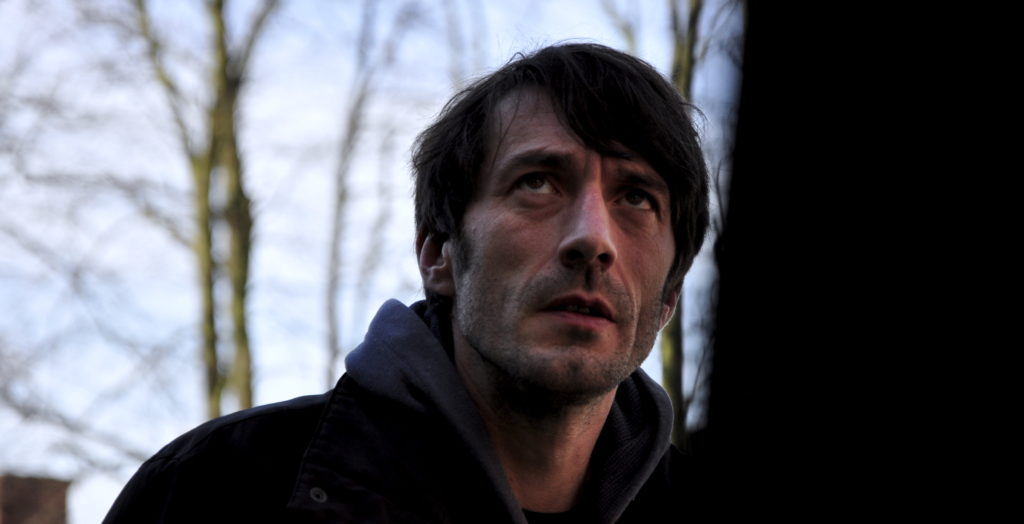
Jeremy Renner plays Cory Lambert, sharp shooter for Wyoming’s department of fish and wildlife. He protects livestock from predators – like the three wolves surrounding a flock of sheep in the scene that immediately follows that of a young girl bleeding and dying alone in a frozen wasteland.
Behind the camera, Sheridan is a bit less subtle with symbolism than he might want to be. In fact, though Wind River spins a compelling murder mystery, it’s far more of a blunt instrument than the filmmaker’s last two – admittedly magnificent – efforts as writer.
Perhaps Sicario and Hell or High Water represent too high a bar for a director with only one feature, the 2011 horror flick Vile, under his belt.
Performances are wonderful. Renner’s stoic cowboy unveils genuine tenderness, Gil Birmingham’s brief screen time is a blistering blessing of tumultuous emotion, and Elizabeth Olsen breathes life into a surprisingly one-note role.
Sheridan doesn’t have quite the touch of Villeneuve or Mackenzie, and without it, his material feels a touch too preachy, a whisper too self-righteous, and most troublingly, too white.
Set on a Native American reservation, Lambert is enlisted to help Olsen’s fledgling FBI agent Jane Banner and an understaffed tribal police department solve the crime behind the girl’s death.
And though Renner brings his grieving hunter to the screen with an aching, restrained performance, it’s hard to understand why the character needed to be white. That piece of casting gives the film a “white savior” tenor that only exacerbates that nagging feeling of misplaced self-righteousness.
Wind River is a fine, if flawed, police procedural. Unfortunately, that makes it a bit of a disappointment coming from Sheridan.

https://www.youtube.com/watch?v=zN9PDOoLAfg
by Hope Madden
Maybe you’re not up for 80 minutes of existential dread, of traversing the subconscious of a stunted artist – a man who cannot complete a project because you don’t have to fail if you never finish anything.
But do you feel like wandering through a cardboard maze? Because, dude, it is so cool in here!
Dave Made a Maze takes its millennial angst seriously enough to construct a remarkably thorough metaphor through the creation of this remarkable cardboard labyrinth.
Frustrated artist Dave (Nick Thune) has countless great ideas, no follow-through. All he really wanted to do while his girlfriend Annie (Meera Rohit Kumbhani) was out of town was fix the doorknob.
Ooo! Origami!
Hey! Woodwork!
No, wait…that doorknob…look! An ant farm!
Inspired by the ant farm, Dave builds the world’s most elaborate and amazing labyrinth inside cardboard boxes taking up the bulk of his apartment. To Annie’s dismay, he won’t – or can’t – come out once she arrives home.
Plus, there’s a minotaur in there!
As Annie and Dave’s friends attempt a rescue, a charming, nerdy horror comedy of sorts emerges as a mash note to self-loathing and the creative process.
Adam Busch, playing Dave’s bearded bestie Gordon, is a delight, while the gang’s documentarian buddy Harry (James Urbaniak) and his crew (Scott Narver and Frank Caeti) are a self-referential hoot.
First time director Bill Watterson, working from a screenplay he co-wrote with Steven Sears, serves up a charmingly spot-on metaphorical intervention, with an amazing assist from production designers Trisha Gum and John Sumner with art director Jeff White.
Their cardboard world of Dave’s subconscious is endlessly fascinating, adorably dangerous and fun. Existential dread has never been so charming.

by Hope Madden
Who remembers Safe House, the passable 2012 action flick that sees Ryan Reynolds in over his head trying to keep an international assassin, played by Denzel Washington, safe?
Well, lobotomize Safe House, swap in Samuel L. Jackson for Denzel, trade grit for humor and you have the mid-August version of an action comedy, The Hitman’s Bodyguard.
Jackson is Darius Kincaid.
No he isn’t. He’s an underwritten tough guy, filled out with characteristic Jacksonisms: foul language and swagger. He’s Samuel L. Jackson, motherfucker.
Likewise, Reynolds may go by Michael Bryce, but this is prototypical Reynolds, all sarcastic charm and self-loathing.
Bring them together: glib meets badass. They take a bullet-riddled road trip, Bryce trying to keep Kincaid safe long enough to testify against the former president of Belarus, a war criminal and all-around evildoer, played, naturally, by Gary Oldman.
Of course he is.
No, not a lot of acting muscles are being overworked in this one.
Writing muscles either, for that matter. The film coasts on mostly ludicrous but sometimes fun set pieces energized by the silly sniping happening as the Jackson/Reynolds bromance blossoms.
Director Patrick Hughes (Expendables 3 – did we know there were 3?) relies heavily on his cast and their individual brands. It’s like shorthand. No reason for character development, which is a good thing because scribe Tom O’Connor isn’t strong.
Hughes has trouble balancing the action, humor and unexpected romance. Reynolds’s security expert pines for the Interpol agent that left him; meanwhile, Jackson’s assassin misses his Mrs. (Salma Hayak, funny).
But, hey, do you like Ryan Reynolds, Samuel L. Jackson and Gary Oldman? Because the three of them play the three of them in a disposable action comedy coming out this weekend.

by Hope Madden
The Ghoul opens on a crime scene. One detective leads another through the facts of the crime, which appear simple enough until you work in the bit about the victims walking toward the perpetrator even after being repeatedly shot.
Are we watching a cop drama, supernatural thriller or meditation on mental illness? Actor turned writer/director Gareth Tunley keeps you guessing.
As Chris (Tom Meeten), working with criminal profiler Kathleen (Alice Lowe), goes undercover to investigate a therapist who may be hiding a lead, Tunley’s story takes a series of mysterious turns.
In his feature debut behind the camera, Tunley’s instincts for leading and misleading pay off. His film moves quite slowly, wandering into fascinating territory now and again as it forever turns itself inside and out.
To say much more about the plot would rob it of its curious power, but the writing, in particular, deserves attention for accomplishing something few scripts manage.
An agile, believable lead performance helps.
Meeten’s quiet, often heartbreaking turn grounds the film, while Rufus Jones and Geoffrey McGivern, as patient and psychologist, respectively, offset the quiet with bright bursts of energy.
Tunley offers two equally viable interpretations for his film, echoing events and phrases to create a structure that mirrors the mystery unfolding. Reminiscent at times of memorable (if underseen) indies Tony, Locke and They Look Like People, The Ghoul still manages to tell its own peculiar and poignant story.
A little slower this week in the home entertainment arena, but summer blockbusters are beginning to trickle in.
Click the title for a full review. And as always, please use this information for good, not evil.
Click HERE to joins us in the Screening Room to break down Annabelle: Creation, The Glass Castle, Nut Job 2: Nutty by Nature, Killing Ground and what’s new in home entertainment!
by Hope Madden
I was excited about the screen adaptation of Jeannette Walls’s memoir The Glass Castle. Hers is a well-told, often jaw-dropping story of a most unusual family. Her telling is neither sentimental nor leading; she is both clear-eyed and forgiving of an upbringing that is eccentric at best, criminally negligent at worst.
Clearly destined for big screen treatment, the adaptation appeared to fall into the right hands considering the director – Destin Daniel Cretton, of the underseen gem Short Term 12 – and the cast.
Oscar winner and fellow Short Term 12 alum Brie Larson takes lead responsibilities as the adult Walls, while her parents are played by the always wonderful Woody Harrelson and Naomi Watts.
That’s a pedigree right there. So what went wrong?
A lot – and the release date was the first clue.
August tends to be a dumping ground. If it didn’t have “summer blockbuster” written on it and it’s not likely to bait Oscar voters, it comes out now.
Presumably, Glass Castle was originally conceived as Oscar bait, and the performances are wonderful, to be sure. It’s really Cretton, along with Andrew Lanham, who adapted Walls’s text, who fell down on this one.
With Cretton, Lanham co-wrote the 2017 screen adaptation of The Shack, an inspirational drama in which a grieving man receives a letter, and then a visit, from God. And that may be all you need to know.
Between Lanham’s refocusing of the story, Cretton’s manipulative use of slow-mo and the emotionally leading score, Walls’s remarkably balanced portrait of wanderlust, addiction and damage is utterly lost.
In its place, you’ll find cheap sentimentality.
The volatile and life-shaping relationship between Walls and her mother is discarded almost outright and Watts is left basically sidelined while a more cinema-friendly arc is developed between father and daughter.
Harrelson has far more to work with, but the root of his troubling quest for freedom is pushed aside in favor of wise-yet-innocent monologues and general zaniness.
Do yourself a favor and grab the book instead.
by Hope Madden
There are a lot of things James Wan’s 2013 hit The Conjuring got right. Leaning toward practical effects over CGI, casting high-quality talent, and digging into an allegedly true story – all good choices that, matched with his eye for framing and skill with mounting dread, led to a chilling and memorable flick.
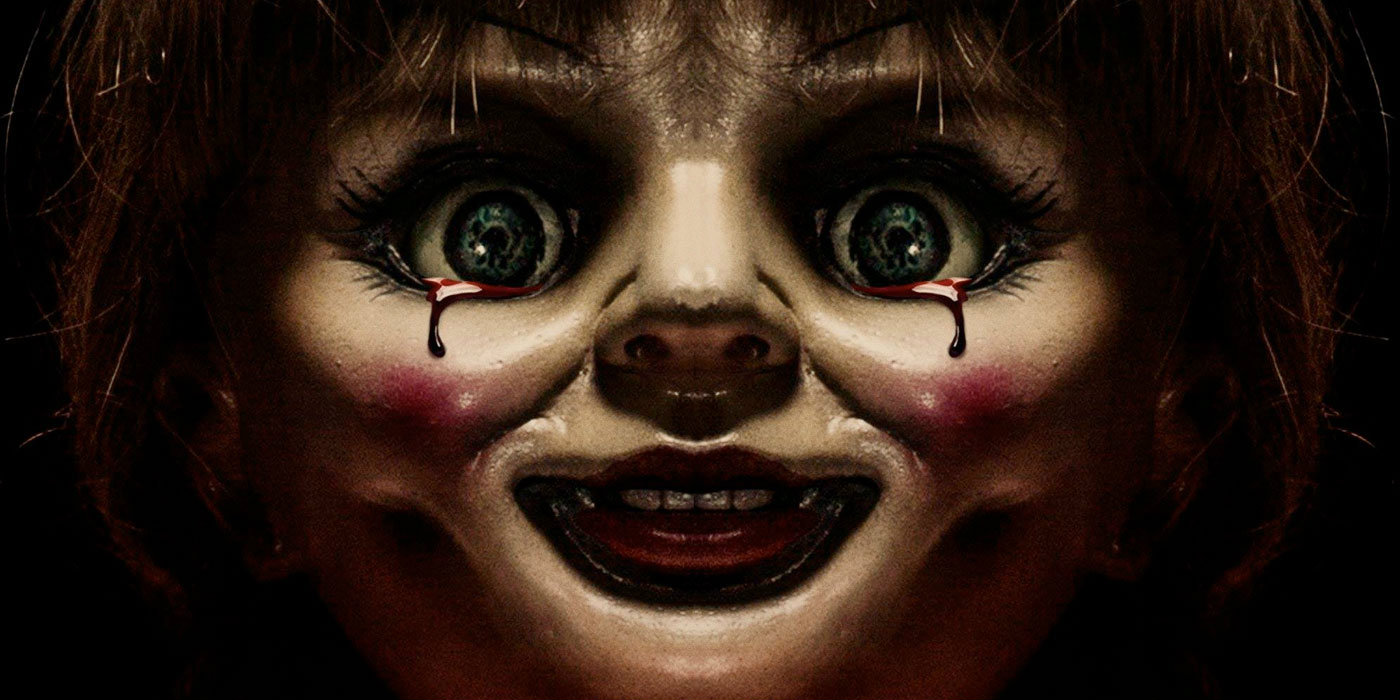
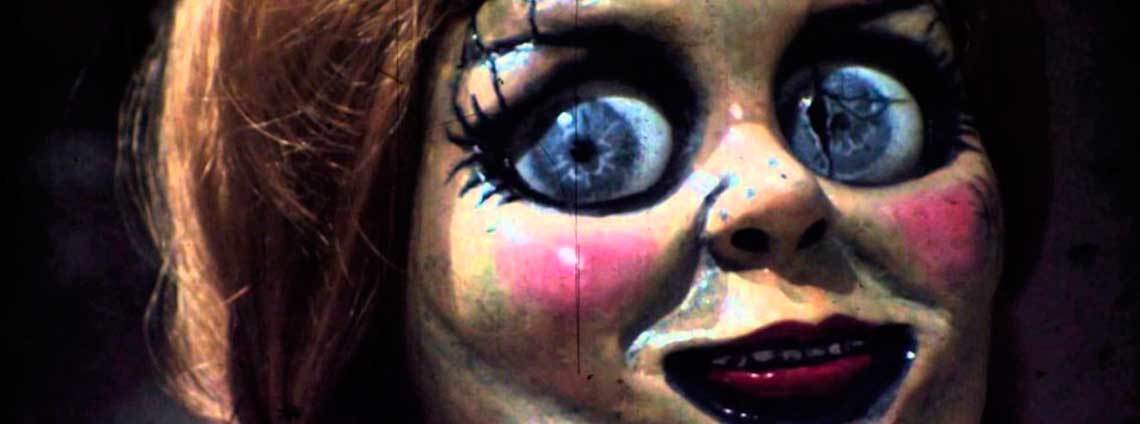
There’s also a creepy doll, the element that seems to be driving this unexpected franchise and the only item from the original film that made the leap to Annabelle: Creation.
You remember her – she terrorized a young family, and later a pair of nursing students before being locked in a glass case in that creepy room at Ed and Lorraine Warren’s house.
But did you ever wonder what kind of demonic hijinks created her in the first place? Or do you just find yourself in the mood to watch orphans being persecuted? Either way, may I introduce you to Annabelle: Creation?
Director David F. Sandberg (Lights Out) does what he does best, relying on good, old-fashioned jump scares. If that’s your bag – and you don’t get side tracked with nit-picky things like how utterly ignorant writer Gary Dauberman is of actual Catholicism (so maybe he shouldn’t have chosen a Catholic orphanage!) – then this film may be for you.
Years after a doll maker and his wife lose their precious daughter, they accidentally conjure up a demon to live in the single ugliest doll any toy maker has ever seen fit to make.
Bad choice.
Worse choice? Inviting those orphans to move in.
Welp, empty-headed horror it is. And there is something to be said for that in a mid-August slump. This is the sequel to a weak film, itself a sequel of sorts to the kind of movie that felt like a one-off.
It seems unlikely a franchise was the expectation back when Conjuring hit screens in ’13. Since then, filmmakers have scrambled to cobble together a universe of supernatural spookiness to spin off and connect. (Look closely at the picture from Sister Charlotte’s convent – any of those nuns look familiar?)
Sandberg offers little in the way of originality. (He’s clearly a pretty big fan of Wan’s Insidious.) But there are jumps aplenty and a couple of very freaky images in the third act.
Because if you can’t have a creepy nun, may as well make due with a disfigured mother and a scarecrow.
by Hope Madden
Australian campers find trouble in what amounts to Eden Lake meets Wolf Creek.
If you missed either of those two deeply troubling horror classics, you should watch them now. Right now, seriously.
Great, right? Terrifying, eh? Makes you kind of want to see what writer/director Damien Power has in store with his feature film debut, Killing Ground.
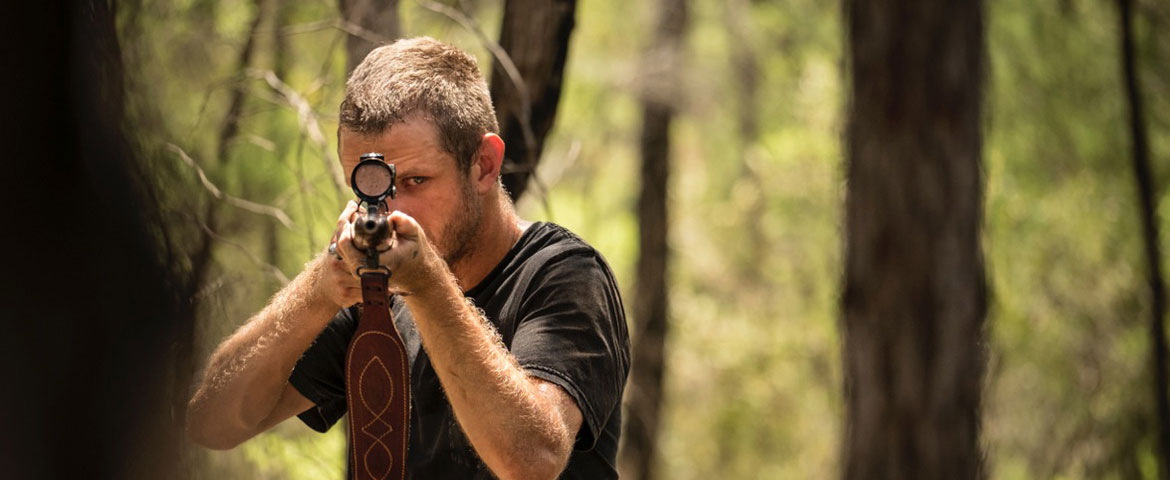
He starts off predictably enough: Sam (Harriet Dyer) and her boyfriend Ian (Ian Meadows) are headed to an out-of-the-way campsite Ian remembers from his childhood. They stop for directions, are warned off by a creepy Aussie with a barking pit bull, go anyway.
Right.
They arrive and are disappointed to see that they’ll be sharing the site with another group – based on the parked SUV and the pitched tent. But where are these other campers?
Though Power doesn’t explore a lot of new ground with this campsite horror flick, his approach is so authentic and spare that it breaks free of cinematic hyperbole and leaves you seriously wondering why in the hell anybody camps – anywhere, but especially in Australia.
His narrative builds tension by cross-cutting between the tale of the camping couple and the story of the family whose vacant tent begins to really worry Sam and Ian come nightfall.
From The Babadook to Wyrmwood to The Loved Ones, Australia’s horror output has been outstanding in recent years. Earlier this year, newcomer Ben Young rocked cinemas with his low-budget Aussie horror Hounds of Love.
Killing Ground isn’t quite ready to join those ranks, mainly because, at its core, it’s an unremarkable story – although a few clever twists and choices keep it fresh enough.
The tale is well told and beautifully performed. Aaron Pendersen and Aaron Glenane, in particular, craft believable, dimensional, terrifying characters.
A satisfying power struggle and the provocative use of ambiguities that refuse to offer a tidy ending help the film hang around after credits role.
Seriously, though, why do people camp?