You think the GOAT debate about hoop gets heated? Just wait ’til your twitter thread blows up with hot takes on the thespian greatness of Jordan vs. LeBron!
Yeah, that’s not likely to happen.
I can tell you Don Cheadle is a great actor, and he’s clearly having a ball as the high-tech heavy in Space Jam: A New Legacy.
Cheadle is Al G. Rhythm, a (what else?) algorithm inside the Warner 3000 computer system that has designed a can’t miss WB idea for LeBron James. But LeBron is not impressed, so Al decides to get even by pitting LBJ against his own 12 year-old son, Dom (Cedric Joe).
Dom is actually more interested in video game design than basketball, but feels pressured by his superstar Dad to follow in the family business. Al seizes on this rift, pulling father and son into the virtual world, stealing Dom’s design for a basketball video game, and offering a deal.
You guessed it: classic Tunes (featuring Zendaya voicing Lola Bunny) vs. some brand new Goons (basketball superstars including Anthony Davis, Damian Lillard and Diana Turasi). A win for the Tune Squad puts the James family back to normal, but a loss means they’ll stay in the “server-verse” forever.
Adding WNBA stars and a new look for Lola are just two of the ways director Malcolm D. Lee (Girls Trip, TheBest Man franchise) and the writing team succeed with an updated premise required for new sensibilities. Sure, the resolution of the father-son tension is predictable, but it manages a schmaltzy level of resonance amid the cartoon nuttiness that we’re really here for.
The antics of your favorite Looney Tunes characters (aside from an ill-advised, rapping Porky Pig) are classically looney, but the script also scores with some topical, self-aware humor aimed at the digital age, a classic Dave Chappelle bit, and LeBron himself (Dom: “Did my Dad leave?” Al: “That’s what he does, isn’t it?”)
And while the original ’96 Space Jam always smacked of product placement marketing, A New Legacy ups that ante, dropping LBJ and friends into any number of Warner properties, from Casablanca to Rick & Morty. Shameless, yes. Fun? Also yes.
As for King James, he follows that standout cameo in Trainwreck with a lead performance that alternates between awkward and decent. He does bring more natural onscreen charisma than Jordan (there’s a reason MJ barely speaks in his TV ads), but I’m guessing the task of acting opposite cartoons didn’t help with James finding a comfort zone in his first lead role.
But LeBron sure looks at home on the court, and once everybody joins him (and I mean everybody – have fun scanning the crowd), Lee rolls out some frantically fun game action with plenty of visual pop. This Space Jam may follow some of the original’s playbook, but there’s enough “new” here to justify the title, and by the time the buckets and anvils start dropping, A New Legacy finds its own fun and satisfying groove.
Avenger Natasha Romanoff had to wait a while to get the green light on her own standalone origin story, and then even longer for the big screens to carry it. Now Black Widow is finally here, and Natasha’s not even the most interesting character in her own show.
And the film is better for it.
Director Cate Shortland and writer Eric Pearson surround Natasha with uniquely compelling personalities that become important parts of a whole, while surrounding star Scarlett Johansson with a supporting ensemble skilled enough to make this one of the MCU’s most character-driven successes.
Oh, there’s action, too, but we start with a prologue set in 1995 Ohio, when Natasha’s family is trying to flee the country at a moment’s notice. Father Alexei (David Harbour), and mother Melina (Rachel Weiss) were prepared for this day, so they scoop up young Natasha (Ever Anderson) and sister Yelena (Violet McGraw) and put the escape plan into action.
An overlong, Watchmen-style montage mixing music and news headlines brings us up to 2006, when the family is long estranged. Natasha is on the run since the Avengers “divorce” (between Civil War and Infinity War), Yelena (Florence Pugh) is taking names in Norway, Alexei is in prison and Melina’s loyalties seem tied to some talented pigs. Meanwhile the villainous Dreykov (Ray Winstone – nice! His accent – not so much) has plans to build an army of mind-controlled “Black Widow” assassins.
That means females only, but while the reveal lands as a clear metaphor for sex trafficking, Shortland (Berlin Syndrome, the underseen gem Lore) and Pearson (Godzilla vs. Kong, Thor: Ragnarok) never belabor any well-taken points. Even better, they fill the entire adventure with enough organic, self-aware humor about posing, too tight supersuits and the need for pockets that very few of the 133 minutes seem laborious at all.
The core foursome is uniformly terrific, as you would expect from actors of this caliber. Performances blossom and surprise, their chemistry buoying the familial longing required of every superhero backstory while anchoring action in characters you can care about.
Pugh—sympathetic, comedic and badass—is the standout, but Johansson shines, especially in a climactic bout with Winstone that lands satisfying jabs about weak men.
Shortland never forgets the point of a superhero film, though. The breathless action in Black Widow impresses as much as it entertains, whether hand-to-hand or aerial.
And it is a Marvel film, so be sure to stick around post-credits for an intriguing stinger and a welcome addition to the universe.
That is a direct quote from my doctor after I re-injured myself for the 11th or 12th time from running. He may have consulted on Anthony Guidubaldi and Keith Strausbaugh’s screenplay for their new mockumentary, Marathon.
Amateur documentarians follow five runners as they train for
an off-brand marathon organized by Ed Clap (Jimmy Slonina), the owner of a shoe
store, equally off-brand.
In much the way the master of the genre Christopher Guest used dog shows and community theater to explore particular personality types, so do Guidubaldi and Straugsbaugh set a group of oddballs loose inside the idiocy of marathon training.
For Shareef Washington (Tavius Cortez), this is about
sibling rivalry. Unfortunately, he has to do all his training on a treadmill
because whenever he runs outside, he gets arrested by white cops. Jenna (Natalie
Sullivan), on the other hand, wants to break the world record for marathon runners
dressed as fruit.
Crews also tail a woman (Anais Thomassian) trying to
remember life before motherhood and an insecure man (Andrew Hansen) hoping to prove
himself to his ex-wife by qualifying for the Boston Marathon.
So, the runners range from desperate to lunatic, sometimes in insightful and often in amusing ways. Hansen’s quickly deteriorating relationship with Jeff, the cameraman we never see, delivers the film’s funniest moments.
The keenest insights may come by way of Emilou (Kimia Behpoornia),
who drops out the moment she realizes marathons are 26 miles long. Her crew
stays with her through race day, though, just to prove how much better life is
when you’re not training for a marathon.
Though Hansen is clearly the film’s brightest spot, the filmmakers pieced together an entirely solid ensemble. Droll performances suit the script and keep your attention, but the story itself lacks much real punch. Worse, the police oppression subplot feels tone-deaf at best.
Still, Guidubaldi and Strausbaugh understand something my doctor saw perhaps too well, and that’s why their affectionate ribbing rings so true.
Back in 2014, Irish filmmaker Ivan Kavanagh wondered what to do about a dad who may be his son’s only salvation, or may be his one true danger. Canal had a lot going for it—it looked creepy, performances were solid, and it wasn’t afraid to bang up its cast.
It just couldn’t quite make the leap from good to great.
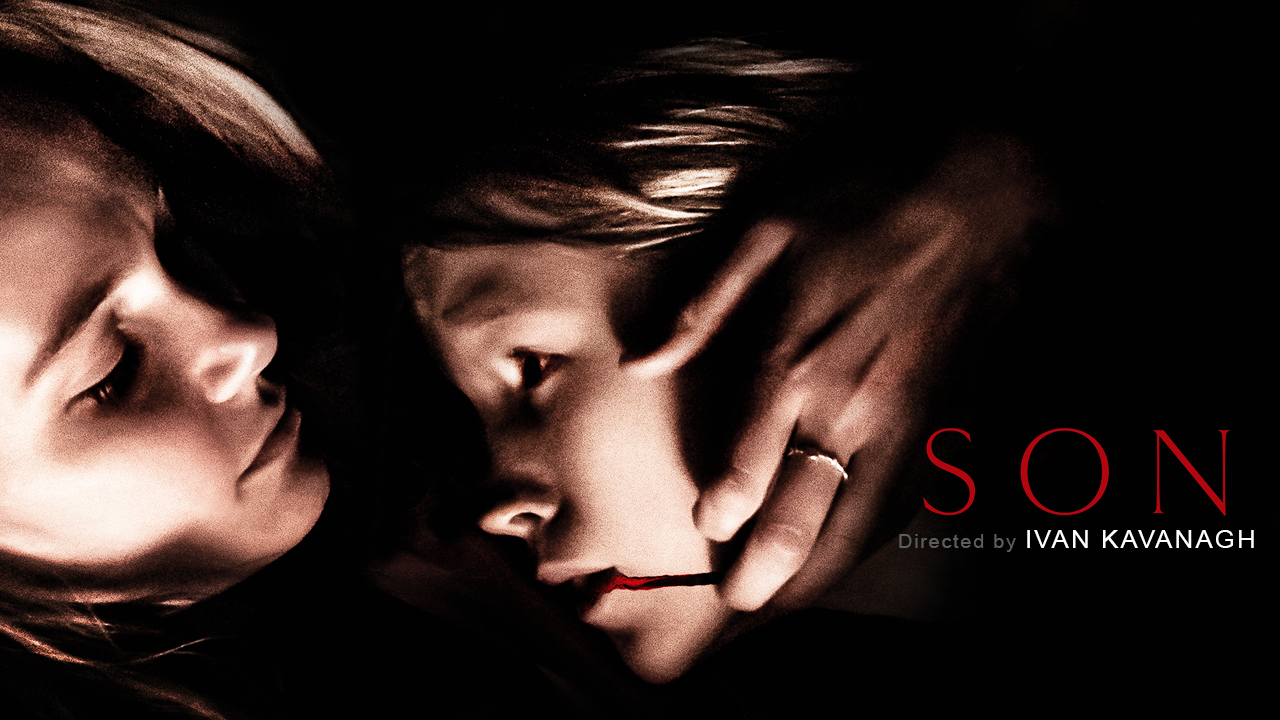
Same goes for the filmmaker’s latest, Son.
We open on a filthy, barefoot, rain-soaked young pregnant woman (Andi Matichak, Halloween) hoping to warm up with a coffee in a roadside diner. Two men walk in, she exits in a hurry.
Cut to eight years later. Same woman, clean and wholesome
now, buckles in precocious little David (Luke David Blumm) to drop him off at
school. They’re adorable. They’re happy, hard-working, loving, and about to
face some ugly stuff once Kavanagh establishes the paradise to be lost.
An awful lot of movies want to know how far a mother is
willing to go to protect the son who may or may not be the real villain. This has
been especially true in the last five years. (See The
Hole, The
Prodigy, Brahms:
The Boy 2, Z,
Brightburn
— it’s a long list.) Does anything set Son apart?
Kavanaugh roots the story in hysteria and conspiracy, sketchy memories of a cult versus police reports of sex trafficking. All of it feels mildly of-the-moment, but the real purpose is to throw skepticism toward the seemingly lucid mother and her claims.
Which is another common horror trope (is she crazy or is she right?), especially in the subgenre where a mother is trying to figure something out that may or may not be supernatural.
So, no, Kavanaugh does not bring much that’s new to the table.
Son does boast solid performances, and the filmmaker once again flexes his strong instincts for unsettling locations and atmospheres. The writing, pacing, and imagery all work together as they should to generate anxiety and dread. Son gets gory now and again, too.
It just doesn’t do anything you don’t expect it to do.
Bonus content! Mangled dick experts! Iconic freeze frames! Yes, this extra Fright Club podcast has it all, thanks to the glorious Felissa Rose of Sleepaway Camp, who joined us to talk about horror fans, realizing her iconic status, and worries over whether her face will freeze like that.
The pandemic – as it did with everything else – played havoc with our latest half-year list. Because Oscar understandably extended last year’s window of eligibility, films that would normally have been included on the list below (such as Judas and the Black Messiah) technically come down on the 2020 ledger.
Do we have to play by Oscar rules? No. But mainly to avoid confusion when it’s time for the end-of-the-year list come December, we will.
So in alphabetical order, here are our picks for the best films of March thru June, 2021:
A Quiet Place Part II
AQPII is lean, moves at a quick clip, thrills with impressive outdoor carnage sequences and yet commands the original film’s same level of tension in the nerve- janglingly quiet moments. Writer/director John Krasinski had a tough task trying to follow his 2018 blockbuster, one made even tougher now having to prove the sequel was worth saving for a theaters-only release.
On both counts, we’d say he nailed it.
Final Account
The final film for late documentarian Luke Holland, this oral history of Nazi Germany challenges rationalizations. It doesn’t accuse, doesn’t accost, but it also doesn’t let anyone off the hook. What is the difference between being complicit and being a perpetrator? It’s a question that haunts the film and its subjects. It becomes clear that it’s a question that haunts a nation.
Holler
If you seek an antidote to Hillbilly Elegy, writer/director Nicole Riegel’s feature debut has what you’re looking for. Driven by Jessica Barden’s blisteringly confident lead performance, Holler sugarcoats nothing about American poverty, patronizes no one, and does not need a Mamaw to explain the facts of life.
In the Heights
Director Jon M. Chu takes Lin-Manuel Miranda’s Tony Award-winning In the Heights from stage to screen with the magic intact, for a block party worthy of celebrating – in a theater, with a crowd.
Are we really “back to normal?” Can the American dream still be alive?
For 143 minutes, it sure feels like it.
Nobody
The one and only thing that separates Nobody from dozens and dozens of expertly crafted, wildly interchangeable “underestimated badass” films is the utter brilliance of its casting.
And by that, I mean exclusively the perfection of Bob Odenkirk in this role. His placement at the center of the film not only sells the “average guy” masquerade better than Liam Neeson ever could, but it makes his inner struggle and his displays of violence actually stand out.
Regardless of the fact that you’ve seen this exact movie a dozen times, you just don’t expect it to be this good.
Riders of Justice
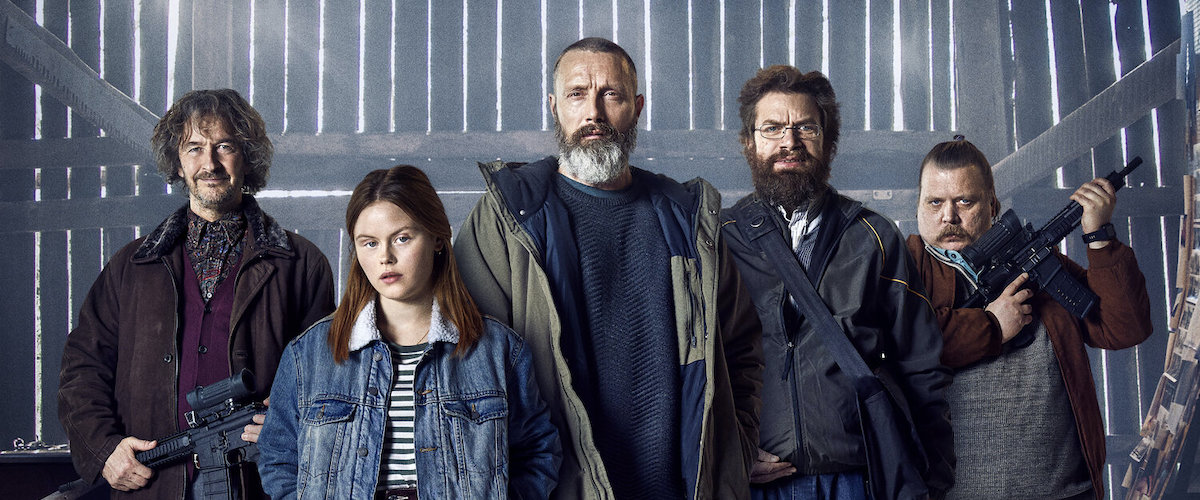
Men will single-handedly gun down an entire biker gang rather than go to therapy. That’s the premise from prolific writer-director Anders Thomas Jensen, where he reunites with Mads Mikkelsen in the dark comic revenge fantasy Riders of Justice.
But Jensen isn’t nearly as interested in the physical mayhem as the emotional wreckage his oddball characters are all coping with. Riders of Justice treats its characters with such forgiving empathy that it’s easy to forget that the group is also almost certainly responsible for the most murders in Denmark since the Vikings.
Rita Moreno: Just a Girl Who Decided To Go For it
Beyond the treasure trove of archival footage, home movies and interview praises, director Mariem Pérez Riera finds the most resonance in the personal journey told by Rita Moreno herself.
Looking back on the obstacles she faced and the successes and failures of her life and career, Moreno displays a hard-won self-worth and an honest self-awareness that she continues to probe.
This is not just an entertaining Hollywood story, it’s an inspiring American story and a hopeful human story. It’s just a damn good story, from someone worthy of celebrating while she’s still here.
Saint Maud
Maud (an astonishing Morfydd Clark) has some undefined blood and shame in her recent past. But she survived it, and she knows God saved her for a reason. She’s still working out what that reason is when she meets Amanda (Jennifer Ehle), a former choreographer now crumbling beneath lymphoma. Maud cannot save Amanda’s body, but because of just the right signs from Amanda, she is determined to save her soul.
As a horror film, Saint Maud is a slow burn. Writer/director Rose Glass and crew repay you for your patience, though, with a smart film that believes in its audience. Her film treads the earth between mental illness and religious fervor, but its sights are on the horror of the broken-hearted and lonesome.
Shiva Baby
Clearly, much of writer/director Emma Seligman’s sharp dialog comes from personal experience, and if it’s one you share this is a film that will feel like part of the family. But you didn’t have to be Greek to get caught up in that Big Fat Wedding, and you don’t have to be Jewish to see the joy in Shiva Baby.
Seligman flashes an insight that disarms you with sex and humor, keeping its hand at a subtle distance. But by the time we’re leaving the buffet, a breakout filmmaker and star (the irresistible Rachel Sennot) have delivered a fresh, funny and intimate take on the indignities of finding yourself.
Slalom
The sports movie genre is littered with tales of the could-have-been athlete who regains what legitimacy he can by shepherding the next phenom. Slalom is more interested in the havoc that can wreak on the younger athlete.
Writer/director Charlène Favier’s take on the situation is even-handed. She never stoops to melodrama, never paints young skier Lyz (Noée Abita’s) as faultless in her relationship with trainer Fred (Jérémie Renier, great). Lyz’s complexities – particularly given Abita’s assured performance – only ensure that the film leaves more of a mark.
There Is No Evil
Presenting four short films together as separately compelling variations on a theme is impressive. Make those four shorts all from the same writer/director, telling distinct stories that raise the emotional stakes in distinct ways, and you have a stunning achievement.
You have Iranian filmmaker Mohammad Rasoulof delivering a political statement of immense weight and moral conviction. You have There Is No Evil.
Each chapter of the film presents a seemingly unique paradox, then quietly mounts the tension before revealing gripping plot turns that unite the strands in memorably devastating fashion.
With four masterful bits of storytelling and the exceptional ensemble cast in There Is No Evil, Rasoulof deftly explores the wages of those decisions, as well as the immoral center of a despotic regime that makes them necessary.
This Is Not a Burial, It’s a Resurrection
Incredibly beautiful and rich with color, light, and shadow, every scene in this film is a haunting painting. The cast, mixed with actors and non-actors alike, brings you to witness the erasure of a real place and real people, and you mourn with them.
Though the people of the film’s central town of Nazareth still live, something about them will be lost forever. They are some of the last of their kind as new roads, and new buildings, and new dams continue to creep into the quiet places of the world. Progress fills up little villages with the walking dead as ways of life are washed away.
Together Together
It takes a full two minutes to get a really good feeling about Together Together. Writer/director Nikole Beckwith delivers witty, engaging dialogue from the jump, defining characters and setting the stakes in a beautifully organic manner.
There’s love and family and funny stuff here, and though none of it is quite the kind we’re used to seeing, all of it is wonderfully real. Together Together is a delivery that somehow feels comfortable and unique, both overdue and right on time.
Need one more reason to be thrilled that the Wexner Center
for the Arts is reopening to the public? A new collaboration between filmmakers
Jennifer Reeder and Nancy Andrews—the delightfully spacy I Like Tomorrow—plays
through July and August in The Box.
The 11-minute short showcases Andrews’s animation prowess,
as well as the versatility of performer Michole Briana White, who delivers three
roles in one.
White plays Captain Regina Lamb, a lone astronaut who’s been
in orbit a while. Maybe a really long while. And at the moment, she’s working
through some relationship issues. With herself. Specifically, she’s navigating
her commitments to her past self (White again, as Reggie) and her future self
(White as Rae).
The I Like Tomorrow aesthetic is MST3K meets Bowie,
and who wouldn’t be wild about that? White’s performance is lonesome, slyly insightful
and very funny. She makes excellent use of Reeder and Andrews’s nimble dialog, using
space exploration to mirror relationship communication, then focusing everything
inward.
Captain Lamb’s journey toward appreciating who she is today,
this moment, is as charming as it can be. White gives each of the three versions
of Lamb age-appropriate personalities and the interplay among the three is
priceless.
As layered and insightful as the film is, Andrews and Reeder
never abandon their playful attitude. In fact, the comic in this cosmic episode
only increases as Captain Lamb’s journey wears on.
Musical interludes and animation, set design and costumes
all work together to create a mood that’s simultaneously lonely, hopeful, and
weirdly funny.
The best horror movies balance the darkness with light, the evil with goodness. Often enough they only do that so it can hurt you all the more when the nice guys finish dead last. Here are our favorite nice guys in horror. Be warned, a couple of these include spoilers that will break your heart.
5. Dick Hallorann (Scatman Crothers), The Shining (1980)
Thank god for Dick Hallorann, the one person poor little Danny could trust to make sense of a senseless situation and do the right thing in a pinch. Scatman Crothers played such an amiable character, the kind of grown man who’s good to children. He was a good dude.
Kubrick was not as good to Scatman, though. The director famously put the then-70-year-old actor through 60 takes of his wordless death scene. He knew it was the one death that would break our hearts, though, so it had to be perfect.
https://www.youtube.com/watch?v=B7l7zazCrXk
4. Finn (Sam Richardson), Werewolves Within (2021)
The brand new video game adaptation opens with, of all things, a quote from Mr. Fred Rogers.
I am in.
Sam Richardson plays Finn, the new park ranger in an isolated mountain town divided along political lines. All he wants, especially as it becomes increasingly clear that there is a werewolf afoot, is for everyone just to try to be a good neighbor.
One of the reasons this film is as fun and satisfying as it is (no, not because the cute AT&T girl Lily [Milana Vayntrub] is in it) is because this film doesn’t punish Finn for being a good guy. It celebrates it. Finally!
3. Lee (Jon Krasinski), A Quiet Place (2019) SPOILER
Don’t watch the clip if you haven’t seen the movie. Or if you weep easily. Or if you weep less easily. What a gut punch this one is!
Sure, Lee’s fathering is marred by anger and frustration, but his tenderness – especially at the end – and his consistent desire to protect, encourage and support his family earns him a spot here.
2. Michael (Jake Weber), Dawn of the Dead (2004)
You just want to hug him. A cooler head, a humble voice, a supportive voice of reason, Mark is perhaps the most important person in that mall hunkered down away from the fast-moving zombie horde.
No matter what happens, Mark never loses his humanity. Hell, he never even loses his temper.
We bet he was a great dad.
1. Frank (Brendan Gleeson), 28 Days Later
This movie – a genre masterpiece – finally gave us a break, a breather, a respite from the rage and fear and terror when it introduced us to Frank.
Brendan Gleeson, a masterpiece himself, is ever chuckling, good-natured, protective but kind dad. He wants to keep his daughter safe. He wants to ensure her safety. But he also wants to carve out some kind of normalcy, happiness, even.
He is huggable, dependable, and exactly what Jim and Selena need, too.
You’ll find real horror in False Positive. There’s the plot, sure—a woman desperate to conceive, in the hands of a nefarious physician with a God complex—and all the body horror and helplessness that go along with it. But that’s not the scary part.
Indeed, co-writer/director John Lee levels a more comedic
tone to the by-the-numbers premise. Where he and co-writer/star Ilana Glazer
mine unnerving dread is in their observational honesty.
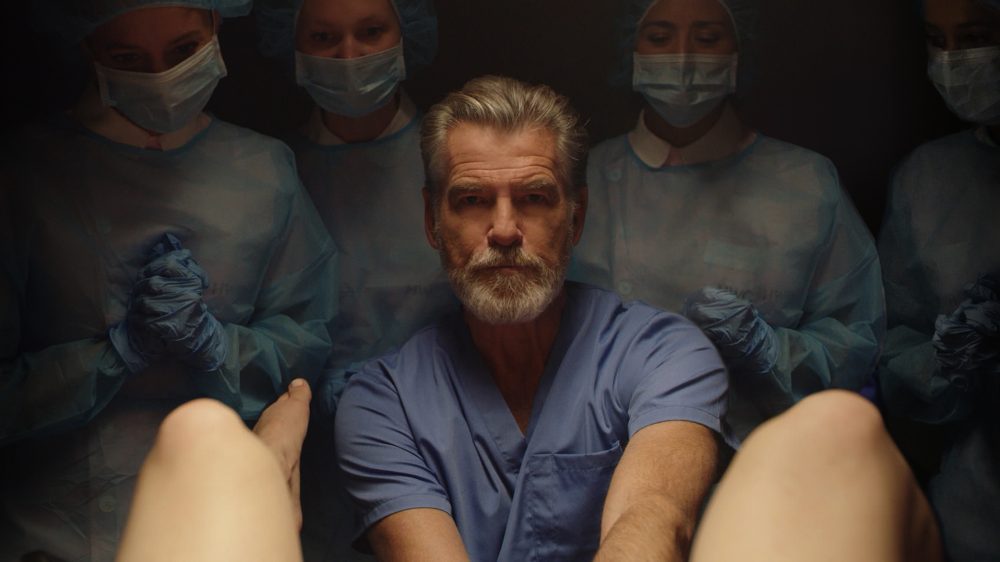
Glazer is Lucy, and she and her husband Adrian (Justin Theroux, slyly wonderful) have been trying to get pregnant for two years. As much as she wants to do this naturally, she finally caves in to Adrian’s suggestion that they visit his med school mentor, Dr. Hindle (Pierce Brosnan – perfection).
Lee’s intention is not to make you wonder whether something sinister is afoot. The Stepford-esque nursing staff and eerily meticulous clinic proclaim it. The sheer number and variety of phallic instruments to be inserted, and the volume of lubricant so very lovingly applied, plays like SNL by way of Cronenberg.
If you’ve ever seen Broad City, Glazer’s groundbreaking Comedy Central sit-com, you may not recognize the performer’s dramatic skills, but you will recognize the writer’s keen eye for everyday absurdities.
Here’s where False Positive’s horror kicks in. It’s the
authenticity, the banal realism of Lucy’s daily condescending, dismissive,
patronizing, smothering, gaslighting humiliations that really eat at you. The low-key
accuracy of it all—from the male colleagues who swear you are glowing as they
leave their lunch orders next to your laptop, to your nurse’s reassuring caresses
and terms of endearment, to your husband’s reminder whenever you’re feeling
down that we’ve been through a lot with this pregnancy.
Tensions escalate as the storyline itself dictates, although
the film is far more surefooted in its observational horror than it is in its
plot. Lucy’s pre-pregnancy character is ill-defined, which makes her descent less
satisfying. The climax is played for comedic value and the final act’s weirdness,
though welcome, holds no real meaning.
Worse of all is the under-developed character of a midwife played imposingly by Zainab Jah. Lee clearly hoped to use this character as a statement on the genre itself but the whole affair feels wrong-headed.
Those are some serious misgivings, I grant you, but there really is something subversive, honest, and horrifying worth witnessing in this movie.