SCREENING ROOM PODCAST
by George Wolf
Give a few minutes to Wim Wenders’s Anselm, and you may be inspired to make up some new words to describe the experience.
Like awesommersive. Or historiography.
The film wows you from the outset, as Wenders (Pina, Wings of Desire, Paris Texas) follows German artist Anselm Kiefer around his studio. The use of 3-D (and 6k resolution!) isn’t there to hurl objects from the screen to your eyeholes, but instead to surround you with artistic vision that is often as massive in scale as it is in meaning.
While Wenders does present some layers of biography, it’s clear that the overarching purpose here is to document Kiefer’s work and the mission that continues to drive his “protest against forgetting.” For decades, Kiefer has stood as a provocateur intent on exposing the “open wound of German history,” and Wenders has crafted a mesmerizing ode that delivers an appropriately mixed media aesthetic.
Archival footage permits the older and younger Anselm to become one. We hear his declarations of seeing through the world through a different lens, and then witness the creative process that convinces us it is undoubtedly so.
And even if you don’t know Kiefer from Sutherland, Anselm is a big screen experience that is not to be missed. As much about the art as it is about the artist, Anselm is an unforgettable journey into what makes both so necessary and vital.

by Hope Madden and George Wolf
2023 was a great year for great movies, great screenplays, great performances, and great craftsmanship. Many of this year’s categories are stacked with deserving nominees., and overall, it was not a bad job by the Academy.
But we do have a few nits to pick.
Best picture
Solid, but we would put “Godzilla Minus One” and “The Color Purple” in for “Past Lives” and “The Zone of Interest.”
Best actor
All great choices.
Best actress
These are strong, but we would have loved to see Fantasia’s performance in “The Color Purple ” in Bening’s spot.
Best supporting actor
All good here.
Best supporting actress
Very strong list.
Best director
No Bradley Cooper? No Greta Gerwig.? We take umbrage, and would put them in over Glazer and Triet.
International feature film
Very nice.
Animated feature film
Not a great year for animation, but these are worthy.
Adapted screenplay
We’d put “Barbie” in Original Screenplay and add “The Color Purple,” but okay.
Original screenplay
Good choices.
Visual effects
Nice to see the relatively low budget “The Creator” included here.
Original score
All strong, but where’s “Godzilla Minus One”? Criminal.
Original song
We would have loved to see Road to Freedom from “Rustin” included in this category.
Documentary feature film
“Anselm” should be here, and maybe “Still: A Michael J. Fox Story.”
Cinematography
So great to see “El Conde” on this stellar list. It was beautiful, and hopefully this nomination will cause people to seek it out. But, to be honest, we’d have given its spot to “Barbie.“
Costume design
Animated short film
Live action short film
Documentary short film
Film editing
We’d probably go with “Barbie” over “The Holdovers” here.
Sound
Production design
Makeup and hairstyling
The 96th Academy Awards, hosted by Jimmy Kimmel, will air on ABC on Sunday, March 10, live from the Dolby Theatre at Ovation Hollywood.
by George Wolf
You get the sense early on that the German thriller Trunk may have some pleasant surprises in store.
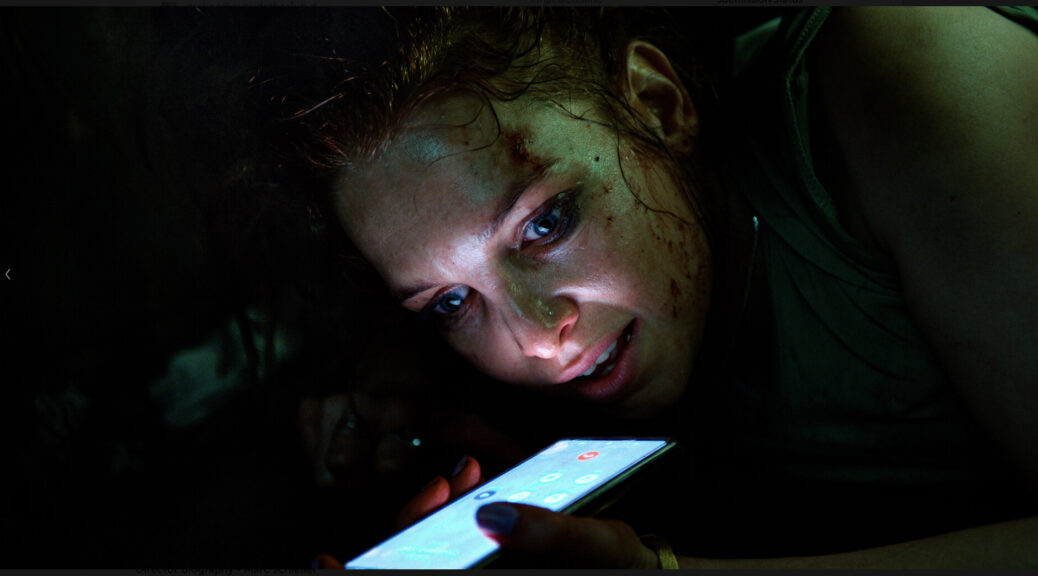
Malina (Sina Martens, terrific in a physically demanding role) wakes up to find herself badly injured and confined to the trunk of a car. The trunk is ajar, and before the driver returns to shut her inside, Malina is able to retrieve her cell phone.
And lemme guess, the phone’s almost dead, right?
FULL POWER.
Okay, then, here we go! Dialing a series of well-chosen contacts, Malina has to 1) stay alive, and 2) piece together what’s happening while she looks for an escape route.
Writer/director Marc Schießer proves a solid triple threat here, also handling the editing duties with a deft hand and solid instincts for pacing and tension.
The cinematography is on point, as well. And while this particular trunk seems unusually roomy, Scheiber consistently lands precisely the type of claustrophobic camera angles and POV shots that Liam Nesson’s recent car-centric thriller Retribution tried in vain to achieve.
You may end up sniffing out some the mystery at play, but even so, Schießer’s finale will be no less satisfying. Trunk is a tense, crowd-pleasing thriller, one that adds enough detours to a well-traveled road until it’s fun again.
So climb in, and enjoy the ride.
by George Wolf
Origin is so loaded with theories, facts and history, you may wonder why writer/director Ava DuVernay didn’t just make the film a documentary. After all, 2016’s 13th showed DuVernay can certainly command the genre.
I’m guessing she gives us the answer with a telling line of dialog: “Real people, real things.”
The main character, Isabel Wilkerson, is a real, extraordinary person, and author of the source book, “Caste: The Origins of Our Discontent.” And the film works as well as it does because of how well DuVernay unveils both the results of Wilkerson’s work and the personal journey that made it possible.
Aunjanue Ellis-Taylor’s tremendous turn as Wilkerson doesn’t hurt, either.
We first meet Wilkerson shortly after the news of Trayvon Martin’s murder first breaks. The Pulitzer Prize-winning journalist is looking to take some time off to care for her elderly mother, but her colleagues (Blair Underwood, Vera Farmiga) are hoping she can address the issue in print.
Even Wilkerson’s husband Brett (a wonderful Jon Bernthal) thinks she’s happier working, but Isabel is hesitant.
“I don’t write questions, I write answers,” she explains. And Isabel finds many lingering questions in the Martin murder, the Charlottesville tragedy, and the increasing drumbeat of fascism in America. Her mind is restless, because while racism is a symptom, using it as “a primary language to understand everything isn’t sufficient.”
But as Isabel suffers heartache and loss in her personal life, she researches history in Germany, India, and America’s Deep South to find the connective tissue she sought – caste systems perpetuated through unending violence until they’re accepted as the natural order.
DuVernay utilizes Wilkerson’s classroom presentations, conversations with her cousin Marion (Niecy Nash, terrific) and fact-finding interviews as sufficiently organic vehicles for flashback. The history lessons are rife with discovery and heartbreak, and compelling enough to keep a firm grip on your attention.
There are flashbacks to Isabel’s personal history as well, including a look at her relationship with Brett that is tender, funny and poignant, buoyed by the sweet chemistry between Ellis-Taylor and Bernthal.
And though the third act can get especially lecture heavy, the material works as a narrative whole because DuVernay finds her own layer of tissue that connects us to both the real people and the real things.
The cycle of trauma -be it personal or systemic – can only be broken by confronting it. Origin confronts it with questions and answers, humanity and inhumanity, in ways compelling enough to change the very way we look at the world around us.
It’s one of the oldest tropes in horror: an unexpected knock at the door. Maybe the visitors are in danger: The Texas Chain Saw Massacre, The Human Centipede, The Old Dark House and countless others. Or, maybe it’s the folks inside who should be afraid: Knock, Knock; Brimstone and Treacle. For our 10th anniversary special, we count down the best “unexpected guest” horror.
The Eyes of My Mother will remind you of many other films, and yet there truly is no film quite like this one.
First time feature writer/director Nicolas Pesce, with a hell of an assist from cinematographer Zach Kuperstein, casts an eerie spell of lonesome bucolic horror.
Shot in ideal-for-the-project black and white, an Act 1 event could come from any number of horror films. A mother looks out her window to see her young daughter, playing alone in the front lawn, talking with a stranger. There is something clearly wrong with the stranger, and things take a bad turn. But for Pesce, this simple, well-worn set-up offers endless unexplored possibilities. Because this bad man doesn’t realize that the isolated farm family he’s come to harm is very comfortable with dissection.
“Is Tamara home?”
Writer/director Bryan Bertino creates an awful lot of terror beginning with that line.
A couple heads to an isolated summer home after a wedding. It was meant to be the first stop on their life together, or so we gather, but not all worked out as James (Scott Speedman) had planned. As he and what he’d hoped would be his fiancé, Kristen (Liv Tyler), sit awkwardly and dance around the issue, their very late night is interrupted by a knock and that immediately suspicious question.
Bertino beautifully crafts his first act to ratchet up suspense, with lovely wide shots that allow so much to happen quietly in a frame. This is a home invasion film with an almost unbearable slow burn.
A family pulls into their vacation lake home, and are quickly bothered by two young men in white gloves. Things, to put it mildly, deteriorate.
Writer/director Michael Haneke begins this nerve wracking exercise by treading tensions created through etiquette, toying with subtle social mores and yet building dread so deftly, so authentically, that you begin to clench your teeth long before the first act of true violence.
But it is the villains who sell the premise. Whether German actors Arno Frisch and Frank Giering or Americans Brady Corbet and Michael Pitt for his 2007 English language remake, the bored sadism that wafts from these kids is seriously unsettling, as, in turn, is the film.
I would like, if I may, to take you on a strange journey.
Two young, ordinary, healthy kids left Denton that fateful evening on a night out. It was a night out they were going to remember for a very long time.
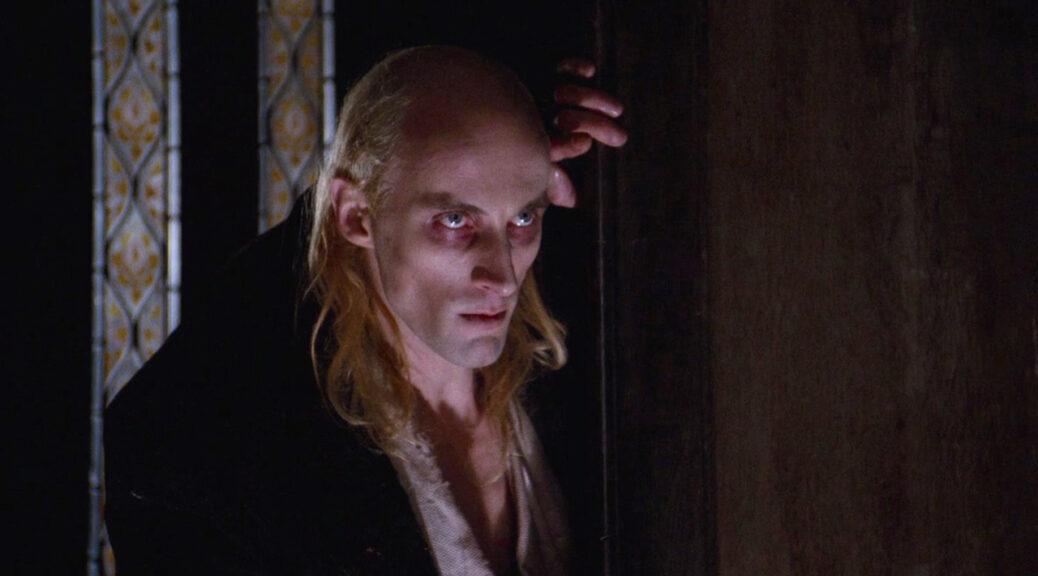
Brad Majors (asshole) and Janet Weiss (slut) get themselves in a bit of a pickle on a rainy night and need to seek a telephone at that castle they past a few miles back. I think you know the rest.
Rocky Horror owes a tremendous debt to Edgar G. Ulmer’s bizarre horror show. The film – clearly precode – boasts torture, tales of cannibalism, and more than the hint of necromancy.
Plus Bela Lugosi and Boris Karloff?! What is not to love?
Loosely based on Poe’s The Black Cat – so loose in fact that it bears not a single moment’s resemblance to the short – the film introduces Lugosi’s Dr. Vitus Werdegast. He’s come to seek vengeance on Karloff’s mysterious Hjalmar Poelzig, if only Werdegast can overcome his all-consuming terror of cats!
by George Wolf
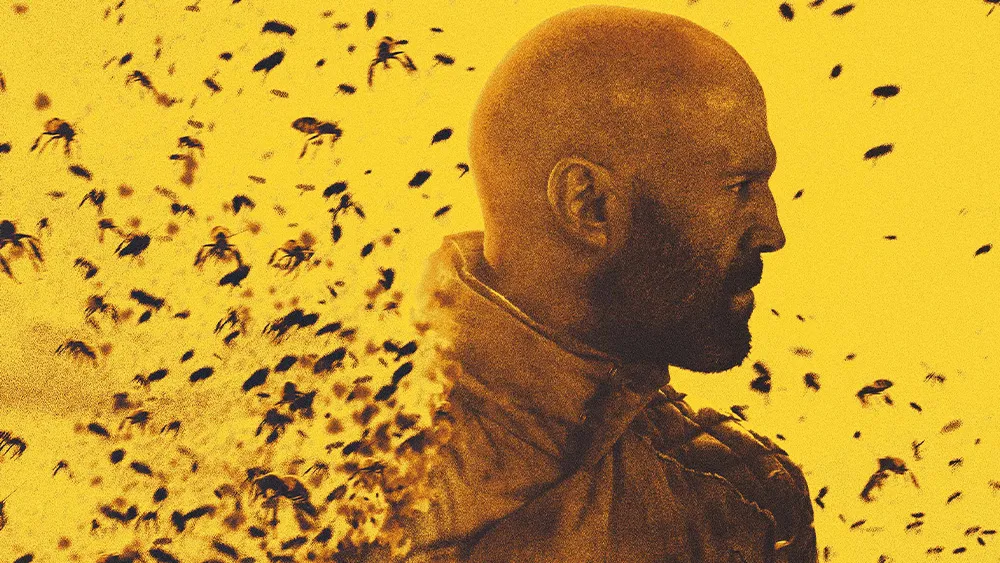
About two-thirds of the way through The Beekeeper, director David Ayer and star Jason Statham hit us with the film’s highlight. It’s an elevator sequence that takes an unexpectedly gory turn, then adds a clever surprise for the finishing touch.
If only the rest of the film could be this interesting.
Statham is playing his usual one man killing machine, this time named Adam Clay. He’s living a quiet and reclusive life as a beekeeper in rural Massachsetts, until a cybercrime firm scams Clay’s only friend (Phylicia Rashad) so badly she kills herself.
Clay takes very explosive, very lethal revenge.
But the phishing firm’s CEO Derek Danforth (Josh Hutcherson in hipster douchebag mode) has friends is high places, including a former CIA director (Jeremy Irons, classing up the joint). Danforth wants Clay taken out, but he soon learns that will not be so easy.
See, Clay is more than a beekeeper, he’s a former beekeeper, an elite group of enforcers who are outside the chain of command and charged only with “protecting the hive when the system is out of balance.”
Bad news for anyone standing between Clay and the scale-tipping Danforth.
Screenwriter Kurt Wimmer (Expend4bles, the Point Break and Total Recall reboots) rolls out a script that feels like a discarded idea from Denzel’s first Equalizer film. Each step closer to “the head of the snake” gets more ridiculous, all presented with a bone dry seriousness from Ayer (Fury, Suicide Squad) and Statham that screams for a little self awareness.
Instead, The Beekeeper keeps pushing toward its own misguided goal of sermonizing about corruption while celebrating vigilante vengeance. Where it lands – elevator ride aside – is strictly in plug-and-play Statham territory, another ironic reminder of why his comedic turn in Spy was such a joyous bullseye.