“I got everything I ever wanted, and I never really got over it.”
It’s been said that life is lived forward, but understood backward. This sentiment sits at the heart of Best Worst Thing That Ever Could Have Happened, a poignant look back at a failed musical that carried the very same theme.
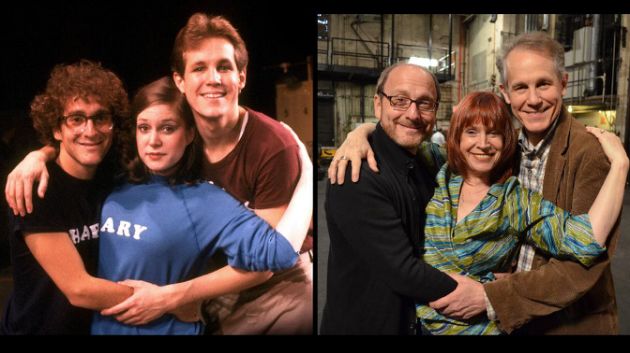
In 1981, director/co-writer Lonny Price was in the original Broadway cast of Merrily We Roll Along, a Stephen Sondheim/Hal Prince production that started with middle-aged characters and worked backward in time, until each was just a teenager eager to embark on life’s journey.
Now, more than three decades later, those very cast members (including a 21 year-old Jason Alexander) are middle-aged, and Price (who you’ll remember as ‘Neil” from Dirty Dancing) brings them together to look back on their shared experience and how it affected the course of their lives.
The setup is so perfect you’d think opening this time capsule was planned from the start, except that Merrily was an unexpected flop, leaving all involved to pick up the pieces and move on.
Price’s project struck gold when he discovered boxes of old video covering the birth of the show. Meant for an ABC-TV project that never aired, the footage lets us glimpse men and women watching themselves as just kids, excited for the promise of a future that has now become the past.
The young actors are beside themselves with energy, incredulous that they’re working with Sondheim and Prince (“the Gods of Broadway!”) and nearly bursting with all the bravado and naivete of youth.
The feels come early and often, in an entertaining and well-paced package. The strength of dreams, the bonds of friendship and the pain of disillusionment all take their bows, as the lines between stage, documentary and the lives of those involved are blurred in bittersweet ways.
Broadway fans will find an endearing peek inside that life, but thirty-five years later, the film succeeds on that elusive universal level the musical was dreaming of.
Familiar crafts and creatures are scattered about, buoyed with a stream of cameos that begin as clever and escalate to downright ovation-wothy. And, at the film’s core is a story of wayward fathers, longing children, and the paradox of “confusing peace with terror.”
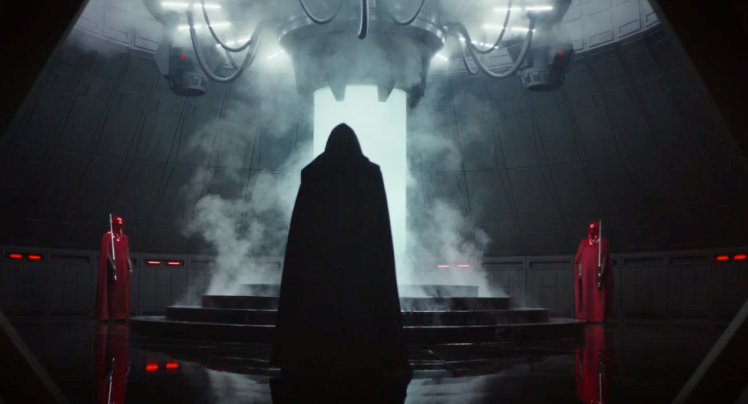
Why this sudden pearl-clutching over the politics of the Star Wars universe? There’s been a “final solution” tilt since the outset (they are called stormtroopers, after all), and Rogue One takes us back to when the Empire’s prized Death Star had yet to be completed.
As an act of conscience, Empire scientist Galen Erso (Mads Mikkelson) designed the Death Star with that fatal flaw that is exposed when viewing the original blueprints. It’s up to Galen’s daughter Jyn (Felicity Jones) and her band of rebel fighters to capture that file and ensure daddy’s flaw is exploited.
Sure, we know how it all turns out, but connecting those dots becomes a thrilling, thoughtful bit of fun.
Jones makes a fine hero: brave, righteous and naive – or, perfect for this series.
She and Mikkelson join a full slate of very talented character actors – from the genius Ben Mendelsohn to the under-appreciated Diego Luna to the up-and-coming Riz Ahmed. They’re part of an adventure that butts up against the New Hope, bridging tales swirling around that far away galaxy.
Like JJ Abrams’s The Force Awakens, Rogue One: A Star Wars Story peppers the action with welcome humor and continually reminds viewers of the film’s place – chronological and geographical – in the saga.
One or two of the tricks up director Gareth Edwards’s (Monsters, Godzilla) sleeve come up short, but the majority land with style. With his team of writers and a game cast, he takes us back to the height of the Empire’s smug attitude – their belief in their right to silence those who oppose them and dictate to a voiceless population with impunity.
It’s a clever, thoughtful slice of entertainment entirely apiece of the Star Wars history. It’s also a reminder that there is always hope.
They say bad things happen when the copier goes down.
When it’s fully operational at the Office Christmas Party …well, those aren’t TPS reports.
Clay (T.J. Miller) is the Chicago branch manager at a big tech company who wants to throw a Christmas party like his Dad did back in the days when employees “got drunk before noon.” Trouble is, since Dad died Clay’s sister Carol (Jennifer Aniston) is CEO and she wants to fill Clay’s stocking with budget cuts.
In fact, Carol might close the entire Chicago operation down unless Clay, Chief Tech Officer Josh (Jason Bateman) and IT wiz Tracey (Olivia Munn) can find a way to land the multi-million dollar account of Walter Davis (Courtney B. Vance). Their standard pitch to Davis is less than persuasive, so what’s left to do but impress him with office camaraderie at an epic holiday bash?
Despite warnings from an HR head (Kate McKinnon) who wants a non-denominational mixer and hangs up “think of your family” signs, the staff naughty list starts getting crowded.
The premise (from the guys behind The Hangover) seems a perfect fit for this talent-laden ensemble. It might fit too well, as even the steady amount of laughs the film lands feels a tad disappointing.
I mean, if you need a wisecracking nice guy, a mean-spirited boss with sarcastic bite, and a Tommy Boy for today, Bateman, Aniston and Miller should be on speed dial.
Plus there’s a break room full of winning side characters. From Karan Soni’s guy-with-an-imaginary-girlfriend to Rob Corddry’s embittered lifer to Jillian Bell’s curiously polite pimp and beyond, entertaining impressions are mined from limited screen time by people clearly trained to do just that. And McKinnon? There may not be a better scene-stealer around, and you’re afraid to look away for fear of missing even the subtlest of gags.
Directors Josh Gordon and Will Speck (Blades of Glory, The Switch) and their team of writers manage some passing nods to cutthroat corporate culture and political correctness, but thankfully don’t try to overthink things. Just let these ponies run. And though I’m guessing there was plenty of inspired improvisation (stay for the in-credits gag reel), even their best peaks can’t hide some valleys in the script.
But hey, it’s the holidays, be of good cheer and ride out them out for the payoffs. Office Christmas Party supplies them, even if, like that end of the year bonus, you were hoping for a little more.
Finally! We’ve been kicking this one around for a long time, but this week – with the help of Vince and Grant of the podcast In the Record Store – we finally tackle the best black and white films in horror.
What a list! We had no choice but to employ fuzzy math for this one, and even so we had to leave off so many greats – including some that Grant and Vince would have included.
6. Night of the Living Dead (1968)
From the brightly lit opening cemetery sequence to the paranoid power struggle in the house to the devastating closing montage, Night of the Living Dead teems with the racial, sexual and political tensions of its time. An unsettlingly relevant George A. Romero knew how to push societal panic buttons.
As the first film of its kind, the lasting impact of this picture on horror cinema is hard to overstate. Romero’s inventive imagination created the genre and the monster from the ground up.
They’re dead.
They’re back.
They’re hungry for human flesh.
Their bite infects the bitten.
The bitten will eventually bite.
Aim for the head.
Romero served as cinematographer for this project, likely choosing black and white as a cost saver, but we’d later learn that this format is 1) highly forgiving of zombie makeup, and 2) spookier. The color palette turns the Waltons-esque setting of the farm house into something isolated and sinister.
The shrill sense of confinement, the danger of one survivor turning on another, and the unthinkable transformation going on in the cellar build to a startling climax – one that utterly upends expectations – followed by the kind of absolutely genius ending that guarantees the film’s eternal position in the annals of horror cinema.
5. Eraserhead (1977)
There truly is no film quite like David Lynch’s first feature, eh?
Eraserhead defies simple summarization. Easily the most surreal of all Lynch’s films – which is a huge statement – the film follows sad-sack Henry Spencer (Jack Nance) dealing poorly with fatherhood.
The film becomes a nightmare of paternal angst and existential crisis – indeed, it may be impossible to name a film or filmmaker more able to bring a nightmare to life.
It’s also among the finest examples of corporeal horror you will find. The shadowy, grimy b/w photography – partially handled by Lynch’s longtime cinematographer Frederick Elmes – amplifies the dismal stagnation facing Henry.
At the same time, it gives a weird, nostalgic camp factor to the Lady in the Radiator and adds a particularly lurid element to that whole bleeding “chicken” thing.
Plus, the baby. Yikes. Alive with the most disturbing imagery, Eraserhead is impossible to forget.
4. Psycho (1960)
Among the four Oscar nominations the film garnered was one for John L Russell and his gorgeous black and white cinematography.
By 1960, most folks had abandoned black and white – including Hitchcock. But with his truest foray into horror, the master returned to the high contrast imagery for a number of reasons.
Sure, one of those was that it freed him up with the blood. Had all that stuff in the shower been red, he’d never have gotten away with it. Mrs. Bates wouldn’t have looked quite right, either.
Russell’s visuals also gave the film its lonesome American Gothic quality. Norman seemed more innocent, Marion Crane seemed more mysterious, and the old Bates house seemed spookier.
Of course, was there ever a question Hitch knew what he was doing?
3. Frankenstein (1931)
James Whale’s genius was in finding the monster fascinating, rather than the doctor. Nearly every other Frankenstein made before or since has been preoccupied with the doctor, but Whale understood that it was this unique beast, baby and man, evil and innocent, that should compel our interest. Who cares about one more doctor with a god complex?
Luckily for Whale, he had Boris Karloff. Karloff’s gift was in seeing the monster as a neglected child. His monster is sweet and tragic, characterized by the terrible freedom of a loosed child full of fear, unbridled excitement and shame. Karloff nails this childlike energy and ignorance married to a grown man’s strength in a way that no other actor truly has.
Obviously, in 1931 Whale had no choice but to film in black and white, but how fascinating that a movie without color created a green monster. What a testament to the film’s vidid imagery – created with the help of make-up guru Jack Pierce. A nightmare of greying flesh, black stitches and mechanical pieces, this image of the monster speaks of death, mad science and bad intentions.
https://www.youtube.com/watch?v=McUce_xwxeA
2. Nosferatu (1922)
Not the seductive, European aristocrat, cloaked and mysterious, oh no. With Count Orlock, filmmaker F. W. Murnau explores something more repellant, casting an actor who resembles an albino naked mole rat.
Given that Murnau equates the film’s vampire-related deaths with the plague, this vermin-like image fits well. But more than that, thanks to a peculiarly perfect performance by Max Schreck, Murnau mines the carnality of the vampire myth for revulsion and fear rather than eroticism.
Murnau’s gift was not solely in casting. The shadows danced, the dead rose and Europe writhed with the dead and dying. His skill with the camera was unparalleled. Between his casting and his camera, he made the most authentic vampire movie – perhaps ever.
Sure, the silent film style of acting appears nothing short of quaint today, and the Dracula tale has been told too, too often at this point. But Max Schreck is a freak, and in his bony, clawlike hands, Count Orlock remains the greatest vampire ever undone by a sinless maiden.
https://www.youtube.com/watch?v=sk70lSUqaM8
1. The Bride of Frankenstein (1935)
James Whale and Boris Karloff – with tag along make-up man Jack Pierce – returned to Castle Frankenstein for an altogether superior tale of horror. What makes this one a stronger picture is the dark humor and subversive attitude, mostly animated by Frankenstein’s colleague Dr. Pretorius (Ernest Thesiger).
Thesiger’s mad doctor makes for a suitable counterpart to the earnest and contrite Henry Frankenstein (Colin Clive, again), and a sly vehicle for Whale. This fey and peculiar monster-maker handles the most brilliant dialogue the film has to offer, including the iconic toast, “To gods and monsters.”
The sequel casts off the earnestness of the original, presenting a darker film that’s far funnier, often outrageous for its time, with a fuller story. Karloff again combines tenderness and menace, and Elsa Lanchester becomes the greatest goth goddess of all film history as his Bride.
Before it makes a hard left turn down Lifetime Lane, Man Down sets a decent hook. The cast is uniformly splendid, while director/co-writer Dito Montiel displays some effective understatement in the early going, establishing a confidence in the destination that he can’t quite reward.
Shia LeBeouf is outstanding as Gabriel Drummer, a Marine searching for his son in a near future ravaged by some manner of deadly outbreak. Teamed with fellow Marine and boyhood buddy Devin Roberts (Jai Courtney), Gabriel scours the terrain for any survivor who might have seen his little boy.
Slowly, Montiel weaves in the backstory, with flashbacks to bootcamp, a happy home life with wife Natalie (Kate Mara), dangerous patrols in Afghanistan and sessions with a Marine counselor (Gary Oldman) who gently pushes a shaken Gabriel to talk about “the incident.”
LeBeouf, regardless of his personal antics, can deliver the goods. Though his character’s arc isn’t presented in linear fashion, LaBeouf mines the resonant layers. Gabriel’s early naivete, hardened intensity and haunted conscience are all fleshed out, while the separate angles LaBeouf employs in intimate scenes with Mara and Oldman (both stellar) buoy all three performances.
Montiel (Fighting, Robin Williams’s final film Boulevard) again has fine intentions, but is too content to satisfy them with dated predictability. What he’s saying isn’t new, and how he’s saying it is even less so. You’ll most likely guess one major plot revelation early on, then sense the other coming with an “are we going there – yes, I guess we’re going there” type of dread.
There are interesting characters here and fine actors to inhabit them. They just need somewhere equally interesting to go.
Thirteen years after showing us that it’s probably not a candy cane in his pocket, Bad Santa is back for more naughtiness.
Thirteen years, really?
Yep, which is just one of the reasons BS2 smells more like desperation than inspiration.
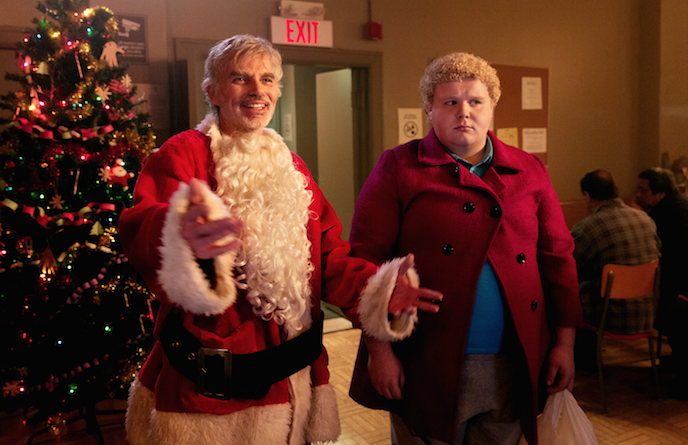
The always charming Willie Soke (Billy Bob Thornton) is trying to end his miserable life when Thurman Merman (Brett Kelly) walks in to offer him a sandwich and let Willie know that his old friend Marcus needs a meeting pronto.
Marcus (Tony Cox) says there’s an easy score of at least 2 million bucks waiting at a charity in Chicago. All they have to do is put the old suits back on, ring some bells for donation money and then rob the safe on Christmas Eve. Once in Chi-town, Willie learns the part Marcus left out. They’ll be working with Willie’s long-estranged and equally charming mother Sunny (Kathy Bates), who has organized the whole plan.
Then Thurman makes the trip from Arizona to be with Willie on Christmas, and the gang is back together!
Well, some of the gang, but not nearly enough.
Part one was more than just a hilariously shocking mix of the sacred and the profane. Director Terry Zwigoff and original writers Glenn Ficarra and John Requa put some subversive social commentary alongside distinct supporting characters that were perfectly fleshed out by the likes of John Ritter and Bernie Mac.
BS2 finds director Mark Waters (Mean Girls, Vampire Academy) and a new writing team not thinking any deeper than being crude and having Kathy Bates in the cast. The characters are thin, the plot is contrived and few of the jokes find a mark. Worse than that, the bad boy charm from BS1 is long gone, replaced with an unsavory streak of mean.
And then there’s Thurman Merman. He was the MVP of Bad Santa, so you can’t really have a sequel without him, yet there’s no way to recreate that magic. Thurman was 8 back then, and his unending belief in a “bad” Santa created a sweet conflict that felt impossibly real and drove the film. Sure, it’s a kick to see him at age 21 but beyond that, the writers can’t seem to decide how the character fits in anymore.
Much as I wanted to believe in Bad Santa 2, it’s just too much of an empty suit.
It’s been too long since we took a trip around the world to see how certain corners view horror. Today we head to the cluster of chilly Norse and Scandinavian countries to seek trolls, wolves, Nazi zombies – and to steer clear of household tools, if possible.
5. Trollhunter (2010) (Norway)
All ancient cultures generated fairy tales. They passed on stories that wrapped the virtues most respected at the time inside common dangers to tell tales of heroism and humor. Norway’s fairy tales all involve trolls. Indeed, their entire national culture seems weirdly identified with trolls. Why is that? Well, writer/director Andre Ovredal’s Trollhunter suggests that maybe it’s because trolls are a real problem up there.
Ovredal’s approach is wry and silly – adjectives that rarely hang out together, but maybe we haven’t seen enough of Norway’s cinematic output. The FX are sometimes wonderful, and especially effective given the otherwise verite, documentary style. Ovredal makes droll use of both approaches.
Trollhunter is definitely more comedy than horror, as at no time does the film actually seek to scare you. It’s a wild ride into a foreign culture, though, and it makes you think twice about the Norway section of Epcot, I’ll tell you what.
https://www.youtube.com/watch?v=vy2nAOdBUlw
4. Dead Snow (2009) (Norway)
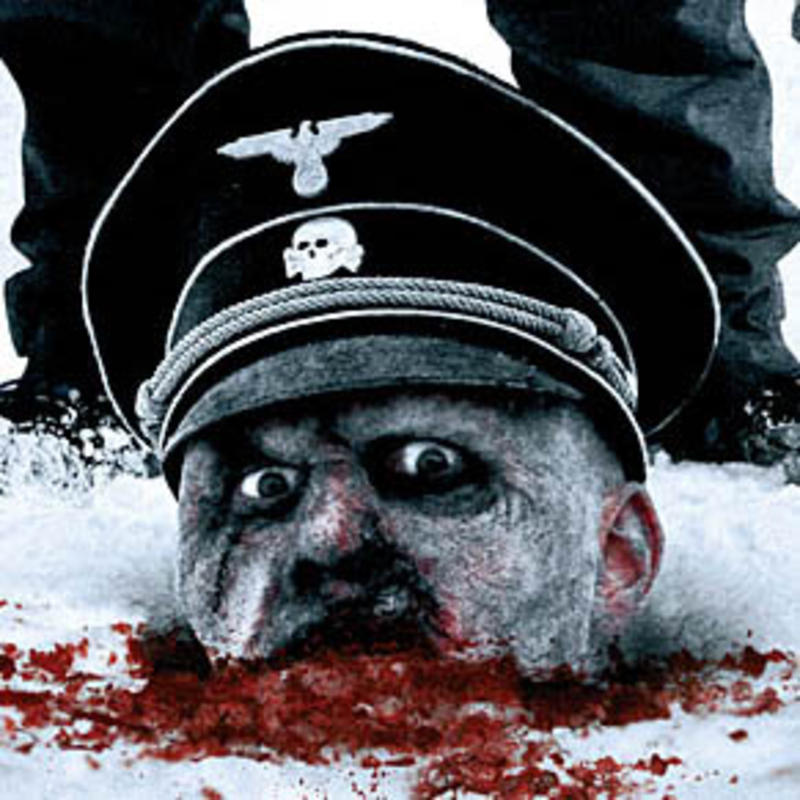
Nazi zombies, everybody! Hell yes!
Like its portly nerd character Erlend, Dead Snow loves horror movies. A self-referential “cabin in the woods” flick, Dead Snow follows a handsome, mixed-gender group of college students as they head to a remote cabin for Spring Break. A creepy old dude warns them off with a tale of local evil. They mock and ignore him at their peril.
But co-writer/director/Scandinavian Tommy Wirkola doesn’t just obey these time-honored horror film rules, he draws your attention to them. His film embraces our prior knowledge of the path we’re taking to mine for comedy, but doesn’t give up on the scares. Wirkola’s artful imagination generates plenty of startles, and gore by the gallon.
Spectacular location shooting, exquisite cinematography, effective sound editing and a killer soundtrack combine to elevate the film above its clever script and solid acting. Take, for example, the gorgeous image of Norwegian peace – a tent, lit from within, sits like a jewel nestled in the quiet of a snowy mountainside. The image glistens with pristine outdoorsy beauty – until it … doesn’t.
3. Antichrist (2009) (Denmark)
Saturated in the cinematic equivalent of melancholy poetry, punctuated with truly, deeply shocking moments of violence and brutality, Lars von Trier’s Antichrist takes the cabin-in-the-woods horror to brand new places, sharing his auteur cred with the horror genre.
A nameless couple (Willem Dafoe and Charlotte Gainsbourg) is wracked with grief after the death of their young son. They retreat to their remote cabin, hoping to speed the healing process. Things do not go well.
Dafoe and Gainsbourg give terrific, courageous performances. They are the only two actors onscreen for 99 percent of the film, and they do not shrink from the challenge. These are deeply flawed characters, and the performances are haunting.
Von Trier’s film is so gorgeous to see and so punishing to watch, the result is an amazing if bruising experience. His tone ranges from somber to insane, and one or two of the more vivid weirdisms feel terribly out of place. But there is no forgetting Antichrist, hard as you may try.
2. Hour of the Wolf (1968) (Sweden)
An atmospheric masterpiece, Ingmar Bergman’s meditation on artistic conflict and regret is a haunting experience.
Bergman favorites Max von Sydow and Liv Ullman are a married couple spending time on an isolated, windswept island. Ullman’s Alma is pregnant, and her relationship with her husband becomes strained as his time and attention become more and more consumed by visions, or demons – or maybe they’re just party people.
Von Sydow’s character is tempted with the decadence missing from the wholesome life that may be dissatisfying to him. But it’s Ullman, whose performance spills over with longing, that amplifies the heartbreak and mourning that color the entire film.
Shot in incandescent black and white, with Bergman’s characteristic eye for light and shadow, Hour of the Wolf is a glorious, hypnotic nightmare.
1. Let The Right One In (2008) (Sweden)
In 2008, Sweden’s Let the Right One In emerged as an original, stylish thriller – and the best vampire flick in years. A spooky coming of age tale populated by outcasts in the bleakest environment, the film breaks hearts and bleeds victims in equal measure. Kare Hedebrant‘s Oskar, with his blond Prince Valiant haircut, falls innocently for the odd new girl (an outstanding Lina Leandersson) in his shabby apartment complex. Reluctantly, she returns his admiration, and a sweet and bloody romance buds.
As sudden acts of violence mar the snowy landscape, Oskar and Ali grow closer, providing each other a comfort no one else can. The film offers an ominous sense of dread, bleak isolation and brazen androgyny – as well as the best swimming pool scene perhaps ever. Intriguingly, though both children tend toward violence – murder, even – you never feel anything but empathy for them. The film is moving, bloody, lovely and terrifying in equal measure.
Even if you had a good time in high school, let’s be honest. Would you really want to go back?
Doubtful. And The Edge of Seventeen is another reminder that one time through a battlefield littered with drama, hormones, benzoyl peroxide and general awkwardness is plenty, thanks.
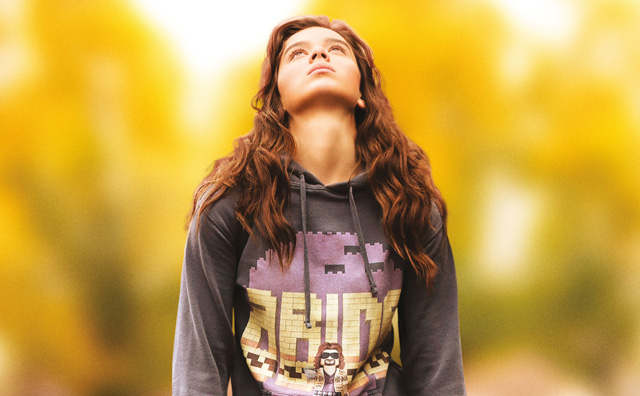
Oregon teen Nadine (Hailee Steinfeld) is navigating that struggle with a standard mix of panic and self-absorption. She feels like a social outcast, is convinced she’s an old soul, resents the golden boy status of her older brother Darian (Blake Jenner) and has one real friend in Krista (Haley Lu Richardson). Just as Nadine is plotting a strategy to catch the eye of her crush Nick (Alexander Calvert), she catches Krista and Darian canoodling, and dramatically issues the “him or me!” ultimatum.
It doesn’t go well.
In her debut as writer/director, Kelly Fremon Craig crafts a “Nora Ephron for teens” type of vibe, and buoys Steinfeld’s terrific lead performance with just enough refreshing frankness to offset the standard teen cliches.
We get voiceover narration, forced quirkiness and the nice boy who waits while Nadine chases the bad boy, but we also get commitments to a layered main character and complicated relationships. Nadine doesn’t give us many reasons to like her, and though you know this is going to change, her journey to the edge of maturity feels more real than most.
Her theatrics are undercut by the amusing reactions of Mr. Bruner (Woody Harrelson), a history teacher who’s seen way too much of her kind and is more concerned about Nadine’s run-on sentences than her latest social suicide. After dismissing Bruner as an out of touch fogey, Nadine’s peek inside his home life is an effectively subtle wake up.
Even better, Fremon Craig uses the friction between Nadine and Krista as a nice metaphor for leaving childhood things behind and moving on.
The Edge of Seventeen is not without its own growing pains, but much like Nadine, it accumulates enough moments of depth for a well-earned resonance.
Horror loves it some weirdos – and so do we! Be honest, Carrie would not have done nearly so much damage had she fit in somehow, right?
Oh, Carrie – how we love you and your nutcase of a mom. And the White women are hardly alone. Freaks and misfits litter the horror cinema landscape – and thank God for it! Whether Edwin Neal – the hitchhiker and harbinger of what’s to come in West Texas – or an unseemly Pit Bukowski, white gown and katana bedecked in Der Samurai.
You want to get really weird? How about anybody from Calvaire? Possession’s swinging Heinrich? Let’s not forget our favorite prom non-goer, The Loved Ones’ Lola (Robin McLeavy).
And these aren’t even the best. Who are the five best weirdos in horror cinema?
5. Orlok (Willem Dafoe) Shadow of the Vampire (2000)
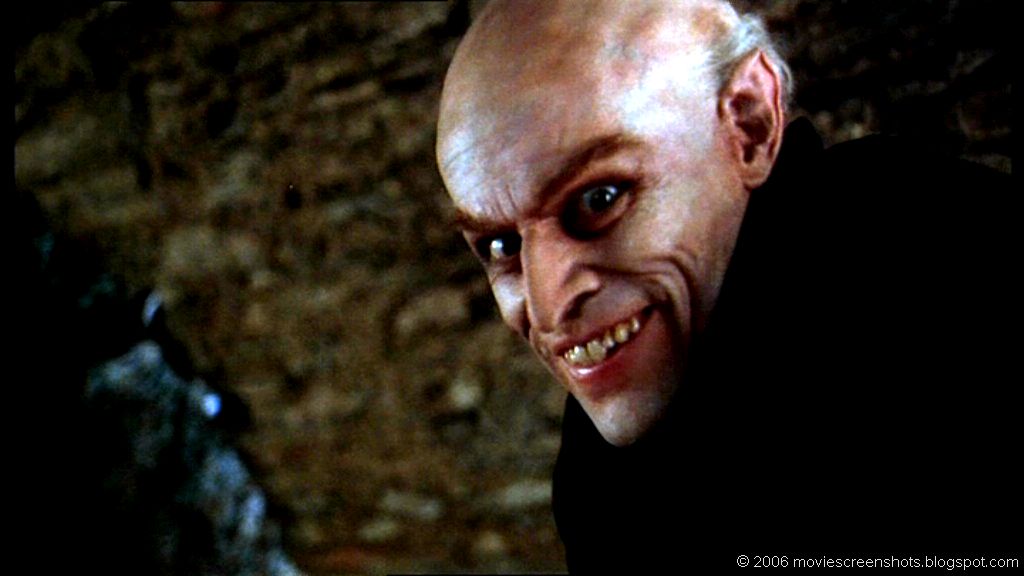
Veteran actor/effortless weirdo Willem Dafoe picked up an Oscar nomination playing Max Schreck, the “actor” who portrayed vampire Count Orlock in FW Murnau’s groundbreaking 1922 film Nosferatu.
Shadow film pokes good natured but pointed fun at the industry, but it’s based on the rumor at the time that Schreck’s performance was so authentic because he was, indeed, a vampire.
Dafoe is odd as they come, and also heartbreaking, goofy, lovable, wounded and terrifying.
4. Ichi (Nao Ohmori) Ichi the Killer (2001)
Clearly someone from a Takashi Miike film was bound to make this list. Indeed, just about every character in this film would have been in contention. But no one out-weirds Ichi.
A man-child who’s equal parts sympathetic and repellant, Ichi does the bidding of those who care for him. Their moral compass does not always point North, though they try to do the right thing by letting Ichi unleash his very, very wrong behavior in a kind of, sort of heroic way.
Which is why some of his actions are so profoundly, scarringly surprising. Because Ichi does some seriously fucked up shit. And he’s not even the one who skins a guy alive.
3. May (Angela Bettis) May (2002)
Oh, Angela Bettis. No one – not even Sissy Spacek – captured the crushing awkwardness of trying to fit in when you are, deep down, cripplingly odd as well as Bettis.
Her May aches for a friend. She has some heartbreaking trouble finding that in Adam (Jeremy Sisto) and Polly (Anna Faris – brilliant). But if you can’t find a friend, you might just have to make one.
Her performance is all awkward pauses, embarrassing gestures and longing. It’s beautiful, tender, sweet and – eventually – forgivingly bloody. We love May.
2. Bubby (Nicholas Hope) Bad Boy Bubby (1993)
Christ, kid, you’re a weirdo.
Writer/director Rolf de Heer explores something amazing in his Aussie arthouse horror Bad Boy Bubby. Bubby has spent his entire 30 years in a single, windowless room with Mam. She leaves now and again, affixing a gas mask and warning the boy that he’ll die if he sets foot outside.
No, things aren’t that great for Bubby. They’re even worse for Cat. When Bubby eventually has to meander out into the open, his adventure is so authentically pieced together. He assimilates information and behaviors with the perfect sense of childishness.
Nicholas Hope’s performance is a minor miracle in a film that is wild, disturbing and pretty amazing.
1. Big Ronnie (Michael St. Michaels ) Greasy Strangler (2016)
Honestly, just about anybody from this film might have made the list. Big Brayden (Sky Elobar) was an obvious possibility. Those glasses! And he’s shit scared!
But it’s Big Ronnie (or is it Private Eye Jodie?!) who earns the accolade. Yes, he may be a bullshit artist, but that smile, the disco suit, the “big rat,” – let’s not even get started on his diet or hygiene. We’d never have thought of using a carwash quite that way, and yet we will never be able to think of it otherwise again.
Big Ronnie is the Weirdo All Star. Celebrate with some potato chips?
All the single ladies, all the single ladies – unfortunately, life does not always turn out as well for us as it does for Beyonce. Today we celebrate and fear the horror that can befall the single parent. Your kids may be monsters. Monsters may be after your kids. You may be the monster. Maybe it’s all three at once. Whatever the case, horror filmmakers have found a way to hit some very effective buttons when exploring the horror potential in a single parent home.
5. The Ring (2002)
Let’s be honest, Rachel (Naomi Watts) is not much of a mother. Were it not for her sloppy parenting, her precocious son Aidan (adorable and creepy David Dorfman) might not even be in this mess. But she left her VHS tape laying around, paid no attention to what he was up to, and now Samara is coming for him.
Gore Verbinski one-upped Hideo Nakata’s 1998 Japanese original Ringu with this deeply creepy, well-executed nightmare, much of it centering on questionable parenting. Both Watts and Dorfman are excellent, each creating a character that is somehow rigid and distant, but you long for tenderness between them. Dorfman’s wise-beyond-his-years performance feels both chilly and vulnerable, and the relationship here creates an off-kilter foundation for the horrific mystery unfolding.
Everything about this film is done well – the images on the video tape, the looks on the faces of the victims, that horse bit on the boat, Brian Cox in the bathtub, Samara climbing out of the well! Verbinski strings together one nightmare image after another, but the tension of whether or not Rachel has the wherewithal to save the son she hasn’t paid enough attention to in the first place is what holds these together.
https://www.youtube.com/watch?v=_PkgRhzq_BQ
4. Goodnight Mommy (2014)
There is something eerily beautiful about Severin Fiala and Veronika Franz’s rural Austrian horror Goodnight Mommy (Ich seh, Ich seh).
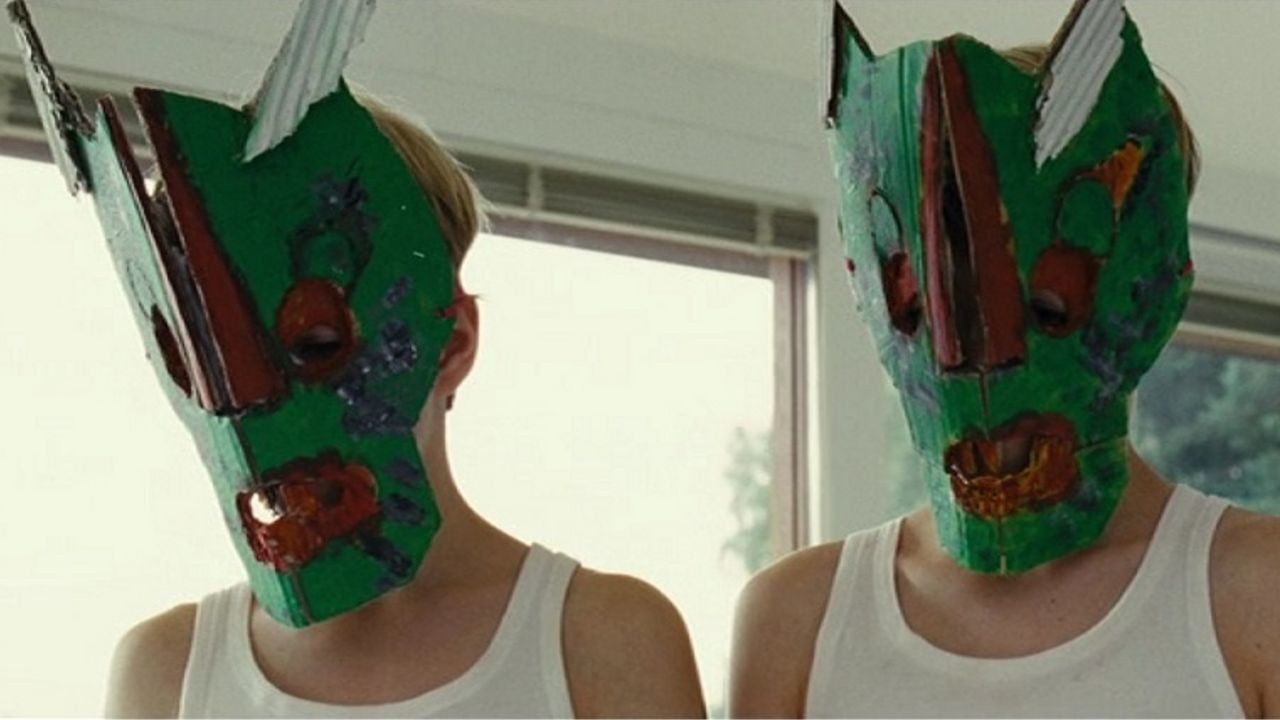
During one languid summer, twin brothers Lukas and Elias await their mother’s return from the hospital. But when their mom comes home, bandaged from the cosmetic surgery she underwent, the brothers fear more has changed than just her face.
Inside this elegantly filmed environment, where sun dappled fields lead to leafy forests, the filmmakers mine a kind of primal childhood fear. There’s a subtle lack of compassion that works the nerves beautifully, because it’s hard to feel too badly for the boys or for their mother. You don’t wish harm on any of them, but at the same time, their flaws make all three a bit terrifying.
Performances by young brothers Lukas and Elias Schwarz compel interest, while Susanne Wuest’s cagey turn as the boys’ mother propels the mystery. It’s a hypnotic, bucolic adventure as visually arresting as it is utterly creepy.
3. Under the Shadow (2016)
The tale is set in Tehran circa 1988, at the height of the Iran/Iraq war and just a few years into the “Cultural Revolution” that enforced fundamentalist ideologies.
Shideh (a fearless Narges Rashidi) has been banned from returning to medical school because of her pre-war political leanings. Her husband, a practicing physician, is serving his yearly medical duty with the troops. This leaves Shideh and their young daughter Dorsa (Avin Manshadi) alone in their apartment as missiles rain on Tehran.
When a dud missile plants itself in the roof of the building (shades of del Toro’s Devil’s Backbone), Dora starts talking to a secret friend. Maybe the friend would be a better mommy.
Frazzled, impatient, judged and constrained from all sides, Shideh’s nerve is hit with this threat. And as external and internal anxieties build, she’s no longer sure what she’s seeing, what she’s thinking, or what the hell to do about it.
The fact that this menacing presence – a djinn, or wind spirit – takes the shape of a flapping, floating burka is no random choice. Shideh’s failure in this moment will determine her daughter’s entire future.
https://www.youtube.com/watch?v=4fhejr94P14
2. Psycho (1960)
Was Norman Bates psychotic from the start? Or was he smothered into madness by his mother?
Hard to say – Mrs. Bates can’t speak for herself, can she? Although Norman’s mother is not a character in Hitchcock’s classic, her presence is everywhere. But to be fair, we don’t get to see her as she was, we only get to see her as Norman sees her.
Whatever the case, Norman has an unhealthy attachment to his late mother, a single parent whose relationship with her son may have driven him to some very bad deeds. Part of Hitchcock’s skill in this film is to play with our expectations of the characters.
The heroine has done some questionable things. The villain is the most sympathetic character onscreen. The most relevant character in the story isn’t even in the film. Was Mrs. Bates really a bad mom, or does she just seem like that to us because we see her through Norman’s eyes, and he’s a psycho?
1. Babadook (2014)
You’re exhausted – just bone-deep tired – and for the umpteenth night in a row your son refuses to sleep. You let him choose a book to read, and he hands you a pop-up you don’t recognize: The Babadook. Pretty soon, your son isn’t the only one afraid of what’s in the shadows.
Filmmaker Jennifer Kent’s film is expertly written and beautifully acted, boasting unnerving performances from not only a stellar lead in Essie Davis, but also the alarmingly spot-on young Noah Wiseman. Davis’s lovely, loving Amelia is so recognizably wearied by her only child’s erratic, sometimes violent behavior that you cannot help but pity her, and sometimes fear for her, and other times fear her.
Likewise, Wiseman delivers as a tender, confused, dear little boy you sometimes just want to throttle. Their naturalistic performances genuinely showcase the baggage that can exist between a parent and a child.
Much of what catapults The Babadook beyond similar “presence in my house” flicks is the allegorical nature of the story. There’s an almost subversive relevance to the familial tensions because of their naked honesty, and the fight with the shadowy monster as well as the film’s unusual resolution heighten tensions.
The film’s subtext sits so close to the surface that it threatens to burst through. Though that does at times weaken the fantasy, it gives the film a terrifying urgency. In the subtext there is a primal horror, a taboo rarely visited in film and certainly never examined with such sympathy. Indeed, the compassion in the film may be the element that makes it so very unsettling.