Tag Archives: Christie Robb

Growing Strong

Beans

by Christie Robb

Adolescence is hard. It’s beset with conflicts and struggles that come from all directions—society, parents, peers, your own body… In Tracey Deer’s Beans, we see Tekahentakwa’s (nicknamed Beans) coming-of-age narrative, well, a slice of it anyway. She’s coming up on her seventh-grade year and contemplating a move from her neighborhood school to Montreal’s posh Queen Heights Academy.

The posh and majority-white Queen Heights Academy.

Which is more than usually fraught because Beans is a Mohawk and the Mohawks are fighting to keep White Quebecois developers from expanding a golf course onto a Mohawk cemetery.

Inspired by the true events of the Oka Crisis aka Kanesatake Resistance of 1990, Beans is a mix of archival news footage and fictional drama.

What begins as a peaceful protest at the cemetery turns violent once a riot squad shows up and starts lobbing tear gas at the protestors. A police officer is killed, which leads to a stand-off. Mohawks and white police face each other behind barricades. Beans’s town is cut off from supplies, leaving it more or less under siege.

The details of the stand-off are a little unclear, the way world events can seem when you are in middle school. What Beans experiences is a betrayal of white adults. They fail to live up to their roles in the social system she thought she was living under. Shop keepers won’t sell groceries to “her kind.” Police won’t protect a car full of women and children from folks throwing rocks. People scream obscenities and spit at her adorable kid sister.

In the midst of this, Beans is trying on possible versions of her adult self. She meets an older, more contemptuous, teenage mentor and seeks advice on how to toughen up. She abandons her baggy 90s overalls and braids and experiments with side ponytails, crop tops, and lipstick. She practices swearing in front of the mirror. She learns more about administering violence and suffering it.

As tensions with the developers and government mount, Beans’s life grows increasingly complicated, forcing her to make choices and figure out the type of person she wants to be.

The cast delivers authentic performances. As Beans, Kiawentiio nails the vulnerability covered with a brittle armor of cynicism that I remember from middle school. Paulina Alexis does a great job as the tough older girl who has been through some shit. And Rainbow Dickerson shines as the ultimate adult role model—strong and nurturing, and able to let loose with the lecture to kids and adults alike.

As a monolingual person from the States, I would have appreciated subtitles for the French language news footage and a little bit more context on how the Mohawks and the Canadian Government came to a resolution. But, overall, Beans is a moving coming-of-age story that depicts many strong First Nations women. This is Tracey Deer’s first feature film and I look forward to seeing what’s next.


It’s All Fun and Games Until You Stare Into the Void

The Spine of Night

by Christie Robb

The Spine of the Night is a rotoscope-animated feature that presents a pseudo-H. P. Lovecraft story of humanity’s cosmic insignificance in the visual style of a higher-budget He-Man cartoon.

The film is mostly the backstory of a formidable, almost-naked, swamp queen who has trekked up the face of a mountain. She’s come to swap tales with a Guardian sworn to protect humanity from confronting its own vulnerability in the face of a vast and indifferent universe.

He’s guarding a blue flower that makes folks trip balls and contemplate the cosmic void. But a seed got away from him and floated to the fertile earth of the swamp. With the knowledge of the void comes magic power.

And humanity’s quest for this power has caused no end of trouble.

Like Lovecraft’s stories, the Spine of the Night has a slow, dreamy pace. The art style pays homage to the otherworldly and provocative covers of vintage pulp fantasy/horror novels, but with a welcome understanding that not all women are proportioned like Barbie dolls, and with more diversity in the race/ethnicity of its characters.

The theme of humanity’s fragility is underscored in the movie’s violence. Skin parts and limbs break off with the ease of a tortilla chip placed under the pressure of a slightly viscous dip. Viscera are just waiting to pop out of the body’s private cavities like trick snakes in a can of faux potato chips. People are cleaved in half.

Writer/directors Philip Gelatt and Morgan Galen King have assembled a roster of voice talent that helps bring the characters to life. Is there a better choice to play a badass swamp queen who is impervious to frostbite than Lucy Lawless? I don’t think so. Joining Lawless are Richard Grant as the Guardian, Joe Manganiello as the beefy soldier Mongrel, Betty Gabriel as a warrior-librarian, and Patton Oswalt as the whiny and entitled Lord Pyrantin.

As a child of the eighties, I was left feeling swaddled in nostalgia by Spine of the Night, wanting to pair it with some cozy PJs and a bowl of sugary cereal.

Performing Without a Safety Net

Runt

by Christie Robb

It’s a truth universally acknowledged that high school students are dumb.

It’s not their fault. The part of the brain that supports decision-making isn’t fully developed until the mid-twenties. And that’s ideally why society surrounds the impulsive little beasties with grownups who can model positive behavior and counsel them about their choices.

Director William Coakley’s Runt shows a good kid, Cal, trying to navigate the tightrope of high school and arrive safely at art school. But he’s working entirely without a safety net.

His single-parent mom is either at work or asleep. His teachers are the kind of folks who will yell at him for being obvious when he breaks and lets the jocks cheat off him. His best friend is an increasingly self-destructive embarrassment. His manager at the supermarket is always on his butt. The only living being that has his back at all is his dog, Runt.

Right from the jump, you know this isn’t going to end well.

Over the course of the film, Cal’s relationship with the jock bullies becomes increasingly violent. The tea of toxic masculinity that they are all steeping in leaves no room for apologies. The cycle of violence feeds on the overall negative energy until, toward the end, it feels like you are watching the birth of a supervillain.

Cameron Boyce as Cal is fantastic. You can see all the nuances of the different emotions that play over his features. The mixture of pride, shock, and guilt that flash across his face after he impulsively does something that Cal never thought he would do is awe-inspiring. The entertainment industry truly lost a promising talent when Boyce died in 2019.

The film’s ending somewhat undercuts what seems to be the intended message. There’s a tinge of romanticism in the very final moments that gives Cal’s violence a more heroic feel than what the rest of the movie seems to be going for.

But as a portrait of what’ll make an art kid snap, it’s pretty good.

How the Sausage Gets Made

Ascension

by Christie Robb

If the makers of Black Mirror made a documentary, I imagine it would feel a lot like Jessica Kingdon’s Ascension.

Presented with no voice-over, written narrative, or expert interviews, the film traces Chinese capitalism from cattle-call like recruitment fairs for entry-level factory work, to shots of machines spitting out piles and piles and piles of single-use plastic doodads, through military-inspired company cultural training exercises for middle managers, to seminars aimed at budding entrepreneurs trying to “monetize [their] personal brand.” The film hits its social apex as a group of youngish elites dine on French pastries while discussing exactly how much knowledge a government should allow its citizens in order to be globally competitive.

With arresting and disorienting camera positions, sharp cuts, and an anxiety-producing soundtrack that would elevate any horror movie, the alienating effect of consumerism is more than carried across.

What we are hearing sold is a Chinese version of the “American Dream,” in which there is a promise of wealth distribution to those who “deserve it.” But what we are seeing is the cost of that dream.

It’s a nightmare of repetitive work, managerial corruption, and alienating corporate propaganda. Employees are encouraged to work harder and faster than sanity would indicate is advisable. All knowledge must be monetized. Families must be deprioritized. Relationships are reduced to whether you are influenced or influencing.

At one point, a CEO delivers a presentation and mentions that China has the potential to be five times the consumer that America is. By that point in the film, the line might as well be underscored by the shrieking violin in Hitchcock’s Psycho.

It inspires nightmare images of the future. The human race drooling incapacitated in front of a screen buried in an ocean’s worth of water bottles in the best-case scenario. Or being whipped by a screaming boss demanding you to make more water bottles faster in an unregulated and perilous working environment.

This isn’t to say the film is completely without humor. The funny moments are just…well…dark. At one point a photographer is barking orders while snapping shots of an influencer on the pristine lawn of a resort. She complains bitterly of the heat, “I can get a heatstroke out here.” Meanwhile, a laborer squats a little ways down the lawn painstakingly removing each invading weed by hand.

It’s heavy-handed, but Christ on a container ship, Ascension is effective.

Dark Academia

Detention

by Christie Robb

Dead Poet’s Society meets Pan’s Labyrinth in John Hsu’s Detention, based on a 2017 2-D video game.

Set in 1960s Taiwan, the state is under martial law. Reading communist and other left-leaning books is punished severely—in some cases by death. In the midst of this repression, two high school teachers start a secret book club that meets in a storeroom and introduces students to works of “subversive literature.” One of the students narcs on the group, unleashing government-sanctioned violence upon the school.

The story unfolds in several parts. “Nightmare” starts with two of the students waking up in the now-empty and somewhat dilapidated school building, unaware of how they got there and what happened before they went to sleep.  The students are literally haunted by their own recent past. Some of the horror tropes are familiar: long, vertigo-inducing, ill-lit hallways, creepy girls with hair hanging in front of their eyes, fairly effective jump scare. This section seems to be most heavily influenced by the videogame source material. What is particularly effective here is a literal embodiment of the repressive state that menaces the corridors.

The section “The Whistleblower” shows the events that led to the outing of the book club. It takes an onion-peeling approach, showing the motivations and potential culpabilities of various participants, layer by layer. Awe-inspiring and sadly realistic how so much deplorable violence can result from the banal foibles of adolescents and their ever-so-slightly older teachers.

“The Ones Who Live” establishes the thesis of the work, that it’s important for those who live on to remember and admit to mistakes made in the past. As long as there are people living, there is hope.

Well-acted, with cinematography and sound design that keep us poised for scares, Detention does a wonderful job delivering a SpooOOooOOky season movie while also conveying a message about the price of freedom and liberty.

Must Be Adjacent to the Hotel California

The Nowhere Inn

by Christie Robb

Ever wondered what a mock music documentary directed by David Lynch would feel like?

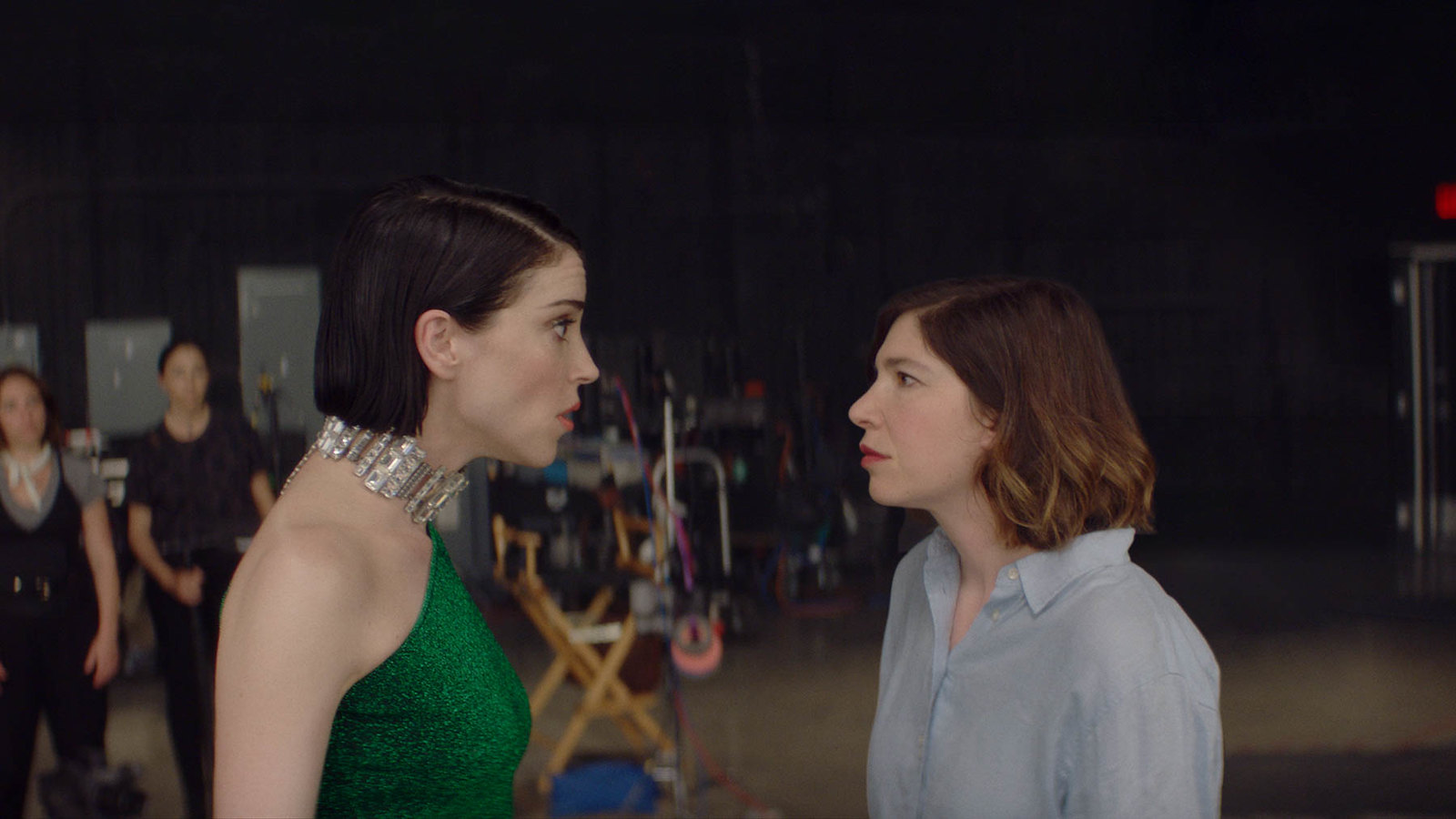
Bill Benz’s The Nowhere Inn is a hybrid of St. Vincent tour footage and a deconstruction of the concept of identity, written by real-life friends Annie Clark (St. Vincent) and Carrie Brownstein (Portlandia, Sleater-Kinney).

Ostensibly a music documentary of a St. Vincent tour put together by Annie and her best friend/director Carrie, the goal of the project is to show fans who Annie Clark really is and give Carrie a chance to dig herself out of a career rut.

Quickly, Carrie tires of Annie’s life off stage, which consists of Pilates, playing scrabble with bandmates on the bus, and searching around tour locations for farmers’ markets to purchase healthy road snacks. Carrie asks Annie to zhuzh it up a bit to make the film more interesting.

And the offended Annie delivers.

As Annie’s behind-the-scenes self merges with that of her stage persona, the film takes on a more ominous tone. It combines elements of a music video with comedy and thriller/horror. (And even amateur pornography in a fun little scene with Dakota Johnson playing an expensive lingerie-wearing fictional Dakota Johnson.) Ultimately, the movie becomes surrealist as it grapples with the nature of identity, friendship and authenticity.

The cinematography is often painterly with vibrant colors contrasted against velvety blacks. This is mixed with somewhat grainy “archival” footage, filmed St. Vincent performances, and reality TV-style confessional interview footage. The fact that we don’t get lost in all this is a win for the editing department.

Annie Clark shows an impressive acting range, from nerdy awkwardness to lonely vulnerability, aloof artist to menacing narcissist. She’s also got a sense of comedic timing that can keep up with the bone-dry Brownstein.

Although the thesis is somewhat belabored and some of the subplots don’t particularly go anywhere, The Nowhere Inn is an interesting place to find yourself.

O Brave New World

The Colony

by Christie Robb

Director/co-writer Tim Fehlbaum’s The Colony (originally titled Tides) is a new entry into science fiction’s grand tradition of working out issues of the past and present in imagined future contexts.

In this one, Earth’s elites packed into spacecrafts and blasted away from a planet wrecked by climate change, pandemics and war. (Imagine!)

They settled on a planet called Kepler 209, which provided a temporary refuge. While they could survive there, radiation had an impact on fertility and, two generations in, no children were being conceived by a now-aging population.

So, once the Keplerians got some data from beacons they’d left back on Earth that their home planet may have healed somewhat, they sent a reconnaissance party called Ulysses 1 to scout out the situation and see if Earth was safe to return to and, hopefully, procreate on.

They never heard from U1.

Some years later, they scraped together the resources and sent U2 with a small crew including Louise Blake (Nora Arnezeder), the now-grown daughter of a missing astronaut from U1. Blake’s crash to Earth is where the Colony begins.

From the moment she impacts the surface, things are grim. Crewmembers are inured. Some die.

There’s a perpetual and inhospitable fog that obscures the landscape rendering Blake unable to get a clear picture of her surroundings. And this thematically fits, as this initial slow-burn of a movie is all about Blake charting the lay of the land on this new Earth.

She’s not alone.

But exactly who she is sharing space with and whether their interests are aligned is something that Blake has to explore and uncover. As the movie progresses, the pace increases incrementally and the stakes get higher as Blake needs to decide what she stands for and whose side she is on.

It’s interesting how it works with the themes of colonization in a tweaked context.

The Colony is a good offering. It’s not perfect. Communication between different groups is managed with way too much ease. The plot is somewhat predictable. One character is so much without agency that he may as well be a Force ghost urging Blake to heroic action. And, for a movie that mentions pandemics in the intro, it really missed an opportunity to add a novel disease transmission subplot.

But the cinematography, particularly the play between extreme wide shots emphasizing the characters’ vulnerability in the forbidding landscape and the close-up point of view shots giving us Blake’s limited access to snippets of the action, is wonderful. As is Arnezeder’s portrayal of Blake’s full emotional range.

Of special note is Iain Glen (as Jorah Mormont), who manages to effortlessly show the violence lurking just beneath the veneer of civilization.

Revealing Our Privates in Public

Materna

by Christie Robb

With Materna, director David Gutnik presents four emotional vignettes of women and their relationships with either their mother figures, their children, or both.

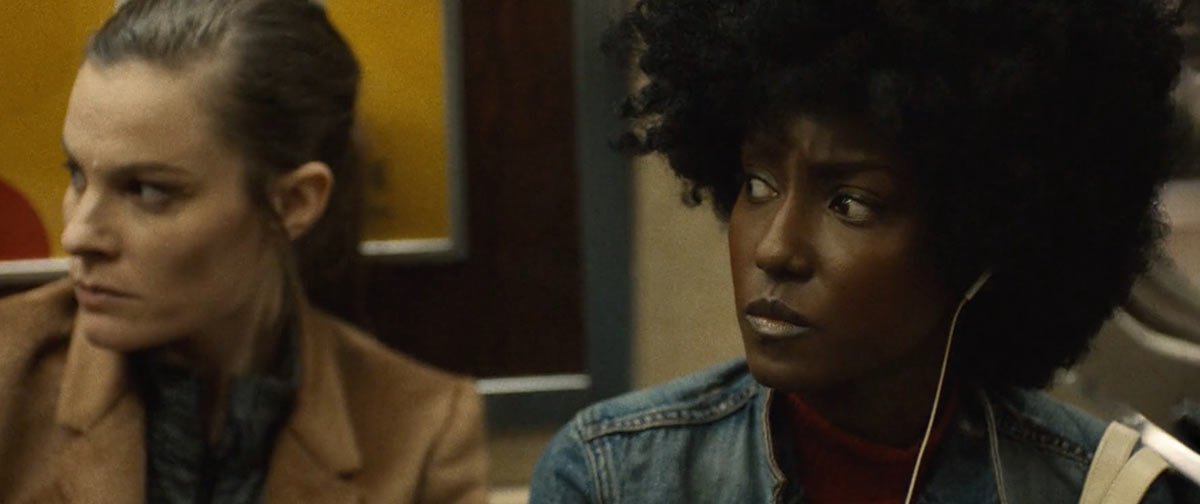
While the four women’s stories intersect in a brief, tense moment on a New York subway car, their backstories and how they came to be in that particular car are quite different.

The flashbacks don’t depict simple, saccharine, Hallmark Mother’s Day card relationships. These relationships are layered and complicated—with longing and frustration, the urge to shelter and the urge to smack.

Each of the four lead actresses, Kate Lyn Sheil, Jade Eshete, Lindsay Burdge, and Assol Abdullina, rises to the challenge and convincingly demonstrates the emotional range of her subject. (Eshete and Abdullina also co-wrote the screenplay with Gutnik.)

Rory Culkin shows up to illustrate that the maternal instinct is not solely the purview of those with two X chromosomes.

It’s not a perfect film. The initial segment, while it does pique the viewer’s interest, maybe doesn’t best set the stage for the ones that follow. There are elements that seem to signal sci-fi or body horror that aren’t carried through in the rest of the film. And because of the brevity of each of the vignettes, some of them seem a little roughly sketched, lacking in details that would more solidly ground the perspective of the woman depicted.

At the point of intersection in the subway car, each of the women is keeping herself to herself and adhering to the unspoken etiquette of public transportation. But then a white man starts loudly trying to engage them in conversation that quickly devolves into harassment and violence.

This screaming, egomaniac clearly sees himself as the most important person in the shared space and aims to capture everyone’s attention, making his private life public, doing a kind of emotional manspreading. It’s interesting to contrast this with what the women are dealing with and how their private lives either do or do not impact this public space.  

This is Gutnik’s first feature film and I’m looking forward to seeing what’s next.

A Whole Aesthetic World

Kenny Scharf: When Worlds Collide

by Christie Robb

With the cancellation of 2021’s Columbus Arts Festival and ComFest happening only virtually, this summer you might be feeling the sweet ache of longing for community-building kooky pop art. Never fear—a Kenny Scharf documentary is here!

Scharf, an LA valley native and young baby boomer, was drawn to New York by Andy Warhol and the Factory—folks having an extravagantly good time making art fun. He became part of a group of young artists who merged the club and art scenes. Along with Jean-Michel Basquiat and Keith Haring, Scharf was also part of the 1980s NYC graffiti subculture and became renowned for blurring the lines between the rarified walls of the art gallery and the gritty surfaces of public spaces.

Scharf’s style is maximalist, bright, chaotic, with amoebic-like organic forms. Heavily influenced by mascot-like pop-cultural memes from advertising, cartoons, and B-movies, there’s often something sinister lurking behind a smile. He calls attention to the nuclear in nuclear family.

The documentary, by Scharf’s daughter Malia Scharf and Max Basch, is a mix of interviews with Kenny, archival footage, and commentary from collaborators, critics, artists, and collectors. It situates Kenny in art history by tracing the evolution of art style from post-WWII abstract expressionism through to pop art/appropriation art, to graffiti art and cartoon realism.

Although some personal and historical background is presented, the focus is on the art itself and the evolution of the artist’s style, motivation, and use of media over the course of his decades-long career. While Basquiat and Haring died young (taken by overdose and AIDS, respectively), Scharf was privileged to witness his embrace by the art establishment, his fall into obscurity, and his perseverance as a creator. He’s an inspiration.

Yippie Ki Yay, Micro Budget

In Action

by Christie Robb

In a world where two middle-aged men have access to a room, a series of Apple products, $22,730 from Kickstarter, and five years, expect a variety of action movie tropes to be stitched together with a thread of f-bombs and self-referential humor to create this strange quilt of a feature-length buddy-action-comedy/YouTube video.

In Action follows two former writing partners, Eric and Sean, who reunite at a frenemy’s wedding. Bored with their day-to-day lives, they decide to team up again to bang out an action movie screenplay asynchronously over email. But, unbeknownst to them, their script is intercepted by hackers and the writers get more action than they expected.

Directors/writers/stars Sean Kenealy and Eric Silvera manage to get a fair amount of bang for the low-budget buck. Not strong actors, the rapid banter between the two is engaging. And it has to be, because essentially the entire movie is just those two.

An assortment of minimal props, occasional animation, and (briefly) the use of action figures do serve to interject some variety. With the exception of some camera work and quick cuts that seem inspired by Shaun of the Dead, the camera is static. Other characters are mostly filmed over the shoulder, giving the impression that the only two involved in the film are Sean and Eric (sometimes in wigs or silly hats) until more than two bodies are shown on screen at the same time. Then, it becomes honestly a little confusing as to why these characters aren’t shot more conventionally. But, whatever.

The overall product, though, is fun with sound design and editing that are way more professional than you would expect. For an action movie with essentially no budget, it gets the job done pretty darn well.