James Wan is preoccupied. He’s made three nearly identical films back to back – Insidious, The Conjuring, Insidious: Chapter 2. In each, small children are terrorized by malevolent forces from beyond the grave, and their well-meaning parents are useless to help them, so the family turns to supernatural investigators. A big, scary dead lady is to blame.
Perhaps worry over Wan’s childhood is appropriate at this point. So why has his recent output been so much fun to watch?
Rock solid casting helps. Given the comparably miniscule budgets for each film, the fact that Wan drew the interest of Vera Farmiga, Rose Byrne, Lili Taylor, and Patrick Wilson (all three times!) says something for his casting ability. Even in this third go round – easily the weakest of the efforts – Wan still shows a joyous thrill for adventuring into something that clearly terrifies him.
As with the previous two ghostly installments, Wan also favors flesh and blood performances to FX when it comes to the spectral side of his films, which continues to elevate his work above other recent ghost stories.
Insidious: Chapter 2 picks up right where the original left off. The beleaguered Lamberts have their once-comatose-and-trapped-in-ghostland son Dalton back, but something ugly returned with him.
Far more streamlined than Chapter 1 but with little of the elegant slow build of Conjuring, Chapter 2 splits its efforts between two sets. We’re in the house with the terrified Lamberts, or we’re ghosthunting with Grandma (Barbara Hershey) and her paranormal investigators.
It amounts to two haunted houses, more children in peril, and ghosts who don’t just lurk and stalk but punch you full in the face. So that part’s new.
By this time, seeing an expert on the paranormal freeze in their tracks, terrified beyond words at the malevolent force only they can see feels a little stale. Rather than exploring the darkness as he did so weirdly well in Chapter 1, Wan mostly contents himself with the two real-world sites, which is a bit of a letdown.
Still, that “he has your baby he has your baby he has your baby” dude is pretty freaky.
Lots of images are, showing that Wan’s arsenal of unsettling vision wasn’t quite yet empty. Insidious 2 is a fun genre piece, but a bit of a disappointment after this summer’s spookirific The Conjuring. By this time, hopefully Wan has exorcised his demons and can turn his attention elsewhere.
Oh, that’s right. He’s directing Fast & Furious 7.
I don’t know. Maybe another ghost story would be OK.
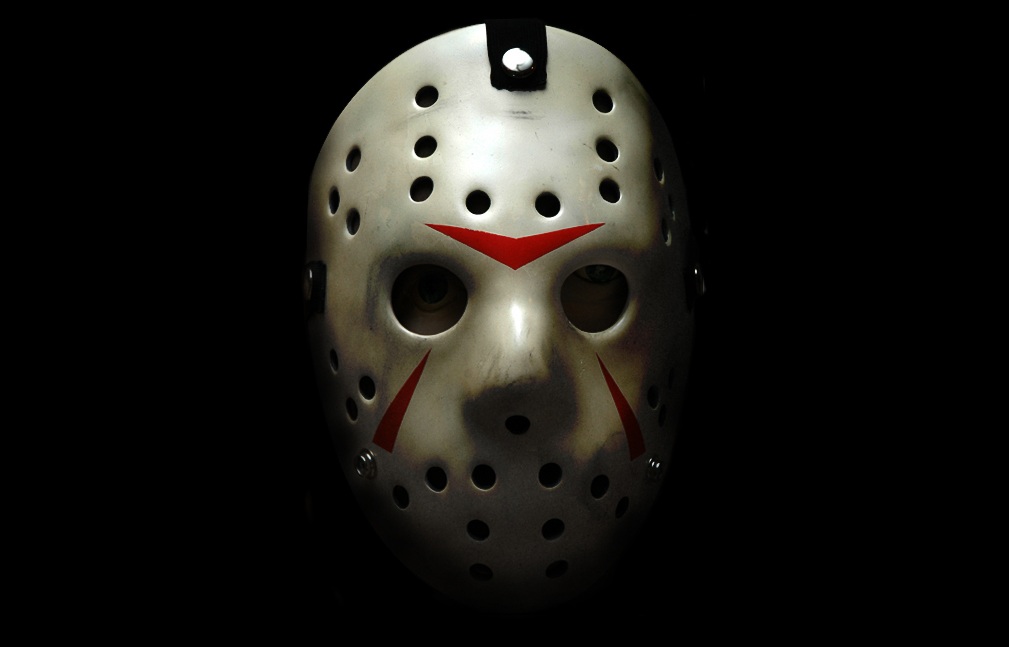
Our weekend countdown comes a day early this week so we can celebrate Friday the 13th – today’s date, and that little slashser franchise that could.
Friday the 13th (1980): Our tale began in 1980, when a mother – grief-stricken over the drowning death of her disfigured son Jason – kills a campful of kids. Then Jason kills to avenge his mother for a few flicks. Then an unrelated ambulance driver kills kids, then back to Jason, who goes to camp, to Manhattan, to hell, to outer space, and finally to Elm Street before returning in ‘09 to Crystal Lake to rekindle his hatred for backpackers.
It should surprise no one that the only one that’s really worth a look is the original. This is not a good film, or even an especially scary film, but the characters are not entirely clichéd and the plot twist is somewhat clever. Over-the-top Tom Savini FX give you something to look at beyond the revolving door of shrieking, dying knuckleheads, and the movie boasts an almost absurd number of odes to the film Psycho. Also, of course, is the outstanding Kevin Bacon death scene. (Kevin Bacon Death Scene – I love them! I think I saw them open for Skinny Puppy in ’88.)
http://www.youtube.com/watch?v=UF_yl401bCc
Friday the 13th Part II (1981): Gone is the novelty of the grief-crazed mother, replaced by the far more potent (franchise-wise) image of an unstoppable killer in Jason Voorhees. He’s played unimpressively by both Warrington Gilette and Steve Dash. With a bruised thumbnail and a bag over his head, the now fully grown Jason finishes off the last survivor of the original, shows a loving affection for his mother’s disembodied head, and kills nearly everyone at the camp next door to Crystal Lake- even wheelchair-bound Ted (a sly ode to Tobe Hooper, or am I overly optimistic?). But not Ginny, played by genre favorite Amy Steel. Ginny believes psychology can explain things, and shows her sympathy for poor Jason by using the term “frightened retard.” Real professional, Ginny. Her green turtleneck and rustic button down wearing beau Paul looks on. Paul – don’t be a hero! Ginny’s not worth it! (PS: Nonsensical ending = huge cop out.)
http://www.youtube.com/watch?v=rShnuCLtc0Q
Friday the 13th Part III (1982): The next day, Jason wanders to a sketchy grocery store, kills its unpleasant owners, eats their rabbit and pilfers some clothes. Then he goes further around the lake to Chris Higgins’s family’s summer place, Higgins’ Haven. Episode 3 is mostly famous for introducing the iconic hockey mask, and if you were lucky enough to see it in theaters, you tasted the satisfaction of uninspired 3D, coming at you via a pole, snake, eyeball, yoyo, popcorn, pitchfork, and any number of gimmicks that translate poorly to home enjoyment. Jason smooshes a guy’s head so his eye pops out. Another guy keeps faking his own death, while yet another walks on his hands for no reason I can fathom. The film ends with an unsatisfying dream sequence followed by the sighting of Jason’s dead body. So, clearly, he’s gone for good. Whew!
Friday the 13th(4): The Final Chapter (1984): Would that it were. A little further around the lake from Higgins’ Haven are other private cabin homes that humans continue to rent, regardless of the slaughter taking place over the last few days (episodes 2 and 3). But Jason’s dead now, so no worries, eh? This second attempt to end the franchise inadvertently begins what I like to call the Tommy Trilogy. Tommy Jarvis (Corey Feldman) and his mom and sister live next door to a cabin rented by six horny, disposable teens who’ll skinny dip, pair up, dance poorly and get picked off by the not-really-dead-at-all Jason. Part 4 also sees Crispin Glover (professional oddball and Back to the Future’s George McFly) get laid (after which, of course, comes death by corkscrew). Later, Feldman, the film’s other Eighties icon, chops Jason Voorhees to pieces. Tommy just chops and chops and chops. Chop him up good, Tommy! Not that it will help.
Friday the 13th Part V: A New Beginning (1985): A profitable franchise, like an unstoppable murdering machine, is hard to kill. Since the chopping scene in that last installment left little possibility for Jason’s survival – but so much more money to be made – the unavoidable 5th installment had to come up with something novel. So, we open on a dream sequence that has Jason’s killer Tommy witness Jason’s graveyard resurrection. But that’s too nutty – surely that didn’t happen! Could it be? Or is it adolescent, clearly disturbed Tommy? Or is it some other totally random guy with no connection to Jason whatsoever? Yawn. Well, whatever Part 5 lacks in cinematic quality it compensates for with profanity and bralessness. Yep, lotta boobs in this one.
Friday the 13th Part VI: Jason Lives (1986): This is the final installment of the Tommy Trilogy. The first one sees youngster Tommy Jarvis chop Jason to bits. Then an adolescent Tommy heads out to a halfway house far from Crystal Lake, but first he dreams of someone digging Jason up and bringing him back to life. So, naturally in his final go-round, a young adult Tommy goes to the cemetery, digs up Jason (with Ron Palillo – Welcome Back, Kotter’s Horshack – in tow), and brings him back to life. Genius. Keep in mind, Jason was honest to God dead this time, and a bolt of lightning through a metal fence post reanimated him (zombie Jason!) It marks a change, however subtle – Jason’s not just hard to kill now; he’s the walking dead.
http://www.youtube.com/watch?v=PigpFbOqVtQ
Friday the 13th Part VII: The New Blood (1988): By the late Eighties it was impossible to keep each one straight, and yet the most famous Jason doesn’t enter the picture until this 7th installment: fan favorite Kane Hodder. Hodder’s Jason is chained to a boulder deep in Crystal Lake, but he’s released from his lake prison by a confused telekinetic. He kills the kids vacationing next door, other campers on and around the lake, and eventually has a face-off with the telekinetic. Terry Kiser (Bernie from Weekend At .. fame) plays a total dick of a doctor. A lot of weirdness happens in this one, and yet it still feels like a paint by numbers pick-off of horny, one-dimensional teens.
Friday the 13th Part VIII: Jason Takes Manhattan (1989): We were all so tired of Jason by 1989. So tired. So writer/director Rob Hedden decided to freshen things up by leaving Crystal Lake behind and spending an interminable amount of time on a big boat, a row boat, on docks and in sewers in an attempt to make a comment on the ugly modern times in urban America. The tiniest graduating class of all time boards a boat for Manhattan, but their classmates, Mall Hair and Mullet, inadvertently dredged Jason up from beneath the water with their anchor the night before, so he stows away. A lot of Eighties clichés later, the prickiest school administrator in history and the rest of the survivors have life boated to NYC, only to fall prey to gang members and druggies and assorted urban whathaveyou. Eventually Jason melts into a frightened little boy. What the hell?
Jason Goes to Hell (9): The Final Friday (1993): Speaking of hell. So Jason’s a demon, apparently, and he’s killed in an FBI sting. That’s right, a whole SWAT team manages to hide themselves and their giant flood lights in the forest around Camp Crystal Lake without drawing Jason’s notice. One minute he’s alive and full size (regardless of what happened to him in those Manhattan sewers), the next, he’s blown to bits. Unfortunately his black heart keeps beating, and he (by way of a kind of giant demon snake) slides from one poorly drawn character into another. This means there’s really no Jason for most of the film, just Jason’s essence, so to speak. But the killers look like regular schlubs because Jason’s inside them. That’s not scary, although one of his bodies looks a lot like that Mayhem guy from the car insurance ads, which seems fitting. It all leads to some nonsense about his bloodline and a mystical dagger. And it ends with Freddy Krueger laughing.
Jason X (2002): He’s been to hell. Where to now? How about deep space? Well, there is a difference between quality bad and worthless crap, and this movie plain old sucks. The great David Cronenberg plays the mad scientist who cryogenically freezes Jason Voorhees. Flash forward 453 years, and the frozen carcass is found, brought aboard New Earth’s space craft, and Jason Meets Aliens unspools. The nubile youngsters are trapped on board with the freshly thawed killing machine.
Freddy vs Jason (2003): At long last! Here’s the skinny: Freddy Krueger can’t hurt anyone if he’s forgotten, so he (somehow – think back ten years to when Jason went to hell) brings Jason back from the dead and sends him to Elm St. to carve up some youngsters. Freddy believes that the carnage will revive the town’s memory of the old nightmare killer. The memories make Freddy strong enough to kill again, but now Jason won’t get off his turf, so they have to duke it out. Some highly augmented and imaginative teens piece this puzzle together and hope to find a way to finish both monsters off for good. Will they succeed? And who will win this battle between the iconic bloodletters? With a little fresh blood spilling from these tired old veins, don’t we all win, really?
Friday the 13th (2009): Unfortunately, Freddy V Jason wasn’t the capper. Not a remake at all, 2009’s Friday the 13th is just another sequel. For the most part, you get what you should, by now, expect: drinkers, sluts, jocks and drug users die; quirky, eternally single ethnic friends brought along for comic relief die; disposable youth mostly fall victim to hatchets to the back, machetes to the skull. There’s also a return to the old “boobs a’bouncing” school of slashers. (This bouncing usually takes place just prior to a hatchet to the back or a machete to the skull.) In fact, there seem to be no tired formulas the film is wary to trot out. It’s as if Jason pulled out the Way Back Machine to revisit the land of 80s horror film cliches. Too bad he didn’t stay there.
The writer/director/Frenchman’s fondness for violence and organized crime in film is well documented. He’s written and/or directed dozens of films on the topic, including La Femme Nikita, The Professional, and Transporter. Rather than follow a single assassin or bag man, this time around Besson wades through more familiar cinematic waters with a full-fledged mafia picture.
De Niro plays Giovanni Manzoni, known to his new neighbors in Normandy, France as Fred Blake. He ratted out his wise guy connections back in Brooklyn, and now the Witness Protection Program shuffles his family around France trying to avoid a retaliatory hit. But the “Blakes” don’t make it easy.
Besson’s screenplay is based on a novel by Tonino Benacquista, who’s penned some great, gritty flicks (The Beat that My Heart Skipped, Read My Lips). The Family is a lighter affair, depicting good natured psychopaths who fail to fit in as another set of psychos descend on a sleepy French town.
The film lacks the action choreography Besson’s audience has come to expect. Instead, its charm lies in the director’s joyous fondness for American gangster flicks in general and De Niro’s work in particular. His odes grow evermore obvious, with callbacks to most of the actor’s greats: Taxi Driver, Goodfellas, The Godfather: Part II, even Cape Fear. Besson’s having some fun, and DeNiro seems to enjoy the affection.
De Niro’s chemistry with Michelle Pfeiffer, playing his wife, gives the film a little heart. It’s great to see these two seasoned veterans share the screen, and Pfeiffer’s displaced and disgruntled Italian American is fun to watch.
The storyline for the couple’s two teens is weaker, and Besson seems almost disinterested in the involvement of the WPP agents, including saggy faced sourpuss Agent Stansfield (Tommy Lee Jones).
It’s an action comedy that’s a little short on action. The comedy is pleasant and fun, but never truly funny. What keeps this light but violent romp entertaining is its own sense of joy and its love of Robert De Niro. Which may not be the best reason to make a film, but there are worse.
Hey look! It’s that hottie and that cutie, and the guy from Office Space and that other guy from TV in a romantic comedy about drinking beer. Nice!
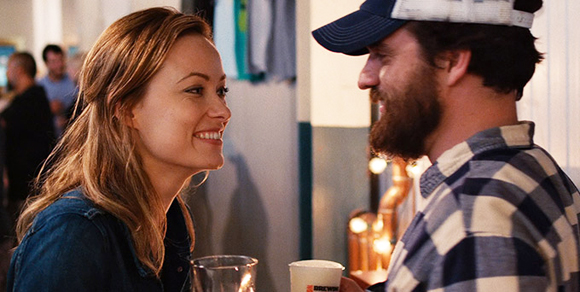
Well, as it turns out, Drinking Buddies may not be quite what you’re expecting, though that’s not necessarily a bad thing. Rather than a by the numbers rom-com with a comfortable ending designed to send the folks home happy, writer/director Joe Swanberg delivers a loose, observational drama that focuses on small moments in unfulfilled lives.
Olivia Wilde takes the lead as Kate, who works at a Chicago brewery with her best buddy Luke (Jake Johnson from TV’s New Girl). Though Luke is talking marriage with his longtime girlfriend Jill (Anna Kendrick) and Kate has just started seeing Chris (Ron Livingston), the co workers continue to nurture their “why don’t they just do it already” friendship.
Though not quite a full on mumblecore project, Drinking Buddies certainly passes through the neighborhood. Many scenes meander with a highly improvised, aimless approach, while Swanberg keeps the film bathed in the gritty look of persistent realism.
The action rarely gets beyond hanging out, drinking, and talking about relationships, but you slowly come to appreciate how little the characters do what you think they will. After the two couples spend a weekend at Chris’s lakeside cabin, certain priorities are re-evaluated, and the film’s soft focus on the quest for knowing what you want becomes increasingly clear.
The actors all mesh well, with Wilde giving her most assured performance yet. Kate is a damaged soul, and Wilde is able to get beneath the “one of the guys” party girl persona to reveal layers of vulnerability, hurt and anger.
Though it’s far from the When Harry Met Sally treatment of platonic friendships, Drinking Buddies has a charm, wit and wisdom that may make it the perfect reboot for today.
2013’s highest caliber, most fun blockbuster releases to all frontiers today.Star Trek Into Darkness – JJ Abrams’s exceptional sequel to his surprisingly awesome Star Trek reboot – brings all the humor, spectacle, nerdiness and octane of its predecessor. In fact, it may top it, thanks in part to the director’s genuine affection for the source material, his genius for casting, and his ability to tell a story that’s as pleasantly familiar as it is excitingly surprising.
Speaking of source material, why not get set for the legendary William Shatner’s visit to Columbus next weekend and revisit 1982’s Star Trek II: The Wrath of Khan? Beyond Ricardo Montalban’s heaving chest plate and the wolverine napping on Shatner’s head lies a solid trek less dependent on special effects than basic storytelling. You’ll find various elements from Into Darkness began with STII, and though too many trekkies got their phasers stunned by the liberties Abrams put to use, the two films can co-exist just fine.
It was rumored this week that Jack Nicholson, 76, has retired from acting. Then it was rumored that he hasn’t. Don’t tease us! One of cinema’s most ferocious performers, he’d certainly create a noticeable hole with his absence. In his nearly sixty years in film, he’s racked up a dozen Oscar nominations, three leading to wins. And while he’s certainly been a Hollywood character himself, we want to thank him for introducing us to these ten characters we won’t forget.
10. Frank Costello (The Departed)
9. Buddusky (The Last Detail)
8. Melvin Udall (As Good As It Gets)
7. George Hanson (Easy Rider)
6. Warren Schmidt (About Schmidt)
http://www.youtube.com/watch?v=W-zEwGZ56Bs
5. Garrett Breedlove (Terms of Endearment)
4. JJ Gittes (Chinatown)
3. R. P. McMurphy (One Flew Over the Cuckoo’s Nest)
That may not sound like kid stuff, but I Declare War presents an arresting mix of fantasy and reality, transporting you back to a time when counting to ten could resurrect the dead, and all that mattered was the here and now.
Co-directors Robert Wilson and Jason Lapeyre, working from Lapeyre’s script, drop us in the heat of battle right from the get go, as a group of 12 year olds is engaged in a very serious round of Capture the Flag.
To hear George’s interview with co-director Robert Wilson, click this: Robert_Wilson
General PK (Gage Munroe) is out to remain unbeaten, while across the woods, General Quinn (Aidan Gouveia) plots an upset. Both leaders must deal with dissension in the ranks, and some surprises in the field, before a winner is declared.
Wilson and Lapeyre contain the film in a glorious section of the outdoors, framing the action skillfully enough to give it an expansive, wide open feel, as if the opposing base camps were miles apart and expert cunning was required to keep from getting hopelessly lost.
Of course, putting pre-teens in violent situations where sticks suddenly become rifles and POWs are subject to enhanced interrogation will quickly bring up a host of delicate social issues. Thankfully, the filmmakers deliver their commentary with a gentle touch, utilizing a terrific young cast to craft characters who, though a bit cliched in their respective roles, don’t reek of adult romanticism.
You’ll recognize homages to Apocalypse Now, Saving Private Ryan and more, and as you find yourself caught up in a kid’s game, you’ll recognize a phase of life that’s bursting with both anguish and wonder.
The screen fills with the sepia image of a bygone Texas. Sinewy lovers quarrel and forgive, then wait in a pick-up, planning a future with their unborn baby, until the third robber arrives. There’s a chase, a lonesome shack, a shoot out, and a compromise that sends the boy away to prison and the girl home to pine.
There’s good reason writer/director David Lowery’s romantic tragedy Ain’t Them Bodies Saints feels so confident. The breathtaking cinematography, the fittingly artistic framing, the poetry of the language and image, the heartbreaking authority of the performances – each element fits together beautifully and benefits from the artistic coordination of a maestro. It’s because the relatively unknown Lowery has honed his craft, spending time as a casting director, crewman, writer, director, sound editor, actor, producer, and cinematographer before tackling this, the culminating effort of a lifetime spent in film.
He’s blessed with a cast that embraces his understated drama. Casey Affleck animates a career full of characters with vulnerability and confused nobility, and he impresses again here as the outlaw who breaks out of prison, just like he promised, to reunite with his girl and the daughter he’s never met.
Rooney Mara’s quiet ferocity offsets Affleck’s tenderness, and the love story they create offers a poignant center to the film. Orbiting the couple is Ben Foster’s humble police officer, torn by his affection for one and duty to the other. Each actor embodies an image of lonesomeness that makes the film ache. What’s beautiful about this triangle is that neither the characters nor the filmmaker judges anyone. Lowery and his characters accept, however sadly, the motivations and actions of all involved.
The young mother also attracts the protective nature of a retired gangster/father figure played by Keith Carradine, whose presence reinforces the film’s bluesy connection to the other great, doomed Western romance, McCabe and Mrs. Miller.
The film’s one shortcoming is that it does not tell a larger tale. This beautifully told story of loneliness, devotion, love and tragedy never manages to transcend its own intimacy to speak to something universal.
But it’s a hell of an effort, and one that establishes Lowery as one of the most exciting new filmmakers to come along in decades.
There’s something both familiar and weirdly backwards about the film Big Star: Nothing Can Hurt Me, a documentary that follows the path of a talented, promising rock band as it hurtles toward obscurity.
This is a film about a band so indie only the indiest of indie bands even know them; a band so underground that they inspired nearly every seminal act of the Eighties and Nineties alt rock movement; a band so obscure that they spun off into other bands that opened for punk acts you probably never heard of at CBGB’s. But, you totally know the That Seventies Show theme song, which is an obscure Cheap Trick cover of a Big Star song. So it’s not like they’re make believe.
The doc follows the career of Alex Chilton – you know, like from that Replacements song – and his Memphis band Big Star, who changed the foundation of rock music without ever really being heard by more than a few hundred people at a time.
Chilton charted a #1 song in his teens, singing “The Letter” with the Box Tops. By 1970, the Memphis youngster joined up with local musician/songwriter/budding producer Chris Bell and his buddies. They took advantage of a fruitful situation with local label Ardent Records, and the stage was set for what might have become the city’s next Sun Records-style phenomenon.
Over the next couple years, with a little band reshuffling, Big Star recorded two more albums with Ardent – all three of which landed in Rolling Stone Magazine’s list of the 500 best albums of all time.
Of all time.
I’m sorry – who are these people?
When you talk about the seminal Memphis acts, Big Star might not outshine Elvis, Aretha Franklin, B.B. King, John Lee Hooker, or even Jeff Buckley – so why spend two hours with their music? Well, that’s not always entirely clear. The doc plays only enough snippets of the band’s work to pique interest, while its focus meanders to the point of frustration.
Still, filmmakers Drew DeNicola and Olivia Mori seek not only to clue you in on the greatest band you never heard of, but also to cast a glance at a little known revolution in Memphis music, one that came and went before its time, but impressed every music critic of the era and laid the groundwork for what we now know as alternative music.
We can’t bring ourselves to pair up a new release with a similarly wonderful backlist title because two awesome films are released to DVD today: The Iceman and Stories We Tell. You’ll just have to watch two new ones.
The Iceman showcases the range of genius character actor Michael Shannon. Director Ariel Vromen makes the most of Shannon’s physical presence as well as his ability to oscillate between steely calm and touching vulnerability. It’s a tour de force from one of this generation’s most impressive performers.
http://www.youtube.com/watch?v=vHZ6dxR2EiQ
Meanwhile, Sarah Polley continues to impress with her skills behind the camera with Stories We Tell. The Canadian writer/director/actor becomes her own documentarian, sharing family secrets in a poignant, fascinating and impeccably crafted look at how all families shape and reshape their own histories.