Look at little Tommy Solomon! Joseph Gordon-Levitt has proven himself a versatile actor in the years since his TV career in the guise of a pre-pubescent Earthling. With his newest effort, Don Jon, he exhibits surprising confidence and aptitude as both a screenwriter and a director.
The film follows Jon (Gordon-Levitt), a Jersey player who cares deeply about only a handful of things: his bod, his pad, his ride, his family, his church, his boys, his girls, his porn.
Guess which one of those gets him into trouble.
Maybe the best way to appreciate what Don Jon is, is to quickly cover what it is not. Don Jon is not a traditional romantic comedy. It is not a sexy romp, or a perfect flick for hangin’ with your bros.
No. It’s a sexually frank, cleverly written, confidently directed independent comedy/drama about our culture of objectification. It’s an alert comment on a society that fears intimacy, collects trophies, and looks to get more than it gives; a culture that raises girls to want to be princesses, and guys to collect sexual conquests. A culture where a fast food restaurant honestly advertises its newest sandwich by having an oiled up, bikini clad super model spread her legs while she enjoys the tasty burger.
The effort certainly carries its flaws, but JGL gets credit for upending expectations, and for brilliantly paralleling romantic comedies and porn – because, let’s be honest, they are equally damaging to our concept of relationship.
Writing and direction are nothing without a cast, and Gordon-Levitt proves just as savvy in that department. Tony F. Danza, ladies and gentlemen! Danza has fun as Jon’s role model father, while this season’s go-to girl Brie Larson – with barely a word – scores as his observant sister.
Gordon-Levitt’s own perfectly crafted swagger finds its match in a gum-chewing Scarlett Johansson, whose sultry manipulator is spot-on.
The fledgling auteur stumbles by Act 3 – quite a letdown after such a well articulated premise. The underdeveloped resolution would hinder the effort more were it not for the presence of Julianne Moore as the eccentric and wise Esther. The role may be a bit clichéd, but Moore is incapable of anything less than excellence.
It won’t be long before we’re saying the same of Joseph Gordon-Levitt. Until the end, he proves himself an insightful observer of his times, a cagey storyteller, and an artist with limitless potential.
Chances are by now you’re well aware of the horror fun to found inThe Cabin in the Woods(and if you’re not, what gives?) For a lesser known take on the “cabin” premise, check out Resolution, which is finally released to DVD this week. Much like the blockbuster, Resolution takes a self-aware approach to the horror genre, reworking popular plot conventions and metaphorically bringing the horror audience into the narrative. It also brings more true creepiness to the party, while still managing a healthy dose of humor, and tipping a hat to the art of scary storytelling with nods to films as varied as The Blair Witch Project and Cache.
And speaking of Michael Haneke’s brilliant, simmering thriller Cache, definitely see that movie. Though it’s an entirely different experience, Haneke’s work shares a sense of dread that comes from the knowledge of being surveilled. Haneke develops a looming, paranoid foreboding, a sense of silent menace the characters can’t shake. You’ll have trouble relieving yourself of it, too.
Pre-game warmups aren’t usually part of the moviegoing experience, but Prisoners may require a little preparation.
Quite simply, it will wear you out.
Director Denis Villeneuve and writer Aaron Guzikowski have crafted a relentlessly intense, utterly engrossing mystery/thriller that will bludgeon your nerves, tease your sensibilities and leave your morals in disarray.
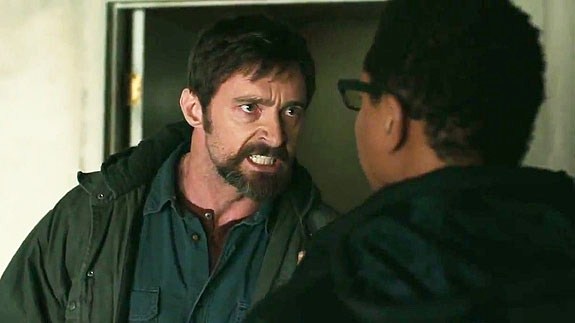
Hugh Jackman is unbelievably great as a father desperate for answers after his daughter, and his neighbor’s daughter, are abducted on Thanksgiving Day. The assigned detective (Jake Gyllenhaal) believes a troubled local man (Paul Dano) is to blame, but can’t find the evidence to hold him. Jackman’s character, overcome with rage, takes matters into his own hands.
That’s all the info you need, but just a tiny fraction of the complex chain of events set in motion by the crime. Guzikowski, who adapted the Contrabandscreenplay last year, delivers a twisting, intelligent script that lulls you with the familiarity of the premise all the while it’s leading you places you may not want to go.
Villeneuve, best known for writing and directing the Oscar-nominated Incendies three years ago, makes a stunning English language debut that succeeds on many levels. If a thriller was all it was, it would be a good one, relying on a substance that recalls years of Hollywood films from Death Wishto Gone Baby Gone.
Prisoners transcends the genre in the way it forces its audience to face the same moral ambiguities the characters are up against. The stupendous cast, which also includes greats such as Terence Howard, Viola Davis and Melissa Leo, fills each character with gritty realism, allowing actions that seem justified in one set of circumstances to be easily called into question. As surprises mount, the film lands solid blows to perceptions of torture, fear-mongering, religious fanaticism, and even basic parenting.
Sound like a lot? It is, and the film earns every minute of its two and a half hour running time. It is a dark, cathartic journey that is not for the squeamish, and the film’s length only serves to reinforce the hell these people are going through. They want it to end, and so do you, but only because the film has hooked you so deeply.
You’ll need to pay attention and listen hard, and though you probably won’t figure things out early, the clues are all there in front of you. Prisoners is a breathtaking ride that rewards the effort it demands, ultimately providing a satisfying payoff, capped by an unforgettable final scene that may very well find its way into your dreams.
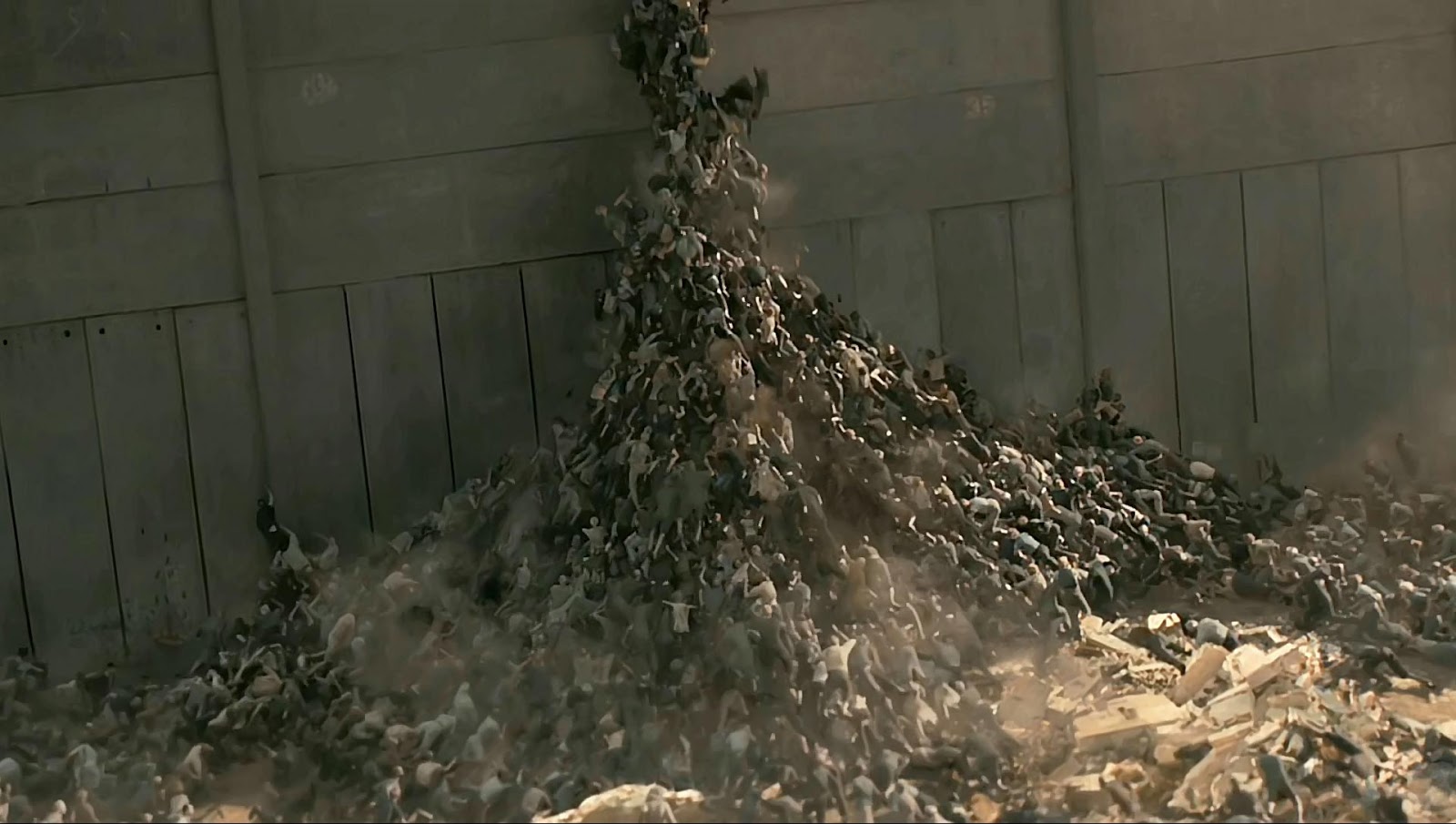
The zombie thriller directed by Marc Forster (who’d directed no thrillers, let alone zombies) that has almost nothing to do with Max Brooks’s fascinating novel World War Z? Surprisingly enough, yes. Yes please, even. Brad Pitt’s scarf-wearing hero traipses the mostly demolished globe in search of a cure in a movie that never lets up, consistently surprises, and delivers the goods. Check it out this week on DVD.
Maybe the zombie movie match-up is Danny Boyle’s not-really-zombie flick 28 Days Later. Sure, they’re not dead yet, but they are super pissed off and they want to eat you, so run! Just don’t run to that military outpost. Boyle’s empty London, brutal monsters, and epically creepy climax makes his foray into horror an especially joyous one. Two great ways to get prepped for the coming Halloween season.
http://www.youtube.com/watch?v=eunaclr-WgU
Or, just watch Fight Club. You can’t go wrong there.
In 2010, Stuart Blumberg wrote a film that frankly depicted the crisis of a loving but stagnant marriage upended by infidelity. Though it may have been the intrigue of “new era family” that piqued audience interest in The Kids Are All Right, it was the talented cast and the casually insightful writing that made the film worth seeing.
In fact, Blumberg has made a career out of clever scripts that take a familiar approach to an unfamiliar topic, such as The Girl Next Door, the teen romance between a shy young man and his porn star neighbor.
For his directorial debut he pulled from a screenplay he co-wrote with Matt Winston. Thanks for Sharing offers a romantic dramedy about sex addiction.
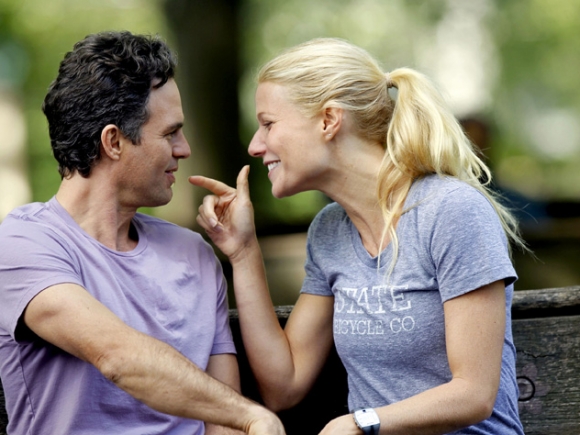
The great Mark Ruffalo anchors the cast as Adam, sex addict. Adam’s been sober for 5 years, thanks in part to the salty wisdom of his sponsor, Mike (Tim Robbins), though he’s having trouble with his new court-appointed sponsee Neil (Josh Gad), who isn’t taking the program seriously.
Complications arise for all three addicts, who face temptation anew as life asks them to juggle adversity and addiction simultaneously. The film is refreshingly clear on the point that overcoming addition is harder than most movies make it out to be.
Credit Blumberg once again for his script’s candor. Every character is gifted with sharp dialogue that does more than shape the role; it articulates profound difficulty of overcoming this particular problem. This cast takes advantage.
Ruffalo finds humanity in every character, and his take on Adam’s wobbly sense of control is touching. Gwyneth Paltrow offers another strong turn, and both actors benefit as much from Blumberg’s bright dialogue as the film benefits from the duo’s easy onscreen chemistry.
Though Robbins delivers a lot of the film’s funnier lines, Gad brings schlubby humor while sparring with a charmingly vulgar Alecia Moore (taking a break from her day job as pop star “Pink”).
Unfortunately, Blumberg the director is less confident than Blumberg the writer. He’s too uncomfortable with the tension he creates, switching from one storyline to the next when things get dark and confining his characters with predictable, tidy formulas.
It may be impossible to watch a film about sex addiction without remembering Michael Fassbender’s scarring performance in 2011’s Shame. While that film wallows in the filth and self loathing, Thanks for Sharing dips a toe and quickly hoses off. For a man who’s made a career of exploiting the mundane inner workings of naughtiness, he should be more comfortable getting a little messy.
Though I didn’t read the 2007 novel that inspired Austenland, the premise of sending Jane Austen devotees off to their own fantasy camp is one that seems full of possibilities for satire-filled fun.
Consider them missed.
Keri Russell plays Jane Hayes, an Austen freak who blows all her money to attend Austenland, longing for life in a ” simpler time” and the promise of romance with her very own “Mr. Darcy.”
One she arrives, though, Jane learns she has only purchased the “basic” Austenland experience, which means modest accommodations, poor social status and the new name “Jane Erstwhile.”
Still, she tries to make the best of it, buddying up with the obnoxious but wealthy “Miss Elizabeth Charming” (Jennifer Coolidge) and stealing kisses from the off-limits stable boy Martin (Flight of the Conchords‘Bret McKenzie). Eventually, Miss Erstwhile catches the eye of the standoffish “Mr. Nobley” (JJ Feild) and..
You can probably guess the rest, which is exactly the way the film wants it. In many respects, Austenland is a dumbed down Midnight in Paris, where the whimsical fantasy elements and sublime writing is replaced with forced humor and one joke obviousness.
The flat conventionality of it all is a bit of a surprise, coming from director/co- writer Jerusha Hess. Though this is her directing debut, she co wrote the screenplays for Nacho Libre, Gentlemen Broncos, and Napoleon Dynamite, three wonderfully offbeat comedies that were anything but crowd pleasingly safe.
There’s no sharp wit, satire or subtlety here, just sitcom humor and fluffy romance dressed up in period costumes.
For a more successful mix of romantic fiction and present day fandom, check out the 2008 mini series Lost in Austen, and leave Austenland on the shelf.
James Wan is preoccupied. He’s made three nearly identical films back to back – Insidious, The Conjuring, Insidious: Chapter 2. In each, small children are terrorized by malevolent forces from beyond the grave, and their well-meaning parents are useless to help them, so the family turns to supernatural investigators. A big, scary dead lady is to blame.
Perhaps worry over Wan’s childhood is appropriate at this point. So why has his recent output been so much fun to watch?
Rock solid casting helps. Given the comparably miniscule budgets for each film, the fact that Wan drew the interest of Vera Farmiga, Rose Byrne, Lili Taylor, and Patrick Wilson (all three times!) says something for his casting ability. Even in this third go round – easily the weakest of the efforts – Wan still shows a joyous thrill for adventuring into something that clearly terrifies him.
As with the previous two ghostly installments, Wan also favors flesh and blood performances to FX when it comes to the spectral side of his films, which continues to elevate his work above other recent ghost stories.
Insidious: Chapter 2 picks up right where the original left off. The beleaguered Lamberts have their once-comatose-and-trapped-in-ghostland son Dalton back, but something ugly returned with him.
Far more streamlined than Chapter 1 but with little of the elegant slow build of Conjuring, Chapter 2 splits its efforts between two sets. We’re in the house with the terrified Lamberts, or we’re ghosthunting with Grandma (Barbara Hershey) and her paranormal investigators.
It amounts to two haunted houses, more children in peril, and ghosts who don’t just lurk and stalk but punch you full in the face. So that part’s new.
By this time, seeing an expert on the paranormal freeze in their tracks, terrified beyond words at the malevolent force only they can see feels a little stale. Rather than exploring the darkness as he did so weirdly well in Chapter 1, Wan mostly contents himself with the two real-world sites, which is a bit of a letdown.
Still, that “he has your baby he has your baby he has your baby” dude is pretty freaky.
Lots of images are, showing that Wan’s arsenal of unsettling vision wasn’t quite yet empty. Insidious 2 is a fun genre piece, but a bit of a disappointment after this summer’s spookirific The Conjuring. By this time, hopefully Wan has exorcised his demons and can turn his attention elsewhere.
Oh, that’s right. He’s directing Fast & Furious 7.
I don’t know. Maybe another ghost story would be OK.
Our weekend countdown comes a day early this week so we can celebrate Friday the 13th – today’s date, and that little slashser franchise that could.
Friday the 13th (1980): Our tale began in 1980, when a mother – grief-stricken over the drowning death of her disfigured son Jason – kills a campful of kids. Then Jason kills to avenge his mother for a few flicks. Then an unrelated ambulance driver kills kids, then back to Jason, who goes to camp, to Manhattan, to hell, to outer space, and finally to Elm Street before returning in ‘09 to Crystal Lake to rekindle his hatred for backpackers.
It should surprise no one that the only one that’s really worth a look is the original. This is not a good film, or even an especially scary film, but the characters are not entirely clichéd and the plot twist is somewhat clever. Over-the-top Tom Savini FX give you something to look at beyond the revolving door of shrieking, dying knuckleheads, and the movie boasts an almost absurd number of odes to the film Psycho. Also, of course, is the outstanding Kevin Bacon death scene. (Kevin Bacon Death Scene – I love them! I think I saw them open for Skinny Puppy in ’88.)
http://www.youtube.com/watch?v=UF_yl401bCc
Friday the 13th Part II (1981): Gone is the novelty of the grief-crazed mother, replaced by the far more potent (franchise-wise) image of an unstoppable killer in Jason Voorhees. He’s played unimpressively by both Warrington Gilette and Steve Dash. With a bruised thumbnail and a bag over his head, the now fully grown Jason finishes off the last survivor of the original, shows a loving affection for his mother’s disembodied head, and kills nearly everyone at the camp next door to Crystal Lake- even wheelchair-bound Ted (a sly ode to Tobe Hooper, or am I overly optimistic?). But not Ginny, played by genre favorite Amy Steel. Ginny believes psychology can explain things, and shows her sympathy for poor Jason by using the term “frightened retard.” Real professional, Ginny. Her green turtleneck and rustic button down wearing beau Paul looks on. Paul – don’t be a hero! Ginny’s not worth it! (PS: Nonsensical ending = huge cop out.)
http://www.youtube.com/watch?v=rShnuCLtc0Q
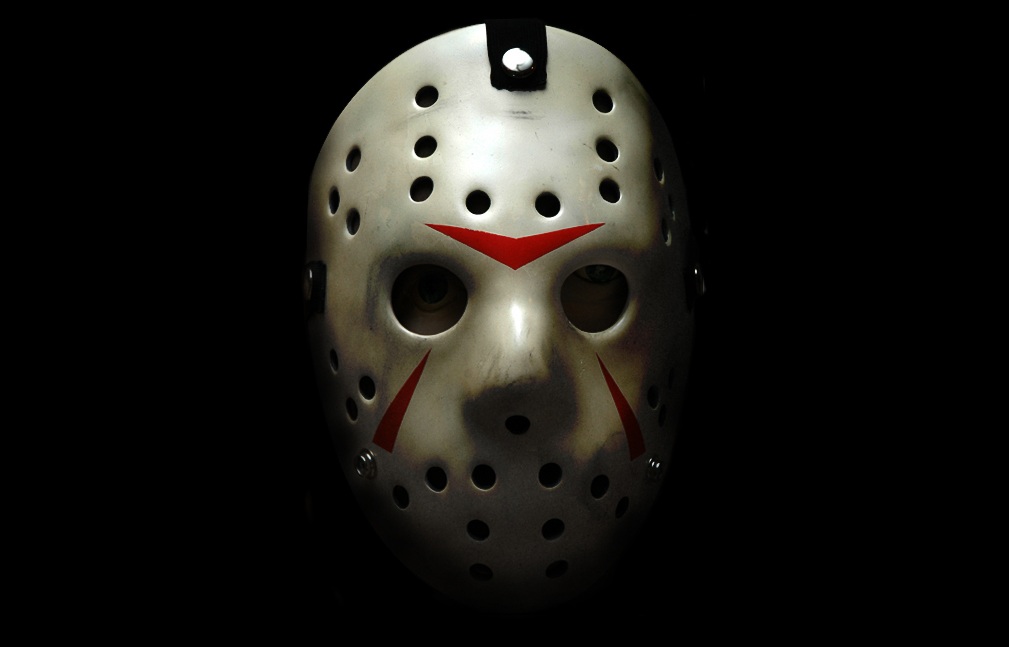
Friday the 13th Part III (1982): The next day, Jason wanders to a sketchy grocery store, kills its unpleasant owners, eats their rabbit and pilfers some clothes. Then he goes further around the lake to Chris Higgins’s family’s summer place, Higgins’ Haven. Episode 3 is mostly famous for introducing the iconic hockey mask, and if you were lucky enough to see it in theaters, you tasted the satisfaction of uninspired 3D, coming at you via a pole, snake, eyeball, yoyo, popcorn, pitchfork, and any number of gimmicks that translate poorly to home enjoyment. Jason smooshes a guy’s head so his eye pops out. Another guy keeps faking his own death, while yet another walks on his hands for no reason I can fathom. The film ends with an unsatisfying dream sequence followed by the sighting of Jason’s dead body. So, clearly, he’s gone for good. Whew!
Friday the 13th(4): The Final Chapter (1984): Would that it were. A little further around the lake from Higgins’ Haven are other private cabin homes that humans continue to rent, regardless of the slaughter taking place over the last few days (episodes 2 and 3). But Jason’s dead now, so no worries, eh? This second attempt to end the franchise inadvertently begins what I like to call the Tommy Trilogy. Tommy Jarvis (Corey Feldman) and his mom and sister live next door to a cabin rented by six horny, disposable teens who’ll skinny dip, pair up, dance poorly and get picked off by the not-really-dead-at-all Jason. Part 4 also sees Crispin Glover (professional oddball and Back to the Future’s George McFly) get laid (after which, of course, comes death by corkscrew). Later, Feldman, the film’s other Eighties icon, chops Jason Voorhees to pieces. Tommy just chops and chops and chops. Chop him up good, Tommy! Not that it will help.
Friday the 13th Part V: A New Beginning (1985): A profitable franchise, like an unstoppable murdering machine, is hard to kill. Since the chopping scene in that last installment left little possibility for Jason’s survival – but so much more money to be made – the unavoidable 5th installment had to come up with something novel. So, we open on a dream sequence that has Jason’s killer Tommy witness Jason’s graveyard resurrection. But that’s too nutty – surely that didn’t happen! Could it be? Or is it adolescent, clearly disturbed Tommy? Or is it some other totally random guy with no connection to Jason whatsoever? Yawn. Well, whatever Part 5 lacks in cinematic quality it compensates for with profanity and bralessness. Yep, lotta boobs in this one.
Friday the 13th Part VI: Jason Lives (1986): This is the final installment of the Tommy Trilogy. The first one sees youngster Tommy Jarvis chop Jason to bits. Then an adolescent Tommy heads out to a halfway house far from Crystal Lake, but first he dreams of someone digging Jason up and bringing him back to life. So, naturally in his final go-round, a young adult Tommy goes to the cemetery, digs up Jason (with Ron Palillo – Welcome Back, Kotter’s Horshack – in tow), and brings him back to life. Genius. Keep in mind, Jason was honest to God dead this time, and a bolt of lightning through a metal fence post reanimated him (zombie Jason!) It marks a change, however subtle – Jason’s not just hard to kill now; he’s the walking dead.
http://www.youtube.com/watch?v=PigpFbOqVtQ
Friday the 13th Part VII: The New Blood (1988): By the late Eighties it was impossible to keep each one straight, and yet the most famous Jason doesn’t enter the picture until this 7th installment: fan favorite Kane Hodder. Hodder’s Jason is chained to a boulder deep in Crystal Lake, but he’s released from his lake prison by a confused telekinetic. He kills the kids vacationing next door, other campers on and around the lake, and eventually has a face-off with the telekinetic. Terry Kiser (Bernie from Weekend At .. fame) plays a total dick of a doctor. A lot of weirdness happens in this one, and yet it still feels like a paint by numbers pick-off of horny, one-dimensional teens.
Friday the 13th Part VIII: Jason Takes Manhattan (1989): We were all so tired of Jason by 1989. So tired. So writer/director Rob Hedden decided to freshen things up by leaving Crystal Lake behind and spending an interminable amount of time on a big boat, a row boat, on docks and in sewers in an attempt to make a comment on the ugly modern times in urban America. The tiniest graduating class of all time boards a boat for Manhattan, but their classmates, Mall Hair and Mullet, inadvertently dredged Jason up from beneath the water with their anchor the night before, so he stows away. A lot of Eighties clichés later, the prickiest school administrator in history and the rest of the survivors have life boated to NYC, only to fall prey to gang members and druggies and assorted urban whathaveyou. Eventually Jason melts into a frightened little boy. What the hell?
Jason Goes to Hell (9): The Final Friday (1993): Speaking of hell. So Jason’s a demon, apparently, and he’s killed in an FBI sting. That’s right, a whole SWAT team manages to hide themselves and their giant flood lights in the forest around Camp Crystal Lake without drawing Jason’s notice. One minute he’s alive and full size (regardless of what happened to him in those Manhattan sewers), the next, he’s blown to bits. Unfortunately his black heart keeps beating, and he (by way of a kind of giant demon snake) slides from one poorly drawn character into another. This means there’s really no Jason for most of the film, just Jason’s essence, so to speak. But the killers look like regular schlubs because Jason’s inside them. That’s not scary, although one of his bodies looks a lot like that Mayhem guy from the car insurance ads, which seems fitting. It all leads to some nonsense about his bloodline and a mystical dagger. And it ends with Freddy Krueger laughing.
Jason X (2002): He’s been to hell. Where to now? How about deep space? Well, there is a difference between quality bad and worthless crap, and this movie plain old sucks. The great David Cronenberg plays the mad scientist who cryogenically freezes Jason Voorhees. Flash forward 453 years, and the frozen carcass is found, brought aboard New Earth’s space craft, and Jason Meets Aliens unspools. The nubile youngsters are trapped on board with the freshly thawed killing machine.
Freddy vs Jason (2003): At long last! Here’s the skinny: Freddy Krueger can’t hurt anyone if he’s forgotten, so he (somehow – think back ten years to when Jason went to hell) brings Jason back from the dead and sends him to Elm St. to carve up some youngsters. Freddy believes that the carnage will revive the town’s memory of the old nightmare killer. The memories make Freddy strong enough to kill again, but now Jason won’t get off his turf, so they have to duke it out. Some highly augmented and imaginative teens piece this puzzle together and hope to find a way to finish both monsters off for good. Will they succeed? And who will win this battle between the iconic bloodletters? With a little fresh blood spilling from these tired old veins, don’t we all win, really?
Friday the 13th (2009): Unfortunately, Freddy V Jason wasn’t the capper. Not a remake at all, 2009’s Friday the 13th is just another sequel. For the most part, you get what you should, by now, expect: drinkers, sluts, jocks and drug users die; quirky, eternally single ethnic friends brought along for comic relief die; disposable youth mostly fall victim to hatchets to the back, machetes to the skull. There’s also a return to the old “boobs a’bouncing” school of slashers. (This bouncing usually takes place just prior to a hatchet to the back or a machete to the skull.) In fact, there seem to be no tired formulas the film is wary to trot out. It’s as if Jason pulled out the Way Back Machine to revisit the land of 80s horror film cliches. Too bad he didn’t stay there.
The writer/director/Frenchman’s fondness for violence and organized crime in film is well documented. He’s written and/or directed dozens of films on the topic, including La Femme Nikita, The Professional, and Transporter. Rather than follow a single assassin or bag man, this time around Besson wades through more familiar cinematic waters with a full-fledged mafia picture.
De Niro plays Giovanni Manzoni, known to his new neighbors in Normandy, France as Fred Blake. He ratted out his wise guy connections back in Brooklyn, and now the Witness Protection Program shuffles his family around France trying to avoid a retaliatory hit. But the “Blakes” don’t make it easy.
Besson’s screenplay is based on a novel by Tonino Benacquista, who’s penned some great, gritty flicks (The Beat that My Heart Skipped, Read My Lips). The Family is a lighter affair, depicting good natured psychopaths who fail to fit in as another set of psychos descend on a sleepy French town.
The film lacks the action choreography Besson’s audience has come to expect. Instead, its charm lies in the director’s joyous fondness for American gangster flicks in general and De Niro’s work in particular. His odes grow evermore obvious, with callbacks to most of the actor’s greats: Taxi Driver, Goodfellas, The Godfather: Part II, even Cape Fear. Besson’s having some fun, and DeNiro seems to enjoy the affection.
De Niro’s chemistry with Michelle Pfeiffer, playing his wife, gives the film a little heart. It’s great to see these two seasoned veterans share the screen, and Pfeiffer’s displaced and disgruntled Italian American is fun to watch.
The storyline for the couple’s two teens is weaker, and Besson seems almost disinterested in the involvement of the WPP agents, including saggy faced sourpuss Agent Stansfield (Tommy Lee Jones).
It’s an action comedy that’s a little short on action. The comedy is pleasant and fun, but never truly funny. What keeps this light but violent romp entertaining is its own sense of joy and its love of Robert De Niro. Which may not be the best reason to make a film, but there are worse.
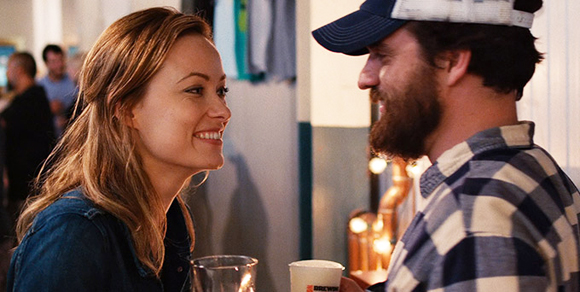
Hey look! It’s that hottie and that cutie, and the guy from Office Space and that other guy from TV in a romantic comedy about drinking beer. Nice!
Well, as it turns out, Drinking Buddies may not be quite what you’re expecting, though that’s not necessarily a bad thing. Rather than a by the numbers rom-com with a comfortable ending designed to send the folks home happy, writer/director Joe Swanberg delivers a loose, observational drama that focuses on small moments in unfulfilled lives.
Olivia Wilde takes the lead as Kate, who works at a Chicago brewery with her best buddy Luke (Jake Johnson from TV’s New Girl). Though Luke is talking marriage with his longtime girlfriend Jill (Anna Kendrick) and Kate has just started seeing Chris (Ron Livingston), the co workers continue to nurture their “why don’t they just do it already” friendship.
Though not quite a full on mumblecore project, Drinking Buddies certainly passes through the neighborhood. Many scenes meander with a highly improvised, aimless approach, while Swanberg keeps the film bathed in the gritty look of persistent realism.
The action rarely gets beyond hanging out, drinking, and talking about relationships, but you slowly come to appreciate how little the characters do what you think they will. After the two couples spend a weekend at Chris’s lakeside cabin, certain priorities are re-evaluated, and the film’s soft focus on the quest for knowing what you want becomes increasingly clear.
The actors all mesh well, with Wilde giving her most assured performance yet. Kate is a damaged soul, and Wilde is able to get beneath the “one of the guys” party girl persona to reveal layers of vulnerability, hurt and anger.
Though it’s far from the When Harry Met Sally treatment of platonic friendships, Drinking Buddies has a charm, wit and wisdom that may make it the perfect reboot for today.