Before some empty misnomers such as “prestige horror” are bandied about, let’s be clear: this is not a horror movie.
But what A Ghost Story is not hardly matters when what it is remains this beautiful. Writer/director David Lowery has crafted a poetic, moving testament to the certainty of time, the inevitability of death and the timeless search for connection.
Opening with a telling quote from Virginia Woolf’s short story “A Haunted House,” Lowery shows us Casey Affleck and Rooney Mara as a loving couple at odds over whether to move from their current house. She wants to, he doesn’t.
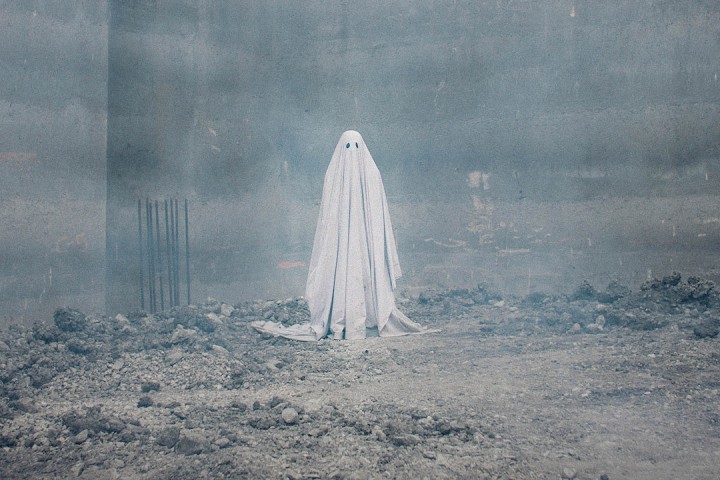
A car accident tragically takes his life, and as her life must move on, his spirit rises to wander as the silent, white-sheeted embodiment of any number of homemade Halloween costumes.
The irony of such a childlike image representing themes so vast and existential seems silly, but only for a few moments, until Lowery’s stationary camera and long, elegant takes wrap you in a strangely hypnotic trance.
After the curious detour of Pete’s Dragon last year, Lowery returns to the dreamlike imagery that drove his richly rewarding Ain’t Them Bodies Saints and evokes the best of Terrence Malick. Here, the Malick comparisons may be even more apt as A Ghost Story‘s narrative is loose and abstract, with long stretches of little to no dialogue.
Both Affleck and Mara (also Lowery’s leads from Bodies Saints) are deeply affecting, though a big part of the film’s conscience is instead revealed through the monologue of a random one-scene character. That’s fitting, for what makes this film so eerily touching is not what it tells but what it shows, and our ache for the couple comes in part from their staying out of our reach.
As the ghost travels through time and circumstance, it’s easy to see Woolf’s short story as a major inspiration for Lowery – right up to the sudden and glorious finale that’s sure to fuel plenty of conversation. Restless spirits amid the slow, silent march of mortality may sound like a horror show, but A Ghost Story is anchored by a loving hope that might bring a tear to the eye.
How is it even possible that we’ve recorded 109 Fright Club podcasts and we have not covered German horror yet?! It’s high time we remedy that situation, and we do so with the help of Fright Clubber #1, John Dean.
German has an incredible history in this genre, from some of the earliest and most memorable horror films through the contemporary indie gems that will become the next generation of classics. We talk through the five best – and a bunch of others you should really see.
5. Rammbock: Berlin Undead (2010)
Why does this film work?
Michael (Michael Fruith) arrives in Berlin to visit his recently-ex girlfriend. She’s not home. While he waits in her apartment, Berlin falls prey to the zombipocalypse.
It’s actually the rage virus, and it’s how well Rammbock plays like the Berlin equivalent of 28 Days Later or Quarantine that helps it excel.
Michael finds himself trapped inside his ex’s apartment building, scheming survival tricks with the plumber hiding out with him. The team work, strategy, human kindness and pathos all combine with really solid acting and more than a few well-choreographed action bits to help this film more than transcend familiar tropes.
You love these guys. You believe in them, and the idea that they won’t make it through this is dreadful. Director/co-writer Marvin Kren, blessed with a stellar cast, works your sympathies and your nerves.
4. Der Samurai (2014)
Writer/director Till Kleinert’s atmospheric Der Samurai blends Grimm Brother ideas with Samurai legend to tell a story that borders on the familiar but manages always to surprise.
Jakob, an unintimidating police officer in a remote German berg, has been charged with eliminating the wolf that’s frightening villagers. Moved by compassion or longing, Jakob can’t quite make himself accomplish his task – a fact that villagers and his commanding officer find predictably soft. But a chance encounter with a wild-eyed stranger wearing a dress and carrying a samurai sword clarifies that the wolf is probably not the villagers’ – or Jakob’s – biggest problem.
Pit Bukowski cuts a peculiar but creepy figure as the Samurai – kind of a cross between Iggy Pop and Ted Levine (The Silence of the Lambs’s Buffalo Bill). His raw sexuality offers the perfect counterpoint to the repressed Jakob (Michel Diercks).
Kleinert’s sneaky camera builds tension in every scene, and the film’s magnificent sound design echoes with Jakob’s isolation as well as that of the village itself. And though much of the imagery is connected in a way to familiar fairy tales or horror movies, the understated approach gives it all a naturalism that is unsettling.
It’s a beautiful film about embracing or forever suppressing your inner monster, but this is no ordinary Jekyll and Hyde retread. Kleinert’s vision is steeped in sexuality and sexual identity, giving it a fascinating relevance often missing in this style of horror film.
3. Goodnight Mommy (2014)
There is something eerily beautiful about Severin Fiala and Veronika Franz’s rural Austrian horror Goodnight Mommy (Ich seh, Ich seh).
During one languid summer, twin brothers Lukas and Elias await their mother’s return from the hospital. They spend their time bouncing on a trampoline, floating in a pond, or exploring the fields and woods around the house. But when their mom comes home, bandaged from the cosmetic surgery she underwent, the brothers fear more has changed than just her face.
Franz and Fiala owe a great debt to an older American film, but to name it would be to give far too much away, and the less you know about Goodnight Mommy, the better.
Inside this elegantly filmed environment, where sun dappled fields lead to leafy forests, the filmmakers mine a kind of primal childhood fear. There’s a subtle lack of compassion that works the nerves beautifully, because it’s hard to feel too badly for the boys or for their mother. You don’t wish harm on any of them, but at the same time, their flaws make all three a bit terrifying.
The filmmakers’ graceful storytelling leads you down one path before utterly upending everything you think you know. They never spoon feed you information, depending instead on your astute observation – a refreshing approach in this genre.
Performances by young brothers Lukas and Elias Schwarz compel interest, while Susanne Wuest’s cagey turn as the boys’ mother propels the mystery. It’s a hypnotic, bucolic adventure as visually arresting as it is utterly creepy.
The film is going to go where you don’t expect it to go, even if you expect you’ve uncovered its secrets.
https://www.youtube.com/watch?v=hisSd7qyY40
2. Funny Games (1997)
A family pulls into their vacation lake home, and are quickly bothered by two young men in white gloves. Things, to put it mildly, deteriorate.
Writer/director Michael Haneke begins this nerve wracking exercise by treading tensions created through etiquette, toying with subtle social mores and yet building dread so deftly, so authentically, that you begin to clench your teeth long before the first act of true violence.
His teen thugs’ calm, bemused sadism leaves you both indignant and terrified as they put the family through a series of horrifying games. And several times, they (and Haneke) remind us that we are participating in this ugliness, too, as we’ve tuned in to see the family suffer. Sure, we root for the innocent to prevail, but we came into this with the specific intention of seeing harm come to them. So, the villains rather insist that we play, too.
Once Haneke’s establishes that he’ll break the 4th wall, the director chooses – in a particularly famous scene that will likely determine your overall view of the film – to play games with us as well.
But it is the villains who sell the premise. With actors Arno Frisch and Frank Giering, the bored sadism that wafts from these kids is seriously unsettling, as, in turn, is the film.
1. Nosferatu (1922)
Best vampire ever. Not the seductive, European aristocrat, cloaked and mysterious, oh no. With Count Orlock, filmmaker F. W. Murnau explores something more repellent, casting an actor who resembles an albino naked mole rat.
Given that Murnau equates the film’s vampire-related deaths with the plague, this vermin-like image fits well. But more than that, thanks to a peculiarly perfect performance by Max Schreck, Murnau mines the carnality of the vampire myth for revulsion and fear rather than eroticism.
Famously, the film was meant to be the first Dracula movie, but Murnau could not work out an agreement with Bram Stoker’s estate (who later sued, and all copies of the film were nearly lost). He changed a handful of things in an attempt to avoid the eventual lawsuit and filmed anyway. Names are changed (Harker is now Hutter, Dracula is Orlock, etc.), and details are altered, but the story remains largely – well, criminally – the same.
The genius move is the spindly, bald hunchback for a vampire – why, he’s almost a European Monty Burns! Murnau’s mastery behind the camera – particularly his ability to capture the vampire’s shadow – made the film a breathtaking horror show at the time. But don’t discount this as dusty history.
Sure, the silent film style of acting appears nothing short of quaint today, and the Dracula tale has been told too, too often at this point. But Max Schreck is a freak, and in his bony, clawlike hands, Count Orlock remains the greatest vampire ever undone by a sinless maiden.
It is too damn hot to leave the house. You got your Cheetos or Pop Tarts and your beverage of choice – what to watch? Brand-spankin’ zombie movie? Captain America melting hearts? ScarJo’s conflicted cyborg? Glen Baby Glen Ross? We have the answers!
Click the title for a full review. And as always, please use this information for good, not evil.
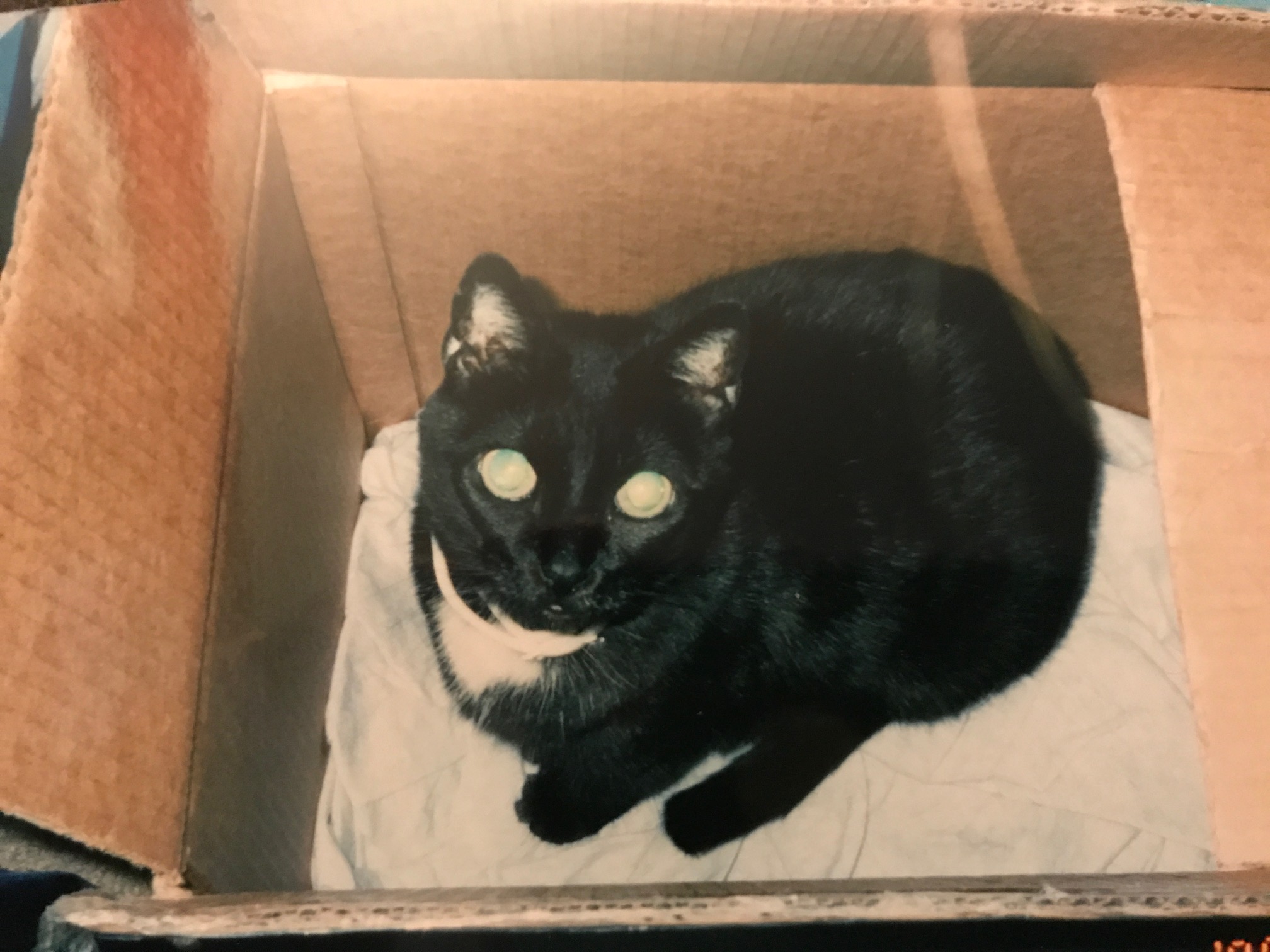
We were starting to think we had new pets. We had one already – a cat named Zappa. She’d been with us forever, rescued from Cat Welfare years ago when we were apartment dwellers and couldn’t have a dog. At the time, we felt like our 2-year-old son Riley needed a buddy.
A million years later, we still didn’t have a dog because Zappa was a 16-year old deaf, toothless cat who refused to eat anything but scrambled eggs and lunchmeat and really wasn’t adaptable enough for a sibling.
Since she was allergic to fleas, however, Zappa never went outdoors, so an outside pet or two would be OK.
But the heartbreak of outdoor pets, especially those that choose you rather than those you purchase, is that sometimes they waddle around in your pool and eat your store-bought feed and then fly away, never to return.
Like our ducks.
A mallard couple began hanging around our street in Grandview one spring.
They’d show up in the morning, loiter all afternoon, then fly away at night. There were sightings all over the neighborhood, and then, little by little, the waddling twosome zeroed in on a single yard for passing their daylight hours. Ours.
We have a small front yard far from any known body of water, so we hadn’t a clue s to why the ducks kept returning. We tried not to disturb them too much – made sure we entered and exited by way of the back door, scattered some birdseed for them. They seemed to appreciate it day after day, week after week, and we got used to seeing them.
The female would hide between two little bushes, and the male would sit in the middle of our front yard. We took it that he was guarding her, and we hoped she was making a nest.
We had become too attached. In fact, my husband, George, went the wild bird store to find out what was the best kind of feed for Gary and Fiona.
Yes, our son gave them names.
Once you name them, you’re doomed.
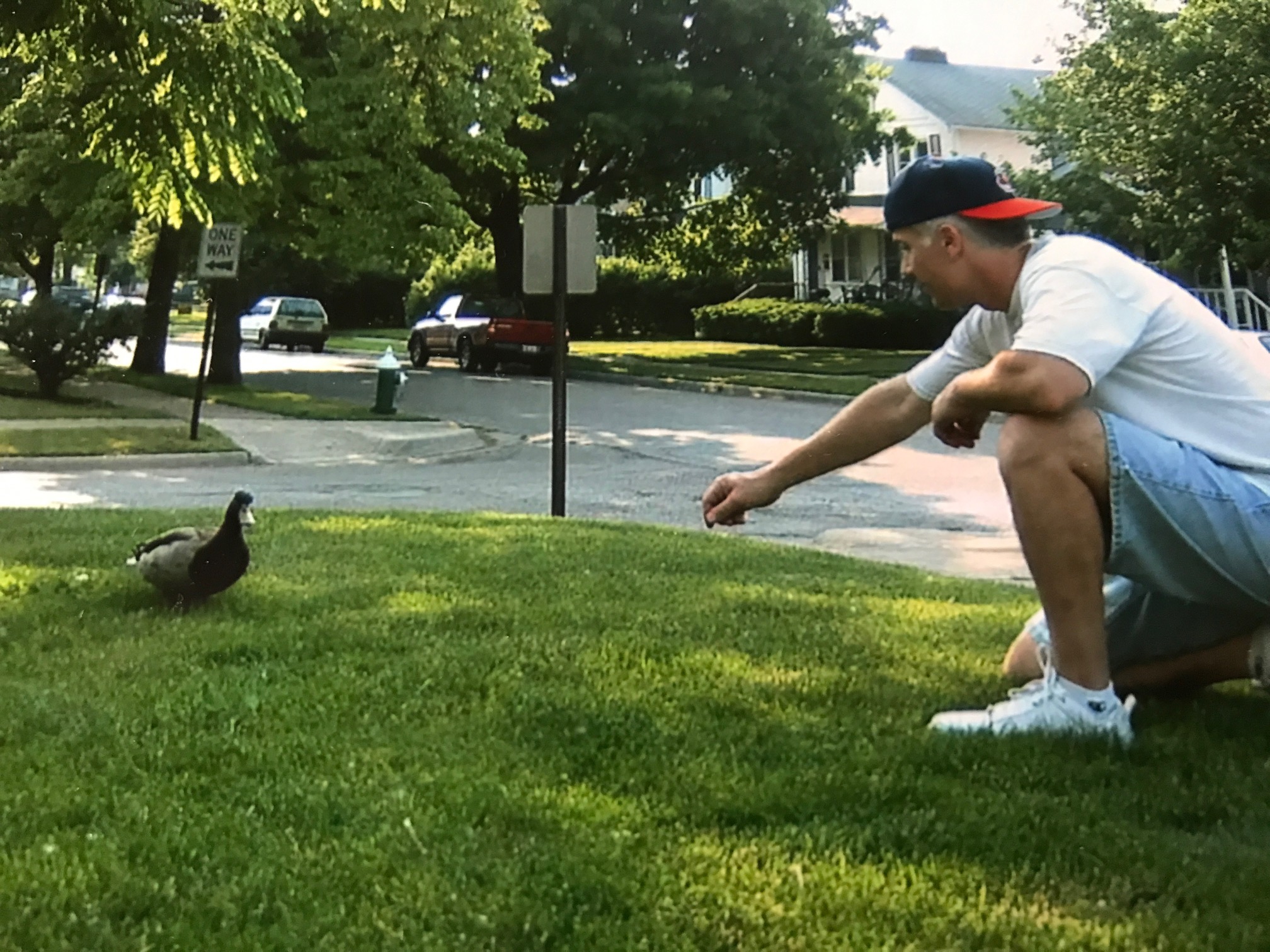
They seemed to like us, too. I think their favorite was George, who would approach them gently, shaking his jug of wild duck feed, and Gary would waddle right up to him.
George was utterly smitten.
In fact, I came home from work once to find a blue Scooby-Doo wading pool in my small front yard. Some might consider it unusual for a grown man whose only child was in high school to buy a toddler’s pool; others might find the thing an eyesore.
Nonetheless, there it was, and Fiona seemed pleased. So much so, the couple threw a few pool parties. We began to see a second female, Simone, who would show up to splash around.
We became mildly famous in the neighborhood- like those people who string too many Christmas lights, causing mild traffic jams.
We occasionally found children in our front yard trying to pet or catch Gary. We shooed them away, sometimes unpleasantly. As it turns out, we liked Gary and Fiona better than the neighbor kids.
I came home one day to find a teenage girl sitting in my front lawn, trying to coax Gary onto her lap. Her embarrassed boyfriend waited on the sidewalk. When he saw me, he said nervously, “My girlfriend likes your ducks.”
I told him thanks, but they weren’t my ducks. They just hung out in my yard. Like his girlfriend.
Shockingly oblivious and absorbed in her commune with nature, she asked me where I’d gotten them. I said again that they weren’t mine, to which she replied, “So I could just take on?”
“Get out of my yard, kids.”
I was nicer than George, though, who found this menacing neighbor boy chasing Gary around the yard. George shouted and then chased him down the street. It was outstanding.
We even received a complaint from a concerned citizen who told us we had no business keeping wild animals. Of course, we weren’t keeping them at all. They didn’t live with us; they were just well-liked squatters.
Then, they flew off one evening never to return.
For weeks George would listen for their quacking in the morning when he got up for work, but all we had left was a half-empty Scooby-Doo pool in the front yard and a half-full jug of duck feed on the back porch – and the memory of the heartbreakers who decided suburban life was not for them.
But we’re keeping an eye on this possum we’ve seen hanging around the garbage cans.
Click HERE and join us in The Screening Room this week to break down Dunkirk, Valerian, Fist Kill, The Little Hours, Killing Ground and what’s new on home video!
Given the recent, tragic passing of filmmaking icon George A. Romero, you may find yourself nostalgic for the walking dead. Not just any hungry, re-animated cadaver, but the kind that serve as a parable or vehicle for self-awareness. The slow moving kind. The kind you don’t know whether to fear, pity or admire.
It Stains the Sands Red is here for you.
Director/co-writer Colin Minihan, with co-writer Stuart Ortiz (formerly known collectively as The Vicious Brothers), tests your patience, but the effort mostly pays off.
We open with some impressive aerial shots of the smoking, neon ruin of the Las Vegas strip. Cut to another gorgeous aerial of a sports car zipping up a desert highway. In it, a couple of coked-up strip club lowlifes, Molly (Brittany Allen) and Nick (Merwin Mondesir), are escaping to an airfield where they’ll meet with other lowlifes and head to an island off Mexico.
Naturally, this isn’t going to work out. But what Minihan has in store will surprise you.
He’s made a couple of fine choices with his film. The point of view character is not only an unlikely protagonist – an unpleasant thug with a drug habit – but she’s also female.
Soon the car goes off the road and one meathead catches her scent, and suddenly Molly’s stripper shoes are not her biggest problem as she faces a 30-mile trek across the desert to the airfield.
Molly names her zombie pursuer Smalls, but she may as well call him Wilson.
What develops is an often fascinating, slow moving but relentless chase as well as a character study. With a protagonist on a perilous journey toward redemption, It Stains the Sands Red takes a structure generally reserved for the man who needs to rediscover his inner manhood and tells a very female story.
Very female. Menstruation and everything.
Credit to the formerly Vicious for investing in a female’s perspective, and for doing it some level of justice.
Allen makes a great anti-heroine. Convincingly hard-knock and difficult to like, she never becomes the would-be lunch meat you root against.
As is too often the case in film – horror, thriller or otherwise – the only way a female can tap that survival instinct is by way of the maternal one. This picture becomes too predictable and too sentimental once it embraces this cliché, but that’s not reason enough to condemn it.
Two nuns lead a wandering donkey back home to their convent in the 1600s. The groundskeeper offers them a quiet, respectful good morrow. In response, the sisters promptly unleash a torrent of f-bomb filled abuse his way, with an aggressive command to keep his perverted eyes to himself.
Welcome to the The Little Hours, a desert-dry sendup of one of the classic tales in The Decameron, a 14th century Italian novel.
This update from writer/director Jeff Baena (Life After Beth, script for I Heart Huckabees) keeps the original text’s basic premise. Servant Massetto (Dave Franco) is running for his life after being caught canoodling Francesca (Lauren Weedman), the wife of Lord Bruno (Nick Offerman). Father Tommasso (John C. Reilly) offers Massetto refuge as the new groundskeeper at the convent, but only if he pretends to be a deaf/mute.
Deal.
The handsome Massetto is fresh meat to the ladies of the convent, many of whom are not there from a Godly calling. In short order, Massetto is juggling the sweet Alessandra (Alison Brie), the crazy Fernanda (Aubrey Plaza, also one of the film’s producers) and the sexually confused Ginerva (Kate Micucci).
The Holy Grail scene with Sir Galahad in Castle Anthrax will come to mind, and not just for the lustful young ladies. The entire affair has the feel of a Monty Python setup that just never turns a silly corner. The extremely talented ensemble (which also includes Molly Shannon, Fred Armisen and more) plays it nearly stone-faced all the way, just daring you to think there is anything humorous about their anachronistic sex farce.
Some of it is screamingly funny, and other times the film falls flat. Through it all, though, there runs a sly comment on the treatment of women (specifically in the Church) that’s smart and well-played.
It’s never a consistent gut-buster, but The Little Hours is inspired, ambitious lunacy that is always entertaining.
There is a pleasantly madcap quality to the environments filmmaker Luc Besson creates. His best work combines that untamed world – whether earthbound and criminal or colorfully intergalactic – with unusual characters performing slickly choreographed action.
His lesser efforts don’t. On that note, meet Valerian and the City of a Thousand Planets.
Based on France’s beloved comic series about a pair of time and space-hopping agents, Besson’s film looks pretty cool.
Not as good as Christopher Nolan’s Dunkirk, or Matt Reeves’s War for the Planet of the Apes, or Spider-Man: Homecoming or Baby Driver or about one out of every three movies released so far this summer.
At this point in cinematic history, you have to bring more to the screen than visual flair.
What else you got, Luc?
Because it’s not acting.
Dane DeHaan plays Valerian. Poorly. Wildly miscast as the scoundrel flyboy who might find love with his partner, the often reliable actor cannot make his way through Besson’s stilted, lifeless banter.
DeHaan has a better time of it than Cara Delevingne as Valerian’s strong-willed partner Laureline – perhaps because Delevingne has no discernible talent.
Still, the writing is awful and she’d be in a tough spot even if she did have talent. Just ask Clive Owen. He has talent galore and even he embarrasses himself with this garbage.
To be fair, Valerian is basically a kids’ movie. Except for that extended and utterly needless stripper sequence showcasing Rihanna. But if you cut that out (if only we could – along with at least another 15 minutes, because damn this movie is long!), then you basically have a kids’ movie.
Not a good one. So just don’t set your standards too high. Go in looking for an overly long, addle-brained extra-terrestrial romp that looks great and you’ll be fine.
Unless you really want quality acting. Valerian an’t help you there.
The big doin’s in Granville, Ohio a few months back come to the big screen this weekend with the Central Ohio premiere of First Kill, a thriller about …big doin’s in Granville.
Sheriff Howell (Bruce Willis) calls a recent bank heist, “the biggest crime to hit Granville in decades,” and he warns old acquaintance Will Beamon (Hayden Christensen) to keep alert while he’s in town as there’s some dangerous fugitives on the run.
Will’s a hometown boy who made good in New York as a slick Wall St. broker with a hot big city wife (Megan Leonard). But, with their young son Danny (Ty Shelton) having bully problems in school, Will figures the best medicine is a family deer hunting trip back to his old stomping grounds.
Things go awry when father and son see something they shouldn’t, and suddenly Will must recover the stolen bank loot before Chief Howell does and use it as ransom for Danny’s safe return.
Principal shooting on the film was done in Granville last year, with a few additional scenes completed in downtown Columbus. After Travolta’s I Am Wrath and Schwarzeneggar’s Aftermath, First Kill marks the third big screen icon to film in Central Ohio in just the last few years.
Chris Hamel, Board President of the Greater Columbus Film Commission, says that’s more than a coincidence.
“There is a lot of interest in making movies here and I think more and more productions will be choosing Ohio in the coming years. We are pleased that First Kill could be shot in central Ohio and excited to host the Columbus premiere at the Gateway Film Center.”
Director Steven C. Miller, who’s been prolific with these B-movie thrillers, gives a nice shine to the cliche-heavy script from writer Nick Gordon (Girl House). The “hunter will become the prey” foreshadowing is a bit thick in the early going, the setup leans on contrivance, and few if any of the plot turns will surprise, but once First Kill gets rolling into Miller’s well-paced groove, it’s not a bad ride.
Though Christensen is still struggling to carry a film, Willis supplies his natural gravitas and Ohioan Shelton makes an impressive big screen debut. As young Danny, Shelton’s easy rapport with Gethin Anthony (as kidnapper Levi) is a constant highlight.
First Kill can’t hit the Hell or High Water heights it aspires to, but hey, few can. Can it dust off some well-worn genre tropes and entertain? Ten-four.
First Kill makes its Central Ohio premiere July 21st, 7:30 at Gateway Film Center.
Christopher Nolan, one of the biggest imaginations in film, takes on a WWII epic – the truly amazing evacuation of 400,000 British troops from certain death on the beaches of Dunkirk, France.
Nolan = epic, yes. His career is marked by complicated ideas, phenomenal visual style and inventiveness, ever-increasing running times and head-trippery. So, if you’re prepared for a long, bombastic, serpentine, heady adventure, you are not prepared for Dunkirk.
Though the word epic still fits.
Nolan’s storytelling is simultaneously grand and intimate. To do the story justice, he approaches it from three different perspectives and creates, with a disjointed chronology, a lasting impression of the rescue that a more traditional structure might have missed.
The great Mark Rylance brings in the perspective of the courageous Brits who manned their pleasure boats and headed toward the beleaguered troops to ferry them to safety.
From the air, Tom Hardy and Jack Lowden offer the view (literally and figuratively) of the RAF, undermanned and outgunned, maneuvering to end as much of the carnage as possible while the evac takes place.
And on the ground amongst those desperate for removal is young Tommy (Fionn Whitehead), the actor with the most screen time and quite possibly the fewest lines. He’s the reminder that these soldiers were heroes – flawed, brave, terrified and young.
The cast is appropriately huge, including a surprisingly restrained Kenneth Branagh as well as James D’Arcy, Cillian Murphy, Barry Keoghan, Tom Glynn-Carney and, of course, One Direction’s Harry Styles (who commits himself respectably).
Solid performances abound without a single genuine flaw to point out, but the real star of Dunkirk is Nolan.
Talk about restraint. He dials back the score – Hans Zimmer suggesting the constant tick of a time bomb or the incessant roar of a distant plane engine – to emphasize the urgency and peril, and generating almost unbearable tension.
Visually, Nolan’s scope is breathtaking, oscillating between the gorgeous but terrifying open air of the RAF and the claustrophobic confines of a boat’s hull, with the threat of capsize and a watery grave constant.
What the filmmaker has done with Dunkirk – and has not done with any of his previous efforts, however brilliant or flawed – is create a spare, quick and simple film that is equally epic.