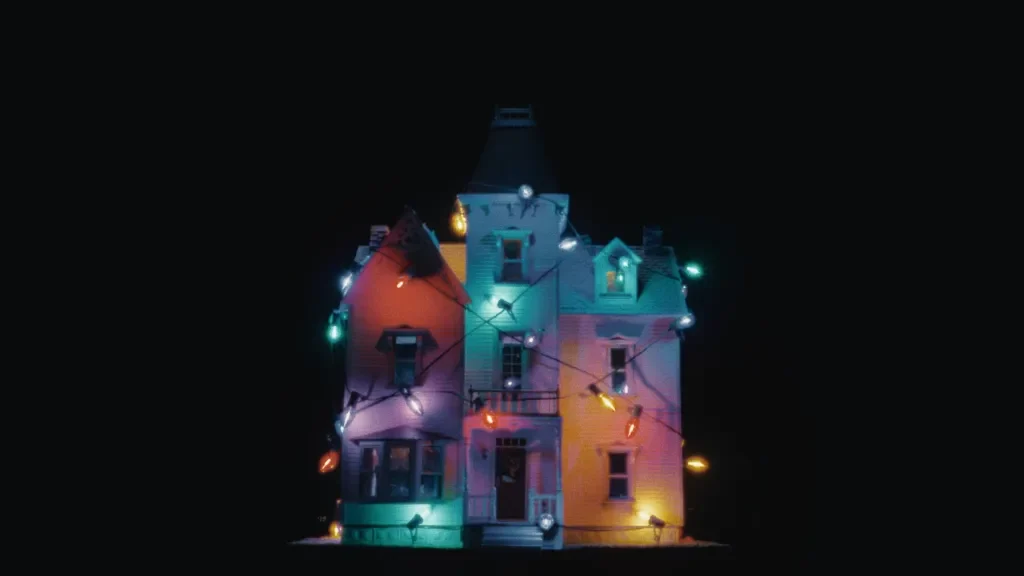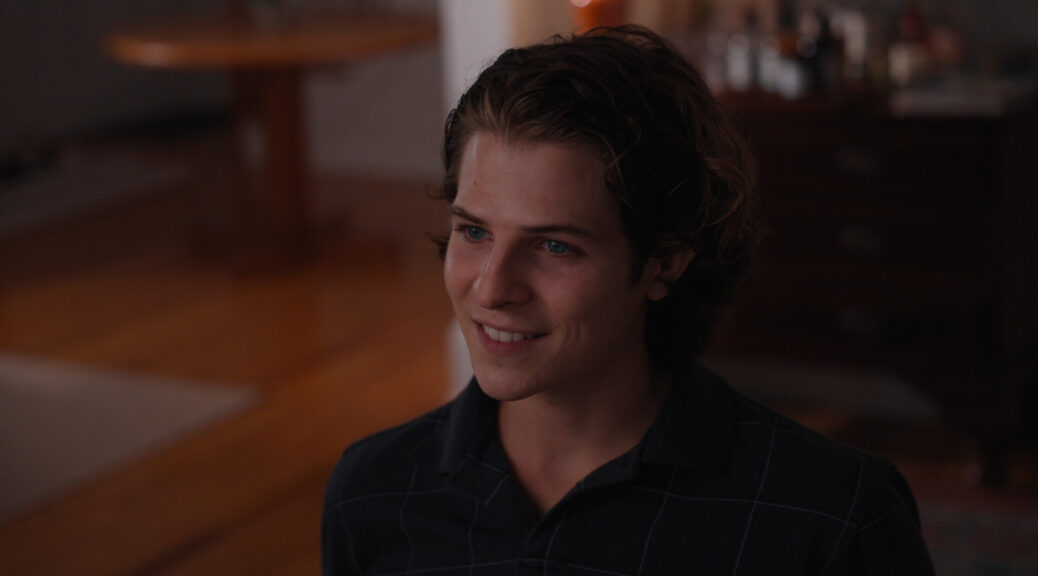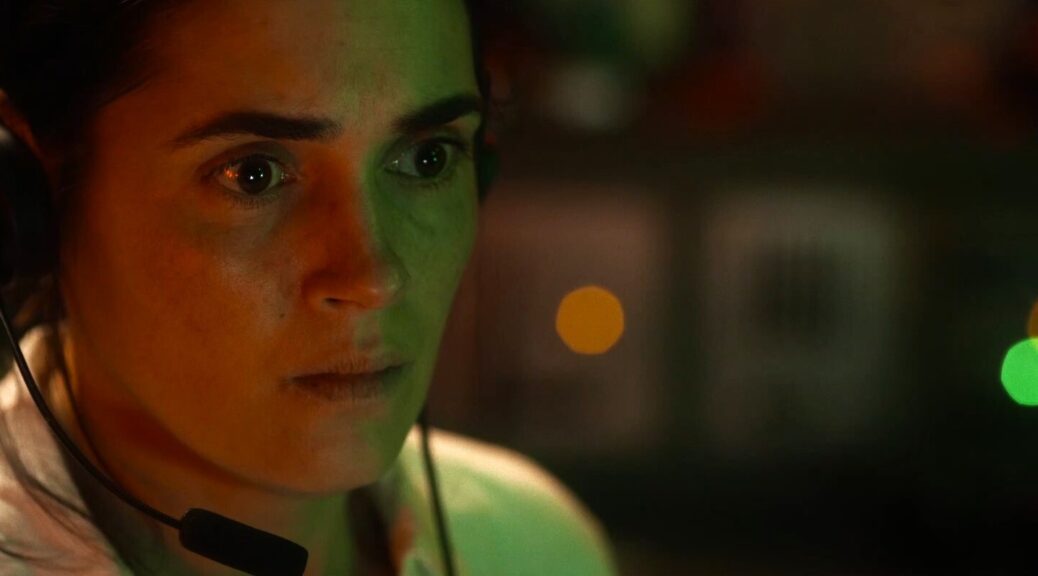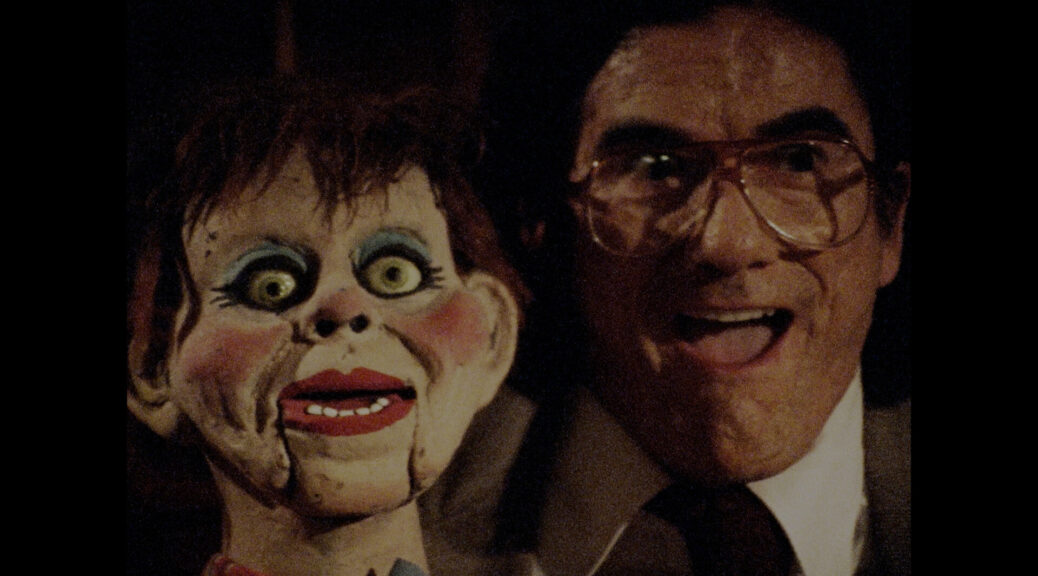
For as many horror films as I watch, it’s rare for one to truly unnerve or scare me. The ones that do tend to hit a deeply held fear or anxiety. Director Pedro Martín-Calero’s film The Wailing hits one of those fears—the fear of not being believed.
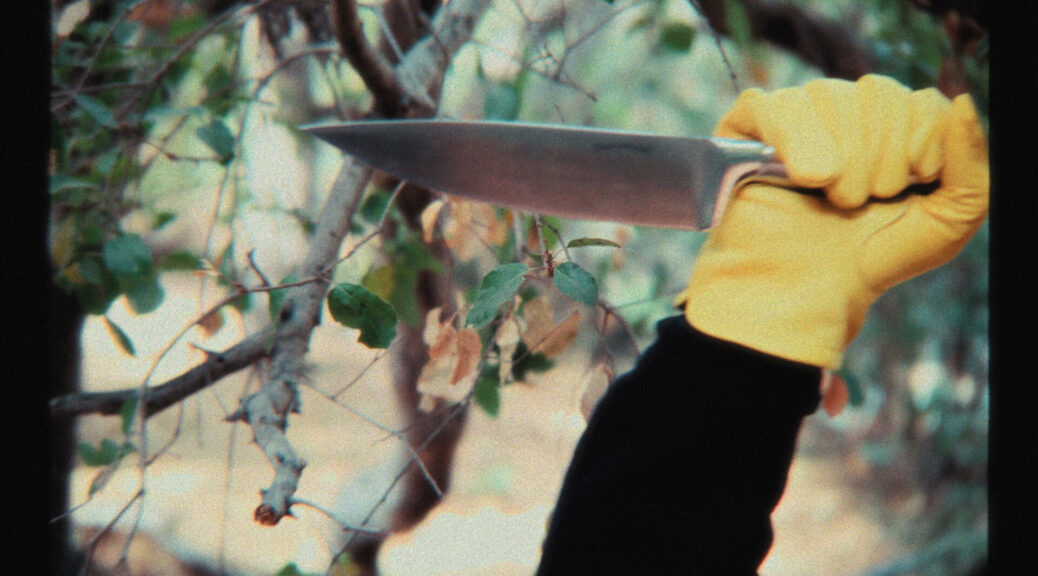
Co-writing with Isabel Peña, Martín-Calero movie follows several women as they encounter a sinister presence. Each section of film follows a different woman, traveling backward and forward in time to show how each one is impacted by the violent entity in their lives.
The first is Andrea (Ester Expósito). While walking home one day, the music on her phone is interrupted by the ethereal wailing of one or more women.
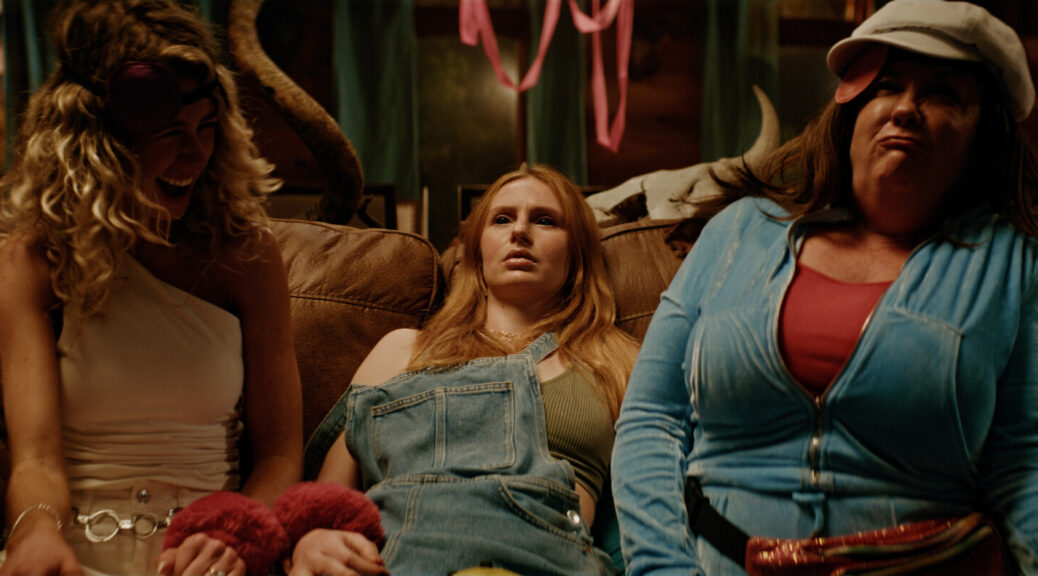
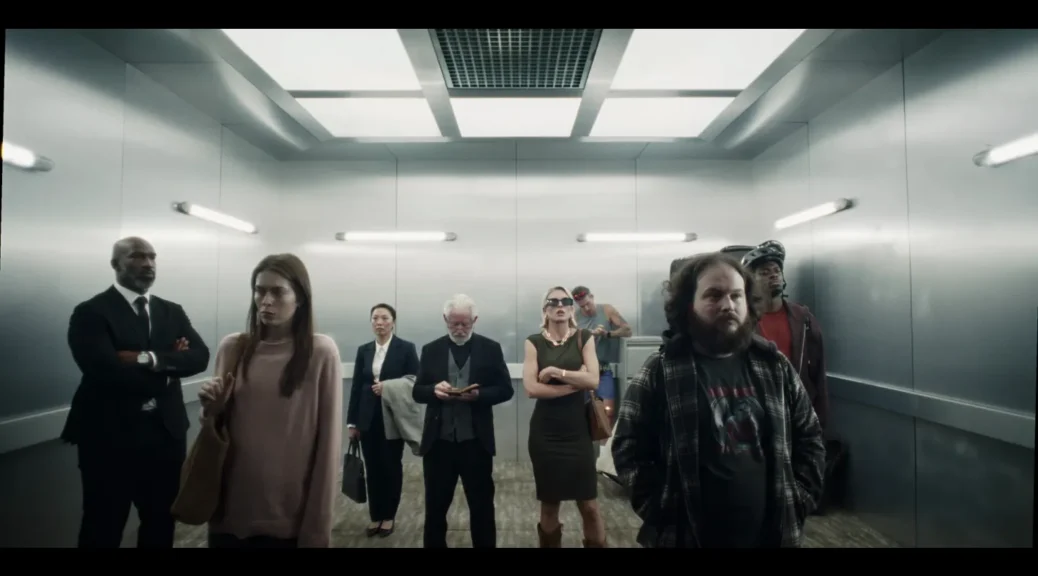
The film’s tension picks up quickly. One especially frightening scene pairs the fear of not being believed with the anxiety of being ignored. As Andrea pleads and screams for help in a crowded room, onlookers simply stare at her, unmoving and unmoved.
It’s these moments, and several quieter ones, where the film excels. As the suspense and mystery grows, it’s clear the takeaway is that when women are ignored, everyone is the worse for it. While the women are the most negatively and directly impacted, the violence has a sinister spread with the potential to affect everyone in it orbit.
The only element the film struggles with is how to convey text conversation. The choice to overlay images with text messages is distracting and negates the rising tension.
Fortunately, this is only an issue during Andrea’s story. Then the film moves back in time to follow Camila (Malena Villa) as she interacts with Andrea’s mother, Marie (Mathilde Olliver).
The Wailing excels in following a reverse timeline to explore the extended metaphor of the long-term effects of not believing women. The film ends on what could be construed as a hopeful note, but the choice of how we move forward is left to the audience to decide. Believing women is the first step; what comes next is up to us.
In 2023, Five Nights at Freddy’s—a predictable PG-13 horror built on a video game—delivered a bit of gimmicky fun for fans of the game and little to nothing for the rest of us. So, hooray! There’s a sequel.
Director Emma Tammi returns, with video game creator Scott Cawthon handling the sole screenplay credit this go-round. His script sees Mike (Josh Hutcherson) still avoiding therapy for himself or his disturbingly naïve 11-year-old sister Abby (Piper Rubio). And Vanessa (Elizabeth Lail) is so bad off she’s taking psychological advice from Mike.
Naturally, all of them are suffering the trauma of the bloodthirsty animatronics that came to life on night security Mike’s watch last time around, possessed by Vanessa’s evil dad’s. But Mike’s painting a house and Abby’s into robotics, so I’m sure they’re fine!
Wait, they’re not. And through a fairly convoluted storyline that sees one of Seinfeld’s neighbors get The Story of Ricky treatment, the trio not only brings the Country Bear Murder Spree back to life, they set them free to roam the town.
Scenes are slapped together with a gleeful disregard to continuity, and again, the macabre sense of humor that might have kept the film afloat is entirely missing.
Freddy Carter is a fun addition as the villainous Michael. (Who, honestly, names one character Mike and another one Michael?) And there is a Skeet Ulrich sighting. Plus, a new animatronic—kind of a goth Miyazaki styles marionette—is cool. And though I’d predicted McKenna Grace to be a kind of cold open kill, instead she gets a bit of a creepy, if small, character arc.
I realize the film is aimed at a young audience, but Tammi and team could at least pretend to respect them as viewers.
Hutcherson can act, and I’m confident someday he’ll get another film that lets him do that. Until then, Five Nights at Freddy’s 2 ends with a clear path to a third installment. Hooray.
Co-writers/directors Paul Grandersman and Peter S. Hall experiment with concept of found footage in an often unique and puzzling feature, Man Finds Tape.
While there are times that the film feels less than original—an influencer suggests he’s stumbled onto something supernatural only to be believed a fraud—the mystery itself is something I haven’t seen before.
Lynn (Kelsey Pribilski) and her brother Lucas (William Magnuson) are not close. She left their small Texas town shortly after their parents died, while Lucas knocked around the old house, falling slowly into depression, until he came across a MiniDV with his name on it. He shares the find online, creating a big conspiracy that screws up Lynn’s documentary career.
So, when he calls her up asking her to watch another video, she’s understandably, even angrily reluctant. But she’s worried about him, so she watches. And while the footage itself is genuinely intriguing, Lynn’s more unnerved by the affect the footage has when her brother watches it. Turns out, every person living in Larkin, Texas has the same reaction. Only Lynn is unaffected.
So, Lynn sets out to document what’s happening, which is how all the various formats of found footage are stitched together. This gives the film a Shelby Oaks or Strange Harvest vibe that leeches some originality from the concept.
But for a good while, it is an interesting concept. Both Pribilski and Magnuson convince as bickering siblings, and most of the ensemble—primarily playing townies happy to be interviewed for Lynn’s documentary—are a lot of fun. Meanwhile, Brian Villalobos approaches his role as “The Stranger” with a fascinating air of smug disgust.
Man Finds Tape delivers an often-engrossing metaphor about parasitic predation dressed as religion, and its particularly harmful effect on small, Southern towns. But Hall and Gandersman write themselves into a corner and the final solution to the mystery is unsatisfying. It’s too bad, because for a good while, they really had something.
Stephen Sondheim’s Merrily We Rolling Along may have taken a while to attain beloved musical status, but it’s certainly getting the flowers now.
Closing just 16 performances after its 1981 Broadway premiere, the show got various rewrites and new stagings over the years, a 2016 documentary on the original production, and finally a Tony award-winning revival in 2023.
And while fans wait for Richard Linklater’s adaptation, which is being filmed over the course of twenty years, director Maria Friedman delivers a film pro shot of a June 2024 performance at New York’s Hudson Theatre.
Tony winners Jonathan Groff and Daniel Radcliffe are songwriters Franklin Shepard and Charley Kringas. When we meet them in 1976, the friendship is strained over Frank’s decision to “go Hollywood” and produce movies. Writer Mary Flynn (Lindsay Mendez, 2018 Tony winner for Carousel) – their third musketeer – tries to make peace but is often drunkenly sarcastic about the cost of their quest for success.
Frank’s self absorption and philandering ways have taken their toll on his family and friends, and as Frank confronts the lowest point in his life, the show begins a series of “Transitions” that gradually roll back to the beginning of the three long friendships.
It’s easy to see why musical theatre fans love this show. It’s a salute to dreamers everywhere – Broadway dreamers especially – sporting several Sondheim tunes (“Opening Doors,” “Old Friends,” “Our Time”) that have become favorites.
The ensemble is fantastic, starting right at the top with the three leads. Of course, Groff (Hamilton‘s original King George) and Mendez are longtime musical theatre powerhouses, so it’s Radcliffe’s absolutely charming turn that will be the biggest surprise.
It is Merrily‘s direction that ends up hampering its effectiveness on screen, with a cramped approach that often yearns for room to breathe. Just earlier this year, Hamilton‘s film pro shot achieved a near perfect balance of intimacy and movement. Friedman leans too heavily on quick cuts and close ups, which tends to neuter the live feeling that is essential to the pro shot experience.
Still, this is one that musical fans should make time for, even if it can’t blend stage and screen quite as merrily as we’ve seen before. But for holding us over for the next couple decades? It’ll do.
It’s been five years since Chloé Zhao took home two Oscars, one for directing and one for adapting the screenplay for Nomadland. She returns to form in both respects with Hamnet, the cinematic adaptation of Maggie O’Farrell’s novel that imagines the way grief may have shaped Shakespeare’s greatest tragedy.
Zhao’s film opens stunningly on Jessie Buckley, nestled womblike among the roots of a massive tree, her face and hands dirty, her hair tangled with leaves. Buckley is Agnes, believed by those in town to be the daughter of a forest witch. Agnes comes from what is.
Will (Paul Mescal) imagines what can be. The hyper real poetry of Zhao’s camera perfectly articulates their yin/yang balance.
It’s with Will that we first see Agnes’s nurturing side applied to humanity rather than the wild. It’s a trait that will become the backbone of their story. Her love is powerful, messy, and unforgiving, and Buckley’s more than up to the task. Her performance, as is so often the case, feels dangerous and uncensored. And gazing adoringly at her, inspired and nurtured, is Will. If there is a better face in cinema than Mescal’s for earnest yet doomed longing, I don’t know whose it could be.
The young cast more than keeps pace. Jacobi Jupe is particularly amazing and utterly heartbreaking as Will and Agnes’s boy, Hamnet. (His older brother Noah Jupe also impresses later in the film as the actor portraying the great Dane in the first ever stage production.)
By the time the most famous lines in theatre are uttered, it takes restraint and rawness. The slightest hint of artifice and the previous ninety minutes are ruined, the film a gimmick. But Zhao never skirts artifice, not even when she makes a Marvel movie, and Mescal delivers lines we know by heart as if they were freshly pulled from an open wound.
Zhao has crafted, aided by magnificent performances and hauntingly stunning cinematography from Lukasz Zal (The Zone of Interest, Cold War), a film that is shattering in its articulation that it is the depth of love that deepens and amplifies the pain of grief.
People make movies about grief all the time. We can expect one every Oscar season. But what Chloé Zhao does with Hamnet is ask us to experience that grief, not just witness it, and in experiencing it we understand the power and vital importance of art.
Using the word “Pig” in the title of your film automatically conjures up a disgusting mix of imagery before you’ve seen even one frame of film. As Sam Jackson’s Jules says in PulpFiction, “Pigs are filthy animals.” That they may be, but director Kevin Lewis sets up a nice curveball with Pig Hill, one that delivers a more psychologically disgusting film than a visual one.
Like most small towns in America, Meadville, Pennsylvania has its own local legend: that of the pig people of Pig Hill. Everyone has their own theory about the pig people, but the one true throughline from all is that they are some ghastly mix of human beings and pigs. Carrie (Rainey Qualley) and her brother Chris (Shiloh Fernandez, Evil Dead) have lived in Meadville their entire lives, and the pig people story has always loomed large. As recent personal struggles bring both siblings to emotional low points, the prospect of writing a book about Pig Hill gives Carrie a potential ticket out of Meadville. As Carrie’s investigation into pig hill deepens, so does the mystery surrounding a growing number of women who have been going missing.
Pig Hill is a cornucopia of a film. There’s a dash of Texas Chain Saw Massacre mixed with a pinch of The Silence of The Lambs, and finally a bit of The Hills Have Eyes for taste. Story and tone aren’t a problem as Lewis (Willy’s Wonderland) weaves his influences together into a satisfying and cohesive whole. As someone who clearly knows the horror genre inside and out, Lewis wickedly plays with audience expectations until the very end.
Outside of a pretty standard open, Pig Hill isn’t the stalk n’ slash fest you might expect. When the film gets down and dirty – it does so with gusto and never forgets that there are characters experiencing the horror around them. The cast ends up doing the bulk of the heavy lifting as it’s a surprisingly dialogue-heavy film that takes the time to flesh out characters. While the cast may not rival that latest P.T. Anderson flick, they all work well for the film. Qualley and Fernandez bounce off one another well, and former teen heartthrob Shane West (A Walk toRemember, League of Extraordinary Gentlemen) brings some name recognition as the film’s romantic lead and pseudo-hero.
Lewis takes a big swing toward the end of the film that might seem too telegraphed, but it still doesn’t lessen the impact once the layers get pulled back more and more. It lets Pig Hill end on a horrific emotionally charged note instead of one covered in blood and guts.
We’ve gone exploring to find all our Christmas decorations! It led us to the basement (which we discuss with Jamie Ray over on his amazing Fave Five from Fans podcast), and into the attic! That’s where we stay for a countdown of the best attics in horror movies!
5. 30 Days of Night (2007)
A pod of survivors hides in an attic, careful not to make any noise or draw any attention to themselves. One old man has dementia, which generates a lot of tension in the group, since he’s hard to contain and keep quiet.
There’s no knowing whether the town has any other survivors, and some of these guys are getting itchy. Then they hear a small voice outside.
Walking and sobbing down the main drag is a little girl, crying for help. It’s as pathetic a scene as any in such a film, and it may be the first moment in the picture where you identify with the trapped, who must do the unthinkable. Because, what would you do?
As the would-be heroes in the attic begin to understand this ploy, the camera on the street pulls back to show Danny Huston and crew perched atop the nearby buildings. The sobbing tot amounts to the worm on their reel.
Creepy business!
4. Hereditary (2018)
With just a handful of mannerisms, one melodic clucking noise, and a few seemingly throwaway lines, Ari Aster and his magnificent cast quickly establish what will become nuanced, layered human characters, all of them scarred and battered by family.
Art and life imitate each other to macabre degrees while family members strain to behave in the manner that feels human, seems connected, or might be normal. What is said and what stays hidden, what’s festering in the attic and in the unspoken tensions within the family, it’s all part of a horrific atmosphere meticulously crafted to unnerve you.
Aster takes advantage of a remarkably committed cast to explore family dysfunction of the most insidious type. Whether his supernatural twisting and turning amount to metaphor or fact hardly matters with performances this unnerving and visual storytelling this hypnotic.
3. The Birds (1963)
As The Birds opens, wealthy socialite Melanie Daniels (Tippi Hedren) has followed hottie bachelor lawyer Mitch (Rod Taylor) to little Bodega Bay, his hometown, to play a flirtatious practical joke of cat and mouse. But you know what will eat both cats and mice? Birds.
Hitchcock introduces a number of provocative characters, including Hedren’s not-that-likeable heroine. Suzanne Pleshette’s lovelorn schoolteacher’s a favorite. But whatever the character, the dread is building, so they need to work together to outwit these goddamn birds.
The film is basically an intelligent zombie film, although it predates our traditional zombie by a good many years, so maybe, like every other dark film genre, the zombie film owes its history to Hitchcock. The reason the birds behave so badly is never explained, they grow in number, and they wait en masse for you to come outside. No one’s off limits – a fact Hitch announces at the children’s party. Nice!
Though the FX were astonishing for 1963, the whole episode feels a bit campy today. But if you’re in the mood for a nostalgic, clean cut and yet somehow subversive foray into fairly bloodless horror, or if, like one of us, you’re just afraid of birds, this one’s a classic.
2. The Changeling (1980)
George C. Scott is a grieving father isolating himself in an old mansion. But something in that mansion in Peter Medak’s atmospheric ghost story is drawn to him.
The Changeling is a beautiful, haunting mystery full of melancholy and grief. Scott’s big, gruff performance breaks with vulnerability just often enough to jerk a tear or two in a film that’s spooky, lovely, and satisfying.
1. Black Christmas (1974)
Director Bob Clark made two Christmas-themed films in his erratic career. His 1940s era A Christmas Story has become a holiday tradition for many families and most cable channels, but we celebrate a darker yule tide tale: Black Christmas.
Sure, it’s another case of mysterious phone calls leading to grisly murders; sure it’s another one-by-one pick off of sorority girls; sure, there’s a damaged child backstory; naturally John Saxon co-stars. Wait, what was different? Oh yeah, it did it first.
Released in 1974, the film predates most slashers by at least a half dozen years. It created the architecture. More importantly, the phone calls are actually quite unsettling, there is something fantastically horrifying staring out the window in the attic, and the end of the film is a powerful, memorable nightmare.
This week in the screening room, Hope & George review Wake Up DeadMan: A Knives Out Mystery, Zootopia 2, Eternity, The Thing With Feathers, Left-Handed Girl, Jingle Bell Heist and Tinsel Town.
Early on, Eternity may feel like a Hallmark Channel movie that made it to the big leagues. But thanks to a great cast and some easygoing humor, the whiffs of schmaltzy contrivance at its core are gone before that first commercial would have kicked in.
Elizabeth Olsen and Miles Teller play Joan and Larry. Married for 65 years, they drag their bickering selves to a family gender reveal party where Larry promptly chokes to death.
Once Larry accepts his fate, his helpful Afterlife Coordinator, Anna (Da’Vine Joy Randolph) gives him the scoop. Larry has one week to browse a very theme park-like showroom for all the eternity options available, and then make his choice.
But while he’s mulling, Larry meets Luke (Callum Tuner), who took a job as the showroom bartender rather than make an eternity choice at all.
Why would he do that? Because Luke is Joan’s first husband, who died in the Korean War and has been waiting 67 years for Joan to arrive.
And right on cue, the cancer that Joan and Larry had been hiding from their family sends Joan to her own Afterlife Coordinator, Ryan (John Early), who explains the obvious.
Joan’s Heavenly table only seats two, and she has one week to decide.
Director/co-writer David Freyne starts winning us over early with the Disneyfied weigh station. Various booths offer some well-played sight gags (“Choose Wine World!” “Man Free World Sold Out!”) while Anna and Ryan begin increasingly competitive campaigns for their clients’ futures.
It’s all good, high concept fun, but the three leads make the film a charmer that’s pretty hard to resist. Turner leans into Luke’s reputation as a perfect war hero too handsome even for Joan (I’m sorry, what? That’s Elizabeth Olsen!), while Teller is a perfect goofball trying to compete with Luke’s pristine memory.
And Olsen is the sweet, harried soul at the center, flush with the return of the young love fighting to drown out decades of memories.
In lesser hands, all three of these characters would become ridiculous posers, but the terrific ensemble and a deceptively smart script end up working wonders. Yes, you can probably guess how some of this plays out, but even that can’t spoil the film’s winning flight of fantasy.
Character-based with bits of nifty visual flair, Eternity delivers some warm fuzzies perfect for the season, even without any time spent in an afterlife Holiday World.
It’s been a decade since Disney rewrote their longstanding history of rocking no boats when the delightfully fearless Zootopia asked its audience to confront our own biases and recognize the way we are programmed to fear the weak to benefit the powerful.
Animators Jared Bush and Byron Howard maybe looked around and noticed certain themes trending again. Zootopia 2, which both direct and Bush writes solo this time, benefits from the same fantastic casting, same visual splendor, same wit as their 2016 Oscar winner. But Bush’s writing burns a little more brightly with anger this time, however charmingly packaged.
Bunny cop Judy Hopps (Ginnifer Goodwin) and her fox partner, Nick Wilde (Jason Batemen), will not content themselves to sitting on the sidelines as rookies when there are real crimes to investigate. Judy believes the weird material she found at the scene of a smuggling crime is actually the shed skin of a snake—and reptiles are banned from Zootopia! They’re weird and dangerous! Just ask the powerful land baron heirs of generational wealth, the Lynxleys!
Do you know how to immediately convince children and adults alike that Gary the heat-sensitive pit viper is, indeed, no threat all? Besides naming him Gary? Cast Ke Huy Quan, whose performance, even when it’s only vocal, sings of harmlessness.
Is Gary being framed? Can conspiracy-seeking podcasting beaver Nibbles Maplestick (Fortune Feimster, hilarious) help in the investigation? Can Judy and Nick’s friendship survive another big case? Is any of this worth dying for?
Boy, that last one’s a big question for a kid’s movie, but Zootopia 2 is committed to asking big questions. It’s equally committed to hilarious sight gags (Hungry Hungry Hippo and Ratatoullie were battling for my favorite, but then they brought out the hedge maze). So it’s a good balance.
Bush’s plot is a little complicated for the youngest viewers, and the film takes a while to really find its groove. But it’s also shockingly relevant and sometimes powerfully emotional. Plus, Patrick Warburton as a vainglorious blond show horse movie star turned mayor is a hoot.
It’s great to see a family film that reminds kids (and adults) that bullies are often the people with the most money, and that the bully is always the problem. Zootopia 2 may not be the utter revelation of the original, but it is an excellent sequel and a tale worth telling.