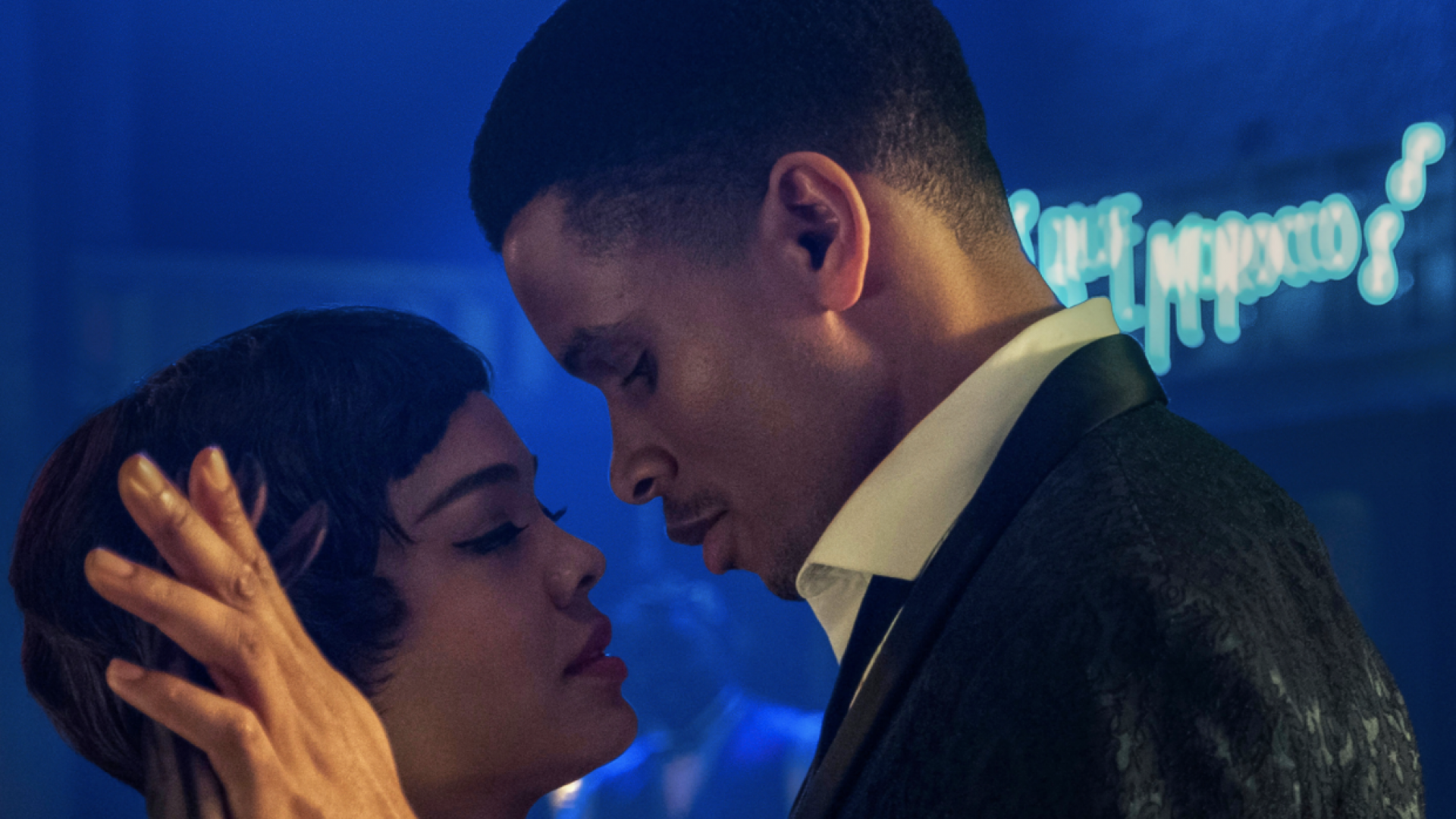
Most of the movies we hoped to love in 2020 have been pushed to 2021, but it turns out, that may just have opened up opportunities for gems we’d have ignored otherwise. Yes, the best films of 2021 are smaller than the best films of 2019, but they are still great. Here’s the list of our favorite 25 movies from our least favorite year on record.
1.First Cow
Kelly Reichardt films tell a story, but not in the traditional Hollywood sense. She draws you into an alien environment, unveils universal humanity and shows you something about yourself, about us. There’s usually a story buried in there somewhere. In this case, it’s about two outsiders in 19th Century Oregon who find friendship.
And a cow.
The narrative lulls you with understated conversations and observations while the meticulously captured natural beauty onscreen beguiles. Within that, we see the potential of a young country through the eyes of Americans determining the dream.
2. Time
What director Garrett Bradley delivers with this documentary of a woman’s daily toil to end her husband’s prison sentence is a miracle of love, hope and superhuman perseverance. The film unfolds in a poetic, sometimes stream-of-consciousness fashion, enveloping you in the indefatigable spirit of Fox Rich. The film sings in a style that is simply transportive, carried by the voice of a true wonder woman.
Time is a stunning journey, searingly intimate with a sobering undercurrent of commonality. You wear this film like a blanket of feeling. Don’t miss the chance to wrap it around you.
3. Soul
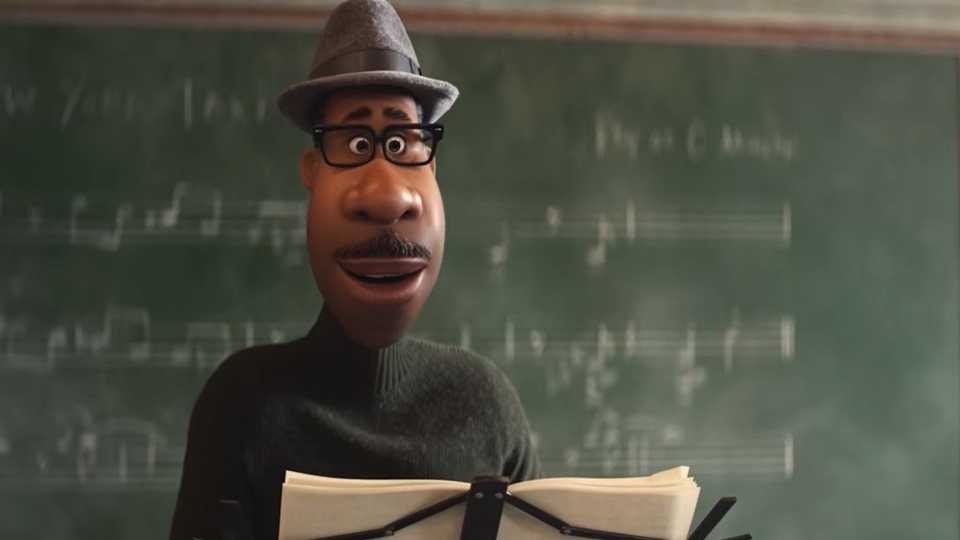
For Soul, Pete Docter and co-writer/co-director Kemp Powers create a deceptively simple, beautifully constructed ode to happiness.
And what a beautiful, big screen-begging journey it is. Soul looks like no Pixar film before it, with wonderfully layered and personality-laden animation for hero Joe’s daily life that morphs into an apt Picasso vibe for our time spent with Joe in other worlds.
Just when you think you know where the film will leave you, it has other plans, and that’s okay. Because while the best of Pixar has always touched us with family adventures that speak to what it means to be human, Soul leaves plenty of room for our own improvisations, producing a heartfelt composition that may be Pixar’s most profound statement to date.
4. Ma Rainey’s Black Bottom
In 1927 Chicago, four musicians – three vets and a brash youngster – gather in the basement of a downtown recording studio. They tune up and rib each other, waiting for the star vocalist to arrive.
That would be one Gertrude “Ma” Rainey, legendary “Mother of the Blues” and one of the first blues singers to make records. And in the late 1920s, those records sold, which meant Ma didn’t waste her time in studio basements.
That spatial divide becomes the metaphorical anchor in director George C. Wolfe and screenwriter Ruben Santiago-Hudson’s adaptation of August Wilson’s Tony Award-winning play. And thanks to the blistering adversarial performances by Chadwick Boseman and Viola Davis, the film has a show-stopping pillar on each floor.
5. Nomadland
Chloe Zhao’s Nomadland follows Fern (Frances McDormand) on her journey in “Vanguard,” the van that serves as her new home. Without an ounce of vanity or artifice, McDormand’s performance allows this film to be one of resilience and promise. Given that Normadland is, in fact, the story of a penniless Sixtysomething widow who lives in a van, that is in itself a minor miracle.
But that’s the film—a minor miracle. Perhaps only in a year when the billion-dollar franchises were mainly held at bay could we make enough space to appreciate this vital and beautiful reimagining of the rugged American tale of individualism and freedom, which is almost always also a story of poverty.
6. Da 5 Bloods
A heist movie on the surface, Da 5 Bloods is clearly about a great deal more than making it rich. Writer/director Spike Lee has a lot to say about how those in power tell us what we want to hear so we will do what they want us to do.
As commanding a presence as ever at 68, Delroy Lindo blends vulnerability into every action, whether funny, menacing or melancholy. His MAGA hat-wearing, self-loathing, dangerously conflicted character gives Lee’s themes a pulse.
It should surprise no one that Lee’s latest happens to hit the exact nerve that throbs so loudly and painfully right now, given that he’s been telling this exact story in minor variations for 30+ years.
7. Mank
David Fincher’s rapid-fire dialogue is beautifully layered and lyrically precise, more like the final draft of a script than authentic conversations, which only reinforces the film’s commitment to honoring the power of writing.
Gary Oldman expertly sells Herman Mankiewicz’s truth-to-power rebellion as a sly reaction to his own feelings of powerlessness. His charm as a “court jester” belies a growing angst about America’s power structure that Orson Welles (Tom Burke) is eager to illustrate.
And though much of Mank‘s power is verbal (just try to catch a breath during Oldman’s drunken Don Quixote speech), Fincher crafts a luscious visual landscape. Buoyed by Erik Messerschmidt’s gorgeous B&W cinematography, Fincher recreates the era with sharp period detail and tips his hat to Welles with Citizen Kane-esque uses of shadow, forced perspective and one falling glass of booze.
8. Never Rarely Sometimes Always
With her 2013 debut It Felt Like Love, Eliza Hittman brought a refreshing honesty to the teen drama. At its core, Never Rarely Sometimes Always could be seen as Hittman’s kindred sequel to her first feature, as two friends (Talia Ryder and a stunning Sidney Flanagan) navigate a cold, sometimes cruel world that lies just beyond the hopeful romanticism of first love.
NRSA shows Hittman in full command of her blunt truth-telling, demanding we accept this reality of women fighting to control their own bodies amid constant waves of marginalization.
Just three films in, Hittman has established herself as a filmmaker of few words, intimate details and searing perspective. NRSW is a sensitive portrayal of female friendship and courage, equal parts understated and confrontational as it speaks truths that remain commonly ignored.
9. One Night in Miami
Regina King, who already has an acting Oscar, jumps into the race for Best Director with a wise and wonderful adaptation of Kemp Powers’s stage play. Powered by a bold and vital script from Powers himself, King invites us into a Miami hotel room in 1963, on the night a young Cassius Clay upset Sonny Liston for the Heavyweight title.
Clay, NFL legend Jim Brown and soul sensation Sam Cooke think it’s party time, but Clay’s mentor Malcom X uses the occasion to engage the room in a frank discussion about the next steps in the civil rights movement, and about each man’s role in the struggle.
The four leads – especially Aldis Hodge as Brown and Leslie Odom, Jr as Cooke – are fantastic, propelling a film that finds its profundity through a refusal to settle for easy answers. Though existing mainly inside one room, One Night in Miami is in a constant state of motion. The characters challenge each other, and the film challenges us with a beautiful dignity that shines in the face of bigotry.
10. Shirley
Director Josephine Decker’s languid style seduces you, keeps you from pulling away from her films’ underlying tensions, darkness, sickness. She specializes in that headspace that mixes the story as it is and the story as it’s told, which makes her a fitting guide for Susan Scarf Merrell’s fictionalized account of this slice of Shirley Jackson’s life.
Decker manipulates the pacing, melancholy and sensuality of her tale beautifully, drawing a stirring performance from Young. But my god, what she gets from Elisabeth Moss and Michael Stuhlbarg.
The result is dark and unseemly, appropriately angry and gorgeously told—a fitting tribute to the titular author.
11. Promising Young Woman
In a riotous and incredibly assured feature debut as writer and director, Emerald Fennell twists both knife and expectations in a rape-revenge riff that’s relevant, smart and surprisingly hilarious—if you like your humor dark.
A pessimism runs through Fennell’s film that’s hard to ignore and even harder to criticize. But the film is true to the character of Cassie—a woman who’s profoundly dark and unforgiving but not wrong.
Fennell’s film is not a nuanced drama concerning rape culture. It’s not telling us anything we don’t honestly know already. It’s not a scalpel to the brain, it’s a sledgehammer to the testicles.
12. Collective
On October 30, 2015, a massive fire broke out at the Colectiv Club in Bucharest, Romania. Twenty-seven people died in the initial blaze while another 180 were injured. In the days and weeks following the fire, dozens of survivors died in the hospital of preventable infections. Over the next year, journalist Catalin Tolontan would uncover a trail of corruption that had all but hobbled the country’s health care system.
There’s a matter-of-factness to this film that is methodical and precise. This clinically observational approach feels more authentic. For a film so steeped in the hunt for the truth, Alexander Nanau’s fly-on-the-wall perspective just seems right.
Collective isn’t a flashy film – it doesn’t want to be. What it is, though, is a gripping look at the good that can come from honest, professional investigative journalism.
*Originally reviewed by Brandon Thomas.
13. The Trial of the Chicago 7
Chicago 7 artfully and urgently recreates the scene of the federal court hearing against eight defendants alleged to have conspired to incite the infamous riot at the 1968 Democratic National Convention in Chicago.
Writer/director Aaron Sorkin’s film rings with historical significance as well as disheartening immediacy. An alarmingly relevant look at the power of due process, free speech, and justice, Chicago 7 is catapulted by more than the self-righteousness that sometimes weights down Sorkin’s writing. This is outrage, even anger, as well as an urgent optimism about the possibilities in human nature and democracy.
14. News of the World
GD National Treasure TomHanks is Captain Jefferson Kyle Kidd, a Civil War veteran who travels from town to town reading news stories to weary people looking for a distraction. In his travels he comes across a 10-year-old girl (Helena Zengel, wonderful) who’d been raised by Kiowa people and is now being returned against her will to her natural aunt and uncle.
Reluctantly, Captain Kidd agrees to transport her 200 miles across dangerous territory. Not because he wants to or because he will benefit in any way from it. In fact, he will probably die, and she with him.
Westerns lend themselves to poetry of a sort. News of the World offers a simple hero’s journey, understated by director Paul Greengrass’s influence and Hanks’s natural abilities.
15. I’m Thinking of Ending Things
The inimitable Charlie Kaufman adapts Iain Reid’s wildly circuitous novel about delusion, self-hatred and self-inflicted loneliness. Who better?
Jessie Buckley gives an award-worthy performance as a woman visiting her boyfriend’s family for the first time. Unbeknownst to him, she’s thinking of ending things.
Buckley’s effortlessly adaptable performance in an endlessly puzzling narrative ensures the movie never loses focus. She’s surrounded by sharp turns from Jesse Plemons, Toni Collette and David Thewlis in a darkly funny near-horror of existential dread.
16. The Devil All the Time
The constant fight to overcome the worst in ourselves lies at the heart of The Devil All the Time, director Antonio Campos’s darkly riveting realization of Donald Ray Pollock’s best-selling novel.
Redemption is a slippery aim in and around Knockemstiff, Ohio, and grace is even harder to come by. With a heavier hand, this film would have been a savage beating or a backwoods horror of the most grotesque kind.
Campos and his formidable ensemble (Tom Holland, Robert Pattinson, Riley Keough, Bill Skarsgard, Jason Clark and More) deliver Pollock’s tale with enough understatement and integrity to cut deeply, unnerving your soul and leaving a well-earned scar.
17. Sound of Metal
Riz Ahmed is Ruben, a heavy metal drummer suddenly and irrevocably going deaf. It’s a performance that brings this man to life with so many layers and such nuance and power it requires your attention.
Even before you begin to appreciate Ahmed’s remarkable performance, you’ll likely notice writer/director Darius Marder’s choices when it comes to what he allows you to hear.
The sound design evokes the sensation of being in Ruben’s head. What he can’t really hear, you can’t, either. Marder mimics the humming, echoing, and blurring together of sounds to create an immersive sensation that never feels like a gimmick. It transports you, as does Ahmed’s performance, to a place you’ve probably never been.
18. Possessor
Possessor is a meditation on identity, sometimes very obviously so, but the underlying message takes that concept and stabs you in your still-beating heart with it.
Brandon Cronenberg’s created a gorgeous techno world, its lulling disorientation punctuated by some of the most visceral horror to make it to the screen this year.
Credit Cronenberg, too, for the forethought to cast the two leads as females (Jennifer Jason Leigh playing boss to a remarkable Andrea Riseborough). The theme of the film, if driven by males, would have been passe and obvious. With females, though, it’s not only more relevant and vital, but more of a gut punch when the time comes to cash the check.
19. Swallow
Putting a relevant twist on the classic “horrific mother” trope, writer/director Carlo Mirabella-Davis uses the rare eating disorder pica to anchor his exploration of gender dynamics and, in particular, control.
Where Mirabella-Davis’s talent for building tension and framing scenes drive the narrative, it’s Haley Bennett’s performance that elevates the film. Serving as executive producer as well as star, Bennett’s character transformation is startlingly true.
When things finally burst, director and star shake off the traditional storytelling of the Yellow Wallpaper or Awakening or even Safe. The filmmaker’s vision and imagery come full circle with a bold conclusion worthy of Bennett’s performance.
20. Senior Love Triangle
Co-writer/director Kelly Blatz creates a minor cinematic miracle with his feature debut, Senior Love Triangle.
Inspired by co-writer Isadora Kosofsky’s remarkable longterm photo essay of the same name, the film delivers a candid look into the intimate relationship among three elderly characters: William (Tom Bower), Adina (Anne Gee Byrd) and Jeanie (Marlyn Mason).
The film is equal parts charming, frustrating and heartbreaking. More importantly, it takes its characters seriously. In an era where veteran actors entertain us via “those crazy old people!” vehicles (watching Diane Keaton become a cheerleader in Poms sapped my will to live), Senior Love Triangle feels gloriously anarchic. The magic of Blatz’s film is that it offers a character study of the sort we simply never see.
21. Capital in the 21st Century
New Zealand filmmaker Justin Pemberton has assembled an array of scholars and historians (including Thomas Piketty, author of the source book) for a 103-minute presentation that is so informative, measured and concise it should earn you college credits.
There are graphs, illustrations and pop culture snippets from film and television that Pemberton weaves throughout the lecture material to attract the eye and boost the film’s overall entertainment value. But make no mistake, his mission is about breaking down the 400 years of history that explain the social and economic precipice we’re teetering on right now.
And while some of the lessons are not new (i.e. we need a strong middle class) the context here is so vivid and relevant many observations may land with an echo of “eureka!” inside your head.
22. Wolfwalkers
One of the brightest spots in a relatively weak year for animated films, Wolfwalkers spins another beautiful Irish folk yarn from the team behind The Secret of Kells and Song of the Sea.
Robyn, a young English girl whose father is tasked with wiping out wolves from an Irish village, longs to be a hunter herself. Things change quickly when Robyn meets up with Mebh, a young firebrand who belongs to a legendary group that transforms into wolves by falling asleep.
It’s a film bursting with dazzling animation and captivating lore, one full of warm silliness, gentle danger, wonderful voice work and a timeless, touching finale perfect for multiple family movie nights.
23. The Wolf of Snow Hollow
Writer/director/star JimCummings is officer John Marshall of the Snow Hollow sheriff’s department. John’s father (Robert Forster, in his final role) is the longtime sheriff of the small ski resort town, but Dad’s reached the age and condition where John feels he’s really the one in charge.
John’s also a recovering alcoholic with a hot temper, a bitter ex-wife and a teen daughter who doesn’t like him much. But when a young ski bunny gets slaughtered near the hot tub under a full moon, suddenly John’s got a much bigger, much bloodier problem.
At its core, The Wolf of Snow Hollow is a super deluxe re-write of Cummings’s heartbreaking and hilarious 2018 character study Thunder Road with werewolves. We call that a bloody good time.
24. Boys State
Imagine what you get when you bring over a thousand 17-year-old boys together to play politics.
Fight Club with zits?
You get Boys State, an annual exercise into the “civil discourse” of state government. An American Legion program since 1935, Boys State (and its corresponding project for girls through the Legion Auxiliary) gives selected high school juniors the chance to build a representative government from the ground up.
For directors Amanda McBaine and Jesse Moss, the result is an endlessly fascinating and thoroughly entertaining mixture of shock and awe.
25. The Vast of Night
Opening with vintage Rod Serling welcoming us to “Paradox Theatre,” director Andrew Patterson unveils an incredibly polished debut, one that’s full of meticulous craftsmanship, effective pacing and wonderfully engaging storytelling.
Peterson’s commitment to production and sound design results in a totally immersive experience. The period details – from costumes to recording equipment – are more than just historically correct. Paired with the quick, comfortably lived-in dialog from screenwriters James Montague and Craig W. Sanger, they create a throwback setting that charms without the tell of undue effort.
Peterson also flexes confidently behind the camera, moving from extended tracks to slow pans to quiet stills, all in service of the film’s wondrous tone. With Sierra McCormick and Jake Horowitz leading a stellar ensemble, what could have been a generic sci-fi time filler becomes a smart parable with an eerie grip.