Wholesome is the new look in superheroes. Just a couple weeks back, James Gunn and Superman made kindness punk rock. And now, director Matt Shakman hopes to draw on a retro-futuristic vibe to conjure a less skeptical, cynical time.
The Fantastic Four: First Steps owes much of its entertainment value to production design. The 1960s of the future is as quaint as can be, but the vibe is never played for laughs at the expense of its innocence.
And sure, villainy is forever afoot, but for Mr. Fantastic (Pedro Pascal) and Sue Storm (Vanessa Kirby), nothing is as scary as new parenting. For the first time, Mr. Fantastic/Reed Richards is facing the fact that he knows nothing about anything (as all new parents must).
But he’d better get over it because world eater Galactus (Ralph Ineson, in great voice) is headed to earth, as heralded by one silver surfer (Julia Garner). Does Johnny Storm (Joseph Quinn) have a crush? Sure, but so does The Thing (Ebon Moss-Bachrach), thanks to that kindly teacher over at the neighborhood Hebrew school (Natasha Lyonne, donning her own inimitable retro-future style).
Shakman helms his first feature in over a decade, after slugging it out on a slate of successful TV series, including helming 9 episodes of WandaVision. Though he nails the visual vibe, set pieces and action sequences entertain more than wow.
The wholesome family speechifying gets a little tiresome eventually, as well. But the earnest, heartfelt messaging—no cynicism, no snark, no ironic detachment—feels not only welcome but fearless. Performances are no less sincere, each actor carving out camaraderie and backstory the film refuses to telegraph.
Pascal, as a genius almost enslaved by his calculating brain, effortlessly mines the character for conflicted tenderness, so believably submissive to this new love. Both Moss-Bachrach and Quinn, in supporting roles, craft memorable, vulnerable characters.
Kirby impresses. Saddled heavily by the cinematic tropes of protective motherhood and indefatigable maternal instinct, she edges Sue’s conflict with flashes of rage and ferocity that not only support the plot but give life to the character.
The Fantastic Four: First Steps is no Superman. But it’s fun. It’s wholesome. It’s swell.
Can you watch a found footage horror film and not be constantly asking yourself, who edited this footage together? Who pulled from one camera, then another, spliced in security cam stuff? Who looked at all the footage from all the different cameras and decided what we would see when? And how did they get it all? And where did they go?
If it does not bother you, then it’s possible that you will enjoy writer/director Kris Collins’s House on Eden more than I did.
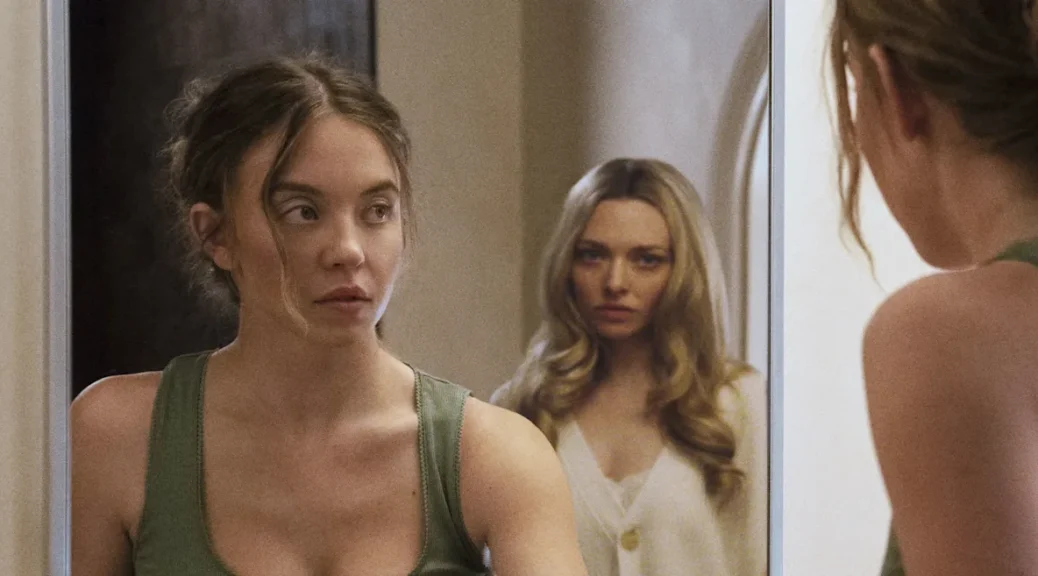
This found footage horror clings close to real life. Spooky content creators “KallMeKris” Collins, “celinaspookyboo” Celina Myers, and filmmaker Jason-Christopher Mayer play versions of themselves, social media handles and all. The trio is out to make a great video, not one of those boring videos everyone makes. So instead of going to the cemetery Celina has researched, Kris diverts the road trip to a house she found online that she’s sure no one has ever been to.
Sure. Because totally anonymous houses post themselves online.
And what’s the draw? Why is it spooky? Because maybe a girl went missing somewhere in the vicinity 60 years ago.
For context, wherever you are standing at this very second, some girl has gone missing from that spot in the last sixty years.
So, three youngsters break and enter into a beautiful, well-maintained home, not a speck of dust anywhere. But it’s really, really far away from everything else so surely, it must be abandoned.
That is to say, three people break into a well cared for, isolated home to unravel no mystery they know of in one of the more tedious, uninspired, lazily written found footage horror films in recent memory.
It’s not as if found footage can’t be done well, even the ghosthunter variety. Deadstream is epically watchable, funny and scary at the same time, and it maintains the integrity of found footage pretty well. My advice to you is to watch that instead.
Thanks in part to the success of Dan Trachtenberg’s 2022 Prey, period piece creature features have come into vogue. Nice!
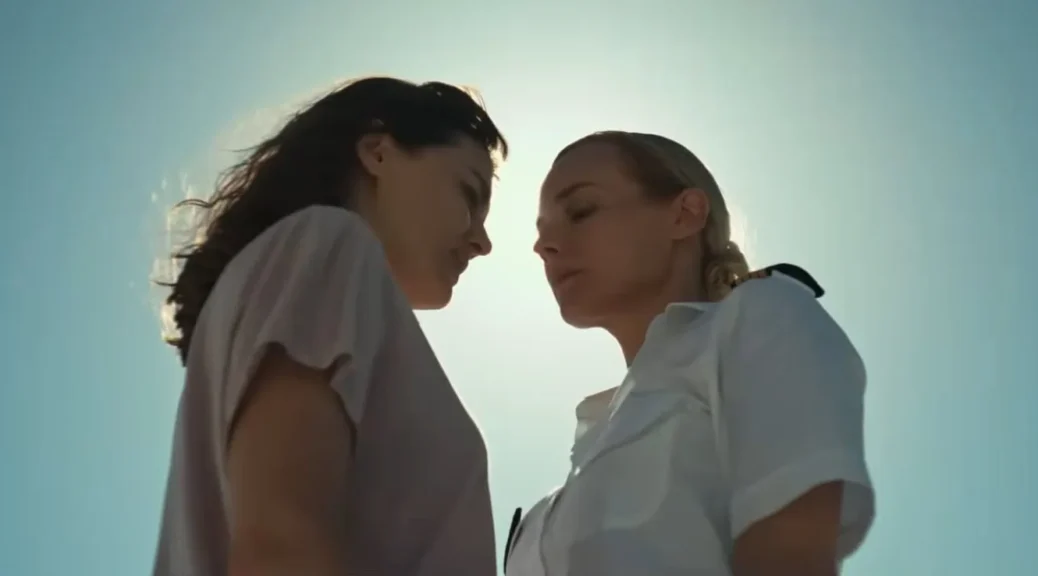
Writer/director Mike Wiluan’s Monster Island (originally titled Orang Ikan) is the latest. In a case of “the enemy of my enemy is my friend,” two men—a Japanese traitor (Dean Fujioka) and a British POW (Callum Woodhouse)—are shipwrecked on an island in the Pacific. That chain that binds them together at the ankle is not the biggest obstacle to their survival. Certainly not the toothiest.
Neither man speaks the other’s language, which is another hurdle Wiluan uses wisely. Thanks to subtitles, we know what each man says, and the moments when they don’t understand each other offer more about the story Monster Island is telling than the action ever could.
That’s not to disrespect the action. This is a nicely edited b-movie, cut to create the most tumult and action possible given the circumstance (meaning, the budget and the big rubber suit).
And while some of the early shipboard explosion footage is clearly (and not very convincingly) created digitally, the monster is not. That’s a benefit and a curse. It’s not to say Orang Ikan, the name given to the big island beastie by an unlucky castaway, looks bad. It just looks a little bit borrowed, sort of Predator meets Rawhead Rex (that underbite!) meets Creature from the Black Lagoon. In terms of screentime, less would probably have been more.
But both Fujioka and Woodhouse are so fully committed to their characters—an introvert haunted by his decisions and a punch-first-think-later Englishman—that the blossoming bromance makes up for whatever originality Orang Ikan lacks.
We spend 75% of the films brisk run time with just those three characters. In lesser hands, that could become tedious. But Wiluan and his dedicated trio deliver action and fun.
About an hour into The Home, things escalate. And quickly. There’s a big enough jolt of blood and violence to make you hopeful the foolishness that’s been rolled out so far can be rescued.
Sorry, too little, too late.
Pete Davidson gives the film a solid, sympathetic anchor as Max, a troubled man who gets sentenced to community service doing custodial work at a New Jersey old folks home. He makes friends with some of the residents, angers some of his co-workers, and quickly comes to realize something pretty f’ed up is going on.
Director and co-writer James DeMonaco, who created The Purge franchise and helmed three of the chapters, can’t mine the same levels of socially-conscious horror or reality-based tension. What’s up with these seniors is ridiculous sci-fi horror built on ideas from much better films, with a message that’s hammered home through repetition, explanation and – for the first 60 minutes at least – boredom.
Through it all, Davidson exhibits a fine screen presence, and the supporting cast is littered with veteran faces you’ll recognize even if the names (John Glover, Ethan Phillips, Bruce Altman) aren’t familiar. They help you to keep rooting for the movie when the bloodshed hits, but DeMonaco doesn’t see it through, pulling up too soon and settling for a curious finale that’s far too weak to satisfy.
A horror film out to chop bloody holes in that “Greatest Generation” mantra is plenty intriguing. The Home, though, feels stuck between more desirable neighborhoods. It’s not self-aware or over-the-top enough to be satirical fun, but far too obvious for metaphorical nuance.
So we’re left wanting, reminded of how important it is to craft a good plan for the golden years.
Documentaries based on beloved children’s entertainers have become quite the trend in the last 10 or so years. Both Mr. Rogers and Jim Henson were the subject of wonderful films that chronicled their lives and the impact they both had on children’s entertainment, education, and culture. With Shari & Lamb Chop, renowned ventriloquist and magician Shari Lewis gets her own time to shine.
No stranger to crafting a documentary on an entertainment icon, director Lisa D’Apolito (Love, Gilda) dives into Lewis’s personal and professional history through enlightening interviews with living family members, those who worked for and with her, and industry professionals. While the bulk of the film is spent showering Lewis with praise, it also doesn’t completely shy away from her darker periods: a failed first marriage, a years-long career slump, and an affair that nearly derailed her second marriage. D’Apolito strikes a balance between transparency and understanding that her primary audience is likely Lamb Chop die-hards.
It would’ve been easy for Shari & Lamb Chop to completely focus on the Lamb Chop character and how it essentially propelled Lewis’s overall career. While Lamb Chop plays a major role in the doc (the name is in the title, right?), D’Apolito instead puts the spotlight on Lewis and the professional drive that made her a beloved figure in children’s entertainment. The film comes alive when it touches on Lewis’s talent at magic acts, or her experience as a dancer, and how she put that to great use on a variety show.
Shari & Lamb Chop comes to a close with a poignant look at Lewis’s final days and how her terminal illness allowed her to make one more professional statement while simultaneously acting as a goodbye to her loved ones. D’Apolito’s use of behind-the-scenes footage from this final show brings us all into that emotional moment. It’s a beautiful period on a life and career that brought so much joy and love to people around the world.
Despite taking the same “Greatest Hits” approach that many similar docs have done with famous subjects, Shari & Lamb Chop still soars thanks to a steady filmmaking hand and the engrossing life of the film’s titular focus.
Clare (Bella Thorne, The Babysitter) is a college student who believes she is on a mission from God. Blessed with visions, she hunts down the men who prey on the women in her small town. Detective Timmons (Ryan Phillippe, Cruel Intentions, MacGruber) grows suspicious of her extra-curricular activities as she keeps turning up in the wrong places.
Guided by the ghost of Mailman Bob (Frank Whaley, Pulp Fiction), the first man she inadvertently killed, Clare begins to connect the dots on who’s behind the growing number of local women who have gone missing. Bob is a messenger from the beyond and he seeks to keep Clare centered on her righteous path of vengeance.
Saint Clare is based on the YA novel Clare at Sixteen by Don Ruff. A quick search yields book reviews that frequently compare the Clare Bleecker series to Dexter, the popular show that is still churning out sequel and spin-off seasons. It’s easy to see why – Clare is a serial killer who only pursues other killers and she has conversations with a dead person from her past who acts as her conscious.
Thorne delivers a solid performance as the melancholy Clare, but the rest of the film around her is tonal mess. It really feels like a pilot episode with the season finale tacked on as the final fifteen minutes. There are a lot of story threads and elements, like a goofy school play, that are introduced but dumped quickly in favor of rushing toward the ending. The film is uninterested in exploring its own central mystery of the missing women, Clare is simply propelled to the wrong doers by convenience.
Co-writer and director Mitzi Peirone (Braid) provides a few moments that visually pop as the world around Clare becomes more colorful and otherworldly, but they are too few and far in between.
Saint Clare never quite picks a lane. It’s a revenge tale without a strong motive, it’s a mystery that isn’t remotely interested in the investigation, and it’s a supernatural fable that is too grounded and serious for its own good.
There are very few contemporary filmmakers better able to pick scabs, to generate discomfort for an entire running time, than Ari Aster.
Eddington, his latest, is an inverted Western set in late May of 2020—you remember spring of 2020, don’t you? The lunacy. The terror. The relentless need to move from one day to the next as if we were not actively sniffing the apocalypse. Well, Aster sure remembers it.
In a lot of ways, Eddington, New Mexico resembles just about any place in the spring of 2020. An awful lot of people wanted to ignore the pandemic because it hadn’t touched their town (yet, that they knew of). Others wanted to follow the rules as closely as was convenient, hoping that business as usual would find a way. Others spiraled, whether from terror or boredom or lack of structure, often turning to the internet, many to finally realize that police brutality was a real thing.
Aster captures it all, depicting the way the façade of normalcy had protected us from ourselves and each other, and reminds us that nothing healthy grows on stolen land.
Sheriff Joe Cross (Joaquin Phoenix) just wants things to go back to the way they were. He sees the disdain, fear, maybe even hate people like him—white, unmasked men—are facing. It is disconcerting—Aster’s hint that the underlying cause of all the harm, hatred, violence, and mayhem that came from the pandemic might have less to do with Covid 19 and more with white men feeling their true vulnerability.
Phoenix is characteristically flawless—flummoxed and human in a way that engenders more empathy than Joe likely deserves. Joe’s counterpoint, the smooth, opportunistic mayor, Ted Garcia (Pedro Pascal), doesn’t get off any easier, and Pascal’s slightly brittle performance is enlightening.
Aster populates Eddington with a collection of the exact types of people forged by the pandemic, though many are boiled down to defining lines of dialogue (“I am a privileged white male, and I’m here to listen! And I’ll do that as soon as I’m done with this speech.”) Still, with supporting performers as strong as Emma Stone, Austin Butler, Michael Ward, and Dierdre O’Connell, even the most faintly drawn character is fascinating.
Aster’s film blames humanity, not right or left, for the cultural rot we’re left with. That may be the most honest and aggravating choice he makes, but Eddington offers very little in the way of fabrication. The town may be fictional, but I think we all remember the place.
One of my favorite classic album deep cuts is Springsteen’s “Meeting Across the River” from Born to Run. In the song, two longtime losers are planning for the night they’ve been waiting for, when they’ll finally get a chance at the big score that will change their lives.
Bruce leaves the ending up to us, because the point is more about the past of these characters than their future.
To a Land Unknown works on similar levels, as director/co-writer Mahdi Fleifel uses an intimate story to invite us into larger conversations.
Chatila (Mahmoud Bakri) and Reda (Aram Sabbah) are Palestinian cousins living in Greece. Chantila has a wife and child in Lebanon, while Reda is trying to make it past thirty days off drugs. Together, the two snatch purses and scheme for any way to get enough money for fake passports.
Unexpected friendships with a 13 year-old from Gaza (Mohammed Asurafa) and a local cougar (The Lobster‘s Angeliki Papoulia) give Chatila an idea for a big con. Pull it off, and they’ll have enough for the passports and tickets to a new life in Germany.
Once there, they will open a cafe, reunite the family and finally breathe easier.
After many years of short films and documentaries, Fleifel’s first narrative feature leans on many recognizable influences and familiar moments in movie history. The solid performances and assured plotting keep you engaged throughout, but as the film progresses, Fleifel brings weight to an undercurrent of exile that breathes in humanity, empathy and undeniable relevance.
Like so many other lost souls in songs and stories, Chatila and Reda are desperate for a place to belong, and for the chance to build their own lives. To a Land Unknown brings a cold and urgent realism to that familiar journey.
The idea of a changeling—a baby that’s not really yours, and who knows where your dear sweet little one really is?!—is so primal a fear that it’s existed in folktales for centuries. Ireland really picks this scab well in their horror movies, but they are not alone. It’s an idea that can’t help but unsettle. Here are our five favorite “that’s not your baby!” horror movies.
Director Ted Post (Hang ’em High, Magnum Force) gets a little unseemly with this story of welfare fraud, Greek tragedy, fear of emasculation, and more. Freud would have a time with The Baby!
Mrs. Wadsworth (Ruth Roman) does not want nosey new social services wench Ann Gentry (Anjanette Comer) sniffing around. Why does she and her two perfectly normal, not at all criminal, grown daughters have to prove that their fully grown son/brother still thinks he’s a baby? The grown man in the crib and onesie upstairs.
If that’s not upsetting enough, Ann Gentry’s not all she’s cracked up to be, either. What was the deal with the Seventies?
4. The Hallow (2015)
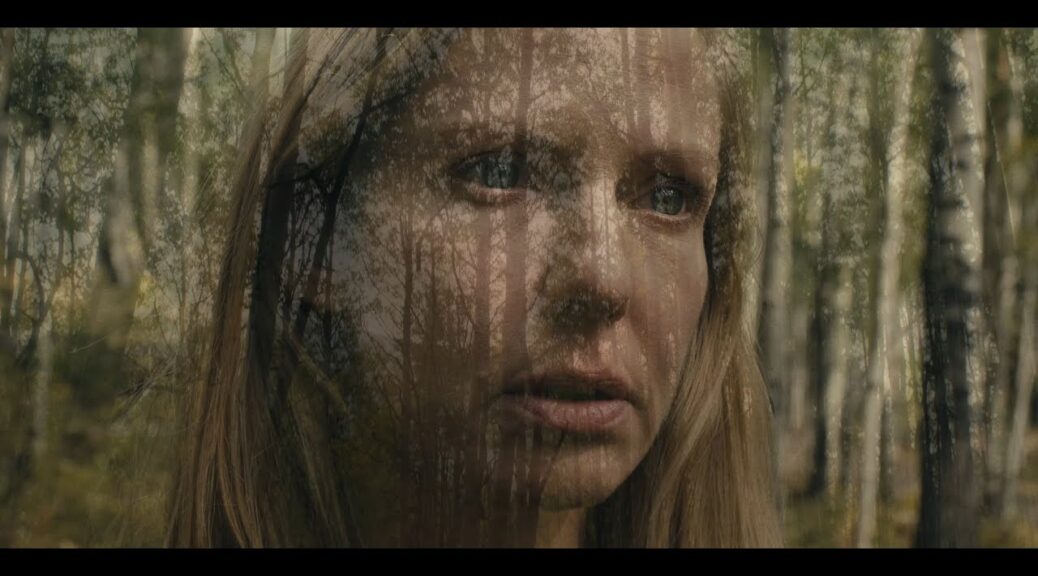
Visual showman Corin Hardy has a bit of trickery up his sleeve. His directorial debut The Hallow, for all its superficiality and its recycled horror tropes, offers a tightly wound bit of terror in the ancient Irish wood.
Adam (Joseph Mawle) and Clare Hitchens (Bojana Novakovic) move, infant Finn in tow, from London to the isolated woods of Ireland so Adam can study a tract of forest the government hopes to sell off to privatization. But the woods don’t take kindly to the encroachment and the interloper Hitchens will pay dearly.
Hardy has a real knack for visual storytelling. His inky forests are both suffocating and isolating, with a darkness that seeps into every space. He’s created an atmosphere of malevolence, but the film does not rely on atmosphere alone.
Though all the cliché elements are there – a young couple relocates to an isolated wood to be warned off by angry locals with tales of boogeymen – the curve balls Hardy throws will keep you unnerved and guessing.
3. Hole in the Ground (2019)
Sara (Seána Kerslake), along with her bib overalls and young son Chris (James Quinn Markey), are finding it a little tough to settle into their new home in a very rural town. Chris misses his dad. Sara is having some life-at-the-crossroads anxiety.
Then a creepy neighbor, a massive sink hole (looks a bit like the sarlacc pit) and Ireland’s incredibly creepy folk music get inside her head and things really fall apart.
Writer/director Lee Cronin’s subtext never threatens his story, but instead informs the dread and guilt that pervade every scene. You look at your child one day and don’t recognize him or her. It’s a natural internal tension and a scab horror movies like to pick. Kids go through phases, your anxiety is reflected in their behavior, and suddenly you don’t really like what you see. You miss the cuter, littler version. Or in this case, you fear that inside your beautiful, sweet son lurks the same abusive monster as his father.
2. Border (2018)
Sometimes knowing yourself means embracing the beast within. Sometimes it means making peace with the beast without. For Tina—well, let’s just say Tina’s got a lot going on right now.
Border director/co-writer Ali Abbasi has more in mind than your typical Ugly Duckling tale, though. He mines John Ajvide Lindqvist’s (Let the Right One In) short story of outsider love and Nordic folklore for ideas of radicalization, empowerment, gender fluidity and feminine rage.
It would hardly feel like a horror movie at all were it not for that whole, horrifying baby thing.
The result is a film quite unlike anything else, one offering layer upon provocative, messy layer and Abbasi feels no compulsion to tidy up. Instead, he leaves you with a lot to think through thanks to one unyieldingly original film.
1. Lamb (2021)
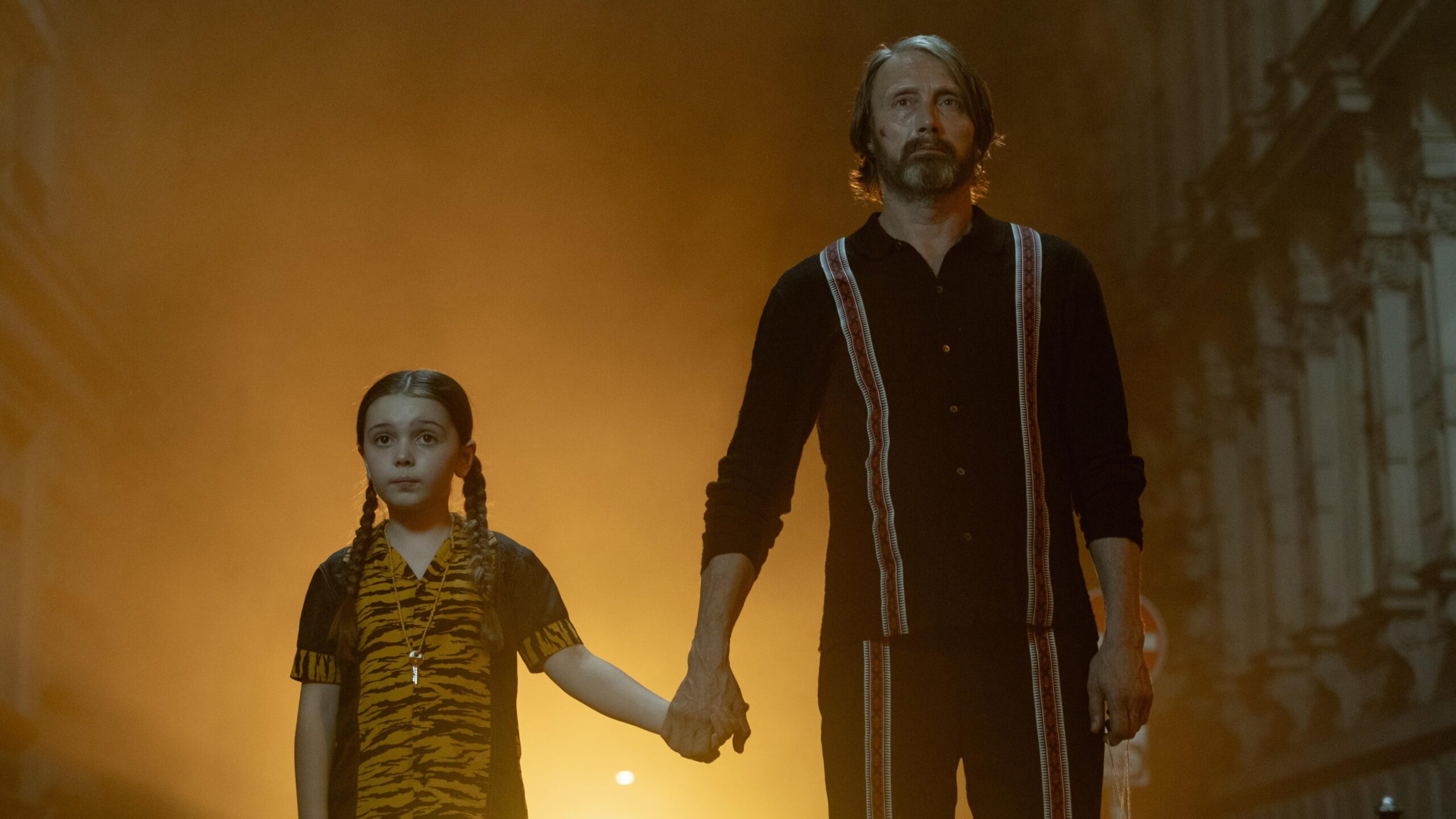
Among the many remarkable elements buoying the horror fable Lamb is filmmaker ValdimarJóhannsson’s ability to tell a complete and riveting tale without a single word of exposition.
Not one. So, pay attention.
Rather than devoting dialog to explaining to us what it is we are seeing, Jóhannsson relies on impressive visual storytelling instincts, answering questions as they come up with a gravesite, a crib coming out of storage, a glance, a bleat.
His cast of three – well, four, I guess — sells the fairy tale. A childless couple working a sheep farm in Iceland find an unusual newborn lamb and take her in as their own child. As is always the way in old school fables, though, there is much magical happiness but a dire recompense soon to come.