Daddy’s Girl

She Rides Shotgun

by George Wolf

She Rides Shotgun sports a passionate performance from Taron Egerton as a desperate man on the run. It also features John Carroll Lynch – one of the most reliable character actors around – digging into the role of a crooked sheriff carrying a very nasty streak.

But it’s the nine year-old girl you’ll be talking about long after the movie ends.

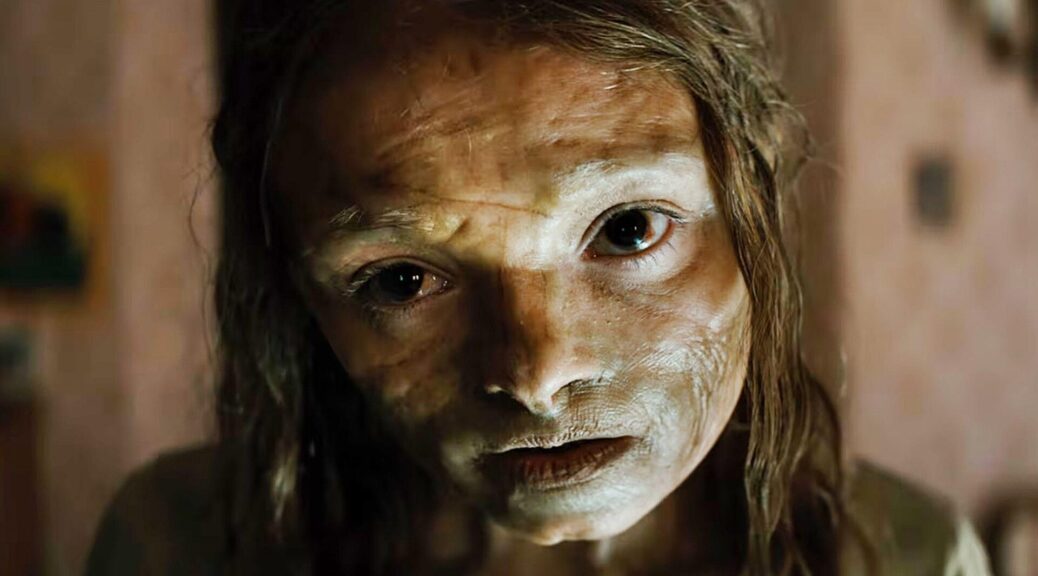
Ana Sophia Heger delivers one of the most impressive child performances in years as Polly, a young girl who hesitantly gets in the car with her dangerous father Nate (Egerton) when her mother doesn’t show after school.

You can probably guess why Mom is late, and Polly could be next unless Daddy and daughter make a blood-soaked road trip through the Southwest toward a chance at settling old scores.

Director and co-writer Nick Rowland adapts Jordan Harper’s source novel, a story that shares the roots of generational violence that propelled Rowland’s brooding and excellent 2019 feature, Calm With Horses. And while that film was deeply and unmistakably Irish, this time Rowland crafts some sharp edges from the tragically familiar American meth epidemic.

Egerton is intense, taut and terrific as a father with one last shot at redemption, while Lynch, as the sadistic “God of Slabtown,” mines tension and terror through a measured commitment to brutality. This is just the latest version of a tale that’s been told in countless crime thrillers, but Rowland works levels of camerawork, pace and performance that give familiar themes relevant life.

Heger (Things Seen and Heard, TV’s Life in Pieces) simply amazes, displaying a wonderfully authentic chemistry with Egerton that shines from their very first moments together. And though it’s hard to know in what order the scenes were shot, you start to wonder if Rowland began pushing Heger once he realized just what he had in the little powerhouse.

The violence, tension and dramatic intensity get heavier, and this girl does not shrink from it at all. Far from it. Rowland trusts her enough to deliver his parting shot via a gradual, extended close up that will leave you astonished at Heger’s level of emotion and control.

It’s a gripping reminder that one young actor has a seemingly boundless future, and that She Rides Shotgun conjures an effective remedy for some old wounds.

Paint It Black

Sketch

by Hope Madden

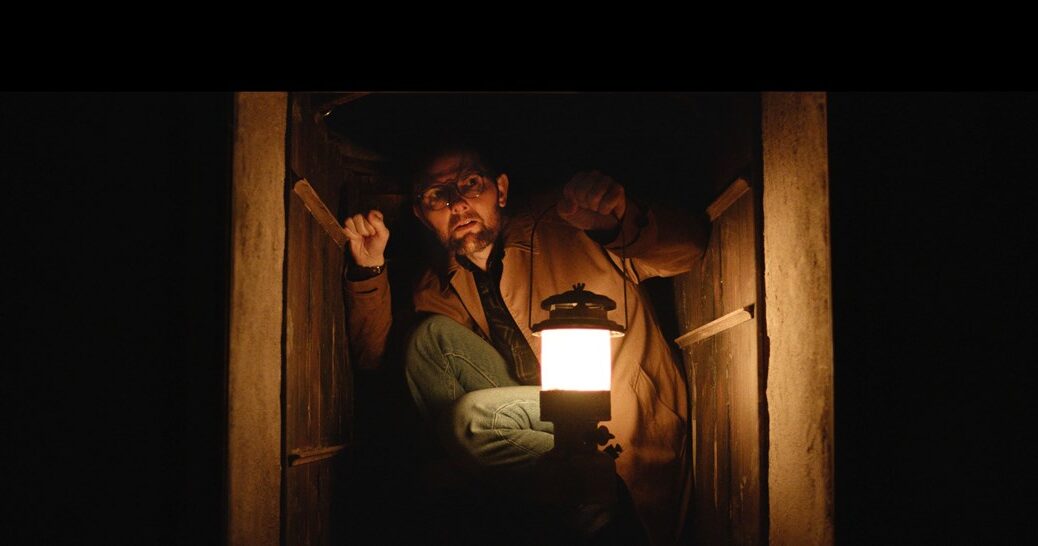
When I was 10, I wrote and directed a school play. In it, a babysitter and her charges are murdered by a roving madman. I got in a lot of trouble.

Young Amber Wyatt (Bianca Belle) knows my pain. To the dismay of her out-of-his depth dad (Tony Hale) and protective if clueless brother Jack (Kue Lawrence), Amber draws scary monsters capable of murder. Mainly they murder Bowman (Kalon Cox), the b-hole from the school bus who is on Amber’s last nerve. But with their teeth, tentacles, hook feet, and sword arms, they could murder anybody.

Could they? We’ll, we’re set to find out when Amber Wyatt’s sketchbook makes its way into a magical little pond and all her beasties come to life.

Writer/director Seth Worley’s Sketch is the latest Angel Studios release, but don’t hold that against it. Yes, that’s the studio responsible for the irresponsible, illogical, and terribly acted Sound of Freedom and a host of other mediocre-to-awful inspirational films. Still, Sketch is a charmer, family-friendly but unafraid, forgiving and funny.

The message is clear but not too blunt: stop freaking out about the kids who are examining their pain. Worry more about the people who are silencing theirs. Part of the reason the themes resonate without wallowing is the banter between the always reliable Hale and D’Arcy Carden, as his sister.

Belle struggles from time to time with the heaviness of the character, but both Lawrence and Cox deliver silly fun as a couple of dumbasses out to save their town from day-glo chalk monsters belching glitter.

Worley’s writing is on point, rarely (though occasionally) drifting into maudlin territory. But even at its weakest, the script benefits from Carden’s crisp comic turn and Hale’s effortlessly empathetic pathos.

Plus, the imagination that is celebrated onscreen with macabre whimsy articulates a kind of acceptance rarely emphasized in films that begin with a teacher worrying a parent over creepy kid drawings.

There’s a lot beneath the film’s surface that feels too familiar, but a game cast and directorial commitment to childish creativity elevate Sketch. It’s a good one to watch with your kids. Even better if you’re kind of afraid of your kids.

So Happy

Together

by Hope Madden

Horror has always trodden the terror of losing your identity, of losing your very personality or individuality, of what makes you you. From Dr. Jekyll and Mr. Hyde to every Invasion of the Body Snatchers iteration (including The Faculty) to most zombie horror, horror fiction and cinema reflect our own worry that there is something out there that will steal from us what makes us ourselves and turn us into something else.

The anxiety of losing your identity to coupledom is just as real, though few films (horror or otherwise) have depicted this relatable, perhaps primal fear as adorably, as authentically, or as grotesquely as Michael Shanks’s Together.

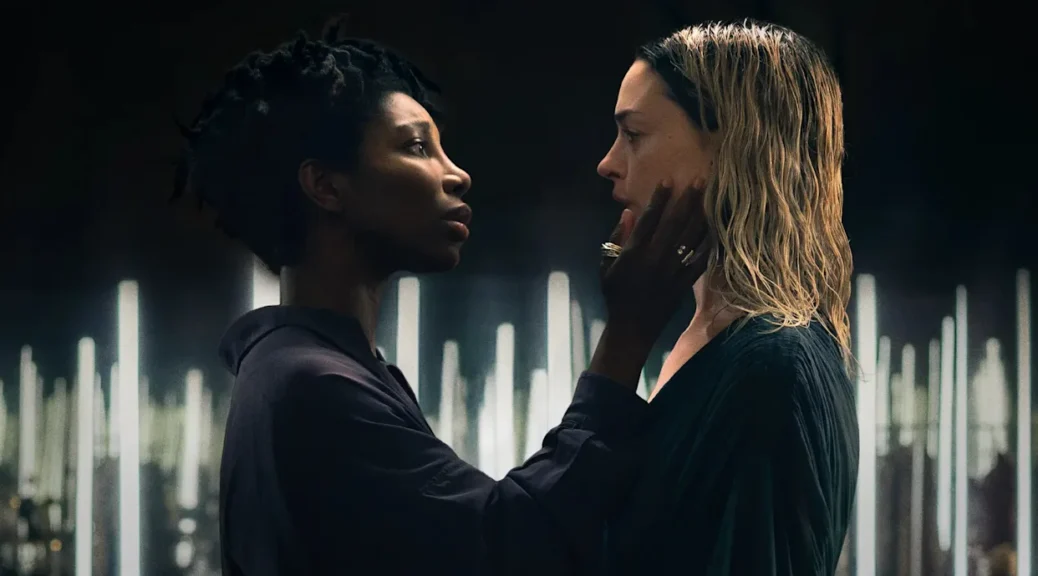
The writer/director’s feature debut benefits enormously from the lived-in camaraderie of its leads. Alison Brie and Dave Franco, married in real life, play Millie and Tim. They’ve been together for nearly a decade, but this new chapter of their lives marks a distinct step. Millie took a job teaching in Upstate New York, two hours from NYC where Tim sometimes plays guitar with a band while he tries to finish his solo EP, to be self-released.

Millie has grown up. Will Tim? Can he? Or is he abandoning himself, giving up on his dreams and forgetting who he is by moving with Millie? If they don’t split up now, it’ll just be harder later.

Much, much harder. Stickier too.

Something happens as the pair explore the woods around their new home and, little by little, it draws their two bodies together, attempting to fuse them into one thing. It’s a delightful metaphor played joyously and goretastically, the body horror and humor fusing just as readily as Tim and Millie’s extremities.

Brie and Franco are perfect, and Damon Herriman lends his considerable, understated talent to develop the plot and keep you guessing.

Though Shank’s writing sometimes lands heavily (past trauma exposition), and other times leaves you disbelieving (why on earth is she still with him?!), the sweet, romantic believability of the performances charms you into sticking it out. And you’ll be glad, because once the film hits its stride, it is a wild, funny, charming, repulsive ride.

What Shanks manages with his film is to be overtly romantic, never cynical, consistently funny, and gross as hell. It’s the perfect date movie. But maybe go on an empty stomach.

Baby Steps

The Fantastic Four: First Steps

by Hope Madden

Wholesome is the new look in superheroes. Just a couple weeks back, James Gunn and Superman made kindness punk rock. And now, director Matt Shakman hopes to draw on a retro-futuristic vibe to conjure a less skeptical, cynical time.

The Fantastic Four: First Steps owes much of its entertainment value to production design. The 1960s of the future is as quaint as can be, but the vibe is never played for laughs at the expense of its innocence.

And sure, villainy is forever afoot, but for Mr. Fantastic (Pedro Pascal) and Sue Storm (Vanessa Kirby), nothing is as scary as new parenting. For the first time, Mr. Fantastic/Reed Richards is facing the fact that he knows nothing about anything (as all new parents must).

But he’d better get over it because world eater Galactus (Ralph Ineson, in great voice) is headed to earth, as heralded by one silver surfer (Julia Garner). Does Johnny Storm (Joseph Quinn) have a crush? Sure, but so does The Thing (Ebon Moss-Bachrach), thanks to that kindly teacher over at the neighborhood Hebrew school (Natasha Lyonne, donning her own inimitable retro-future style).

Shakman helms his first feature in over a decade, after slugging it out on a slate of successful TV series, including helming 9 episodes of WandaVision. Though he nails the visual vibe, set pieces and action sequences entertain more than wow.

The wholesome family speechifying gets a little tiresome eventually, as well. But the earnest, heartfelt messaging—no cynicism, no snark, no ironic detachment—feels not only welcome but fearless. Performances are no less sincere, each actor carving out camaraderie and backstory the film refuses to telegraph.

Pascal, as a genius almost enslaved by his calculating brain, effortlessly mines the character for conflicted tenderness, so believably submissive to this new love. Both Moss-Bachrach and Quinn, in supporting roles, craft memorable, vulnerable characters.

Kirby impresses. Saddled heavily by the cinematic tropes of protective motherhood and indefatigable maternal instinct, she edges Sue’s conflict with flashes of rage and ferocity that not only support the plot but give life to the character.

The Fantastic Four: First Steps is no Superman. But it’s fun. It’s wholesome. It’s swell.

Found and Lost

House on Eden

by Hope Madden

Can you watch a found footage horror film and not be constantly asking yourself, who edited this footage together? Who pulled from one camera, then another, spliced in security cam stuff? Who looked at all the footage from all the different cameras and decided what we would see when? And how did they get it all? And where did they go?

If it does not bother you, then it’s possible that you will enjoy writer/director Kris Collins’s House on Eden more than I did.

This found footage horror clings close to real life. Spooky content creators “KallMeKris” Collins, “celinaspookyboo” Celina Myers, and filmmaker Jason-Christopher Mayer play versions of themselves, social media handles and all. The trio is out to make a great video, not one of those boring videos everyone makes. So instead of going to the cemetery Celina has researched, Kris diverts the road trip to a house she found online that she’s sure no one has ever been to.

Sure. Because totally anonymous houses post themselves online.

And what’s the draw? Why is it spooky? Because maybe a girl went missing somewhere in the vicinity 60 years ago.

For context, wherever you are standing at this very second, some girl has gone missing from that spot in the last sixty years.

So, three youngsters break and enter into a beautiful, well-maintained home, not a speck of dust anywhere. But it’s really, really far away from everything else so surely, it must be abandoned.

That is to say, three people break into a well cared for, isolated home to unravel no mystery they know of in one of the more tedious, uninspired, lazily written found footage horror films in recent memory.

It’s not as if found footage can’t be done well, even the ghosthunter variety. Deadstream is epically watchable, funny and scary at the same time, and it maintains the integrity of found footage pretty well. My advice to you is to watch that instead.

Sea Creature in Paradise

Monster Island

by Hope Madden

Thanks in part to the success of Dan Trachtenberg’s 2022 Prey, period piece creature features have come into vogue. Nice!

Writer/director Mike Wiluan’s Monster Island (originally titled Orang Ikan) is the latest. In a case of “the enemy of my enemy is my friend,” two men—a Japanese traitor (Dean Fujioka) and a British POW (Callum Woodhouse)—are shipwrecked on an island in the Pacific. That chain that binds them together at the ankle is not the biggest obstacle to their survival. Certainly not the toothiest. 

Neither man speaks the other’s language, which is another hurdle Wiluan uses wisely. Thanks to subtitles, we know what each man says, and the moments when they don’t understand each other offer more about the story Monster Island is telling than the action ever could.

That’s not to disrespect the action. This is a nicely edited b-movie, cut to create the most tumult and action possible given the circumstance (meaning, the budget and the big rubber suit).

And while some of the early shipboard explosion footage is clearly (and not very convincingly) created digitally, the monster is not. That’s a benefit and a curse. It’s not to say Orang Ikan, the name given to the big island beastie by an unlucky castaway, looks bad. It just looks a little bit borrowed, sort of Predator meets Rawhead Rex (that underbite!) meets Creature from the Black Lagoon. In terms of screentime, less would probably have been more.

But both Fujioka and Woodhouse are so fully committed to their characters—an introvert haunted by his decisions and a punch-first-think-later Englishman—that the blossoming bromance makes up for whatever originality Orang Ikan lacks.

We spend 75% of the films brisk run time with just those three characters. In lesser hands, that could become tedious. But Wiluan and his dedicated trio deliver action and fun.

Suspect Your Elders

The Home

by George Wolf

About an hour into The Home, things escalate. And quickly. There’s a big enough jolt of blood and violence to make you hopeful the foolishness that’s been rolled out so far can be rescued.

Sorry, too little, too late.

Pete Davidson gives the film a solid, sympathetic anchor as Max, a troubled man who gets sentenced to community service doing custodial work at a New Jersey old folks home. He makes friends with some of the residents, angers some of his co-workers, and quickly comes to realize something pretty f’ed up is going on.

Director and co-writer James DeMonaco, who created The Purge franchise and helmed three of the chapters, can’t mine the same levels of socially-conscious horror or reality-based tension. What’s up with these seniors is ridiculous sci-fi horror built on ideas from much better films, with a message that’s hammered home through repetition, explanation and – for the first 60 minutes at least – boredom.

Through it all, Davidson exhibits a fine screen presence, and the supporting cast is littered with veteran faces you’ll recognize even if the names (John Glover, Ethan Phillips, Bruce Altman) aren’t familiar. They help you to keep rooting for the movie when the bloodshed hits, but DeMonaco doesn’t see it through, pulling up too soon and settling for a curious finale that’s far too weak to satisfy.

A horror film out to chop bloody holes in that “Greatest Generation” mantra is plenty intriguing. The Home, though, feels stuck between more desirable neighborhoods. It’s not self-aware or over-the-top enough to be satirical fun, but far too obvious for metaphorical nuance.

So we’re left wanting, reminded of how important it is to craft a good plan for the golden years.

Master of Puppets

Shari & Lamb Chop

by Brandon Thomas

Documentaries based on beloved children’s entertainers have become quite the trend in the last 10 or so years. Both Mr. Rogers and Jim Henson were the subject of wonderful films that chronicled their lives and the impact they both had on children’s entertainment, education, and culture. With Shari & Lamb Chop, renowned ventriloquist and magician Shari Lewis gets her own time to shine.

No stranger to crafting a documentary on an entertainment icon, director Lisa D’Apolito (Love, Gilda) dives into Lewis’s personal and professional history through enlightening interviews with living family members, those who worked for and with her, and industry professionals. While the bulk of the film is spent showering Lewis with praise, it also doesn’t completely shy away from her darker periods: a failed first marriage, a years-long career slump, and an affair that nearly derailed her second marriage. D’Apolito strikes a balance between transparency and understanding that her primary audience is likely Lamb Chop die-hards.

It would’ve been easy for Shari & Lamb Chop to completely focus on the Lamb Chop character and how it essentially propelled Lewis’s overall career. While Lamb Chop plays a major role in the doc (the name is in the title, right?), D’Apolito instead puts the spotlight on Lewis and the professional drive that made her a beloved figure in children’s entertainment. The film comes alive when it touches on Lewis’s talent at magic acts, or her experience as a dancer, and how she put that to great use on a variety show. 

Shari & Lamb Chop comes to a close with a poignant look at Lewis’s final days and how her terminal illness allowed her to make one more professional statement while simultaneously acting as a goodbye to her loved ones. D’Apolito’s use of behind-the-scenes footage from this final show brings us all into that emotional moment. It’s a beautiful period on a life and career that brought so much joy and love to people around the world. 

Despite taking the same “Greatest Hits” approach that many similar docs have done with famous subjects, Shari & Lamb Chop still soars thanks to a steady filmmaking hand and the engrossing life of the film’s titular focus.

Hope Madden and George Wolf … get it?