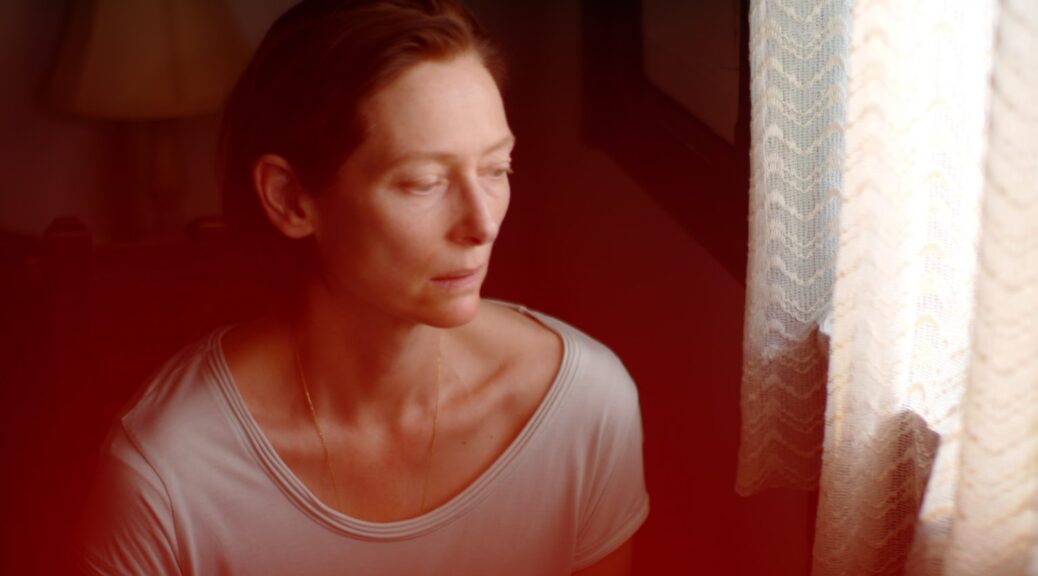
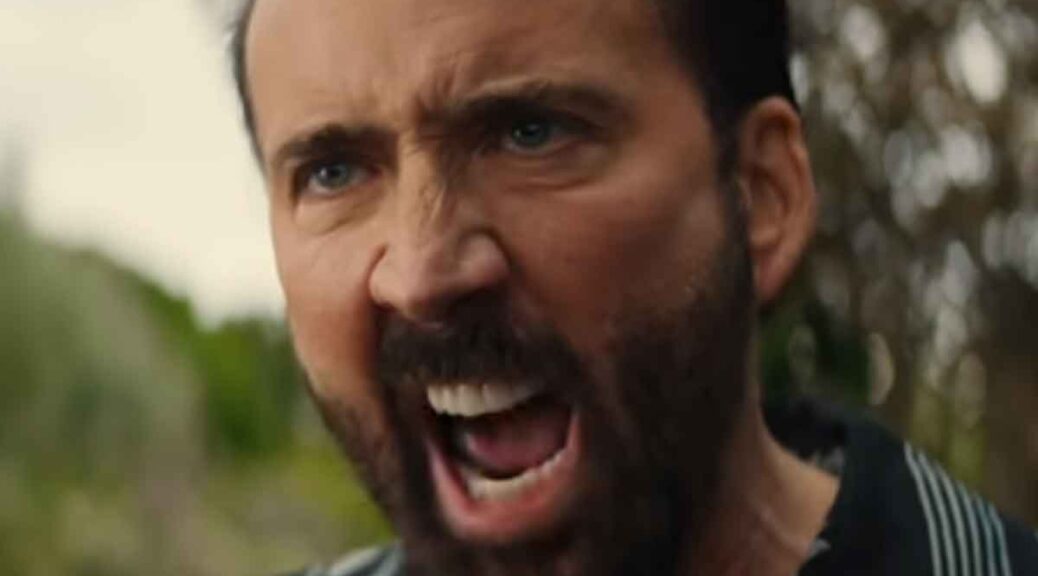
The Spine of the Night is a rotoscope-animated feature that presents a pseudo-H. P. Lovecraft story of humanity’s cosmic insignificance in the visual style of a higher-budget He-Man cartoon.
The film is mostly the backstory of a formidable, almost-naked, swamp queen who has trekked up the face of a mountain. She’s come to swap tales with a Guardian sworn to protect humanity from confronting its own vulnerability in the face of a vast and indifferent universe.
He’s guarding a blue flower that makes folks trip balls and contemplate the cosmic void. But a seed got away from him and floated to the fertile earth of the swamp. With the knowledge of the void comes magic power.
And humanity’s quest for this power has caused no end of trouble.
Like Lovecraft’s stories, the Spine of the Night has a slow, dreamy pace. The art style pays homage to the otherworldly and provocative covers of vintage pulp fantasy/horror novels, but with a welcome understanding that not all women are proportioned like Barbie dolls, and with more diversity in the race/ethnicity of its characters.
The theme of humanity’s fragility is underscored in the movie’s violence. Skin parts and limbs break off with the ease of a tortilla chip placed under the pressure of a slightly viscous dip. Viscera are just waiting to pop out of the body’s private cavities like trick snakes in a can of faux potato chips. People are cleaved in half.
Writer/directors Philip Gelatt and Morgan Galen King have assembled a roster of voice talent that helps bring the characters to life. Is there a better choice to play a badass swamp queen who is impervious to frostbite than Lucy Lawless? I don’t think so. Joining Lawless are Richard Grant as the Guardian, Joe Manganiello as the beefy soldier Mongrel, Betty Gabriel as a warrior-librarian, and Patton Oswalt as the whiny and entitled Lord Pyrantin.
As a child of the eighties, I was left feeling swaddled in nostalgia by Spine of the Night, wanting to pair it with some cozy PJs and a bowl of sugary cereal.
Remember Shudder’s 2019 documentary Horror Noire: A History of Black Horror from director Xavier Burgin? It was great, wasn’t it? And if you thought to yourself that you’d love a sequel, you should know that this week’s Shudder premiere Horror Noire is not that. Not exactly.
Instead, it is an anthology of six horror shorts made by Black filmmakers. Writers, directors, performers, ideas, perspectives, points of view — everything the documentary made us realize we were not getting – is delivered by the anthology.
Production values and performances in every film are solid. Familiar faces of veteran talent elevate the individual pieces. Tony Todd, Malcolm Barrett, Rachel True, Peter Stormare, Lenora Crichlow and others turn in memorable performances in creature features, Gothic horrors, psychological horrors and comedies.
Todd, True and Barrett star as a married couple pulled apart by a cult in one of the strongest entries, Rob Greenlea’s Fugue State, a sly comment on a common problem. Kimani Ray Smith’s Sundown is a fun reimagining of horror tropes led by Stormare’s characteristic weirdness and the action hero stylings of Erica Ash.
Julian Christian Lutz’s Brand of Evil reworks familiar ideas, turning them into an unexpected creature feature that’s both savvy and strangely touching.
Other shorts are a little less successful. Robin Givens’s Daddy digs into parental horror but can’t balance build-up with payoff. Zandashé Brown’s The Bride Before You brims with insight and style, but an overreliance on voiceover narration keeps the film from developing the kind of atmosphere it hopes for.
Joe West’s The Lake also falls just short of keeping you interested and guessing, although a fuzzy backstory allows for a more thought-provoking lead character than you might expect.
The full stash runs two and a half hours and might have played better as a short series. It’s a long commitment, and every film has weak spots, which makes the time really feel like a commitment. But there’s much to enjoy with each episode. Taken as a whole, there’s variety enough in style and substance to promise something for everyone.
Friends to the end – that’s the whole idea when horror filmmakers tackle friendship, isn’t it? Can they be trusted? Who will sacrifice what, and will it be worth it? Or are they both evil? Horror cinema has an excellent run of best friends in movies, but we’re looking at movies specifically about that friendship. Movies like Shaun of the Dead and Jennifer’s Body. (Both brilliant, but not on the list. We know! There are a lot of great ones!) So let’s get to it!
5. Bedevilled (2010)
Cheol-soo Jang’s first feature film bears witnesses not only to some horrific deeds, but to an amazingly confident new filmmaker who knows how to sidestep expectations, turn the screw, and offer surprising insight in a genre that doesn’t always generate that kind of thoughtfulness.
The film opens as beautiful if cold Hae-won (Sung-won Ji) witnesses a crime and chooses not to involve herself. She takes a (somewhat involuntary) vacation on the remote island where she grew up, to find her childhood friend Bok-nam (Young-hee Seo). On the isolated, backward island – though Hae-won is treated to rest and nurturing by her adoring friend – Bok-nam’s life is about as far from ideal as possible.
Jang captures the rugged, isolated beauty of the island and offsets both ideas with his leads – one, an elegant and pristine beauty, the other a rough-hewn image – and sees two sides of the same humanity. This is a morality tale, but it’s also a brutal but sympathetic (and seriously bloody) comeuppance. Jang does not leave off where you think he might, instead crafting a compelling and satisfying whole that will stick with you.
4. Tragedy Girls (2017)
Heathers meets Scream in the savvy horror-comedy that mines social media culture to truly entertaining effect.
Besties Sadie (Brianna Hildebrand) and McKayla (Alexandra Shipp) are looking for more followers to improve their brand, and they have been doing a lot of research to make their content more compelling. The Tragedy Girls plumb their small Ohio town’s surprising death toll with more insight than the local police seem to have. Where do they get their knowledge?
Provocative.
Hildebrand and Shipp (both X-Men; Hildebrand was the moody Negasonic in Deadpool while Shipp plays young Storm in the franchise proper) nail their characters’ natural narcissism. Is it just the expectedly shallow, self-centeredness of the teenage years, or are they sociopaths? Who can tell these days?
3. Tucker & Dale vs Evil (2010)
Horror cinema’s most common and terrifying villain may not be the vampire or even the zombie, but the hillbilly. The generous, giddy Tucker and Dale vs. Evil lampoons that dread with good-natured humor and a couple of rubes you can root for.
In the tradition of Shaun of the Dead, T&DVE lovingly sends up a familiar subgenre with insightful, self-referential humor, upending expectations by taking the point of view of the presumably villainous hicks. And it happens to be hilarious.
Two backwoods best buds (an endearing Tyler Labine and Alan Tudyk) head to their mountain cabin for a weekend of fishing. En route, they meet some college kids on their own camping adventure. A comedy of errors, misunderstandings and subsequent, escalating violence follows as the kids misinterpret every move Tucker and Dale make.
T&DVE offers enough spirit and charm to overcome most weaknesses. Inspired performances and sharp writing make it certainly the most fun participant in the You Got a Purty Mouth class of film.
2. Let the Right One In (2008)
In 2008, Sweden’s Let the Right One In emerged as an original, stylish thriller – and the best vampire flicks in years. A spooky coming-of-age tale populated by outcasts in the bleakest, coldest imaginable environment, the film breaks hearts and bleeds victims in equal measure.
Kare Hedebrant‘s Oskar with a blond Prince Valiant cut needs a friend. he finds one in the odd new girl (an outstanding Lina Leandersson) in his shabby apartment complex. She, as it turns out, needs him even more.
This is a coming-of-age film full of life lessons and adult choices, told with a tremendous atmosphere of melancholy, tainted innocence, and isolation. Plus the best swimming pool carnage scene ever.
The unsettling scene is so uniquely handled, not just for horrifying effect (which it certainly achieves), but to reinforce the two main characters, their bond, and their roles. It’s beautiful, like the strangely lovely film itself.
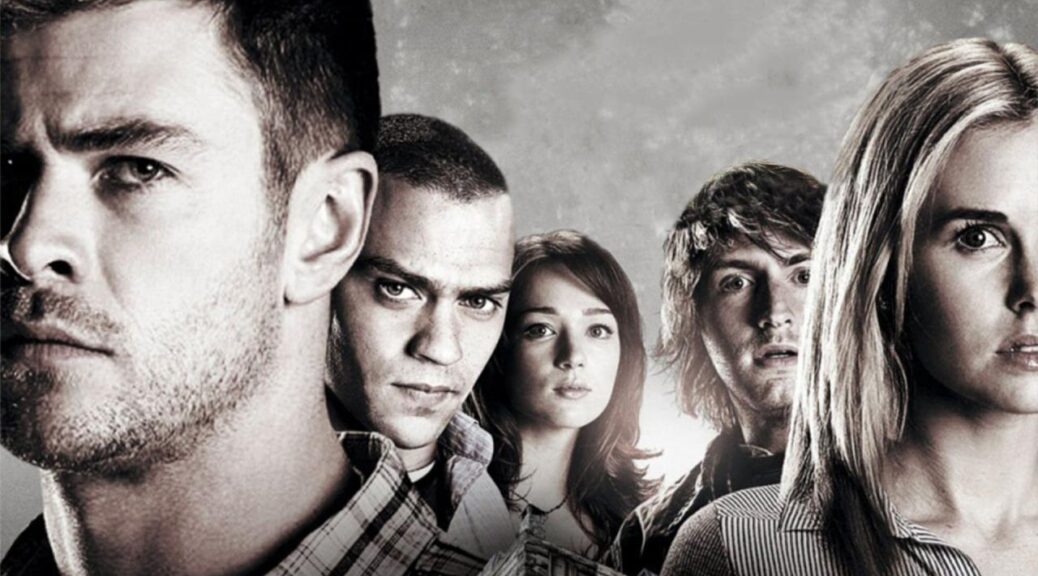
1. They Look Like People (2015)
Christian (Evan Dumouchel) is killing it. He’s benching 250 now, looks mussed but handsome as he excels at work, and he’s even gotten up the nerve to ask out his smokin’ hot boss. On his way home from work to change for that date he runs into his best friend from childhood, Wyatt (MacLeod Andrews), who’s looking a little worse for wear. Christian doesn’t care. With just a second’s reluctance, Christian invites him in – to his apartment, his date, and his life.
But there is something seriously wrong with Wyatt.
Writer/director Perry Blackshear’s film nimbly treads the same ground as the wonderful Frailty and the damn near perfect Take Shelter in that he uses sympathetic characters and realistic situations to blur the line between mental illness and the supernatural.
Wyatt believes there is a coming demonic war and he’s gone to rescue his one true friend. Andrews is sweetly convincing as the shell shocked young man unsure as to whether his head is full of bad wiring, or whether his ex-fiance has demon fever.
The real star here, though, is Dumouchel, whose character arc shames you for your immediate assessment. Blackshear examines love – true, lifelong friendship – in a way that has maybe never been explored as authentically in a horror film before. It’s this genuineness, this abiding tenderness Christian and Wyatt have for each other, that makes the film so moving and, simultaneously, so deeply scary.
The title of No Future also serves as an emotional
content warning for a film about heroin addiction, and it’s a warning to heed
if you want this kind of narrative tempered with breezy redemption.
But it’s not without hope. Rather, directors Andrew Irvine and Mark Smoot avoid sentimentality and addiction cliches in equal measure, and what’s left is a lean, emotional gut punch delivered by the small cast all turning in top performances.
When an old friend dies of an overdose, Will (Charlie
Heaton), himself in recovery from heroin addiction, begins a tumultuous affair
with Claire (Catherine Keener), his dead friend’s mother.
The pair are drawn together by grief and guilt, a dynamic
that quickly goes from sympathetic to parasitic as the two spurn the numerous
more emotionally healthy therapeutic outlets available to process their loss.
Keener and Heaton are electric together, which is no small
feat for characters that veer wildly between retreating alone into their own
pain while showing a convincing attraction to each other. Keener in particular shines
as a woman who goes from casual fatalism to incandescent rage as she comes to
terms with losing her son Chris (Jefferson White).
The film flirts with thematic shortcuts, most notably in the
form of No Future—a band that Will and Chris played in together. But the more
Will and Claire wax philosophical about what brought them to this point in the
present, it becomes clear that it’s less nihilistic than it sounds.
The film is populated almost entirely with people who don’t allow themselves the luxury of looking any farther ahead than their open wound of the day. It’s raw and bracing to watch it all unfold, but if nothing else the impact lingers well into the future.
Did you know that there was a time, at least in England,
when cats were not a popular house pet? And it wasn’t really that long ago. How
weird is that?
Not weird enough to stand out in the highly unusual and very
endearing film The Electrical Life of Louis Wain.
The ever-reliable Benedict Cumberbatch plays Wain, artist
whose drawings of adorably anthropomorphized cats took Victorian England, and
then the world, by storm. Will Sharpe’s biopic looks to introduce us to the
eccentric, charming, and ultimately tragic world of this friend of the feline.
Sharpe’s film is a swirl of color and energy led onward by
the droll musings of narrator Olivia Colman, who gets all the best lines. (“Aside
from its bizarre social prejudices and the fact that everything stank of shit,
Victorian England was also a land of innovation and scientific discovery.”)
As Wain’s life unravels before us, wonderful actors populate
the screen: Toby Jones as the publisher who sees great, if unusual, things in
Wain; Claire Foy as the governess-turned-wife whose love would bring Wain joy
and scandal; Andrea Riseborough, as the eldest sister far better suited to the
world of business and awfully frustrated with her unsuitable brother.
At the center of everything is Cumberbatch, more than up to
the challenge of creating a lovable outsider, a man so full of something
wonderful and so destined to be eaten alive.
Sharpe has trouble with that balance, even if Cumberbatch
does not. While Wain’s talent brought joy to many across the world, his
gullible nature, wild lack of business savvy and likely mental illness made him
an easy mark in a callous world. Sharpe, who co-wrote the script with Simon
Stephenson, has a difficult time conveying the madness that would be Wain’s
undoing.
He keeps us at arm’s length from Wain, even as Cumberbatch repeatedly
invites in. The actor and performance are wonderful, outdone only by an
underused Riseborough as the one character even more shackled by the realities
of the world.
But Sharpe’s vision is not sharp enough, and he ties up Wain’s frantic and messy life with far too much tidiness, a cinematic shortcut that doesn’t suit the film or the subject. Too much effort goes into wrestling Wain’s madness into a coherent, cinema-friendly plotline and it feels like the artist is being cheated once again.
Denis Villeneuve’s vision for Frank Herbert’s Dune is
as gorgeous and cinematic as you might expect from the filmmaker behind Blade Runner 2049
and Arrival. The worlds, the interiors, the
exteriors, the space crafts, the spice, the worm — each articulated with a
sense of wonder, as if the director himself was awestruck by what he saw.
That vision is hampered by a number of things, but the cast
is not among its faults. Though Part One contains too many glorified
cameos, even those are handled with care.
But let’s start at the top. Timothee
Chalamet, whose genuine vulnerability makes him the perfect emo savior, is a
natural for Paul. There is depth and almost humor to the performance. Even with
only the first part of his journey completed by the end of the 2 hour and 35 minute
film, his arc is clearly underway.
Oscar Isaac is so wonderfully Oscar Isaac as Paul’s noble
but human father, and Rebecca Ferguson is exquisitely tortured as Paul’s mother.
Sharon Duncan-Brewster, Josh Brolin, Jason Momoa and especially Javier Bardem all
leave impressions with minimal screen time.
But the film has two problems, they are both pretty substantial,
and they are both the story.
Problem #1 is that Dune Part 1 is half a film. You
can make a multi-part story and still have several lovely, complete, standalone
films. Kill Bill did it. Dune did not. It ends at the halfway
point and that is exactly how it feels: 2 and a half hours to halfway there.
The second concern is that the source material is a white savior
film. By casting almost exclusively people of color as the indigenous Fremen
people of the conquered planet Arrakis, Villeneuve was at least facing the
issue directly. That same laudable decision also exacerbated the situation, however,
by turning Dune from a metaphorical white savior story into a literal
white savior film, as the very white Chalamet takes on the mantle of messiah to
lead the Fremen toward salvation.
He’s a dreamy messiah whose hair is forever mussed and
hanging in his big, brown (for the moment) eyes, sure. But we know where this
is going, even if we have no idea when we’ll get to see it arrive as Dune
Part 2 is not yet filming.
It’s a lot of very attractive waiting for something to happen, which is maybe the best Dune synopsis I can think of.
If you’re the one, I’ve got two reasons not to saddle up with The Harder They Fall.
It’s a Western
It’s good
Ruthless Rufus Buck (Idris Elba) is getting out of jail, and that’s mighty interesting news to Nat Love (Jonathan Majors), who has no love for Rufus.
Nat has a serious score to settle, so he re-assembles his old gang, led by sharpshooter Bill Pickett (Edi Gathegi), and sets out on horseback. Along the way, Nat rekindles a flame with saloon owner Stagecoach Mary (Zazie Beetz) and earns the trust of Mary’s silent-but-deadly bodyguard Cuffie (Danielle Deadwyler).
And even though Nat is a wanted man, Marshall Bass Reeves (Delroy Lindo) decides he’d rather be on the team that finally takes Buck down.
But Rufus has some pretty solid support in his corner, too. Treacherous Trudy Smith (Regina King) speaks softly but shows no mercy, while quick draw legend Cherokee Bill (LaKeith Stanfield) leads a posse of men helping Rufus kick Sherrif Wiley Escoe (Deon Cole) out of Redwood and take over the town.
And that town ain’t big enough for both Buck and Love.
Director and co-writer Jeymes Samuel (aka The Bullitts) plants his flag early, with onscreen text telling us that he may not be telling a true story, but these people did exist. So while you may be reminded of Tarantino (or his many shared influences), this film’s history isn’t alternative. Samuel and his committed ensemble are here to remind us that it’s the whitewashed Hollywood version of the Old West that’s fiction.
Yes, these dusty roads are well traveled and the dialog can be a bit musty (“love is the only thing worth dying for…”), but there’s so much stylish bloodshed, gallows humor and terrific acting in every frame that the film wins you over on pure entertainment value alone.
Plus, it looks fantastic. Samuel frames the landscape with gorgeous panoramas, while wrapping some nimble camera movements and pulsing rhythms around those steely stare downs, frantic shoot ’em ups, freshly-pressed hats and dusters and plenty of other delicious period details.
The Harder They Fall is big, bold, visionary fun. It takes characters, races and lifestyles that have been hijacked by history and reclaims them all with the brashness of an early morning bank job.
This crew ain’t shootin’ blanks, and they rarely miss.
At Horizon High School in El Paso, Texas, students have the
opportunity to learn and train for careers in law enforcement. From Border
Patrol to the El Paso PD, director Maisie Crow examines the opportunities and dilemmas
the students face as they follow this path in her documentary, At the Ready.
The film follows three students, two seniors at Horizon and
one recent graduate, keeping the focus on how these teenagers participate not
only in the Law Enforcement classes, but the school’s criminal justice club.
Mason, a transgender youth, joins the club because it’s portrayed as a place where a student gains a family. Indeed, we see former members of the criminal justice club returning to the school to interact with and encourage current members. A family is something Mason is desperate to find, as he is mostly on his own. With divorced parents, and a father often away for his job, Mason struggles with his loneliness, as well as his inability to reveal who he truly is to his parents, classmates and teachers.
The familial aspect of the classes is conveyed through the
actions of not just the students, but many of the teachers – those profiled are
all retired law enforcement personnel. However, we see that for some of the
teachers, there is a hypocrisy to what they teach. They struggle to convey the
realities of a career in law enforcement: the stress on one’s family, the fear,
and the trauma that comes with the territory.
Many of the students are children of immigrants. For them, working for Border Patrol is an opportunity to not only protect the border, but to help others trying to enter the country. The reality of the situation is another focus of the film: Trump’s border policy of separating children from their families is something many of the students struggle with. Christina, a recent graduate, finds herself questioning the ethical morality of such a policy. When the border policy changes with the whims of those in D.C., it’s the people on the ground who have to deal with the fallout of inhumane regulations.
Crow does a good job of keeping the focus on the subjects in the film without injecting too much bias. You’re encouraged to make up your own mind as you connect with people on screen.
Many well-done documentaries will not only hold your
interest, but make you think. This one does both.
It’s a truth universally acknowledged that high school students are dumb.
It’s not their fault. The part of the brain that supports decision-making isn’t fully developed until the mid-twenties. And that’s ideally why society surrounds the impulsive little beasties with grownups who can model positive behavior and counsel them about their choices.
Director William Coakley’s Runt shows a good kid, Cal, trying to navigate the tightrope of high school and arrive safely at art school. But he’s working entirely without a safety net.
His single-parent mom is either at work or asleep. His
teachers are the kind of folks who will yell at him for being obvious
when he breaks and lets the jocks cheat off him. His best friend is an
increasingly self-destructive embarrassment. His manager at the supermarket is
always on his butt. The only living being that has his back at all is his dog,
Runt.
Right from the jump, you know this isn’t going to end well.
Over the course of the film, Cal’s relationship with the jock bullies becomes increasingly violent. The tea of toxic masculinity that they are all steeping in leaves no room for apologies. The cycle of violence feeds on the overall negative energy until, toward the end, it feels like you are watching the birth of a supervillain.
Cameron Boyce as Cal is fantastic. You can see all the nuances of the different emotions that play over his features. The mixture of pride, shock, and guilt that flash across his face after he impulsively does something that Cal never thought he would do is awe-inspiring. The entertainment industry truly lost a promising talent when Boyce died in 2019.
The film’s ending somewhat undercuts what seems to be the intended message. There’s a tinge of romanticism in the very final moments that gives Cal’s violence a more heroic feel than what the rest of the movie seems to be going for.
But as a portrait of what’ll make an art kid snap, it’s pretty good.