Out this week on DVD and Blu Ray is the surprisingly watchable Cloud Atlas – a challenging yet accessible sci-fi fantasy. Nesting six stories inside each other, Atlas connects human souls over generations, from a 19th Century shipwrecked notary to a clone awaiting execution in a dystopian future and onward. The large cast is anchored by solid performances from Tom Hanks, Halle Berry, Jim Broadbent and Jim Sturgess, all playing multiple roles as settings quickly move across time and space.
Viewed individually, some of the segments do struggle to keep silliness at bay, making the nearly three hour running time feel a bit bloated. As a whole, though, Cloud Atlas is ambitious, often visually stunning, and constantly fascinating.
For an even stronger existential dream across time and space, check out Terrence Malick’s glorious 2011 effort, The Tree of Life. As gorgeous a film as you’ll find, Malick’s rumination on innocence lost boasts magnificent performances from Brad Pitt and Jessica Chastain. It’s a masterpiece of a film, as big an effort as anything Malick or any other director has tackled. Talk about ambitious!
A Moulin Rouge spin on F. Scott Fitzgerald’s tale of decadence, longing, and the brutal carelessness of the wealthy could have been awesome. Isn’t that what we kind of expected when Rouge helmsman Baz Luhrmann signed on to direct The Great Gatsby, especially when he unveiled his hip hop and jazz soundtrack? What better way to bridge the gap between eras, to help today’s audience fathom the indulgent lifestyle of the filthy rich in the roaring Twenties?
Somehow, though, Luhrmann can’t quite pull it off.
It isn’t his cast. A more perfect actor-to-character match is hard to imagine. Though some may miss Robert Redford’s stiff, humorless Gatsby, Leo DiCaprio fills the screen with the vulnerability, flash and charm that made the character leap off Fitzgerald’s page. Likewise, the ever wide-eyed Tobey Maguire wanders amiably through Gatsby’s world as though he was born into Nick Carraway’s life.
Not surprisingly, it’s the great Carey Mulligan who almost effortlessly steals the film. Her voice full of money, her languid flirtations both lovely and sad, Mulligan’s marvelous Daisy Buchanan becomes so human, she’s probably more sympathetic than the character deserves to be.
Even with a strong concept, brilliant source material and a perfect cast, Luhrmann stumbles. He just tries too hard. One of the most efficiently written, perfectly crafted novels ever penned, clocking in at barely 300 pages, morphs in to a 143 minute film? Why? Needless complications.
For instance, co-writing the adaptation with frequent collaborator Craig Pearce (Strictly Ballroom, Romeo + Juliet, Moulin Rouge), Lurhmann opens the film on a depressed, alcoholic, insomniac Nick Carraway telling the sad tale of his neighbor Jay Gatsby to his shrink at the sanitarium.
What?
Lame.
But the film’s greatest misstep is probably the overwrought, surprisingly lifeless style. Luhrmann aims to mirror the gaudy, hopelessly shallow glamour of the era. He succeeds in spurts, but his approach is so heavy handed it overwhelms the film. Gimmicky and uninspired, the directorial vision serves mostly to draw your attention away from all that’s right about his picture.
It doesn’t kill the effort so much as undermine it. Luhrmann had something really remarkable to start with. He just needed to be a little more trusting of his cast and source material and a little less self-indulgent.
So, The Great Gatsby remains a lesson in the evils of self indulgence. Too bad, because it could have been a good movie instead.
How does a young Scottish thug turn his life around to become the father his infant son needs? He relies on national resources: a kilt, some good Scotch, and the music of the Proclaimers. Done.
The Angels’ Share follows Robbie (Paul Brannigan), a wayward youth facing charges of beating and disfiguring several other young Scots. The judge chooses leniency because of the positive influence of Robbie’s girlfriend and his impending fatherhood, so he’s facing community service rather than prison time. Too bad the judge’s good nature won’t help him with his girlfriend’s dad or those same disfigured toughs.
Working again with longtime collaborator, screenwriter Paul Laverty, filmmaker Ken Loach’s eye for social commentary twinkles a bit. Like many of the duo’s films, The Angels’ Share situates us within the generations-deep custom of poverty and criminality in the UK’s lower classes. Loach’s trademark spontaneous realism is on display, but this film offers more cheek and charm, possibly less social relevance than his more famous works.
Loach’s efforts are aided by generous, naturalistic performances from a cast heavy with newcomers. (How novice and natural? Expect accents so thick you’ll be grateful for the subtitles.) But it’s veteran character actor John Henshaw who provides the spark that turns the film from grim street crime tragedy to buoyant tale of resilience. His role could easily have fallen into the realm of cliché, but the seasoned performer keeps the characterization honest. Anything else would have felt wildly out of place.
In his film debut, Paul Brannigan anchors the adventure with an understated turn that realizes the burden of self loathing and the fire of a man’s determination to change his destiny. His performance is tender and charming, not to mention terribly impressive for a novice.
He’s flanked on all sides by fresh and endearing comic foils. The supporting characters are edgy enough to broaden the image of not-quite-working-class Scotland, but Loach, Laverty and a talented supporting cast give each an individual struggle and a clear personality.
What the film lacks, finally, in social relevance it makes up for with unexpectedly joyous adventure.
Slim pickins in new release this week, but if you’re looking for something spooky, Jessica Chastain’s spectral thriller Mama is your best bet. Thanks to the impressive performances of its youngest cast members, this supernatural tale of feral orphans generates true dread. Heartbreaking, pensive and convincingly creepy, the wee ones steal the film in a disturbing way. Their stellar work is nearly undone by a lackluster title character, but for about 2/3 of its run time, Mama is a keeper.
For a much stronger voyage into spectral horror and creepy children, try the 2007 Spanish gem The Orphanage. Elegantly filmed, atmospheric and deeply creepy, The Orphanage recalls such genre greats as The Devil’s Backbone, The Others, and The Innocents. Is a mother so distraught over the vanishing of her son that she’s seeing ghosts, or is there something more sinister afoot in the old orphanage she bought? It’s a haunted house tale that manages to be familiar, surprising and, most importantly, spooky.
After making some really super friends last year, Tony Stark is flying solo again, reaching some pretty impressive heights.
With an infusion of hip from a slick new filmmaker and the continued excellence of its star, Iron Man 3 re-establishes the high-tech suited one as the anchor of The Avengers franchise.
Of course, Robert Downey, Jr. can go a long way toward making even weak films entertaining, but even he seems to have more pep in his step this time thanks to director/co-writer Shane Black.
Black, given the keys to this valuable engine from executive producer Jon Favreau, does not disappoint, filling IM3 with snappy dialogue, clever plot twists and intelligent subtexts addressing self-doubt and terrorism. Oh yeah, and plenty of the impressive 3D visual wizardry that’s required of a superhero blockbuster.
The story catches up with Stark enjoying his fame as usual, but also suffering bouts of insomnia and anxiety while trying to come down from the Avengers battle royale. He stays up all night crafting more toys for his alter ego, only to be plagued by nightmares when he does manage some sleep.
It doesn’t help when an old acquaintance (Guy Pearce) shows up with a business offer and an eye for Stark’s love Pepper (Gwyneth Paltrow), or when one of Stark’s old conquests (Rebecca Hall) joins the soap opera with some mysterious warnings of her own.
And then, as if Stark didn’t have enough on his mind, international terrorist “the Mandarin” (Ben Kingsley) starts blowing everything up!
Black and Downey Jr., re-teaming after the underrated Kiss Kiss Bang Bang from 2005, know that the best comic book- inspired stories turn darker as they age, and they both show good instincts toward how to best apply that formula to their story. They break Stark/Iron Man down mentally, physically and mechanically, while managing to keep the film smart, funny, and often spectacular.
There’s plenty to keep you engaged, and keep you guessing, with the impressive cast of actors providing downright gleeful performances.
Ironically, IM3’s biggest weakness comes from sometimes having too much of a good thing. With Patriot (Don Cheadle) by Stark’s side in the explosive finale, there might be one too many suits, near deaths and breathless escapes.
That’s nit-picking I know, and not enough to derail Iron Man 3 as a thrilling start to the blockbuster season.
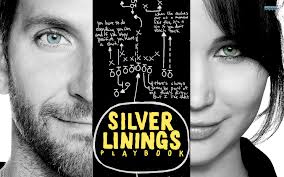
At long last, Silver Lining’s Playbook– David O. Russell’s story of love in a hyper-diagnosed, over-medicated, label-dependent society – is available on DVD. Bradley Cooper plays a damaged man returning home to Philly from an institutionalized stint. He returns to a football obsessed father with undiagnosed OCD (Robert DeNiro – and he’s actually acting, everybody!), and his own unrelenting determination to win back his estranged wife. And then he meets an unbalanced, brooding, unquestionably hot neighbor (Oscar winner Jennifer Lawrence). Both leads are fantastic, buoyed by an excellent supporting cast and a screenplay that bends to enough Hollywood tropes to be a crowd pleaser but subverts enough to be a real surprise.
We’re not going to pretend we championed Lawrence since her TV days on the Bill Envall show, but with Winter’s Bone, she impressed us and everyone else who saw her gritty, Oscar-nominated performance. As a young woman in the Ozarks wading through family secrets while searching for her father, Lawrence is never less than frighteningly real. She is surrounded by an outstanding supporting cast, most notably John Hawkes and Dale Dickie. Director/co-writer Debra Granick crafts a latter day Deliverance that grabs you early, not letting go until you feel that you’ve survived an experience, not merely seen a movie.
In fairness to director Michael Bay (did I just write that out loud?) turning a real life murder case into a comedy is not unheard of. Just last year, Ricard Linklater pulled it off with the delightful Bernie.
It can be done, but judging by Pain & Gain, Bay doesn’t know how.
The film is based on the exploits of two Miami bodybuilders currently sitting on Death Row. In the mid-1990s they kidnapped and tortured wealthy businessman Marc Schiller until he signed away nearly all his fortune. They attempted to kill him as well, but even though he survived, Schiller struggled to get police to buy his story.
Thinking they got away once, the “Sun Gym Gang” eventually tried the scheme again, and two people died grisly deaths.
In the right hands, this story could become a dark, satirical comedy that uses the wretched excess of South Beach as a platform to skewer the misplaced values of a consumer culture run amok. The possibilities are there, but Bay doesn’t do nuance.
Instead, the gang is sympathetically portrayed as a group of bumbling clowns just taking a kookier path to the American dream. Ringleader Daniel Lugo (Mark Wahlberg) attends get rich seminars and calls himself a “doer” while roping the steroid-crazed Adrian Doorbal (Anthony Mackie) into his plans. For extra muscle, they recruit the gigantic Paul (Dwayne Johnson), a rehabbing, Jesus-loving ex-con character reportedly written as a composite of other real life gang members.
Wahlberg and Mackie are fine, Johnson’s growth as an actor continues to impress, and there is solid supporting work from Tony Shalhoub. All are hamstrung, though, by how their respective characters are conceived. Screenwriters Christopher Markus and Stephen McFeely (the Narnia series) hit a target that’s just a few “nyuk nyuks” away from the Stooges, which is a few miles away from where they should have been aiming.
Ironically, with all the slo-mo, voiceovers and onscreen text, you get the feeling Bay actually thinks he crafted a Natural Born Killers for a new generation.
He didn’t.
Still, he’s trying, in his own misguided way, to say something here. That, along with the capable performances, is all Pain & Gain needs to stand as Bay’s best film to date.
If there’s one thing movies have taught us, it’s to stay out of the woods. If there’s a second thing, it’s that only a knucklehead would screw with the fine folks of Boston. It didn’t work out that well for the British, or for most anyone else, as these films clarify. These citizens are a hardy sort, and our hats are off to them.
The Departed (2006): Scorsese and DiCaprio closed themselves up in a mental institution in Boston Harbor for 2010’s Shutter Island, but the insanity they unleashed back in 2006 resulted in their real Beantown masterpiece. Hometown boys Mark Wahlberg (never better) and Matt Damon mix with accent-appropriate DiCaprio and an unhinged Jack Nicholson to let Scorsese work out his Catholicism-and-bullets fixation in a new town with a new ethnicity. Dropkick Murphys tag along.
The Verdict (1982): Writer David Mamet and director Sidney Lumet echo Boston’s hard boiled, thick skinned belief in redemption. Stubborn but wearied Beantown lawyer – a brilliant Paul Newman – decedes not to take the easy money and instead takes a Catholic-run hospital to trial. A tremendous supporting cast helps, with bonus points to James Mason, whose creepy-charming malevolence is chilling.
Gone Baby Gone (2007): For his own career redemption, once-laughingstock Ben Affleck returned to his hometown (and the town that inspired his first Oscar) for his first directorial effort. Shot on location and filled to brimming with local actors (OK, maybe we didn’t need 3 actors with a hairlip), Affleck’s flick makes Dorchester as much a morally ambiguous character as Patrick Kenzie (Casey Affleck), the hometown investigator looking for a missing girl. Amy Ryan astonishes – truly – as the girl’s mother.
http://www.youtube.com/watch?v=rb2-Ac2K3BQ
The Town (2010): Affleck returns home for his second effort behind the camera, this time to make Charlestown less of a tourist destination than it had already been. The best low-brow heist movie ever, The Town boasts excellent performances all around – even from Blake Lively. It serves up generations of bone-deep, hardened Towny criminals including Chris Cooper, still fighting the fight as a lifer, and Pete Postelthwaite creeping everybody out as kingpin/florist.
Mystic River (2003): Eastwood’s spin on a Dennis Lehane novel reignited Hollywood’s romance with Boston flicks. Three neighborhood buddies grow up and grow apart, each with his own connection to the criminal element that tainted their childhood and threatens to unravel their lives. Moody and dramatic, with a winding, melancholy mystery to puzzle out, the film nabbed two Oscars (Sean Penn, Tim Robbins) and racked up four more nominations.
http://www.youtube.com/watch?v=tjHLulVPB7w
The Friends of Eddie Coyle (1973): Most of these films involve a code, one of silence and violence that’s accepted and practiced because without it the business couldn’t go on. Eddie Coyle (Robert Mitchum) breaks that code because he’s facing a stretch in the joint he’d just as soon avoid. A never-better Mitchum upends snitch stereotypes, drawing our sympathy as he works through his dilemma. Slower paced and filmed with less panache than its Boston Mob counterparts, this film develops slowly and leaves you feeling more like you’ve been punched in the gut.
http://www.youtube.com/watch?v=_WtR-mi6VtU
Good Will Hunting (1997): Hello, Southie. Hometown boys Ben Affleck and Matt Damon started their Hollywood takeover by writing a story about two low rent kids upending MIT’s elitism, finding love, and breaking out of a history of poverty and violence. Well, Damon broke out, but Affleck got to deliver the best Boston character in any film ever.
The Boondock Saints (1999): Jesus, these brogues are terrible. Just awful. But writer/director Troy Duffy’s sordid story of the righteously violent McManus twins did find an audience. They’re out to clean up the Boston they love – or at least ensure that it’s the Irish, not the Russians, allowed to shoot up the neighborhood. Steeped in Catholicism, blood, pathos and, again, the worst imaginable accents, Boondock Saints is weirdly watchable. It helps that Willem Dafoe tags along as one bat shit insane FBI agent.
The Fighter (2010): Another Boston tale of redemption, fucked-up Irish families and low-rent hustling, David O. Russell’s brilliant The Fighter mines authenticity from this true life tale. Brilliant performances across the board owe their merit to actors who never judge or condescend. Oscar winner Melissa Leo shines as mother/manager for her boxer sons, and every scene she shares with her seven daughters – who hate son Mickey’s (Mark Wahlberg) girlfriend – is genius. But it’s Christian Bale’s epic performance as Mickey’s crackhead former boxer/older brother Dickey that seals this picture as among the best of 2010.
Honestly, Oblivion is a film that is a challenge to critique.
Not that it doesn’t have weaknesses. The problem is, it’s assembled from parts of many other science-fiction movies, and naming those films would necessitate one big spoiler alert.
Spoiler alerts are for the weak, so let’s tread lightly and say that Tom Cruise stars as Jack (can we give this character name a rest please?) one of the last “drone repairmen” on Earth. After decades of war with the invading Scavs, the planet was left devastated. Though victorious, most of humanity has relocated to a moon of Saturn, while Jack and his sparse mop up crew hang around to harvest resources and keep the drones working efficiently.
When a strange vessel crash lands, Jack defies orders and investigates, setting in motion a tumultuous chain of events.
While it may be true that sci-fi films have been borrowing from each other forever, Oblivion takes it up a notch. Not only are certain themes and plot devices instantly recognizable, but images and scenes considered at least famous (and at most, iconic) are shamelessly recreated.
Director/co-writer Joseph Kosinski, in just his second feature (after TRON: Legacy ) expands the story he first pitched as an eight –page treatment for a graphic novel. It seems he was thinking visually from the start, and it shows.
Oblivion is gorgeous, showcasing a wondrous sci-fi world full of eye-popping cinematography (especially effective in the IMAX version). From Jack’s outpost-in-the-clouds to his trips to the Earth’s surface in a pretty bitchin’ spacecraft, there is fertile ground for the type of poetic message Kosinski is after.
For a while, the substance keeps pace with the style, but it’s slowly bogged down by a script that ultimately can’t deliver the profundity it strives for. There is some humanity here, but not enough originality to keep the film from feeling overlong .
Tom Cruise is Tom Cruise, with the usual brand of charming intensity we’ve come to expect. Kosinski is still new to the game, but if his storytelling skills ever match his visual flair, he’ll be a player.
Django Unchained releases this week. Woo hoo! Quentin Tarantino’s first Oscar winning screenplay since Pulp Fiction unleashes a giddy bloodbath that’s one part blaxploitation, two parts spaghetti Western, and all parts awesome. Astonishing performances from Leonardo DiCaprio and Oscar winner Christoph Waltz might keep you from noticing the excellent turns from Sam Jackson, Jamie Foxx and Kerry Washington. That’s why you’ll need to see it again. Lucky for you it’s available on DVD today!
For an homage with a more comical edge, we recommend 2009’s Black Dynamite, a hilarious send-up of the blaxploitation films of the 1970s. Co-writer Michael Jai White is perfect as the titular hero who is out to avenge his brother’s death at the hands of..who else?…The Man. With character names such as Tasty Freeze and Cream Corn, and B.D. seducing the ladies with “you can hit the sheets or you can hit the streets, ” you can bet you’re last money this flick is superbad, honey.