Category Archives: Slider

For the homepage slider

A Skipper Brave and Sure


by George Wolf


If the story of Captain Phillips wasn’t true, someone in Hollywood would have dreamed it up for a new Paul Greengrass adventure film starring Tom Hanks. That movie would have been pretty good.

The reality-based version, though, is pretty great.

In 2009, Phillips was at the helm of the Mearsk Alabama when it was attacked and boarded by Somali pirates. Failing to take control of the ship, the pirates took Phillips hostage, holding him in a lifeboat for days until a Navy SEAL team did what Navy SEALs do.

As this is not a documentary, some of the details may be exaggerated, a fact which takes nothing away from the film’s effectiveness. Greengrass (The Bourne Supremacy and Ultimatum, United 93) utilizes the shaky camera movements and extreme closeups he’s known for to create solid tension early on, and then to slowly increase the pressure as events unfold.

In much the same vein as the fact- based films Argo and Zero Dark Thirty, Captain Phillips chronicles a crisis from recent history, and tells the story well enough to make you bite your nails over an outcome you already know.

Ironically, that story gets off to a bit of a rocky start. In setting up a contrast between the respective worlds of Phillips and the lead pirate Muse (Barkhad Abdi, in a stunning acting debut), Greengrass and screenwriter Billy Ray (The Hunger Games, State of Play) seem a bit hurried.

Not only is Phillips’s pre-trip routine very reminiscent of Hanks’s pre-flight scenes in Castaway, but, more importantly, in attempting to explain the attack, the opening minutes skirt with reducing the entire ordeal to little more than black savages against white heroes.

If you’ll pardon the pun, the ship is righted once the attack begins. From the moment Phillips spies the pirate boat through his binoculars, the tension is palpable. Greengrass creates an effective hide-and-seek between the pirates and the crew of the Alabama, culminating with the capture of Phillips himself.

The claustrophobic depiction of the days inside the lifeboat, mixed with scenes of a rescue being planned and implemented are nothing short of gripping, as Hanks delivers what is possibly the best work of his career.

His status as Hollywood heavyweight and all around swell guy has at times made it easy to forget that Hanks is damn good. This performance slaps the memory back into you. Hanks gives Phillips the humanity needed to ground a tale such as this, and drives the entire film into your psyche with one of the finest depictions of post-trauma shock ever seen on film.

By the time you are breathing a sigh of relief, you can’t imagine the story of Captain Phillips in better hands.



Verdict-4-0-Stars


http://www.youtube.com/watch?v=Sp6jpeDeQmE

SciFi of Significance

by Hope Madden

The wondrous galactic epic Gravity delivers an unmatched cinematic achievement. Co-writer/director Alfonso Cuarón sets you adrift in space, and for 90 minutes he leaves you breathless at the glory of the universe, and wrung out at the drama of attempted survival.

His work will make you remember why you go to movies – to the dark auditorium with the big, big screen. It will make you remember a time when a trip to the cinema utterly dwarfed the experience of movie night at home.

To create this magnificent beast, Cuarón created tools and technology that simply did not exist prior to this film. He created what he needed to authentically craft the sense of zero gravity, utter silence, cosmic lighting – all in 3D, no less.

When it comes to the vehicle for all this gadgetry, Cuarón, along with co-writer and son Jonás, seems to understand that simplicity is his friend. He refuses to complicate the tale, and the paired down narrative allows the primal terror and exhilaration of the space adventure to take hold.

Cuarón’s camera takes us to the outer reaches, and then crawls inside the space suit, allowing us to hurl unmoored through space along with Sandra Bullock’s novice astronaut. She is a medical researcher on her first space voyage, and she is in over her head, unprepared for all that she will experience. Just like us.

A playful George Clooney tags along for camaraderie, helping Cuarón create a joyous calm before the crisis. They’re astronauts. Look how cool that is! No wonder they risk almost unimaginable peril to do it.

Though the narrative makes a misstep here and there with emotional trickery and melodrama, what errors Cuarón makes with words he more than compensates for with the overwhelming visual experience.

The action will wring you out as you curse the clumsy suits, rail against the unpredictability of gravity, strain with heroes desperate to rush in a silent calm that will not allow it. Gravity doesn’t just deliver a magnificent view of space; it also offers perhaps the most breathlessly exciting action adventure of the year.

Visually glorious does not begin to describe Cuarón’s film. More than that, Gravity is realistic – jaw droppingly so. And this is why people began making movies in the first place – to transport you someplace magical, someplace otherworldly. Few if any have succeeded in this quest quite as Cuarón has with Gravity.


Verdict-4-5-Stars


A Scary Movie a Day for October! Day 1: Halloween


Halloween (1978)

Look past the ton of weak imitations, the awful sequels and the jokes about the Shatner mask, and remember that the original Halloween was pretty effective. No film is more responsible for the explosion of teen slashers than John Carpenter’s babysitter butchering classic.

Sure, you’ve seen it, but from the creepy opening piano notes to the disappearing body ending, this low budget surprise changed everything. Agreed, there are several terribly flat lines, and P.J. Soles as a giggling, dead-eyed airhead irritates the shit out of you, but Carpenter develops anxiety well, and plants it right in a wholesome Midwestern neighborhood. You don’t have to go camping or take a road trip or do anything at all – the boogeyman is right there at home.

Michael Myers – that hulking, unstoppable, blank menace – is scary. Pair that with the down-to-earth charm of lead Jamie Lee Curtis, who brought a little class and talent to the genre, and add the bellowing melodrama of horror veteran Donald Pleasance, and you’ve hit all the important notes. For the coup de grace, John Carpenter’s minimalistic score is always there to ratchet up the anxiety. Nice.

http://www.youtube.com/watch?v=8SFmmROBUto

Drama and Spectacle


by George Wolf

Yes, it’s clichéd irony, but here goes:  Rush, a movie steeped in the world of Formula One (F1) racing, excels because it downshifts, taking the time to examine the intricacies of a rivalry between two very distinct personalities.

Those two are James Hunt and Niki Lauda, legendary drivers who rose through the ranks together, ultimately waging an epic battle for the 1976 F1 championship. In the midst of that battle, Lauda suffered a near fatal accident, then subjected himself to the accelerated, painful rehabilitation needed to get back in the car before season’s end.

Rush is the latest in a line of historical dramas from veteran director Ron Howard, and thankfully, it’s one that favors the insightful subtlety of Frost/Nixon more than the overwrought melodrama of Cinderella Man.

That shouldn’t be a huge surprise. Oscar-nominated screenwriter Peter Morgan, who penned Frost/Nixon (as well as The Queen and The Last King of Scotland) delivers another thoughtful, character-driven script that supplies Howard with the sharp dialogue and wonderful themes necessary to develop the engrossing drama Rush ultimately becomes.

While Morgan again proves himself a master wordsmith, Howard displays a deft command of the pacing and camerawork needed to balance the human drama with the sports spectacle.

There are stories floating around that the film became a dual character study only because Howard didn’t have the budget necessary for all the racing he wanted to film. True or not, what matters is we get the best of both, with some truly pulse-pounding race sequences amid a faithful recreation of the international F1 scene during the swinging 70s.

Still, a  superior drama requires superlative lead performances, and Rush offers those as well. Chris Hemsworth (Thor) puts his charisma to good use, painting Hunt as the cavalier playboy who drifted through life looking for something, or someone, that could give him the high he got from his race car. Hemsworth’s looks and movie star status make him an easy choice for the Rush poster, but while his turn is strong, it his co-star who drives the film.

As Lauda, Daniel Bruhl creates a persona that becomes utterly fascinating, especially when pitted against his rival. While Hunt is raw talent, charm and bravado, Lauda is brainy, meticulous, blunt and socially inept. In a commanding performance that needs to remembered come awards season, Bruhl (Inglourious Basterds) makes an “unlikeable” character both sympathetic and compelling, drawing you into how Lauda views Hunt, and the world.

Exciting, enlightening, heartfelt and humorous, Rush flat out delivers, on all pumped-up cylinders.


Verdict-4-0-Stars


Tony Danza, Scarlett Johansson and Porn

by Hope Madden

Look at little Tommy Solomon! Joseph Gordon-Levitt has proven himself a versatile actor in the years since his TV career in the guise of a pre-pubescent Earthling. With his newest effort, Don Jon, he exhibits surprising confidence and aptitude as both a screenwriter and a director.

The film follows Jon (Gordon-Levitt), a Jersey player who cares deeply about only a handful of things: his bod, his pad, his ride, his family, his church, his boys, his girls, his porn.

Guess which one of those gets him into trouble.

Maybe the best way to appreciate what Don Jon is, is to quickly cover what it is not. Don Jon is not a traditional romantic comedy. It is not a sexy romp, or a perfect flick for hangin’ with your bros.

No. It’s a sexually frank, cleverly written, confidently directed independent comedy/drama about our culture of objectification. It’s an alert comment on a society that fears intimacy, collects trophies, and looks to get more than it gives; a culture that raises girls to want to be princesses, and guys to collect sexual conquests. A culture where a fast food restaurant honestly advertises its newest sandwich by having an oiled up, bikini clad super model spread her legs while she enjoys the tasty burger.

The effort certainly carries its flaws, but JGL gets credit for upending expectations, and for brilliantly paralleling romantic comedies and porn – because, let’s be honest, they are equally damaging to our concept of relationship.

Writing and direction are nothing without a cast, and Gordon-Levitt proves just as savvy in that department. Tony F. Danza, ladies and gentlemen! Danza has fun as Jon’s role model father, while this season’s go-to girl Brie Larson – with barely a word – scores as his observant sister.

Gordon-Levitt’s own perfectly crafted swagger finds its match in a gum-chewing Scarlett Johansson, whose sultry manipulator is spot-on.

The fledgling auteur stumbles by Act 3 – quite a letdown after such a well articulated premise. The underdeveloped resolution would hinder the effort more were it not for the presence of Julianne Moore as the eccentric and wise Esther. The role may be a bit clichéd, but Moore is incapable of anything less than excellence.

It won’t be long before we’re saying the same of Joseph Gordon-Levitt. Until the end, he proves himself an insightful observer of his times, a cagey storyteller, and an artist with limitless potential.


Verdict-4-0-Stars

Make Sure You’re Prepared


by George Wolf


Pre-game warmups aren’t usually part of the moviegoing experience, but Prisoners may require a little preparation.

Quite simply, it will wear you out.

Director Denis Villeneuve and writer Aaron Guzikowski have crafted a relentlessly intense, utterly engrossing mystery/thriller that will bludgeon your nerves, tease your sensibilities and leave your morals in disarray.

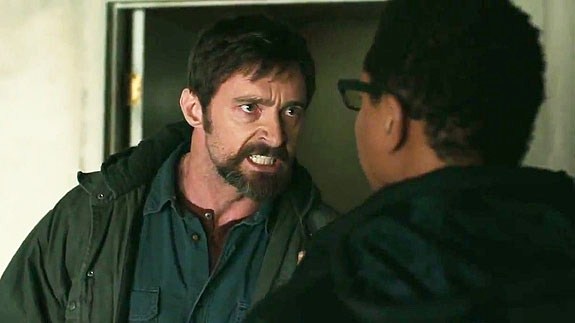
Hugh Jackman is unbelievably great as a father desperate for answers after his daughter, and his neighbor’s daughter, are abducted on Thanksgiving Day. The assigned detective (Jake Gyllenhaal) believes a troubled local man (Paul Dano) is to blame, but can’t find the evidence to hold him. Jackman’s character, overcome with rage, takes matters into his own hands.

That’s all the info you need, but just a tiny fraction of the complex chain of events set in motion by the crime. Guzikowski, who adapted the Contraband screenplay last year, delivers a twisting, intelligent script that lulls you with the familiarity of the premise all the while it’s leading you places you may not want to go.

Villeneuve, best known for writing and directing the Oscar-nominated Incendies three years ago, makes a stunning English language debut that succeeds on many levels. If a thriller was all it was, it would be a good one, relying on a substance that recalls years of Hollywood films from Death Wish to Gone Baby Gone.

Prisoners transcends the genre in the way it forces its audience to face the same moral ambiguities the characters are up against. The stupendous cast, which also includes greats such as Terence Howard, Viola Davis and Melissa Leo, fills each character with gritty realism, allowing actions that seem justified in one set of circumstances to be easily called into question.  As surprises mount,  the film lands solid blows to perceptions of torture, fear-mongering, religious fanaticism, and even basic parenting.

Sound like a lot? It is, and the film earns every minute of its two and a half hour running time. It is a dark, cathartic journey that is not for the squeamish, and the film’s length only serves to reinforce the hell these people are going through.  They want it to end, and so do you, but only because the film has hooked you so deeply.

You’ll need to pay attention and listen hard, and though you probably won’t figure things out early, the clues are all there in front of you. Prisoners is a breathtaking ride that rewards the effort it demands, ultimately providing a satisfying payoff, capped by an unforgettable final scene that may very well find its way into your dreams.


Verdict-4-0-Stars


De Niro’s Not-So-Secret Admirer

The Family

by Hope Madden

Think of The Family as Luc Besson’s mash note to Robert De Niro.

The writer/director/Frenchman’s fondness for violence and organized crime in film is well documented. He’s written and/or directed dozens of films on the topic, including La Femme Nikita, The Professional, and Transporter. Rather than follow a single assassin or bag man, this time around Besson wades through more familiar cinematic waters with a full-fledged mafia picture.

De Niro plays Giovanni Manzoni, known to his new neighbors in Normandy, France as Fred Blake. He ratted out his wise guy connections back in Brooklyn, and now the Witness Protection Program shuffles his family around France trying to avoid a retaliatory hit. But the “Blakes” don’t make it easy.

Besson’s screenplay is based on a novel by Tonino Benacquista, who’s penned some great, gritty flicks (The Beat that My Heart Skipped, Read My Lips). The Family is a lighter affair, depicting good natured psychopaths who fail to fit in as another set of psychos descend on a sleepy French town.

The film lacks the action choreography Besson’s audience has come to expect. Instead, its charm lies in the director’s joyous fondness for American gangster flicks in general and De Niro’s work in particular. His odes grow evermore obvious, with callbacks to most of the actor’s greats: Taxi Driver, Goodfellas, The Godfather: Part II, even Cape Fear. Besson’s having some fun, and DeNiro seems to enjoy the affection.

De Niro’s chemistry with Michelle Pfeiffer, playing his wife, gives the film a little heart. It’s great to see these two seasoned veterans share the screen, and Pfeiffer’s displaced and disgruntled Italian American is fun to watch.

The storyline for the couple’s two teens is weaker, and Besson seems almost disinterested in the involvement of the WPP agents, including saggy faced sourpuss Agent Stansfield (Tommy Lee Jones).

It’s an action comedy that’s a little short on action. The comedy is pleasant and fun, but never truly funny. What keeps this light but violent romp entertaining is its own sense of joy and its love of Robert De Niro. Which may not be the best reason to make a film, but there are worse.


Verdict-3-0-Stars


http://www.youtube.com/watch?v=APfgBoaGdf4

I’ll Have What She’s Having

Drinking Buddies

by George Wolf

Hey look! It’s that hottie and that cutie, and the guy from Office Space and that other guy from TV in a romantic comedy about drinking beer. Nice!

Well, as it turns out, Drinking Buddies may not be quite what you’re expecting, though that’s not necessarily a bad thing. Rather than a by the numbers rom-com with a comfortable ending designed to send the folks home happy, writer/director Joe Swanberg delivers a loose, observational drama that focuses on small moments in unfulfilled lives.

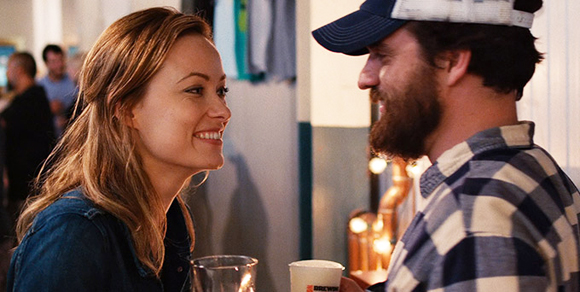
Olivia Wilde takes the lead as Kate, who works at a Chicago brewery with her best buddy Luke (Jake Johnson from TV’s New Girl). Though Luke is talking marriage with his longtime girlfriend Jill (Anna Kendrick) and Kate has just started seeing Chris (Ron Livingston), the co workers continue to nurture their “why don’t they just do it already” friendship.

Though not quite a full on mumblecore project, Drinking Buddies certainly passes through the neighborhood. Many scenes meander with a highly improvised, aimless approach, while Swanberg keeps the film bathed in the gritty look of persistent realism.

The action rarely gets beyond hanging out, drinking, and talking about relationships, but you slowly come to appreciate how little the characters do what you think they will. After the two couples spend a weekend at Chris’s lakeside cabin, certain priorities are re-evaluated, and the film’s soft focus on the quest for knowing what you want becomes increasingly clear.

The actors all mesh well, with Wilde giving her most assured performance yet. Kate is a damaged soul, and Wilde is able to get beneath the “one of the guys” party girl persona to reveal  layers of vulnerability, hurt and anger.

Though it’s far from the When Harry Met Sally treatment of platonic friendships,  Drinking Buddies has a charm, wit and wisdom that may make it the perfect reboot for today.

Verdict-3-5-Stars

Ain’t That Film Impressive

by Hope Madden


The screen fills with the sepia image of a bygone Texas. Sinewy lovers quarrel and forgive, then wait in a pick-up, planning a future with their unborn baby, until the third robber arrives. There’s a chase, a lonesome shack, a shoot out, and a compromise that sends the boy away to prison and the girl home to pine.

There’s good reason writer/director David Lowery’s romantic tragedy Ain’t Them Bodies Saints feels so confident. The breathtaking cinematography, the fittingly artistic framing, the poetry of the language and image, the heartbreaking authority of the performances – each element fits together beautifully and benefits from the artistic coordination of a maestro. It’s because the relatively unknown Lowery has honed his craft, spending time as a casting director, crewman, writer, director, sound editor, actor, producer, and cinematographer before tackling this, the culminating effort of a lifetime spent in film.

He’s blessed with a cast that embraces his understated drama. Casey Affleck animates a career full of characters with vulnerability and confused nobility, and he impresses again here as the outlaw who breaks out of prison, just like he promised, to reunite with his girl and the daughter he’s never met.

Rooney Mara’s quiet ferocity offsets Affleck’s tenderness, and the love story they create offers a poignant center to the film. Orbiting the couple is Ben Foster’s humble police officer, torn by his affection for one and duty to the other. Each actor embodies an image of lonesomeness that makes the film ache. What’s beautiful about this triangle is that neither the characters nor the filmmaker judges anyone. Lowery and his characters accept, however sadly, the motivations and actions of all involved.

The young mother also attracts the protective nature of a retired gangster/father figure played by Keith Carradine, whose presence reinforces the film’s bluesy connection to the other great, doomed Western romance, McCabe and Mrs. Miller.

The film’s one shortcoming is that it does not tell a larger tale. This beautifully told story of loneliness, devotion, love and tragedy never manages to transcend its own intimacy to speak to something universal.

But it’s a hell of an effort, and one that establishes Lowery as one of the most exciting new filmmakers to come along in decades.


Verdict-4-5-Stars


Demanding to be Seen


by George Wolf


Surreal, perverse, curious and horrifying, The Act of Killing demands to be seen as much as any film in recent memory.

It is anchored in the atrocities committed during the overthrow of the Indonesian government in 1965. Paramilitary death squads and ruthless gangsters captured, tortured and killed at will, all under the guise of exterminating “communists.” Over one million Indonesians lost their lives, and those responsible continue to gloat about their actions from a seat of power they still enjoy today.

Co-director Joshua Oppenheimer met with some of the most famous death squad leaders and made them a distasteful yet ultimately brilliant offer:  would they re-enact their savagry on camera?

The result is mesmerizing, can’t-believe-what-I’m-seeing-stuff.

As they gleefully reveal their love of American film genres, the murderers show themselves as man-children, the result of lives lived running amok without fear of parental or social reprisal. Throwing themselves into the task, they utilize makeup, costumes, props and local extras to film dimly lit drama scenes and extravagant musical numbers, while discussing their bloodlust with a devastating casualness.

Three specific paramilitary leaders take center stage, two of whom show little to no remorse for their actions, explaining that “war crimes are defined by the winners.” The third, an aging grandfather named Anwar Congo, is different. As the ghosts of his past are unearthed, we see a man often struggling to come to grips with himself. While it is not a sympathetic portrait, the transformation in his demeanor is fascinating.

Fearing reprisals, many names in the final credits (including that of the Indonesian co-director) are replaced with “Anonymous.” Two names that do stand out are those of acclaimed documentarians Errol Morris (The Thin Blue Line/The Fog of War) and Werner Herzog (Cave of Forgotten Dreams/Grizzly Man), who serve as executive producers.

Recalling the finest of their work, The Act of Killing is unforgettable. It calls to mind past cruelty, an Orwellian present and an uncertain future, emerging as essential, soul-shaking viewing.


Verdict-5-0-Stars