Category Archives: New In Theaters

Reviews of what’s out now

Meet the Parent

Attachment

by Hope Madden

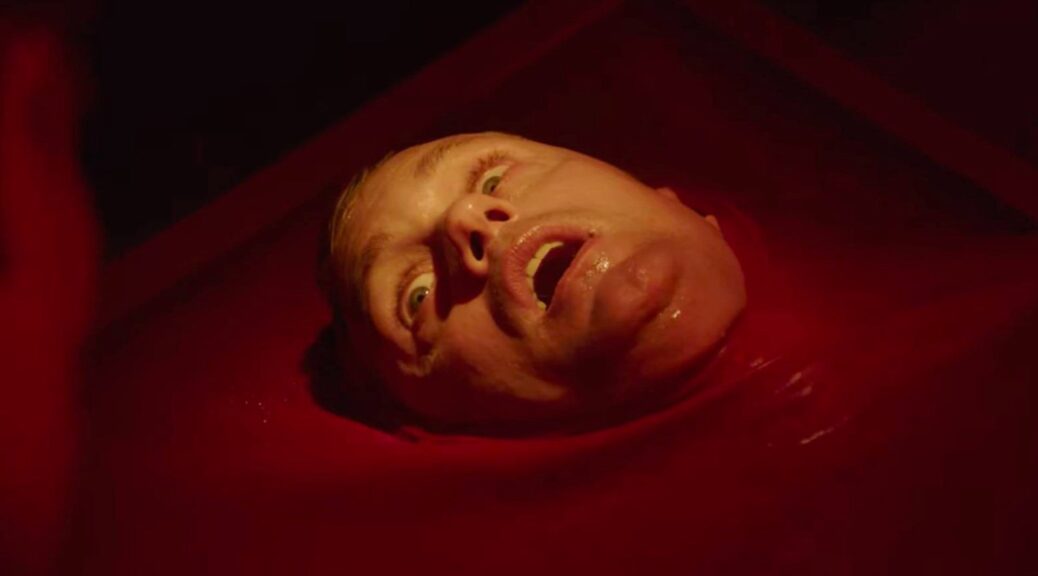
There are not nearly enough horror films based in Jewish folklore. Have you ever seen a dybbuk movie? You should. So far, I’ve seen three – Marcin Wrona’s beautiful 2016 haunting, Demon; Keith Thomas’s 2021 horror, The Vigil; and writer/director Gabriel Bier Gislason’s latest, Attachment.

The thing about dybbuk stories is that I’ve never seen one go well for anyone. Fun!

On the surface – and even just below – Attachment is an astute observation on being new to the family, particularly in a situation where the relationship itself is probably not that welcome. All families are weird, but they are weird in such individual ways. Gislason picks that scab effectively, as does his cast.

Josephine Park is Maja, a Danish actress best known – really, only known – for playing Santa’s Elf in a long-defunct TV series. She literally runs into Leah (Ellie Kendrick) at a bookstore. Leah is in from London doing some research, the two fall quickly in love, and after Leah is injured during a seizure, Maja offers to return with her to London and her mother’s care.

There is something quietly astute about the way Gislason sets up the dynamic: the willfully oblivious love interest, the domineering parent (Sofie Gråbøl) unwilling to be gracious, and the insecure new love unsure how to make herself fit into the family. All of it feels authentic, even if the stakes and weirdness are clearly ratcheted up a few notches.

Attachment delivers slow-burn horror that repays close attention but never falls to gimmickry. Yes, the situation is absurd, but everyone behaves in a way that is rooted in real-world expectations and experiences.

When the film changes its point of view, you realize where its compassion really lies. Attachment is a nightmare about parenting, about releasing your everything – your beautiful, tender baby – into a vast and brutal world. At the center of the entire nightmare is love, of course, because there is no real horror unless love is at stake. It’s that knowledge that makes the film hurt.

Hug your mom.

Skin Deep

Woman of the Photographs

by Brandon Thomas

Vanity has been a part of human existence for ages. The standards of beauty come and go with the passage of time, but no matter where we are in history, people have sought to look attractive. In Woman of the Photographs, director Takeshi Kushida offers a compelling statement on the broad spectrum of beauty, and how either end of it can be equally damaging. 

Kai (Hideki Nagai) is a Japanese photographer who spends most of his days taking standard portraits and then endlessly photoshopping them for his vain clients. Only on the side does Kai get to dabble in a more artistic expression of his photography. While taking photos of insects in the forest, Kai stumbles upon Kyoko (Itsuki Otaki), an Instagram influencer who has just fallen from a tree trying to get the perfect photo. It’s not your standard meet-cute, and Kyoko certainly isn’t your standard model. After inviting herself for a ride home with Kai, Kyoko slowly integrates herself into Kai’s daily life. What starts as a symbiotically awkward relationship slowly morphs into something more sinister as both Kai and Kyoko become obsessed with a more destructive form of beauty. 

What makes Woman of the Photographs so interesting is how delicately it dances around being a horror film. The first half of the movie feels more akin to a quirky indie drama than it does something in the genre realm. As Kai and Kyoko’s relationship deepens later in the film, the tendrils of horror finally make their appearance, calling to mind something close to Cronenberg-lite. 

The body horror in Woman of the Photographs isn’t as pronounced as that of David Cronenberg. No, Kushida’s desire seems to be to purposefully hold back on the excessive gore and instead force the audience to think about standards of beauty when it comes to surface-level imperfections. The horror emphasis is less on Kyoko’s wound itself and more the obsessiveness with which Kai and Kyoko marvel upon it. 

There’s also a fascinating commentary on the state of modern Japan and the isolation many of its citizens feel. While not exactly suffering from hikikomori (the Japanese phenomenon of extreme isolation), Kai’s relationship with other people is often felt only through the viewfinder of a camera. On the opposite end is Kyoko, whose only connection with others – outside of Kai – is through her Instagram page where she obsesses over each and every shot of herself that she posts. 
Woman of the Photographs slowly unravels from a quirky first act to a much more sinister final half. For those with the patience, the methodical descent into Japanese body horror will be well worth the investment.

Mama Mia

Baby Ruby

by Rachel Willis

Becoming a new mother is a joy. The sleepless nights, constant crying, bleeding heavily from your vagina for weeks, having a new human you’ve been entrusted to keep alive in your house.

Did I say joy? I meant horror show.

Writer/director Bess Wohl has turned new parenthood, particularly motherhood, into a tense, sometimes funny, horror movie with Baby Ruby.

New parents Jo and Spencer (Noémie Merlant and Kit Harington) have a lot to be thankful for when they bring new daughter Ruby home. Jo is a very successful blogger who is eager to prove her mettle as a new mom.

However, problems start right away. It’s unclear, to both Jo and the audience, if certain horrific events are real or dreams. Jo begins losing time. Ruby never stops crying.

There’s a certain amount of confusion and plenty of red herrings peppered through the film. Though it seems obvious what plagues Jo, the filmmakers want you off-balance. Is husband, Spencer, supportive – or is that smile vaguely sinister? Is someone whispering to Ruby through the baby monitor? Is Ruby angry with Jo?

These are the things that rattle Jo’s confidence. On top of her struggles with Ruby, all the other new moms make it look easy. Jo is introduced to several new moms at a local café. They’re all perfectly coifed in summer dresses, and their babies must sleep long enough for them to do their makeup. In comparison, Jo feels even more like a failure.

There’s a certain subtle humor to the film, even as it works to rachet up the tension.

Because of the desire to keep the audience guessing, there are a few moments when it feels like Wohl is trying too hard to scare you. Some of the horror works well, some segments are too heavy-handed. There is a dog and a dog-related low blow.

No offense to the parents of the babies playing Ruby, but they’re perfectly cast as they’re both adorable and a little creepy. Part of you wants to reach out and pick her up, while the other part is a bit put off by that weird little face.

The film nails several aspects of what makes being a new parent feel like a nightmare. It’s not surprising that many parents look back at those early days with hindsight and laugh. Otherwise, we might all feel like we’ve lived through a horror movie.

Gridiron Grannies

80 for Brady

by George Wolf

You’ve seen those close-ups on a movie character pouring out their feelings, right? The ones where the camera pulls back to reveal that the person being spoken to has fallen asleep and missed every word?

If that’s still funny to you, 80 for Brady will deliver some laughs. If not, there’s at least the charm of seeing four legendary ladies coming together for some big screen hi-jinx.

Inspired by the real-life “Over 80 for Brady” fan club, the film follows elderly besties off to see Tom Brady and the New England Patriots take on the Atlanta Falcons back in Super Bowl 51.

Maura (Rita Moreno) is a widow living in a senior center. Betty (Sally Field) is “only 75” and a former M.I.T mathematician, Lou (Lily Tomlin) is a cancer survivor and Trish (Jane Fonda) is a divorcee who writes erotic Rob Gronkowski fan fiction (on one book cover: “football all isn’t the only game of inches!”)

But when Lou gets a new message to call her doctor, she calls an audible instead. Fearing this might be her last chance to see Brady win a title, Lou springs for four Super Bowl tickets, and the gang heads off to Houston.

Thankfully, the film centers on their time actually at the big game. But while this isn’t technically a road movie, writers Emily Halpern and Sarah Jenkins fill it with all the same type of very loosely connected skits that often make that genre so tiresome.

Betty enters a spicy wing-eating contest. Lou throws a football for prizes. They all get invited to a pre-game bash and accidentally take drugs. They get in the coach’s box. And of course there is a dance number. Even the promising cameos from Rob Corddry and Alex Moffat, as a pair of Masshole superfans with a call-in show, come up empty.

It’s all such lazy, old-fish-in-younger-waters humor that’s only mildly amusing at best, which is surprising considering Halpern and Jenkins penned the sly and very funny Booksmart in 2019. They are done no favors by the sitcom-ready treatment from first-time feature director Kyle Marvin, with artificial stadium segments rendered all the more amateurish next to the bounty of actual game film provided by the NFL.

Isn’t it just great to see these icons together, though, in anything? Sure it is, and by the time Brady himself (also a producer here) makes an appearance that manages a nod to his own mother’s cancer battle, you can’t deny the warm fuzzy footballs taking flight.

But as a comedy worthy of this Hall of Fame starting lineup, 80 for Brady feels like a personal foul.

Campaign Promises

Little Dixie

by George Wolf

By now, we’ve moved past the “it’s nice to see longtime supporting player Frank Grillo in the lead” phase, haven’t we? He’s established himself as a charismatic actor more than capable of carrying a film.

And while he’s still a reliably galvanizing presence in Little Dixie, the movie itself struggles to carve out its own identity as it vacillates between a generic crime narrative and some seedy sexual underbellies.

Grillo stars as Doc, a no-nonsense intermediary between Texas Gov. Richard Jeffs (Eric Dane) and a ruthless Mexican cartel run by Lalo Prado (Maurice Compte). But when the Gov. goes rogue and ignores the truce that Doc has brokered, Lalo’s bloodthirsty brother Cuco (Beau Knapp) crosses the border looking for payback – and his search starts with Doc’s daughter (Sofia Bryant).

So yes, expect plenty of “If you touch her I swear to God I’ll….,” but also writer/director John Swab’s penchant for hard turns.

This time Swab goes searching for subversion inside a Sicario-like setup, an approach similar to how he attacked truck stop horror in the recent Candy Land. But while that film managed to uncover something surprisingly human amid all the brutality, the persistent posturing and lurid details in Little Dixie do little to raise the resonance of characters or choices – and in at least one instance end up bordering on blood-soaked parody.

But the attempt to firebomb expectations almost works, more evidence that Swab may just need a little more seasoning to find his uniquely compelling voice. Until then, Little Dixie stands as a cluster of eyebrow-raising campaign promises drowned out by a standard stump speech.

Apples and Trees and All That

Blood

by Hope Madden

Back in 2001, Brad Anderson scared the living shit out of us with the ingenious institutional horror, Session 9. He followed this up with the utterly remarkable The Machinist, and a few years later, the mind-bending thriller, Transsiberian.

Things began to peter out for Anderson as a filmmaker by 2010’s Vanishing on 7th Street, and as he found more success with episodic programming, he more or less stayed there, popping over to film every few years with routinely middling results.

Such is the case with his latest, the supernatural family drama, Blood.

Michelle Monaghan is Jess, a recently sober, recently divorced, harried nurse settling her pre-teen children into their new home, an isolated farmhouse owned by her aunt before she passed. But Pippin, the golden lab, knows something’s wrong out in them woods.

Whatever’s out there ends up in Pippin and then, shortly, in Jess’s 8-year-old, Owen (Finlay Wojtak-Hissong). The obvious tension is amplified by the fact that Jess is desperately afraid to lose custody of her children, so she is loath to admit there’s anything seriously wrong. But things are seriously, seriously wrong with Owen.

Writer Will Honley hits on a topic that was really popular in the genre maybe five years ago (The HoleThe ProdigyBrahms: The Boy 2ZBrightburn ).  His updates actually recall slightly older films – Grace (2009), It’s Alive (the 2009 remake), even 1990’s nutty Baby Blood to a degree. What Blood is saying is not original at all, so to make it relevant, Anderson will need to mine Honley’s script for some real relevance.

The family dysfunction and addiction angle could be it. There’s an undercooked metaphor here concerning addiction and heredity. Owen’s bratty behavior buoys the film’s darker qualities, and that business down the basement is especially gruesome (as “down the basement business” so often is). But none of it pans out. In fact, some of it – the least forgettable bits – are forgotten entirely as the film delivers a kind of final grace that is wildly unearned.

Had that moral ambiguity felt intentional the film would have been at least provocative. The fact that it does not is alarming, but not in a way that makes the film more enjoyable.

All the performances are solid. Monaghan and June B. Wilde spar beautifully with each other. Meanwhile, Skeet Ulrich (nice to see you!) and young Skylar Morgan Jones fill out the problematic family well. They just won’t help you remember the movie.

Swim At Your Own Risk

Infinity Pool

by Hope Madden

Brandon Cronenberg + Mia Goth + Alexander Skarsgård … for a very specific set of people, the sum there is hell yes.

Riding my favorite wave in horror – that rich people are unspeakably diabolical – writer/director Cronenberg takes us on a strange journey through privilege, debauchery, entitlement, boredom, narcissism, psychotropic drugs and more in his trippy new flick, Infinity Pool.

Skarsgård is James Foster, a writer of very little renown who’s vacationing on a fictional island nation with his wealthy wife (Cleopatra Coleman). They’re bored, but as luck would have it, James’s number one fan Gabi (Goth) and her husband have vowed to show them a good time.

Cronenberg’s ultimate concept is clearly, wildly his own, but moments sometimes call to mind ideas from last year’s Speak No Evil, as well as Society, Kill List, Hour of the Wolf, and A Serbian Film (no, not that part). Still, the film never feels borrowed. Uncomfortable, yes. Borrowed? No.

James represents the regular Joe – yes, a very good-looking version, but regular, nonetheless. And no matter how long he plays the part, he’s an outsider. The truly wealthy are alien. Beyond the sci-fi insanity, beyond the outright body horror, this is the most horrific element of the film because feels honest. It touches a nerve.

In 2020, Jeff Bezos racked up more than 16k in parking tickets. Because, why not? He wanted to park there. Once you reach a certain tax bracket – which is the one where you pay no taxes at all – no rules apply. And that does not create better people.  

It’s fascinating and refreshing, this particular approach to the story. These particular villains. And Goth proves once again to be a seductive menace and a force to be reckoned with.

There are certain scenes in this – one in a group holding cell at the island prison, for instance – that are as insightful, impressive and memorably horrific as anything any Cronenberg has filmed.

It’s hard to believe this is only Brandon Cronenberg’s third feature. It does not pack the visceral punch of 2020’s Possessor, but it is a satisfyingly surreal piece of class warfare and an outstanding way for the genre to kick off 2023.

Crimes and Punishment

Kompromat

by Tori Hanes

Two full hours of grit, sweat, and anxiety from all participants, both in the film and out. That’s what you can expect from the latest by director Jerome Salle. 

Kompromat is one of those unnerving instances for reviewers where your technical training and study of film confuses your internal perception. The film excels where it is meant to: it’s tense to the point of unbearable anxiety. It’s forcibly eye-opening, and it’s nauseatingly realistic. Lead actor Gilles Lellouche gives a standout performance as a grounded, gritty, desperate, resourceful anti-hero. The story, while seemingly convenient at times, builds masterfully while swerving down winding thoroughfares. 

The viewing experience itself can be defined as less than pleasant. While Salle succeeds at delivering a hard-to-watch movie, he also creates… a hard-to-watch movie. 

With something so viscerally unsettling, you might expect your worldview to be heightened as a result of the painstaking two hours spent. Kompromat doesn’t exactly succeed in this – it paints the illustration of a wrongly accused straight, white, French man in Russia’s highly unprogressive society. All facts and facades we’ve seen at play before. So it begs the question, what is the point?

The point, quite bluntly, seems to be tension. Building it, releasing it, savoring it. If the film makes you break a sweat, the crew can pat themselves on the back.

Obviously, there are advantages and disadvantages to this approach. Draping the background with a seemingly pressing political story convolutes the film’s actual intention. If Kompromat could be obvious in its goal, a more palpable connection between audience and film could be forged. Instead, there seems to be some thrashing in the netting Salle creates.

While Kompromat excels at holding a consistent fever pitch, it allows itself too much freedom. The two-hour runtime feels like a dumbbell lowering suffocatingly onto your chest. The film’s consistency in story and performance through the overly long run is a testament to Salle’s command of scene and pace but shows a streak of overindulgence. 

If your New Year’s resolution is to elevate your heart rate for 2 hours at a time, pick this up. If breaking a sweat while sitting on your couch isn’t appealing, you may want to skip out on Kompromat

Mission Impossible

The Mission

by Christie Robb

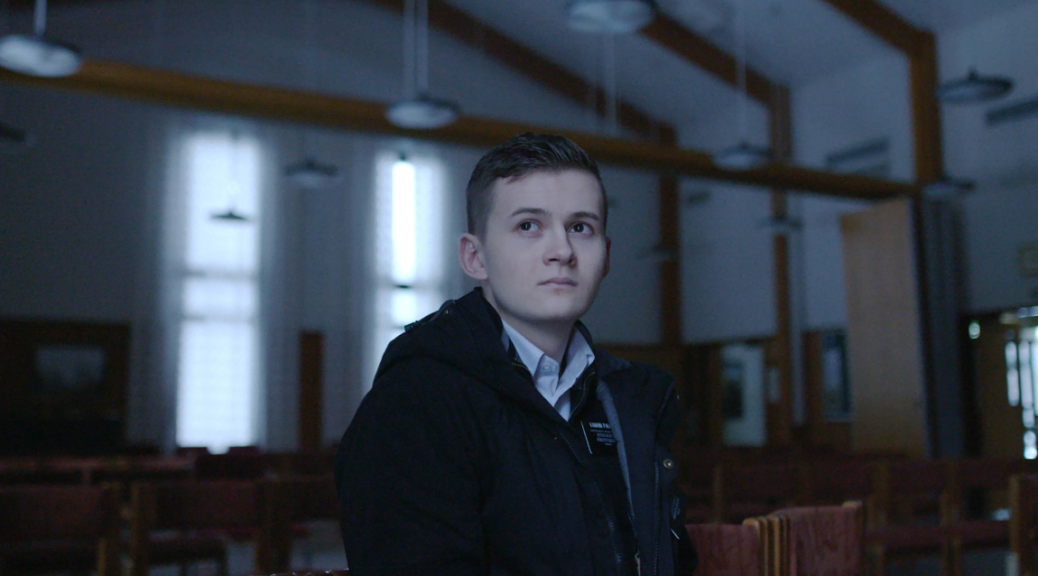
Tania Anderson’s documentary The Mission details the lives of four very young adults as they embark on two-year missions to try to spread the word of the Church of Jesus Christ of Latter-Day Saints to the population of Finland. Finland—a country in northern Europe with a high per-capita income, one of the best educational systems in the world, an extensive social safety net, and one that has ranked number one in every annual report of World Happiness since 2018. Not the kind of place where people are likely to be shopping for a new religious modality.

Barely out of childhood, the two American men and women spend a few weeks in a kind of missionary boot camp in Utah before being thrown into a new country, expected to converse with the locals despite only knowing a few stock phrases (and often stumbling over those) and ultimately convince them to convert. Their lives are regimented. Expected to rise at 6:30 AM each day and begin work, they are assigned a companion—a stranger—who spends all “non-hygiene-related time” with them for nine weeks before the companion is replaced with another. They are only allowed contact with family and friends once per week. And they have to pay for the privilege of doing this. The Church does not subsidize its missionaries.

Anderson emphasizes the loneliness. She lingers on the barren, spare quarters in which the subjects live. She uses long establishing shots of the landscape to show how small they are in this new country. She lingers on conversations that strain the viewer’s ability to handle social awkwardness.

In contrast to the aims of its subjects, the documentary itself is not preachy. It covers enough successful conversions and strengthening of faith to balance out the coverage of those dealing with doubt and existential despair. However, this balance is delivered at the surface level. We don’t really get to know any of the four subjects and what motivates them in any profound way. Their reasons for taking on this task, the logistics of the financial commitments, the cultural differences between Americans and Finns, and the missionaries’ personal struggles are only hinted at or covered at the depth one might expect while making small talk at a church bake sale.

The mission takes place between 2019 and 2021 and, unbelievably, it does not consider COVID-19 and the impact it had on a socially-focused pursuit, at all.  Nothing about the fears these folks had at being stuck in a foreign country when the borders started closing. Nothing about how they reacted when millions of mink that had been culled from fur farms in nearby Denmark started to rise from the grave. There are some shots toward the end where the missionaries are wearing masks, but aside from that, the pandemic is completely erased from existence, much in the same way that you are likely to forget this entirely adequate documentary after you have watched it.

Parks & Resignation

Living

by George Wolf

It shouldn’t take a film such as Living to make us realize what a treasure we have in Bill Nighy.

But then it shouldn’t take a grim diagnosis for Rodney Williams to seek true meaning in his life, so maybe Nighy’s long wait for a first Academy Award nomination is somehow cosmically right.

In this adaptation of Kurosawa’s 1952 classic Ikiru (To Live), Nighy earns every bit of that Oscar nod as “Mr. Williams,” the humorless manager of a public works office in 1950s London. Various floors full of buttoned-up civil servants pass on projects to other departments until the papers finally come to rest on one desk or another, with piles always kept as high as possible so co-workers won’t “think you have nothing better to do.”

Mr. Williams doesn’t, until a fateful trip to the doctor makes him realize how sad this is. A night out with that rascal Sutherland (Tom Burke) offers some cheap thrills, but it’s the persistence of the local ladies petitioning for a new public playground that give Mr. Williams the chance to leave a legacy.

Nobel prize-winning writer Kazuo Ishiguro adapts Kurosawa (and lands his own Oscar nom) with a script that shaves about 45 minutes off the running time while it adds layers of beauty and sentiment. Mr. Williams’ distance from his son becomes more heartbreaking, while the relationships with his two youngest employees (Alex Sharp and Aimee Lou Wood) are given more arc and resonance.

Director Oliver Hermanus replaces the original film’s clinical narration and B&W palette with gentle grace and the splendidly picturesque cinematography of Jamie Ramsay. Outside the office confines, this is a gorgeous London of crisp lines among detailed color, light and shadow, all in orbit around a lead performance of endless humanity.

Nighy is just the epitome of wonderful, with every sigh, furrowed brow and slight smile conveying so much about Mr. Williams’ journey to contentment. Nighy’s every moment on screen nearly glows with honesty, and provides the film with a unique and dignified identity.

Kurosawa’s take still hits hard, but Living would have been foolish to follow a similar fight plan. These blows may indeed be softer, but don’t think for a second they won’t leave a mark.