Category Archives: New In Theaters

Reviews of what’s out now

De Niro’s Not-So-Secret Admirer

The Family

by Hope Madden

Think of The Family as Luc Besson’s mash note to Robert De Niro.

The writer/director/Frenchman’s fondness for violence and organized crime in film is well documented. He’s written and/or directed dozens of films on the topic, including La Femme Nikita, The Professional, and Transporter. Rather than follow a single assassin or bag man, this time around Besson wades through more familiar cinematic waters with a full-fledged mafia picture.

De Niro plays Giovanni Manzoni, known to his new neighbors in Normandy, France as Fred Blake. He ratted out his wise guy connections back in Brooklyn, and now the Witness Protection Program shuffles his family around France trying to avoid a retaliatory hit. But the “Blakes” don’t make it easy.

Besson’s screenplay is based on a novel by Tonino Benacquista, who’s penned some great, gritty flicks (The Beat that My Heart Skipped, Read My Lips). The Family is a lighter affair, depicting good natured psychopaths who fail to fit in as another set of psychos descend on a sleepy French town.

The film lacks the action choreography Besson’s audience has come to expect. Instead, its charm lies in the director’s joyous fondness for American gangster flicks in general and De Niro’s work in particular. His odes grow evermore obvious, with callbacks to most of the actor’s greats: Taxi Driver, Goodfellas, The Godfather: Part II, even Cape Fear. Besson’s having some fun, and DeNiro seems to enjoy the affection.

De Niro’s chemistry with Michelle Pfeiffer, playing his wife, gives the film a little heart. It’s great to see these two seasoned veterans share the screen, and Pfeiffer’s displaced and disgruntled Italian American is fun to watch.

The storyline for the couple’s two teens is weaker, and Besson seems almost disinterested in the involvement of the WPP agents, including saggy faced sourpuss Agent Stansfield (Tommy Lee Jones).

It’s an action comedy that’s a little short on action. The comedy is pleasant and fun, but never truly funny. What keeps this light but violent romp entertaining is its own sense of joy and its love of Robert De Niro. Which may not be the best reason to make a film, but there are worse.

 

Verdict-3-0-Stars


http://www.youtube.com/watch?v=APfgBoaGdf4
I’ll Have What She’s Having

Drinking Buddies

by George Wolf

Hey look! It’s that hottie and that cutie, and the guy from Office Space and that other guy from TV in a romantic comedy about drinking beer. Nice!

Well, as it turns out, Drinking Buddies may not be quite what you’re expecting, though that’s not necessarily a bad thing. Rather than a by the numbers rom-com with a comfortable ending designed to send the folks home happy, writer/director Joe Swanberg delivers a loose, observational drama that focuses on small moments in unfulfilled lives.

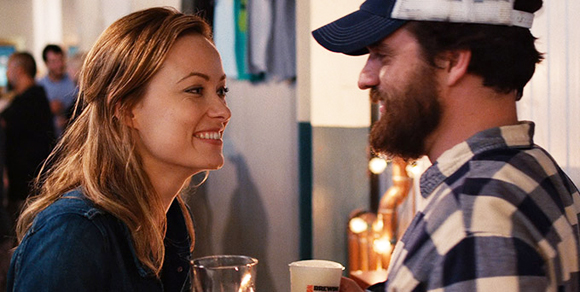
Olivia Wilde takes the lead as Kate, who works at a Chicago brewery with her best buddy Luke (Jake Johnson from TV’s New Girl). Though Luke is talking marriage with his longtime girlfriend Jill (Anna Kendrick) and Kate has just started seeing Chris (Ron Livingston), the co workers continue to nurture their “why don’t they just do it already” friendship.

Though not quite a full on mumblecore project, Drinking Buddies certainly passes through the neighborhood. Many scenes meander with a highly improvised, aimless approach, while Swanberg keeps the film bathed in the gritty look of persistent realism.

The action rarely gets beyond hanging out, drinking, and talking about relationships, but you slowly come to appreciate how little the characters do what you think they will. After the two couples spend a weekend at Chris’s lakeside cabin, certain priorities are re-evaluated, and the film’s soft focus on the quest for knowing what you want becomes increasingly clear.

The actors all mesh well, with Wilde giving her most assured performance yet. Kate is a damaged soul, and Wilde is able to get beneath the “one of the guys” party girl persona to reveal  layers of vulnerability, hurt and anger.

Though it’s far from the When Harry Met Sally treatment of platonic friendships,  Drinking Buddies has a charm, wit and wisdom that may make it the perfect reboot for today.

Verdict-3-5-Stars

Kid Stuff?


by George Wolf

“This is war, not fucking hopscotch!”

That may not sound like kid stuff, but I Declare War presents an arresting mix of fantasy and reality, transporting you back to a time when counting to ten could resurrect the dead, and all that mattered was the here and now.

Co-directors Robert Wilson and Jason Lapeyre, working from Lapeyre’s script, drop us in the heat of battle right from the get go, as a group of 12 year olds is engaged in a very serious round of Capture the Flag.


To hear George’s interview with co-director Robert Wilson, click this:   Robert_Wilson


General PK (Gage Munroe) is out to remain unbeaten, while across the woods, General Quinn (Aidan Gouveia) plots an upset. Both leaders must deal with dissension in the ranks, and some surprises in the field, before a winner is declared.

Wilson and Lapeyre contain the film in a glorious section of the outdoors, framing the action skillfully enough to give it an expansive, wide open feel, as if the opposing base camps were miles apart and expert cunning was required to keep from getting hopelessly lost.

Of course, putting pre-teens in violent situations where sticks suddenly become rifles and POWs are subject to enhanced interrogation will quickly bring up a host of delicate social issues. Thankfully, the filmmakers deliver their commentary with a gentle touch, utilizing a terrific young cast to craft characters who, though a bit cliched in their respective roles, don’t reek of adult romanticism.

You’ll recognize homages to Apocalypse Now, Saving Private Ryan and more, and as you find yourself caught up in a kid’s game, you’ll recognize a phase of life that’s bursting with both anguish and wonder.


Verdict-3-5-Stars


Ain’t That Film Impressive

by Hope Madden


The screen fills with the sepia image of a bygone Texas. Sinewy lovers quarrel and forgive, then wait in a pick-up, planning a future with their unborn baby, until the third robber arrives. There’s a chase, a lonesome shack, a shoot out, and a compromise that sends the boy away to prison and the girl home to pine.

There’s good reason writer/director David Lowery’s romantic tragedy Ain’t Them Bodies Saints feels so confident. The breathtaking cinematography, the fittingly artistic framing, the poetry of the language and image, the heartbreaking authority of the performances – each element fits together beautifully and benefits from the artistic coordination of a maestro. It’s because the relatively unknown Lowery has honed his craft, spending time as a casting director, crewman, writer, director, sound editor, actor, producer, and cinematographer before tackling this, the culminating effort of a lifetime spent in film.

He’s blessed with a cast that embraces his understated drama. Casey Affleck animates a career full of characters with vulnerability and confused nobility, and he impresses again here as the outlaw who breaks out of prison, just like he promised, to reunite with his girl and the daughter he’s never met.

Rooney Mara’s quiet ferocity offsets Affleck’s tenderness, and the love story they create offers a poignant center to the film. Orbiting the couple is Ben Foster’s humble police officer, torn by his affection for one and duty to the other. Each actor embodies an image of lonesomeness that makes the film ache. What’s beautiful about this triangle is that neither the characters nor the filmmaker judges anyone. Lowery and his characters accept, however sadly, the motivations and actions of all involved.

The young mother also attracts the protective nature of a retired gangster/father figure played by Keith Carradine, whose presence reinforces the film’s bluesy connection to the other great, doomed Western romance, McCabe and Mrs. Miller.

The film’s one shortcoming is that it does not tell a larger tale. This beautifully told story of loneliness, devotion, love and tragedy never manages to transcend its own intimacy to speak to something universal.

But it’s a hell of an effort, and one that establishes Lowery as one of the most exciting new filmmakers to come along in decades.


Verdict-4-5-Stars


I’m In Love With That Song

Big Star: Nothing Can Hurt Me

by Hope Madden

There’s something both familiar and weirdly backwards about the film Big Star: Nothing Can Hurt Me, a documentary that follows the path of a talented, promising rock band as it hurtles toward obscurity.

This is a film about a band so indie only the indiest of indie bands even know them; a band so underground that they inspired nearly every seminal act of the Eighties and Nineties alt rock movement; a band so obscure that they spun off into other bands that opened for punk acts you probably never heard of at CBGB’s. But, you totally know the That Seventies Show theme song, which is an obscure Cheap Trick cover of a Big Star song. So it’s not like they’re make believe.

The doc follows the career of Alex Chilton – you know, like from that Replacements song – and his Memphis band Big Star, who changed the foundation of rock music without ever really being heard by more than a few hundred people at a time.

Chilton charted a #1 song in his teens, singing “The Letter” with the Box Tops. By 1970, the Memphis youngster joined up with local musician/songwriter/budding producer Chris Bell and his buddies. They took advantage of a fruitful situation with local label Ardent Records, and the stage was set for what might have become the city’s next Sun Records-style phenomenon.

Over the next couple years, with a little band reshuffling, Big Star recorded two more albums with Ardent – all three of which landed in Rolling Stone Magazine’s list of the 500 best albums of all time.

Of all time.

I’m sorry – who are these people?

When you talk about the seminal Memphis acts, Big Star might not outshine Elvis, Aretha Franklin, B.B. King, John Lee Hooker, or even Jeff Buckley – so why spend two hours with their music? Well, that’s not always entirely clear. The doc plays only enough snippets of the band’s work to pique interest, while its focus meanders to the point of frustration.

Still, filmmakers Drew DeNicola and Olivia Mori seek not only to clue you in on the greatest band you never heard of, but also to cast a glance at a little known revolution in Memphis music, one that came and went before its time, but impressed every music critic of the era and laid the groundwork for what we now know as alternative music.

So, you know, thanks.


Verdict-3-5-Stars


Demanding to be Seen


by George Wolf


Surreal, perverse, curious and horrifying, The Act of Killing demands to be seen as much as any film in recent memory.

It is anchored in the atrocities committed during the overthrow of the Indonesian government in 1965. Paramilitary death squads and ruthless gangsters captured, tortured and killed at will, all under the guise of exterminating “communists.” Over one million Indonesians lost their lives, and those responsible continue to gloat about their actions from a seat of power they still enjoy today.

Co-director Joshua Oppenheimer met with some of the most famous death squad leaders and made them a distasteful yet ultimately brilliant offer:  would they re-enact their savagry on camera?

The result is mesmerizing, can’t-believe-what-I’m-seeing-stuff.

As they gleefully reveal their love of American film genres, the murderers show themselves as man-children, the result of lives lived running amok without fear of parental or social reprisal. Throwing themselves into the task, they utilize makeup, costumes, props and local extras to film dimly lit drama scenes and extravagant musical numbers, while discussing their bloodlust with a devastating casualness.

Three specific paramilitary leaders take center stage, two of whom show little to no remorse for their actions, explaining that “war crimes are defined by the winners.” The third, an aging grandfather named Anwar Congo, is different. As the ghosts of his past are unearthed, we see a man often struggling to come to grips with himself. While it is not a sympathetic portrait, the transformation in his demeanor is fascinating.

Fearing reprisals, many names in the final credits (including that of the Indonesian co-director) are replaced with “Anonymous.” Two names that do stand out are those of acclaimed documentarians Errol Morris (The Thin Blue Line/The Fog of War) and Werner Herzog (Cave of Forgotten Dreams/Grizzly Man), who serve as executive producers.

Recalling the finest of their work, The Act of Killing is unforgettable. It calls to mind past cruelty, an Orwellian present and an uncertain future, emerging as essential, soul-shaking viewing.


Verdict-5-0-Stars


Being in Love Means Never Having to Say “Slow Down!”


by Richard Ades


Just days after the events depicted in Before Midnight, Jesse (Ethan Hawke) is still smarting from the emasculating attack he endured at the hands of Celine (Julie Delpy), the increasingly bitter love of his life. He returns to their Parisian home and is surprised to find it empty and in a state of disarray.

The phone rings. A strangely accented voice tells him he must steal a souped-up Mustang and perform a series of dangerous tasks if he ever wants to see Celine again.

There’s a long pause. “Well?” the voice asks.

“I’m thinking,” Jesse replies.

Obviously, that is not how Getaway begins. A flick that hopes to attract fans of Gone in Sixty Seconds and similar car-chase epics has no time for complicated relationships. It doesn’t even have time for exposition. Instead, director Courtney Solomon dives into the gear-gnashing, tire-squealing action before the opening credits even roll.

Via flashbacks and spare bits of dialogue, we learn that Brent Magna (Hawke) is a washed-up American racecar driver now living in Sofia, Bulgaria. We also learn that his Bulgarian wife (Rebecca Budig) has been abducted by a mysterious man (Jon Voight) who communicates with Brent through the car’s phone and threatens to kill her unless his instructions are followed to the letter.

Soon joined by the Mustang’s angry owner, a young woman known only as the Kid (Selena Gomez), Brent is ordered to perform tasks that mostly involve evading the police and always put the general public at risk. And because it’s the Christmas season, there’s a lot of general public around to be put at risk.

All of this could be entertaining if it weren’t for a couple of problems.

First, the movie suffers from unfortunate timing. In an early scene, Brent is told to drive at full speed through thick crowds of holiday revelers. Though he miraculously avoids hitting anyone, it’s an uncomfortable reminder of the Dodge-driving maniac who killed a bride and injured 16 others while plowing through a Los Angeles boardwalk crowd in early August.

More importantly, co-screenwriter and third-time director Solomon (An American Haunting) seems to have no knack for this kind of thing. The action is nearly nonstop and the destruction is massive, but frantic editing lowers the excitement level.

We see a tiny Bulgarian police car, and a split second later, it crashes. Where’s the fun in that? A last-minute chase, in which Solomon adopts the driver’s-view strategy pioneered by Bullitt (1968), offers one of the flick’s few heart-pounding moments.

Solomon’s attempts at humor also fall flat. They mostly call on the Kid to hurl insults at Brent, such as calling him a “shitty” driver—which is incongruous, considering he’s performing moves that could only be completed by someone who’s spent his life racing on Sundays and studying stunt driving the rest of the week.

In general, the talented Hawke and likable Gomez are limited to yelling at each other in the midst of all the mayhem, except during the rare quiet moments when the Kid uses her technological savvy in an attempt to figure out their tormenter’s motive. And he has one, of course, but don’t think about it too hard or you’ll start asking questions.

Getaway is designed to be mindless entertainment, after all. It’s just too bad that the mindlessness began before the first pedal was pressed to the metal.


More reviews and stories by Richard Ades can be found on his theater blog, columbustheater.org, and in the new weekly version of the Columbus Free Press, which launches Sept. 5.


Verdict-2-0-Stars


http://www.youtube.com/watch?v=hM7BB16PkAw


Pub Crawl Interrupts Review of Movie About Pub Crawl


by George Wolf


After successful romps thru zombie flicks (Shaun of the Dead) and cop dramas ( Hot Fuzz),  Simon Pegg and company finish up their “Cornetto Trilogy” with The World’s End, a wild science fiction sendup that will put you in the mood for a cold beer.

Lost soul Gary King (Pegg, who also co- wrote the script) feeds the nostalgia for his youth by rounding up his old gang and convincing them to finish a job their younger selves never could. In 1990, they fell short of competing the local pub crawl known as “The Golden Mile”:  twelve pints in twelve bars, concluding at a watering hole called The World’s End.

They meet in their old hometown and begin the task, only to find that things have changed…to the tune of invasions and body snatchers.

While never laugh out loud funny, The World’s End does provide plenty of fun, mixing tongue in check nods to the sci-fi genre with frenetic action and age old lessons about going home again.

If that sounds a bit all over the place, it is. Director/co-writer Edgar Wright can’t seem to find a pace that suits him, instead opting to just try a little bit of everything and see how that works. Though the film sputters a bit getting out of the gate and suffers some misfires in character development, it actually manages to come together pretty well.

Oops, gotta run…our plane just landed in Key West and we’ve got a pub crawl of our own to start.


Verdict-3-0-Stars


They’re On a Road to Nowhere

Prince Avalanche

by Hope Madden

David Gordon Green is a curious filmmaker. Beginning his career with poignant, Southern independent films, he is perhaps best known for the breakout hit Pineapple Express and subsequent bombs Your Highness and The Sitter. He returns to the world of offbeat indies with Prince Avalanche – a film about as offbeat and indie as any you will ever find.

Alvin and Lance (Paul Rudd, Emile Hirsch) spend the summer of ‘88 doing roadwork in an isolated, wooded area recovering from the years-old and miles-wide devastation of a wildfire. They’re just two goofy dorks in blue overalls arguing over their “equal time boombox agreement” and painting yellow stripes, mile after mile, week after week.

Avalanche is as sweetly odd as it is casually gorgeous, the wild beauty of the duo’s surroundings an absurd backdrop to their own screwball behavior. It’s a buddy comedy of the most eccentric sort.

Green’s unconventional approach allows Hirsch and Rudd ample room to breathe, and to develop unique and fascinating characters. Rudd’s peculiar Alvin nicely counters Hirsch’s silly Lance, and their placement in this vast wilderness feels so entirely counter intuitive that their adventure takes on an almost surreal humor. Both actors are a joy in a film that commits to taking you places you’ve simply never been.

Green based the screenplay on Hafsteinn Gunnar Sigurossen’s much lauded but little seen Icelandic picture Either Way. The meandering pace he gives the work serves its overall themes, but will aggravate a lot of viewers – particularly those seeking a plot. What we get is a generously documented, lovingly observed character study of two outsiders with little in common beyond their own troubles with human contact.

When Green remains focused on the absurdity of the situation, Prince Avalanche charms the impatient viewer into submission. It’s only when he falls back on his own roots in indie cinema – poetically capturing the languid beauty and rustic living – that the slight production feels tedious.

Still, I cannot imagine a more potent antidote to Summer Blockbuster Fever and its symptoms of FX bloat star dazzle than this spare, offbeat film.

Verdict-3-5-Stars


Sometimes Actually Spectcular

The Spectacular Now

by Hope Madden

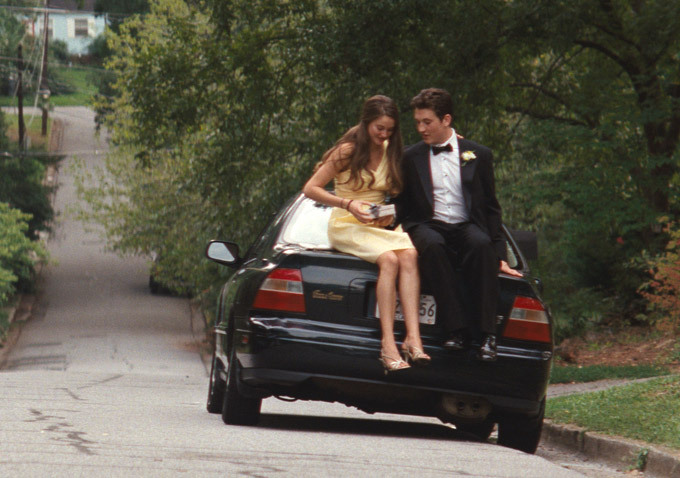
The Spectacular Now suffers slightly from high expectations. National critics quickly heralded the film the summer’s best, and its quirky indie pedigree is tough to argue. The film marks Shailene Woodley’s first feature since her breathtaking turn in The Descendents. Penned by the duo that delivered 500 Days of Summer, directed by Smashed helmsman James Ponsoldt, and starring the charmingly charismatic, damaged doofus Miles Teller, the film’s buzz certainly felt potentially deserved.

A popular, life-of-the-party high school senior rebounds from a break up by dating a quiet, hard-working, nice girl. Brace yourself, there’s no make-over, no peer pressure, no angst.

No angst – what?!

It’s true. In fact, it is the film’s fresh approach that makes the safe decisions and clichés stand out. For a high school romance with an edge, The Spectacular Now is an engaging dramedy boasting stronger scripting and far superior performances than what you find in other likeminded works. Indeed, it sparkles in comparison to similar genre titles – the sickeningly overrated Perks of Being a Wallflower, for example.

Polsoldt never drapes his high school romance in nostalgia – a common mistake in films such as these – but looks at the situation with the clear view his protagonist lacks. With a handful of exceptions, the writing holds up, and when it doesn’t, credit Teller and especially Woodley for the sheer talent to buoy the occasional weak scripting.

Woodley, who wowed audiences with her turn as the thoroughly modern, cynical teen in Descendents, shows true range that proves her wealth of talent.

Viewers who remember Teller from his recent work in Project X and 21 and Over may see the young actor as a one-trick pony, again playing the likeable screw up with an alcohol dependency. In his performance here, though, we glimpse a bit of the nuance and power fans of his turn in 2010’s Rabbit Hole will remember.

Unfortunately, The Spectacular Now falls too conveniently into a formula framed by the dreaded college essay. Ponsoldt lets his crisis off the hook far too simply, and where the resolution should have felt appropriately ambiguous, it instead seems superficially settled.

But cast that all aside and drink in two of the most fully crafted teens ever to hit the screen. The team of Ponsoldt, Woodley and Teller plumb for that bittersweet combination of longing, confidence, vulnerability and potential that marks adolescence. While his film may be merely better than average, his leads are truly spectacular.


Verdict-3-5-Stars