Category Archives: New In Theaters

Reviews of what’s out now

Sheriff McClane Comes to Town

First Kill

by George Wolf

The big doin’s in Granville, Ohio a few months back come to the big screen this weekend with the Central Ohio premiere of First Kill, a thriller about …big doin’s in Granville.

Sheriff Howell (Bruce Willis) calls a recent bank heist, “the biggest crime to hit Granville in decades,” and he warns old acquaintance Will Beamon (Hayden Christensen) to keep alert while he’s in town as there’s some dangerous fugitives on the run.

Will’s a hometown boy who made good in New York as a slick Wall St. broker with a hot big city wife (Megan Leonard). But, with their young son Danny (Ty Shelton) having bully problems in school, Will figures the best medicine is a family deer hunting trip back to his old stomping grounds.

Things go awry when father and son see something they shouldn’t, and suddenly Will must recover the stolen bank loot before Chief Howell does and use it as ransom for Danny’s safe return.

Principal shooting on the film was done in Granville last year, with a few additional scenes completed in downtown Columbus. After Travolta’s I Am Wrath and Schwarzeneggar’s Aftermath, First Kill marks the third big screen icon to film in Central Ohio in just the last few years.

Chris Hamel, Board President of the Greater Columbus Film Commission, says that’s more than a coincidence.

“There is a lot of interest in making movies here and I think more and more productions will be choosing Ohio in the coming years.  We are pleased that First Kill could be shot in central Ohio and excited to host the Columbus premiere at the Gateway Film Center.”

Director Steven C. Miller, who’s been prolific with these B-movie thrillers, gives a nice shine to the cliche-heavy script from writer Nick Gordon (Girl House). The “hunter will become the prey” foreshadowing is a bit thick in the early going, the setup leans on contrivance, and few if any of the plot turns will surprise, but once First Kill gets rolling into Miller’s well-paced groove, it’s not a bad ride.

Though Christensen is still struggling to carry a film, Willis supplies his natural gravitas and Ohioan Shelton makes an impressive big screen debut. As young Danny, Shelton’s easy rapport with Gethin Anthony (as kidnapper Levi) is a constant highlight.

First Kill can’t hit the Hell or High Water heights it aspires to, but hey, few can. Can it dust off some well-worn genre tropes and entertain? Ten-four.

First Kill makes its Central Ohio premiere July 21st, 7:30 at Gateway Film Center.

Verdict-3-0-Stars


We Shall Fight on the Beaches

Dunkirk

by Hope Madden

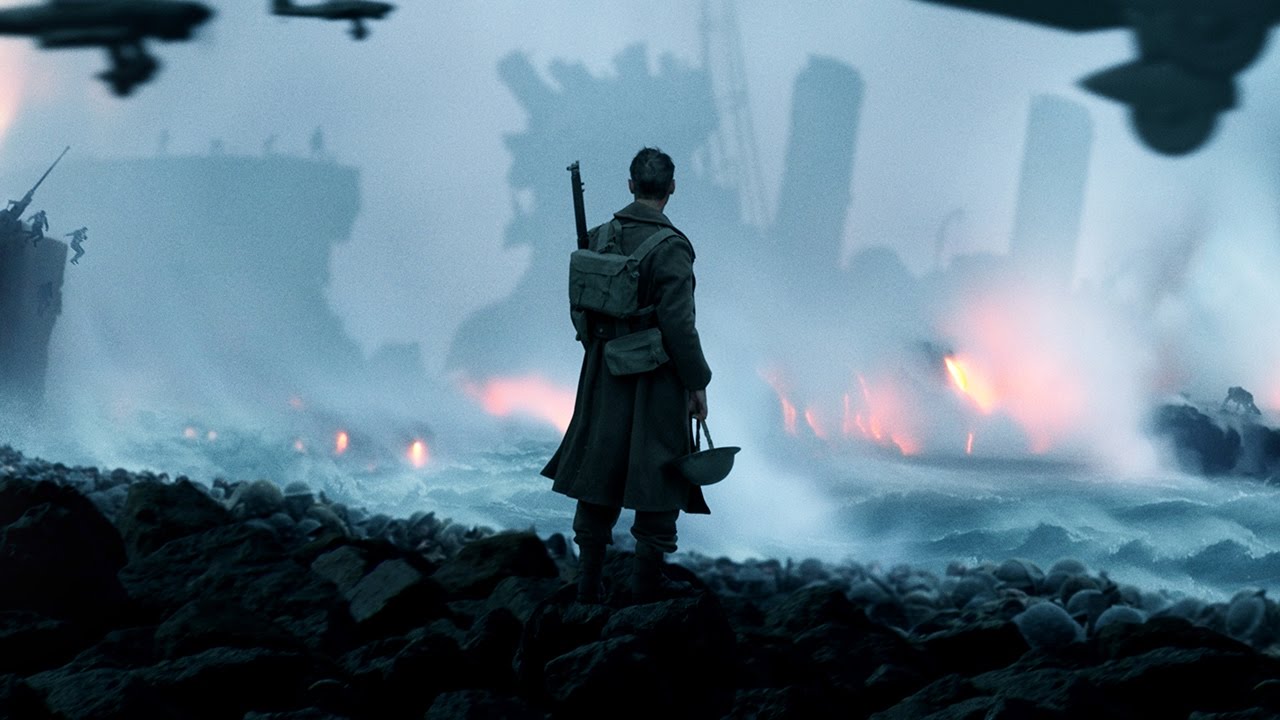
Christopher Nolan, one of the biggest imaginations in film, takes on a WWII epic – the truly amazing evacuation of 400,000 British troops from certain death on the beaches of Dunkirk, France.

Nolan = epic, yes. His career is marked by complicated ideas, phenomenal visual style and inventiveness, ever-increasing running times and head-trippery. So, if you’re prepared for a long, bombastic, serpentine, heady adventure, you are not prepared for Dunkirk.

Though the word epic still fits.

Nolan’s storytelling is simultaneously grand and intimate. To do the story justice, he approaches it from three different perspectives and creates, with a disjointed chronology, a lasting impression of the rescue that a more traditional structure might have missed.

The great Mark Rylance brings in the perspective of the courageous Brits who manned their pleasure boats and headed toward the beleaguered troops to ferry them to safety.

From the air, Tom Hardy and Jack Lowden offer the view (literally and figuratively) of the RAF, undermanned and outgunned, maneuvering to end as much of the carnage as possible while the evac takes place.

And on the ground amongst those desperate for removal is young Tommy (Fionn Whitehead), the actor with the most screen time and quite possibly the fewest lines. He’s the reminder that these soldiers were heroes – flawed, brave, terrified and young.

The cast is appropriately huge, including a surprisingly restrained Kenneth Branagh as well as James D’Arcy, Cillian Murphy, Barry Keoghan, Tom Glynn-Carney and, of course, One Direction’s Harry Styles (who commits himself respectably).

Solid performances abound without a single genuine flaw to point out, but the real star of Dunkirk is Nolan.

Talk about restraint. He dials back the score – Hans Zimmer suggesting the constant tick of a time bomb or the incessant roar of a distant plane engine – to emphasize the urgency and peril, and generating almost unbearable tension.

Visually, Nolan’s scope is breathtaking, oscillating between the gorgeous but terrifying open air of the RAF and the claustrophobic confines of a boat’s hull, with the threat of capsize and a watery grave constant.

What the filmmaker has done with Dunkirk – and has not done with any of his previous efforts, however brilliant or flawed – is create a spare, quick and simple film that is equally epic.

Verdict-4-5-Stars

Striking Gold

Dawson City: Frozen Time

by Hope Madden

If art imitates life, then can the discarded art of a period tell us an insightful story of a forgotten time and place? Documentarian Bill Morrison thinks so, or his latest, Dawson City: Frozen Time, suggests as much.

A pastor and part-time backhoe operator in Dawson – a small town in the Yukon – unearthed a trove of nitrate film reels from the silent era while digging up the land behind Diamond Tooth Gertie’s gambling hall in 1978.

Adding a minimum of spoken explanation or context, all of which is quarantined to the opening and closing of his film, Morrison pieces together footage from the find with sometimes startlingly gorgeous photos and other craftily placed film bits, as well as onscreen type, to weave his tale.

His film tells of Dawson’s fascinating history – the romantic, dangerous kind usually reserved for Wild West legends. (Maybe something worthy of the name Diamond Tooth Gertie?)

Dawson was the last stop for a film, a location so remote and far flung, distributors refused to pay the postage to have their movies returned. Theater managers disposed of most of it in the same way the townspeople disposed of everything at the time – down river during the thaw.

But one crafty bank manager – because it was in the bank that many reels were held – decided to use it as landfill beneath the town’s ice rink. The permafrost kept the reels from deteriorating entirely, and their water damage only adds to the odd and dreamy style Morrison uses to sketch out this history.

Immersed in Alex Somers’s often hypnotic score, the film is a meticulously crafted near-silent film itself – a work full of insight on history and art. Perhaps too meticulous. Feeling every minute of its 2-hour run time, Frozen Time is often so bogged down in minutia that the bigger, more fascinating picture can get lost.

Though his documentary does share insights into Dawson’s labor, expansion, culture, science and the displacement of native peoples, Morrison is interested in more than the progression of the town.

His doc is also about film as art, and the ways that art can be manipulated to tell a compelling story. The filmmaker, relying heavily though not exclusively on reels uncovered by Frank Barrett’s backhoe, edits together images from wildly varying movies having nothing to do with Dawson. He uses these to articulate, in clever and sometimes wryly funny fashion, the history unfolding.

Verdict-3-5-Stars

Girl Tripping

Girls Trip

by Hope Madden

Here’s my guess: The first time you saw the trailer for Girls Trip you thought, didn’t I just see this movie? Isn’t Rough Night this same movie, only whiter?

Yes.

Well…Girls Trip is a bit raunchier, a bit schmaltzier, with characters a bit more broadly drawn.

You will laugh, though.

Regina Hall stars as Ryan Pierce, an Oprah-style life coach whose perfect marriage is a beacon of “having it all” to her throngs of fans and book buyers. Invited to keynote at Essence Magazine’s New Orleans conference, she sees a chance to reconnect with her three college besties – the Flossy Posse.

Uptight single mom Lisa (Jada Pinkett Smith), trashy Dina (Tiffany Haddish) and true friend in a bad spot, Sasha (Queen Latifah) join Ryan for their first wild weekend together in years. Give this mostly veteran cast credit – they take underwritten characters and make them feel like flesh and bone.

Girls Trip bears the glossy look and feel of a Malcolm D. Lee film – enough camaraderie to keep you interested, enough syrup to make you want to brush your teeth. But Lee takes some chances and allows his cast some leeway with this film, and it pays off.

Despite its already tired premise, Lee’s movie takes some of its antics in extreme directions to draw shocked laughter and genuine entertainment.

I don’t mean polite chuckle funny, either. It’s “is that an old man dick?” funny.

Not a single plot point will surprise, and the film is too damn long. Way too long – 30 minutes too long at least. But, between the natural chemistry among the quartet of leads and wild scene stealing from the comically gifted Haddish, Girls Trip offers some fun.

It’s too bad the lessons learned have to be delivered with a sledge hammer blow, but if you’ve ever said, “This place smells like Hennessy and bootie sweat. We’ve found our tribe,” then Girls Trip may be your film.

Verdict-2-5-Stars

Suitable for Framing

Maudie

by George Wolf

“Show me how you see the world…”

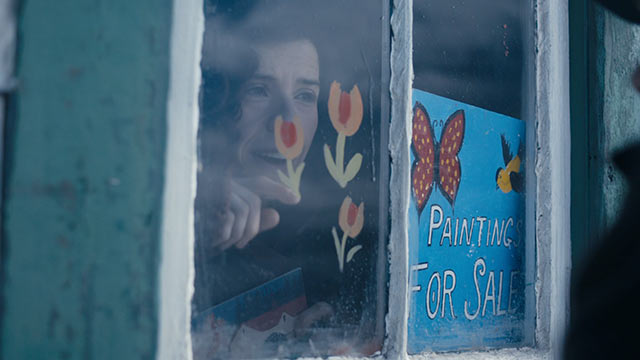
Thanks to a glorious performance from Sally Hawkins, Maudie shows us the enduring flame of creativity, and how a Canadian folk hero harnessed it to rise above the challenging hand life dealt her and become a sought-after artist.

Born in Nova Scotia in 1903, Maud Dowley suffered with rheumatoid arthritis from a very young age. By 1937 both her parents had died, and not long after Dowley answered an ad from local fish peddler Everett Lewis for a “live-in housekeeper.” The two were married some weeks later, and Maud began her professional art career selling small, hand painted Christmas cards to the locals.

While director Aisling Walsh and writer Sherry White can’t follow through on all the possibilities for resonance that Maud’s story offers, Hawkins carries the film. Hers is a warm, endlessly captivating performance that fills nearly every frame with the sweetest of heartbreaks.

As Maud’s gruff and often disagreeable husband Everett, Hawke continues his recent streak of impressive performances with a turn that gives Hawkins a fitting bookend. But this is her show, to such an extent that the sheer joy of watching her can compensate for when the film takes the road more traveled.

While Maud’s talent and ingenuity are in focus, and we see her rise above those who would cast her off as nothing but a burden, Maudie‘s spirit soars. But Walsh and White then become too satisfied with a by-the-numbers love story pastiche.

It’s a curious destination for a film that seemingly had much more to say.

Still, it has Hawkins in nearly every scene, all suitable for framing.

Verdict-3-5-Stars

Is That a Monkey Paw?

Wish Upon

by Hope Madden

Wish Upon is, basically, a Twilight Zone episode – or a Simpson’s episode. Just toss in a bit of The Craft, add a dash of Final Destination, just a touch of Hellraiser, all topped off with the slightest hint of A Nightmare on Elm St.

Wait, how can you get away with such derivative pap? Get it a PG-13 rating – no one under 20 has ever seen any of those things.

What they’ll see here is a cautionary tale about succumbing to your high school angst.

Clare (Joey King) is unpopular in that Hollywood sense – meaning she’s artistic, adorable and quirky, but the Barbie doll lookalikes and their gay friend inexplicably hate her. Her two besties (admirably played by Shannon Purser and Sydney Park) love her, though. Plus, she has an admirer in that cute skateboarder, Ryan (Ki Hong Lee – man is he saddled with some bad dialog).

But her dad (Ryan Phillippe) is a total embarrassment – even if he did find her this cool Chinese wishing pot. (This, PS, is the whitest movie about Chinese demons ever made.)

Luckily, director John R. Leonetti (Annabelle) has King to rely on. She’s likeable, generally believable, and she offers a compelling deterioration, post-wishing. (Because wishing + puzzle boxes + horror movies = bad idea.)

Leonetti, working from Barbara Marshall’s script, seems to be suggesting that you should just accept who you are, and that pining for something as superficial as popularity and wealth will literally kill you and everyone you love.

It’s not bad advice. Might be a little over-the-top.

Wish Upon is a bland if competently made screamer for the not-ready-for-R set. It’s a John Hughes movie with more carnage. It’s a Taylor Swift song with a body count.

It’s fine. Unless you like good movies.

Verdict-2-0-Stars

I Will Choose Free Will

Afterimage

by Hope Madden

Painting in his room, the artist Wladyslaw Strzeminski (Boguslaw Linda) suddenly loses his light as an enormous red banner of Stalin is dropped in front of his building. He opens the window, reaches out with his crutch and tears a hole big enough to let in natural light.

It’s a scene heavy with symbolism as well as dread, and one of many that filmmaker Andrzej Wajda uses to evoke a sense of time, place and struggle. It is not how Afterimage opens, though.

In a painterly scene brimming with life and beauty, Strzeminski meets in a meadow with a group of students from his Academy of Fine Arts in Lodz. The WWI veteran missing one arm and leg tucks his crutches and rolls on his side down the hill, followed merrily by his students. A sunny, living painting – the bright spot is meant to give you a comparison as totalitarian post-war Poland crushes every glint of light in the artist’s life.

Wajda’s lean, focused film limits its scope to the days leading up to Strzeninski’s conflict with Poland’s Ministry of Culture and the deterioration of the artist after. His abstract work and outspoken views on “Socialist Realism” – propaganda disguised as art – are deemed counter to public interest.

What to do with an artist?

Linda’s understated performance grieves for hope – a pervasive feeling throughout the film.

Sharply written, lean and efficient, Afterimage engages with an unadorned vision. What emerges is the picture of systematic bullying aimed at breaking a man’s will.

Strzeminski’s story is not so atypical, and as angry a film as Wajda creates, there is no glory in the artist’s martyrdom. There is simply choice. Afterimge doesn’t deify the man. What it does is more honest.

It not only asks after the imperative of personal and artistic choice. It muddies that conversation intentionally with an accusation about the separation of art and commerce.

And it’s not difficult to find modern echoes in totalitarian catch phrases like, “Unfortunately, we have to educate,” and “Those who don’t work won’t eat.”

That’s a lot to cover in a brief run time, but Afterimage is not just an excellent picture of an artist Poland wanted us to forget. It’s a directorial feat to remind us that Wajda, making his last film before his death at 90, was a storyteller of the highest caliber until the end.

Verdict-4-0-Stars

The Horror

War for the Planet of the Apes

by George Wolf

They’re not kidding, this is a war movie.

The rebooted Apes trilogy concludes with a thrilling, deeply felt and always engrossing rumination on the boundaries of humanity and the levels of sacrifice, where the wages of brutality are driven home in equal measure by both sweeping set pieces and stark intimacy.

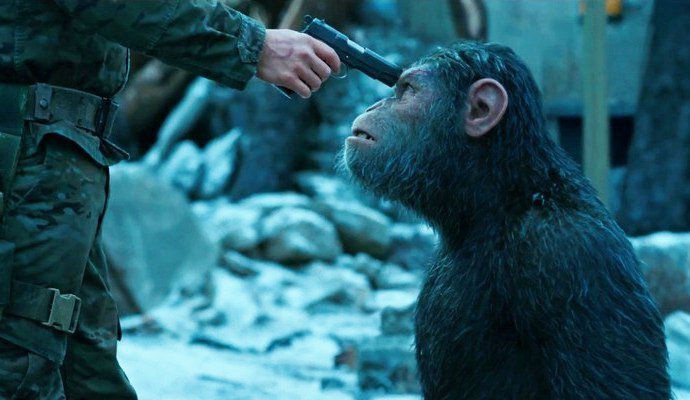
Two years after the events in Dawn of the Planet of the Apes, Caesar (Andy Serkis, again making an Oscar nod for a motion-capture performance seem inevitable) is leading an ape army that has suffered heavy casualties.

Despite some cunning maneuvers, Caesar is on the run from The Colonel (Woody Harrelson, also award-worthy), an unforgiving military dictator who shaves his head and preaches dominance of a master race.

Director/co-writer Matt Reeves says “Ape-pocalypse Now” before you can, but such an obvious ode to Brando’s Colonel Kurtz ultimately becomes a clever misdirection for the layered themes that resonate on a much more current level.

Reeves, returning from 2014’s Dawn, expands his vision of this franchise and its possibilities, crafting a majestic slice of summer entertainment that also reminds us of what fertile soil fear can easily become.

And yet amid all this heavy drama, some bittersweet humor finds a home, due mostly to “Bad Ape” (Steve Zahn), a hermit who is found by Caesar and his followers. Zahn’s performance is expressive and touching, his frequent close-ups serving as amazing evidence of the visual wonders at work. As the trilogy has progressed, the effects have improved in perfect sync with the cognitive growth of the ape characters, giving this third installment new depths in the richness of its storytelling.

The raging battles give way to a personal war within Caesar, as he balances the good of his population with a primal desire for revenge. His final meeting with The Colonel does not disappoint, thanks to the subtle foreshadowing and effective thrills that fill Reeves’s confident march to the showdown he knows we want.

Ultimately, we’re left with a bridge to the original 1968 film in sight, and a completely satisfying conclusion to a stellar group of prequels.

But is there room for more?

You bet, and War for the Planet of the Apes makes that prospect more than welcome.

Verdict-4-0-Stars

Gonna Break Into Your Heart

American Valhalla

by Hope Madden

An aging musical icon wants to end his career on a fresh note and reaches out to an esteemed industry powerhouse to help him.

A modern master gets a text from his childhood hero, reminding him in a rush of all that informed the direction of his life.

In what could easily have been a simple marketing tool – a documentary to support Iggy Pop’s last album, Post Pop DepressionAmerican Valhalla instead offers a look at the creative process. But, more than that, it’s a glimpse into the kind of rock star adoration we’ve all felt, and an image of the all-too-human object of that worship.

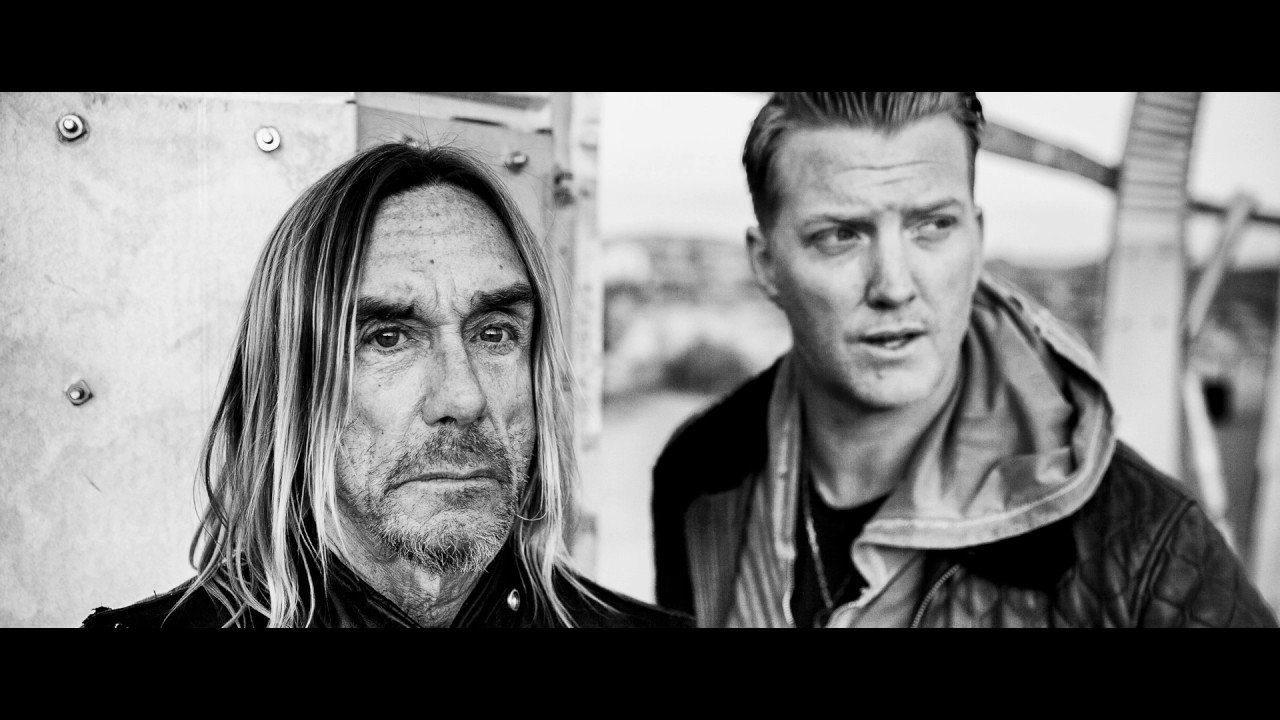
In this case, the adored is punk rock godfather Iggy Pop; the adoring, Queens of the Stone Age front man Josh Homme, (who also co-directs).

Reading directly from their own journals written during the planning, recording and touring process, Homme, Pop and the rest of the band narrate the clashing emotions, nerves and anxieties that fueled this partnership and the ensuing album and tour.

Pop, now in his late sixties, is a small, crooked, humble guy, and still every bit a spectacle. His raw, unpredictable humanity is etched in the deep lines and huge eyes that haunt his famous face.

Homme – every inch Pop’s physical opposite, tall, sleek and handsome – opens himself up on camera in a way that’s disarming. Between Pop’s honest humility and Homme’s almost paralyzing adoration, the film somehow strikes a deeply sweet note. It’s validation for the overwhelming awe your own personal heroes can inspire. At the same time, it’s a touching reminder that even our heroes are deeply human.

Homme, directing with Andreas Neumann, shows great instincts visually. The documentarians cut between live footage, portraits and stills, creatively framed talking heads, and lonesome vistas. The pieces weave together to create an image that’s simultaneously haunting and energetic.

The music also happens to be outstanding.

Most surprising may be the film’s sweet, open heart. It’s a mash note for fans – all fans, but particularly Iggy Pop fans. If this is, indeed, to be Pop’s final hurrah, it is a lovely way to go out.

Verdict-4-0-Stars

Life Support

The Big Sick

by George Wolf

The Big Sick is that rare breed seldom seen in the wilds of the multiplex. It’s a smart and incisive romantic comedy that has something new and vital to say while it’s being both romantic and comedic.

It also feels incredibly authentic, probably because co-writers Emily V. Gordon and Kumail Nanjiani are telling much of their own story.

Kumail (Nanjiani) is a struggling standup comedian in Chicago who can’t bring himself to tell his traditional Pakistani family about his new girlfriend Emily (Zoe Kazan). Family pressures eventually lead to a breakup, not long before Emily becomes hospitalized with a mysterious infection that becomes life-threatening.

Emily’s parents (Holly Hunter and Ray Romano) know all about Kumail, and they aren’t exactly thrilled with his insistence on hanging around the hospital with a visitor’s badge.

Director Michael Showalter (Wet Hot American Summer, Hello My Name is Doris), is blessed with a uniformly wonderful ensemble cast, and he guides the actors through alternating levels of humor and societal insight that feel effortlessly organic.

We see a Muslim family portrayed much as any other movie family might be (imagine!), with generational conflicts that are plenty familiar, even if they manifest in unfamiliar ways. Bonus points for cleverly educating about Pakistani culture while also finding the funny in culture clash and persistent stereotypes.

Almost all the humor – be it scatalogical, corny, or suddenly dark – finds a mark, and is paired with a constant undercurrent of relatable humanity that draws us into these characters and becomes truly touching.

At times hilarious, sweet,  emotional and even heartbreaking, The Big Sick has a case of charming that will follow you home.

Let’s hope it’s catching.

Verdict-4-0-Stars