Exit Light, Enter Night

In Your Dreams

by Hope Madden

The delightfully juvenile humor that propels much of the new Dreamworks animated film In Your Dreams entertains. It also amplifies the tension between tween big sister Stevie (Jolie Hoant-Rappaport) and little brother, Elliot (Elias Janssen).

If the perfectionist eldest sibling is going to somehow get her parents to stay together, the last thing she needs is Elliot and his foul-smelling stuffed animal Baloney Tony (Craig Robinson) getting in the way.

But naturally, when Stevie makes a wish to find Sandman and make her dream of a happy family come true, somehow Elliot gets himself involved. Now Stevie can’t make her way through dreamland to find the Sandman without her pesky little brother.

In that way, In Your Dreams is sort of the Predator: Badlands of the grade school set.

Though the computer-generated animation is sometimes disappointing, the movie’s chaotic energy and humor while our heroes work toward finding the Sandman—plus a fun, splashy bit of hand drawn animation— are a blast. It’s during these dream montages that co-writers/directors Erik Benson and Alexander Woo (who write with Stanely Moore) are most inspired. It’s also where we get to spend the most time with Baloney Tony, easily the film’s funniest character.

As dreams of life among happily animated breakfast foods turn rancid under the influence of Nightmara (Gia Carides), In Your Dreams runs through a fun, funny, and often insightful set of dream sequences set to appropriate and fun needle drops.

The film’s themes are compelling and often insightfully rendered, and the storyline itself bears originality sometimes lost in family films. But once we finally reach the Sandman, the look, feel, humor and imagination seem to disappear. We build and build to Sandman, but he and his castle are bland and forgettable.

In Your Dreams never fully recovers, most of Act 3 feeling like a quick and easy escape route from the otherwise clever conceits in the plot. There are definitely laughs and fun sequences, but you may forget this one as quickly as last night’s dream.


Makes the Dream Work

Predator: Badlands

by Hope Madden

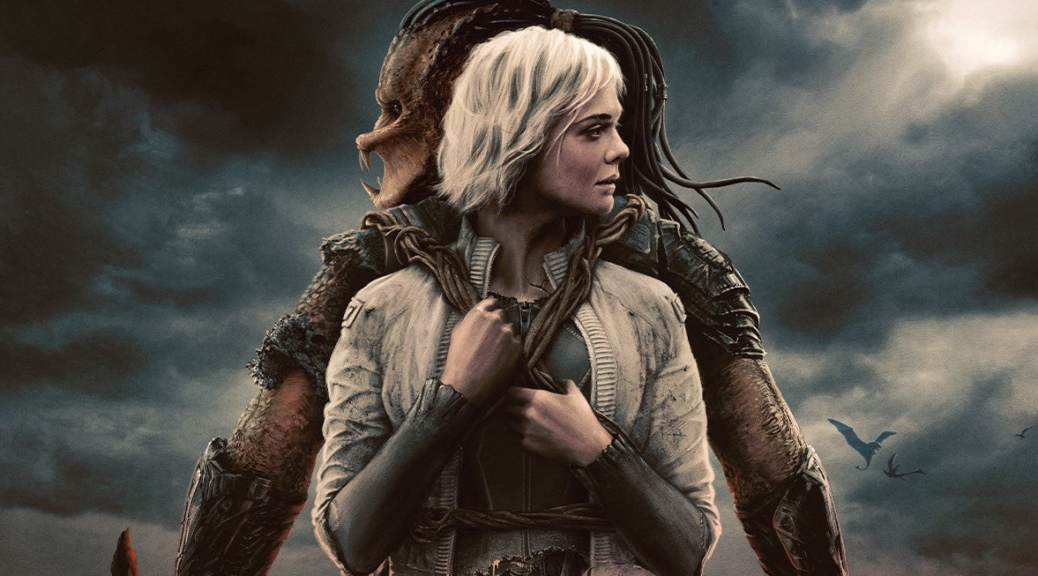
Whenever anybody ranks the Predator films—or the Alien films, for that matter—most episodes hold up moderately to well, except for those crossovers. Well, it appears filmmaker Dan Trachtenberg, who’s asked us to rethink so much about the Predator franchise, wants us to revisit that as well.

And why not? In 2022, the co-writer/director of Prey brought new life to a fun action thriller series that seemed to have worn itself out. And then, as we all waited patiently for his next sequel, he dazzled us with the bloody fun animated anthology, Predator: Killer of Killers.

Now Trachtenberg betrays a love of this franchise and a seemingly endless inspiration for its universe as he takes us on a trajectory begun when Paul W. S. Anderson first pitted the two most badass alien lifeforms against each other in 2004’s AVP: Alien vs. Predator. Because it was in this installment, weak as it was, that the rogue hunter learned the value of teamwork.

Predator: Badlands introduces Dek (Dimitrius Schuster-Koloamatangi), runt of his Yautja clan, banished unless he can return with his trophy: the Kalisk of Genna. But do you remember when Tom Hiddleston and his band of misfits landed on Skull Island in search of Kong, only to find out that everything on the island wanted to eat them? Genna is like that, and Dek is so full of rage, daddy issues, and insecurity that all he can think to do is beat his chest and lash out.

Luckily, what’s left of a synthetic being named Thia (Elle Fanning) knows the lay of the land and can help Dek survive the planet and find his trophy, so long as he carries her back to her legs.

Thia’s a bit of a Chatty Cathy, a personality tic that allows Trachtenberg and his co-writers, Patrick Aison and Jim Thomas, to clue viewers in on the planet, its creatures, and her own backstory as the budding frenemy relationship develops the film’s themes.

It’s fun. Fanning’s charmingly garrulous sidekick brings more lightheartedness to this installment than we’ve seen in previous episodes, but the action is fun and frequent. Expect plenty of bloodshed regardless of the PG-13 rating (it’s mostly beasties, some of them green blooded).

The film is often frustratingly dark, limiting the enjoyment of many set pieces, but the score is amazing and the depth of character is an unexpected pleasure. Predator: Badlands is not the best of the franchise, nor is it as ground breaking as Prey, but it’s a ton of fun.

Mystery Girl

Die My Love

by Hope Madden

Earlier this year, filmmaker Michael Shanks and real-life marrieds Alison Brie and Dave Franco examined man’s fear of losing his identity to couplehood in the weirdly romantic horror, Together.

Lynne Ramsay’s latest, Die My Love, looks at it from a slightly more skewed perspective.

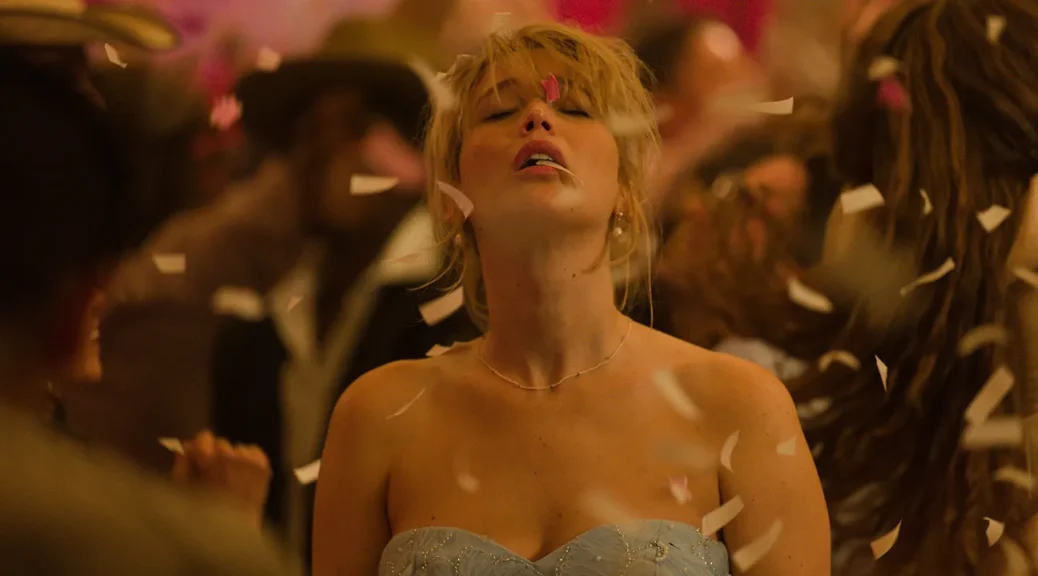
For Grace (Jennifer Lawrence), the horror seems to be gradual disappearance, a total loss of who you were with no new version to take its place. A new home—well, old home inherited by boyfriend Jackson (Robert Pattinson)—in a new and isolated spot, and a new baby all seem to leech from Grace whatever it was that had held her together. Her attempts to contend with this vanishing, this mundane nonexistence, are a volcanic, often hilarious and just as often terrifying wonder from a phenomenal talent in top form.

The inimitable Ramsay, along with Enda Walsh and Alice Birch, adapts Ariana Harwicz’s novel. The loosely constructed narrative presents atmosphere and context more than plot. Grace and Jackson move into the now-vacated Montana home. It’s perhaps not ideal, but who cares? It’s theirs, it’s free, and Grace can write all day.

But she doesn’t, nor does she fit in (or try) with Jackson’s family. Boredom, new motherhood, sexual frustration, a negligent husband, and isolation all weigh on Grace, and in every instance, her reaction startles and fascinates.

Lawrence is fearless— that’s nothing new—but here she is alive, on fire. Funny and heartbreaking, fierce and merciless, aching but rarely vulnerable, Lawrence’s command of this film is breathtaking.

An impressive ensemble—Pattinson, Sissy Spacek, Nick Nolte, LaKeith Stanfield—exist more to offer opportunities for Lawrence to react than to craft full characters. But few directors can craft an individual scene, or string together scene after scene after scene, as transfixing as those conjured by Ramsay.

And her dreamlike creations seem always to nurture an unparallelled performance from some of the greatest actors working: We Need to Talk About Kevin’s Tilda Swinton, You Were Never Really Here’s Joaquin Phoenix, and now, Die My Love’s Lawrence, whose raw sensuality, anger, and sadness command attention.

The film’s lack of cohesion, of clear path or plot, weaken the effort. Die My Love is more character study than story, but Grace is a character that can’t be known. This is her burden and her glory, but an unknowable character makes for a tough study.

But, though you may walk away from Die My Love wondering what it is  you just watched, you’ll not likely forget what you saw.

Everything Else Is Cleveland

Lost & Found in Cleveland

by Hope Madden

Tennessee Williams once said, “America has only three cities: New York, San Francisco, and New Orleans. Everything else is Cleveland.”

The indie charmer Lost & Found in Cleveland wisely opens with that text on the screen, both signaling the film’s deeply midwestern sense of self-deprecating humor, and the universality of its set of small stories.

Filmmakers Keith Gerchak and Marisa Guterman spin intersecting tales of a handful of Clevelanders whose paths cross when the Antiques Road Show inspired program Lost & Found comes to town.

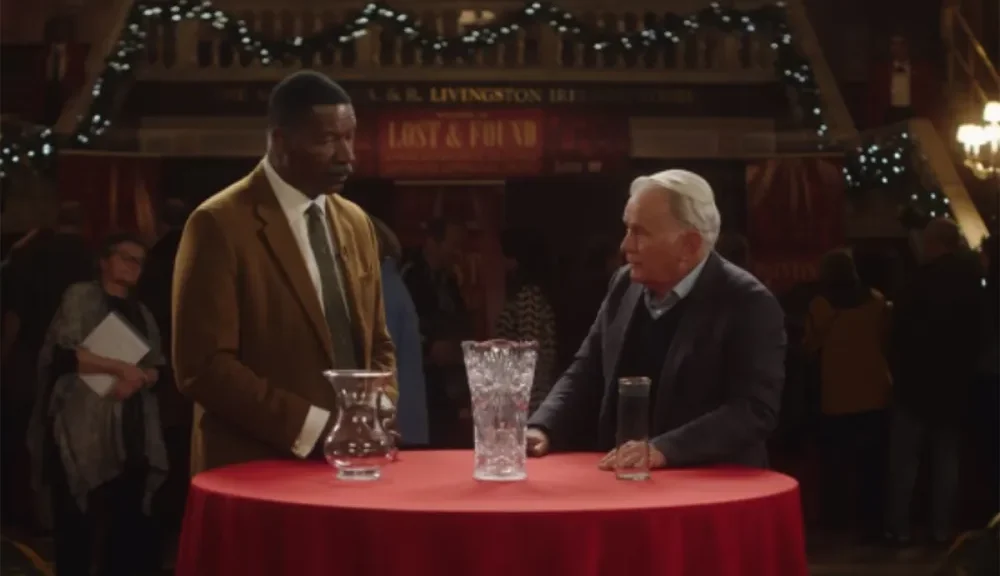
Nine-year-old Charlie (Benjamin Steinhauser), struggling to come to terms with his dad’s death and his mom’s new boyfriend, is desperate to authenticate a hand-written letter from President William McKinley. Mr. and Mrs. Sokolowski (Stacy Keach and June Squibb) have some plates to appraise. Mail carrier Marty (Dennis Haysbert) collects vases and longs to open a high-end restaurant in remembrance of his mother. Nouveau riche Sophie Mathers (Liza Weil) cannot wait until her newly acquired piece, an enormous sculpture of the goddess Juno, is belle of the Lost & Found ball. And Gary (Santino Fontana) needs to come to terms with the enormous and mortifying Aunt Jemima collection his Nana Noni left him.

Tennessee Williams may not have thought much of it, but Gerchak and Guterman clearly love Cleveland. You’ll recognize some landmarks from Superman, but this film isn’t pretending The Arcade or the Hope Memorial Bridge belong anywhere other than The Land. With equal parts humility and humor, the film glories in everything that makes the town so very Cleveland.

This roots the tales in authenticity, while performances and storylines allow each a bit of zaniness. Sometimes the writing crosses the line to sit-com simplicity, and not every performance convinces. And one dance sequence is a real head scratcher.

But with talent like Squibb, Keach and Haysbert, plus supporting comedic gold from Dot-Marie Jones, it’s tough to hang on to any hard feelings. Somehow the amateurish moments feel right. Accepting them is like accepting every burning river, horrendous sports season, missed opportunity and freak snowstorm. Anything more polished just wouldn’t be Cleveland.

Tear the Fascists Down

Nuremberg

by Hope Madden

There were many reasons to be hopeful for James Vanderbilt’s Nuremberg, chief among them its modern-day resonance and the satisfaction of watching Nazis suffer the consequences of their actions.

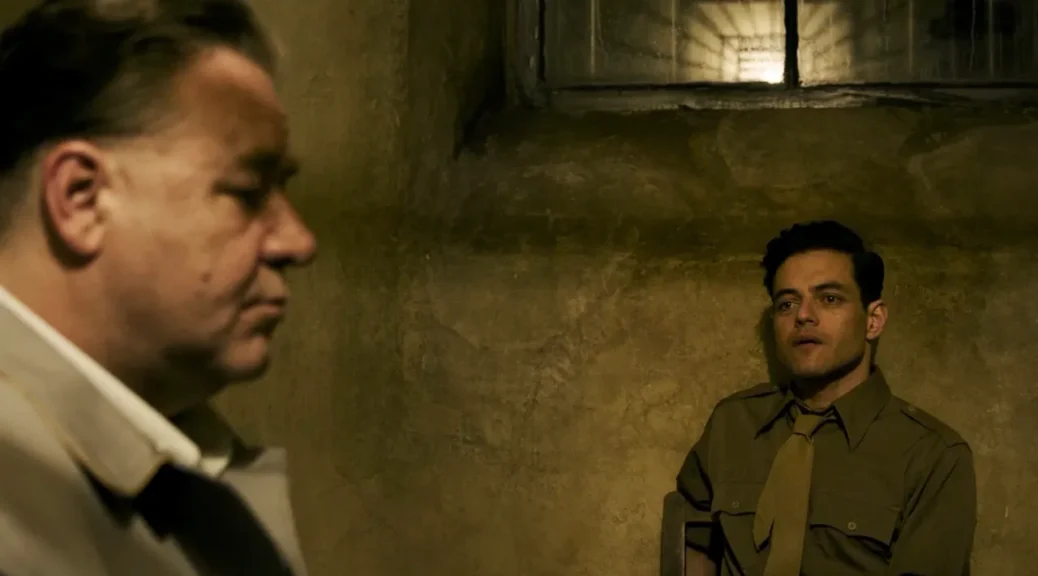
Vanderbilt’s impressive ensemble tells the true story of the global court case trying the Nazi high command for crimes against humanity. Russell Crowe delivers an almost fanciful turn as Hermann Göring, sparring with army doctor Douglas Kelley (Rami Malek), assigned to help the prosecution get inside the mind of the monster.

Vanderbilt adapts Jack El-Hai’s book The Nazi and the Psychiatrist, developing the relationship between these two characters as the film’s primary plot. A parallel storyline following Justice Robert Jackson (Michael Shannon) grounds the film in the importance of the trial and its single desired result: to annihilate pro-Nazi sentiment and the white supremacist authoritarianism that fueled it.

Richard E. Grant, John Slattery, Colin Hanks, and Mark O’Brien deliver solid performances, though the film would not have suffered by streamlining both O’Brien and Hanks entirely out of the movie.

Nuremberg‘s problem is not so much its length as its cumbersome scripting. To add the full (and imperative) B-story, the events and characters that orbit the psychiatrist and the Nazi should have been pruned.

Vanderbilt chooses showy direction throughout, cutting from one scene to the next with gimmicks that call to mind classic screwball comedies—a wild, almost horrific mismatch with the material.

There’s such obviousness to the telling of the tale, and not because we know the outcome of the trial but because the character points we shouldn’t know are telegraphed.

Now and again one brilliant line of dialog bursts through, which is almost as frustrating as the otherwise ostentatious script because there’s something here. Something worth telling, in need of telling.

But Vanderbilt buries it under forced emotion (when certainly none needs to be forced) and flamboyant staging. Hard as Nuremberg tries to connect the dots from past to present, it offers no insight. And that’s what’s most frustrating.

Fight Like a Girl

Christy

by George Wolf

No matter what you think of Sydney Sweeney the celebrity glamour girl, you’ve got to give her props for not resting on her sexy laurels. I’m not saying her turn in the bikini-friendly Anyone But You didn’t show fine comic timing, but in five of her last seven films, Sweeney has chosen roles that downplayed her curves and provided the chance to challenge herself as an actress.

Okay, so Echo Valley, Eden, American, Immaculate and Reality didn’t make the box office buzz, but Christy continues Sweeney’s ambitious trend. And right on the cusp of awards season, she doesn’t waste the opportunity to impress, leading a stellar ensemble in giving some well-deserved flowers to a trailblazer in women’s sports.

In 1989, Christy Salters was a bored girl from West Virginian who played a very physical brand of basketball and bristled when her mother (Merritt Weaver) obsessed over the whispers about Christy’s relationship with girlfriend Rosie (Jess Gabor). After winning $300 in a local Toughman contest, Christy is introduced to boxing trainer/future husband Jim Martin (Ben Foster), who guides her, exploits her and violently abuses her on Christy’s path toward becoming Don King’s “Coal Miner’s Daughter,” the first woman to headline a PPV undercard.

Boxing films may carry the most inherent cliches of all sports stories and director/co-writer David Michôd can only steer Christy around them about half the time. As Christy’s fame and fortune grew, the level of abuse she suffered only intensified, to a level that will surprise many. And when Michôd (Animal Kingdom, The Rover) finds small moments to accentuate with a dramatic camera angle or well-timed edit, the performances from Sweeney and Martin find resonant depth.

We’re used to exemplary work from Foster, and here he makes Jim Martin a slippery, violent gas-lighter with just enough relatable edges to avoid caricature. Sweeney responds with committed grit, and Christy’s battles both in and out of the ring elicit sympathy, respect and admiration.

Even so, the biggest challenge to telling a story so personal is the temptation of throwing too many formulaic haymakers. When Christy can do that, it becomes a film worthy of Martin’s fight.

Winner by split decision.

Killer Pictures

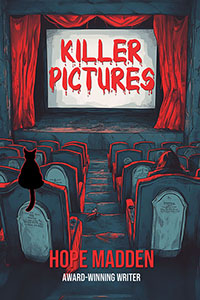
Maybe you know about Hope’s latest novel, Killer Pictures (get yourself an autographed copy right here in our store!)

It tells the story of Dez, who should go to bed, but instead, she keeps watching horror movies for the Mayhem & Madness Film Festival. She sees a new one pop up in her to-review queue: Adam. That’s a funny title, she thinks, since there’s another judge named Adam. But instead of watching, she goes to bed, and by the time she wakes up, the judge named Adam has killed his wife and himself, and the film Adam has disappeared from the judging queue.

In its place is a film called Grant — the name of another judge. Is Grant doomed to Adam’s fate? Will Dez see her own name as a film title? If she does, will she dare watch it?

Welcome to the Mayhem & Madness film festival, where the judges are committed and the pictures are killer.

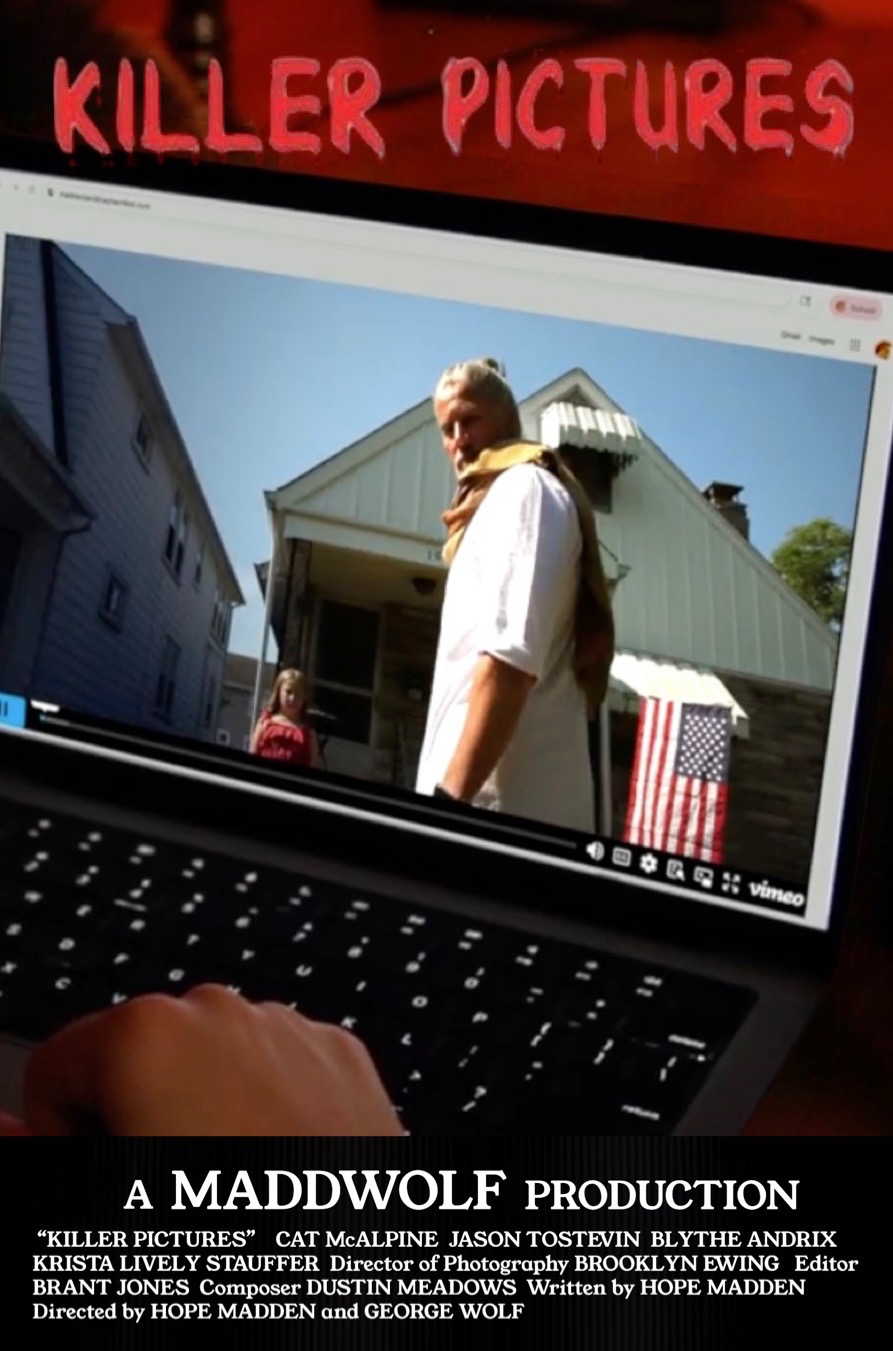
Intrigued? Well, treat yourself to our new short film, Killer Pictures, to watch as Dez falls into a mystery that may end her life.

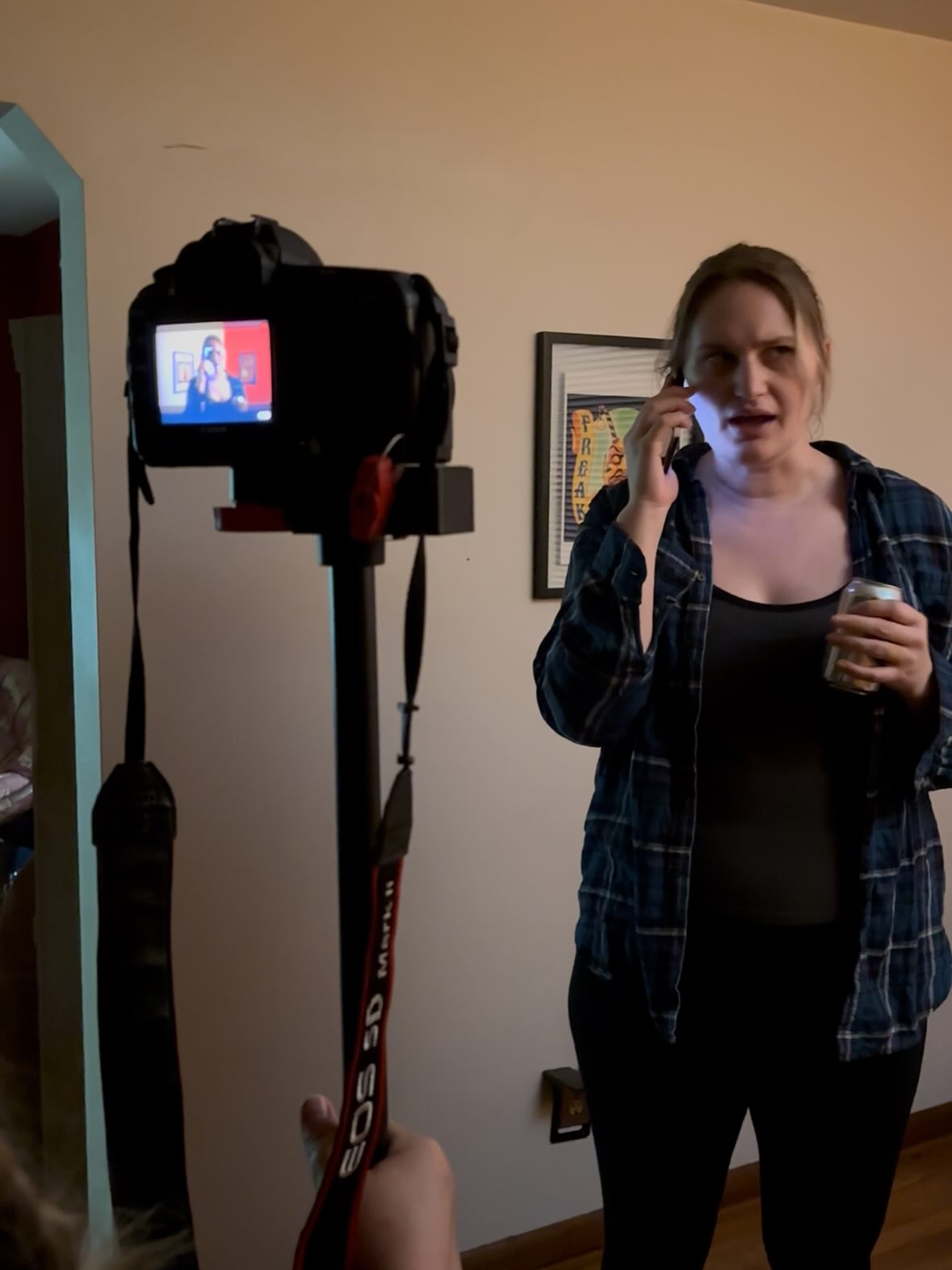
Behind the Scenes!