So a guy passes out after a hard night of drinking. It’s his daughter’s birthday, and that helps us see that the guy is a dick. He wakes up a prisoner in a weird, apartment-like cell. Here he stays for years and years.
The guy is Dae-su Oh (Min-sik Choi). The film is Oldboy, director Chan-wook Park’s masterpiece of subversive brutality and serious wrongdoing.
This is not a horror film in any traditional sense – not even in South Korean cinema’s extreme sense. Though it was embraced – and rightly so – by horror circles, this is a refreshing and compelling take on the revenge fantasy that drags you places you do not expect to go. But that’s the magnificence of Chan-wook Park, and if you have the stomach, you should follow where he leads.
Released in 2003 and remade (BADLY) ten years later, the film’s secrets have likely been spilled by this point. One of the miraculous things about Oldboy is that, even if you know the twists that lie ahead, you cannot imagine how Park will reveal and execute them.
And if you don’t know, all the better
Choi is unforgettable as the film’s anti-hero, and his disheveled explosion of emotion is perfectly balanced by the elegantly evil Ji-tae Yu.
Choi takes you with him through a brutal, original, startling and difficult to watch mystery. You will want to look away, but don’t do it! What you witness will no doubt shake and disturb you, but missing it would be the bigger mistake.
Listen weekly to MaddWolf’s horror podcast FRIGHT CLUB. Do it!
Short and sweet, like most of its performers, Tod Browning’s controversial film Freaks is one of those movies you will never forget. Populated almost entirely by unusual actors – midgets, amputees, the physically deformed, and an honest to god set of conjoined twins (Daisy and Violet Hilton) – Freaks makes you wonder whether you should be watching it at all. This, of course, is an underlying tension in most horror films, but with Freaks, it’s right up front. Is what Browning does with the film empathetic or exploitative, or both? And, of course, am I a bad person for watching this film?
Well, that’s not for me to say. I suspect you may be a bad person, perhaps even a serial killer. Or maybe that’s me. What I can tell you for sure is that this film is unsettling, and the final, rainy act of vengeance is truly creepy to watch.
Beautiful ‘normal’ Cleopatra (Olga Baclanova) performs in the circus, flirting with sideshow manager Hans (Harry Earles) for the perks – the gifts, and the chance to mock him with the other ‘normals’ in the group. When she realizes that Hans is loaded, she decides to marry and then kill him, with the help of dunderheaded Hercules (Henry Victor).
Among the film’s drawbacks are the ridiculously thick accents of most of the principal actors. Earles, in particular, is almost impossible to understand, but he is – god help me – absolutely adorable. That’s Hans’s problem, of course. His baby face and tiny stature make him tough to take seriously, and his tendency to fall for opportunistic bitches that tower over him isn’t helping.
To make things even more unseemly, Hans is loved truly by fellow little person Frieda, played by the actor’s own sister Daisy. The two characters are not, as far as I can tell, meant to be related, but they look exactly alike, which just makes the whole effect all the weirder. I have no idea if this was intentional or not, but I’m for it.
Well sir, the close knit “family” of freaks gets wind of Cleopatra’s plan, and they exact revenge. The revenge itself – the final act – makes no logical sense, but the perpetration is awesome.
Browning’s camera stays near the ground, filming everything as lowly, dark, hiding, creeping. He’s taking the inconcrete fear we have of what is abnormal and making it literal: that which we hide from view will creep forth and kill us.
Or, turn us into a chicken lady.
Listen weekly to MaddWolf’s horror podcast FRIGHT CLUB. Do it!
There have long been filmmakers whose ultimate goal is not entertainment; the idea being that art is meant to affect, not entertain. These filmmakers, from Sam Peckinpah to Lars von Trier, generally develop impenetrable indie credibility and a line of devoted, bawling fans. No one in recent memory has applied this ideology to horror cinema as effectively as writer/director Greg McLean with his Outback opus Wolf Creek.
Some of the best scares in film have come as the reaction to urbanites’ fear of losing the tentative grasp on our own link in the food chain once we find ourselves in the middle of nowhere. With Wolf Creek, it’s as if McLean looked at American filmmakers’ preoccupation with backwoods thrillers and scoffed, in his best Mick Dundee, “That’s not the middle of nowhere. This is the middle of nowhere.”
A quick glimpse of a map of Australia points out that nearly every city with a population higher than that of an Ohio State University dorm is along the coastline. McLean explores the isolated beauty of this vast, empty middle with spectacularly creepy results.
Using only digital cameras to enhance an ultra-naturalistic style, McLean’s happy backpackers find themselves immobile outside Wolf Creek National Park when their car stops running. As luck would have it, friendly bushman Mick Taylor (John Jarratt) drives up offering a tow back to his camp, where he promises to fix the vehicle.
If this sounds predictable and obvious to you, rest assured that McLean has plans to burst every cliché in the genre, and he succeeds on almost every level.
His first triumph is in the acting. Jarratt’s killer is an amiable sadist who is so real it’s jarring. You find yourself hoping he’s an actor. His performance singlehandedly shames the great Tobe Hooper and Wes Craven, whose backwoods horror films relied so completely on caricatures for villains.
A horror film this realistic is not only hard to watch, but a bit hard to justify. What makes an audience interested in observing human suffering so meticulously recreated? This is where, like a true artist, McLean finally succeeds. What is as unsettling as the film itself is that its content is somehow satisfying.
Listen weekly to MaddWolf’s horror podcast FRIGHT CLUB. Do it!
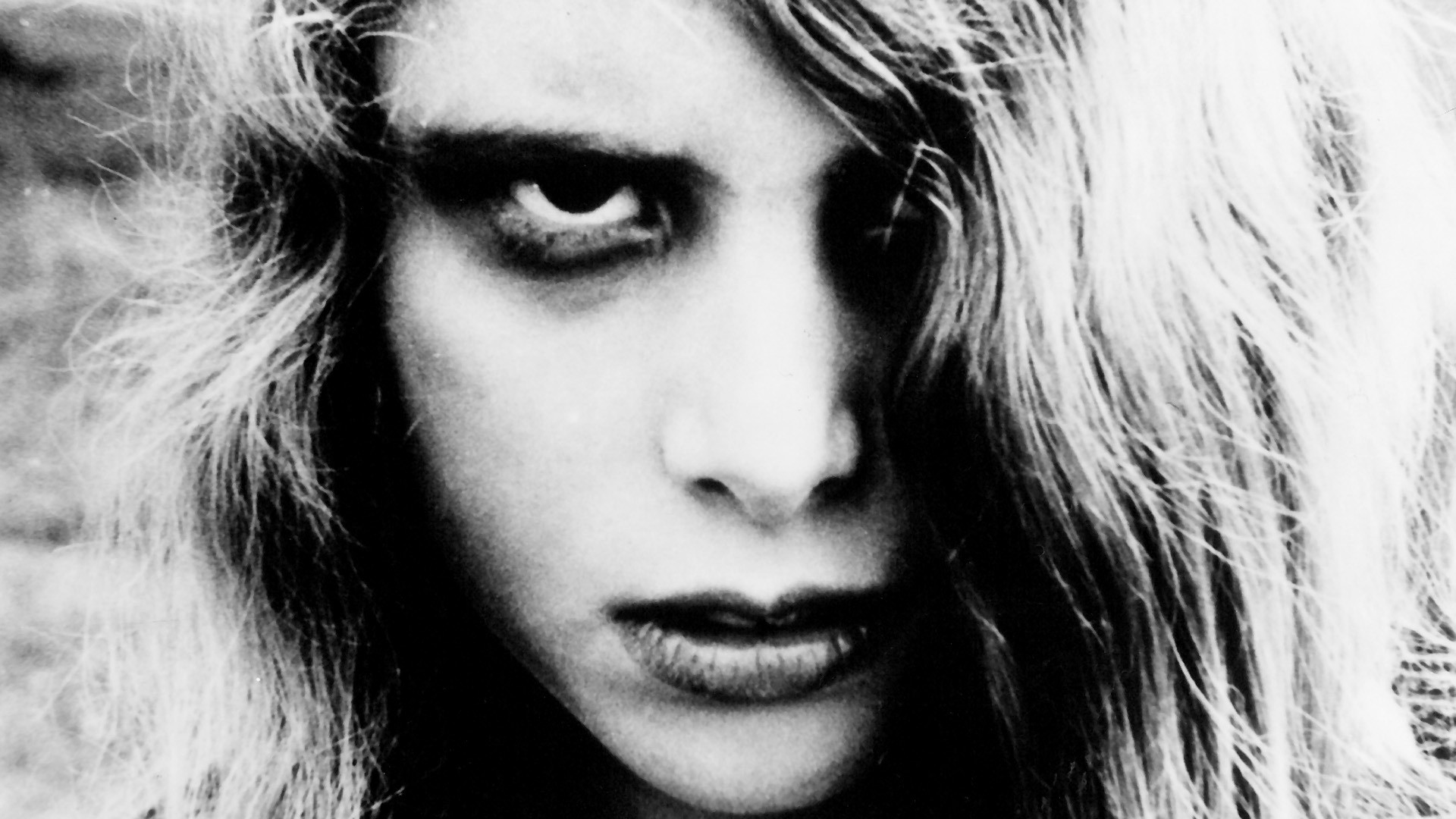
From the brightly lit opening cemetery sequence to the paranoid power struggle in the house to the devastating closing montage, Night of the Living Dead teems with the racial, sexual and political tensions of its time. An unsettlingly relevant George A. Romero knew how to push societal panic buttons.
Two hundred miles outside Pittsburgh, squabbling siblings Barbara and Johnny visit a cemetery to put a wreath on their father’s grave. Then comes the first of the film’s many iconic quotes: They’re coming to get you, Barbara.
My favorite, though, has always been, “Yeah, they’re dead. They’re all messed up.”
A befuddled, borderline useless Barbara (Judith O’Dea) stumbles to an old farmhouse, where the very useful and not easily befuddled Ben (Duane Jones) takes her under his wing and boards up the place. Meanwhile, TV newsmen declare that the, “scene can best be described as mayhem” and note that Barbara, Ben and all those folks down the basement should avoid the mayhem’s “murder-happy characters.”
Romero’s responsible for more than just outstanding dialogue. (OK, at times, like the heavy handed score, the dialogue isn’t entirely outstanding. But often enough, it is.) As the first film of its kind, the lasting impact of this picture on horror cinema is hard to overstate. His inventive imagination created the genre and the monster from the ground up.
They’re dead.
They’re back.
They’re hungry for human flesh.
Their bite infects the bitten.
The bitten will eventually bite.
Aim for the head.
The tensions inside the house are almost as serious as the danger outside the house, once bossypants Mr. Cooper pokes his head out of the basement. And wouldn’t everybody be better off if Romero could write a worthwhile part for a female?
Still, the shrill sense of confinement, the danger of one inmate turning on another, and the unthinkable transformation going on in the cellar build to a startling climax – one that utterly upends expectations – followed by the kind of absolutely genius ending that guarantees the film’s eternal position in the annals of horror cinema.
Listen weekly to MaddWolf’s horror podcast FRIGHT CLUB. Do it!
In a bit of meta-filmmaking, Man Bites Dog is a pseudo-documentary made on a shoestring budget by struggling, young filmmakers. It is about a documentary being made on a shoestring budget by struggling, young filmmakers. The subject of the fictional documentary is the charismatic Ben – serial killer, narcissist, poet, racist, architecture enthusiast, misogynist, bird lover.
There’s more than what appears on the surface of this cynical, black comedy. The film crew starts out as dispassionate observers of Ben’s crimes. They’re just documenting, just telling the truth. No doubt this is a morally questionable practice to begin with. But they are not villains – they are serving their higher purpose: film.
Eventually the filmmakers’ commitment to the project, fear of retaliation, bloodlust, or sense of camaraderie pushes them toward aiding Ben, and then finally, to committing heinous crimes themselves.
Benoit Poelvoorde’s (who also co-directs) performance as Ben is just as quirky, ridiculous and self-centered as it can be. He’s perfect. His character needs to move the group toward fear, camaraderie, and sometimes even pity – but slyly, he also moves the audience.
The film examines social responsibility as much as it does journalistic objectivity, and what Man Bites Dog has to say about both is biting. It’s never preachy, though.
Theirs is a bitter view of their chosen industry, and – much like The Last Horror Movie – a bit of a condemnation of the viewer as well. The fact that much of the decidedly grisly content is played for laughter makes it that much more unsettling.
There are cynical chuckles to be has as members of the crew die off, one by one, and the remaining crew come up with teary excuses to soldier on with the film. But filmmaker and views alike have been made unclean by what we’ve chosen to participate in.
Listen weekly to MaddWolf’s horror podcast FRIGHT CLUB. Do it!
In 2015 -a year rife with exceptional Westerns – this film sets itself apart. S. Craig Zahler’s directorial debut embraces the mythos of the Wild West, populating a familiar frontier town with weathered characters and casting those archetypes perfectly.
Kurt Russell and Richard Jenkins, in particular, easily inhabit the upright sheriff and eccentric side kick roles, while Patrick Wilson’s committed turn as battered, heroic lead offers an emotional center.
Even the heretofore unexceptional Matthew Fox finds a little wounded humanity in his swagger as Brooder, the fancy-lad sharp shooter who volunteers to help Wilson and posse find his wife, believed to have been nabbed by cannibals.
Cannibals?! Hell yeah!
Zahler effortlessly blends the horror and Western genres, remaining true to both and crafting a film that’s a stellar entry into either category. Bone Tomahawk looks gorgeous and boasts exceptional writing, but more than anything, it offers characters worthy of exploration. There are no one-note victims waiting to be picked off, but instead an assortment of fascinating people and complex relationships all wandering into mystical, bloody danger.
This is not your typical cowboys and Indians film – Zahler is (perhaps too) careful to clarify that. This is more of an evolutionary wonder taking place – kind of a Hills Have Eyes in 1869.
Because the true horror is a long time coming and you’re genuinely invested in the participants in this quest, the payoff is deeply felt. This is a truly satisfying effort, and one that marks a new filmmaker to keep an eye on.
Listen weekly to MaddWolf’s horror podcast FRIGHT CLUB. Do it!
Welcome to 1971, the year the Perron family took one step inside their new home and screamed with horror, “My God, this wallpaper is hideous!”
Seriously, it often surprises me that civilization made it through the Seventies. Must every surface and ream of fabric be patterned? Still, the Perrons found survival tougher than most.
The farmhouse’s previous residents may be dead, but they haven’t left, and they are testy! So the Perrons have no choice but to look up paranormal investigators Lorraine and Ed Warren – the real life couple linked to many famous American hauntings, including one in Amityville, NY. The Conjuring is allegedly based on one of the couple’s cases.
Yes, this is an old fashioned ghost story, built from the ground up to push buttons of childhood terror. But don’t expect a long, slow burn. Director James Wan expertly balances suspense with quick, satisfying bursts of visual terror.
Wan cut his teeth – and Cary Elwes’s bones – with 2004’s corporeal horror Saw. He’s since turned his attention to something more spectral, and his skill with supernatural cinema only strengthens with each film.
Ghost stories are hard to pull off, though, especially in the age of instant gratification. Few modern moviegoers have the patience for atmospheric dread, so filmmakers now turn to CGI to ramp up thrills. The results range from the visceral fun of The Woman in Black to the needless disappointment of Mama.
But Wan understands the power of a flesh and blood villain in a way that other directors don’t seem to. He proved this with the creepy fun of Insidious, and surpasses those scares with this effort.
A game cast helps. Joining five believably terrified girls in solid performances are Vera Farmiga, Patrick Wilson, and the surprisingly well-suited Ron Livingston as the helpless patriarch.
Claustrophobic when it needs to be and full of fun house moments, The Conjuring will scare you while you’re watching and stick with you after. At the very least, you’ll keep your feet tucked safely under the covers.
Listen weekly to MaddWolf’s horror podcast FRIGHT CLUB. Do it!
We are thrilled to have Senior British Correspondent Craig Hunter of SCREENRELISH join us to look at some of our favorite British horror movies. From classics of Hammer to some of today’s most disturbing films, we count down the five best.
5. Dracula (Horror of Dracula) (1958)
In 1958, Hammer Films began its long and fabulous love affair with the cloaked one, introducing the irrefutably awesome Christopher Lee as the Count.
Their tale varies a bit from Stoker’s, but the main players are mostly accounted for. Peter Cushing steps in early and often as Van Helsing, bringing his inimitable brand of prissy kick-ass, but its Lee who carries the film.
Six foot 5 and sporting that elegant yet sinister baritone, Lee cuts by far the most intimidating figure of the lot as Dracula. Director Terence Fisher uses that to the film’s advantage by developing a far more vicious, brutal vampire than what we’d seen previously.
Still the film is about seduction, though, which gives Lee’s brute force an unseemly thrill. Unlike so many victims in other vampire tales, it’s not just that Melissa Stribling’s Mina is helpless to stop Dracula’s penetration. She’s in league. She wants it.
Ribald stuff for 1958!
https://www.youtube.com/watch?v=HTyBClMmoyQ
4. Kill List (2011)
Never has the line “Thank you” had a weirder effect than in the genre bending adventure Kill List.
Hitman Jay (a volcanic Neil Maskell) is wary to take another job after the botched Kiev assignment, but his bank account is empty and his wife Shel (an also eruptive MyAnna Buring) has become vocally impatient about carrying the financial load. But this new gig proves to be seriously weird.
Without ever losing that gritty, indie sensibility, Ben Wheatley’s fascinating film begins a slide in Act 2 from crime drama toward macabre thriller. You spend the balance of the film’s brisk 95 minutes actively puzzling out clues, ambiguities and oddities.
As Kill List drifts toward its particular flavor of horror, Wheatley pulls deftly from some of the most memorable films of a similar taste. For those looking for blood and guts and bullets, Kill List will only partially satisfy and may bewilder by the end. But audiences seeking a finely crafted, unusual horror film may find themselves saying thank you.
3. Eden Lake (2009)
The always outstanding Michael Fassbender takes his girl Jenny (Kelly Reilly) to his childhood stomping grounds – a flooded quarry and soon-to-be centerpiece for a grand housing development. He intends to propose, but he’s routinely disrupted, eventually in quite a bloody manner, by a roving band of teenaged thugs.
James Watkins’s screenplay keeps you nervous and guessing with some clever maneuvers and horrific turns.
The acting, particularly from the youngsters, is outstanding. Fassbender’s bravado strikes an honest note, and Reilly’s Jenny is capable, smart and compassionate. More than anything, though, the film owes its unsettling ability to stay with you to an unnerving performance from the up and coming Jack O’Connell.
It’s an upwardly mobile urbanite nightmare, well made and crafted to stay with you.
2. The Descent (2005)
A caving expedition turns ugly for a group of friends, who will quickly realize that being trapped inside the earth is not the worst thing that could happen.
This spelunking adventure comes with a familiar cast of characters: arrogant authority figure, maverick, emotionally scarred question mark, bickering siblings, and a sad-sack tag along. And yet, somehow, the interaction among them feels surprisingly authentic, and not just because each is cast as a woman.
Writer/director Neil Marshall makes excellent use of the story’s structure. Between that and the way film and sound editing are employed, Marshall squeezes every available ounce of anxiety from the audience. Long before the first drop of blood is drawn by the monsters – which are surprisingly well conceived and tremendously creepy – the audience has already been wrung out emotionally.
1. 28 Days Later (2002)
Activists break into a research lab and free the wrong fucking monkeys.
28 days later, bike messenger Jim wakes up naked on an operating table.
You know you’re in trouble from the genius opening sequence: vulnerability, tension, bewilderment, rage and blood – it marks a frantic and terrifying not-really-a-zombie film. (They were not dead, you see. Just super pissed off.)
Danny Boyle is one of cinema’s visionary directors, and he’s made visceral, fascinating, sometimes terrifying films his entire career – Shallow Grave, Trainspotting, Millions, 127 Hours – but 28 Days Later is certainly his one true horror film. And it is inspired.
The vision, the writing, and the performances all help him transcend genre trappings without abandoning the genre. Both Brendan Gleeson and Cillian Murphy are impeccable actors, and Naomie Harris is a truly convincing badass. Their performances, and the cinematic moments of real joy, make their ordeal that much more powerful.
Co-writer/director Alejandro Amenabar casts a spell that recalls The Innocents in his 2001 ghost story The Others. It’s 1945 on a small isle off Britain, and the brittle mistress of the house (Nicole Kidman) wakes screaming. She has reason to be weary. Her husband has still not returned from the war, her servants have up and vanished, and her two children, Anna and Nicholas, have a deathly photosensitivity: sunlight or bright light could kill them.
What unspools is a beautifully constructed film using slow reveal techniques to upend traditional ghost story tropes, unveiling the mystery in a unique and moving way.
Kidman’s performance is spot-on, and she’s aided by both the youngsters (Alakina Mann and James Bentley). Bentley’s tenderness and Mann’s willfulness, combined with their pasty luster (no sun, you know) heightens the creepiness.
The house is as much a character in this film as anyone in the credits. Enormous and yet claustrophobic, filmed to tweak tensions with the sense that something lies just out of frame, gorgeously lit to ghostly effect, it’s a roomy old mansion that begs you to hear echoes of the past.
With the help of cinematographer Javier Aguirresarobe and supporting actress Fionnula Flanagan, Amenabar introduces seemingly sinister elements bit by bit. It all amounts to a satisfying twist on the old ghost story tale that leaves you feeling as much a cowdy custard as little Nicholas.
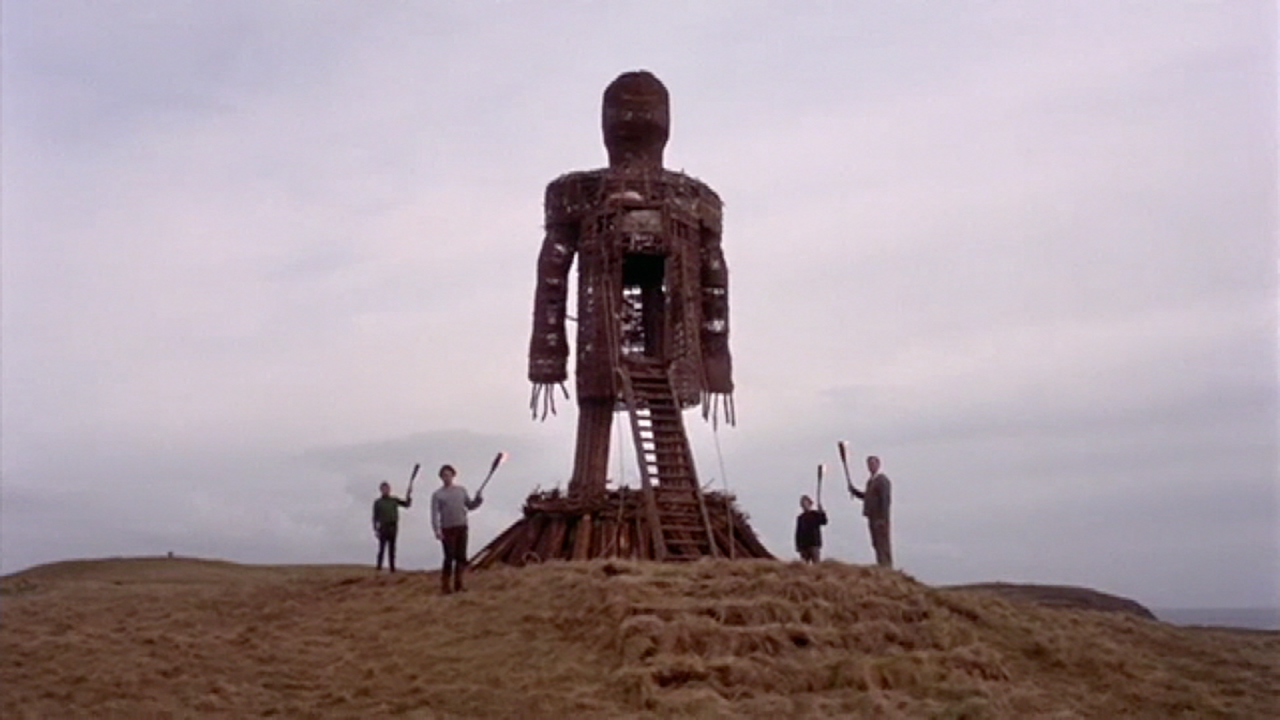
In the early Seventies, Robin Hardy created a film that fed on the period’s hippie- versus-straight hysteria. An uptight Brit constable Sgt. Howie (Edward Woodward) flies to the private island Summerisle, investigating charges of a missing child. His sleuthing leads him into a pagan world incompatible with his sternly Christian point of view.
The deftly crafted moral ambiguity of the picture keeps the audience off kilter. Surely we aren’t to root for these heathens, with their nudey business right out in the open? But how can we side with the self-righteous prig Howie?
Hardy and his cast have wicked fun with Anthony Shaffer’s sly screenplay, no one more so than the ever-glorious Christopher Lee. Oh, that saucy baritone! We love him in the role of Lord Summerisle, though it helps that he gets all the great lines. For instance, “Shocks are so much better absorbed with the knees bent,” he deadpans.
When Howie asks, “And what of the one true God?”
Summerisle responds, “Well, he’s dead. He had his chance and, in modern parlance, blew it.”
Blasphemy indeed! No wonder Howie’s so up in arms. Plus there’s that naked barmaid and her sexy come-hither dance.
Truth be told, Brit Eckland’s seductive dancing looks more like a temper tantrum mixed with a seizure, but on Summerisle you can let your freak flag fly.
Howie won’t be tempted by the barmaid, though. And as the tale meanders unpredictably forward, he might have wanted to rethink that.
The film is hardly a horror movie at all –more of a subversive comedy of sorts – until the final reel or so. Starting with the creepy animal masks (that would become pretty popular in the genre a few decades later), then the parade and the finale, things take quite a creepy turn.
It’s a different type of horror film, one with a cheery disposition and sense of wicked fun that puts you in an uncomfortable position. Brilliantly told, impeccably filmed and hard to forget, it’s worth digging up this season.