Tag Archives: Noah Jupe

Passing Through Nature to Eternity

Hamnet

by Hope Madden

It’s been five years since Chloé Zhao took home two Oscars, one for directing and one for adapting the screenplay for Nomadland. She returns to form in both respects with Hamnet, the cinematic adaptation of Maggie O’Farrell’s novel that imagines the way grief may have shaped Shakespeare’s greatest tragedy.

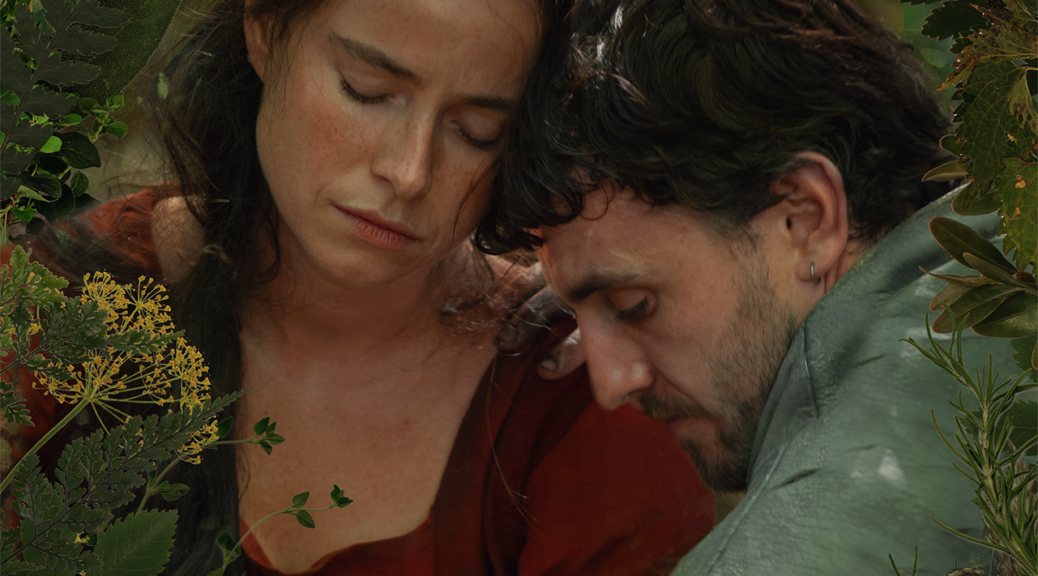
Zhao’s film opens stunningly on Jessie Buckley, nestled womblike among the roots of a massive tree, her face and hands dirty, her hair tangled with leaves. Buckley is Agnes, believed by those in town to be the daughter of a forest witch. Agnes comes from what is.

Will (Paul Mescal) imagines what can be. The hyper real poetry of Zhao’s camera perfectly articulates their yin/yang balance.

It’s with Will that we first see Agnes’s nurturing side applied to humanity rather than the wild. It’s a trait that will become the backbone of their story. Her love is powerful, messy, and unforgiving, and Buckley’s more than up to the task. Her performance, as is so often the case, feels dangerous and uncensored. And gazing adoringly at her, inspired and nurtured, is Will. If there is a better face in cinema than Mescal’s for earnest yet doomed longing, I don’t know whose it could be.

The young cast more than keeps pace. Jacobi Jupe is particularly amazing and utterly heartbreaking as Will and Agnes’s boy, Hamnet. (His older brother Noah Jupe also impresses later in the film as the actor portraying the great Dane in the first ever stage production.)

By the time the most famous lines in theatre are uttered, it takes restraint and rawness. The slightest hint of artifice and the previous ninety minutes are ruined, the film a gimmick. But Zhao never skirts artifice, not even when she makes a Marvel movie, and Mescal delivers lines we know by heart as if they were freshly pulled from an open wound.

Zhao has crafted, aided by magnificent performances and hauntingly stunning cinematography from Lukasz Zal (The Zone of Interest, Cold War), a film that is shattering in its articulation that it is the depth of love that deepens and amplifies the pain of grief.

People make movies about grief all the time. We can expect one every Oscar season. But what Chloé Zhao does with Hamnet is ask us to experience that grief, not just witness it, and in experiencing it we understand the power and vital importance of art.

Rising Son

The Carpenter’s Son

by George Wolf

There are plenty of great reasons to want Nicolas Cage in your movie. Downplaying it alongside a young Jesus probably isn’t one of them.

But writer/director Lotfy Nathan seems undaunted, and he guides The Carpenter’s Son around Cage’s often distracting presence for a Biblical tale rooted in a more historical approach.

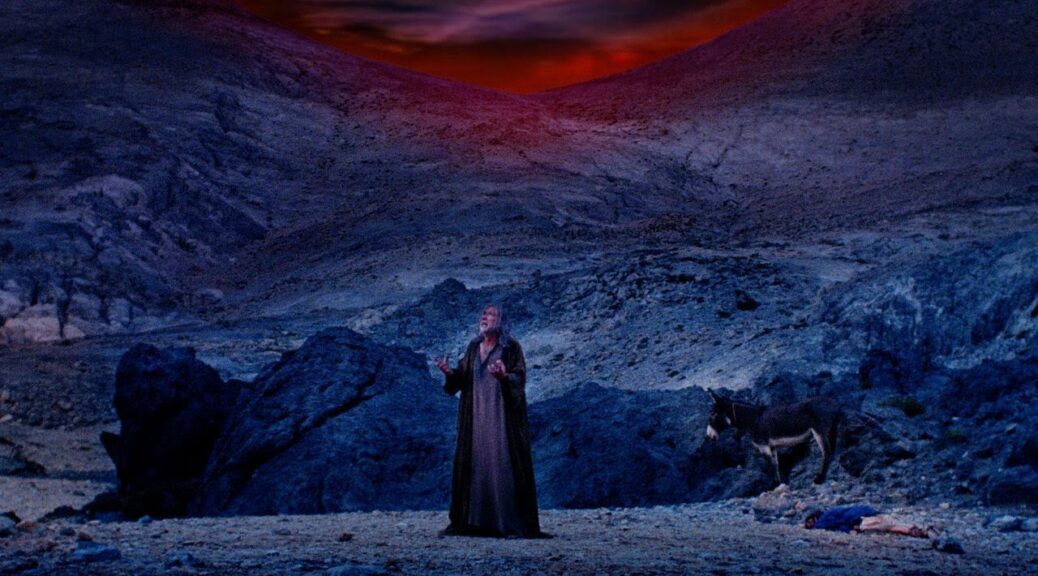
Nathan has based his script on “the Infancy Gospel of Thomas,” one of the apocryphal writings by early Christians that describe events missing in the New Testament. Cage is The Carpenter, who smuggles The Mother (FKA Twigs, saddled with an underdeveloped role) and their infant son out of the city before King Herod’s officers can sentence The Boy to death.

The family lays low for years, but by the time The Boy is a teenager (Noah Jupe), whispers are starting to spread about his mysterious powers. How Nic Cage lays low is another mysterious question, with his neatly trimmed beard and distinctly American accent adding to the feeling that he may have wandered in from another set.

And early on, the film seems headed for a disastrous collision of awkward tone and misguided ambition. But slowly, as Nathan focuses more on The Boy’s growing friendship with The Stranger (Isla Johnston), a compelling narrative begins to emerge.

Jupe (Suburbicon, Honey Boy, A Quiet Place, Ford v Ferrari) continues to impress as a now young adult, and Johnston delivers a standout supporting turn of intrigue. With their relationship at the center, the film becomes a unique coming-of-age story that offers both a relatable humanity and a possibility of Divine Providence.

Another part of the curiosity around this film is just what audience Nathan is going after. The faith-based crowd will find moments of blasphemy while the non-believers will scoff at the silliness. Folk horror fans will question how it earned that label, and plenty more will be waiting for a Cage rage that never materializes.

While it’s not the trainwreck you’re afraid it’s going to be, The Carpenter’s Son can’t build anything that’s truly satisfying. The blueprint may be provocative, but the support system remains plenty wobbly.

Missions Possible

The Magician’s Elephant

by George Wolf

Anything is possible, just believe in your dreams.

That’s a fine moral for The Magician’s Elephant. But much like the film itself, it’s a bit generic and less than memorable.

Based on the children’s book by Kate DiCamillo, this Netflix animated adventure takes us to the land of Baltese, where strange clouds have rolled in and “people stopped believing.” Young orphan Peter (voiced by Noah Jupe) is being raised by an old soldier (Mandy Patinkin) to live a soldier’s life, which will be hard because “the world is hard.”

It gets harder when Peter uses meal money for a fortune teller (Natasia Demetriou) to tell him how his long lost sister can be found. The soldier told Peter the girl died at birth, but that’s not what he remembers, and a palm reading confirms that she is indeed alive.

To find her, Peter must “follow the elephant.”

But there are no elephants in Baltese, at least until a desperate magician (Benedict Wong) makes one fall from the sky. And after the magician and the elephant are both locked up for causing trouble, Peter begs the King (Aasif Mandvi) to let him care for the beast, as it is “only guilty of being an elephant.”

The King agrees, providing Peter can complete three tasks. Three impossible tasks.

Ah, but remember, nothing is impossible!

Director Wendy Rogers (a visual effects vet helming her first feature) and screenwriter Martin Hynes have plenty of threads to juggle, from animal cruelty to the costs of war to a Dickensian twist of fate. The resulting narrative ends up feeling overstuffed and convoluted.

The muted coloring no doubt reflects the village’s cloudy atmosphere, and the stiff animation may be intended to recall a children’s popup, but there is little in the film’s aesthetic that is visually inspiring.

Mandvi and Patinkin are the most successful at crafting indelible characterizations, while the rest of the voice cast (also including Brian Tyree Henry and Miranda Richardson) manages workmanlike readings that neither disappoint or standout.

Same for the film. The Magician’s Elephant pulls plenty from its crowded hat, but has trouble conjuring anything that is truly magical.

Walk Softly

A Quiet Place Part II

by George Wolf and Hope Madden

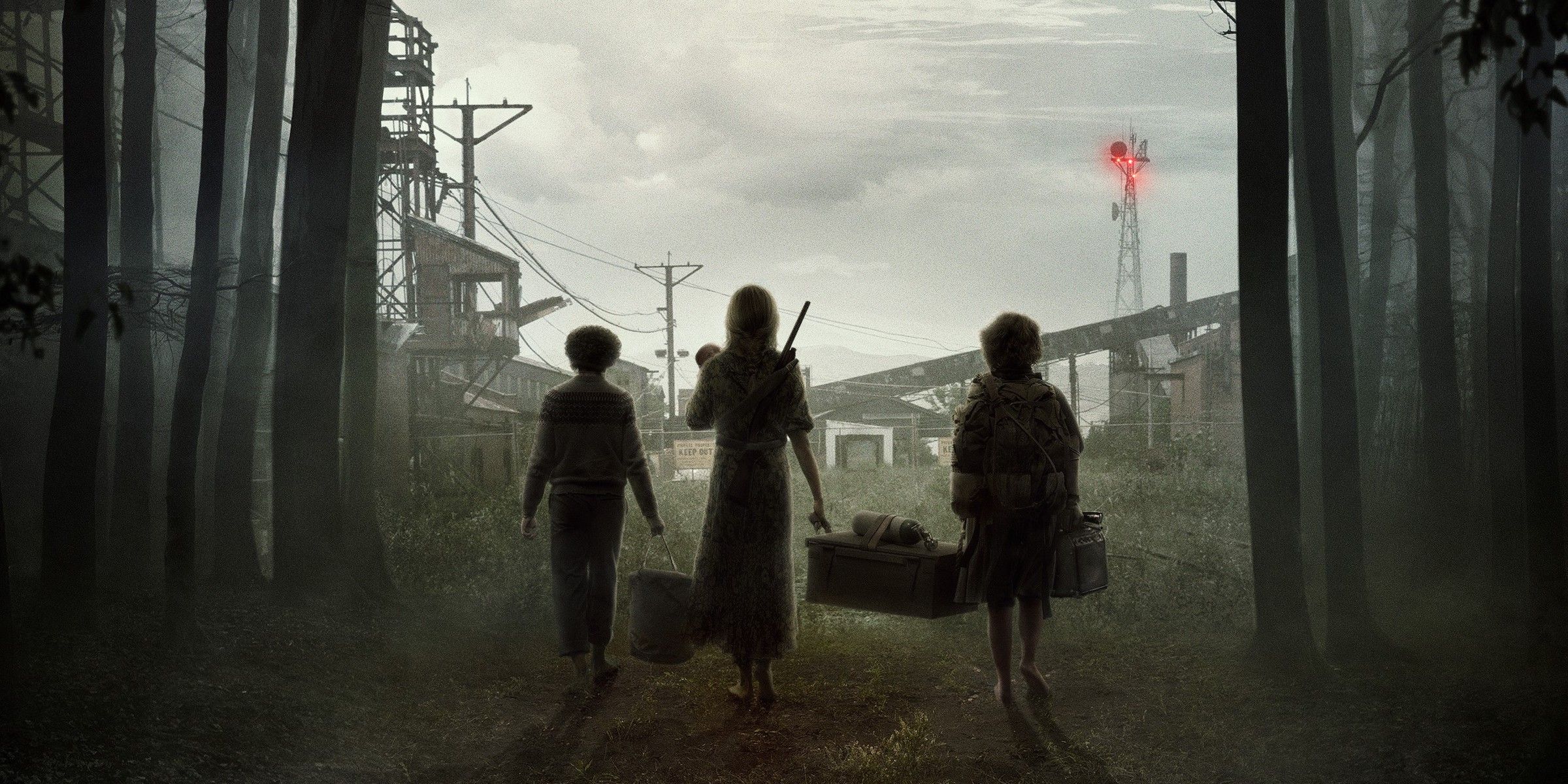
For a few well-placed and important seconds, there it is: the much-discussed nail from A Quiet Place. And like most everything else in writer/director John Krasinki’s thrilling sequel, the nail’s return carries weight, speaking visually and deepening our investment in these characters’ terrifying journey.

But before we see that the Abbotts have learned to avoid that nail, we go back to how it all began on “Day 1.” And Krasinski knows it doesn’t make sense now to tease us with monsters we’ve already seen up close, so beginning right from that pulse-pounding prologue, he keeps ’em coming.

So while there’s no shortage of exhilarating, squirm-inducing and downright scary moments, Krasinski instills it all with an impressive level of humanity.

As Evelyn (Emily Blunt), Regan (Millicent Simmonds), and Marcus (Noah Jupe) continue traveling on foot with baby Abbott in tow, they enter the fortified compound of old friend Emmett (Cillian Murphy), who is not nearly as welcoming as they hoped.

But when Regan heads out alone to find the permanent safe haven she’s sure exists, Evelyn convinces Emmett to follow, and bring her daughter back to the family.

From that point, the film splits into two parallel narratives that Krasinki layers with some nifty intercutting and clever, crowd-pleasing plotting. As the threats keep coming for Regan and Emmett in the wild, and for Evelyn, Marcus and baby back at the compound, the tensions build simultaneously via storytelling that’s primarily visual and wonderfully economical.

The editing gives the enterprise a welcome retro feel and Krasinski’s flair for visual storytelling has only strengthened since the last film.

Jupe is tenderly terrific, and it’s no surprise that Blunt and Murphy—two exquisite actors who never let you down—carry their own, but the one who carries the most weight in Part II is Simmonds. Regan is the film’s believable and capable hero this time, in a narrative choice that underscores the entire film’s optimism for our future and Krasinski’s reminder that there are always “people worth saving.”

AQPII is lean, moves at a quick clip, thrills with impressive outdoor carnage sequences and yet commands that same level of tension in its nerve- janglingly quiet moments. Krasinski had a tough task trying to follow his 2018 blockbuster, one made even tougher now having to prove the sequel was worth saving for a theaters-only release.

On both counts, we’d say he nailed it.

Shush!

A Quiet Place

by Hope Madden

Damn.

So, John Krasinski. That big, tall guy, kind of doughy faced? Married to Emily Blunt? Dude can direct the shit out of a horror movie.

Krasinski co-writes, directs and stars in the smart, nerve-wracking gut-punch of a monster flick, A Quiet Place.

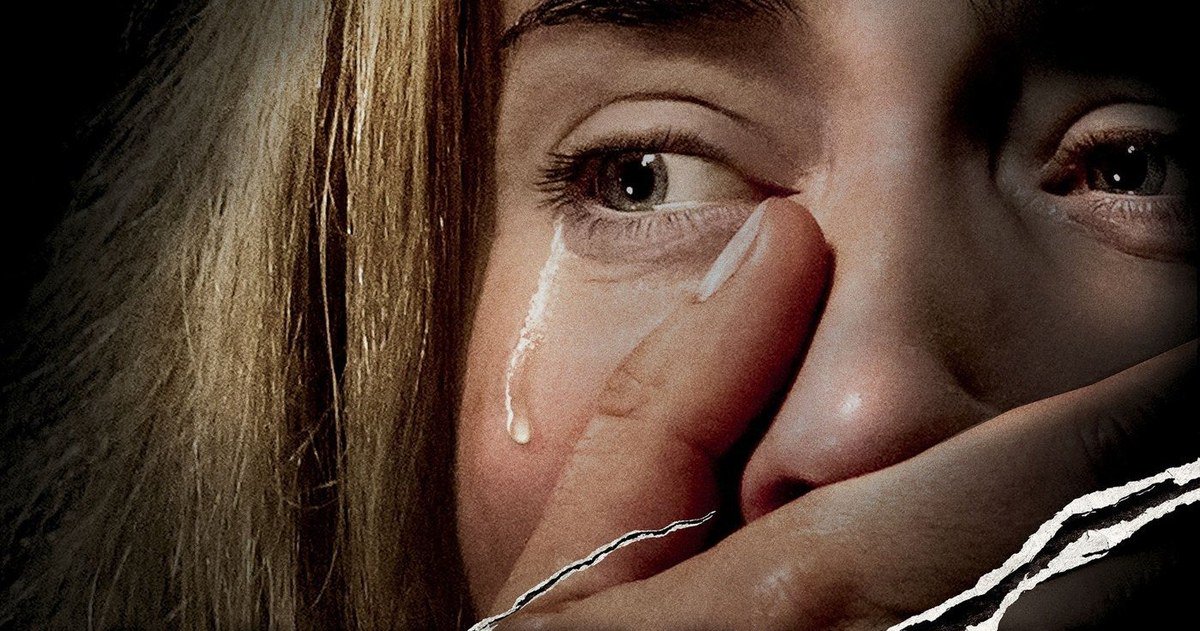
Krasinski plays the patriarch of a close-knit family trying to survive the post-alien-invasion apocalypse by staying really, really quiet. The beasts use sound to hunt, but the family is prepared. They already know sign language because their oldest, played by Millicent Simmonds (Wondertruck) is deaf.

A blessing and a curse, that, since she can’t tell if she makes noise, nor can she tell if a creature comes calling.

Simmonds is wonderful as the conflicted adolescent, her authenticity matched by the tender, terrified performance given by Noah Jupe (Wonder) playing her younger brother.

As their expecting mother, Emily Blunt is magnificent, as is her way. Simultaneously fierce and vulnerable, she’s the family’s center of gravity and the heart of husband (onscreen and off) Krasinski’s film.

But you expect that from Emily Blunt. She’s amazing.

What you may not expect is Krasinski’s masterful direction: where and when the camera lingers or cuts away, how often and how much he shows the monsters, when he decides the silence will generate the most dread and when he chooses to let Marco Beltrami’s ominous score do that work for him.

The script, penned by Krasinski with horror veterans Bryan Woods and Scott Beck, stays one step ahead of your complaints. Just as you think, “Why haven’t they done this?” a clear explanation floats across the screen, either as translated sign language, a prop on a table or a headline in Dad’s gadget-laden basement bunker.

It’s smart in the way it’s written, sly in its direction and spot-on in its ability to pile on the mayhem in the final reel without feeling gimmicky or silly.

And the monsters are kick ass. That’s a big deal.

At its heart lies a sweet sentiment about family, but sentiment does not get in the way of scares. A Quiet Place works your nerves like few films can.