Screening Room: Wish, Napoleon, Saltburn & more
by George Wolf
“Destiny has brought me here! Destiny has brought me this pork chop!”
And a silly food fight ensues between Napoleon and Josephine, just minutes before director Ridley Scott unveils a simply breathtaking recreation of 1805’s Battle of Austerlitz.
Scott’s Napoleon is a film that succeeds with moments both big and small, but suffers from a lack of connective tissue that might have formed it into one unforgettable whole.
Joaquin Phoenix makes the legendary emperor and military commander as endlessly fascinating as you’d expect, while Vanessa Kirby’s equally mesmerizing turn as Josephine creates a dynamic that authenticates Napoleon’s lifelong devotion.
But even if we didn’t already know Scott’s 4-hour director’s cut is coming, this 2 and 1/2 hour version ends up feeling like a stunningly crafted, IMAX-worthy appetizer. It’s every bit a grand spectacle with epic vision of history, but never quite the incisive character study that may be waiting in the streaming wings.

by George Wolf
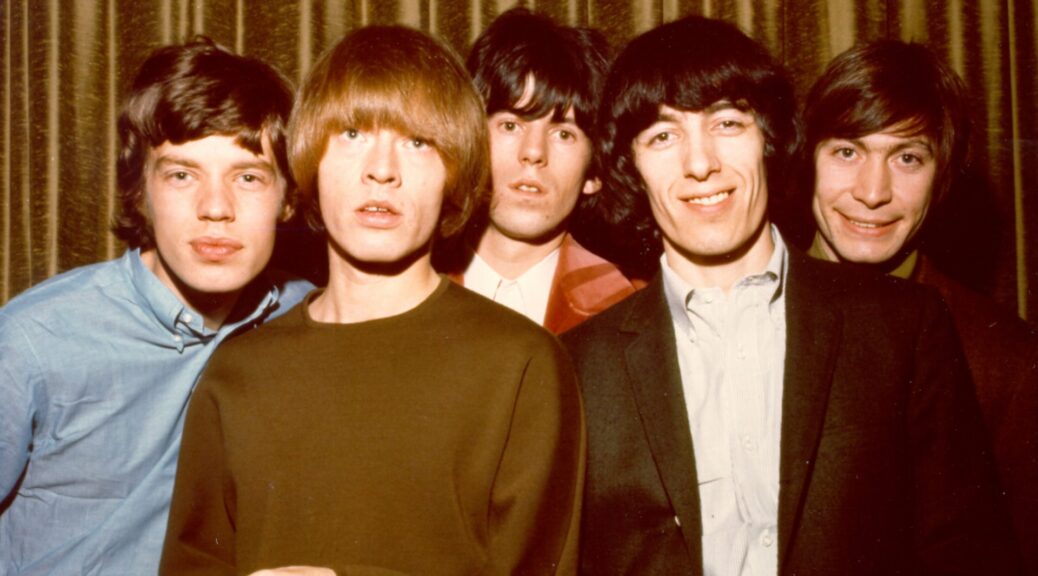
At this point, it’s a good bet that any Rolling Stones fan who is familiar with the name Brian Jones is 1) dedicated 2) old or 3) both.
With The Stones and Brian Jones, documentarian Nick Broomfield aims to add some numbers to that list, reminding all who will listen about Jones’s place in the Stones enduring legacy.
It was, after all, guitarist and blues devotee Brian who is credited with forming the band at the age of 19. He recruited Mick, Keith, Charlie and Bill via other groups or local advertisements, and was the Stones figurehead until the Jagger/Richards cocktail of rock charisma and songwriting prowess began to take over.
As he did with 2019’s Words of Love: Marianne and Leonard, Broomfield leans on archival footage and interview audio to effectively stamp the time and place. He surrounds us with England in the 1960s, pulling us into the story of a young man whose troubled relationship with his parents drove both his ambition and his self-destructive nature.
We hear from other musicians (retired Stone and devoted archivist Bill Wyman serves as a consultant on the film), friends, family and the various girlfriends who bore his 5 children. And while we certainly get a peek behind the rock star curtain (“He just uses people”), Jones’s eventual fade into the background comes off as inevitable.
His haircut was mod, his aim to keep the band bluesy was pure and his attention to fan mail was sweet, but he didn’t sing and didn’t write songs.
Again, do the math.
For music fans, Broomfield has assembled a wealth of audio and video that feels like a must-see scrapbook on the birth of a legend. Ironically, it all casts a spell that’s only broken by the more recent Zoom-like interviews that are included (including Wyman, which only draws more attention to the absence of Mick and Keith).
It’s hard not to smile as a young Brian tells a reporter that he’d do it all again “a hundred times,” and wonder if he ever could have imagined that even today, the history of the band he started would somehow still be adding chapters.
But Brian’s personal history was cut short, and much like in Words of Love, a parting note from long ago becomes a bittersweet ode to the real lives that got away from the people living them. Mr. Jones may not have been a survivor, but as Broomfield makes clear, he should be remembered as more than a footnote.
by Dustin Meadows
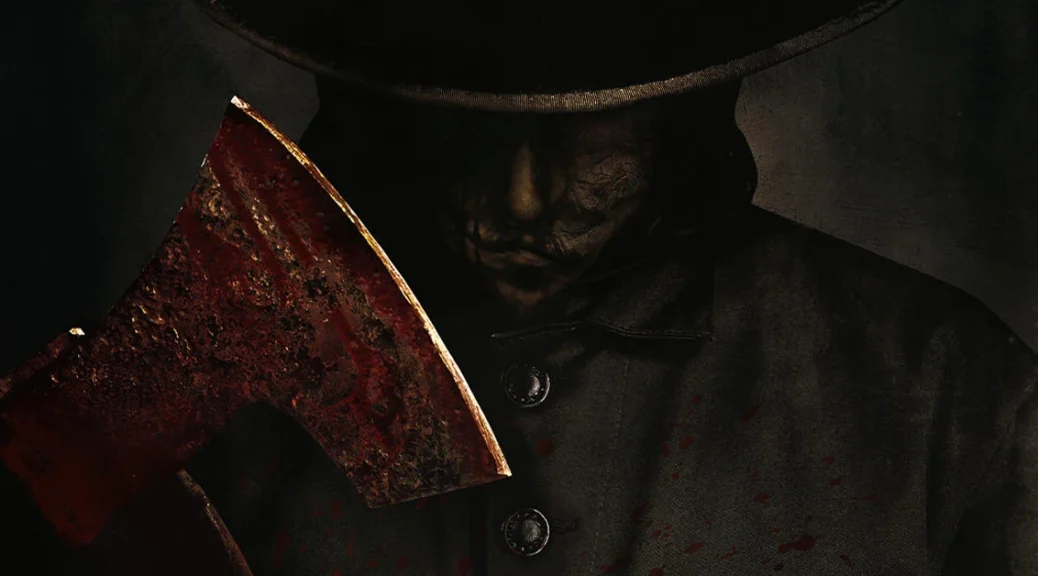
In 2007, Quentin Tarantino and Robert Rodriguez’s ambitious double feature homage to throwback genre pictures, Grindhouse, roared into cinemas. While the film was a commercial failure, it easily found a cult audience, thanks in no small part to the pedigree of the directors and the accompanying pitch perfect fake movie trailers contributed by Rodriguez (Machete), Edgar Wright (Don’t), Rob Zombie (Werewolf Women Of The SS), and Eli Roth (Thanksgiving). It’s taken sixteen years for the latter to be realized, but Roth’s holiday-inspired slasher has finally arrived to join the ranks of Thanksgiving horror flicks like Blood Rage and Thankskilling!
While the original Thanksgiving trailer had more in common with the sleaze and brutality of 80s slashers (like Maniac or Don’t Go In The House), Roth’s finished film falls more in line with contemporary slasher/whodunits, like the Scream films without the meta-deconstruction of horror films and tropes. The film opens with a darkly comic and brutal Black Friday massacre that mirrors the real life chaos of the annual consumer circus, and sets in motion the story that picks up one year later as a killer dressed as a pilgrim and wearing a John Carver mask begins a murderous spree of revenged slayings against the instigators of the deadly Black Friday incident.
Jessica (newcomer Nell Verlaque) is the heart of the film, leading the cast of potential young victims trying to learn who the killer is while avoiding being served up at the dinner table. A very game Patrick Dempsey (fully leaning into his native New England accent) is also along for the ride as the town sheriff working with the kids to put an end to John Carver’s deadly holiday plans. Roth and Jeff Rendell’s script offers up plenty of red herrings throughout the film, and while the killer’s identity will be fairly easy to deduce by most slasher fans, the inspired violence and set piece kills more than make up for the thin mystery of who John Carver really is. Fans of the original trailer will recognize several moments throughout the film (trampoline, anyone?), but Roth manages to shake things up enough to keep you guessing how each act of violence is gonna play out. Sprinkle in a little Rick Hoffman and just a pinch of Gina Gershon, and you’ve got a pretty good dinner!
Though the opening Black Friday scene alone makes this dish worthwhile, the bulk of the film may not measure up to the promise of the original trailer. But that will likely have more to do with the pressure of expectations of modern horror audiences and time passed, and less with the actual execution of the film itself.
Hungry for a new turkey day tradition that delivers on outlandish violence? Skip the Westminster Dog Show and enjoy a helping of Thanksgiving.
by George Wolf
With some misguided storytelling and off-screen tumult, Marvel’s post-Thanos phases have been uneven, to say the least. Recent rumors even have the studio willing to pony up whatever it takes for a re-assembling of the core Avengers.
Nią DaCosta’s The Marvels gets the MCU back on some steady ground, layering characters, tones and multi-verses for a fast and fun trip to the stars.
Intergalactic trouble starts when Cree warrior Dar-Benn (Zawe Ashton) uncovers a “Quantum Band” buried on planet MB-418. Her meddling causes a power surge in the universe jump points. It’s enough to get the attention of both Nick Fury (Samuel L. Jackson) and Carol Danvers/Captain Marvel (Brie Larson), but nothing compared to what Dar-Benn could do if she found the other matching Band.
So where would it be?
In Jersey City, on the arm of Kamala Khan/Ms. Marvel (scene-stealer Iman Vellani). And it isn’t long before Carol, Kamala and a grown up Capt. Monica Rambeau (Teyonah Parris) come together to find that every time they use their respective “light-based” powers, they switch physical spaces.
This is going to make it difficult to battle Dar-Benn and her revenge tour, but “The Marvels” will have to figure it out.
DaCosta (Candyman, Little Woods), also co-writing with WandaVision‘s Megan McDonnel and Loki‘s Elissa Karasik, sets a funny, frisky tone from the start. The split screen panels and universe jumping tap into a hipper Spider-Man type vibe, while Ms. Marvel’s glee at working alongside her idol provides a seamless infusion of her series’ youthful charm.
There are a few rough spots, including more trouble in the Marvel visual department. Some of the wider, more expansive looks are fine, if not exactly eye-popping, but too many of practical set pieces come with a look of discount production design and thrown-together costuming.
Most of the film’s humor lands firmly, with a self-aware wink and a nod. And while our heroes’ stop at a planet that communicates only through song falls flat, the musical number starring Goose the cat becomes a laugh out loud highlight.
For real, if you liked Goose the first time, this installment will feel like catnip.
The end result creates its own crowd-pleasing jump point, one that brings Marvel’s small screen spirit to the multiplex. At 105 minutes (and that includes one mid-credits stinger) The Marvels may be the most brisk feature in the entire MCU. But compared to the bloated run times spent on Love and Thunder, Quantumania and Eternals, this less certainly feels like more.
by George Wolf
It’s the holiday season! The time of peace, joy, and goodwill!
Or…conflict, resentment, and spite.
Director Alexander Payne serves up plenty from group B in The Holdovers, a period comedy that also finds time to unwrap some warmth and understanding.
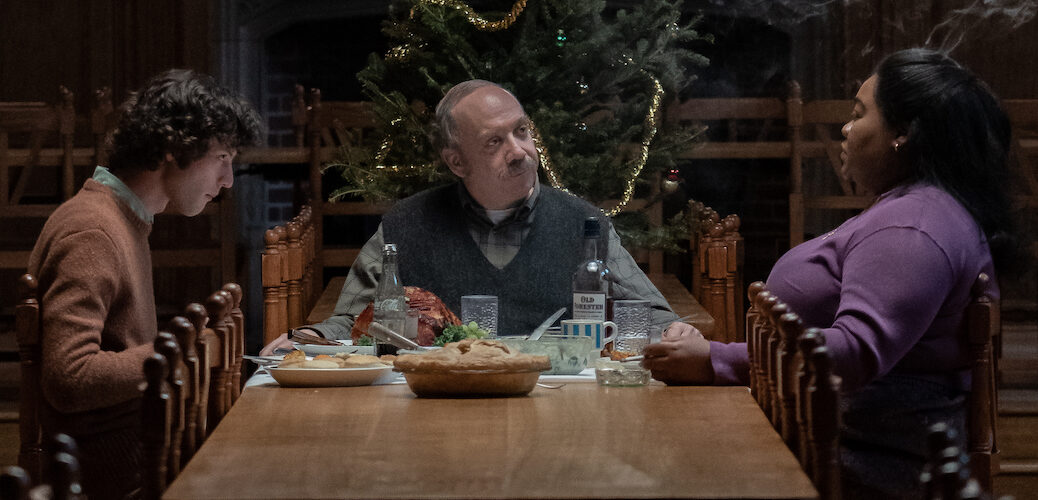
It is December 1970, and most of the boys at New England’s Barton boarding school are heading home for the two-week Christmas break. Circumstance has left five “holdovers” behind, where they will endure the disciplined regimen of Mr. Paul Hunham (Paul Giamatti), a bitter history teacher who delights in the misery of his rich, entitled students.
But through an additionally cruel twist of fate for the angry, young Angus Tully (newcomer Dominic Sessa), the four other left behinds get sprung, leaving Angus alone with the cantankerous teacher the boys have nicknamed “Walleye.”
Well they’re not quite alone. Kitchen manager Mary Lamb (Da’Vine Joy Randolph) is on campus, too. Mary’s still mourning the loss of her son Curtis in Vietnam, and she has no room in her heart of festive merrymaking.
Giamatti is perfection as a man who seems to have forged a comfortable “hate-hate” relationship with life. Sessa impresses in his screen debut, giving depth to the rebellion that has brought Angus multiple expulsions from multiple schools. And Randolph brings plenty of weary humanity, crafting Mary as a heartbroken woman still trying to understand why her Curtis was deemed more expendable than these rich white boys who are preparing for college instead of war.
And as Mr. Hunham tells Angus that we “must begin in the past to understand the present,” David Hemingson’s script sends the three unlikely friends off on a “field trip.” The adventure will reveal how their respective pasts have shaped them, and how they may have more in common than they knew.
There are areas of contrivance that recall Hemingson’s extensive TV resume, but Payne (Nebraska, Sideways, The Descendants) grounds it all with a comfortable restraint that allows the actors and some terrific production design to work authentic moments of magic and laughter..
We all have a story. Life can be unfair, and most of us are struggling with something. Be kind.
Those are lessons that seem to resonate a little deeper this time of year, which means now is the perfect time to accept an invitation from The Holdovers.
by George Wolf
Numerous biopics have shown us numerous ways to illustrate a life through formula and cliche. Nyad smartly maneuvers around most of those by anchoring a tale of persistence and achievement with a warm and intimate friendship.
The achievement is Diana Nyad’s quest to become the first to swim the 110 miles from Cuba to Key West. She tried – and failed – at the age of 28, then took a few years off. Well, more than a few.
Crediting a “soul ignited by passion,” Nyad (Annette Bening) returned to her dream at the age of 61. And her best friend Bonnie Stoll (Jodie Foster) was there to train her, push her, and sometimes protect her from herself.
Oscar-winning documentarians Jimmy Chin and Elizabeth Chai Vasarhelyi (Free Solo, The Rescue) are right at home with a true story of personal struggle, but together with screenwriter Julia Cox and the two veteran leads, carve out an entertaining and satisfying narrative.
Nyad is proud, motivated, and shamelessly self-absorbed (“It’s not that I don’t know I’m this way!”), while Bonnie is pragmatic, patient and heroically loyal. They make a fascinating and sometimes frustrating pair, and of course, Bening and Foster bring them both to life with a brilliant, lived-in authenticity.
And rather than a generic, chronological rehashing of Nyad’s life, indelible moments are seen in flashback, often at the most organic times. The long, solitary hours in the water meant Nyad’s mind would search for motivation, even if it was painful.
Chin and Vasarhelyi are not shy about weaving in some actual archival footage. And while that helps accentuate both the difficulty of Nyad’s quest and her love of self-promotion, it also adds to the list of story elements being juggled.
But with Bening and Foster setting the gravitation center, this ship never strays too far off course, and Nyad comes ashore as a worthwhile endeavor.
by Hope Madden and George Wolf
In 2020, filmmaker George C. Wolfe used theatrical set design combined with snappy, rhythmic editing to contextualize the mournful, defiant music of Ma Rainey’s Black Bottom. Wolfe’s style remains much the same for his biopic of trailblazing civil rights activist Bayard Rustin. And once again, the drama sings.
That’s much thanks to a soaring performance by Colman Domingo. A character actor known for decades of memorable performances, Domingo takes the lead in Rustin and owns the film from frame one. Vulnerability and resolve pass across Domingo’s face in a performance the should absolutely be remembered this coming award season.
He’s not alone. Support work from Audra McDonald, CCH Pounder, Glynn Turman, Aml Ameen and a scorching cameo from Jeffrey Wright bring enough acting mastery to make Chris Rock’s turn seem a bit out of out of place.
Rustin was a key figure in the 1963 March on Washington, battling racism and homophobia as he mobilized scores of volunteers, advocacy groups and sometimes competing interests.
Ands Wolfe, working from a script by Julian Breece (When They See Us) and Dustin Lance Black (Milk, When We Rise), keeps his film grounded in the political realities that not only mark American history but American present. Fueled by an electric performance, Wolfe’s production saturates that history with undeniable life and passion.
The film consistently moves with the energy and staging of a musical. It’s an approach that should help hold sustained interest for home streaming, but one that results in a broad-brushed, sometimes hurried feel to the important matters at hand.
But Rustin should invite further study about a man who deserves it. And while doing so, it reminds us that the fight for equality doesn’t end until it includes all of us, and that every victory depends on the day-to-day groundwork of warriors we may never get to know.
Plus, Colman Domingo. Get to know him.
by George Wolf
Even if you’ve never taken the tour at Graceland, the bare feet on shag carpeting that Sofia Coppola uses to open Priscilla should serve as a proper metaphor for the biography to come.
Welcome to a world you could never imagine being a part of. Tread lightly.
Priscilla Beaulieu (Cailee Spaeny) was just a ninth grader when she met Elvis Presley (Jacob Elordi) on the West German Air Force base where her stepfather was stationed. They eventually married in 1967, had daughter Lisa Marie, and divorced in 1973.
Like most stories about Elvis, this one is pretty familiar. But this point of view is not. That’s likely what interested Coppola, and she adapts Priscilla’s 1985 memoir “Elvis and Me” as a lush, compelling, and often heartbreaking portrait of the woman at the heart of a uniquely American love story.
As Priscilla enters Elvis’s world, she’s a stranger in a strange land, wide eyed and wondering what this older man wants from her. It’s a theme that calls to mind Coppola’s Lost in Translation, but this young girl is much more at the mercy of Elvis than Scarlett Johansson ever was to Bill Murray.
And Spaeny (On the Basis of Sex, Bad Times at the El Royale) gives a breakout performance that is utterly transfixing. With grace and ease, she is able to take Priscilla from the shy schoolgirl hiding a big secret behind her knowing smile, to a woman no longer willing to sacrifice her life to the whims of an icon.
Just last year, Baz Luhrmann used Colonel Tom Parker as a fresh window into the legend of the King. But as entertaining as it was, Luhrmann’s film suffered from its one-note treatment of Elvis, the man. For Coppola, this is an area of strength.
Here, he’s a gaslighting, manipulative ass with a God complex, Mommy issues and weird ideas about sex. And Elordi (Euphoria) embodies it all through a strong performance that captures the charisma and complexities without leaning toward comic impersonation (and with Elvis, that is not easy).
Coppola’s pace and construction are reliably assured and more easily identifiable than anything she’s done since The Beguiled. The production design and time stamp are both detailed and gorgeous, wrapped in a dreamlike haze that slowly fades when reality starts chipping away at Priscilla’s youthful naivete.
And if you’re expecting a hit parade of Elvis classics, you’ve forgotten whose story this is. Coppola’s soundtrack choices are on point, right down to the way she incorporates the few moments of recognizable Elvis hits that we do hear. We only see that side of Priscilla’s husband the way she saw it: as a mythical creature she couldn’t pry loose from the man that always promised he’d make more time for her.

by George Wolf
It’s been over twenty years since American Psycho personified the soulless self-interest of the Reagan 80s with bloody, hilarious precision.
Around the same time, the French duo of writer Alexis “Matz” Nolent and illustrator Luc Jacamon published the first of their graphic novels centered around the life of “Le Tueur” a ruthless, unnamed assassin.
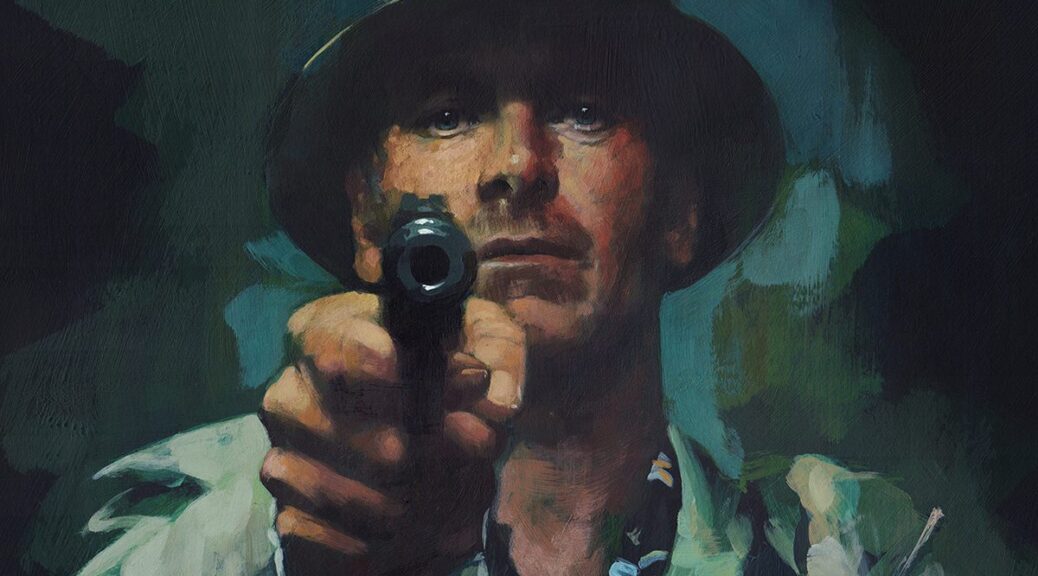
Now, writer/director David Fincher gives us The Killer as a Patrick Bateman for a new generation. And while his film is not as outwardly comedic as Mary Harron’s classic, Fincher manages some dark fun as he probes our descent into cold, violent narcissism.
After some brisk and stylish opening credits, Fincher and star Michael Fassbender slow the pace to a crawl, and the opening chapter of their character study begins in France, with the quiet assessing of a target.
The Killer (Fassbender) is an ex-law student turned assassin for hire, and his years of completed assignments have earned him big targets and big rewards. The Killer has iron clad rules for success in work and in life, and Fassbender’s voiceover narration puts them on repeat.
“Keep calm. Keep moving.”
“Empathy is weakness. Weakness is vulnerability.”
“What’s in it for me?”
But when The Killer’s aim fails him on that Paris job, he is the one who is suddenly hunted. Things get nasty, and The Killer sets off on a multi-national manhunt for vengeance, buoyed by another effectively moody, pulsating score from Trent Reznor and Atticus Ross.
There are no business cards involved, but passports with increasingly funny aliases (brush up on your classic sitcoms) provide levity as scores are settled with inventive bloodshed and impressive fight choreography. And through it all, The Killer keeps preaching his mantra as a MAGA Bond, unwavering in his devotion to self and the perpetual need to feel aggrieved.
Fassbender is perfection as this meticulous, emotionless killbot, and the great Tilda Swinton’s late stage cameo brings the film more star power, plus one genuinely hilarious and insightful moment.
It’s a fascinating film, and one that feels like a new kind of Fincher. Recalling not only American Psycho, but also his own Fight Club and Anton Corbijn’s assassin creed The American, The Killer succeeds both as a surface-level thriller, and as a deeper illustration of another empty era.