Tag Archives: movie reviews

Checking Out

Always at the Carlyle

by Rachel Willis

There are a few directions a film can take when focusing on a hotel with the kind of history as the Carlyle Hotel in Manhattan. A historical retrospective of its place in New York would have cemented the hotel as one of the city’s vibrant hearts. A simple history of the hotel itself and its early struggles after opening during the Great Depression and its rise to prominence could have proved an interesting subject if explored.

However, director Matthew Miele focuses his documentary, Always at the Carlyle, on the shallowest of subjects—the hotel’s many famous guests.

A good chunk of the film feels like a promotional advertisement. Interviews with hotel staff highlight the hotel’s charms without diving too deeply into those charms. One of the staff was given the opportunity to stay in the room that Princess Diana frequented on her visits to New York. When asked by Miele if the room’s $10,000 per night fee is worth it, she says yes. It’s hard to imagine her saying anything else.

The rest of the film is interviews with its rich and famous guests. From George Clooney to Angelica Huston to Lenny Kravitz to Sofia Coppola, we’re told repeatedly why they find the Carlyle so inviting. They hint at scandals and extravagant parties, but no one ever divulges anything truly interesting.

There’s a lack of cohesion to the story Miele is trying to tell, so it’s not entirely clear what he hopes to accomplish. Part of the documentary focuses on the upcoming arrival of William and Kate, the Duke and Duchess of Cambridge. From the initial call booking the room to the couple’s arrival, it could have been a lynchpin for the movie, but their story is abandoned half-way through the film. Instead, it’s simply another entry into the Carlyle’s roster of celebrity guests.

Miele’s film is, in some ways, representative of the worst of our celebrity-obsessed culture. It equates wealth with class, fame with sophistication, and the past as a time when things were “better.” It’s the same kind of culture that led to the death of the hotel’s frequent visitor, Princess Diana.

While The Carlyle may have an interesting story to tell, this documentary doesn’t do it.

KITT, Meet Stem

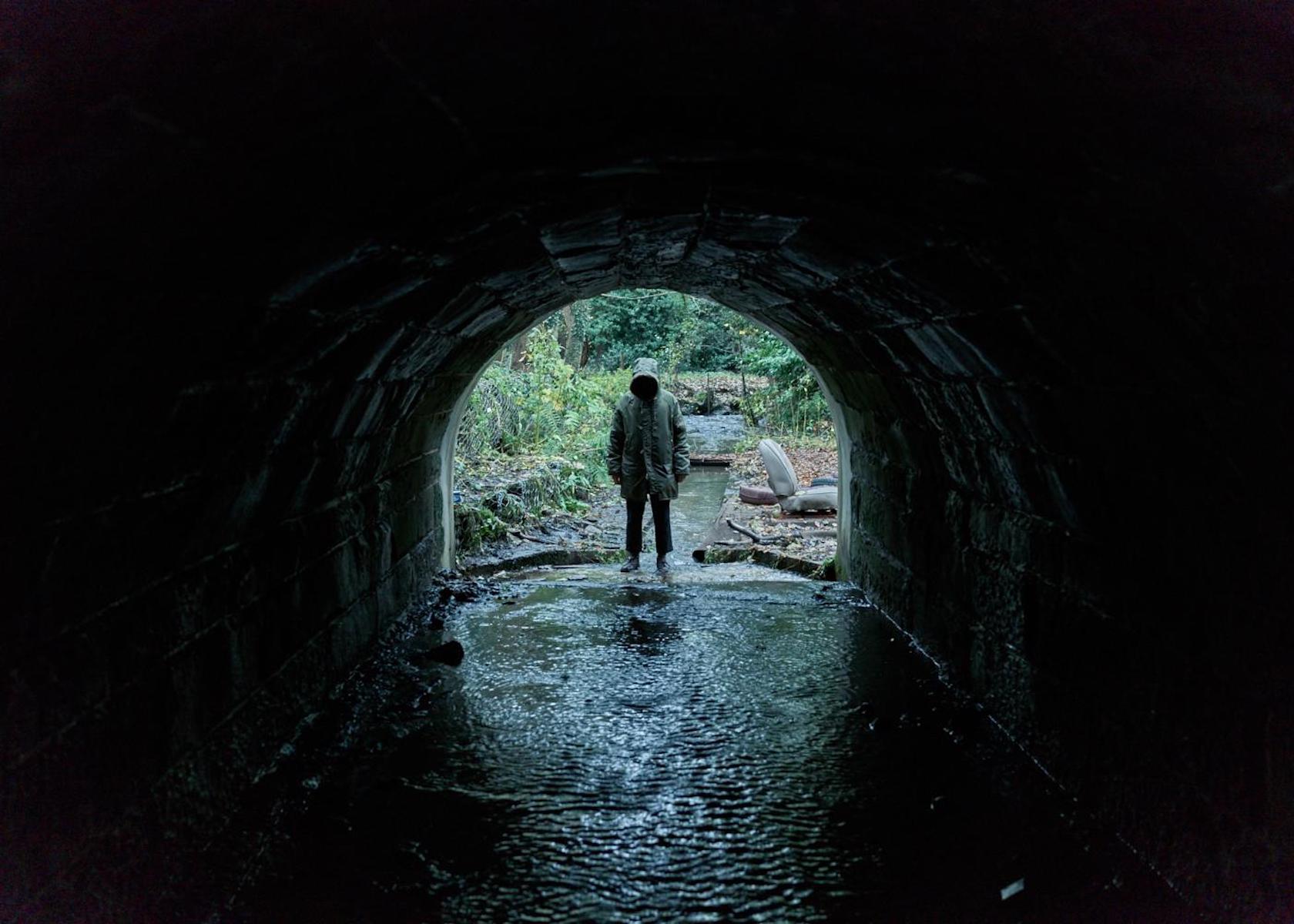
Upgrade

by Hope Madden

It’s a setup you’ll recognize. A man, doing man’s work, brightens when his wife arrives. Oh, they are really in love. Let’s just do this one thing before the romance, OK honey?

Minutes from now, she will be dead, he will be damaged, and eventually his suicidal melancholy will fuel revenge.

From Death Wish to John Wick to Death Wish (again), it’s a premise that never goes out of style and never, ever surprises.

Credit writer/director Leigh Whannell and star Logan Marshall-Green (The Invitation) for keeping you entertained for 90 minutes.

Marshall-Green plays Grey. While all the rest of the world relies on technology to drive them around, buy their eggs and dim their lights, Grey’s in the garage listening to blues on vinyl and rebuilding a Trans-Am.

After the aforementioned tragedy, Grey reluctantly turns to a Cyber Victor Frankenstein type (Harrison Gilbertson, a little over-the-top), who implants a chip to help repair the physical damage.

What happens from there is like Knight Rider meets David Cronenberg.

Right?!

Whannell freshens up the technophobe dystopian narrative with a few fresh ideas, a silly streak and serious violence.

This is the guy who wrote Saw, after all. Those who are surprised by the inspired bloodshed probably haven’t seen his canon.

Marshall-Green shines when he’s not morose and lovelorn, but rather tentatively administering “justice.” His physical performance and the action sequences are enough to keep you interested; the strangely comical tone rewards you for your time.

Aside from Betty Gabriel (always a joy to see her), the performances around Marshall-Green are serviceable: the devoted mom, the icy mercenaries, the boundlessly loving wife. Luckily, this is Marshall-Green’s show. Though he struggles (as does Whannell) with the emotional bits, he’s more than at home with the goofy and the violent.

Long live the flesh!

Good Day Sunshine

Let the Sunshine In

by Hope Madden

Claire Denis + Juliet Binoche = yes, please.

For her latest, Let the Sunshine In, the unerringly insightful French filmmaker takes on middle aged dating, following behind an exasperated Isabelle (Binoche) as she rotates through a series of relationships in Paris.

Isabelle is an artist, though her work—and her 10-year-old daughter, for that matter—are trivialities here. The point is the journey toward that last, real companion for the rest of the journey.

Could it be the boorish, married banker (Xavier Beauvois, flawlessly intolerable)? The boozy but oh-so-dreamy stage actor (Nicolas Duvauchelle)? Sensitive artist (Denis regular Alex Descas)? Brooding guy with the smooth dance moves (Paul Blain)? Ex-husband (Laurent Grevill)?

Whew! Who needs a rest?

Don’t look for any additional plot here. Denis’s focus, through a circuitous story of relationships crumbling, rekindling and sparking for the first time, simply illuminates the passionate daily trivialities of mid-life dating. She strips away nearly everything besides the ups and downs of Isabelle’s romantic life, sometimes skipping weeks at a time to pinpoint not the relationship itself, but each beginning and end.

And, of course, that intoxicating moment of promise —of love? Sex? Rejection? Few filmmakers capture that one moment, breathless and nervous, as authentically as Denis does.

It’s dizzying. No wonder Isabelle’s always so tired.

Binoche’s generous performance as the self-sabotaging Isabelle embraces the insecurities, optimism and neediness that color the character’s quest. Though never laugh-out-loud funny, the film is a comedy of sorts. There is something absurd about the assault of highs and lows, the desperate lurches toward love and the inevitably disappointing consequences.

And then a big cry and she’s off again.

Though Isabelle is a frustrating, often unlikeable character, the film never judges her. It’s too late to settle, which is a dangerous, selfish, vulnerable decision to make.

Good for her.

Pretty Vacant

How to Talk to Girls at Parties

by Hope Madden

Oh, the fish out of water tale. What if X found itself in Y: a mermaid in New York City, an American werewolf in London, an alien in Croyden? What hijinks could arise!

Elle Fanning is that alien, Zan, and Croyden is a suburb of London that was, in 1977, thrashing about to the strains of the burgeoning and decaying punk rock scene.

When Enn (Alex Sharp) and his fanzine-writing mates stumble into an alien house party, believing it to be a punk show after party, Zan abandons the strict duties of her visit to experience life on Earth.

Who better to bring Neil Gaiman’s short story to the big screen than Hedwig himself, John Cameron Mitchell (Hedwig and the Angry Inch, Shortbus, Rabbit Hole)? Directing, as well as co-writing the adaptation with Philippa Goslett, Mitchell strives to complete Gaiman’s 18 pages with punk attitude, coming of age angst, romance, political asides and style.

He’s only marginally successful on any of those counts.

Punk rock seems a perfect vehicle for the central themes of conformity versus individuality. What the film needs is a little punk rock. Instead, it offers knowing lip service (and next to no music) in service of an all-too-earnest love story.

The brightest light glimmers from Nicole Kidman as grand master on the scene, Queen Boadicea. Patroness of the dingiest club, bondage artist and the dying spirit of an era not meant to age well, she relishes every ridiculous line and delivers perhaps the film’s only truly honest dialogue.

Fanning captivates, as is her way. All the joy, curiosity and misunderstanding she can muster create a character who becomes far more than simply the first hot girl to pay attention to Enn.

Sharp performs solidly as the wallflower everyman, although that is part of the problem. Scribblings, safety pins and zines aside, Enn is just a middle-of-the-road sweetheart. The film is not about the outsider at all, though it pretends to be.

It pretends a lot of things, sometimes very colorfully and often entertainingly, but without a raucous atonal tune to push it forward and with a fairly lukewarm crisis to overcome, it fails entirely at embodying the punk rock themes it proposes.

Oh my God, this movie is a poseur.

What would Hedwig think?

Space Cowboy

Solo: a Star Wars Story

by Hope Madden and George Wolf

Are Han and Chewie your favorite characters from the Star Wars franchise? And if not, why not?

They were the cool kids in a galaxy of nerds, and if any single Star Wars offshoot deserves the edgy, thought-provoking, dare-we-even-say dangerous treatment, it’s the origin story of this duo.

And nothing spells danger more than director Ron Howard.

Actually, most everything does, but Howard does manage to steer Solo in satisfactory, though not quite thrilling, directions.

The film catches the scent of a young street rat, in love and in need of a ticket out of his home planet. Complications arise, friends are lost, found and lost again, there’s gambling, smuggling and risk-taking and a future legend finally getting his wings – plus a big, furry co-pilot.

Aldren Ehrenreich makes for a fine young Han. He mixes enough of Harrison Ford’s mannerisms (and the scar on his chin – nice touch) with an unvarnished naivete that suits the effort. He’s more than matched by Donald Glover, whose Lando is a smooooth amalgamation of Billy Dee Williams, youthful swagger and some sweet capes.

Fun new characters, including a rebellious droid who steals the show, round out a rag-tag group of misfits to root for. Woody Harrelson cuts exactly the right figure to be the mentor Han needs, while Paul Bettany’s brand of slippery villain (Josh Brolin busy?) offers an excellent foil.

Howard famously picked up the Solo mantle after executive producers canned Phil Lord and Christopher Miller, the charming rogues behind The LEGO Movie, 21 Jump Street and Cloudy with a Chance of Meatballs.

He’s working from a script by the father and son team of Jonathan and Lawrence Kasdan. Kasdan the Elder, of course, penned Force Awakens, Empire Strikes Back and Return of the Jedi.

All of which sounds perfectly calculated and terribly risk-free. And it is, but it’s also a lot of fun. The imagery (speeders, desolate planets, weapons, casinos) looks simultaneously retro and futuristic, beat up but cutting edge. And there are plenty of warm nods to Han and Chewie’s future that will bring a knowing smile while honoring our long investment in these characters.

So what’s missing? The rogue spirit that let Han steal scenes in A New Hope so easily.

It’s a film that takes no chances, which feels ill-at-ease with who Han is as a character. After a couple of installments in the Star Wars saga that were unafraid to make dangerous decisions, chart new courses and stir up the fanboys, this one just feels too safe.

Solo‘s got plenty of space, just not enough balls.

Dead Again

Deadpool 2

by Hope Madden

Machine gun fire gags, self-referential comments, foul language, meta laughs, gore for the sake of comedy and fourth-wall bursting—it appears the sequel to 2016’s surprise blockbuster Deadpool cometh.

Since we left Wade/Deadpool (Ryan Reynolds), the avocado-faced super-anti-hero spends his days dispatching international criminals and his nights snuggling tight with his beloved Vanessa (Morena Baccarin). When tragedy strikes, Wade spirals into suicidal depression and finds himself in the titanium arms of X-Man Colossus (voiced by Stefan Kapicic), by the side of troubled adolescent mutant Russell (Julian Dennison, Hunt for the Wilderpeople), and then in the path of time-traveling mercenary Cable (Josh Brolin, having a good year).

In the midst of all this, Reynolds never stops cracking wise on every comic book or pop cultural reference that can be squeezed into two hours. Bursts of laughter pepper the film’s landscape like mines. It’s fun. Hollow, but fun.

Origin stories are tough, but following a fresh, irreverent surprise of an origin story might be even tougher. Deadpool’s laughs came often at the expense of the gold-hearted, furrow-browed, money-soaked superhero franchises that came before it. Now a cash machine of a franchise itself, riffing on that same bit is a difficult sell. Deadpool 2 has essentially become the butt of that very joke.

Writers Rhett Reese and Paul Wernick return, sharing the pen with Reynolds this go-round. Atomic Blonde director David Leitch takes the helm, promising the inspired action that made his Charlize Theron spy thriller so very thrilling.

But Leitch’s action feels saddled and uninspired, and Reese and Wernick’s screenplay is basically a reimagining of a truly excellent time-travel flick from a few years back (that will remain nameless to avoid spoilers).

Deadpool 2 is very funny, often quite clever, and sometimes wrong-minded in the best way. An Act 2 parachuting adventure feels magical, and the new blood brings fresh instinct to the mix. Dennison straddles humor and angst amazingly well, and Zazie Beetz brings a fun energy to the film as the heroically lucky Domino.

Brolin, for the second time in a month, commands the screen with a performance that has no right to be as nuanced and effecting as it is.

Ryan Reynolds is Ryan Reynolds, but he’s just so good at it.

The film’s cynical, hard-candy shell makes way for a super-gooey inside that Reynolds doesn’t have the capacity to carry off. Worse still, it undermines the biting sensibility that made the first Deadpool such an antidote for the summer blockbuster.

But I guess that’s what happens when you become the thing you mock.

Tell Me a Story

Ghost Stories

by Hope Madden

Billed as a return to the old-school British horror anthology, Ghost Stories takes us through three paranormal cases passed from the chief investigator to a colleague he’s hoping can prove them false.

Ghost Stories is based on a popular stage play written by the film’s own co-writers and co-directors, Andy Nyman and Jeremy Dyson. Nyman also stars as Professor Goodman, the paranormalist who agrees to look into the trio of cases that muddled his hero and mentor.

The movie invests far more in this set up than expected, developing a fascinating connecting tale rather than a simple framing device that holds together a handful of otherwise disconnected shorts. Instead, we get a deeper story, one that influences and is influenced by the shorts in ways more organic than the run-of-the-mill anthology.

And though the three individual shorts contain nothing extraordinary in the way of scares, each offers a richly developed world full of detail and shadow. Every short has its own personality and style, although they all contain puzzle pieces that provide a coherence to the overall story, little items that range from the peculiar to the outright spooky.

A great deal of the success lies in the wonderfully human portrayal delivered by Nyman, who conveys humility, pomposity, self-righteousness, pity and terror in turns without ever hitting a false note. Other solid performances pepper the film. Martin Freeman is particularly engaging. Paul Whitehouse and Alex Lawther also bring uniquely high-strung characters to life.

As scares go, the first short packs the biggest wallop. A night guard at a dilapidated old asylum for women sees and hears strange things, leading to horror.

If that sounds like well-worn territory, that’s because it is. In fact, the three short films themselves don’t deliver much in the way of new scares, but that isn’t Nyman and Dyson’s intention. The terror here is far less paranormal than existential, and clever clues combine with crisp writing to create a full picture that’s more satisfying than it should probably be.

I Don’t Want to Go Out—Week of May 14

Dudes, Kingdom comes. Black Panther is finally available to play on a loop in your very own living room. Is Michael B. Jordan the greatest villain ever? Is Letitia Wright the greatest Disney Princess? Can Danai Gurira kick all of our asses? (The answer to that last one is a resounding yes, btw.)

So watch it! And just ignore the other one you can get. Trust us.

Click the link for the full review.

Black Panther

Samson