Tag Archives: movie reviews

In Bloom

Master Gardener

by Hope Madden

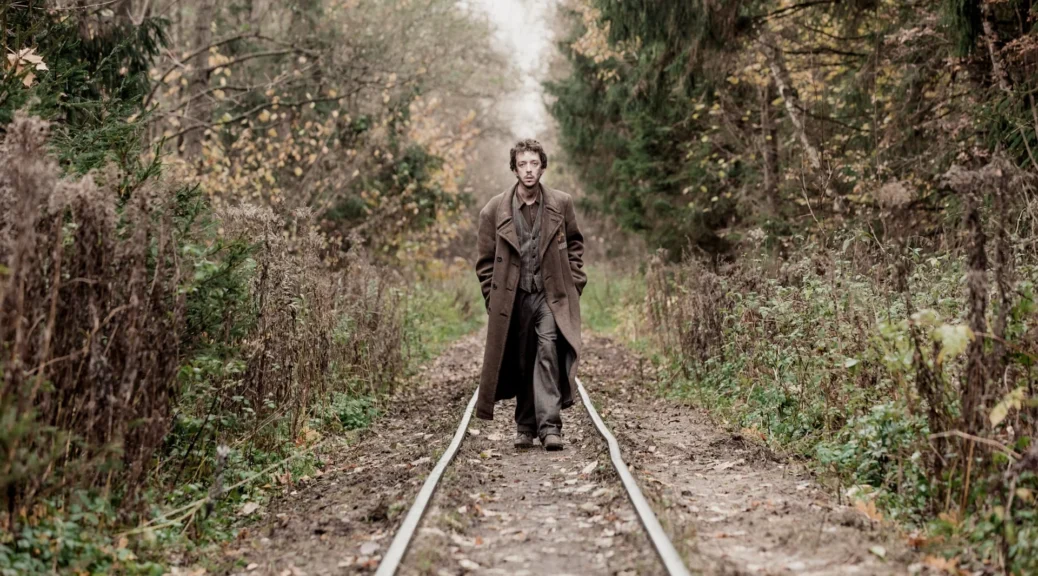
A damaged man imposes order on his life, eventually growing confident enough in this structure to try to save someone else because he cannot save himself.

That’s right. This is a Paul Schrader movie. Like most of Schrader’s best features (First Reformed, The Card Counter, all the way back to his script for Taxi Driver) Master Gardener delivers a variation on that same riff. Lucky his characters are so compelling they keep us watching.

In this case, that character – the titular gardener – is Narvel (Joel Edgerton). Narvel tells us, via his journal: Gardening is a belief in the future, that change will come in its due time.

Is Schrader growing more optimistic? Or will we grow to hope for Narvel only to witness the worst possible outcome (a la Card Counter)? Longtime fans may get a little nervous before the general moviegoer, but either way, Schrader sets a hook early.

The other element that jumps out early is the look of this film. Schrader’s gift for visual composition has never seen so exceptional a vehicle. Fitting, given the beauty of a garden. The lovely orderliness of Narvel’s garden is set against the riotous disarray that arrives in the shape of Mya (Quintessa Swindell): sloppy clothes, hair everywhere, no plans, no future. Maya doesn’t crave orderliness. Mya just is.

What Mya is not is like her Great Aunt Norma (Sigourney Weaver, letter perfect as the wealthy matriarch of the estate). Norma has arranged for Mya to apprentice on the property. She’d like Narvel, or “Sweet Pea” as she calls him, to look after the girl.

The arrival of this outsider sets wheels in motion. Narvel’s once orderly world now falls victim to his own past, drug dealers, the Feds. Edgerton’s a solid choice for the role, stoic but roiling with regret and quietly desperate for redemption. Swindell’s free spirit, tempered with the justifiable righteousness of youth, offers an excellent counterweight and Weaver outshines them all, stealing every inch of scene she’s in.

But they don’t have enough to do. Redemption feels unearned. Drug addiction is treated as too easily overcome. Most troubling is the way racism is skirted throughout the film.

“Gardening is the manipulation of the natural world, the creation of order out of disorder,” Narvel tells us. Filmmaking can provide much the same exercise. But forgiveness comes too easy for this damaged antihero, and Master Gardener feels too much like Schrader light.

Classic Case

Carmen

by George Wolf

For this latest reimagining of the classic story, director Benjamin Millepied credits inspiration from Prosper Mérimée’s original novella from 1845, and Alexander Pushkin’s poem “The Gypsies” from 1824.

Flashing more modern vibrancy through culturally rich music and dance, this new Carmen arrives as a wonder of visionary composition that struggles to find an equally compelling connection to its characters.

The writing team of Loic Barrere, Alexander Dinelaris and Lisa Loomer crafts a surface-level tale of lovers on the run. Aidan (Paul Mescal) is a troubled Marine veteran volunteering on a night patrol along the Mexican border, while Carmen (Melissa Barrera) is trying to cross after the death of her mother. A violent altercation leads to casualties, and the two are soon trying to stay one step ahead of authorities.

Millepied (choreographer and co-star of Black Swan) knows his way around a dance number, getting an assist from flamenco specialist Marina Tamayo for sequences that sport some thrilling fluidity. The acclaimed talents of cinematographer Jörg Widmer (The Tree of Life, V for Vendetta) and composer Nicholas Britell (Moonlight, If Beale Street Could Talk) are also on full display, rounding out a veteran stable of technical skill that consistently lifts the film’s imagery and scope.

Mescal (Aftersun) continues to show a gift for quiet nuance, Barrera (In the Heights, Scream, Scream VI) finally breaks out of her reliance on posing, and the veteran Rossy de Palma (various Almodóvar projects) steals scenes as a savvy nightclub owner, but the script seems content to keep depth at a distance.

Pushkin’s centuries-old themes of noble savages and the tragedy of life are too often given a heavy hand, needing a rescue by the visual poetry on display.

This Carmen tells us “dancing will you heal you.” Indeed, it’s one of the cures for what ails a less than passionate romance.

Moonchild

Crater

by Hope Madden

Following three increasingly competent features (Easier with Practice, C.O.G., The Stanford Prison Experiment), filmmaker Kyle Patrick Alvarez moved into episodic television. His return to feature length feels a bit more like TV than film, but Crater marks new territory for Alvarez in family entertainment.

The Disney+ feature, written by John Griffin (also mainly TV), follows a quintet of adolescents on a joyride across the moon.

The effortlessly charming Mckenna Grace (Ghostbusters: Afterlife) is the new kid on the helium mining colony. Caleb (Isaiah Russell-Bailey) and his buddies need her to help them break into the basement garage so they can hotwire a rover and take it to the “crater” Isaiah’s dad was always talking about. They never expected her to want to go with them.

The film’s anticapitalism message (ironic coming from Disney) is welcome, as we commiserate with the five children of miners – each with no future outside of mining, except for Isaiah. When Isaiah’s father died in the mine, the insurance money bought his now-orphaned son a ticket off this rock.

But first, the kids go on an epic adventure that will change their lives.

It feels about as pre-packaged as it sounds, very Goonies or Stand By Me, but slicker, tidier and without the soul. Grace has proven to be nothing but an authentic talent since toddlerhood, really announcing her skill in 2017’s Gifted. But she’s given no real opportunity to create a character here.

Her co-stars struggle even more. Russell-Bailey can’t dig deep enough to manage the life-altering grief or rage a kid in his position would face, but at least his backstory is unveiled slowly. Isaiah’s best friend (Billy Barratt) just announces his trauma, then stares doe-eyed at both Grace and Russell-Bailey for the balance of the film. This isn’t a knock on the performance as much as it is the script and direction.

Crater cobbles together a lot of cliched ideas but can’t find any depth to explore. Instead Alvarez delivers a superficial and forgettable road trip movie in space.

https://www.youtube.com/watch?v=nWIeQmRNZEY

Like It’s 1995

Party Girl

by Hope Madden

It was 1995. We’d already had a sense of the unique talent that is Parker Posey because of her drill sergeant character in Dazed and Confused, but we were not yet in love with her. Writer/director Daisy von Scherler Mayer’s Party Girl would change that.

Von Schlerler Mayer’s slight story trails a twentysomething in NYC whose only real skill is partying and looking fantastic. Mary (Posey) is busted throwing a rent party (the purpose of the party is to make enough money to pay rent) and has to turn to her only family – librarian godmother Judy (Sasha von Scherler, the director’s mother) – to bail her out. The condition: Mary has to get a real job. Preferably clerking in the library.

It’s a fairly straightforward “fish out of water” story, the type where the fish realizes dry land (that is, becoming a librarian) is really the way to go. Kind of a cross between Breakfast at Tiffany’s and Desperately Seeking Susan with essentially none of the plot of either, Party Girl skims the surface of extended adolescence.

There are romantic entanglements and an assortment of hip friends on the fringe. And, of course, the clash between downtown style and library shushing. Von Schlerler Mayer’s ensemble delivers charmingly superficial and oblivious characters, and the climax is never really in doubt. So why has this film stood up for almost thirty years?

Parker Posey, duh.

There was no turning back after this film. Posey owns this character, her insecurity and confidence, vulnerability and insensitivity. She carves out a personality that can carry the whole film, even though the film itself offers little in return. Posey radiates goofy charm that’s infectious enough to keep you drawn to Mary’s dilemma, however vapid it is.

Party Girl is a frothy, forgettable good time, but Posey turned out to be a keeper.

Work Is Murder

Employee of the Month

by Daniel Baldwin

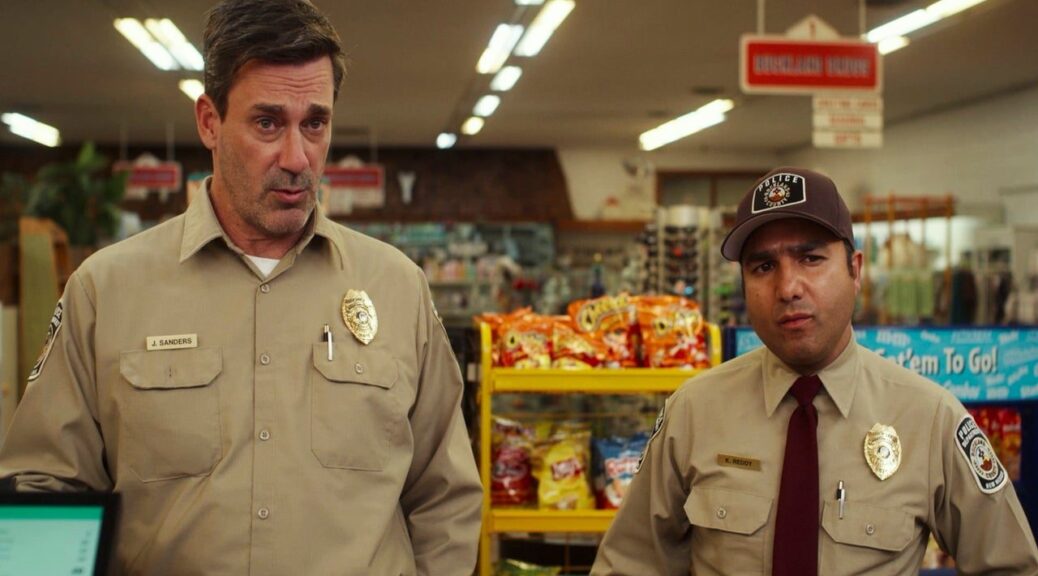
Ines is a 45-year-old paralegal doing the work of five people and getting the salary of less than one. She’s worked for the same cleaning products company for almost two decades and has yet to receive a raise. Paired with her is Melody, a college student intent on finishing out her accounting degree by completing an internship at said company – EcoCleanPro – which has recently laid off her own mother to save a few bucks. EcoCleanPro is run by a bunch of lazy, greedy, chauvinistic men who see little value in the women who work beneath them, save for whenever they want coffee or for the toilet paper to be refilled.

Ines is, understandably, fed up. She hasn’t had a raise in over a decade and a half and no one at the office takes her seriously. Melody views her internship as a means to an end; a hardship that must be endured so that she can complete her degree and bounce as soon as possible. To say these women are not enjoying their time working at EcoCleanPro would be putting it very, very mildly.

When Ines finally confronts the office manager about all of this, a (perhaps not so) tragic accident occurs that results in death. From there, the situation only continues to snowball for Ines and Melody. That doesn’t necessarily mean it’s a bad thing, however, for as the body count rises, so too do their spirits and camaraderie.

Writer/director Veronique Jadin has crafted a biting black comedy that takes female workplace anxieties and unleashes them like a bullet from the barrel of a gun. There’s a delightful throwback nature to the film that calls to mind the similar darkly comedic thrillers of the ‘90s. Enough so that Employee of the Month would not feel out of place in a movie marathon that also contained the likes of Office KillerVery Bad ThingsCurdled, and (of course) Office Space.

The stars of the show here are Jasmina Douieb and Laetitia Mampaka as Ines and Melody, respectively. Both are equally compelling in their separate performances, but their chemistry together really makes Jadin’s and co-screenwriter Nina Vanspranghe’s script sing. Single location films of any genre are not an easy feat to pull off and to do so with a comedy is exceptionally hard. Douieb and Mampaka carry this one across the finish line hand-in-hand.

Fairy Tale Ending

Book Club: The Next Chapter

by Hope Madden

I understand and respect that there is an audience for Book Club: The Next Chapter. I see the draw in watching characters in their Seventies – vital, beautiful, rich women, who have men that adore them exactly as they are, and healthy, supportive friends who are always ready for an adventure. May we all have such a third act.

It’s a lovely fantasy. But it’s a bad movie.

Back in 2018, director Bill Holderman introduced us to a quartet of lifelong friends whose monthly book club turned a little ribald when Viv (Jane Fonda) recommended 50 Shades of Grey. Everybody got horny, one marriage was saved, and four remarkable talents got to spend 90 harmless if uninspired minutes onscreen together.

Fast forward five years and one Covid lockdown and the besties are finally able to host their monthly meetup in person again. Just in time, too, because Viv is engaged! So Carol (Mary Steenburgen), Diane (Diane Keaton) and Sharon (Candice Bergen) decide a bachelorette trip to Italy is in order. Madcap!

The stakes are low and the wine is flowing, the police stations and jail cells are remarkably clean and free from riffraff, the comedy is broad and the life lessons are frequent but not too painful. Consequences are entirely nonexistent, but that’s because this is a fantasy. It’s a geriatric Sex and the City episode.

Holderman, writing again with Erin Simms, mercifully avoids jokes made at the expense of the characters. We laugh with them more often than we laugh at them. Holderman and his film respect these mature characters, which is a nice change of pace.

And, of course, Keaton, Bergen, Steenburgen and Fonda can act. They’re not asked to for this particular film, but we’re aware that they have the capacity. Fonda has two Oscars, Steenburgen and Keaton have one apiece, and bringing up the rear, Bergen has a nomination. And the best Book Club: The Next Chapter can think to do with them is have them model wedding dresses.

At least they’re not in a wing eating competition, I guess. And that’s actually where Holderman deserves praise, because he’s not making a great movie. He’s not even making a very good movie. But he’s making a movie for a target audience, and it’s a group of people who’ve lived through enough drama and trauma, cynicism and tragedy. That’s not what they want. They want a fantasy where there are no money issues, no health issues, all their friends are alive and well and still with them, and romance abounds.

Holderman has a club for that.

Wild Case of Mismanagement

Wild Beauty: Mustang Spirit of the West

by Christie Robb

Did you know that, in the United States, wild horses run free on publicly-owned land in 10 states? These lands are managed by the Bureau of Land Management (BLM), charged by a 1971 Concessional Act signed into law by Nixon to protect the horses and keep them in balance with the overall ecosystem in which they live.  

In shooting footage of wild horses for her 2020 Disney+ film Black Beauty, Ashley Avis became familiar with the Onaqui mountain herd outside of Salt Lake City, Utah and was shocked to find that instead of prospering under BLM’s care, the horses were disappearing. According to the filmmaking team, privately-owned cattle and sheep (often owned by rich ranchers and  large corporations) are being allowed to graze on the land in large numbers. They are much harder on the ecosystem, but it’s the horses that are scapegoated for the damage done to the land. The horses are rounded up via helicopters owned by private contractors, and herded into holding facilities, then sold at auction, often to slaughterhouses. The film alleges that up to one half of the BLM’s budget is spent on long- and short-term holding facilities, rather than on maintaining the horses on the public land itself.

The BLM often argues that the horses are overpopulated and in poor body condition. The herd sizes must be reduced to avoid future starvation. If this justification is undercut by the robust physical appearance of the horses once penned up, another rationale is adopted, for example, upcoming drought conditions.

Shot on location in various states including Oregon, Wyoming, North Dakota, Arizona, Colorado, and Utah, the film features breathtaking cinematography of the diverse wild landscapes across the American west and the majestic horses that inhabit them. So, of course, it is equally devastating to watch the horses running terrified from whirring helicopter blades, bloodied in cages, and separated from and screaming for their families.

Avis certainly does an effective job of spotlighting the plight of these animals and tugging at our heart strings. Hopefully her storytelling leads to positive change.

Bad Touch

You Can Live Forever

by Cat McAlpine

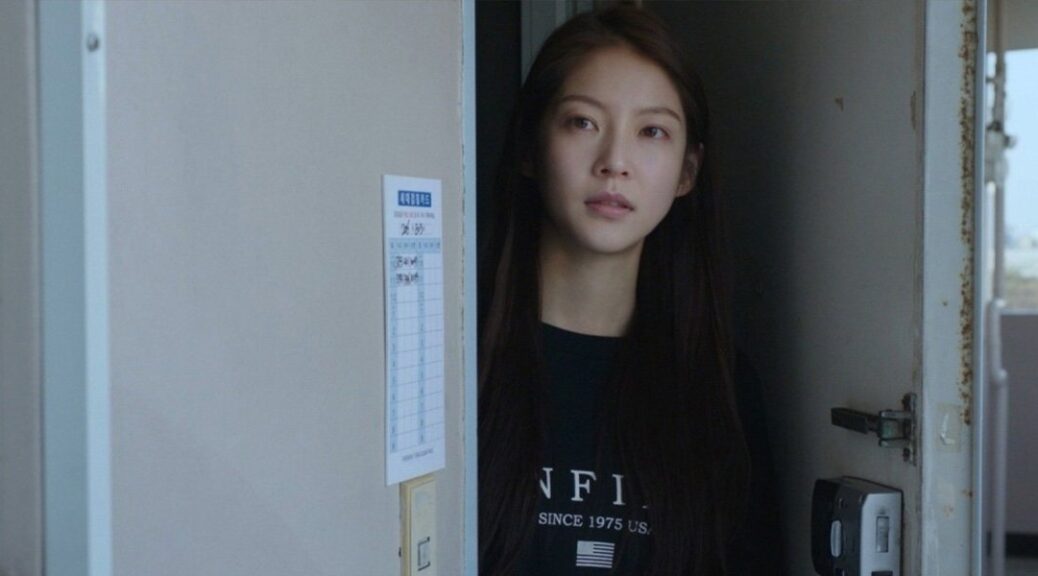
When Jaime’s (Anwen O’Driscoll, delivering a memorable performance of youth in crisis) father dies, her unstable mother sends her to stay with family in Quebec. Jaime is left in a strange new place to navigate her grief, sexuality, and attempted indoctrination by Jehova’s Witnesses.

Writer/Director team Sarah Watts and Mark Slutsky construct a taut canvas for their characters’ longing, repression, and resentment to build upon. You Can Live Forever is shot with lingering, even dreamlike takes, in direct opposition to the ever-mounting tension. With a relatively unknown cast and a focus on the interconnected lives of a small community, Watts and Slutsky deliver a sweet and painful coming-of-age tale. The resulting film immediately feels claustrophobic and grounded.

Everything about Jaime’s world shrinks and isolates throughout the film. Several new friends worry that she doesn’t speak French, and will struggle to get along in Quebec. She drops her walkman in a river, losing one of her favorite forms of escapism. Her aunt and uncle, while seemingly understanding that she is not “in the truth,” continually urge her to attend meetings with them at church.

Though the Jehovah’s Witness community is welcoming and warm, there’s a cold truth to their world. Birthdays are not to be celebrated. Appropriate behavior must be supervised. Defectors are not to be acknowledged.

Jaime becomes entranced by another young member of the church, Marike (June Laporte, in a sweet, wide-eyed performance). When Jamie asks what happened to her mom, Marike responds, “She’s not in the truth anymore…we’re supposed to imagine that she’s dead.”

The girls grow close at a lightning pace. Sleepovers with a misplaced hand or arm rapidly blossom into stolen kisses in dark alleyways. Jaime teeters between two selves. She smokes cigarettes and plays video games with Nathan (Hasani Freeman, charming) and she pretends to proselytize so she can spend more time with Marike.

Marike knows that Jamie doesn’t believe, but she doesn’t lose her faith as she discovers her own sexuality. “I can believe enough for the both of us,” pleads Marike. Jamie is challenged to choose between a delayed love that may never come (in an uncertain afterlife) and happiness in her life now.

When all the growing tension comes to a head, the religious community does what they do best: deny, divert, and convert. None of the tension is truly relieved, and everyone is left to continue grinding their teeth until they die.

That lingering tension and guilt stays with you, just like societal shame, religious trauma, and all the other oppressive forces in our lives. And the lack of resolution, the lingering touches and sidelong glances, are what keep You Can Live Forever on the mind once the screen fades to black.