A magical young princess leaves her sister’s side amid some heavy emotional trauma, taking her cold heart to a frozen environment and staking her claim as the Ice Queen. This one, though, has no interest in building a snowman.
Winter’s War is both prequel and sequel to Snow White and the Huntsman, the competent fantasy drama from 2012. You might wonder about the need for another film in this franchise, but it’s hard to argue with the cast.
Chris Hemsworth is back as Eric the Hunstman, along with Jessica Chastain as his beloved Sara and Charlize Theron’s evil Queen Ravenna. Theron was easily the best thing about the first film, and adding the great Emily Blunt as Ravenna’s chilly sister Freya seems like a pretty safe play.
Yeah, um, about that…
Blunt’s unbeaten streak of onscreen chemistry with every living human ends here, as she and Theron can’t get their considerable talents to gel. Instead, Blunt’s “love is evil” act and Theron’s power-mad malevolence wander into a curiously campy section of the castle.
How can you put two actors of this caliber side by side, and end up with scenes this dull?
Director Cedric Nicolas-Troyen is a visual effects veteran making his feature debut, and he seems much more confident presenting Eric and Sara’s woodland journey to recover the magical mirror, mirror no longer on the wall.
The film’s first act is nearly insufferable, ploddingly paced and weighted by exposition shared via the buttery (if uncredited) voice of Liam Neeson.
Things pick up midway as the adventure proper begins, but Nicolas-Troyden and cast stumble again as their tale comes to a close. Though it often looks fantastic, Winter’s War is uneven at best, with a mishmash of ideas that barely hold together, and cannot capture attention.
Worse still, it is an unforgivable waste of three of the most talented women working in film today.
If you harbor a mad desire to see the film, you may want to let it go.
It’s time again to travel the globe and pull together a list of the best in horror to be found, this time in the ripe ground of Korea. Just a decade or two ago, Korea’s horror output tended to feel like an echo of Japan’s cinema, but by the early 2000s, a number of truly wonderful filmmakers began working in the genre and the outcome has been a breathtaking onslaught of the most extreme kind. Hooray!
5. Bedevilled (2010)
Cheol-soo Jang’s first feature film bears witnesses not only to some horrific deeds, but to an amazingly confident new filmmaker who knows how to sidestep expectations, turn the screw, and offer surprising insight in a genre that doesn’t always generate that kind of thoughtfulness.
The film opens as beautiful if cold Hae-won (Sung-won Ji) witnesses a crime and chooses not to involve herself. She takes a (somewhat involuntary) vacation on the remote island where she grew up, to find her childhood friend Bok-nam (Young-hee Seo). On the isolated, backward island – though Hae-won is treated to rest and nurturing by her adoring friend – Bok-nam’s life is about as far from ideal as possible.
Jang captures the rugged, isolated beauty of the island and offsets both ideas with his leads – one, an elegant and pristine beauty, the other a rough-hewn image – and sees two sides of the same humanity. This is a morality tale, but it’s also a brutal but sympathetic (and seriously bloody) comeuppance. Jang does not leave off where you think he might, instead crafting a compelling and satisfying whole that will stick with you.
https://www.youtube.com/watch?v=jbSZqvDvOFs
4. The Host (2006)
Visionary director Joon-ho Bong’s film opens in a military lab hospital in 2000. A clearly insane American doctor, repulsed by the dust coating formaldehyde bottles, orders a Korean subordinate to empty it all into the sink. Soon the contents of hundreds of bottles of formaldehyde find its way through the Korean sewer system and into the Han River. This event – allegedly based on fact – eventually leads, not surprisingly, to some pretty gamey drinking water. And also a 25 foot cross between Alien and a giant squid.
Said monster – let’s call him Steve Buscemi (the beast’s actual on-set nickname) – exits the river one bright afternoon in 2006 to run amuck in a very impressive outdoor-chaos-and-bloodshed scene. A dimwitted foodstand clerk witnesses his daughter’s abduction by the beast, and the stage is set.
What follows, rather than a military attack on a marauding Steve Buscemi, is actually one small, unhappy, bickering family’s quest to find and save the little girl. Their journey takes them to poorly organized quarantines, botched security check points, misguided military/Red Cross posts, and through Seoul’s sewer system, all leading to a climactic battle even more impressive than the earlier scene of afternoon chaos.
3. I Saw the Devil (2010)
An actor who can take a beating, Min-sik Choi plays Kyung-Chul, a predator who picks on the wrong guy’s fiancé.
That grieving fiancé is played by Byung-hun Lee, whose restrained emotion and elegant good looks perfectly offset Choi’s disheveled explosion of sadistic rage, and we spend 2+ hours witnessing their wildly gruesome game of cat and mouse.
Director Jee-woon Kim breathes new life into the serial killer formula. With the help of two strong leads, he upends the old “if I want to catch evil, I must become evil” cliché. What they’ve created is a percussively violent horror show that transcends its gory content to tell a fascinating, if repellant, tale.
Truth be told, beneath the grisly, far-too-realistic violence of this unwholesome bloodletting is an undercurrent of honest human pathos – not just sadism, but sadness, anger, and the most weirdly dark humor. You might even notice some really fine acting and nimble storytelling lurking inside this bloodbath.
https://www.youtube.com/watch?v=H2h52riooIc
2. Oldboy (2003)
So a guy passes out after a hard night of drinking. It’s his daughter’s birthday, and that helps us see that the guy is a dick. He wakes up a prisoner in a weird, apartment-like cell. Here he stays for years and years.
The guy is Min-sik Choi (remember him?). The film is Oldboy, director Chan-wook Park’s masterpiece of subversive brutality and serious wrongdoing.
This is not a horror film in any traditional sense – not even in South Korean cinema’s extreme sense. Though it was embraced – and rightly so – by horror circles, this is a refreshing and compelling take on the revenge fantasy that takes you places you do not expect to go. But that’s the magnificence of Chan-wook Park, and if you have the stomach, you should follow where he leads.
Choi takes you with him through a brutal, original, startling and difficult to watch mystery. You will want to look away, but don’t do it! What you witness will no doubt shake and disturb you, but missing it would be the bigger mistake.
1. A Tale of Two Sisters (2003)
A lurid Korean fairy tale of sorts – replete with dreamy cottage and evil stepmother – Jee-woon Kim’s A Tale of Two Sisters is saturated with bold colors and family troubles.
Kim also directed I Saw the Devil, but where Devil breathes masculinity, Tale is a deep, murky, and intensely female horror.
A tight-lipped father returns home with his daughter after her prolonged hospital stay. Her sister has missed her; her stepmother has not. Or so it all would seem, although jealousy, dream sequences, ghosts, a nonlinear timeframe, and confused identity keep you from ever fully articulating what is going on. The film takes on an unreliable point of view, subverting expectations and keeping the audience off balance. But that’s just one of the reasons it works.
The director’s use of space, the composition of his frame, the set decoration, and the disturbing and constant anxiety he creates about what’s just beyond the edge of the frame wrings tensions and heightens chills. The composite effect disturbs more then it horrifies, but it stays with you either way.
On the surface, Colonia is a pretty film. The leads are attractive, the period setting lends both nostalgia and an otherworldly quality, and there are some beautiful shots. Despite being based on true and rather horrifying events, however, the film lacks depth.
Florian Gallenberger both directed and co-wrote Colonia, and he seems to shy away from getting too involved with the political details. The story follows two international lovers who find themselves imprisoned at creepy cult camp Colonia Dignidad during the Chilean military coup of 1973. The true events simply serve as a back drop, unfortunately.
Lena (Emma Watson) asks about the crowd holding up her taxi, “Why are they protesting?” Her driver replies vaguely, “Inflation? Food shortages? It is getting very bad now.”
At its open, there is a raw brutality which serves as a painful reminder of what social injustice looked like before the smart phone. Daniel (Daniel Brühl ) is spotted by military police attempting to document their indiscretions with a bulky film camera. This is where both relevancy and homage seem to fade, however. Once Daniel is taken to the colony, the film mostly devolves into a standard thriller featuring an attractive young couple.
Brühl plays Daniel with a sweet subtlety which is not lost in moments of passion or desperation, but rather heightens the reality of his character.
Watson, on the other hand, is wasted as Lena, who lacks both intensity and lines despite immense screen time. There is little to no chemistry between Lena and Daniel, and once they are reunited, they navigate an endless series of near misses with relative ease. There is little doubt that they will survive.
Paul Scäfer (a marvelous Michael Nyqvist) is so mesmerizing and terrifying at the same time, I found myself hoping he’d be in the next scene. He oozes delusion and power. His second in command, Gisela (Richenda Carey) balances positions of power and weakness, and her character becomes more complex as the narrative moves on, a rarity in this film.
Unfortunately, the film does not delve into how Scäfer came to be a god amongst his followers. It also failes to explain exactly how the camp is connected to the military. Lena serves as our eyes for the majority, and we discover along with her. When the film stops being about the camp, it becomes boring and predictable, despite its pacing.
Colonia has beautiful, eerie, and beautifully eerie moments. The cast gives a worthy effort and Emma Watson’s eyebrows look amazing, but none of this star power is enough the raise this film beyond a “meh.” You’re left wondering why a film lacking resolution is two hours long in the first place.
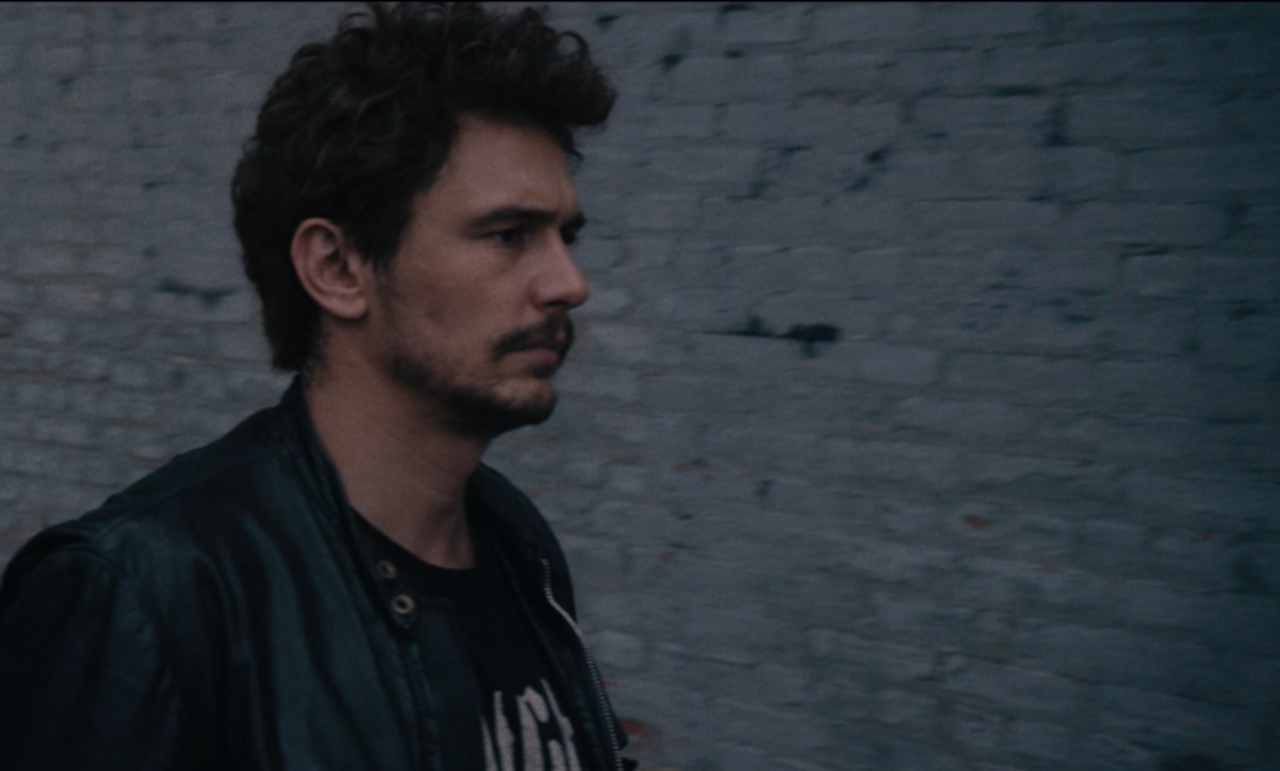
James Franco is nothing if not prolific. The Adderall Diaries was his 8th completed feature slated for release in 2015. He is a frenzy of artistic ambition and he deserves credit for embracing independent filmmaking as well as bigger budget stuff, doling out comedies and dramas in between arty TV bits. But maybe if he slowed down a little, some of the material would be better.
In Adderall Diaries, Franco plays Stephen Elliott, the real-life writer who penned the nonfiction text on which the film is based. As Franco depicts him, Elliott is a self-destructive man-child wallowing in self-pity.
What caused his sour mood? An adolescence of abuse at the hands of a father he pretends is dead (in print and in public, no less). When Dad (Ed Harris) shows up in the flesh at a book reading, Elliott’s cushy world falls to pieces. Combine that with writer’s block and a misdirected interest in a high-profile murder trial, and what can Elliott do but snort, smoke, shoot, and pop every substance he comes into contact with?
There is something interesting buried here about how we use our own memories to justify our behavior, or about how writers are inherently liars, or a bit of both – hard to say because it’s never fleshed out or clearly articulated. But boy, the old ‘downward spiral of the artistic genius’ thing – that is hard to miss.
Though Harris turns in a characteristically strong performances, all other supporting turns are perfunctory at best, which leaves us with little but Franco’s whining protagonist to cling to.
Writer/director Pamela Romanowsky flails about with indie director clichés, creating an overly-filtered world of seediness and confused flashbacks, while her prose cannot deliver the introspection required to make an audience invest in what happens to Elliott.
Subplots go nowhere – the murder trial, in particular, feels as if it should mean something imperative but seems needless and tacked on. Relationships, the writer’s craft, self-examination and anything else the film attempts to tackle are too muddled to stand out. Even Franco’s damaged writer seeking redemption bit is so tired, and the character so unlikeable, that it’s just hard to care about the film’s outcome.
Director Ariel Vroman has crafted an interesting character study within the bones of an action movie with Criminal.
When CIA agent Bill Pope (Ryan Reynolds) is killed in the line of duty, his boss, Quaker Wells (Gary Oldman), desperate to obtain the information Pope was bringing to him, enlists the help of Dr. Franks (Tommy Lee Jones) to perform a radical memory transfer from Pope to Jericho Stewart (Kevin Costner). Dr. Franks is unsure if the procedure will work, as he’s only performed is successfully on small mammals, but Wells pushes him to perform the surgery.
Predictably, the operation is successful. However, Jericho Wells is unpredictable. He is a man without a conscience, and his predilection for destruction jeopardizes Wells’s objective.
Costner is marvelous as Jericho, first playing the character with cold indifference, but shaping him to the memories and feelings of Pope as they overwhelm him. Attempting to use Pope’s knowledge for his own gain, he finds himself drawn to Pope’s life, particularly Pope’s wife and daughter.
As the deceased’s wife, Jill Pope, Gal Gadot (the new Wonder Woman) gives a compelling performance as a woman who is suddenly confronted with a very dangerous man who happens to know things about her life that only her husband would know. The characters’ initial interaction is tense, and it’s unclear how Jericho will act toward Jill and her daughter.
Unfortunately, the situation plays out the way one would expect, as Jericho is influenced more and more by Pope’s thoughts and feelings. What could provide for an unexpected, and possibly deadly, confrontation is instead relegated to a predictable attack of conscience before anything truly sinister occurs.
Though Costner ably carries the weight of the film, many of the supporting characters feel flat, with little to do other than attempt to steer Jericho in the direction they want. Gary Oldman is especially mundane in his role as a CIA director who seems inept and impulsive.
Only Gadot, and Michael Pitt (The Dreamers, Funny Games) as Jan Stroop, imbue their characters with emotions and wants that have nothing to do with Jericho. Pitt is especially effective, radiating various emotions and providing a nice contrast to Jericho.
Despite the weakness of some of the characters, the film is an intriguing study of Jericho. There are a number of tense, and occasionally funny, moments as we watch him navigate his new memories and feelings.
On the whole, Criminal is an enjoyable, if predictable, film.
This is especially true when said party is thrown by your ex and her new man in the house that used to be yours. So, why go?
Curiosity – which is what will or will not keep you invested in director Karyn Kusama’s new film The Invitation.
Will (Logan Marshall-Green) and his new girlfriend Kira (Emayatzy Corinealdi) tough it out. They drive out to the LA hills to join Will’s ex Eden (Tammy Blanchard) and all the friends Will has forgotten about since his son accidentally died in this very house a couple years back.
The party marks Eden’s return to the fold and an introduction to the new man in her life, David (Michiel Huisman), another grief survivor who, like Eden, owes his very sanity to the life-changing vision of Dr. Joseph.
Oh, God. Have they unwittingly submitted themselves to the one thing worse than a time-share opportunity gathering – a religious conversion attempt?
Kusama’s slow build mines societal tensions well. Besides the obvious ex-lover friction and the fear of cult propaganda, many in this once tight circle of friends have avoided the grief-stricken parents since the accident. It’s all very uncomfortable, though the film slowly turns the discomfort toward paranoia as Will begins to wonder where missing buddy Choi (Karl Yune) may be, why Eden has a bottle of barbiturates in her bedroom, and why David keeps all the partygoers locked inside.
Is something amiss, or is Will just dealing with those damaging issues of grief that Eden and David were able to overcome thanks to Dr. Joseph?
As The Invitation slowly evolves from tense drama to thriller to horror, Kusama is always throwing uncomfortable moments and unsettling clues at you. Were it not for the often tediously stilted dialog penned by Phil Hay and Matt Manfredi – whose track record includes the Ride Along series, if that tells you anything – The Invitation would have a consistently nightmarish, hypnotic quality that keeps you uncomfortably captive.
You know, just like that last dinner party you went to.
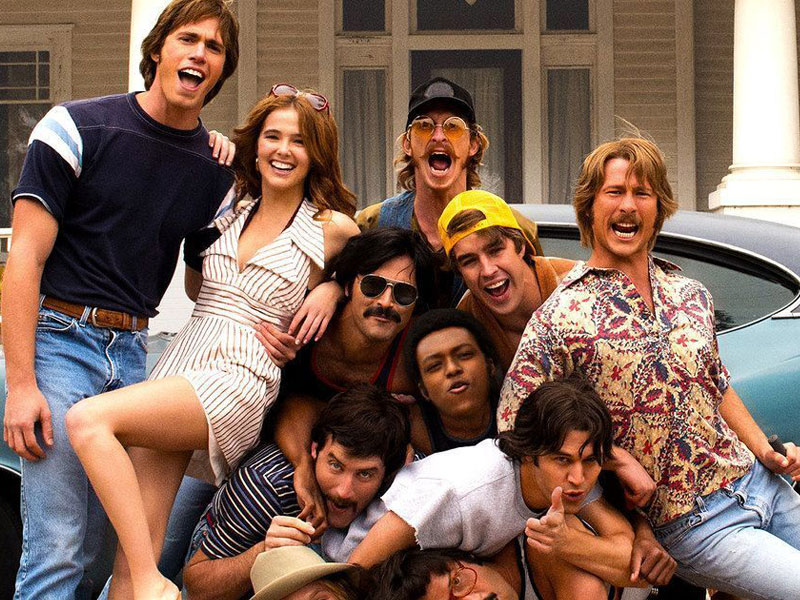
Of all filmmakers in the world, few – if any – can do slice-of-life as well as Richard Linklater. Never weighed down by plot structure or the rigid expectations of modern cinema, Linklater’s the master of fluid, easygoing, day-in-the-life filmmaking. His latest exercise in the craft, Everybody Wants Some, is a charmer.
You’re invited to a 3-day bender in the late summer of 1980 – the long weekend before the first day of classes – and Linklater’s meandering camera makes you feel like you’re just wandering through the party.
Everybody Wants Some is, without question, too forgiving. A South Texas university baseball team settles into the new year by scoping out the female action on and off campus. They’re adaptive – disco one night, urban cowboys the next, punk rockers on a random Sunday. Linklater not only nails 1980, but pinpoints the almost invisible moments of import in a person’s life.
This is a consequence-free zone that smells a bit of nostalgia and self-congratulations. And yet, thanks to a slew of utterly charming performances, the film still works exceptionally well.
Linklater has assembled an outstanding ensemble – not a false note in the lot, from the quiet everyman Jake (Blake Jenner) to the hypercompetitive McReynolds (Tyler Hoechlin) to the philosophical ladies’ man Finnegan (Glen Powell) to the ranting wacko Jay (Juston Street) – and basically the entire team. The first thing Linklater does is establish each ballplayer’s type, just to quietly destroy your preconceived notions of character.
Billed as the “spiritual sequel” to 1993’s coming of age classic Dazed and Confused, Everybody Wants Some is even more laid back, decidedly more masculine, and quite a bit more existential. Linklater’s more existential films tend toward the bittersweet – some more bitter, this one more sweet.
Like Dazed, the new film litters its fluid storyline with hijinks and casually perceptive dialog.
“It’s all so damn tribal.”
“Embrace your inner strange.”
It’s a film about competition and identity, the battle between self-discovery and authenticity, but with Linklater’s light, affectionate touch, nothing ever feels heavy. The writing is as good as anything Linklater has produced, positively glowing with “unsolicited wisdom and fuckwithery.” And all of it leads to an absolutely perfect ending.
Horror films have the power to freak you out, to terrify you, to disturb and unsettle you. And often enough, along with inspiring some combination of the aforementioned emotions, certain horror films just beg the question WTF?! Like, almost anything Takashi Miike has ever directed. Or Antichrist – I’m sorry, did that fox just speak? Whether the bizarre puppetry of Hausu or the skull sex of Headless, the orifice’s point of view camera angles in Enter the Void or the queasying sibling relationship in Pin, horror movies can hit that unsettling nerve. So let’s just embrace it today, shall we? Today we count down the five (or six!) best in WTF?! horror.
6. The Woman (2011)
There’s something not quite right about Chris Cleese (an unsettlingly cherubic Sean Bridgers), and his family’s uber-wholesomeness is clearly suspect. This becomes evident once Chris hunts down a feral woman (an awesome Pollyanna McIntosh), chains her, and invites the family to help him “civilize” her.
The film rethinks family – well, patriarchy, anyway. Notorious horror novelist and co-scriptor Jack Ketchum may say things you don’t want to hear, but he says them well. And director Lucky McKee – in his most surefooted film to date – has no qualms about showing you things you don’t want to see. Like most of Ketchum’s work, The Woman is lurid and more than a bit disturbing. Indeed, the advanced screener I watched came in a vomit bag.
Aside from an epically awful performance by Carlee Baker as the nosey teacher, the performances are more than just good for the genre, they’re disturbingly solid. McIntosh never veers from being intimidating, terrifying even when she’s chained. Bridgers has a weird way of taking a Will Ferrell character and imbibing him with the darkest hidden nature. Even young Zach Rand, as the sadist-in-training teen Brian, nails the role perfectly.
Nothing happens in this film by accident – not even the innocent seeming baking of cookies – nor does it ever happen solely to titillate. It’s a dark and disturbing adventure that finds something unsavory in our primal nature and even worse in our quest to civilize. Don’t even ask about what it finds in the dog pen.
5. Bad Boy Bubby (1993)
The hell?! Why? What?! Good God.
Nicholas Hope is astonishing as the titular Bubby, a 30-year-old manchild who’s never, ever left the room he keeps with his mum.
Remember the Oscar-winning indie film Room? Remember how tragedy is somehow skirted because of the courageous love of a mother for her son? Well, this was not Bubby’s mum. Bad things are happening in that room, and once Bubby is finally free to explore the world, his adventure is equal parts deranged and soul-crushing. Hope is so frustratingly empathetic in the lead that no matter what he does, you root for him. You root for friends who will love him, for someone who will care for him, but it’s the resigned cheerfulness with which he faces any kind of abuse that really just kills you.
This taboo-shattering film is so wrong in so many ways, and yet it’s also lovely, optimistic, sweet, and funny. And just so, so fucked up.
4. Baskin (2015)
Welcome to hell! Turkish filmmaker Can Evrenol invites you to follow a 5-man police squad into the netherworld, where eye patches are all the rage, pregnancy lasts well under the traditional 40 weeks, and you don’t want to displease Daddy.
The serpentine sequencing of events evokes a dream logic that gives the film an inescapable atmosphere of dread, creepily underscored by its urgent synth score. Evrenol’s imagery is morbidly amazing. Much of it only glimpsed, most of it left unarticulated, but all of it becomes that much more disturbing for its lack of clarity.
The further along the squad gets, the more often you’ll look in horror at something off in a corner, that sneaking WTF? query developing along with your upset stomach.
The central figures in this nightmare are one eye-patch wearing helper who enjoys tossing his or her hair over one shoulder, and the breathtaking father figure played by Mehmet Cerrahoglu. There is no one quite like him.
Cerrahoglu’s remarkable presence authenticates the hellscape. Evrenol’s imaginative set design and wise lighting choices envelope Cerrahoglu, his writhing followers, and his victims in a bloody horror like little else in cinema.
3. Calvaire (The Ordeal) (2004)
A paranoid fantasy about the link between progress and emasculation, The Ordeal sees a timid singer stuck in the wilds of Belgium after his van breaks down.
Writer/director Fabrice Du Welz’s script scares up the darkest imaginable humor. If David Lynch had directed Deliverance in French, the concoction might have resembled The Ordeal. As sweet, shy singer Marc (a pitch perfect Laurent Lucas) awaits aid, he begins to recognize the hell he’s stumbled into. Unfortunately for Marc, salvation’s even worse.
The whole film boasts an uneasy, “What next?” quality. It also provides a European image of a terror that’s plagued American filmmakers for generations: the more we embrace progress, the further we get from that primal hunter/gatherer who knew how to survive.
Du Welz animates more ably than most our collective revulsion over the idea that we’ve evolved into something incapable of unaided survival; the weaker species, so to speak. Certainly John Boorman’s Deliverance (the Uncle Daddy of all backwoods survival pics) understood the fear of emasculation that fuels this particular dread, but Du Welz picks that scab more effectively than any filmmaker since.
His film is a profoundly uncomfortable, deeply disturbing, unsettlingly humorous freakshow that must be seen to be believed.
https://www.youtube.com/watch?v=Hn3oba5HmH8
2. Possession (1981)
Speaking of sex and monsters – wait, were we? – have you seen Possession? WTF is going on there?
Andrzej Zulawski – writer/director/Czech – created this wild ride with doppelgangers, private investigators, ominous government agencies, and curious sexual appetites. It’s more precisely fantasy than horror, but it feels like David Cronenberg meets David Lynch, which is a pairing we can get behind.
Sam Neill plays Mark. Mark has just left his job – a mysterious position with some kind of lab. He’s being offered a lot of money to stay, but he needs to go home. We don’t know why.
Back at home, he greets his genuinely adorable son Bob (Michael Hogben). Bob – the names is so normal, and yet feels so unusual for a small child. Mark’s wife Anna (Isabelle Adjani) is also at home with Bob. There’s nothing normal about Anna.
Mark and Anna’s relationship boasts an intentional artificiality – a queasying sexuality – that makes it hard to root for either of them as their marriage deteriorates. Anna, it seems, is in love with someone else. Is it the sexually open – really, really open – Heinrich? Is it a bloody, mollusk-like monster? Is Mark boning Anna’s mean friend with a cast on her leg? Does Bob’s kindergarten teacher bear an unreasonable resemblance to Anna? Is anyone caring properly for Bob?
These questions and more go basically unanswered in a deviant, summary-defying, fantastical bit of filmmaking that mocks the idiocy, even insanity of obsession and boasts a handful of weirdly excellent performances. And sex with a bloody mollusk monster.
1. Gozu (2003)
If you are looking for genuine lunacy in film, your search should begin and quite possibly end with filmmaker Takashi Miike. His shit is nuts. Truth be told, there are scads of Miike films that could have populated this list because even his tamest, most logical, no-puppetry films are wild rides. So when he starts coloring way outside the lines, expect to be surprised.
This one starts off as a yakuza film – one guy on a mob-style assignment – then descends into absolute madness.
Minami (Yuta Sone) has been ordered to assassinate his feeble-minded yakuza boss Ozaki (Sho Aikawa), but he’s conflicted. Then he loses him and wanders, in search, into – you might say it was the Twilight Zone, except this place is considerably weirder. There’s a minotaur. An electrified anal soup ladle death scene. Some seriously, seriously weird shit.
Like a walk through somebody’s subconscious, the film is awash in repressed sexual desires of the very most insane and unspeakable. There’s a comical element that’s almost equally unsettling. Gozu is not as violent as many Miike films – it’s violent, don’t be mistaken, but the horror here is more in unseemly behavior and wildly inappropriate imagery. It’s just stuff you can’t unsee.
The Boss is a comedic story of one woman’s fall from the top and her struggle to regain her position in the world.
Melissa McCarthy is Michelle Darnell, a high powered executive who writes a brand of self-help books. Her fall comes at the hands of former lover and business rival, Ronald (Peter Dinklage).
Kristen Bell is Michelle’s long suffering assistant, Claire, who is forced to find a new employer when Michelle is incarcerated for insider trading. The early setup foretells the redemption of Michelle, though the ways in which it happens are unpredictable and provide the bulk of the movie’s many jokes.
As a vehicle for Melissa McCarthy, The Boss has a number of laughs. Sharp wit, foul language, and bodily humor combine to offer an appealing repertoire of McCarthy’s talents. However, the movie itself falls flat. The supporting cast is underutilized. Kristen Bell, herself a witty and capable actress, is lackluster against McCarthy. The chemistry is non-existent, and the two characters never seem to foster a believable relationship.
The screenplay doesn’t know what to do with anyone other than McCarthy. Though a decent portion of the film revolves around Bell’s character, her scenes independent of McCarthy are mildly tedious.
Peter Dinklage, another actor with an incredible range of talent, has a woefully small amount of screen time, and though he plays Michelle’s former lover who both hates and still wants her, he has no sexual chemistry or tension with McCarthy. The interaction between the characters frequently feels forced.
The only actor who plays well of off McCarthy’s humor is Cedric Yarbrough, the “yes man” Tito, who appears briefly in the beginning of the film, but sadly, doesn’t return after Michelle’s release from prison.
On the whole, the film is disjointed. What could be a cohesive story of Michelle’s fall and attempted rise back to the top is unfortunately punctuated with scenes that don’t really fit the narrative: a comic book style slow motion fight scene between girls from two warring Girl Scout-like troops, a scene where Michelle has a bad reaction to puffer fish, and others.
Despite the movie’s flaws, it’s not without appeal. Ella Anderson who plays Claire’s daughter, Rachel, is a delightful foil to Michelle’s brash and sarcastic nature. Her emotions based on Michelle’s actions come across as genuine. Her joys and pains are felt by the audience. McCarthy’s humor and flair carries the film in places where in another’s hands it might suffer.
It’s a shame so many of the other characters are without appeal, as The Boss could have been a much stronger comedy.
Get to know Jeff Nichols. The Arkansas native is batting 1000, writing and directing among the most beautiful and compelling American films being made. His latest, Midnight Special, is no different. But then again, it is very, very different.
You should know as little as possible going into this film because Nichols is the master of slow reveal, pulling you into a situation and exploiting your preconceived notions until you are wonderfully bewildered by the path the story takes.
Suffice it to say, Nichols mainstay Michael Shannon, as well as Joel Edgerton, are armed men in a seedy motel. They have a child in tow (Jaeden Lieberher – wonderful). Local news casts a dark image of the trio, but there’s also a Waco-esque religious community looking for the boy, not to mention the FBI. So, what the hell is going on?
Nichols knows, and he invites your curiosity as he upends expectations. The film toys with the clash between logic and the supernatural, not unlike the themes of Nichols’s masterpiece Take Shelter (also starring a magnificent Shannon). While moments of Midnight Special will feel more reminiscent of memorable films in the SciFi vein, what this filmmaker does with his subject is beautifully novel.
The film, like all of Nichols’s work, is deeply rooted in traditions and atmosphere specific to the American South, and the filmmaker boasts a deep and easy skill as a storyteller. He’s also truly gifted with casting.
Lieberher, who showed amazing natural talent in 2014’s St. Vincent, again offers a beautifully restrained central figure. Edgerton and Kirsten Dunst are likewise wonderful, both turning in nuanced performances that reflect Nichols’s uncanny way of dealing with the extraordinary in the most naturalistic way.
But Michael Shannon, a remarkable talent no matter what film he graces, anchors the film with a heartbreaking, award-worthy performance.
Midnight Special is just another gem of a film that allows Nichols and his extraordinary cast to find exceptional moments in both the outlandish and the terribly mundane, and that’s probably the skill that sets this filmmaker above nearly anyone else working today. He sees beyond expectations and asks you to do it, too.