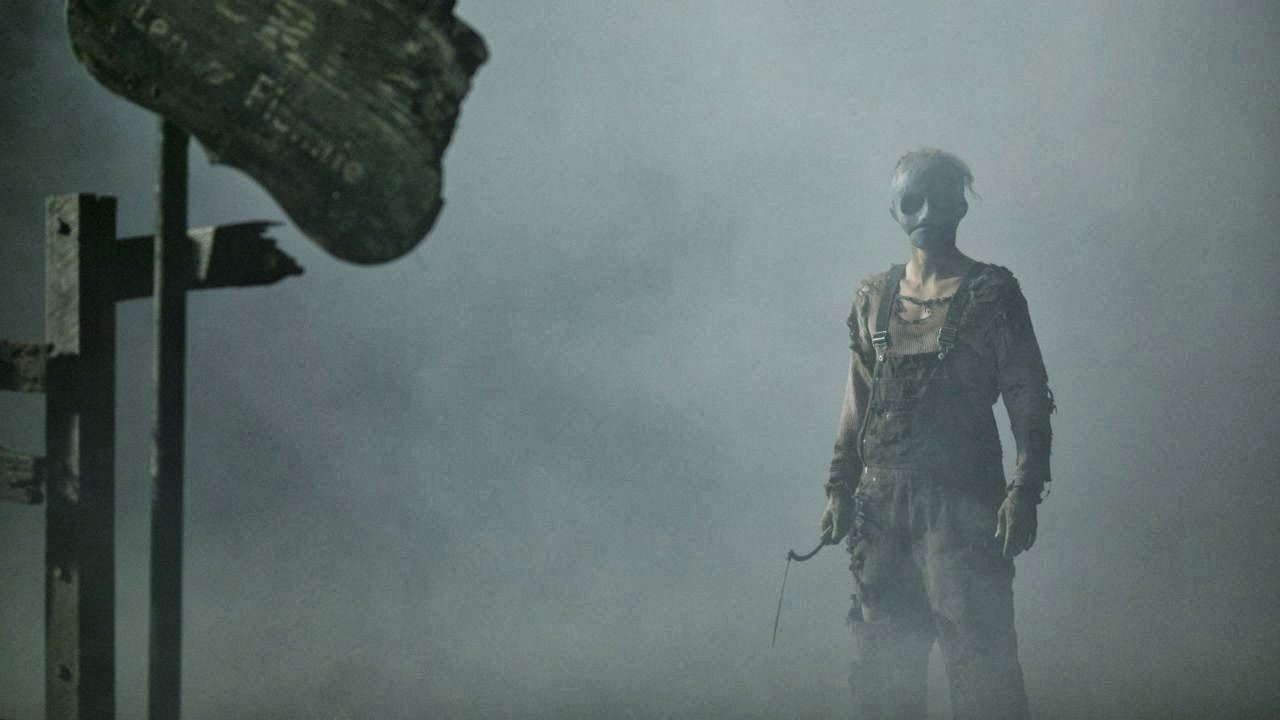
So many horror films delve into those murky holy waters of Catholicism. So many horror movies are clearly made by lifelong non-Catholics. If Aislinn Clarke’s The Devil’s Doorway gets extra points, it’s for knowing the religion it is lambasting.
Two priests—one young, one a veteran—head into dangerous spiritual territory in a film that fully understands that you will compare it to The Exorcist. How can you not?
The Devil’s Doorway follows Fr. Thomas Riley (Lalor Roddy) and Fr. John Thornton (Ciaran Flynn) to a Magdalene Laundry, one of Ireland’s infamous workhouses populated by women the country wanted to hide and exploit.
The setting itself is a way of inverting the gravitas of The Exorcist, which saw two priests—one firm in his belief, the other confronting a crisis of faith—come to the aid of an innocent girl facing the corruption of her purity from something demonic.
Here, Fr. Riley, the elder priest, has to face his own crisis of faith. But his belief has been stretched to breaking by the corruption of the church itself, as manifest by this place.
So, they go to investigate a miracle but find something more predictably menacing is afoot.
There is an earnestness in the battle between faith and cynicism in this film. The Exorcist and films like it, those that saw the wayward horror of man as only correctable with help from above, have long given way to something else. A demonic possession now feels like it happens within holy walls because that’s where the devil lives in the first place.
While most films of this ilk simply take potshots, The Devil’s Doorway mourns the corrosion of something worthwhile and holy. Applause for finding an honest statement to make within this over-worked subgenre, although the congratulations belong primarily to Roddy.
The Irish actor finds truth in Fr. Riley—Doubting Thomas’s—struggle. He stands out as the only sane person, the only responsible adult in the house. And though the Mother Superior role is written with evil relish (as per usual), Helena Bereen’s delivery stings in a way that is eerily authentic.
Until it’s not.
We get it. Nuns are creepy. Twelve years of Catholic school clarified that.
The film gets a bit caught in genre trappings, and what starts as an indictment of the church becomes so punchdrunk on jump scares it loses its focus entirely. The found-footage gimmick works well enough for a while, but devolves in the end into something so familiar it’s almost sad.
The Devil’s Doorway started out with promise, but like so many lapsed Catholics, it lost its way.
My wife says if I can’t get through this without mentioning Die Hard, I owe her ten bucks.
So how much will The Towering Inferno cost me?
Get over it, right? Those are decades old.
Fair enough. Ideas are born to be borrowed, and the real question is how well Skyscraper assembles its inspirations. The answers come without apology, cranked up to full tilt boogie until the rubble-strewn, crowd pleasing finale.
Of course Dwayne Johnson stars as Will Seymour, a former Marine and FBI hostage negotiator now working as a security expert. A tragedy on his former job cost Will his left lower leg, but it led him to a perfect new life with his surgeon wife Sarah (Neve Campbell) and their two cute kids.
Will’s hired to assess the security measures at The Pearl in Hong Kong, the world’s new tallest building that is ready to open its luxurious residential upper half. Will’s intimidated by such a large assignment for his small firm, but there’s a specific reason he got the call.
There’s something in The Pearl’s vault that is very valuable to international terrorist Kores Botha (Roland Moller), and Will is part of the plan to take it from the skyscraper’s visionary designer (Chin Han).
Who’s the fly in that high rise ointment? The monkey in the wrench? It’s The F. Rock
Writer/director Rawson Marshall Thurber (Dodgeball, We’re the Millers, Central Intelligence) trades comedy for disaster thrills with the tangible relish of a kid trading flashcards for the latest XNintendoBox 64 in 3D.
The heroics are grand in scale, engulfed in flames and often unveiled with gasp-inducing effects that consistently poke at our fear of heights. The pace is quick, Johnson serves up his usual good guy charisma and Campbell gets to be more than just a loving bystander.
And it all could only be more ridiculous if Will and Botha got in the Face/Off machine and switched identities.
The film’s plot turns and callbacks get so shameless it nearly pauses for applause, but the commitment is so unabashed and the spectacle so summer-ready, Skyscraper wins you over with pure “are you not entertained?” tenacity.
Horror and disappointment available at home this week. Hopefully not at your home. Just movies, you know? One of the best horror movies of the year, and one terrible disappointment.
Everybody needs a hand now and then, a little guidance. Everybody, even cold-blooded killers, because murder can be really difficult to pull off. You can’t just google a how-to. I mean, you probably can, but where’s the personal connection? The relationship? The trust.
It’s all here, in our list of the best films focusing on murderous mentors.
5. Addiction (1995)
Like most of director Abel Ferrara’s work, the film is an overtly stylish, rhythmically urban tale of brutal violence, sin and redemption (maybe). Expect drug use, weighty speeches and blood in this tale of a doctoral candidate in philosophy (Lili Taylor) over-thinking her transformation from student to predator.
Taylor cuts an interesting figure as Kathleen, a very grunge-era vampire in her jeans, Doc Martens and oversized, thrift store blazer. She’s joined by an altogether awesome cast—Annabella Sciorra, Edie Falco and Christopher Walken among them.
Ferrara parallels Kathleen’s need for blood to drug addiction, but uses her philosophy jibberish to plumb humanity’s historical bloodlust. In monologues and voiceovers, Taylor waxes philosophic as she comes to terms with her own evil nature, and here is where the film nearly implodes. It begins to feel like Ferrara’s real warning is that philosophical pretentiousness spreads like a disease. But just when you are tempted to give up on the pomposity, Walken appears as Kathleen’s vampiric mentor. Thank you.
He injects the film with random violence and nuttiness, as is his way, and Ferrara pays you for your patience and thoughtfulness with viscera aplenty before settling on the uneasy answer that there is no excusing your own bad behavior.
4. The Poughkeepsie Tapes (2007)
John Erick Dowdle’s film is a difficult one to watch. It contains enough elements of found footage to achieve realism, enough police procedural to provide structure, and enough grim imagination to give you nightmares.
Edward Carver (Ben Messmer) is a particularly theatrical serial killer, and the film, which takes you into the police academy classroom, asks you to watch his evolution from impetuous brute to unerring craftsman. This evolution we witness mainly through a library of videotapes he’s left behind—along with poor Cheryl Dempsey (Stacy Chbosky)—for the police to find.
Cheryl is Carver’s masterpiece, the one victim he did not kill but instead reformed as his protégé. It’s easily the most unsettling element in a film that manages to shake you without really showing you anything.
3. The Last Horror Movie (2003)
A clever concept handled very craftily, The Last Horror Movie is found footage in that we, the audience, have found this surprising bit of footage recorded over the VHS tape we are apparently watching. What serial killer Max (a top-notch Kevin Howarth) has done, you see, is made a documentary of his ghastly habits and shared them with an audience that has shown, by virtue of the movie it intended to rent just now, its predilection for something grisly.
Like Edward in The Poughkeepsie Tapes, Max wants to pass on his expertise to a protégé. (There’s a reason the audience isn’t quite enough.) He hires an assistant (Mark Stevenson), who helps with the documentary Max is making. The assistant shoots the footage. Max tells the camera, step by step, what he’s doing, why he’s doing it, how he came to the decision. It’s a how-to, really, and the assistant is supposed to be paying attention.
But when push comes to shove, will the assistant have the stomach for it?
2. Behind the Mask: The Rise of Leslie Vernon (2006)
Writer/director Scott Glosserman’s film takes us to Glen Echo, Maryland. It’s a small town, exactly the kind of town that would be perfect for a slasher, and Leslie Vernon is just the villain Glen Echo doesn’t know it’s aching for.
This is a mockumentary and an affectionate ode to slashers. It pulls the concept of a documentary crew participating in the crime (a la Man Bites Dog), builds on the expected steps of every slasher film (Scream), and yet somehow feels fresh and fun.
One reason is Nathan Baesel as Leslie. He’s a charming, self-deprecating joy.
The second reason is the whole “training” concept. By way of the documentary being filmed, we’re invited into the hard-core training that goes into becoming the next immortal slasher villain. Not just cardio—although Leslie is very clear on the need for cardio—but all the little skills you can’t just pick up on your own. That’s why Leslie is blessed to have the help of a committed community who wants to see him succeed, including Eugene (Scott Wilson), a retired slasher himself.
Clever, funny and surprisingly adorable, this one’s a keeper.
1. Henry: Portrait of a Serial Killer (1986)
Henry offers an unforgivingly realistic portrayal of evil. Michael Rooker is brilliant as serial killer Henry (based on real-life murderer Henry Lee Lucas). We follow him through his humdrum days of stalking and then dispatching his prey, until he finds his own unwholesome kind of family in the form of buddy Otis and his sister, Becky.
“You mean to tell me you’ve never killed anybody before?” a disdainful Henry asks Otis, and the mentoring relationship is born. Otis really takes to it, too.
What’s diabolically fascinating is the workaday, white trash camaraderie of the psychopath relationship in this film, and the grey areas where one crazy killer feels the other has crossed some line of decency.
Rooker’s performance unsettles to the bone, flashing glimpses of an almost sympathetic beast now and again, but there’s never a question that he will do the worst things every time, more out of boredom than anything.
It’s a uniquely awful, absolutely compelling piece of filmmaking.
Welcome back to The Screening Room podcast, where we marvel (see what we did there?) at the breezy comedic stylings of Ant-Man and The Wasp, get political along with the latest Purge, celebrate Robert Pattinson’s continued streak with Damsel, discuss why Whitney is such a solid doc, and also run through what’s worth it and what is not in home entertainment.
A lot of people headed west for a new start. Damsel, the latest quirky comedy from David and Nathan Zellner, doesn’t believe a fresh start is in store for any of us.
“Things are going to be shitty in new and fascinating ways.”
Like Kumiko, the Treasure Hunter —the filmmakers’ high water mark—Damsel is a gorgeous film marked with visual absurdity that emphasizes the uniquely bizarre nature of the human being.
Unlike Kumiko, Damsel is a Western.
A dandy stranger named Samuel (Robert Pattinson) arrives at your traditional, sorry-ass Western town to find the parson (David Zellner). He has a deal set with the parson. But an amazing opening sequence brimming with the beauty, brutality and existential angst of the Wild West means that we know something about the parson that Samuel doesn’t.
Of course, Samuel knows some things he’s not sharing with the parson as well. Soon enough, the two are off, along with the miniature horse Butterscotch, to find and marry Samuel’s beloved Penelope (Mia Wasikowska).
Into the utterly typical Western architecture ride characters entirely lacking that nobility and destiny of the Hollywood classic. The result is not a spoof, it isn’t wacky in the Mel Brooks fashion. It’s thoughtful and humorous, deliberately gorgeous and just a tad melancholy.
Recent years have seen their fair share of revisionist Westerns, but few truly tinker with that romantic nobility associated with every character in quite the way Damsel does.
Pattinson, continuing his streak, is a wonder. He steals every scene and scenes without him suffer from the loss.
Wasikowska is solid as not just the traditional butt-kickin’ Western woman, but a revelation of the status quo. It will be her character that carries us through most of the film, and that is both an intriguing and thematically strong decision. It’s just not as funny.
The film turns on a bullet from silly misadventure to something more profound: a glimpse into the historical constant of toxic masculinity.
As much as the second half of the film scores points for insight, the humor is more depressing and scenes lack the bright, shiny idiocy of Pattinson’s Samuel.
This is not a dooming flaw. The film’s deceptively whimsical comedy offers a biting criticism of traditional, romantically-masculine storytelling.
Midway though Whitney, record business mogul “L.A.” Reid sternly tells the camera,”You laughing at Whitney Houston? Fuck you!”
An animated sitcom gag came just before that scolding, and I was laughing. The well-placed sequence gets to the heart of Kevin Macdonald’s emotional look at a troubled life. Behind every famous public image are truths untold, and Whitney becomes a bittersweet labor of love.
The persistent force behind the film is executive producer Nicole David. A longtime talent agent (and, interestingly enough, the original voice of Scooby Doo’s “Velma”) David represented Houston for almost three decades, and was committed to finding someone who would do justice to the Whitney she knew.
David’s sincerity convinced a skeptical Macdonald, the veteran director with sharp instincts for narrative features (The Last King of Scotland, State of Play) and as well as docs (Touching the Void, Marley). He gets beneath this tabloid fodder with necessary determination.
Houston wasn’t a soul-baring songwriter like Amy Winehouse, and her recorded interviews were scarce and seldom revealing. Macdonald digs hard into interviews with family members and inner circle friends, layering them all with intimate home movie and archival footage to build a sad and sympathetic timeline.
The cycle of talent/fame/money/drugs may be cliched by now, but Whitney succeeds in making this rise and fall more personal. We see Houston’s two personas: The vulnerable “Nippy” to those close to her, and the confident “Whitney” to an obsessive public.
The whispers that come from her closeness to assistant Robyn Crawford, the trauma of sexual abuse from a family member, her volatile marriage to Bobby Brown, the Diane Sawyer “crack is wack” debacle and the tragic legacy passed down to daughter Bobbi Kristina are all addressed in necessary, but thoughtful ways.
Near the end, fan-made concert video shows a once powerful voice destroyed by drugs and demons. That downward spiral is indeed no laughing matter, and Whitney is an emotional ride, a thorough and respectful take on a mysterious, superstar life.
Is it me, or does Independence Day feel a little tough to celebrate this year? Is there a downward spiral going on that seems like the backstory of a dystopian SciFi novel? One where the Supreme Court finally crumbles to an administration that embraces white supremacy, gun violence and toxic masculinity?
Oh, it’s not just me, then?
You want to see a movie?
Five years ago, writer/director James DeMonaco spun a tale of a government-sanctioned, pseudo-religious night of violence meant to purge us of our evil. The Purge turned out to be a cautionary tale: if we’re not careful, this could happen.
Three films later, allegories are cast aside. From tiki torches to pussy grabbers, this is Trump’s America.
The First Purge takes us back to the experiment that set off the once-annual night of mayhem. A test, funded by the NRA and backed by the far-right government, is carried out on Staten Island.
DeMonaco returns to write the latest installment, but for the first time he hands off directing duties. Gerard McMurray makes his feature directing debut with a film that does not mix messages.
The African American director and his primarily African American cast take us inside a film that, if it’s not America today, it’s America of like three weeks from now.
DeMonaco didn’t have to work too hard for his script. From robed Klansmen to unrepentant, officially-sanctioned police officers with badges and billy clubs, to doughy white political mouthpieces altering facts to further their agenda, DeMonaco pulls nightmares from reality and pastes them together in a world that’s almost more comforting in that it’s supposed to be fantasy.
McMurray struggles a bit with action sequences, although, as he follows one misguided young man, he does manage a funhouse atmosphere that creates a giddy tension.
His cast, including Lex Scott Davis, Y’lan Noel and Marisa Tomei, offer entirely solid performances in fairly underwritten roles. Meanwhile, Rotimi Paul cuts an impressive figure as Skeletor, one of the few citizens of Staten Island genuinely interested in participating in the experiment.
McMurray and DeMonaco are not all gloom and doom. Mercifully, they root their story in a realistic optimism that we, the citizens of the United States—potential voters, all—are not as easily manipulated as the powerful may think. We are not sheep. Not one of us is expendable and we outnumber them.
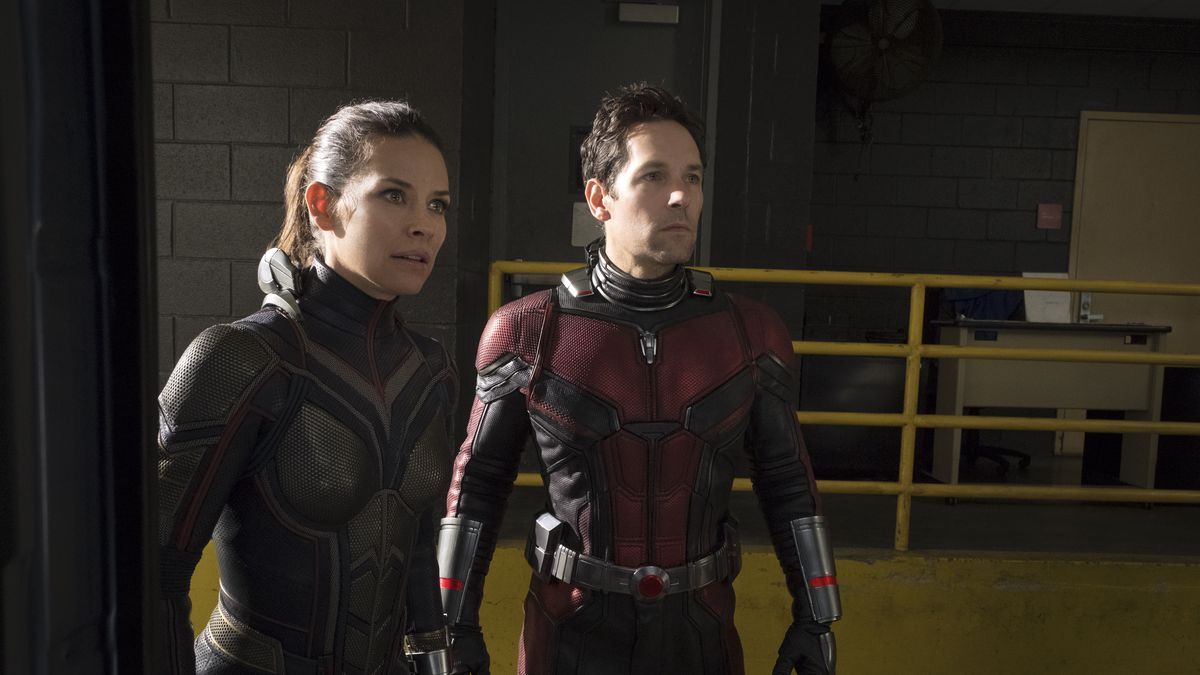
Like the titular heroes who get small to do big things, Ant-Man and the Wasp gets a boost by making its stakes more personal, and its mojo a sweet, witty blast.
“Do you guys just put ‘quantum’ in front of everything?”
Scott Lang/Ant-Man (Paul Rudd) asks that question for him and for us. The answer is yes, they do, but don’t sweat the science and the fun will win out.
Scott’s on the outs with just about everyone since his assist to Captain America (“We call him Cap!”) in Civil War, but he just might be what Dr. Pym (Michael Douglas) and his daughter Hope Van Dyne (Evangeline Lilly) need to rescue their long lost wife/mother Janet Van Dyne (Michelle Pfeiffer) from the “quantum realm” that’s held her for decades.
The team could be on to something huge, and their research has many interested and scary parties, including “Ghost” (Hannah John-Kamen from Black Mirror and Ready Player One), a molecularly challenged young lady who thinks it could save her life.
Too serious? Anything but.
Thanks to Rudd’s comic timing and affable charm, Ant-Man becomes the family friendly cousin to Ryan Reynolds’s Deadpool. Like Reynolds on his DP projects, Rudd again earns a writing credit, filling his character with plenty of snappy dialogue and tongue-in-cheek humor that feels like a comfortable extension of Rudd’s own persona.
He’s a natural, but Lilly is the welcome surprise here. The Wasp’s intro in the first film often seemed like an awkward distraction, but she earns the equal marquee time with a script that allows Lilly the chance to make the character matter.
Director Peyton Reed is also back from part one, showing a confident grasp on Ant-Man’s role in the Marvel Universe. He keeps the pace quick, the gags (many featuring a scene-stealing Michael Pena) on a PG-13 speed dial, and the effects team busy, showcasing plenty of the amazing scale-altering set pieces that give this franchise its unique calling card.
The film knows its place in Marvel’s lineup, too, and that’s hardly an accident. Good as Infinity War was, the break from galaxy-hopping is welcome. Two of the writers from Spider-Man: Homecoming are on board this time, bringing some of the less-is-more sensibility which gave that film such an unexpected freshness.
Yes, it could stand to lose about fifteen minutes of excess, but AMATW has an unassuming vibe that is infectious fun, and the perfect palate cleanser before another bite of Thanos.
And don’t leave early, or you’ll miss a mid-credits bonus that might drop some jaws.
What a killer year 2018 has in horror been already! One mega-blockbuster, another big indie hit, loads of fun stuff big and small. Whether you think the great Annihilation and The Endless are horror, whether you believe unhinged Mom and Dad-style Nic Cage is the best kind of Nic Cage, and no matter where you stand on The Strangers: Prey at Night, we’re here to has it out.
It’s time we count down the best of the best so far this year, and we are thrilled to have Senior Filmmaker Correspondent Jason Tostevin join us, as is tradition, to argue over what is and is not horror, what is and is not great. Plus, we sing!
5. The Ritual
David Bruckner has entertained us with some of the best shorts in horror today, including work from V/H/S, Southbound, and one of our favorites, The Signal. Directing his feature debut in The Ritual, Bruckner takes what feels familiar, roots it in genuine human emotion, takes a wild left turn and delivers the scares.
Five friends decide to mourn a tragedy with a trip together into the woods. Grief is a tricky, personal, often ugly process and as they work through their feelings, their frustration quickly turns to fear as they lose themselves in a foreign forest where danger lurks.
The film works for a number of reasons, but its greatest triumph is in making the woods scary again. That environment has become such a profound cliché in horror that it is almost impossible to make it feel fresh, but there is an authenticity to the performances, the interaction among the characters, and the frustration and fear that grounds the horror. And then there is horror—intriguing, startling, genuinely frightening horror. Yay!
4. Unsane
Sawyer Valentini (Claire Foy—brittle, unlikeable and amazing) is living your worst nightmare. After moving 400 miles to escape her stalker, she begins seeing him everywhere. She visits an insurance-approved therapist in a nearby clinic and quickly finds herself being held involuntarily for 24 hours.
After punching an orderly she mistakes for her stalker, that 24 hours turns into one week. And now she’s convinced that the new orderly George is, in fact, her stalker David (Joshua Leonard—cloying, terrifying perfection).
After laying bare some terrifying facts about our privatized mental health industry, Steven Soderbergh structures this critique with a somewhat traditional is-she-or-isn’t-she-crazy storyline. Anyone who watches much horror will recognize that uneasy line: you may be here against your will, but that doesn’t mean you shouldn’t be here.
And the seasoned director of misdirection knows how to toy with that notion, how to employ Sawyer’s very real damage, touch on her raw nerve of struggling to remain in control of her own life only to have another’s will forced upon her.
He relies on familiar tropes to say something relevant and in doing so creates a tidy, satisfying thriller.
3. Revenge
The rape-revenge film is a tough one to pull off. Even in the cases where the victim rips bloody vengeance through the bodies of her betrayers, the films are too often titillating. Almost exclusively written and directed by men for a primarily male audience, the comeuppance angle can be so bent by the male gaze that the film feels more like an additional violation.
Well, friends, writer/director Coralie Fargeat changes all that with Revenge, a breathless, visually fascinating, bloody-as-hell vengeance flick that repays the viewer for her endurance. (His, too.)
Fargeat’s grasp of male entitlement and the elements of a rape culture are as sharp as her instincts for visual storytelling. Wildly off-kilter close-ups sandwich gorgeous vistas to create a dreamlike frame for the utterly brutal mess of a film unfolding.
Symbol-heavy but never pretentious or preachy, the film follows a traditional path—she is betrayed, she is underestimated, she repays her assailants for their toxic masculinity. But between Fargeat’s wild aesthetic, four very solid performances, and thoughtful yet visceral storytelling, the film feels break-neck, terrifying and entirely satisfying.
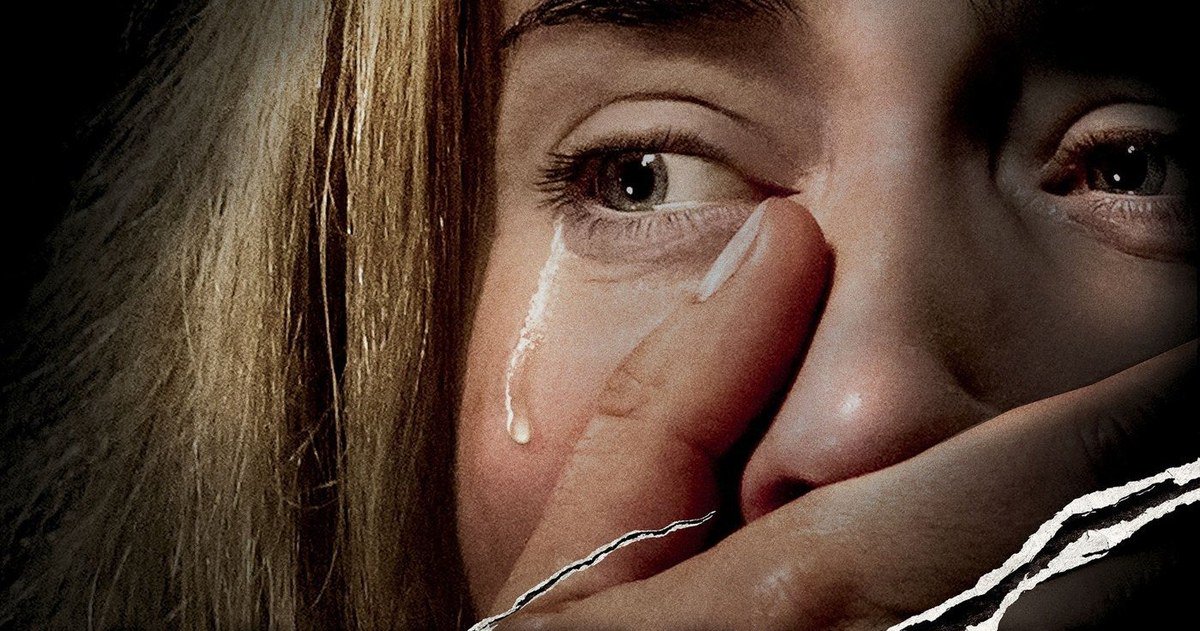
2. A Quiet Place
Damn. John Krasinski. That big, tall guy, kind of doughy-faced? Married to Emily Blunt? Dude can direct the shit out of a horror movie.
Krasinski plays the patriarch of a close-knit family trying to survive the post-alien-invasion apocalypse by staying really, really quiet. The beasts use sound to hunt, but the family is prepared. The cast, anchored by Krasinski’s on-and-off-screen wife Emily Blunt is amazing. That you may expect.
What you may not expect is Krasinski’s masterful direction: where and when the camera lingers or cuts away, how often and how much he shows the monsters, when he decides the silence will generate the most dread and when he chooses to let Marco Beltrami’s ominous score do that work for him.
It’s smart in the way it’s written, sly in its direction and spot-on in its ability to pile on the mayhem in the final reel without feeling gimmicky or silly.
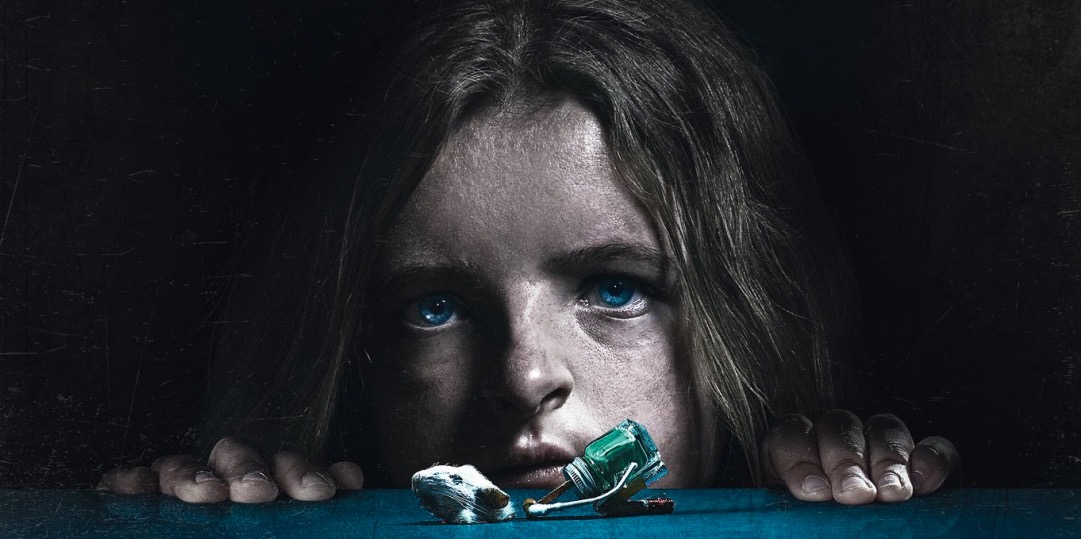
1. Hereditary
Grief and guilt color every somber, shadowy frame of writer/director Ari Aster’s unbelievably assured feature film debut, Hereditary.
With just a handful of mannerisms, one melodic clucking noise, and a few seemingly throwaway lines, Aster and his magnificent cast quickly establish what will become nuanced, layered human characters, all of them scarred and battered by family.
Art and life imitate each other to macabre degrees while family members strain to behave in the manner that feels human, seems connected, or might be normal. What is said and what stays hidden, what’s festering in the attic and in the unspoken tensions within the family, it’s all part of a horrific atmosphere meticulously crafted to unnerve you.
Aster takes advantage of a remarkably committed cast to explore family dysfunction of the most insidious type. Whether his supernatural twisting and turning amount to metaphor or fact hardly matters with performances this unnerving and visual storytelling this hypnotic.