Tag Archives: Madd at the Movies

A Friend in Me

News of the World

by Hope Madden

From the moment Sheriff Woody lamented that snake in his boot, it’s been inevitable that Tom Hanks would star in a Western. Not because he personifies the bruised masculinity, the solitary grit—that’s just ornamentation, anyway.

Tom Hanks would inevitably be the hero in a Western because we believe he would do the right thing, however difficult that is.

The Western News of the World is a film we’re less inclined to expect from director Paul Greengrass. His kinetic camerawork and near-verite style that lent realism to United 93 and added tension to his Jason Bourne films hardly suit a Western. He adapts with a more fluid camera that underscores the tension as well as the lyricism inherent in the genre.

He also takes full advantage of our faith in Tom Hanks.

Hanks is Captain Jefferson Kyle Kidd, a Civil War veteran who travels from town to town reading news stories to weary people looking for a distraction. In his travels he comes across a 10-year-old girl (Helena Zengel, wonderful) who’d been raised by Kiowa people and is now being returned against her will to her natural aunt and uncle.

Reluctantly, Captain Kidd agrees to transport her 200 miles across dangerous territory. Not because he wants to or because he will benefit in any way from it. In fact, he will probably die, and she with him.

Greengrass adapts Paulette Jiles’s nove with the help of Luke Davies. An acclaimed poet, Davies can be a handful for some directors. His material, even when done well, as it was with Garth Davis’s 2016 film Lion, can feel overwrought and overwritten. But Greengrass’s touch is lighter, his style always bending more toward realism than poetry, and here he’s struck a lovely balance.

Westerns lend themselves to poetry of a sort. News of the World offers a simple hero’s journey, understated by Greengrass’s influence and Tom Hanks’s natural abilities. A damaged soul faces an opportunity to prove himself, perhaps only to himself, and he takes it. And he is forever changed.

Full ‘O Shenanigans

Wild Mountain Thyme

by Hope Madden

“Welcome to Ireland! My name is Tony Reilly and I’m dead.”

So begins Wild Mountain Thyme, a romantic comedy so cartoonishly Irish you’ll expect the Lucky Charm leprechaun to drop by for a Guinness.

Writer/director John Patrick Shanley can be very good, especially when he’s working from his own plays. Shanley won an Oscar for penning Moonstruck, and drew a nomination when he adapted his stage play Doubt for the screen.

He also directed the latter, a film that soared thanks to a quartet of nearly perfect performances (Meryl Streep, Viola Davis, Philip Seymour Hoffman, Amy Adams—each the most exquisite piece of casting imaginable).

Though considerably lighter, Shanley’s latest boasts an impressive cast as well. Not Doubt impressive, but what is?

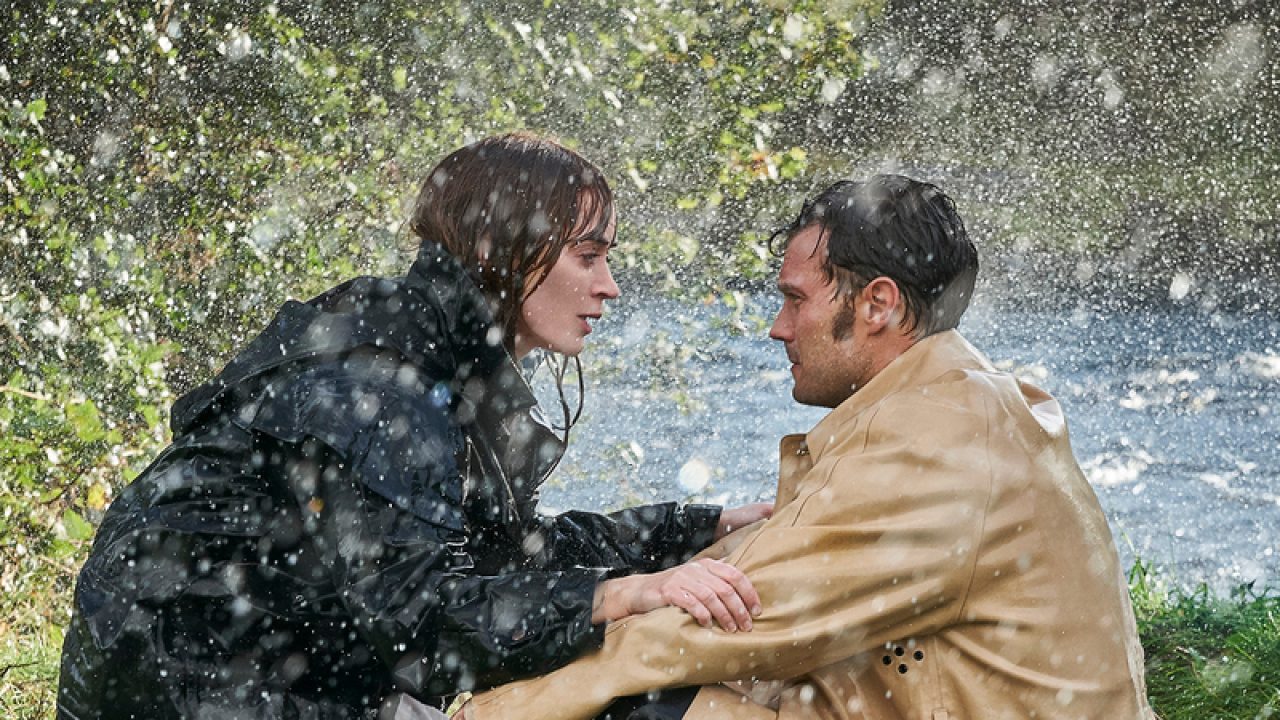
Emily Blunt and Jamie Dornan anchor the film as two unreasonably attractive and weirdly single neighbors in rural County Mayo. Rosemary and Anthony have known each other all their lives, and even though many (including Anthony’s father Tony, played by Christopher Walken) have given up on the union, Rosemary will have her beloved Anthony one day.

Let’s stop a sec on Walken. He’s a great actor, a beloved icon, a cool dude. What he is not is Irish. Does that really matter—Walken’s accent isn’t exactly American, right? It’s just, well, Walken.

The point is that Shanley couldn’t be less interested in authentic Irishness. Wild Mountain Thyme’s authenticity rivals that of Darby O’Gill and the Little People.

Oh the whimsy! The blarney! The third act reveal that outshines any act of nonsense you are likely to find on screen this year. How much Jameson’s did Shanley down before committing this to film?

It’s beautiful, don’t misunderstand. The verdant farms as well as the cast (Jon Hamm joins Blunt and Dornan as the Yank looking for an Irish farm and an Irish lass). It’s just so Irish-Spring-ad ridiculous.

It’s nice, though. Its belabored whimsy kind of clubs you into a stupor by around the third or fourth rainstorm (what, no rainbow?!). The story meanders. The symbolism serves only to further confuse things. The magic Shanley weaves can’t transcend the film’s lunacy long enough to give Wild Mountain Thyme the fairy tale quality it desperately wants.

Still, Blunt and Dornan are engaging and you have to give the film credit for sheer shamrock audacity.

The Walk Out

The Stand-In

by Hope Madden

Director Jamie Babbit specializes in comedies about unlikeable women. While the films invariably appeal to a fairly select taste, they are almost always appealing.

Not today. Today she’s made the longest 2-hour comedy in history. I felt myself age. I did not feel myself laugh.

The Stand In should be a by-the-numbers twist on All About Eve, an evil twin kind of comedy caper. According to its promotion, it’s “the story of a disaffected comedy actress and her ambitious stand-in trading places.”

Eventually, that’s what it is. Candy Black (Drew Barrymore, better than this) hates her fame,  her life and her career. It’s driven her to bottles of pills and liquor and finally, into reclusion. That reclusion has driven her stand-in Paula (also Barrymore, still better than this) to unemployment and homelessness.

So eventually, they switch identities. “Eventually” being the key word because even though you can see where this is going from the film’s opening scene, The Stand In takes a full 45 minutes to get there.

That is to say that Act 1 is 45 minutes long. And once you’re there you realize you know where things will go from here, so why on earth did you wait this long to just settle into a brazenly predictable if inexplicably lengthy and surprisingly mean spirited trajectory?

It is not because you were so busy laughing you didn’t notice the time.

Sam Bain wrote 2010’s magnificent Four Lions, a smart, provocative political comedy that too few people saw. Babbit directed the ballsy cult comedy But I’m a Cheerleader. Barrymore is likable, talented and funny. What the hell went so miserably, soul crushingly wrong with this movie?!

A big part of the problem is a lack of commitment to tone. Both director and writer have experience with satire, although this film fails miserably at the wit or social commentary required. Moments of farce don’t land, the romantic comedy angle—Barrymore’s bread and butter—is maybe its weakest attempt.

Babbit’s film feels most at home as a belabored attempt at dark comedy—dark mainly because every character is loathsome, so at least that part is a success.

Comedy, though? God no.

God is Irish

Crock of Gold: A Few Rounds with Shane McGowan

by Hope Madden

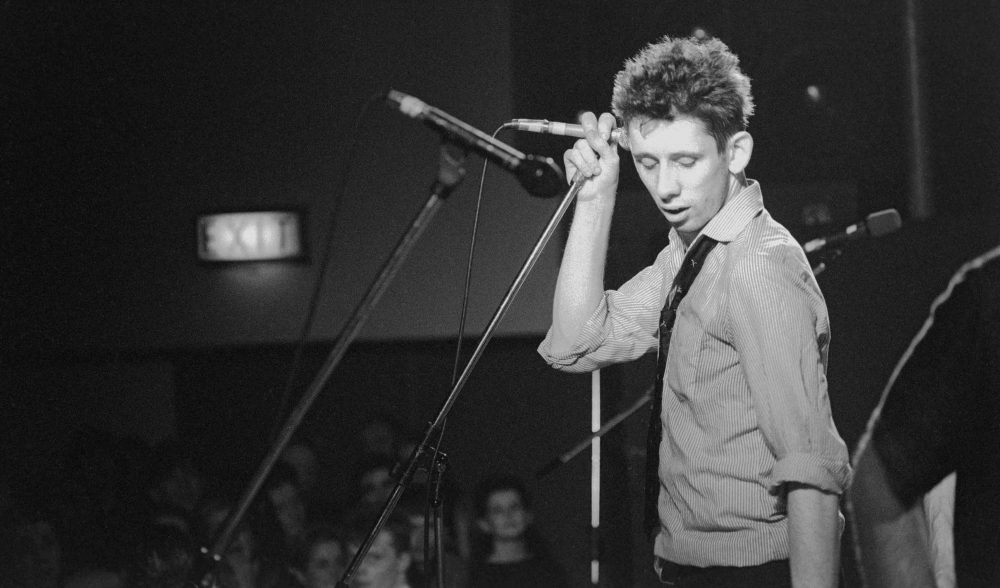
Sloppy and ruinous, raucous and charged, and more than anything, punk rock—honestly, this could describe about a dozen Julian Temple movies. In this case, crashing the party of his Sex Pistols docs and his intimate Joe Strummer film is Shane McGowan. And he’s pissed.

Drunk, I mean.

Crock of Gold: A Few Rounds with Shane McGowan is Temple’s exploration of life after punk.

The poet of Irish rock, a traditionalist who set gritty street ballads to Celtic tunes, McGowan wanted to save Irish music. This was the legacy he was after, and as frontman of the Pogues—Ireland’s second most successful and likely most Irish band—he did.

Yes, here’s where all rock biopics ask, “At what cost?” Temple’s film doesn’t wait, though. Opening as it does on McGowan, 60-years-old, slurring, wheelchair bound and still drinking, Crock of Gold never hides from the ravages of a punk rock life.

The young McGowan railed at the cliché of the drunken Irishman even as he personally confirmed it. “You want a Paddy?” he says of the British establishment. “I’ll give you a fucking Paddy!”

The film faithfully follows McGowan’s chronology, from boyhood in County Tipperary to angry adolescence in London, on to thrashabout music and eventually international stardom before the inevitable crash, slow rebuild, and crash some more.

And McGowan himself is right there, either narrating the unfolding events or listening in to earlier tapes of him narrating. His constant presence anchors the wild, fascinating tales with their physical toll.

Temple also fills the screen with bizarre animation, old movie footage of the Irish War and of bucolic country life, as well as images of McGowan’s late 70s London, Sex Pistols show and all. What he conjures is an image of clashing ideas and ideals that found a home in McGowan’s imagination and translated into melancholy street music.

McGowan’s touring life of drink and drugs, violence and very little toothpaste are well documented. It’s hard to pin down the feelings drummed up by all these stories. The modern day balladeer—a full set of dentures on display when he smiles, which is rarely—seems simultaneously brash and regretful.

For passing fans or newcomers to McGowan’s music, Crock of Gold is an unusually clear-eyed testament to the toll of punk rock excess. These guys were not meant to live forever.

But for true fans, it’s a painful and strangely beautiful look into one remarkable if misspent life.

18 and Life

18 to Party

by Hope Madden

Does every crappy small town in America have a dive called Polo’s where mangey kids—many of them well, well under age—line up to try to get in?

Well, if not, writer/director Jeff Roda’s 18 to Party makes that and just about everything else seem universal. His Linklater-esque exploration of near-adolescence runs its course in a single evening, but that doesn’t make it any easier to forget.

Sure, the high schoolers are all lined up out front waiting for the sun to go down and the bouncer to start letting people in. But Missy, Kira and James, Shel and Brad, Peter and Dean are stuck out behind the club, wasting time and hoping against hope that night manager Rizzo is cool enough to let them in.

Eventually.

Roda understands small town socializing and boredom enough to know that most of the evening’s intrigue, and most of its memories, will take place in those hours before Rizzo makes up his mind.

It’s 1984 and Generation X is, as happened to usually be the case, unsupervised. Well, Shel (a standout Tanner Flood) is supposed to be at Brad’s (Oliver Gifford). Everyone else’s parents are at the town meeting about the UFO sighting.

Thoughts of extra-terrestrials, worries about getting in, general social anxiety and inevitable personality clashes take a back seat to the realization that Lanky (James Freedson-Jackson, really excellent) is back.

No one’s seen him since that thing with his brother.

Roda’s approach is lackadaisical, although the energy that comes naturally off a gaggle of 14-year-olds is enough to deliver regular explosions. Why doesn’t Shel want to fool around with Amy? What is Brad so mad about? Why is Kira so weird?

The film and the evening are loosely structured, allowing for plenty of riffs that occasionally provide a wink to the times (“U2 ripped off The Alarm,” Kira claims. “Check back with me in 5 years and we’ll see who’s still aroud.”)

More often, though, Roda develops darker threads that suggest the kind of doom that can dog you even before you start high school, kiss a girl or get into your first party.

Roda has a light, meandering touch, far more interested in a slice of mid-Eighties life than in the specificity of a John Hughes retread. Characters are familiar, the situation feels authentic, and the mixture of nostalgia, dread and optimism paint a fascinating if unfinished picture.

https://www.youtube.com/watch?v=plO9K1DtXJM

No More Words

Girl with No Mouth

by Hope Madden

If you haven’t seen writer/director Can Evrenol’s 2015 feature debut Baskin, you really must. Watch it right now.

Unless you’re squeamish. Then maybe don’t. But there is another film you might like, Evrenol’s surprisingly good natured post-apocalyptic kid adventure, Girl with No Mouth.

A little bit Goonies, a little bit Mad Max (you know, the one with the kids with the mullets), a little bit Peter Pan, and a lot of deformed children. He is Can Evrenol, after all.

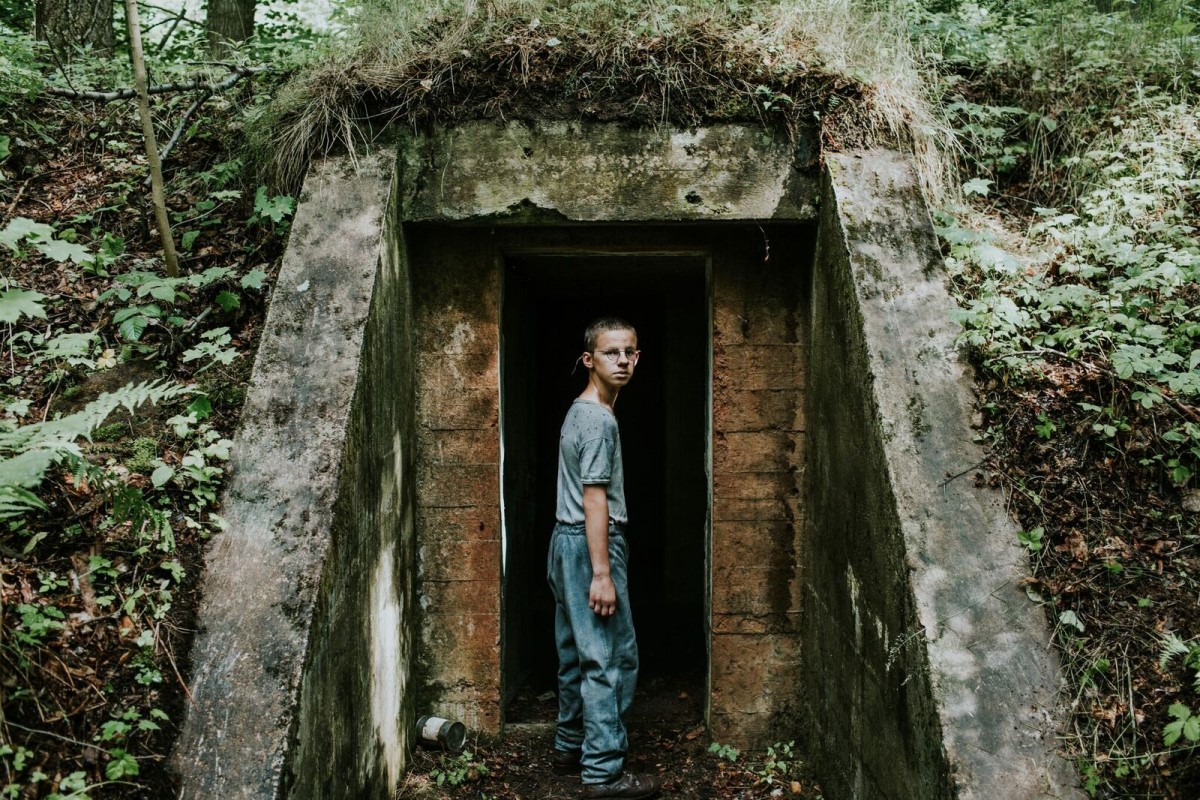
His film is set ten years after The Corporation’s big disaster. Ten-year-old Peri (Elif Sevinc, an effective hero regardless of the fact that she has no dialog) bears the evidence of that disaster. When The Corporation sends goons around to finish cleaning up any remaining evidence, Peri is on the run in the woods, where she finds three friends with similar birth defects.

They believe they’re pirates.

You have to give it to Evrenol, who flavors the film with childlike innocence and fantasy without soft peddling the horror of their situation. It’s a wildly unusual tone the film hits, but it never misses.

Girl has a sense of humor entirely lacking in Baskin, as well as a feeling of optimism. There is blood and death, maggots and burning flesh, but there’s real joy in this film, however weird that is to say.

The four children—Denizhan Akbaba, Ozgur Civelek and Kaan Alpdayi, alongside Sevinc—utterly captivate. Their performances are not showy, but they are vibrant and sometimes giddy. It’s the liveliest post-apocalypse you’re likely to see.

It may never live up to the sheer WTF nastiness of Baskin, nor is it likely to haunt your nightmares the way that descent into hell would. Girl with No Mouth is an adventure film more than a horror movie, and its hopeful resolution may seem out of place in a landscape devoid of such whimsy.

It’s also the second excellent film I’ve seen this week (along with Adrian Panek’s Werewolf) that realizes adults ruin everything and there’s really only one way to fix it.

https://www.youtube.com/watch?v=o6MiHJINTs0

Voice of Rage and Ruin

Werewolf

by Hope Madden

Liberation isn’t always the good time it’s cracked up to be. In his strangely hopeful tale Werewolf, writer/director Adrian Panek offers a different image of social rebuilding.

His film follows a handful of orphans of the Nazi occupation. Eight children liberated from a concentration camp are dropped off at a makeshift orphanage—really a deserted mansion, long bereft of food, no running water, no electricity. The possibility of aid comes by way of rare visits from Russian guards who may or may not bring rations, may or may not bring their own danger.

Still, little by little the children begin to shake off the horrors of the camp. They explore the woods around them, find berries, even play. But Nazi danger is everywhere—maybe in the bunkers dug deep into the surrounding mountains. Definitely in the woods.

Lurking figures and echoing growls haunt the film from the children’s first steps outside the ruined mansion. Then there’s a body, then more bodies. When Panek reveals the source of the terror, Werewolf could easily turn to pulpy horror. It does not.

At times the film conjures the same magic and dread of Monos, but Panek may see more resilience than Lord of the Flies in children. The filmmaker shows restraint and a forgiving nature when it comes to the barbarity of childhood. He reveals strong instincts with his young cast, understating sentiment and avoiding either the maudlin or the saccharine.

Werewolf is beautifully shot, inside the crumbling castle, out in the woods, even in the early, jarring nonchalance of the concentration camp’s brutality. Panek hints at supernatural elements afoot, but the magic in his film is less metaphorical than that. 

The film is creepy and tense. It speaks of the unspeakable – the level of evil that can only really be understood through images of Nazi horror—but it sees a path back to something unspoiled.

https://www.youtube.com/watch?v=EXk6tB4lJQM

City of Ruins

Mosul

by Hope Madden

Matthew Michael Carnahan is a screenwriter unafraid to dive into the political. Though none of his films are classics, from the best (The Kingdom) to the worst (Lions for Lambs), all tell stories that combine governmental indecision with action in an attempt at cultural relevance.

As a rule, the success of his themes depends on the film’s director. So with Mosul, Carnahan has no one to blame but himself if it doesn’t work.

The film spends a single, tumultuous afternoon in the titular Iraqi city with the Nineveh province SWAT team, the only group to fight ISIS occupiers continuously from 2014 to 2017. Onscreen text clues us in to their successes, their legendary status, and their desperation to complete one last mission before ISIS finally flees the city.

En route to completing that mission, they hear gunfire and come to the aid of two standard issue uniformed police officers about to lose their lives in a standoff with ISIS. When all is said and done, one cop is on his way back to the other side of the city. The second, Kawa (Adam Bessa, Extraction), joins the rogue unit.

Carnahan shows surprising instincts when it comes to pacing. Rather than generating tension to be released with bursts of action, Mosul periodically punctuates the near-constant action with brief respites.

Carnahan knows how to make the most of these moments. We catch our breath for a glimpse of each of these men as men. The character building is brief and nearly everyone will die before we know their names, but thanks to touches that never feel scripted or heavy handed, the characters have the chance to be human.

The breathlessly paced slice of war torn life is grounded by two performances: Bessa and Suhail Dabbach, playing commanding officer Jasem. Kawa’s character evolves almost at the speed of light, turning in one afternoon from a wide-eyed, by the books police officer to an unrecognizable man with a mission.

Jasem is on the other side of that evolution and the veteran Iraqi actor makes you believe. A father figure who is simultaneously merciless and dangerously compassionate, he’s a bright and constant reminder of exactly why the unit fights.

Carnahan’s first time out behind the camera rushes at times. Kawa’s speedy transformation certainly strains credulity. But Mosul handles the political themes with a surprisingly light hand. It certainly keeps your attention and delivers eye-opening information without abandoning storytelling to do it.

He should keep directing his own movies.

Teenaged Chasteland

Porno

by Hope Madden

Have you seen Lamberto Bava’s 1985 horror Demons?

I can’t help but wonder if writers Matt Black and Laurence Vannicelli have. It’s a low rent affair that suckers a group of moviegoers into watching a violent horror flick that unleashes—you guessed it—demons.

More than three decades later, Vannicelli and Black pen a more good natured horror that traps five Christian teens in the small town cinema where they work circa 1992. After closing they chase a homeless intruder into an unknown basement, find additional theaters, movie posters for Orgy of the Dead and other unsavory features, and a canister.

Here’s where things get a little familiar. The teens decide to screen the film from the basement canister. But it’s not exactly a grisly horror film, like Bava’s. For these sexually repressed teens, it’s worse.

It’s porn.

Hell for sure.

Black and Vannicelli give director Keola Racela plenty to work with, whether touching the funny bone or the gag reflex. Porno is strangely upbeat and even sweet for a film whose villain (Katelyn Pearce) doesn’t deliver a single line or wear any clothes the entire running time (unless you count her merkin).

And it’s gross. You don’t even want to know what happens to Heavy Metal Jeff’s nut sack.

Four of the five teens are afraid they’re pervs in one way or another and are therefore headed to hell. (Not Jeff. Jeff’s keeping his edge.) Racela and cast have fun with this idea, thanks in large part to charming performances.

Porno nails the time period and the mood, delivering some carnage-laden laughs pointed at both the uptight and the nasty. But Racela gets a little lost in the storytelling. Porno would benefit from a serious edit. It runs a mere 90 minutes but feels much longer, likely because storylines spin out all over the building with little thought to pacing or tension.

Between the sloppy structure and some sophomoric comedy, even the brightest and wildest moments can be overlooked. (Well, not that thing with Jeff.) The weaknesses pile up and by the end, Porno feels like a near miss.