Just when you thought no one could do anything fresh with a possession movie, Terrified filmmaker Demián Rugna surprises you.
Well, fresh may not be the word. Indeed, you can almost smell this putrid tale. I mean that in the best way.
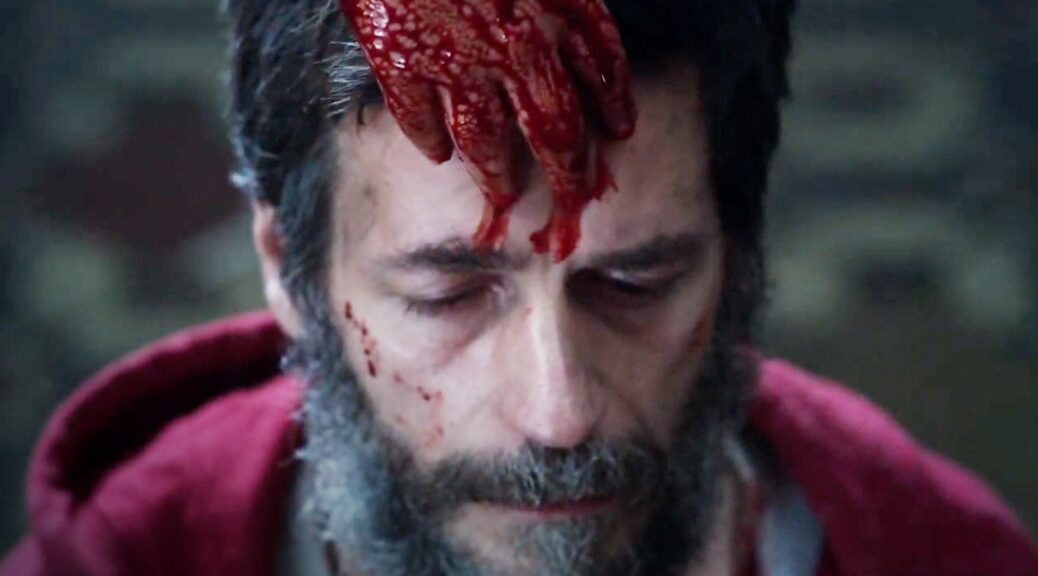
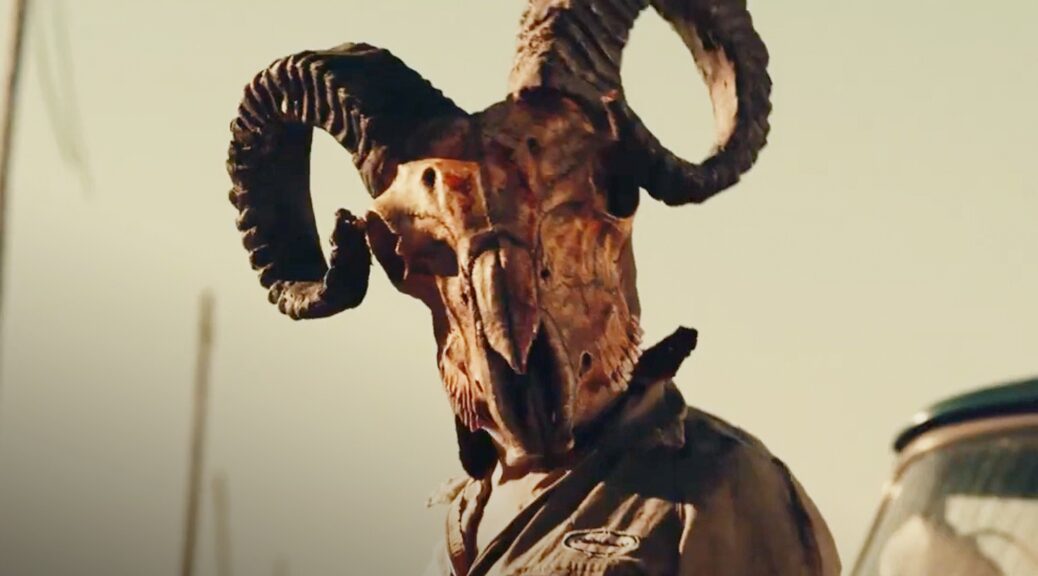
Pedro (Ezequiel Rodriguez) and his brother Jimmy (Demián Salomón) hear shots. It’s late, and the sound is far – somewhere between their land and their neighbor Ruiz’s (Luis Ziembrowski) farm. The way Rugna reveals what the brothers find, where it leads them and what it unleashes is a tale so masterfully told you almost miss the underlying character study and the blistering performance that brings it to life.
When Evil Lurks does sometimes feel familiar, its road trip to hell detouring through The Crazies, among others. But Rugna’s take on all the familiar elements feels new, in that you cannot and would not want to predict where he’s headed.
As choices are made and usually regretted, Rugna propels his heroes onward, each step, each choice, each misstep adding pressure and confusion, unveiling the character beneath even as bits of the brothers’ history organically comes to light. This is a magnificently written piece of horror, and Rugna’s expansive direction gives it an otherworldly yet dirty, earthy presence.
The entire cast is wonderful, each one cracked and poisoned just a bit. But Rodriguez sears through the celluloid with a performance so raw, frustrating and full of rage it makes you uncomfortable.
His counterpoint, Salomón’s younger, gentler brother Jimmy, infects the film with enough tenderness to make the wounds hurt. And in creating injury, Rugna is fearless. No one is safe, not even the audience.
The inexplicable ugliness – this particularly foul presence of evil – is handled with enough distance, enough elegance to make the film almost beautiful, regardless of the truly awful nature of the footage. And Rugna never lets up. Each passing minute is more difficult than the last, to the very last, which is an absolute knife to the heart.
In case Rugna’s 2017 treasure Terrified didn’t solidify his place among the greats working in the genre today, When Evil Lurks demands that recognition.
If found footage, horror anthologies and 80s nostalgia are your thing, V/H/S/85 is speaking your language. The sixth episode in the series straps on those heavy camcorders and uploads that security cam footage to remind us of all the horrors of the Reagan era.
Highlights include David Bruckner’s wraparound story, “Total Copy.” An alum of the 2012 original V/H/S and successful filmmaker behind The Ritual and the recent Hellraiser, Bruckner has a tricky assignment. The wraparound has to serve as an anchor for the balance of the short films while standing on its own. Bruckner’s tale delivers a VHS tape of security footage that’s been copied over with commercials, exercise videos, and other horrors. But the main story it tells, of an entity in lockdown being studied by researchers, is chilling, sometimes funny, and eventually pretty bloody.
Not to be outdone, Mike P. Nelson contributes two short films with one clever twist. The first, “No Wake” follows a group of campers who head out onto a lake despite posted signage forbidding it. And though things go predicably wrong for them, the actual execution (both by the director and of the characters) delivers genuine surprises, as does the twist in Nelson’s second outing, “Ambrosia” about a fundamentally bent family tradition.
“TKNOGD” (technogod), from Natasha Kermani (Lucky), is the most daring of the set, although it nearly outstays its welcome before hitting its stride. A performance artist laments the blossoming obsession with tech. The plausibility of the audience reaction is almost as much fun as the gory finale of her show.
Gigi Saul Guerrero (Satanic Hispanics, Bingo Hell) contributes a news piece gone wrong during Mexico City’s 1985 earthquake. What’s most effective is her use of the set to increase claustrophobia to high levels before bursting that tension with the bloody finale.
Scott Derrikson’s (Sinister, The Black Phone) “Dreamkill” is the most effective and imaginative of the set, plus there’s a Goth kid! Now that’s a reason to love the 80s! A police detective keeps receiving VHS tapes in the mail of murders that have not yet been committed. From the grim crime scenes to the plot twists to the almost funhouse architecture of the final acts of carnage, “Dreamkill” never lets go.
This is the strongest set of shorts in a V/H/S installment in a while. It’s fun, gory, creepy and bite sized – ideal for the season.
There have been more Exorcist movies than you might realize and almost all of them are good. One is great. One is a masterpiece.
Is it really fair to hold any of them up against the mastery of William Friedkin’s 1973 original? Well, The Exorcist: Believer flies the titular flag, and brings back Ellen Burstyn to reprise her role as Chris MacNeil, so the film isn’t exactly staying away from it. And with two more Exorcist films on the way, director and co-writer David Gordon Green is nothing if not ambitious.
Green has been here before, recently bringing Michael Myers roaring back to life with his Halloween trilogy. That project came out of the gate with strength and promise, which only made the final two installments that much more disappointing.
This opening statement brings cause for both optimism and worry.
Green’s multiple nods to Friedkin’s original start from Believer‘s opening frame, as Victor Fleming (Leslie Odom, Jr.) and his pregnant wife are traveling in Haiti. Tragedy strikes, and we move ahead thirteen years, with Victor raising Angela (Lidya Jewett from Hidden Figures and TV’s Good Girls) as a single father in Georgia.
Angela and her friend Katherine (Olivia O’Neill, in her debut) go missing after a walk in the woods, showing up three days later as very different people. Katherine’s parents (Jennifer Nettles and Norbert Leo Butz) are true Bible thumpers, and their contrast with Victor’s skepticism becomes an important thread that Green will pull to the end.
The girls’ shocking and blasphemous behavior leads Victor’s neighbor (Ann Dowd) to suggest contacting MacNeil, now a best-selling author who has devoted the last 50 years to understanding what happened to her daughter, Regan.
Odom, Jr. delivers a complex but never showy performance that anchors all the fantastical that orbits him. And it’s great to see the Oscar-winning Burstyn back in this role, but her rushed introduction here reminds you of what an effectively slow burn the original employed. Maybe today that’s a harder sell. But as good as all these performances are, you are just not as deeply invested once the fight for two souls begins.
Green does show a good feel for the callbacks, never going overboard and holding your attention with a consistently creepy mood. The girls’ makeup, demonic voices and atrocities combine for a series of solidly unnerving sequences. Nothing may come close to the shocks from the original, but really, what could? You’re not going to put another child actor through what Linda Blair endured.
Still, 1990’s Exorcist III managed two original moments that bring chills to this day, and nothing about Believer feels destined for iconic status.
The storytelling scores by mercifully limiting the Catholicism, as Green embraces the idea that every culture has a ritual for expelling evil. It’s nice to point out that the Catholics don’t hold a monopoly on exorcisms and that maybe horror fans have grown weary of priests and nuns at this point. Green removes the power from an individual faith and empowers the idea of community, where “the common thread is people.”
But while Believer brings in some welcome new ideas, it lacks the confidence to let a path reveal itself without guideposts of undue exposition. Too much of what happens in the third act is telegraphed early or explained late, even saddling the always-great Dowd with a needless, bow-tying monologue.
What made the original great? Friedkin and writer William Peter Blatty tied us all up in one man’s shame, his inability to do the right thing, and his crisis of faith just to see him sacrifice himself for an innocent. Friedkin terrified us with the most unholy image one could imagine at that time, closed us in a tiny space with this foul idea, and then released us only when one good man died for us.
The demon is again playing on shame and exploiting grief, ultimately revealing a long held secret that becomes key to the fate of both girls. And while the issue this film raises is worthy and mildly provocative, the question of where the franchise goes next is equally intriguing.
Believer spends two full hours telling the story, and it needs those 121 minutes. But Green doesn’t spend them where he should. He tells us too much, shows us too little, and doesn’t invest our time with characters so we feel for the families. There are scary moments, for sure, but this episode does not feel like a kick start to a beloved franchise or a new vision of evil. It feels like an entertaining sixth movie in a decent series.
On the heels of that evil nun’s return to theaters, Deliver Us arrives with a sexy nun, a horny priest, one ancient prophecy and two incredible claims.
In a Russian convent, sister Yulia (Maria Vera Ratti) is pregnant – with twins. Not only is Yulia claiming immaculate conception instead of virgin birth (remember kids, the immaculate conception was of Mary, not Jesus), but she says one of her unborn children is the Messiah, and the other is the Anti-Christ.
The Church promptly reaches out to the handsome Father Daniel Fox (Lee Roy Kunz) for an investigation (Father Joseph McDreamy was apparently busy). Though the American priest has a history of success with these “demonic” cases, he also has a high level of skepticism and a belief that most can be explained through natural science.
Father Fox is also expecting a child with a prominent Russian bussinesswoman, and is planning on leaving the Church to start a family. Still, he accepts this last assignment, and soon uncovers a secret society’s plan to kill sister Yulia before her twins can fulfill that centuries-old prophecy.
The ancient order/prophecies fulfilled stuff is fertile ground for horror films. And though Kunz – who also co-writes and co-directs – is shaky on religion (the film also has a Catholic bishop trying to talk Father Fox out of leaving the Priesthood by arguing that celibacy is merely a “tradition”), a brutal opening sequence and the resulting mystery combine to set an intriguing hook.
Cinematographer Isaac Bauman gives the film a dark, gorgeously foreboding aesthetic, using stark confines and snowy landscapes to great effect. Candlelit rooms and steam heat in winter air are framed with a fine construction that adds to the feeling of isolation once Father Fox, sister Yulia and the twins set out on the run.
Sacrifices are demanded, and blood is spilled, but as the mystery unfolds, the unfortunate layer of silliness that plagues many films in this demonic subgenre begins to creep in. Even worse, two incredulous Shining references appear to nearly comedic effect, derailing the mood in an instant.
The writing and directing teams also seem overly concerned with the lack of eroticism in the exorcism game. And though Deliver Us can be a horny little devil, some fine production elements are ultimately let down by a script too distracted to satisfy.
What happens if a woman reconsiders Rosemary’s Baby?
This is not to say that writer/director Kjersti Helen Rasmussen’s Nightmare is the masterpiece of Polanski’s 1968 Oscar winner. It is not. But this Norwegian horror delivers an intriguing pregnancy nightmare, one that benefits from a somewhat merciless female perspective.
Eili Harboe (Thelma) is Mona. She and boyfriend Robby (Herman Tømmeraas, Leave) just bought an apartment. It needs a lot of work, but it’s all theirs and now they can be grown-ups. Mona isn’t sure she and Robby have the same definition of grown up, though, and here’s where things begin to break down.
Mona begins having nightmares that escalate into sleepwalking, sleep paralysis and hallucinations. Could it be stress over abandoning a burgeoning career to focus on renovations and – if Robby has a say in things – starting a family? Or maybe it’s the creepy neighbors and their screeching infant?
Whatever the case, Robby’s sexy, shirtless doppelganger comes to Mona every night. The relentlessness of it all has Mona questioning reality.
So do we. Rasmussen rarely clarifies what is really happening and what is nightmare. She mines the dreamy fact that what we see in our sleep is often an image of our waking troubles, particularly those we hide from ourselves. Mona wants to please, as so many women do, and the men around her take casual advantage of this. One scene in a doctor’s office pinpoints the moment Mona finally is moved to begin to act on her own.
Microagressions blend into bigger dangers as Mona’s life blurs with her nightmares. Rasmussen fills the reality with details and beautifully executed moments that fully outline Mona’s struggle.The darker fantasy world of the nightmares is given far less attention, and the medical world that bridges the two feels slapped together.
But Harboe’s understated turn, particularly in a handful of breathtaking scenes, helps Rasmussen blisteringly articulate an everyday horror women face.
Birth/Rebirth opens on two different women performing two different tasks in a hospital. Their paths will cross, but at the moment, Celie (Judy Reyes, Smile) and Rose (Marin Ireland, The Dark and Wicked) are revealing something of themselves to us.
Celie’s environment: chaotic, human. A prenatal nurse used to comforting and nurturing patients in need while navigating an emergency, Celie is a tight balance of empathy and control.
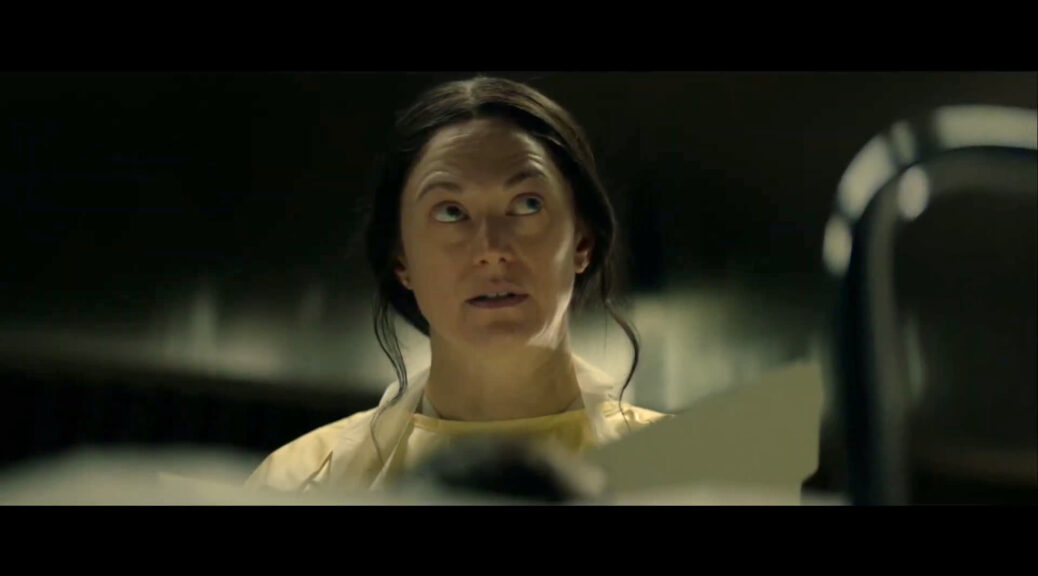
Rose – alone with a cadaver in a pathology lab in the bowels of the hospital – is a fastidious loner, cold, logical. She is pure science.
Their story, like Barbie’s, is about how impossible it is to be a woman. Director Laura Moss moves seamlessly from short to feature with this modern take on Frankenstein and motherhood.
Tragedy strikes early in Moss’s film. Overworked and under rested, Celie blames herself for her daughter Lila’s death. And now the hospital can’t even find the girl’s body.
But Rose can.
Little by little, with motives simultaneously opposed and identical, Celie and Rose become a duo. An odd couple, if you will, each with her own responsibilities, both with the same goal: bring Lila back.
Ireland’s Rose is an exceptional ghoul because her every behavior feels rooted in reality, which makes her both repugnant and sympathetic. However cold her behavior seems, there’s logic behind it. Her joy, those rare flashes, hit harder. She’s like a macabre Spock.
Reyes is her equal and opposite, compassionate but hard-headed. And as their relationship thickens, you see each woman changing thanks to exposure to the other. Rose slowly warms and becomes more human. Celie inches closer and closer to ghoul.
The film amounts to a profound parenting nightmare, and each actor takes on the role of parent to create an unnerving dynamic again guided by authenticity. All of it pulls the psychological scabs of exhausted parenting.
Moss can’t quite stick the landing, but their shoestring Frankenstein fable feels closer to the truth than most of them.
Talk to Me doesn’t waste much time before escalating the conversation.
And while the shocking prologue isn’t the only reminder you’ll get of similarly structured films such as The Ring or It Follows, Australian brothers Danny and Michael Philippou carve out a timely teen horror update that is often chilling and consistently engaging.
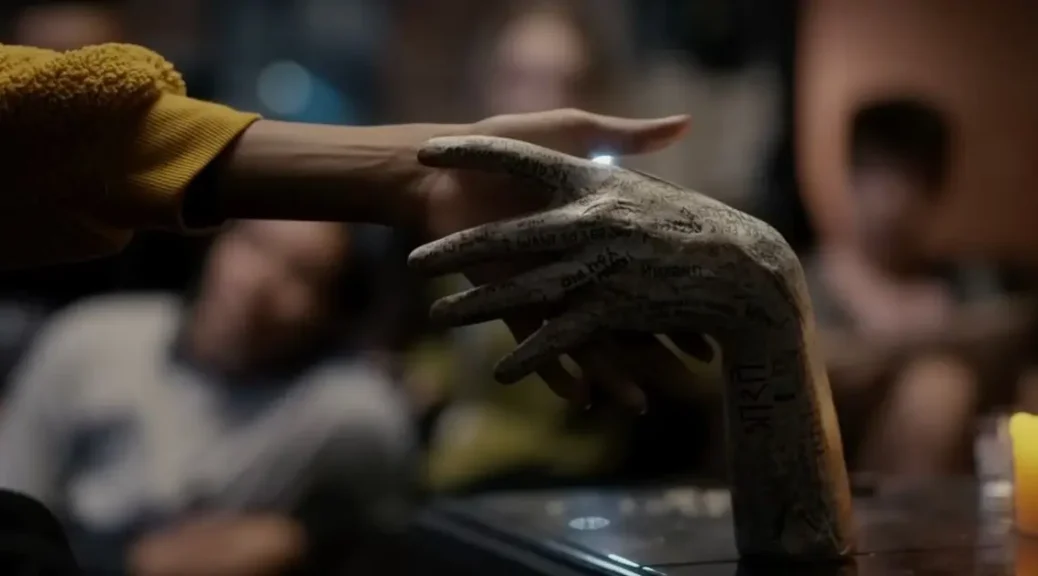
BFFs Mia (Sophie Wilde from The Portable Door) and Jade (Alexandra Jensen) are eager to hang out with the edgy kids at the local parties. And lately, that means getting in the room with Joss (Chris Alosio) and Hayley (Zoe Terakes), because they let you talk to the hand.
Where did Joss get it? Was it the hand of a satanist, or maybe a long dead medium? Details are sketchy. But if you’re game, you grip it, say “talk to me” and take the ride. And everyone else, of course, films the experience.
The Philippou brothers (both direct, Danny also co-writes) worked in TV, YouTube videos and on the camera department for The Babadook before this first feature, and it’s a debut that shines with a confident vision. We’ve seen some of these threads before, but this fresh take is able to capture the current zeitgeist without any desperation for hipness.
Viral fame isn’t the lure here, it’s the high of glimpsing the other side and the enlightened feeling it gives you. But for Mia, it’s also the gateway to a very personal journey that could answer questions from her past while saving the life of Jade’s little brother Riley (Joe Bird).
The script smartly stays a step or two ahead of contrivance, and is able to find some impressive psychological depth as it touches on grief, trauma, and the anxieties of leaving childhood behind.
Plus, come on, the creepy “embalmed hand” gimmick is effective from the start. It gives the Philippou brothers a great anchor for building an aesthetic of ethereal dread while they score time and again with wonderful practical effects.
This is R-rated horror, refreshingly light on the jump scares and false alarms, leaning instead on a parade of visual images that can truly terrify. And even when we don’t see what the game players are seeing, the fact that we’ve already had a hellish glimpse feeds a devilishly fun game within our own imaginations.
Talk to Me somehow feels familiar, but uncomfortably so. It’s a horror show always eager to deface the rulebook, and leave you with a wonderfully organic sign that this game is not over.
Sure, the Losers Club leaps to mind. But the truth is that horror films are littered with lovable losers – often their corpses. Why? It’s easy to root for an underdog, and nothing packs an emotional wallop like watching that bumbling, vulnerable sweetheart meet a grim end.
We love them all: Sean & Ed, Viago & Vladislav, Melvin Juno and 100 Bloody Acres‘s Reg & Angus Sampson. But these are our favorites.
5. Oskar, Let the Right One In (2008)
In 2008, Sweden’s Let the Right One In emerged as an original, stylish thriller – and the best vampire flicks in years. A spooky coming-of-age tale populated by outcasts in the bleakest, coldest imaginable environment, the film breaks hearts and bleeds victims in equal measure.
Kare Hedebrant‘s Oskar with a blond Prince Valiant cut needs a friend. He finds one in the odd new girl (an outstanding Lina Leandersson) in his shabby apartment complex. She, as it turns out, needs him even more.
This is a coming-of-age film full of life lessons and adult choices, told with a tremendous atmosphere of melancholy, tainted innocence, and isolation. Plus the best swimming pool carnage scene ever.
The unsettling scene is so uniquely handled, not just for horrifying effect (which it certainly achieves), but to reinforce the two main characters, their bond, and their roles. It’s beautiful, like the strangely lovely film itself.
4. Lionel Cosgrove, Dead Alive (1992)
Rated R for “an abundance of outrageous gore,” Dead Alive is everything the early Peter Jackson did well. It’s a bright, silly, outrageously gory bloodbath.
Lionel Cosgrove (Timothy Balme) secretly loves shopkeeper Paquita Maria Sanchez (Diana Penalver), but she has eyes for someone less milquetoast. Until, that is, she’s convinced by psychic forces that Lionel is her destiny. Unfortunately, Lionel’s milquetoast-iness comes by way of decades of oppression via his overbearing sadist of a mother, who does not take well to her son’s new outside-the-home interests. Mum follows the lovebirds to a date at the zoo, where she’s bitten (pretty hilariously) by a Sumatran rat-monkey (do not mistake this dangerous creature for a rabid Muppet or misshapen lump of clay).
Braindead is so gloriously over-the-top that nearly anything can be forgiven it. Jackson includes truly memorable images, takes zombies in fresh directions, and crafts characters you can root for. But more than anything, he knows where to point his hoseful of gore, and he has a keen imagination when it comes to just how much damage a lawnmower can do.
3. Katakuri Family, The Happiness of the Katakuris (2001)
Takashi Miike is an extremely prolific director. He makes a lot of musical films, a lot of kids’ movies, a lot of horror movies, and then this – a mashup of all of those things. Like Sound of Music with a tremendous body count.
The Katakuris just want to run a rustic mountain inn. They’re not murderers. They’re lovely – well, they’re losers, but they’re not bad people. Buying this piece of property did nothing to correct their luck, either because, my God, their guests do die.
You might call this a dark comedy if it weren’t so very brightly lit. It’s absurd, farcical, gruesome but sweet. There’s a lot of singing, some animation, a volcano, a bit of mystery, more singing, one death by sumo smothering, and love. It sounds weird, truly, but when it comes to weird, Miike is just getting started.
2. Evil Ed, Fright Night (1985)
Fright Night takes that Eighties, Goonies-style adventure (kids on an adult-free quest of life and death) and uses the conceit to create something tense and scary, and a bit giddy as well. The feature debut as both writer and director for Tom Holland, the film has some sly fun with the vampire legend.
Roddy McDowall got much deserved love at the time for his turn as a washed-up actor from horror’s nostalgic past, and Chris Sarandon put his rich baritone to campy, sinister use.
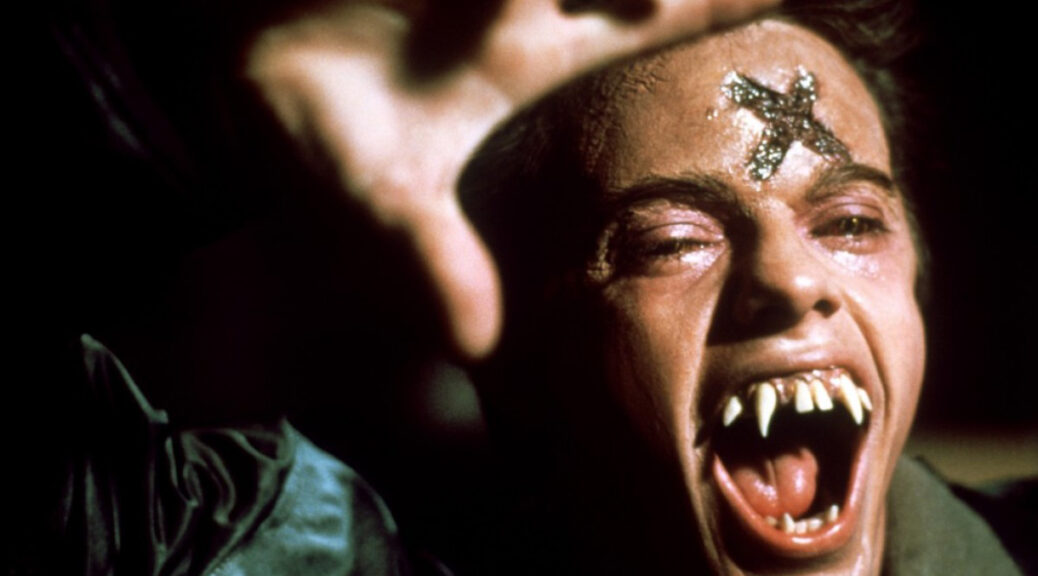
Still, everyone’s favorite character was Evil Ed, the manic, pitiful loser turned bloodsucking minion. Credit Stephen Geoffreys for an electric and, at least in one scene, heartbreaking performance.
1. Tucker& Dale, Tucker and Dave vs. Evil (2010)
Horror cinema’s most common and terrifying villain may not be the vampire or even the zombie, but the hillbilly. The generous, giddy Tucker and Dale vs. Evil lampoons that dread with good-natured humor and a couple of rubes you can root for.
In the tradition of Shaun of the Dead, T&DVE lovingly sends up a familiar subgenre with insightful, self-referential humor, upending expectations by taking the point of view of the presumably villainous hicks. And it happens to be hilarious.
Two backwoods best buds (an endearing Tyler Labine and Alan Tudyk) head to their mountain cabin for a weekend of fishing. En route, they meet some college kids on their own camping adventure. A comedy of errors, misunderstandings and subsequent, escalating violence follows as the kids misinterpret every move Tucker and Dale make.
T&DVE offers enough spirit and charm to overcome most weaknesses. Inspired performances and sharp writing make it certainly the most fun participant in the You Got a Purty Mouth class of film.
In 1974, master of horror Tobe Hooper unleashed The Texas Chain Saw Massacre upon the world, giving it one of the most influential films in the annals of cinema history. It wasn’t the first rural terror flick centered around folks poking their heads where they shouldn’t, but it set into place a permanent subgenre mold that much of what has come since has been cast from. This includes the Nicolas & Luciano Onetti’s 2017 slash and torture film, What the Waters Left Behind.
Five years later, Nicolas Onetti returns to the world of that film with a sequel, Scars. The first film followed a small documentary crew as they ventured into a remote, abandoned town in Argentina called Epecuen. This is a real town that was destroyed in a flash flood during 1985 and remained under water for decades, before the flood finally receded and left ruins in its wake. Both films were shot on location in Epecuen, with the resulting production value being their most striking aspect.
Scars trades in a film crew for a metal band, with our doomed musicians merely passing through their area as they finish their bar gig tour. Once they find themselves in Epecuen, they are quickly set upon by the same cannibal family that dispatched the documentarians in the previous entry. A couple cast members carry over on the villain front, with some fresh faces mixed in as well.
The Onettis’ initial claim to fame came in the form of a trio of neo-giallo films (Deep Sleep, Francesca, and Abrakadabra) that have delighted many fans of that subgenre. Unfortunately, their grasp on rural slashers isn’t as strong. The good news is that if you were a fan of the first film, you’re likely to find a lot to enjoy within Scars, as it is a step up in almost every way. The bad news is that it’s effectively the exact same movie over again, so if you weren’t buying what the first was selling, you’re unlikely to want to partake in seconds.
Their stalking setpieces, torture sequences, and excessive rape scenes repeat over and over with little variation or visual ingenuity, leaving us with an 85-minute film that still feels like it is a solid 15 minutes too long. Scars is for the curious only. All others should stick with the original Texas Chain Saw Massacre or either version of The Hills Have Eyes.
Back in 2023, Chris Kentis crafted one of the most nerve-wracking explorations in tension ever filmed. Open Water dropped you in the middle of the ocean with a married couple and, eventually, as day turns to night and their scuba boat never comes back for them, a lot of sharks.
Few survival tales have stripped away so much and still left you so frazzled. Andres Beltran follows the minimalist tourism of doom path with his Colombian hiking misadventure, Quicksand.
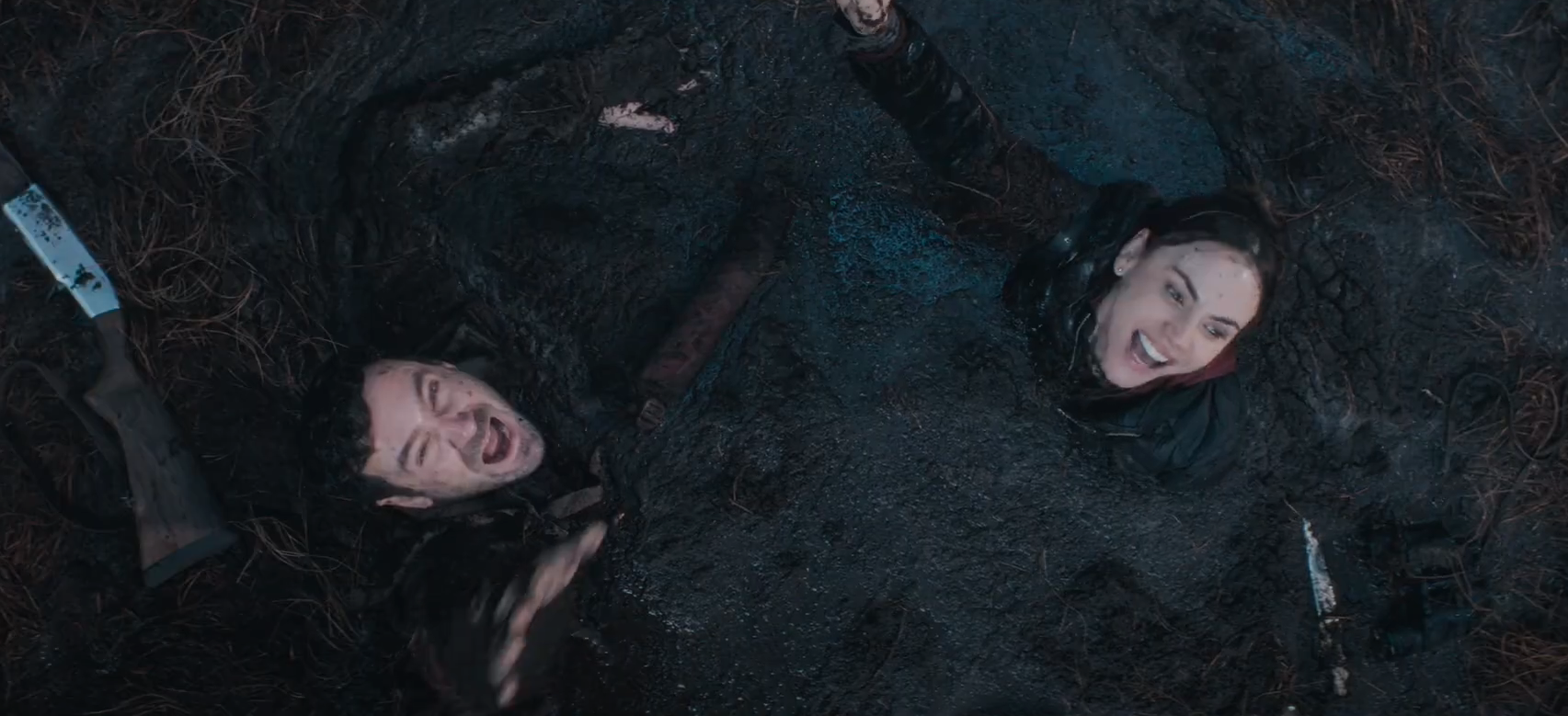
Although Sofia (Carolina Gaitan) and Nick (Allan Hawco) are separated and heading toward divorce, they accept friend Marcos’s invitation to speak at his medical convention. During some down time, they go for a hike, run into trouble, and flee for their lives in the wrong direction – into a part of the rainforest known for quicksand.
Here is where we spend most of the film: stuck chest deep in Colombian mud with an unhappy married couple. No one will realize they’re missing for at least a day, and even then, they’re miles away from where anyone might look for them.
The quicksand isn’t their only problem, naturally. Trapped as they are, they’re vulnerable to predators – fire ants, snakes – but they’ll still have time to hash out their own issues.
A film this limited, done well, can keep you in the moment, your head on a swivel, your mind working along with the characters’ to find a solution. Adam Green’s 2010 skiing horror Frozen succeeded, as, to a degree, did the 2010 Ryan Reynolds date with claustrophobia, Buried.
Given the extremely limited cast, action and locations, a film like this lives and dies on performances since there’s almost nothing else to look at. Hawco delivers layered, vulnerable work that surprises.
Gaitan is less convincing, partly because the performance is superficial and partly because Sofia’s internal journey feels inauthentic and manipulative.
Beltran’s direction, though competent, lacks inspiration. He never manages to mine tension, and his actors rarely feel truly stuck. Uncomfortable, sure. Dirty and wet, definitely. Trapped and panicked, nope.
The fact that the film’s blandly obvious, wildly outdated message is all we get from our efforts doesn’t do Quicksand any favors, either.