Has there been a reason yet for one of Disney’s live-action remakes? Arguably, no, but some of them have been fun. Jon Favreau’s 2016 The Jungle Book used inspired casting and fun tweaks on the Disney’s 1967 animated classic to craft easily the best of the bunch.
Since then? They range from garbage (Robert Zemeckis’s 2022 abomination Pinocchio) to fine (Bill Condon’s 2017 Beauty and the Beast). Disney’s latest, Moana, falls somewhere in between.
Director Thomas Kail (Hamilton) guides the effort that sees Dwayne Johnson adding flesh to his voice role as demigod shapeshifter Maui. Catherine Laga’aia is Moana, the future leader of her Polynesian village in a long ancient time when islands were still being pulled from the ocean floor by gods.
Moana’s father warns her never to go beyond the reef, but if we know anything about young Disney heroes, we know Moana is destined to roam. Her quest: to find Moana, get him on her boat, cross the ocean, and return the heart of the sea to the goddess he stole it from a thousand years ago.
Laga’aia is in fine voice, and the story is as charming as ever. But even more than most of these remakes, Moana begs the question: why? Favreau used motion capture to bring actor and jungle character together, allowing for an experience the animated original couldn’t offer. The animals didn’t look or move like cartoons. They seemed like panthers and tigers, snakes and orangutans imbued with weirdly human personalities.
But a giant, bedazzled crab (still voiced gloriously by Jemaine Clement) just looks like a big, animated crustacean covered in glitter. Tiny coconut pirates, huge fire gods—every unusual creature Moana and Maui encounter still looks cartoon-like. If not cartoon, why cartoon shaped?
The fact that Kail works from Jared Bush, Dana Ledoux Miller, and Ron Clements’s original screenplay, varying barely an iota, doesn’t help. It’s not that Moana is bad. Were it a standalone, it would be a lovely family film. And in a way, that’s still what it is. It just isn’t necessary.
Hope & George review this week’s new releases: Minions & Monsters, Enola Holmes 3, Winthrop/Lockbox, Touch Me, Gregg Allman: Music of My Soul PLUS count down the best films of the first half of 2026!
No, really! The horror of the first half of this year has been amazing! Bloody, original, meaningful, fun, terrifying—it has it all! So much, actually, that we’re obligated to run through a quick list of honorable mentions.
Writers Nick Kocher and Brian McElhaney, fresh off the hilariously unhinged Pizza Movie, adapt the 2021 Norwegian film The Trip with a healthy scoop of witty cynicism atop one good ol’ American mean streak.
Jason Segel and Samara Weaving make an excellent pair of frassasins (friendly assassins), he of the emasculated man child and she of the exasperated younger wife wondering what she saw in this guy. Neither is blameless in the demise of the marriage, and the two actors make the deadly bobbing and weaving (pun intended) a surprising, squirm-inducing delight. Over Your Dead Body is an entertaining genre blast that’s pretty hard to ignore. And by pretty, I mean pretty funny.
And pretty gross.
9. Ready or Not 2: Here I Come
On Prime Premium
If you enjoyed Ready or Not, I’m hard pressed to believe its sequel won’t also leave you smiling. Weaving is back for the sequel. This time, Grace is paired with her sister and reluctant sidekick Faith (Kathryn Newton), as both are forced to endure Round 2. And what this game teaches us is that the entire world is run by a bunch of billionaires, each of whom is unspeakably, irredeemably evil. Just like real life!
Weaving and Newton share a fun, funny, bickering chemistry. Their backstory becomes the spine of a film that, like the original, delivers series of entertaining, bloody set pieces.
8. They Will Kill You
On Disney+, Hulu, HBOMax, and Prime
Zazie Beetz is Asia. She takes a gig as a maid in old school, elite Manhattan high rise, The Virgil. Asia has ulterior motives. The Virgil has ulterior motives. It’s a home for Satanists and she is to be their sacrifice. But Asia has mad skills and the best hair in action hero history, so The Virgil’s residents don’t have such an easy time of it.
What follows is room after crawlspace after room of absolute carnage. They Will Kill You definitely bears a resemblance toReady or Not 2: Here I Come. But this film is more hard-core, the stakes are higher, and the confined, goretastic action is superior.
7. Crazy Old Lady
On Shudder, Prime
Crazy Old Lady traps us in a home with a dementia sufferer who’s stopped taking medication and has embraced a violent unreality. But Martín Marengui, an Argentinian filmmaker, is less interested in what the future holds as what the past hides. He takes a Death and the Maiden approach to much of the film. The result is a profoundly uncomfortable, breathtakingly performed exhumation of the kind of dark past that refuses to stay buried in the garden.
Mauregui builds tension, delivers unexpected shocks, and lets his exceptional cast compel your attention. Despite its exploitation title, Crazy Old Lady delivers a gripping tale.
6. Leviticus
In theaters
Writer/director Adrian Chiarella’s heartbreaking, aching coming-of-age horror deposits Naim (Joe Bird, wonderful) in an Australian backwater with his widowed mom (Mia Wasikowska). She’d been struggling but has found strength in a small community church. That community is less supportive of Naim and Ryan (Stacy Clausen), the boy he loves.
Leviticus turns into a supernatural horror story, but its themes are as true as they can be. Those who seek to save you are the danger, and that which they would save you from is your only salvation. The film is fearless, tender, aching, frightening, and a must see.
5. The Bride!
On Disney+, Hulu, HBOMax
One part Metropolis, one part Bonnie & Clyde, just a touch of Bride of Frankenstein and yet somehow entirely writer/director Maggie Gyllenhaal’s own, The Bride! deserves that exclamation point. Jessie Buckley is a force of nature in a dual role—sort of a triple role, really: an unhappy Chicago gangster’s moll; Mary Shelley, silenced far too soon; and a monster, chaotic, unruly, unburdened by memory and guided by peculiar fury.
The Bride! delights with an anarchic energy, but its underlying plot is tight, its characters clearly drawn and beautifully performed, and its aesthetic wondrous. In just her second feature, after 2021’s sublime The Lost Daughter, Gyllenhaal’s cemented her spot as one of the most exciting filmmakers working.
4. Hokum
On Prime
Damian Mc Carthy is doing something right. The Irish filmmaker writes original stories, invests time and attention to visual storytelling, and produces eerie, memorable horror. There’s an elegance to his movies, but his tales are not meant simply to provoke thought or to elevate the genre. Caveat, Oddity, and now Hokum draw from a long tradition of Irish horror storytelling and love a jump scare as much as anybody.
Scene after scene balances a funhouse vibe with Irish folktale spookiness, and the vintage horror beauty of every frame beguiles you. Caviat offered quietly claustrophobic terror. Oddity delivered clever, melancholy horror. Hokum feels more polished yet more old school. It is perhaps less terrifying than Mc Carthy’s previous features, but it’s a haunting good time.
3. Backrooms
In theaters
Twenty-year-old filmmaker Kane Parsons adapts a series of shorts that made him a YouTube force, all of it based on online Twenty-teens creepypasta dread of being trapped eternally in an endless, yellow, moistly carpeted maze of empty rooms with no hope of escape. The fact that Parsons turned this concept into a compelling feature essentially about our own labyrinthine minds and psychiatry’s impotence is pretty impressive for a teenager!
The endlessly talented Chiwetel Ejiofor and Renate Reinsve play two disillusioned adults lost in the maze. Here are two actors who’ve built careers on understated, natural performances that ground every moment onscreen in something honest. Which makes them a magnificent choice for a film where nothing makes sense, and that’s the whole point.
2. 28 Years Later: The Bone Temple
On Netflix
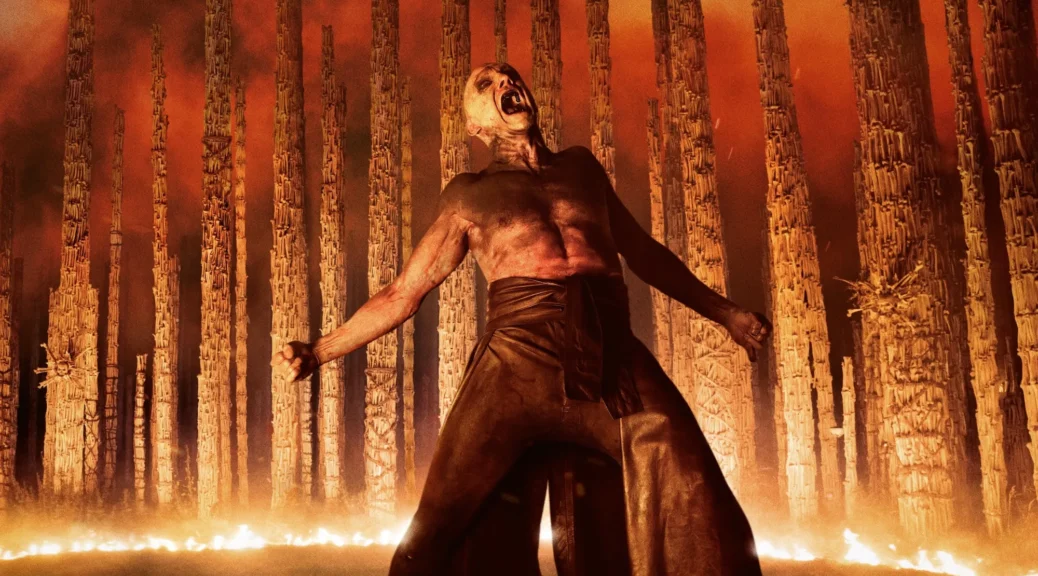
There is more visceral horror in the first three scenes of Nia DaCosta’s film than in the entire hour and fifty-five minutes of 2025’s 28 Years Later. She delivered the first great horror film of the year with 28 Years Later: The Bone Temple, also written by Alex Garland. It picks up the most intriguing threads left untied last time: those of the band of Clockwork Orange-esque marauders who saved young Spike (Alfie Williams) from the infected, and the beautiful soul covered in iodine and living amongst the bones, Dr. Ian Kelson (Ralph Fiennes).
The filmmaker (Little Woods, Candyman, The Marvels, Hedda) returns to horror with aplomb, expertly weaving from the grimmest horrors the sadistic, bewigged Jimmys can muster to the tender bromance blossoming over at the bone temple. And the climactic musical number she stages there is a thing for the ages.
1. Obsession
In theaters
Obsession is a film about consent. Sad by Bear (Michael Johnston) can’t bring himself to confess his feelings for coworker Nikki (Inde Navarrette). He’s so desperate after one cringy missed chance that he breaks open a One Wish Willow he’d purchased as a joke and—without reading any of the warnings printed all over the box—wishes that she would love him more than anyone else on earth. And she does.
The themes writer/director Curry Barker mines are incredibly of-the-moment. Bear wants what he wants, but he wants it to be true. It isn’t, but that’s not good enough. Make it be true. But you can’t make something be true if it isn’t true, no matter how sad the boy is who wants it. Male entitlement masquerading as loneliness leads to violently self-centered behavior. Barker’s story, however jump-scary or genre friendly it becomes, never forgets this central, relevant concept.
One part Metropolis, one part Bonnie & Clyde, just a touch of Bride of Frankenstein and yet somehow entirely writer/director Maggie Gyllenhaal’s own, The Bride! deserves that exclamation point. Jessie Buckley is a force of nature in a dual role—sort of a triple role, really: an unhappy Chicago gangster’s moll; Mary Shelley, silenced far too soon; and a monster, chaotic, unruly, unburdened by memory and guided by peculiar fury.
The Bride! delights with an anarchic energy, but its underlying plot is tight, its characters clearly drawn and beautifully performed, and its aesthetic wondrous. In just her second feature, after 2021’s sublime The Lost Daughter, Gyllenhaal’s cemented her spot as one of the most exciting filmmakers working.
9. The Drama
On Prime
Writer/director Kristofer Borgli continues his social provocateur-ing with look inside a couple thrown waaay off course by a shocking confession. The aftermath – affecting not only the couple involved but other couples in their orbit – becomes a darkly funny and intentionally cringe-worthy dissection of intimacy.
The thought experiment here isn’t just about Emma (Zendaya) and Charlie (Robert Pattinson). Borgli, even more-so than he did with 2023’s Dream Scenario, invites you to imagine yourself in several roles (and, of course, to judge the choices of those around you). The script is crisp, the humor is coal black, and the pacing (aided by some nifty editing and visual cues) keeps you invested at every turn.
8. Tuner
In theaters
His first narrative feature may focus on busting into safes, but Oscar-winning documentation Daniel Roher shows some fine natural instincts for cracking the code that makes “romantic thriller” a crowd-pleasing genre ride.
The slightly contrived, crowd-serviced turns that come in Act Three would elicit a few eyes rolls in lesser films. But by then, Tuner has carved out its own safe space, as a pitch-perfect example of how to make an audience want exactly what you’re going to deliver.
7. Hokum
On Prime
Damian Mc Carthy is doing something right. The Irish filmmaker writes original stories, invests time and attention to visual storytelling, and produces eerie, memorable horror. There’s an elegance to his movies, but his tales are not meant simply to provoke thought or to elevate the genre. Caveat, Oddity, and now Hokum draw from a long tradition of Irish horror storytelling and love a jump scare as much as anybody.
In HokumI, scene after scene balances a funhouse vibe with Irish folktale spookiness, and the vintage horror beauty of every frame beguiles you. Caviat offered quietly claustrophobic terror. Oddity delivered clever, melancholy horror. Hokum feels more polished yet more old school. It is perhaps less terrifying than Mc Carthy’s previous features, but it’s a haunting good time.
6. Backrooms
In theaters
Twenty-year-old filmmaker Kane Parsons adapts a series of shorts that made him a YouTube force, all of it based on online Twenty-teens creepypasta dread of being trapped eternally in an endless, yellow, moistly carpeted maze of empty rooms with no hope of escape. The fact that Parsons turned this concept into a compelling feature essentially about our own labyrinthine minds and psychiatry’s impotence is pretty impressive for a teenager!
The endlessly talented Chiwetel Ejiofor and Renate Reinsve play two disillusioned adults lost in the maze. Here are two actors who’ve built careers on understated, natural performances that ground every moment onscreen in something honest. Which makes them a magnificent choice for a film where nothing makes sense, and that’s the whole point.
5. 28 Years Later: The Bone Temple
On Netflix
There is more visceral horror in the first three scenes of Nia DaCosta’s film than in the entire hour and fifty-five minutes of 2025’s 28 Years Later. She delivered the first great horror film of the year with 28 Years Later: The Bone Temple, also written by Alex Garland. It picks up the most intriguing threads left untied last time: those of the band of Clockwork Orange-esque marauders who saved young Spike (Alfie Williams) from the infected, and the beautiful soul covered in iodine and living amongst the bones, Dr. Ian Kelson (Ralph Fiennes).
The filmmaker (Little Woods, Candyman, The Marvels, Hedda) returns to horror with aplomb, expertly weaving from the grimmest horrors the sadistic, bewigged Jimmys can muster to the tender bromance blossoming over at the bone temple. And the climactic musical number she stages there is a thing for the ages.
4. Toy Story 5
In theaters
Do we need another Toy Story? Actually, it appears we do. The miraculous thing about this franchise is that it’s never just about the toys or about the kids they love. It’s about a recognizable phase in a life. Which episode is your favorite depends entirely on how old you were when you started watching.
Episode 5 delivers an honest assessment of the way screens have invaded childhood and looks with clear eyes at the impact on children. Simultaneously, as Jessie (the genius Joan Cusack) chases down destiny, the film recognizes that, eventually, we all need to let go. Plus Woody has a poncho!
3. I Love Boosters!
In theaters
Boots Riley and a remarkable cast tell a wild, boldly colorful, sometimes Claymation, often surreal, occasionally demonic, fantastical, consistently smart, regularly hilarious, and shockingly personal tale about the individual’s need for community. And, of course, the inescapable evils of capitalism.
Underneath the metaphysical science fiction banter, beneath the scathingly comical evisceration of fast fashion, at the heart of the wacky heist flick, is a lonesome story that resonates. It’s all one struggle.
2. Is God Is
On Prime
Writer/director Aleshea Harris may be pulling from folklore and road movies, revenge flicks and historical dramas, noir and arthouse, exploitation and even horror. But the result of those inspirations is one of the most boldly original films of 2025. The filmmaker shows great affection for so many types of movies, and the way she bends these tropes and styles to the will of this narrative is fresh, unpredictable, and fascinating.
Violence and destiny, family trauma, classism and misogyny, and rage—Is God Is finds poetry and honesty and blood in all of it. Her cast, including Kara Young, Mallorie Johnson, Vivica A. Fox, and Sterling K. Brown, impress in every frame. But the star of Is God Is has to be the storyteller herself. Harris’s command of the audience and of cinema deliver the summer’s most daring and satisfying adventure.
1. Obsession
In theaters
Obsession is a film about consent. Sad boy Bear (Michael Johnston) can’t bring himself to confess his feelings for coworker Nikki (Inde Navarrette). He’s so desperate after one cringy missed chance that he breaks open a One Wish Willow he’d purchased as a joke and—without reading any of the warnings printed all over the box—wishes that she would love him more than anyone else on earth. And she does.
The themes writer/director Curry Barker mines are incredibly of-the-moment. Bear wants what he wants, but he wants it to be true. It isn’t, but that’s not good enough. Make it be true. But you can’t make something be true if it isn’t true, no matter how sad the boy is who wants it. Male entitlement masquerading as loneliness leads to violently self-centered behavior. Barker’s story, however jump-scary or genre friendly it becomes, never forgets this central, relevant concept.
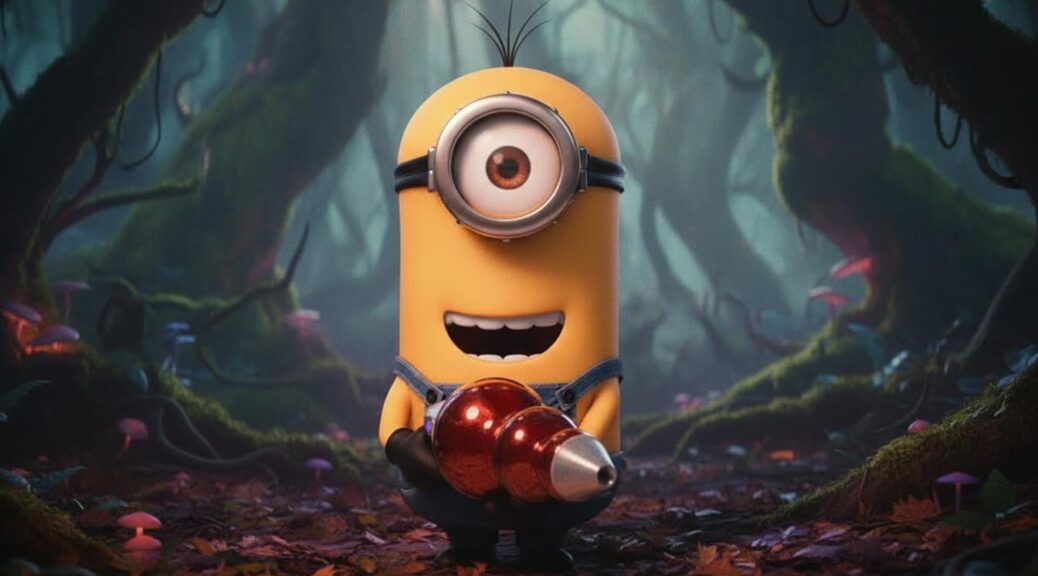
There are six films now in the Minion-verse. Most of these are Gru movies, but honestly, without the minions, where would the Despicable Me features be?
Still, without a single, clear antagonist, the 2015 standalone film Minions felt adrift. Cute and goofy but pointless. To avoid the same trouble this go-round, Minions & Monsters pins the adventure on one creative little dude: James.
Centuries ago, when an early tribe of Minions searched the earth for a villain to assist, James drew pictures. These pictures told funny stories that entertained exactly one other Minion: Henry. (Henry, James and all other Minions are voiced by co-writer/co-director Pierre Coffin.)
The Minions’ quest to find their villain leads them eventually to 1920s Hollywood. Here is where Coffin unveils a love for classic moviemaking. Sure, every film in this franchise charms with hidden sight gags and funny Easter eggs. But Minions & Monsters drips with them. There’s a classic movie reference in nearly every frame of the film, beginning in the intro, where a tour guide (Allison Janney) explains to bored tourists the very important role James and Henry played in saving Hollywood and, indeed, the world.
Janney is not the only Oscar winner lending her voice, either. Christoph Waltz is Max, the harried director who discovers James, and Jeff Bridges plays twin studio heads Frank and Elwood. Plus, Jesse Eisenberg (no slouch!) voices Dort, an unlikely yet somehow perfect Minion ally.
With James in the hero seat, Minions & Monsters follows a more tightly scripted chaos. James decides to conjure some monsters so he can make a creature feature and conquer Hollywood. (If you think Goomi, the first monster conjured, sounds weirdly like Eric Cartman, there’s a reason for that. South Park co-creator and Cartman vocalist Trey Parker lends his voice to the wee green Cthulu cub.)
Characteristic of the franchise, the film is goofball anarchy. Minions & Monsters is quickly paced, brightly colored, silly, good-natured fun. The sheer amount of story sometimes causes the movie to drag. This is not helped by Janney’s lengthy first act exposition. But as a mash note to filmmaking and a goofy, family-friendly adventure, it’s a delightful reason to sit in the air conditioning this weekend with your kids.
About a decade ago, filmmaker Amat Escalante made a movie about sexual frustration, bad decisions and tentacle sex. The Untamed grounded the fantasy in a profoundly ordinary and relatable human drama, limiting the absurdity and amplifying the horror.
Addison Heimann leans far more absurd with his tentacle sex horror Touch Me, a potent drug metaphor that speaks to a modern malaise.
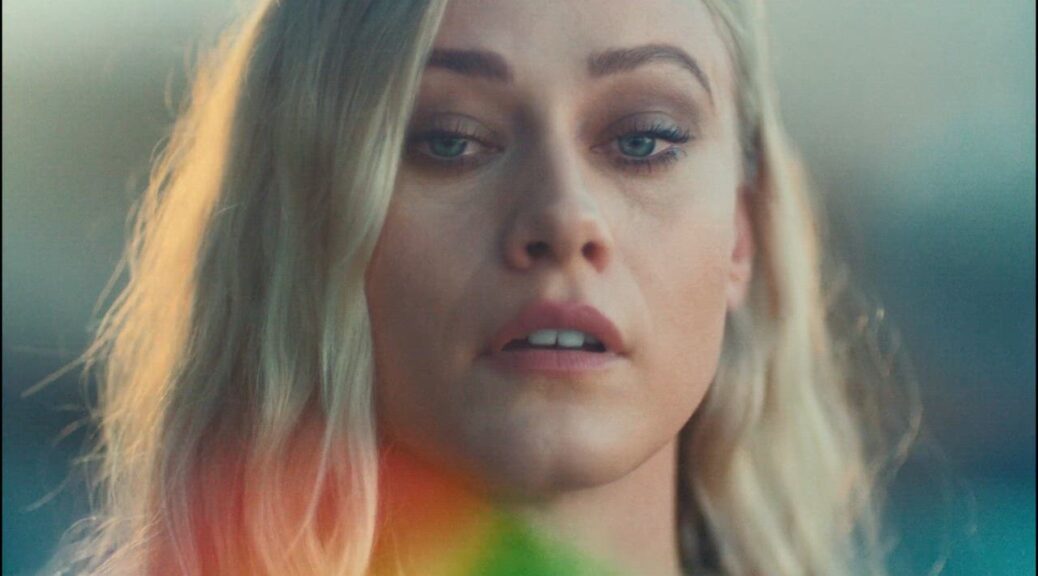
In a lengthy and surprisingly effective opening monologue, Joey (Olivia Taylor Dudley, exceptional) explains her situation to her psychiatrist. A weirdly good-looking alien in a tracksuit (Lou Taylor Pucci) came to save the planet from climate change and convinced Joey to have cross-species intercourse. His touch made her mind go quiet for the first time in her life, but she fled because she nearly died.
Still the lure of a quiet mind proves too much and soon Joey and her best friend Craig (Jordan Gavaris) cave into temptation and find themselves hooked.
Which doesn’t sound funny, but Heimann’s delightfully accepting glimpse at modern slackerism paired with Pucci’s wide-eyed narcissism and hip hop moves keep things light despite a lot of truly dark turns. At its core, Touch Me is about deeply damaged people struggling to face a reality that cannot make them happy and the incessant temptation of hard drugs to silence that anxiety.
For that reason, the silliness sometimes seems tone deaf. That, or the dramatic turns seem maudlin. But only briefly, mainly because of the commitment of Heimann’s small but talented cast.
Dudley and Gavaris affect a believable co-dependence, their banter a familiar and humorous cadence of self-loathing and support. Dudley is particularly impressive in a role that holds the metaphor, horror and silliness together. And Pucci hits a perfect tone for oblivious track-suited narcissist.
The writing does not always serve the actors as well as they serve it. There are holes in logic that Touch Me laughs off by pointing them out—a fun tactic, but not a solution. And the whole feels slight given the deeper ideas sewn throughout. But the film is an enjoyable, sloppy, relatable mess with insight and fun to spare.
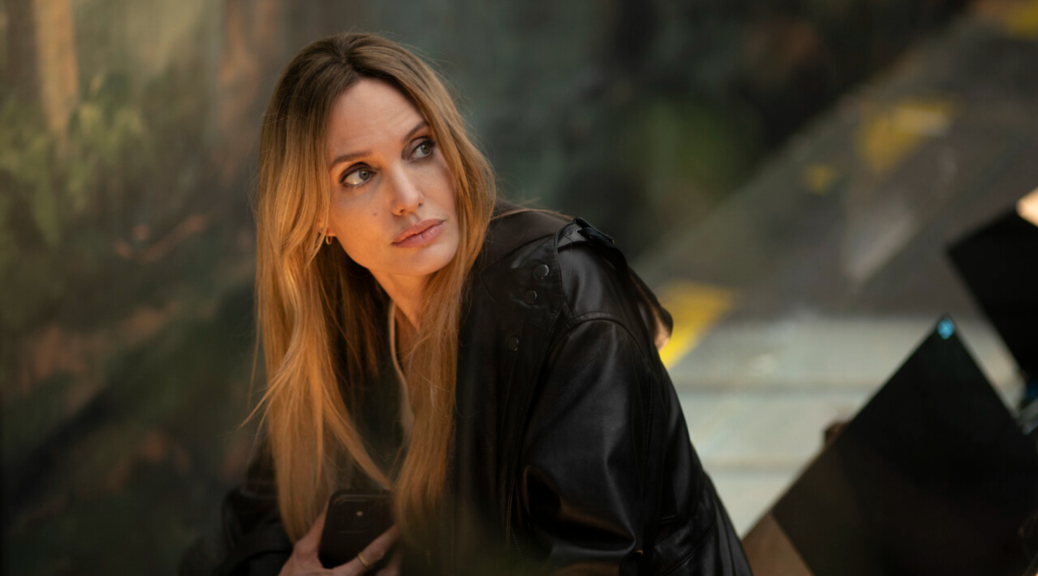
Fashion Week in Paris—the only word in that phrase I entirely understand is “in”. Well, I know what a week is, but in Alice Winocour’s drama Couture, Angelina Jolie plays Maxine, an indie horror director with zero interest in fashion who’s tasked with creating a short film to introduce the diva hullabaloo.
They probably called it something different that I should know, but at least there was a character I could grasp.
Maxine is out of her element, under pressure from the event organizers, struggling to communicate with her Stateside 15-year-old, and told by her doctor that she needs to see a specialist immediately.
Meanwhile, Ada (Anyler Anei) is this year’s “new face.” She’ll star in Maxine’s short film and be the first model on the runway. But she’s never modeled before. She’s an 18-year-old South Sudanese refugee living in Kenya and studying pharmacy. Like Maxine, Ada is in over her head.
Winocour, who writes as well as directs, braids these two stories with a third strand. Ella Rumpf is a make-up artist and observer, someone who runs almost undetected in all the Fashion Week circles.
What the three tales have in common, what Winocour explores without exploring, is what each woman keeps to herself. Choosing Fashion Week for this exploration seems fitting. Models are stand-ins, lovely images to hang an idea or a frock on, but not humans. No emotions, no turmoil, no war-torn country to preoccupy them. At least, that’s the role the industry requires them to perform.
Jolie’s gently understated stoicism offers the film an emotional center while Anei’s sweetly awkward vulnerability keeps it tender. Although Winocour’s transitions from one tale to the next are almost magical in their grace, the third storyline with Rumpf feels underdeveloped and a little heavy handed.
Wincour can’t bring the story full circle. The fashion industry still seems superficial and unnecessary by film’s end, which leaves the film feeling less powerful than what the individual heroines deserve.
A sapphic coming-of-age summer camp horror, those words are not untrue. They are inaccurate. Whatever expectations you may have coming into writer/director Avalon Fast’s Camp, they’re wrong. Which is not necessarily bad.
Prizing atmosphere over genre, Fast’s loose narrative and structure benefit the floating grief that keeps Emily (Zola Grimmer) only partly present in any situation. It’s rooted in an adolescent tragedy and exacerbated by an incident in her early twenties. She’s disconnected, vacant, and her concerned father suggests she take a counselor position at a summer camp for troubled kids.
But Fast clarifies from Camp’s opening sequence that this is not going to be a slasher. Even when Emily falls in with a close-knit group of likewise disaffected young women—her own coven, if you will—the filmmaker shrugs off any comfortable comparison. The Craft? Practical Magic?
No, grief, guilt, shame, and the disconcertingly untethered existence of modern young adulthood don’t fit so neatly into a single box. Fast wanderingly explores ideas connected with nature and female camaraderie, with acceptance and rejection, with the search for peace. But a typical witch film this is not.
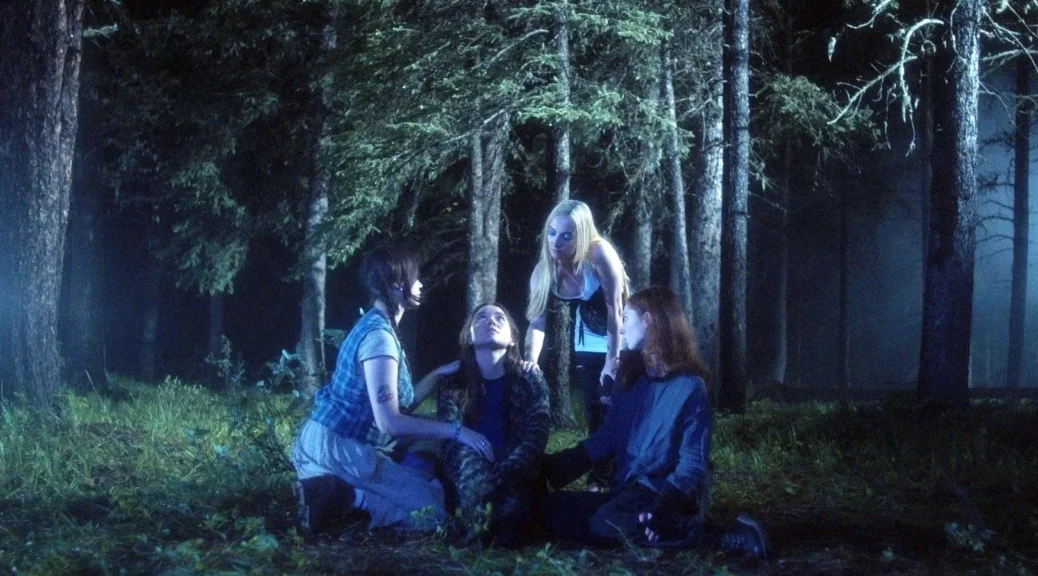
In a little attic space above a cabin in a Christian Youth Camp, five damaged young women cling to each other. They bond, drink, hallucinate, cast spells, make sacrifices, and feel comfort. But unlike The Craft, which condemned a dark use of the feminine power of nature, Camp is nonjudgmental.
Instead, Fast is interested in these broken young women and their hazy search for something to make them feel whole. The pace is slow, the imagery hypnotic, occasionally surreal. The film aches. It mourns. It embraces a vivid if ill-defined reality in which there is no clear path to happiness or wholeness.
Self-discovery is the key, and Emily’s is all melancholy magic. Cinematographer Eily Sprugman captures Emily’s heady freedom and earthy nightmare with gorgeous color. Fast’s languid pace, though sometimes tiresome, mainly delivers a groggy magic that feels like a dark dream.
Grimmer’s naturalistic performance grounds the wonder with honesty and heartbreak. There’s a real sadness at the heart of Camp that, along with an intriguingly messy morality, will keep you thinking about it long after it’s over.
There are loads of bad parents in horror. Jack Torrence is no doll. Margaret White’s a bit much. In bad parent horror, we empathize with the offspring. But there’s something perhaps more unsettling when you empathize with the parents who are genuinely trying but something—sometimes just one bad decision—ends in unspeakable disaster. It’s those dumbasses that we salute today!
This creature feature Frankenstein mad science mash up goes places you may not expect. Director Vincenzo Natali (Cube) investigates science as commerce, the maternal instinct or lack thereof, sexual politics, nature and nurture and more in this body horror.
The wtf! of it all works because of the undeniable talent of its leads, Sarah Polley and Adrien Brody. What they’re doing in this is hard to know, but they elevate a B-horror script to something weirdly compelling. Polley’s big eyed, emotionless performance offers a fascinating conundrum that makes every wild turn make sense. Sort of.
4. Antichrist (2009)
Lars von Trier’s foray into horror follows a couple down a deep and dark rabbit hole of grief. Von Trier’s films have often fixated on punishing viewers and female protagonists alike, but in this film the nameless woman (played fearlessly by Charlotte Gainsbourg) wields most of the punishment – whether upon her mate (Willem Dafoe) or herself.
Consumed by grief, a mother allows her husband—also grieving—to become her psychotherapist as they retreat to their isolated cabin deep in the woods where they will try to overcome the horror of losing their only child.
They won’t succeed.
3. Speak No Evil (2022)
Christian Tafdrup’s Speak No Evil, a terribly polite tale of Danes and Dutchmen that veers slowly but relentlessly toward something sinister. Speak No Evil quickly becomes a sociological experiment that questions our tendency to act against our own instincts, side with the cool kids, and lose who we are.
Tafdrup’s script, co-written with Mads Tafdrup, is sneaky in the way it treads on social anxiety, etiquette, politeness. You see how easily gaslighting alters the trajectory of a conversation, the course of action. Speak No Evil is a grim trip, but there is no question that it’s well made.
2. Mother! (2017)
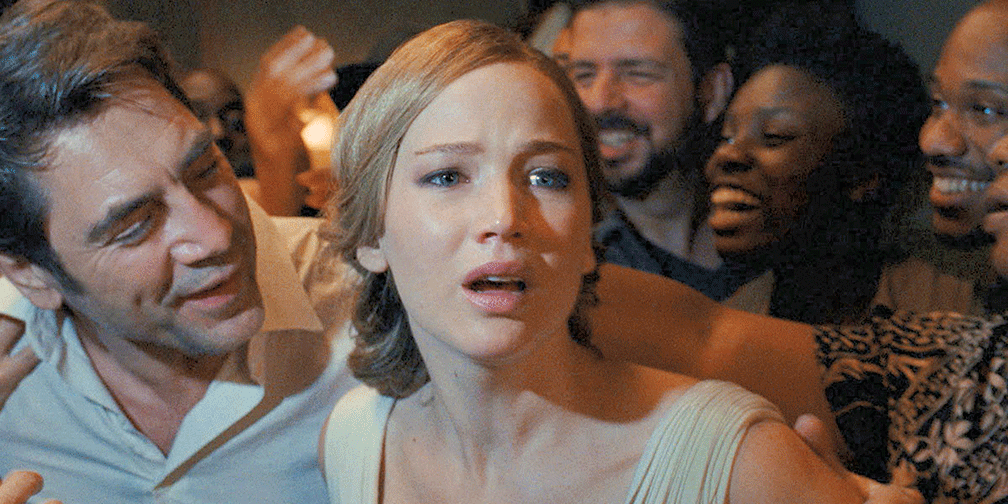
Between writer/director Darren Aronofsky’s disorienting camera and his cast’s impeccable performances, he ratchets up tension in a way that is beyond uncomfortable. This is all clearly leading somewhere very wrong and the film develops the atmosphere of a nightmare quickly, descending further and further with each scene.
Jennifer Lawrence, Javier Bardem, Ed Harris and Michelle Pfieffer are indescribably brilliant. Like most of the filmmaker’s work, mother! will not be for everyone. But if you’re up for an allegorical descent into hell, meticulously crafted and deftly told, and if you like your metaphors heavy and your climaxes absurd, this mother! is for you.
1. Coffee Table (2022)
On Shudder, Prime, Tubi, AMC+
A remarkably well written script fleshed out by a stunning ensemble becomes utter torture as you want so badly for some other outcome. Co-writer/director Caye Casas ties threads, builds anxiety, plunges the depths of “what’s the worst that could happen?” and leaves you shaken.
David Pareja and Estefania de los Santos craft indelible, believable, beautifully flawed characters so convincing that their experience becomes painful for you. Casas salts the wounds with dark comedy, but the tenderness and tragedy collaborate toward something far more crushingly human.