Tag Archives: George Wolf

Tin Roof, Rusted
Snack Shack
by George Wolf
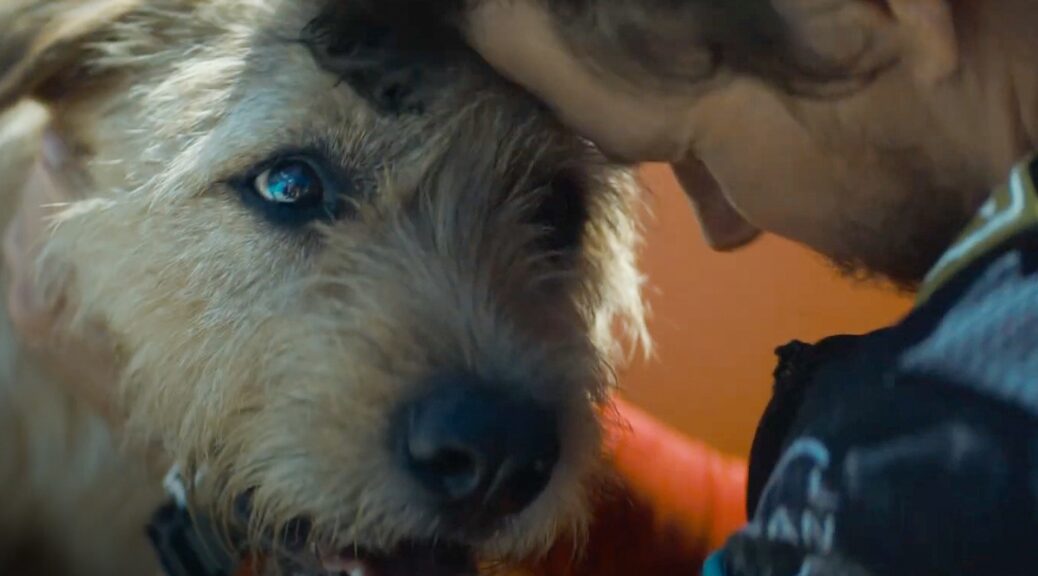
Four years ago, Adam Rehmeier’s Dinner In America arrived as a delightfully subversive 90s punk rock rom-com. Snack Shack finds the writer/director still navigating the 90s with hilarious R-rated delight, even as the punk rock ‘tude has been usurped by capitalistic dreams.
It’s 1991 in small town Nebraska, and teen best friends A.J. (Conor Sherry) and Moose (The Fablemans‘ Gabriel LaBelle) are coming hot into summer with some big plans. They score at the dog track, market their own homemade beer and are working more than enough angles to please the Gordon Gekko poster hanging on the wall.
But then an unexpected new hustle presents itself. The boys’ older friend Shane (Nick Robinson) – who’s a bit of a local hero thanks to his service in Kuwait – is home to manage the local pool, and he gives the foul-mouthed young Gekkos a tip on how to win the city council’s summer contract for the poolside snack bar.
Before long, business is booming, and that 75-cent upcharge for using ketchup to write “fuck” on a hotdog (a “fuckdog!”)is paying off big time. Will success go to their heads? Will A.J. earn enough cash for his Alaskan trek with Shane, AND earn the respect of his parents (David Costabile and Gillian Vigman, both priceless)?
And what about Brooke, the hot new lifeguard (Mika Abdalla)? Could she actually come between these hometown homies?
You’ll know where some of this is going, but Rehmeier’s script delivers foul, horny hilarity, and outstanding turns by both Sherry and LaBelle stand out in a letter perfect ensemble. The time stamp is again spot on, with Rehmeier’s freewheeling style crafting an infectious mashup of The Way Way Back, Superbad and Project X.
And most importantly, Rehmeier captures that zest for life on the cusp of adulthood without a whiff of pandering or condescension. The boys will do some growing up during this one crazy summer, and the film will grow up with them. Slowly, parents don’t seem quite as lame, the hijinx aren’t as silly and some important lessons about love, sex, death and friendship hang in the air just long enough to hit just hard enough.
Fuckdogs are still funny, though, homie, just like a surprise punch to the nuts.


Fright Club: Parasites in Horror Movies
Fear of infection, of contamination, of losing your personhood, of physical violation—all of it coalesces in often gooey fashion in the parasite movie. Metaphors abound and slugs take center stage as some of the greatest directors of the genre tell the tale of hosts and unwanted guests. Here are our favorites.
Shivers (1975)
In an upscale Montreal high rise, an epidemic is breaking out. A scientist has created an aphrodisiac in the form of a big, nasty slug. That slug, though, spreads wantonness throughout the high rise and threatens to overrun the city with its lusty ways.
Shivers takes a zombie concept and uses it to pervert expectations. (See what we did there?) Cronenberg’s his first feature length horror predicts so many of the films to come. The film obsesses over human sexuality, social mores, the physical form, physical violation and infestation, medical science, conspiracy, and free will.
Splinter (2008)
Road kill, a carjacking, an abandoned gas station, some quills – it doesn’t take much for first time feature filmmaker and longtime visual effects master Toby Wilkins to get under your skin. One cute couple just kind of wants to camp in Oklahoma’s ancient forest (which can never be a good idea, really). Too bad a couple of ne’er-do-wells needs their car. Then a flat (what was that – a porcupine? No!!) sends them to that creepy gas station, and all hell breaks loose.
Contamination gymnastics call to mind the great John Carpenter flick The Thing, but Splinter is its own animal. Characters have depth and arcs, the danger is palpable, the kills pretty amazing, and the overall aesthetic of that old highway gives everything a desperately lonesome quality where you believe anything could happen and no rescue is in sight.
Slither (2006)
Writer/director James Gunn took the best parts of B-movie Night of the Creeps and Cronenberg’s They Came from Within, mashing the pieces into the exquisitely funny, gross and terrifying Slither.
Cutie pie Starla (Elizabeth Banks) is having some marital problems. Her husband Grant (the great Michael Rooker) is at the epicenter of an alien invasion. Smalltown sheriff Bill Pardy (every nerd girl’s imaginary boyfriend Nathan Fillion) tries to set things straight as a giant mucous ball, a balloonlike womb-woman, a squid monster, projectile vomit, zombies, and loads and loads of slugs keep the action really hopping.
Consistently funny, cleverly written, well-paced, tense and scary and gross—Slither has it all. Watch it. Do it!
The Thing (1982)
John Carpenter’s remake of the 1951 SciFi flick The Thing from Another World is both reverent and barrier-breaking, limiting the original’s Cold War paranoia, and concocting a thoroughly spectacular tale of icy isolation, contamination, and mutation.
A beard-tastic cast portrays a team of scientists on expedition in the Arctic who take in a dog. The dog is not a dog, though. Not really. And soon, in an isolated wasteland with barely enough interior room to hold all the facial hair, folks are getting jumpy because there’s no knowing who’s not really himself anymore.
This is an amped up body snatcher movie benefitting from some of Carpenter’s most cinema-fluent and crafty direction: wide shots when we need to see the vastness of the unruly wilds; tight shots to remind us of the close quarters with parasitic death inside.
Alien (1979)
After a vagina-hand-sucker-monster attaches itself to your face, it gestates inside you, then tears through your innards. Then it grows exponentially, hides a second set of teeth, and bleeds acid. How much cooler could this possibly be?
Much ado has been made, rightfully so, of the John Hurt Chest Explosion (we loved their early work, before they went commercial). But Ridley Scott’s lingering camera leaves unsettling impressions in far simpler ways, starting with the shot of all those eggs.

Ordinary People
One Life
by George Wolf
Back in 2015, Sir Nicholas Winton passed away at the age of…106.
Healthy diet? Lots of cardio? Maybe, but One Life lets us know Winton could have subsisted on little more than whiskey, smokes, and the unlimited good karma from his days as a young man on a humanitarian mission that put faith in “ordinary people.”
In the years before World War II, “Nicky” (Johnny Flynn) was a London stockbroker. But as Hitler and the Nazis marched across Europe, Nicky committed himself to saving as many Jewish children as he could, spearheading a committee to place the children with foster families in the U.K.
Years later, the older Nicky (Anthony Hopkins) and his wife Grete (Lenas Olin) begin cleaning out their house, which brings him face to face with an old briefcase. Inside the satchel are the records from Nicky’s refugee network, and he begins to wonder if the story might be of interest to the local press.
It is.
Veteran television director James Hawes and the writing team of Lucinda Coxon and Nick Drake adapt the book by Winton’s daughter Barbara as a standard take on an extraordinary story. Have plenty of tissues handy, which is a testament to the sheer power and timely urgency of Nicky’s life-saving work.
The flashback scenes are satisfactory, but lack the cinematic style and structure to find a unique voice amid the holocaust dramas we’ve seen in just the last several years.
It is the later narrative thread – with, unsurprisingly, a truly touching turn by Hopkins – that allows One Life to leave its mark. Overdue accolades only seem to increase Nicky’s despair over the lives he couldn’t save, and Hopkins is able to craft the haunted man with a nuance that underscores all the good that can come from turning care into action.
The film’s final act puts the effect of Sir Nicholas’s work in very specific, very human and very public terms. And even if you remember hearing about the goosebump-inducing way the “British Schindler” finally got his flowers, One Life makes sure those goosebumps will come again.


Screening Room: Kung Fu Panda 4, Imaginary, Ricky Stanicky, Damsel & More
Wolves at the Door
Four Daughters
by George Wolf
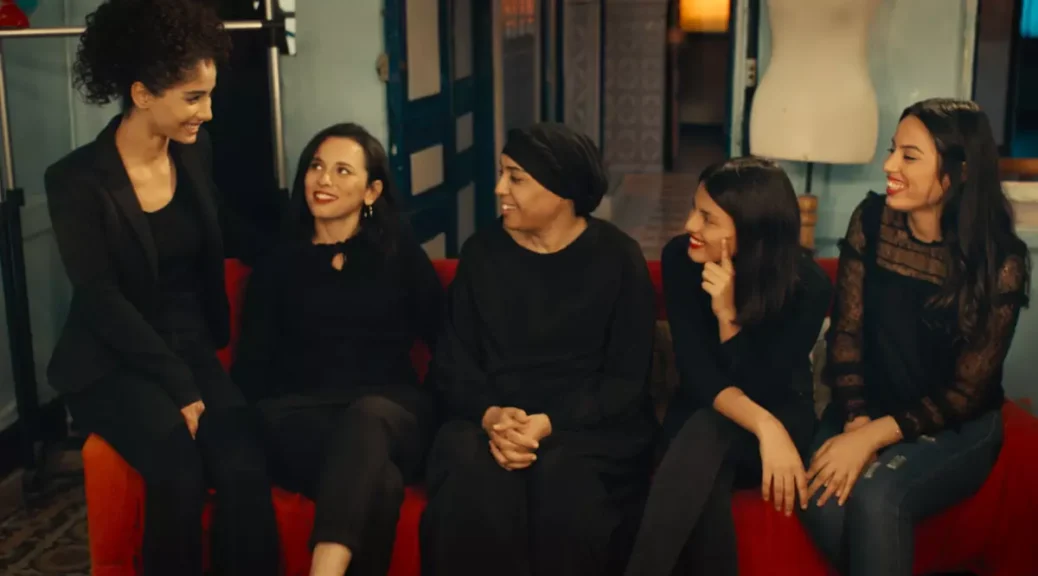
The Oscar-nominated documentary Four Daughters tells the story of Olfa Hamrouni and her four girls. The two youngest, Eya and Tassir, still live at home and speak for themselves. The eldest, Rahma and Ghoframe, are played by actors (Nour Karoui, Ichrak Matar) as the real sisters “were devoured by the wolf.”
Yes, it is a metaphor, one that Tunisian writer/director Kaouther Ben Hania explores with a deeply sympathetic mix of doc and drama.
Most of the time, Olfa will tell her own story while veteran actress Hind Sabri stands by, ready to step in and play the role when the emotion is too much for Olfa to bear.
Mother and daughters laugh, cry and bicker as we hear of their life in the patriarchal society of Tunisia. Olfa moves between gregarious and reserved, as capable of flashing a strong defiant streak as she is of handing down oppressive customs because “that’s just the way it is.”
And as Ben Hania slowly moves toward the source of the family’s heartbreak, the film’s many moving parts don’t always engage in perfect sync. The subtle aspects of Ben Hania’s reenactments – such as having actor Majd Mastoura play all the male parts, or the surreal interplay between real sister and stand in – pay dividends. But moments when actor and subject go off script to debate the familial choices can begin to blur unfortunate lines.
The staggering 2012 doc The Act of Killing used similar tactics, but the arc of barbaric murderers recreating their genocidal crimes mined insight from intimacy. Here, the staged production of pain spurs questions about when intimacy becomes exploitation.
Ben Hania wisely travels a more conventional road in the film’s third act. The reason for the elder sisters leaving home becomes clear, and Four Daughters leaves its unique mark.. A compelling, touching story of memory and generational trauma, it’s a heartbreaking roadmap to radicalization marked with a family’s despair.
Fearless Oscar Picks 2024
by Hope Madden and George Wolf
This year’s group of nominees is stacked. Category after category, you find multiple films, filmmakers and performers all worthy of some hardware. But who will win?
Best picture
- “American Fiction”
- “Anatomy of a Fall”
- “Barbie”
- “The Holdovers”
- “Killers of the Flower Moon”
- “Maestro”
- “Oppenheimer”
- “Past Lives”
- “Poor Things”
- “The Zone of Interest”
Should win: “Poor Things” Will win: “Oppenheimer”
Best actor
- Bradley Cooper, “Maestro”
- Colman Domingo, “Rustin”
- Paul Giamatti, “The Holdovers”
- Cillian Murphy, “Oppenheimer”
- Jeffrey Wright, “American Fiction”
Should win: Cillian Murphy Will win: Murphy (Hope) Paul Giamatti (George)
Best actress
- Annette Bening, “Nyad”
- Lily Gladstone, “Killers of the Flower Moon”
- Sandra Hüller, “Anatomy of a Fall”
- Carey Mulligan, “Maestro”
- Emma Stone, “Poor Things”
Should win: Stone or Gladstone Will win: Gladstone
Best supporting actor
- Sterling K. Brown, “American Fiction”
- Robert De Niro, “Killers of the Flower Moon”
- Robert Downey Jr., “Oppenheimer”
- Ryan Gosling, “Barbie”
- Mark Ruffalo, “Poor Things”
Should win: Ruffalo Will win: Downey Jr.
Best supporting actress
- Emily Blunt, “Oppenheimer”
- Danielle Brooks, “The Color Purple”
- America Ferrera, “Barbie”
- Jodie Foster, “Nyad”
- Da’Vine Joy Randolph, “The Holdovers”
Should win/Will win: Randolph
Best director
- Jonathan Glazer, “The Zone of Interest”
- Yorgos Lanthimos, “Poor Things”
- Christopher Nolan, “Oppenheimer”
- Martin Scorsese, “Killers of the Flower Moon”
- Justine Triet, “Anatomy of a Fall”
Should win: Nolan or Lanthimos Will win: Nolan
International feature film
- “Io Capitano,” Italy
- “Perfect Days,” Japan
- “Society of the Snow,” Spain
- “The Teachers’ Lounge,” Germany
- “The Zone of Interest,” United Kingdom
Should win/Will win: “The Zone of Interest”
Animated feature film
- “The Boy and the Heron”
- “Elemental”
- “Nimona”
- “Robot Dreams”
- “Spider-Man: Across the Spider-Verse”
Should win: “The Boy and the Heron” (Hope) “Spider-Man” (George) Will win: The Boy and the Heron” (Hope) “Spider-Man” (George)
Adapted screenplay
- “American Fiction”
- “Barbie”
- “Oppenheimer”
- “Poor Things”
- “The Zone of Interest”
Should win: “Poor Things” Will win: “American Fiction” (Hope) “Oppenheimer” (George)
Original screenplay
- “Anatomy of a Fall”
- “The Holdovers”
- “Maestro”
- “May December”
- “Past Lives”
Should win: “Anatomy of a Fall” Will win: “The Holdovers” (Hope) “Anatomy of a Fall’ (George)
Cinematography
- “El Conde”
- “Killers of the Flower Moon”
- “Maestro”
- “Oppenheimer”
- “Poor Things”
Should win/Will win: “Poor Things”
Animated short film
- “Letter to a Pig”
- “Ninety-Five Senses”
- “Our Uniform”
- “Pachyderme”
- “War Is Over! Inspired by the Music of John & Yoko”
Should win: “Ninety-Five Senses” Will win: “War Is Over”
Live action short film
- “The After”
- “Invincible”
- “Knight of Fortune”
- “Red, White and Blue”
- “The Wonderful Story of Henry Sugar”
Should win/Will win: “Henry Sugar“
Documentary short film
- “The ABCs of Book Banning”
- “The Barber of Little Rock”
- “Island in Between”
- “The Last Repair Shop”
- “Nǎi Nai & Wài Pó”
Should win/Will win: “The Last Repair Shop”
The 96th Academy Awards, hosted by Jimmy Kimmel, will air on ABC on Sunday, March 10, live from the Dolby Theatre at Ovation Hollywood.

Screening Room: Dune: Part 2, Spaceman, Io Capitano, Dr. Cheon and the Lost Talisman

Trip of a Lifetime
Io Capitano
by George Wolf
The destination may be Italy, but the Oscar-nominated Io Capitano unfolds like a classic Greek fable. Director and co-writer Matteo Garrone crafts a stirring and often gut-wrenching modern Homeric tale, with a young African refugee enduring multiple hardships while refusing to surrender his character or humanity.
16 year-old Seydou (Seydou Sarr) and his cousin Moussa (Moustapha Fall) have been planning for months to leave their home in Senegal for the hope of a better life in Europe. The locals warn against the dangerous trip, and Seydou’s mother (Ndeye Khady Sy) forbids it, but the boys take the stash of money they’ve been saving and head out in secret.
The journey will not be kind. From Niger to Libya to the unforgiving Sahara (presented with breathtaking scope) and beyond, the boys will face shakedowns, bribes, arrest and torture, while subtle twists of fate conspire with glimpses of human kindness to keep them moving forward.
Sarr is absolutely terrific in a highly emotional and physical role, allowing Garrone (Dogman. Gomorrah) to strategically build empathy for the young man and his mission. With brutality all around him, Seydou must ultimately defend his humanity with stirring defiance, cementing his standing as a true and just wanderer.
But though Seydou’s odyssey may have a classic structure, the subtext here is never in doubt. Io Capitano succeeds on both fronts, bringing stark intimacy to the global refugee crisis, along with realization that stories can often speak so much more clearly than statistics.
Fright Club: Skeletons in the Closet, 2024 Oscar Nominees
It’s the most wonderful time of the year! We get to celebrate the terrible decisions some of this year’s Oscar nominees have made in their careers. Why? Because we sincerely love them—the movies and their stars. Join us as we comb through this year’s Oscar nominees’ bad horror past.
5. In Dreams (1999): Annette Bening and Robert Downey Jr.
It’s a twofer! Nominees for Best Actress and Best Supporting Actor, Annette Bening and Robert Downey Jr. joined director Neil Jordan (In the Company of Wolves, Interview with a Vampire, Byzantium) for this gender fluid serial killer/fairy tale mash up that just doesn’t work.
With Aidan Quinn, Stephen Rea, Margo Martindale (in a brief, thankless orderly role), it’s a convoluted mess of a movie that tosses together tropes from about six different styles of horror without ever trying to make sense of any of them.
This was Bening’s only real foray into horror, while Downey Jr. starred in Zodiac (great) and Gothica (poor).
4. Godsend (2004): Robert De Niro
Do not be surprised that De Niro starred in a lackluster horror flick in the early 2000s. He starred in several, not to mention the handful of bad actioners, bad thrillers, and bad comedies he peppers into his otherwise impressive filmography.
In this case, De Niro plays a geneticist with an ulterior motive, preying on the grief of a couple (Rebecca Romijn, Greg Kinnear) whose only child (Cameron Bright) has been killed. De Niro brings him back, but when has that ever been a good idea in a horror movie? Derivative and embarrassing, considering the cast.
Robert De Niro has starred in some great horror (Cape Fear, Angel Heart) and some bad horror (Hide and Seek, Frankenstein).
3. Case 39 (2009): Bradley Cooper
Like George Clooney, Bradley Cooper can write, direct, star, earn Oscar nominations, and be counted on to shine bright in a bunch of bad early career horror. In this case, he co-stars with now two-time Oscar winner Renee Zellweger.
It’s a blatant, lifeless The Ring ripoff with bad FX, bad acting and lame plotting. Cooper plays Doug (he’ll be your Doug). It’s a thankless role of boyfriend/buddy/bee sting sufferer.
We’ve talked about other Cooper horror before, but here’s his whole lineup: My Little Eye (pretty bad), Midnight Meat Train (not very good), and 10 Cloverfield Lane (voice acting, a really good movie).
2. The Wolfman (2010): Emily Blunt
We had such hopes for this one when it came out. That cast! Benicio Del Toro, Anthony Hopkins, Hugo Weaving, and 2024 Oscar nominee Emily Blunt.
Good God, was it awful. If you can look past the idea that Hopkins and Del Toro could be father and son, look past the insipid plot, look past Hopkins’s hamminess or del Toro’s disinterest, you cannot look past the heinous FX. But Blunt handles herself really, really well.
This was not the first, nor would it be the last horror film for Blunt: A Quiet Place (very good) A Quiet Place 2 (good) and Wind Chill (pretty good).
1. Frankenstein and Me (1996): Ryan Gosling
This one’s hard to track down, but worth the effort if you enjoy very badly made family-oriented “horror.” It’s a Disney TV movie starring Burt Reynolds (I swear to God). Burt’s married to a woman 1/3 his age (played by Myriam Cyr, who—God love her—is the worst actor on earth). The two have two young sons, who dream of bringing the dead to life.
Oscar winner Louise Fletcher takes abuse in a role that’s wildly beneath her, but there is one bright spot. This is Ryan Gosling’s first film, and he’s a spunky charmer, elevating every scene he’s in.
It wouldn’t be his last horror film, having also starred in Stay (mediocre, but co-starring 2024 Oscar nominee Sterling K. Brown) and Murder by Numbers (mediocre).
