Screening Room: The Creator, Saw X, Deliver Us & More
by George Wolf
On the heels of that evil nun’s return to theaters, Deliver Us arrives with a sexy nun, a horny priest, one ancient prophecy and two incredible claims.
In a Russian convent, sister Yulia (Maria Vera Ratti) is pregnant – with twins. Not only is Yulia claiming immaculate conception instead of virgin birth (remember kids, the immaculate conception was of Mary, not Jesus), but she says one of her unborn children is the Messiah, and the other is the Anti-Christ.
The Church promptly reaches out to the handsome Father Daniel Fox (Lee Roy Kunz) for an investigation (Father Joseph McDreamy was apparently busy). Though the American priest has a history of success with these “demonic” cases, he also has a high level of skepticism and a belief that most can be explained through natural science.
Father Fox is also expecting a child with a prominent Russian bussinesswoman, and is planning on leaving the Church to start a family. Still, he accepts this last assignment, and soon uncovers a secret society’s plan to kill sister Yulia before her twins can fulfill that centuries-old prophecy.
The ancient order/prophecies fulfilled stuff is fertile ground for horror films. And though Kunz – who also co-writes and co-directs – is shaky on religion (the film also has a Catholic bishop trying to talk Father Fox out of leaving the Priesthood by arguing that celibacy is merely a “tradition”), a brutal opening sequence and the resulting mystery combine to set an intriguing hook.
Cinematographer Isaac Bauman gives the film a dark, gorgeously foreboding aesthetic, using stark confines and snowy landscapes to great effect. Candlelit rooms and steam heat in winter air are framed with a fine construction that adds to the feeling of isolation once Father Fox, sister Yulia and the twins set out on the run.
Sacrifices are demanded, and blood is spilled, but as the mystery unfolds, the unfortunate layer of silliness that plagues many films in this demonic subgenre begins to creep in. Even worse, two incredulous Shining references appear to nearly comedic effect, derailing the mood in an instant.
The writing and directing teams also seem overly concerned with the lack of eroticism in the exorcism game. And though Deliver Us can be a horny little devil, some fine production elements are ultimately let down by a script too distracted to satisfy.

by George Wolf
No One Will Save You gives Brynn Adams – and us – just 12 minutes before uninvited friends come calling.
And in those 12 minutes, writer/director Brian Duffield utilizes some fine visual storytelling to set the stage.
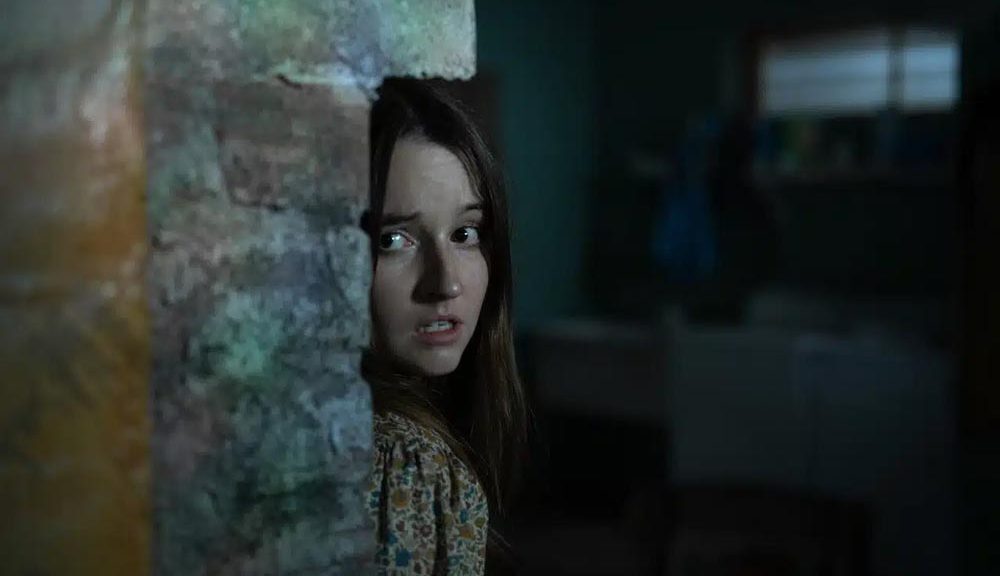
Brynn (Kaitlyn Dever) lives by herself in a lovely country home. Brynn’s a simple homebody who likes simple charms like rotary phones and making beautiful crafts to sell. But in her small town of Mill River, Brynn is a pariah. Something very painful occurred there years ago, and the townsfolk are not shy about reminding Brynn that she was – and still is – to blame.
Brynn soon finds out that what’s worse than no one stopping by is a sudden alien invasion. Hide and seek soon turns to fight or flight, with Brynn struggling to stay alive and find anyone to help her. But as the title implies, Brynn has only herself to rely on.
Duffield (screenwriter for Underwater and The Babysitter, among others) rolls out story beats that recall Signs, It Follows, and The Babadook, while upping the A Quiet Place ante for a film that is 99.9% dialog-free.
In place of conversation, we get some very effective SFX work from James Miller’s sound department, and the always-welcome Dever delivering a physically demanding, sympathetic performance that wordlessly evokes desperation, sorrow and courage.
But as Brynn’s nightmare plays out, a stale air begins to creep in. The creature design is fairly generic, and more effective before we start to see them up close. Duffield’s extended metaphor has been done before and with more subtlety, though it’s rescued somewhat by a final twist from that Twilight-y Zone place.
Most of all, Hulu’s No One Will Save You is another example of a film that seems structured exclusively for a streaming algorithm. The action comes early, it’s repeated often enough that you can go feed the dog and not feel like you’ve missed anything, and the themes are obvious and easily digested.
Once again, it’s a formula that is tasty in spots, but far from filling.
by George Wolf
The marketing for Barber tells us that “everybody has a secret.”
True enough. And there are indeed secrets being kept in this Irish mystery, but none quite as momentous as the film would like us to believe.
Veteran actor Aidan Gillen stars as Valentine (Val) Barber, a former Dublin “guard” (cop) who got tossed from the force and now, in the recent past of masks and sanitizer, works as a private investigator. Barber’s P.I. beat usually involves insurance fraud or cheating spouses, but he can’t refuse the sudden offer that comes from a worried grandmother with deep pockets.
Her 20 year-old granddaughter Sara is missing, and though other family members aren’t too concerned, Grandma suspects kidnapping.
So Barber is on the case, and while he’s learning more about Sara, director and co-writer Finton Connolly makes sure we learn plenty more about Barber.
This character study arc is really where the film is most effective. Barber has a complicated relationship with his ex-wife, his teenage daughter and his former colleagues, and the reliable Gillen (Game of Thrones, Bohemian Rhapsody, Queer as Folk, the Maze Runner franchise) makes the mussy-haired mick a sympathetic lug.
And with this solid ensemble and gritty detective aesthetic, wanting more from Barber seems to be the point here. But while the film covers some important issues (#metoo, homophobia, powerful men abusing power), the stakes all play out as a bit dated and less than thrilling. Tack on an awkward third act twist, and the future cases that Barber clearly teases might be more fitting for episodic TV.
by Hope Madden and George Wolf
If we’re going to congratulate Rian Johnson for reviving the murder mystery, save a backslap for Kenneth Branagh. His Murder on the Orient Express came two years before 2019’s Knives Out, and though Branagh may be adapting decades-old Agatha Christie classics, he’s proven adept at giving them a stylish and star-studded new sheen.
Branagh also stars again as Hercule Poirot, the legendary Belgian detective who showed a friskier side (probably thanks to Johnson’s sublime Benoit Blanc character) in last year’s Death on the Nile. Now for the third in their mystery series, Branagh and screenwriter Michael Green embrace the season with a gorgeous and frequently engaging update of Christie’s 1969 novel “Halloween Party.”
It is 1947, when the now-retired and war weary Poirot meets up with his old friend Ariadne Oliver (Tina Fey) in Venice. Oliver is a famous writer who considers herself quite the smarty, but she needs Poirot’s help to debunk the work of Mrs. Reynolds (Michelle Yeoh), a medium whose talks with the dead are pretty damn convincing.
The setting is a Gothic manor with a disturbing past, where Poirot agrees to attend a seance on Halloween night. There, after a children’s party, Mrs. Reynolds will attempt to give Rowena Drake (Kelly Reilly) the answers she seeks about the murder of her daughter, Alicia (Rowan Robinson).
But another murder soon steals the show, with even Poirot himself questioning his own eyes as things in the night go plenty bumpy.
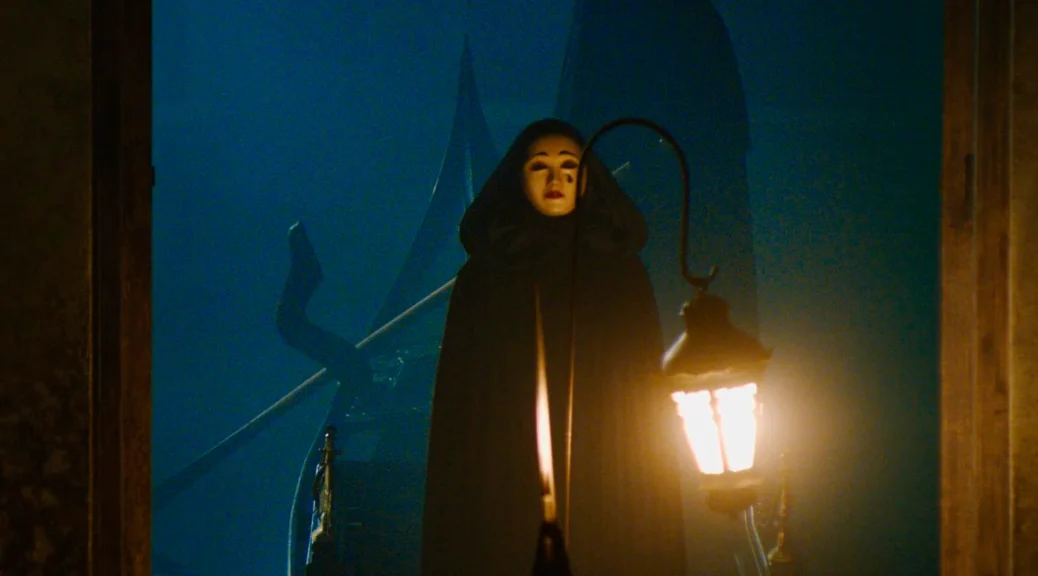
Branagh again teams with cinematographer Haris Zambarloukos (Belfast, Death on the Nile), enveloping the film in a haunted house vibe that is wonderfully foreboding. The camera explores the confines of the manor via angles that are often extreme and disorienting, while lingering on cloaks, masks and other various other articles of creep.
Poirot is a changed man since last we met. He’s seen too much evil, and believes in “no God, no ghosts,” as a cloud of trauma and grief that fits the film’s mood hangs over him. Branagh and his stellar ensemble (including Jamie Dornan, Camille Cottin and Belfast‘s Jude Hill) work their character edges well, making sure no one is ever quite above suspicion.
And those suspicions are easier to play with when the source material isn’t as well known. But while revamping a deeper cut is welcome, the chance for creepy surprise does come at a price.
The core mystery just isn’t as compelling. Branagh and Green make alterations that prolong the chill factor, but result in moments that seem more like a Christie disguise than the face of the master herself.
A Haunting in Venice‘s lingering impression is as a slice of well-dressed fun. It’s a Spooky Season movie for those who don’t like things too scary, and an Agatha Christie tale for those who’d rather not think so hard.

by George Wolf
“Science can only advance when you do things that other people say can’t be done.”
So says climate scientist Lonnie Thompson, PhD, and he should know. He’s been walking the walk for decades, and Canary finds him finally ready to start talking the talk.
And yes, the title does refer to the “canary in a coal mine” metaphor, but directors Danny O’Malley and Alex Rivest wisely spend half of the film’s running time on an extended introduction to a man who’s been described as “the closest living thing to Indiana Jones.”
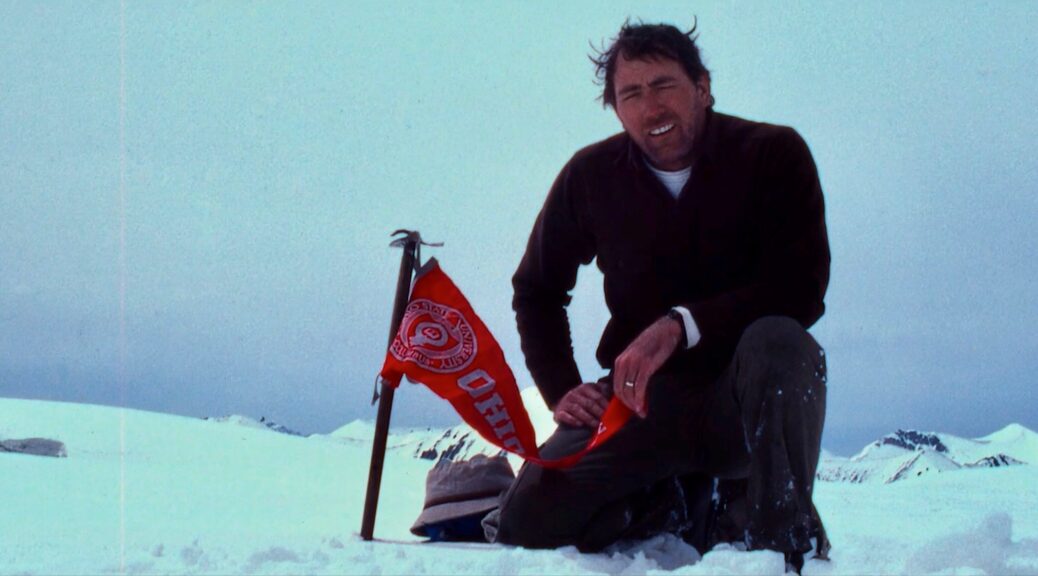
Growing up poor in West Virginia mining county, Lonnie took his scientific mind to Ohio State University to explore coal geology. But a research job studying glaciers changed the course of his life, and ultimately, the very nature of climate research.
Since 1989, Lonnie and his wife Ellen Mosely-Thompson, PhD, have run OSU’s Byrd Polar and Climate Research Center, spearheading groundbreaking work that earned Lonnie a National Medal of Science.
Lonnie’s background and achievements are extraordinary, as O’Malley and Rivest show us a man that none but the most rabid ideologue could ever accuse of grandstanding. His only agenda is scientific fact. But after decades of climbing mountains, drilling into previously unexplored ice caps and collecting indispensable data on the effects of climate change, Lonnie had to face some colder, harder facts.
“What do you not see? Why the disbelief?”
Though he long believed his work would speak for itself, and that the different sides of the political spectrum could “debate solutions, but accept the facts,” Lonnie saw things begin to change in the early 2000s. Canary connects some dots of the misinformation campaign that turned the tide, with evidence of some high-profile politicians quickly shifting their stances.
Lonnie came to accept how hard people will fight back against a forced change in lifestyle, and we see that play out with irony in his own home. Lonnie himself ignored the science of his doctor’s advice and kept climbing until it nearly killed him.
And now, as he sees global CO2 levels still rising, Lonnie realizes his time may best be spent not by collecting another ice core, but by spreading the word of what a lifetime of “doing his research” has revealed.
The film is an awe-inspiring and important step on that journey. Lonnie still believes that if humans can cause a problem, then humans can also solve that problem. And Canary‘s biggest success comes from giving you no reason to doubt the man, even if you want to.

Pregnancy changes you. Your body betrays you, your personality takes of fin wild directions, and it can feel like there’s a little monster growing inside you. And maybe there is!
Quick shout out to the trashy options that we never seem to be able to fit in: Baby Blood and Inseminoid.
This one is nuts. Chaos reigns some blighted wasteland where Lou (Natasha Lyonne) squats in an abandoned trailer, picks up shifts as necessary cleaning a motel, and abuses her body so relentlessly that it becomes the perfect breeding ground for…something.
There’s a lot going on in this movie, most of it unrelated to the plot but aesthetically in line. Writer/director Danny Perez basically creates a fairly realistic town just this side of Street Trash.
Lyonne is unhinged, unperturbable genius in this piece of insanity.
How well do you really know the person you marry? Leigh Janiak’s Honeymoon taps into that anxiety and blends it a bit with pregnancy horror to basically make everything about that new, conjoined life feel alien and weird and murdery.
Rose Leslie is particularly effective as a woman in transition. Her performance is simultaneously tender and sinister.
Janiak nails the smalltown horror, conjuring a kind of sci-fi Let’s Scare Jessica to Death.
Michelle Garza Cervera’s maternal nightmare is bright and decisive, pulling in common genre tropes only long enough to grant entrance to the territory of a central metaphor before casting them aside for something sinister, honest and honestly terrifying.
While it toes certain familiar ground – the gaslighting of Rosemary’s Baby, for instance – what sets Huesera apart from other maternal horror is its deliberate untidiness. Cervera refuses to embrace the good mother/bad mother dichotomy and disregards the common cinematic journey of convincing a woman that all she really wants is to be a mom.
Huesera’s metaphor is brave and timely. Brave not only because of its LGBTQ themes but because of its motherhood themes. It’s a melancholy and necessary look at what you give up, what you kill.
Anybody with any sense at all is afraid of pregnant women. With unassuming mastery, Alice Lowe pushes that concept to its breaking point with her wickedly funny directorial debut, Prevenge.
Lowe plays Ruth. Grieving, single and pregnant, Ruth believes her unborn daughter rather insists that she kill a bunch of people.
Why such bloodlust from Ruth’s baby? Lowe, who also wrote the script, divulges just as much as you need to know when the opportunity arises. At first, there’s just the macabre fun of watching the seemingly ordinary mum pick off an unsuspecting exotic pet salesman.
Putting a relevant twist on the classic “horrific mother” trope, writer/director Carlo Mirabella-Davis uses the rare eating disorder pica to anchor his exploration of gender dynamics and, in particular, control.
Where Mirabella-Davis’s talent for building tension and framing scenes drive the narrative, it’s Bennett’s performance that elevates the film. Serving as executive producer as well as star, Haley Bennett transforms over the course of the film.
When things finally burst, director and star shake off the traditional storytelling, the Yellow Wallpaper or Awakening or even Safe. The filmmaker’s vision and imagery come full circle with a bold conclusion worthy of Bennett’s performance.