Tag Archives: George Wolf

Day 11: American Psycho

American Psycho (2000)

A giddy hatchet to the head of the abiding culture of the Eighties, American Psycho represents the sleekest, most confident black comedy – perhaps ever. Director Mary Harron trimmed Bret Easton Ellis’s novel, giving it unerring focus. More importantly, the film soars due to Christian Bale’s utterly astonishing performance as narcissist, psychopath, and Huey Lewis fan Patrick Bateman.

There’s an elegant exaggeration to the satire afoot. Bateman is a slick, sleek Wall Street toady, pompous one minute because of his smart business cards and quick entrance into posh NYC eateries, cowed the next when a colleague whips out better cards and shorter wait times. For all his quest for status and perfection, he is a cog indistinguishable from everyone who surrounds him. The more glamour and flash on the outside, the more pronounced the abyss on the inside. What else can he do but turn to bloody, merciless slaughter? It’s a cry for help, really.

Harron’s send up of the soulless Reagan era is breathtakingly handled, from the set decoration to the soundtrack, but the film works as well as a horror picture as it does a comedy. Whether it’s Chloe Sevigny’s tenderness as Bateman’s smitten secretary or Cara Seymour’s world wearied vulnerability, the cast draws a real sense of empathy and dread that complicate the levity. We do not want to see these people harmed, and as hammy as it seems, you may almost call out to them: Look behind you!

As solid as this cast is, and top to bottom it is perfect, every performance is eclipsed by the lunatic genius of Bale’s work. Volatile, soulless, misogynistic and insane, yet somehow he also draws some empathy. It is wild, brilliant work that marked a talent preparing for big things.


Listen weekly to MaddWolf’s horror podcast FRIGHT CLUB. Do it!

Day 9: 28 Days Later

28 Days Later (2002)

Prior to 28 Days Later, the zombie genre seemed finally dead and gone. But director Danny Boyle single-handedly resurrected the genre with two new(ish) ideas: 1) they aren’t dead, 2) therefore, they can move really quickly.

You know you’re in trouble from the genius opening sequence: vulnerability, tension, bewilderment, rage, and blood – it launches a frantic and terrifying not-zombie film.

Like zombie god George Romero, though, Boyle’s real worry is not the infected, it’s the living.

Activists break into a research lab and free the wrong effing monkeys.

28 days later, bike messenger Jim wakes up naked on an operating table.

What follows is the eerie image of an abandoned, desolate London as Jim wanders hither and yon hollering for anybody. In the church, we get our first glimpse of what Jim is now up against, and dude, run!

Danny Boyle is one of cinema’s visionary directors, and he’s made visceral, fascinating, sometimes terrifying films his entire career – Shallow Grave, Trainspotting, Millions, 127 Hours – but 28 Days Later is his one true horror film. And it is inspired.

He uses a lot of ideas Romero introduced, pulling loads of images from The Crazies and Day of the Dead, in particular (as well as Adrian Lyne’s Jacob’s Ladder). But he revolutionized the genre – sparking the rebirth of zombie movies – with just a handful of terrifying tweaks.

The vision, the writing, and the performances all help him transcend genre trappings without abandoning the genre. Both Brendan Gleeson and Cillian Murphy are impeccable actors, and Naomie Harris is a truly convincing badass. Their performances, and the cinematic moments of real joy, make their ordeal that much more powerful.

Sure, it’s tough to believe that among the ten or so people still alive in England, two are as stunningly attractive as Murphy and Harris. You know what, though? Boyle otherwise paints a terrifyingly realistic vision of an apocalypse we could really bring on ourselves.

Listen weekly to MaddWolf’s horror podcast FRIGHT CLUB. Do it!

Day 8: Goodnight Mommy

Goodnight Mommy (Ich seh, Ich seh) (2014)

There is something eerily beautiful about Severin Fiala and Veronika Franz’s rural Austrian horror Goodnight Mommy (Ich seh, Ich seh).

During one languid summer, twin brothers Lukas and Elias await their mother’s return from the hospital. They spend their time bouncing on a trampoline, floating in a pond, or exploring the fields and woods around the house. But when their mom comes home, bandaged from the cosmetic surgery she underwent, the brothers fear more has changed than just her face.

Franz and Fiala owe a great debt to an older American film, but to name it would be to give far too much away, and the less you know about Goodnight Mommy, the better.

Inside this elegantly filmed environment, where sun dappled fields lead to leafy forests, the filmmakers mine a kind of primal childhood fear. There’s a subtle lack of compassion that works the nerves beautifully, because it’s hard to feel too badly for the boys or for their mother. You don’t wish harm on any of them, but at the same time, their flaws make all three a bit terrifying.

The filmmakers’ graceful storytelling leads you down one path before utterly upending everything you think you know. They never spoon feed you information, depending instead on your astute observation – a refreshing approach in this genre.

Performances by young brothers Lukas and Elias Schwarz compel interest, while Susanne Wuest’s cagey turn as the boys’ mother propels the mystery. It’s a hypnotic, bucolic adventure as visually arresting as it is utterly creepy.

The film is going to go where you don’t expect it to go, even if you expect you’ve uncovered its secrets.

Listen weekly to MaddWolf’s horror podcast FRIGHT CLUB. Do it!
https://www.youtube.com/watch?v=hisSd7qyY40

Day 7: Dog Soldiers

Dog Soldiers (2002)

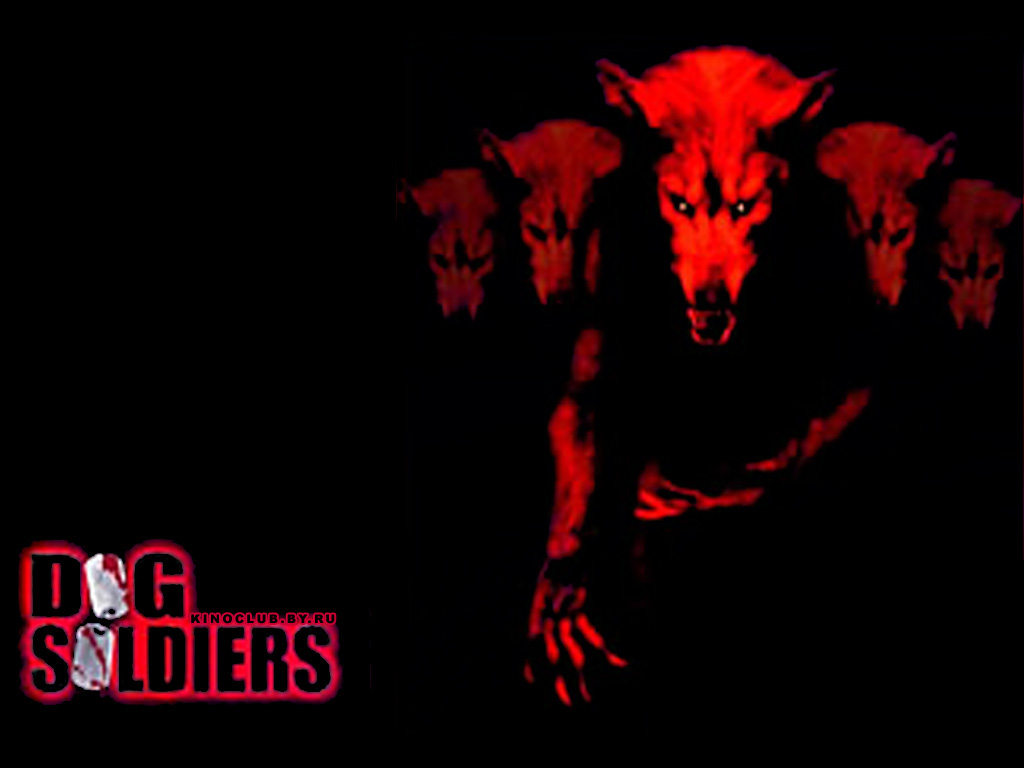
Let’s celebrate October with a fun, bloody, exciting trip to the Scottish highlands. Wry humor, impenetrable accents, a true sense of isolation, and blood by the gallon help separate Neil Marshall’s (The DescentDog Soldiers from legions of other wolfmen tales.

Marshall creates a familiarly tense feeling, brilliantly straddling monster movie and war movie. A platoon is dropped into an enormous forest for a military exercise. There’s a surprise attack. The remaining soldiers hunker down in an isolated cabin to mend, figure out WTF, and strategize for survival.

This is like any good genre pic where a battalion is trapped behind enemy lines – just as vivid, bloody and intense. Who’s gone soft? Who will risk what to save a buddy? How to outsmart the enemy?

But the enemies this time are giant, hairy, hungry monsters. Woo hoo!

The fantastically realized idea of traitors takes on a little extra something-something, I’ll tell you that right now.

Though the rubber suits – shown fairly minimally and with some flair – do lessen the film’s horrific impact, solid writing, dark humor, and a good deal of ripping and tearing energize this blast of a lycanthropic Alamo.

Listen weekly to MaddWolf’s horror podcast FRIGHT CLUB. Do it!

Day 6: May

May (2002)

Who wants a little romance? How about the tale of a wallflower, the blossom of new love, the efficient use of veterinary surgical equipment, and a good sized freezer?

Few horror films are as touching, funny, heartbreaking, or bloody as May.

Lucky McKee’s 2002 breakout is a showcase for his own talent as both writer and director, as well as his gift for casting. The entire ensemble surprises with individualized, fully realized, flawed but lovable characters, and McKee’s pacing allows each of his talented performers the room to breathe, grow, get to know each other, and develop a rapport.

More than anything, though, May is a gift from Angela Bettis to you.

As the title character, Bettis inhabits this painfully gawky, socially awkward wallflower with utter perfection. McKee’s screenplay is as darkly funny as it is genuinely touching, and we’re given the opportunity to care about the characters: fragile May, laid back love interest Adam (a faultless Jeremy Sisto), hot and horny Polly (a wonderful Anna Faris).

Plus there’s a creepy doll! Hooray!

By day Polly flirts with a confused but needy May during their workday as veterinary assistants, and by night May pines for her tragically hip and beloved Adam. There’s nary a false note here, and those expecting a makeover that will turn May into the blooming rose we always knew she could be have tuned into the wrong film.

May’s vulnerability is painful yet beautiful to watch, and it’s impossible not to hope that cool outsider Adam is telling the truth when he reassures her, “I like weird.”

He’s not a liar, really. It’s just that he couldn’t possibly know how weird things would get.

Adam’s epiphany about May is not just the turning point in the film, but one of the most honestly heartbreaking moments in horror cinema.

McKee’s film pulls no punches, mining awkward moments until they’re almost unendurable and spilling plenty of blood when the time is right. He deftly leads us from the sunny “anything could happen” first act through a darker, edgier coming of age middle, and finally to a carnage laden climax that feels sad, satisfying, and somehow inevitable.

Listen weekly to MaddWolf’s horror podcast FRIGHT CLUB. Do it!

Day 5: Dead Alive

Dead Alive (Braindead) (1992)

Rated R for “an abundance of outrageous gore,” Dead Alive is everything the early Peter Jackson did well. It’s a bright, silly, outrageously gory bloodbath.

Lionel Cosgrove (Timothy Balme) secretly loves shopkeeper Paquita Maria Sanchez (Diana Penalver), but she has eyes for someone less milquetoast. Until, that is, she’s convinced by psychic forces that Lionel is her destiny. Unfortunately, Lionel’s milquetoast-iness comes by way of decades of oppression via his overbearing sadist of a mother, who does not take well to her son’s new outside-the-home interests. Mum follows the lovebirds to a date at the zoo, where she’s bitten (pretty hilariously) by a Sumatran rat-monkey (do not mistake this dangerous creature for a rabid Muppet or misshapen lump of clay).

The bite kills her, but not before she can squeeze pus into some soup and wreak general havoc, which is nothing compared to the hell she raises once she comes back from the dead.

Mama’s boy that he is, Lionel can’t bring himself to do what he must until it is spectacularly too late. He chains up an entirely unwholesome family down the basement, which works out well enough as long as he keeps from being bitten, and keeps conniving Uncle Les (Ian Watkin) out of there.

Braindead is so gloriously over-the-top that nearly anything can be forgiven it. Jackson includes truly memorable images, takes zombies in fresh directions, and crafts characters you can root for. But more than anything, he knows where to point his hoseful of gore, and he has a keen imagination when it comes to just how much damage a lawnmower can do.

Listen weekly to MaddWolf’s horror podcast FRIGHT CLUB. Do it!

http://www.youtube.com/watch?v=eigwPFVmMIU

Day 4: A Tale of Two Sisters

A Tale of Two Sisters (2003)

A lurid Korean fairy tale of sorts – replete with dreamy cottage and evil stepmother – Kim Jee-Woon‘s A Tale of Two Sisters is saturated with bold colors and family troubles.

Kim would go on to direct the also outstanding, although entirely different, I Saw the Devil, but where Devil breathes masculinity, Tale of Two Sisters is a deep, murky, and intensely female horror.

A tight-lipped father returns home with his daughter after her prolonged hospital stay. Her sister has missed her; her stepmother has not. Or so it all would seem, although jealousy, dream sequences, ghosts, a nonlinear timeframe, and confused identity keep you from ever fully articulating what is going on. The film takes on an unreliable point of view, subverting expectations and keeping the audience off balance. But that’s just one of the reasons it works.

The director’s use of space, the composition of his frame, the set decoration, and the disturbing and constant anxiety he creates about what’s just beyond the edge of the frame wrings tensions and heightens chills. The composite effect disturbs more then it horrifies, but it stays with you either way.

Tale masters the slow reveal in large and small ways. Whether you’ve begun to unravel the big mystery or not, Tale always has something else up its sleeve. Or, under its table.

Listen weekly to MaddWolf’s horror podcast FRIGHT CLUB. Do it!

http://www.youtube.com/watch?v=nQV7ejqpbPc

Day 3: Tucker & Dale Versus Evil

Tucker and Dale vs Evil (2010)

Horror cinema’s most common and terrifying villain may not be the vampire or even the zombie, but the hillbilly. The Hills Have Eyes, Texas Chainsaw Massacre, Deliverance and hundreds of others both play upon and solidify urban dwellers’ paranoia about good country folk. The generous, giddy Tucker and Dale vs. Evil lampoons that dread with good natured humor and a couple of rubes you can root for.

In the tradition of Shaun of the Dead, T&DVE lovingly sends up a familiar subgenre with insightful, self-referential humor, upending expectations by taking the point of view of the presumably villainous hicks. And it happens to be hilarious.

Two backwoods buddies (an endearing Tyler Labine and Alan Tudyk) head to their mountain cabin for a weekend of fishing. En route they meet some college kids on their own camping adventure. A comedy of errors, misunderstandings and subsequent, escalating violence follows as the kids misinterpret every move Tucker and Dale make.

Director Eli Craig’s clever role reversal screenplay, co-written with Morgan Jurgenson, recreates the tension-building scenes that have become horror shorthand for “the hillbillies are coming.”  From the bait and tackle/convenience store encounter with bib overall clad townies, to the campfire retelling of likeminded teens lost forever in the wooded abyss, the set up is perfect.

Each punchline offers the would-be killers’ innocent point of view – expressing their increasingly baffled take on what appears to them to be a suicide pact among the coeds.

T&DVE offers enough spirit and charm to overcome most weaknesses. Inspired performances and sharp writing make it certainly the most fun participant in the You Got a Purty Mouth class of film.

Listen weekly to MaddWolf’s horror podcast FRIGHT CLUB. Do it!
Day 2: The Loved Ones

The Loved Ones (2009)

Psycho may have asked us to look at the weird relationships possible with mothers and sons, but fathers and daughters can develop dangerously close bonds, as well. For proof, just gander at this Aussie freakshow.

Writer/director/Tasmanian Sean Byrne upends high school clichés and deftly maneuvers between angsty, gritty drama and neon-colored, glittery carnage in a story that borrows from other horror flicks but absolutely tells its own tale.

Brent (Xavier Samuel) is dealing with guilt and tragedy in his own way, and his girlfriend Holly tries to be patient with him. Oblivious to all this, Lola (a gloriously wrong-minded Robin McLeavy) asks Brent to the school dance. He politely declines, which proves to be probably a poor decision.

Byrne quietly crafts an atmosphere of loss and depression in and around the school without painting the troubles cleanly. This slow reveal pulls the tale together and elevates it above a simple work of outrageous violence.

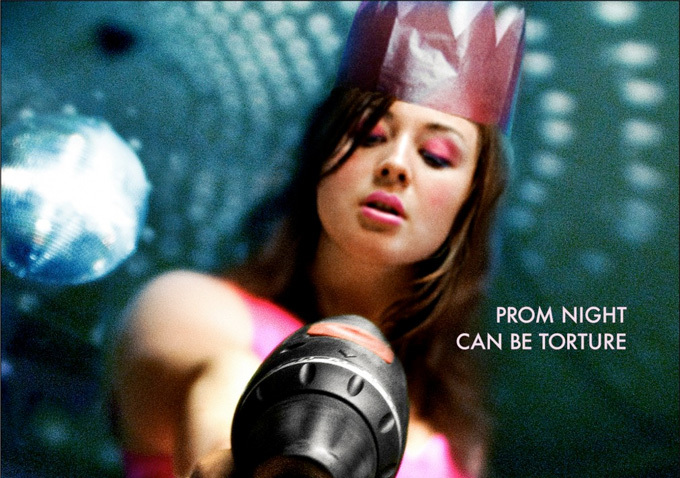
Inside Lola’s house, the mood is decidedly different. Here, we’re privy to the weirdest, darkest image of a spoiled princess and her daddy. The daddy/daughter bonding over power tool related tasks is – well – I’m not sure touching is the right word for it.

The Loved Ones is a cleverly written, unique piece of filmmaking that benefits from McLeavy’s inspired performance as much as it does its filmmaker’s sly handling of subject matter. It’s a wild, violent, depraved way to spend 84 minutes. You should do so now.

Listen weekly to MaddWolf’s horror podcast FRIGHT CLUB. Do it!

Not the Same Old Grind

Mississippi Grind

by George Wolf

Two gamblers – one a smooth talking charmer and the other a desperate loser – team up for a high stakes road trip to New Orleans, taking all the action they can along the way.

It may sound like a cliche waiting to happen, but if you think you know where Mississippi Grind is heading, think again. Filmmakers Anna Boden and Ryan Fleck (Half Nelson, Sugar) don’t do same old same old. The writing/directing team is more interested in slowly immersing you in a new environment, letting simple truths drip from the intimate details of their characters.

Gerry (Ben Mendelsohn) has a growing list of gambling debts and a daughter he never sees, but things might be looking up. The high-rolling, confident Curtis (Ryan Reynolds) sits down at Gerry’s card game, buys him a drink (“not the cheap stuff, either”) and suddenly Gerry thinks he’s found a lucky charm.

Curtis agrees to Gerry’s idea for the road trip, but questions linger. Sure, Curtis can work a room with the best of them, but is it all just to find his next hapless mark? The film wouldn’t work without two sublime performances to drive it, and there’s no question it works.

Reynolds has never been better, keeping just enough of his usual smirking smart ass persona to give Curtis an extra layer that makes him hard to pin down. Mendelsohn is less of a surprise, as he might be the most consistently great actor that nobody knows. He keeps Gerry a constantly evolving work, equal parts thieving liar and gold-hearted schlub who just needs a break.

Sienna Miller and Analeigh Tipton both make effective use of their limited screen time as working girls who get a visit from the southbound duo. They not only give us added glimpses into the souls of Gerry and Curtis, but they’re also real characters unto themselves.

Boden and Fleck introduce each new locale with postcard perfect shots free of almost all life, another reminder our interest is Gerry and Curtis and where they are going, both literally and figuratively.

With enthralling characters, mesmerizing performances and filmmakers confident enough to stay their own course, it’s a hugely satisfying trip.

Verdict-4-0-Stars
