Tag Archives: Fright Club podcast

Fright Club: Best PG-13 Horror

Who wants to scare your kids? Because there is ample opportunity to do so without breaking any laws. Yes, year after year the cinemas are lousy with God-awful PG-13 horror (Rings, Ouija, Wish Upon, Bye Bye Man) aiming to cash in on the underaged market with jump scares and lazy writing.

But, if you look closely you can find some scary shit. Nightmares in the making. So, we looked closely…

6. The Grudge (2004)

The amazing thing about The Grudge’s PG-13 rating is the remarkable amount of violence in this film. There is a death, dismemberment or supernatural act in very nearly every single scene in the movie.

There’s also the larger, scarier idea of a contagious haunted house. You’re not just in jeopardy when you’re in it. This shit comes home with you.

The Grudge is one of the rare American remakes of J-horror that stands up, partly because the antagonists from the original are involved (Yuya Ozeki as the terrifyingly adorable Toshio and Takako Fuji as the just terrifying Kayako). It’s also a benefit that director Takashi Shimizu (who also wrote and directed the original, Ju-on) is back, and that he keeps the setting in Japan. Plus those creepy-ass sounds!

5. Insidious (2010)

Director James Wan and writer Leigh Whannell took a break from each other after a disappointing follow up to their breakout 2004 collaboration Saw (Dead Silence—yeesh). The the pair were back strong in 2010 with a wildly imaginative descent into “the further.”

This is the film where Wan finds his way as a director, and a director of horror in particular. Whannell’s bold story offers plenty of opportunity to work, and the atmosphere, practical effects and clever use of jump scares has become the trademark of the filmmaker.

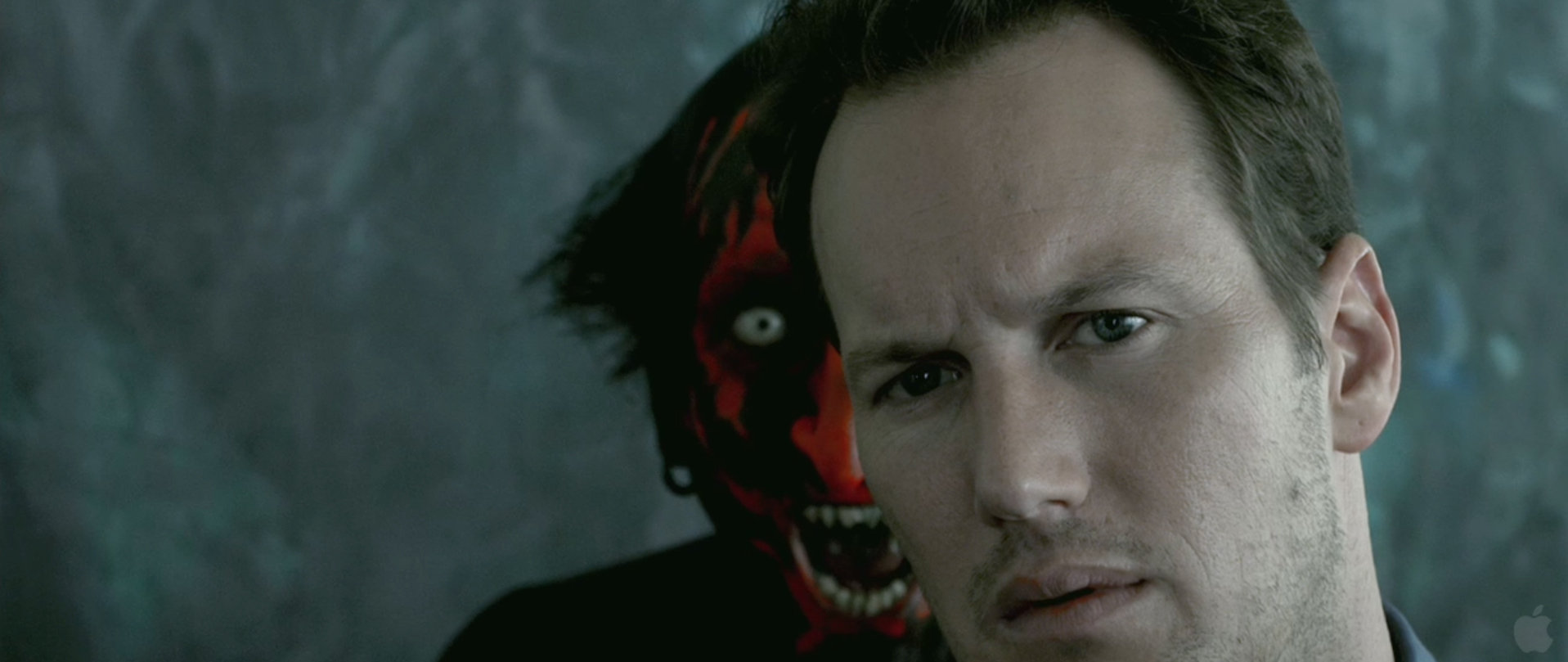
They are also the elements that help this genuinely frightening effort maintain a PG-13 rating. Man, this guy knows how to milk that rating, doesn’t he? That lady in black, that red-faced guy, the whole organ thing, that kid? Tiptoe through the Tulips?

The pair takes a ghost story premise and does what very few people can do well: shows us what we are afraid of.

4. The Sixth Sense (1999)

Oh, you totally didn’t figure it out. Don’t even start.

A troubled child psychologist (Bruce Willis) treats a young boy (Haley Joel Osment) carrying a terrible burden. The execution—basically, seeing ghosts in every corner of Philadelphia—could have become a bit of a joke, but writer/director M. Night Shyamalan delivers a tense, eerie product.

With his 1999 breakout, Shyamalan painted himself into a corner he found it tough to get out of: the spooky surprise ending. And though this would nearly be his undoing as a filmmaker, it started off brilliantly.

Part of the success of the film depends on the heart-wrenching performances: Toni Collette’s buoyant but terrified mother, Willis’s concerned therapist, and Osment’s tortured little boy. Between Shyamalan’s cleverly spooky script, a slate of strong performances and more than a few genuinely terrifying moments, this is one scary-ass PG-13.

3. The Woman in Black (2012)

Director James Watkins was fresh off his underseen, wickedly frightening Eden Lake. Screenwriter Jane Goldman (working from Susan Hill’s novel) had recently written the films Kick-Ass and X-Men: First Class, both of which are awesome. And star Daniel Radcliffe had done something or other that people remembered…

I’d have been worried that Radcliffe chose another supernatural adventure as his first big, post-Hogwarts adventure were it not for the filmmaking team putting the flick together. Goldman’s witty intelligence and Watkins’s sense of what scares us coalesce beautifully in this eerie little nightmare.

A remake of a beloved if rarely shown BBC film, the big screen version is a spooky blast of a ghost story. It makes savvy use of old haunted house tropes, updating them quite successfully, and its patient pace and slow reveal leads to more of a wallop than you usually find in such a gothic tale. Glimpses, movements, shadows—all are filmed to keep your eyes darting around the screen, your neck craned for a better look. It’s classic haunted house direction and misdirection laced with more modern scares.

Ten points for Gryffindor!

2. The Others (2001)

Co-writer/director Alejandro Amenabar casts a spell that recalls The Innocents in his 2001 ghost story The Others. It’s 1945 on a small isle off Britain, and the brittle mistress of the house (Nicole Kidman) wakes screaming. She has reason to be weary. Her husband has still not returned from the war, her servants have up and vanished, and her two children, Anna and Nicholas, have a deathly photosensitivity: sunlight or bright light could kill them.

What unspools is a beautifully constructed film using slow reveal techniques to upend traditional ghost story tropes, unveiling the mystery in a unique and moving way.

Kidman’s performance is spot-on, and she’s aided by both the youngsters (Alakina Mann and James Bentley). Bentley’s tenderness and Mann’s willfulness, combined with their pasty luster (no sun, you know), heighten the creepiness.

With the help of cinematographer Javier Aguirresarobe and supporting actress Fionnula Flanagan, Amenabar introduces seemingly sinister elements bit by bit. It all amounts to a satisfying twist on the old ghost story tale that leaves you feeling as much a cowdy custard as little Nicholas.

https://www.youtube.com/watch?v=ISch6Fi-q0A

1. The Ring (2002)

Gore Verbinski’s film achieves one of those rare feats, ranking among the scarce Hollywood remakes that surpasses the foreign-born original, Japan’s unique paranormal nightmare Ringu. Verbinski’s film is visually arresting, quietly atmospheric and creepy as hell.

This is basically the story of bad mom/worse journalist Rachel (Naomi Watts) investigating the urban legend of a videotape that kills viewers exactly seven days after viewing.

The tape itself is the key. Had it held images less surreal, less Buñuel, the whole film would have collapsed. But the tape was freaky. And so were the blue-green grimaces on the dead! And that horse thing on the ferry!

And Samara.

From cherubic image of plump-cheeked innocence to a mess of ghastly flesh and disjointed bones climbing out of the well and into your life, the character is brilliantly created.

Fright Club: Best Surreal Horror

Everybody’s first experience with horror is a nightmare – their own bad dreams. Surreal horror manages to recreate the anxiety, confusion and dreamlike quality of those nightmares.

In fact, it’s such fertile ground for horror that there are dozens of excellent possible films to celebrate – beginning with Bunuel and Dali’s 1929 head trip Un Chien Andelou to Bergman’s 1968 film Hour of the Wolf, Shin’ya Tsukamoto’s fantastical 1989 fantasy Tetsuo, the Iron Man to Turkey’s latest foray into the genre, Can Evrenol’s 2015 head trip Baskin. All of these films are required viewing for horror fans, but something had to be set aside.

So, here you have it: our pick of the five best surreal horror films.

5. Vampyr (1932)

The well-groomed Allen Grey (Julian West) is an aimless dreamer preoccupied by tales of the supernatural. He wanders thusly, with what appears to be a fish net, to a secluded little inn. But trouble’s afoot.

And dig those crazy shadows!

Early in Vampyr, Grey receives a package from a weary looking man. The package says, “To be opened upon my death.” It appears that Grey has stumbled into a deadly mystery with nothing to help him puzzle out the details except that needless fish net.

The great Carl Theodor Dreyer co-wrote and directed this gorgeous black and white fantasy. The painterly quality of Dreyer’s frames and the bizarre character behavior give the film a surreal atmosphere you can’t shake. His decision to limit dialog to a minimum and craft the film with traditional silent film gimmicks benefitted the dreamscape atmosphere.

As Grey wanders through this picturesque nightmare realm, the film becomes almost drunk with weirdness. Dreyer captures the gorgeous terror of a dream more perfectly than any other filmmaker, in a movie that is never predictable, always a bit surreal and spooky.

https://www.youtube.com/watch?v=5xEWT23yA3o

4. Possession (1981)

Speaking of sex and monsters – wait, were we? – have you seen Possession? WTF is going on there?

Andrzej Zulawski – writer/director/Czech – created this wild ride with doppelgangers, private investigators, ominous government (or are they?) agencies, and curious sexual appetites. It’s more precisely fantasy than horror, but it strikes me as David Cronenberg meets David Lynch, which is a pairing we can get behind.

Mark (Sam Neill) and Anna’s (a fearless Isabelle Adjani) relationship boasts an intentional artificiality – a queasying sexuality – that makes it hard to root for either of them as their marriage deteriorates. Anna, it seems, is in love with someone else. Is it the sexually open – really, really open – Heinrich? Is it a bloody, mollusk-like monster? Is Mark boning Anna’s mean friend with a cast on her leg? Does Bob’s kindergarten teacher bear an unreasonable resemblance to Anna? Is anyone caring properly for Bob?

These questions and more go basically unanswered in a deviant, summary-defying, fantastical bit of filmmaking that mocks the idiocy, even insanity of obsession and boasts a handful of weirdly excellent performances. And sex with a bloody mollusk-like monster.

3. Repulsion (1965)

The first of Polanski’s brilliant “apartment trilogy,” Repulsion takes on its protagonist’s point of view. As Carol (an utterly amazing Catherine Deneuve) spirals into a hallucinogenic stupor of violence and paranoia, Polanski wisely decided to occupy that same headspace, rather than observing it as an outsider.

It gives the film its surreal feel, developed partly by the wonderful camera work of Gilbert Taylor, who uses the black and white necessitated by the budget to wondrous, shadowy, menacing effect.

Though the marketing for the film promoted a virgin’s hysteria, close attention to the film suggests something far more sinister beneath Catherine’s breakdown. Is it ironic that Roman Polanski of all people is able to articulate the mental and emotional chasm left by a likely sexual assault? Why yes, yes it is, but God help me, he does it well.

2. Gozu (2003)

If you are looking for genuine lunacy in film, your search should begin and quite possibly end with filmmaker Takashi Miike. His shit is nuts. Truth be told, there are scads of Miike films that could have populated this list because even his tamest, most logical, no-puppetry films are wild rides. So when he starts coloring way outside the lines, expect to be surprised.

This one starts off as a yakuza film – one guy on a mob-style assignment – then descends into absolute madness.

Minami (Yuta Sone) has been ordered to assassinate his feeble-minded yakuza boss Ozaki (Sho Aikawa), but he’s conflicted. Then he loses Ozaki and wanders, in search, into – you might say it was the Twilight Zone, except this place is considerably weirder. There’s a minotaur. An electrified anal soup ladle death scene. Some seriously, seriously weird shit.

Like a walk through somebody’s subconscious, the film is awash in repressed sexual desires of the very most insane and unspeakable. There’s a comical element that’s almost equally unsettling. Gozu is not as violent as many Miike films – it’s violent, don’t be mistaken, but the horror here is more in unseemly behavior and wildly inappropriate imagery. It’s just stuff you can’t unsee.

https://www.youtube.com/watch?v=penZT2N2xDw

1. Eraserhead (1977)

There truly is no film quite like David Lynch’s first feature, eh?

Eraserhead defies simple summarization. Easily the most surreal of all Lynch’s films – which is a huge statement – the film follows sad-sack Henry Spencer (Jack Nance) dealing poorly with fatherhood.

The film becomes a nightmare of paternal angst and existential crisis – indeed, it may be impossible to name a film or filmmaker more able to bring a nightmare to life.

It’s also among the finest examples of corporeal horror you will find. The shadowy, grimy b/w photography – partially handled by Lynch’s longtime cinematographer Frederick Elmes – amplifies the dismal stagnation facing Henry.

At the same time, it gives a weird, nostalgic camp factor to the Lady in the Radiator and adds a particularly lurid element to that whole bleeding “chicken” thing.

Plus, the baby. Yikes. Alive with the most disturbing imagery, Eraserhead is impossible to forget.

Fright Club: Best Creature Features

SciFi and horror don’t always play well together, but our one commonality will forever bridge the waters separating our nerdiness: creature features. For whatever reason, tales of oversized monsters, generally unleashed at the hands of mad science, appeals to both crowds even more than a marauding serial killer in a Shatner mask. Today we celebrate that common ground by counting down the five best creature features in horror.

Listen to the full podcast HERE.

5. The Fly (1986)

After a couple of interesting, if un-medical films, the great David Cronenberg made a triumphant return to the laboratory of the mad scientist in his most popular film to date.

But it’s not just Cronenberg’s disturbed genius for images and ideas that makes The Fly fly; it’s the performance he draws from Jeff Goldblum.

Goldblum is an absolute gift to this film, so endearing in his pre-Brundlefly nerdiness. He’s the picture’s heartbeat, and it’s more than the fact that we like his character so much. The actor also performs heroically under all those prosthetics.

He and Geena Davis make the perfect pair, with their matching height and mullets, and their onscreen chemistry does give the film a level of human drama traditionally lacking from the Cronenberg canon. Atop that, there’s the transformation scene in the bathroom – the fingernails, the pustules – all classic Cronenberg grotesquerie, and still difficult to watch.

https://www.youtube.com/watch?v=7BzwxJ-M_M0


4. The Descent (2005)

The film begins with an emotionally jolting shock, quickly follows with some awfully unsettling cave crawling and squeezing and generally hyperventilating, then turns dizzyingly panicky before it snaps a bone right in two.

And then we find out there are monsters.

Long before the first drop of blood is drawn by the monsters – which are surprisingly well conceived and tremendously creepy – the audience has already been wrung out emotionally.

Writer/director Neil Marshall makes incredible use of the story’s structure. Between that and the way film and sound editing are employed, Marshall squeezes every available ounce of anxiety from the audience.

The grislier the film gets, the more primal the tone becomes, eventually taking on a tenor as much like a war movie as a horror film. This is not surprising from the director that unleashed Dog Soldiers – a clever and frightening werewolf adventure. But Marshall’s second attempt is far scarier.

For full-on horror, this is one hell of a monster movie.

3. The Thing (1982)

John Carpenter’s remake of the 1951 SciFi flick The Thing from Another World concocts a thoroughly spectacular tale of icy isolation, contamination, and mutation.

A beard-tastic cast portrays a team of scientists on expedition in the Arctic who take in a dog. The dog is not a dog, though. Not really. And soon, in an isolated wasteland with barely enough interior room to hold all the facial hair, folks are getting jumpy because there’s no knowing who’s not really himself anymore.

This is an amped up body snatcher movie benefitting from some of Carpenter’s most cinema-fluent and crafty direction: wide shots when we need to see the vastness of the unruly wilds; tight shots to remind us of the close quarters with parasitic death inside.

The story remains taut beginning to end, and there’s rarely any telling just who is and who is not infected by the last reel. You’re as baffled and confined as the scientists.


https://www.youtube.com/watch?v=F7t-919Ec9U


2. Alien (1979)

Director Ridley Scott’s other masterpiece, Alien, traps a crew aboard a rickety, dark, workingman’s spacecraft with the coolest monster perhaps ever.

After a vagina-hand-sucker-monster attaches itself to your face, it gestates inside you, then tears through your innards. Then it grows exponentially, hides a second set of teeth, and bleeds acid. How much cooler could this possibly be?

Compare that to the crew, and the competition seems unreasonably mismatched. The sunken-chested Harry Dean Stanton, the screechy Veronica Cartwright, the sinister Ian Holm, the mustachioed Tom Skerritt, even the mulleted Sigourney Weaver – they all seem doomed before we even get to know them.

Much ado has been made, rightfully so, of the John Hurt Chest Explosion (I loved their early work, before they went commercial). But Scott’s lingering camera leaves unsettling impressions in far simpler ways, starting with the shot of all those eggs.


1. Jaws (1975)

Twentysomething Steven Spielberg’s game-changer boasts many things, among them one of the greatest threesomes in cinematic history. The interplay among the grizzled and possibly insane sea captain Quint (Robert Shaw), the wealthy young upstart marine biologist Hooper (Richard Dreyfuss), and the decent lawman/endearing everyman Brody (Roy Scheider) helps the film transcend horror to become simply a great movie.

It’s John Williams’s iconic score; it’s Bill Butler’s camera and Verna Fields’s editing, capturing all the majesty and the terror, but never too much of the shark; it’s Spielberg’s cinematic eye. It all works, together with very fine performances, to mine for a primal terror of the unknown, of the natural order of predator and prey.

Spielberg achieved one of the rare adaptations that betters the source material. Though Peter Benchley’s nautical novel attracted droves of fans, Spielberg streamlined the text and surpassed its climax to craft a sleek terror tale.

Jaws is the high water mark for animal terror. Likely it always will be.


http://www.youtube.com/watch?v=CCjDa44S3kI


Fright Club: Best Twin Horror

Listen to the whole conversation on our FRIGHT CLUB PODCAST.

For whatever reason, filmmakers and moviegoers alike seem to find twins inherently creepy. Would The Shining have been as menacing if it were just another child trying to lure Danny to his death? No – for some reason what’s particularly terrifying is the image of those two identical girls waving and beckoning, “Come play with us, Danny…”

It’s as if they’ve conspired. You’re outnumbered. There’s the idea that they’re doppelgangers able to fool the rest of us, that or they are two half beings unable to live without the other and yet perhaps quietly desperate to try.

We’ve enlisted the help of Senior Twin Correspondent Joy Madden (she’s Hope’s evil twin, FYI) to puzzle through the best in twin horror. Unlike The Shining, though, twins are the centerpiece of these films and it is their very twin-ness that drives the story.

5. Basket Case (1982)

This film is fed by a particularly twin-linked anxiety. Can anyone really be the love of one twin’s life, and if so, where does that leave the other twin? More than that, though, the idea of separating conjoined twins is just irresistible to dark fantasy. Rock bottom production values and ridiculous FX combine with the absurdist concept and poor acting to result in an entertaining splatter comedy a bit like Peter Jackson’s early work.

When super-wholesome teenage Duane moves into a cheap and dangerous New York flophouse, it’s easy to become anxious for him. But that’s not laundry in his basket, Belial is in the basket -Duane’s deformed, angry, bloodthirsty, jealous twin brother – but not just a twin, a formerly conjoined twin. What he really is, of course, is Duane’s id – his Hyde, his Hulk, his Danny DeVito. And together the brothers tear a bloody, vengeful rip in the fabric of family life.

https://www.youtube.com/watch?v=wtmLKrxR6H0

4. Sisters (1973)

We’re all probably familiar with director Brian De Palma’s long and sometimes tiresome journey through his own person obsessions with Alfred Hitchcock. He married Hitch’s high-tension score and murder mystery plotlines with Mario Bava’s sexualized violence to create his own hybrid, which began with this twin sister trauma.

French Canadian model Danielle (Margot Kidder) may or may not have a once-conjoined twin who may or may not be a diabolical killer in this “is she or isn’t she” mind bender. Separation anxiety and a general nervousness about twins as an alien concept fuel this murder mystery that takes some hard left turns – some novel, some now clichéd. Whatever the flaws, though, De Palma’s panache and Hitchcockisms are in full bloom in this stylish, often creepy thriller.

3. Dead Ringers (1988)

The film is about separation anxiety, with the effortlessly melancholy Jeremy Irons playing a set of gynecologist twins on a downward spiral. Cronenberg doesn’t consider this a horror film at all. Truth is, because the twin brothers facing emotional and mental collapse are gynecologists, Cronenberg is wrong.

Irons is brilliant as Elliot and Beverly Mantle, bringing such flair and, eventually, childlike charm to the performance you feel almost grateful. Like some of the greats, he manages to create two very distinct yet appropriately linked personalities, and Cronenberg’s interest is the deeply painful power shift as they try and fail to find independence from the other. The film’s pace is slow and its horror subtle, but the uncomfortable moments are peculiarly, artfully Cronenberg.

https://www.youtube.com/watch?v=_xmheE3L19c

2. Goodnight Mommy (2014)

During one languid summer, twin brothers Lukas and Elias await their mother’s return from the hospital. They spend their time bouncing on a trampoline, floating in a pond, or exploring the fields and woods around the house. But when their mom comes home, bandaged from the cosmetic surgery she underwent, the brothers fear more has changed than just her face.

Inside this elegantly filmed environment, where sun dappled fields lead to leafy forests, the filmmakers mine a kind of primal childhood fear. The filmmakers’ graceful storytelling leads you down one path before utterly upending everything you think you know. They never spoon feed you information, depending instead on your astute observation – a refreshing approach in this genre.

Performances by young brothers Lukas and Elias Schwarz compel interest, while Susanne Wuest’s cagey turn as the boys’ mother propels the mystery. It’s a hypnotic, bucolic adventure as visually arresting as it is utterly creepy. The film is going to go where you don’t expect it to go, even if you expect you’ve uncovered its secrets.

1. The Other (1972)

Director Robert Mulligan (To Kill a Mockingbird) is a master of slow reveal, feeding us information as we need it and pulling no punches in the meantime. It’s rural 1930s, and one hearty farm family has withstood a lot. Ever since Dad died last summer, seems like every time you turn around there’s some crazy mishap. And yet, the farm still goes on – there’s always a pie in the oven and a cow that needs milking. Still, Ada (Uta Hagen), the sturdy German matriarch, is troubled. Sweet, stout young Niles seems terribly confused about his twin, Holland.

Mulligan turns to that same nostalgic, heartland approach he used so beautifully with Mockingbird to inform a stunningly crafted, understated film that sneaks up on you. He creates what is likely the most effective and troubling film you’ll see about twins.

https://www.youtube.com/watch?v=HMmMqWkudgA