Halloween Countdown, Day 23

28 Days Later (2002)

Prior to 28 Days Later, the zombie genre seemed finally dead and gone. But director Danny Boyle single-handedly resurrected the genre with two new(ish) ideas: 1) they weren’t dead, 2) therefore, they could move really quickly.

You know you’re in trouble from the genius opening sequence: vulnerability, tension, bewilderment, rage and blood – it marks a frantic and terrifying not-zombie film.

Like zombie god George Romero, though, Boyle’s real worry is not the infected, it’s the living.

Activists break into a research lab and free the wrong fucking monkeys.

28 days later, bike messenger Jim wakes up naked on an operating table.

What follows is the eerie image of an abandoned, desolate London as Jim wanders hither and yon hollering for anybody. In the church, we get our first glimpse of what Jim is now up against, and dude, run!

Danny Boyle is one of cinema’s visionary directors, and he’s made visceral, fascinating, sometimes terrifying films his entire career – Shallow Grave, Trainspotting, Millions, 127 Hours – but 28 Days Later is his one true horror film. And it is inspired.

He uses a lot of ideas Romero introduced, pulling loads of images from The Crazies and Day of the Dead, in particular (as well as Adrian Lyne’s Jacob’s Ladder). But he revolutionized the genre – sparking the rebirth of zombie movies – with just a handful of terrifying tweaks.

The vision, the writing, and the performances all help him transcend genre trappings without abandoning the genre. Both Brendan Gleeson and Cillian Murphy are impeccable actors, and Naomie Harris is a truly convincing badass. Their performances, and the cinematic moments of real joy, make their ordeal that much more powerful.

Sure, it’s tough to believe that among the ten or so people still alive in England, two are as stunningly attractive as Murphy and Harris. You know what, though? Boyle otherwise paints a terrifyingly realistic vision of an apocalypse we could really bring on ourselves.


Wooden Shoes and Risky Romance

Copenhagen

by Hope Madden

If the movies have taught me one thing this year, it’s that – regardless of the date on your birth certificate – you can come of age in Europe. That’s right, whether you are crusty oldsters on a trip through Iceland (Land Ho!) or fiftysomethings eating your way through Italy (The Trip to Italy), or an American asshole approaching 30 and seeking family in Copenhagen, no matter. As long as you’re a guy still holding on to an age that doesn’t suit you, you can turn that page with a European vacation. Just ask William (that American asshole).

Left stranded in Copenhagen after a guys’ trip picked up a third wheel (his best friend’s girlfriend), William (Gethin Anthony) tries to track down the Danish grandfather he never met. He somehow lands the assistance of a cute Danish waitress (Frederikke Dahl Hansen).

Her plucky resolve to solve the mystery of William’s grandfather fuels the exotic vacation romance by first time feature filmmaker Mark Raso, who proves as adept behind the camera as he is with a pen.

His setting is unerringly lovely – exactly the romantic backdrop where a lost soul could be redeemed by young love. Unless it’s William, and the love is really, really young.

Raso explores some taboo territory, but exploitation is not his aim (thank God). Though he dances with the tension of temptation throughout the film, Raso never loses sight of his characters’ humanity and it’s the human interaction that gives the film more than the simple allure of forbidden fruit.

It helps that Dahl Hansen turns in such a naturalistic and lovely performance as the youngster who has so smitten the douchey American. As his arrested adolescence crashes headlong into her actual adolescence, Dahl Hansen never loses her own character, never becomes simply the object of male fantasy. It’s a thoughtful, restrained performance that is the reason the film succeeds.

Not that Anthony’s turn is weak. On the contrary, it’s fascinatingly repellant. Kudos to Anthony and Raso alike for ignoring the temptation to make William more likeable. Anthony’s performance is never entirely genuine except in predatory flashes and you are never absolutely certain how things will resolve themselves. It’s an uncommon image for a protagonist, and it keeps the audience uneasy all the way through.

Copenhagen offers a simple story, exquisitely filmed and well performed. Will William grow up while traveling abroad?

He has a better chance there than in Vegas, I guess.

Verdict-4-0-Stars

Halloween Countdown, Day 22

Eden Lake (2009)

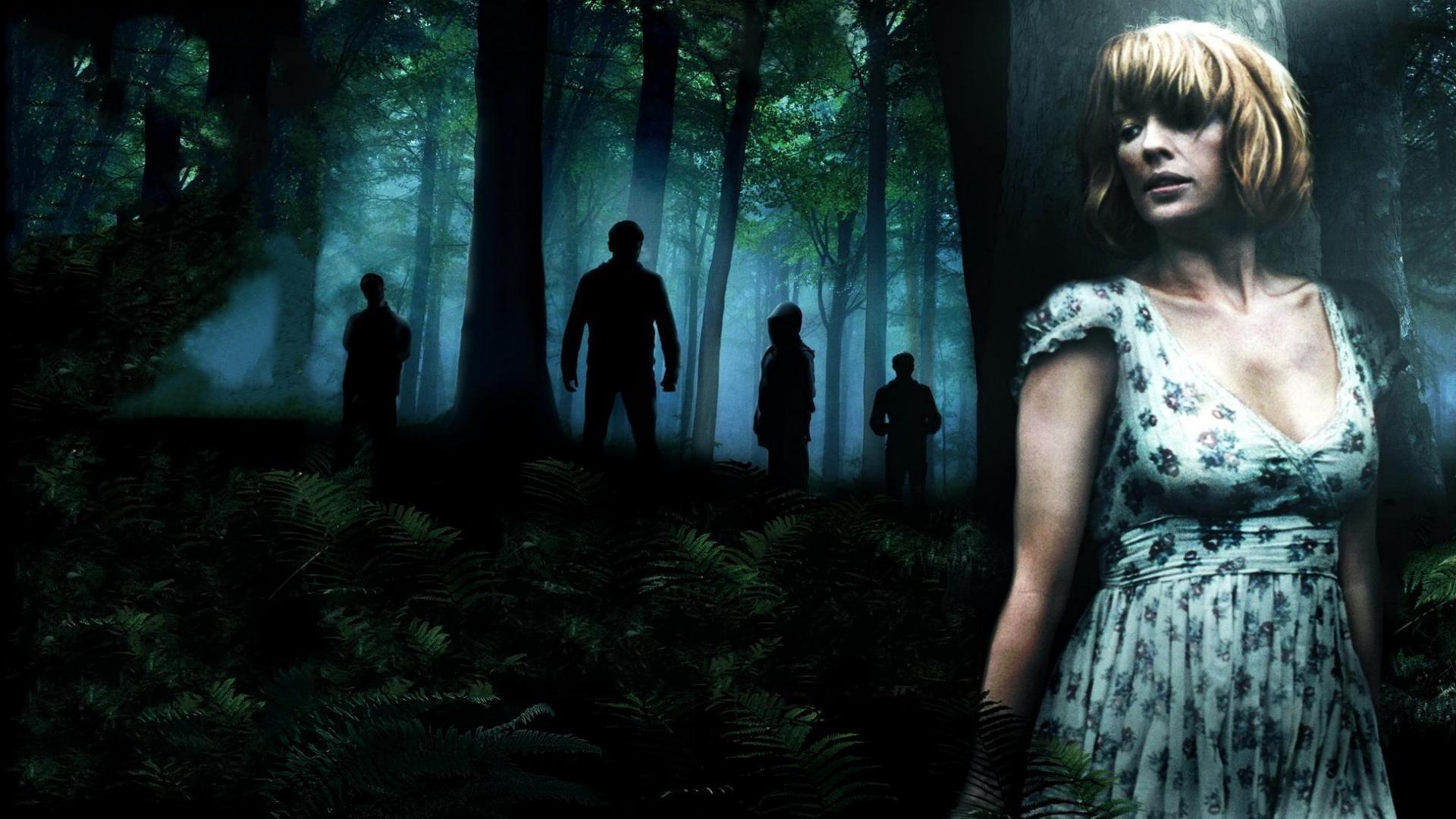
It’s crazy this film hasn’t been seen more. The always outstanding Michael Fassbender takes his girl Jenny (Kelly Reilly) to his childhood stomping grounds – a flooded quarry and soon-to-be centerpiece for a grand housing development. He intends to propose, but he’s routinely disrupted, eventually in quite a bloody manner, by a roving band of teenaged thugs.

Kids today!

The film expertly mixes liberal guilt with a genuine terror of the lower classes. The acting, particularly from the youngsters, is outstanding. And though James Watkins’s screenplay makes a couple of difficult missteps, it bounces back with some clever maneuvers and horrific turns.

Sure, the “angry parents raise angry children” cycle may be overstated, but Jack O’Connell’s performance as the rage-saturated offspring turned absolute psychopath is chilling.

There’s the slow boil of the cowardly self righteous. Then there’s this bit with a dog chain. Plus a railroad spike scene that may cause some squeamishness. Well, it’s a grisly mess, but a powerful and provocative one. Excellent performances are deftly handled by the director who would go on to helm The Woman in Black.

Don’t expect spectral terror in this one, though. Instead you’ll find a bunch of neighborhood kids pissed off at their lot in life and taking it out on someone alarmingly like you.

https://www.youtube.com/watch?v=_9kuMFPW0YI

Snow and Ice for Your Queue

One of the best films of 2014 releases to DVD and BluRay today, and if you haven’t seen Snowpiercer, you should do so now. Well told, fast paced, and tense, the entire action flick is confined to the claustrophobic innards of a high speed train. It’s a post apocalyptic cautionary tale that boasts savvy writing and wry humor, plus a handful of stand out performances – none better than Tilda Swinton’s. Chris Evans anchors the film, though, proving again that he is more than a pretty face and a nice set of abs.

If you’re looking for another reason to believe in Chris Evans, try 2012’s The Iceman. The gritty biopic tells of mob killer Richard Kuklinski as portrayed by the always phenomenal Michael Shannon. Evans is almost unrecognizable as Kuklinski’s cohort in crime Mr. Freezy, and together the two actors create a strangely sympathetic yet cold image of crime’s underbelly and a criminal’s fractured world.

Adventures in Babysitting

My theory is this: first time feature filmmaker Theodore Melfi is a wizard. It seems improbable, sure, but I can think of no other explanation for St. Vincent.

A newly single mom hires her curmudgeonly neighbor to babysit for her precocious son. As obvious as it sounds – and is – somehow Melfi creates surprises in the territory he treads and the performances he draws. Had Charles Bukowski starred in About a Boy, this is the film it would have become.

Melfi’s genius with dialog and his light touch when directing together create an atmosphere that allows actors to breathe. Even the cast members with the least screen time – Terrence Howard and Chris O’Dowd, in particular – have the opportunity to fill out their characters, and they do.

Imagine what Bill Murray can do with this kind of creative atmosphere. Murray reveals layer after believable layer in his performance as Vincent. There’s not a moment of schmaltz in this performance, and there are moments of real genius.

And what about young Jaeden Lieberher as Vincent’s charge Oliver? Melfi obviously created him from some sort of spell. There really is no other explanation. This kid is great – deadpan when he needs to be, and otherwise the natural mixture of wisdom and naiveté that suits Oliver’s peculiar circumstances. The performance is dead on perfect.

Melissa McCarthy gets a couple of good lines in, but her performance is more restrained and internal than what we’re used to from her. It’s a nice change of pace.

Naomi Watts struggles more with the almost cartoonish character she lands, and not all the youngest actors are very strong, but acting is rarely St. Vincent’s weak point. The plotting, on the other hand, needs some work.

Scene after scene is utterly contrived. Many plot points are conveniently forgotten, the climax is obvious and the happy family ending is simplistic given the circumstances of the film on the whole. And yet, somehow the whole is thoroughly enjoyable.

It has to be the fullness of the characters, and the interaction between talented performers. That or the moments of genuine surprise peppered throughout a well worn storyline. Or maybe it’s some kind of sorcery.

What else could explain how well this film works? Because it has no business working at all, yet somehow it’s one of the more memorable and moving dramedies you’ll see this year.

Verdict-3-5-Stars


Halloween Countdown, Day 21

Eyes Without a Face (1960)

The only real flaw in this French classic is that at no point does Billy Idol ride a motorcycle through the rain into an obscurely Satanic ring of fire. Beyond that one obvious problem, Eyes Without a Face is a pretty great flick.

The circus music score that opens the film and shadows it throughout subtly works on your nerves as sort of a cross between a child’s toybox tune and an absurd joke. We first hear those freaky notes as a handsome woman nervously drives a tiny European car with someone in the backseat. Eventually she dumps the young passenger – nude except for a trench coat and oversized hat that obscures her face – into the river and drives away.

From this dialogue-free opening scene, with its sparkling black and white photography and immediate, mysterious tension, you realize that Eyes Without a Face is stylish in that effortlessly French way.

The formula behind Eyes Without a Face has been stolen and reformulated for dozens of lurid, low-brow exploitation films since 1960. In each, there is a mad doctor who sees his experiments as being of a higher order than the lowly lives they ruin; the doctor is assisted by a loyal, often non-traditionally attractive (some might say handsome) nurse; there are nubile young women who will soon be victimized, as well as a cellar full of the already victimized.

But somehow, in this originator of that particular line of horror, the plot works seamlessly.

An awful lot of that success lies in the performances. Pierre Brasseur, as the stoic surgeon torn by guilt and weighed down by insecurities about his particular genius, brings a believable, subtle egomania to the part seldom seen in a mad scientist role.

Alida Valli, in particular, makes all other “devoted beyond reason nurse helpmates” look ridiculous by comparison. She lets both devotion and guilt flavor her performance, allowing it to be surprisingly empathetic given her duties (to lure young victims and support their subsequent butchering).

Still, the power in the film is in the striking visuals that are the trademark of giant French filmmaker Georges Franju. His particular genius in this film gave us the elegantly haunting image of Dr. Genessier’s daughter Christiane (Edith Scob).

Christiane is the image of dainty innocence, a waif-like apparition hiding her monstrousness behind the most divinely spooky, blank mask. Her graceful, damaged presence haunts the entire film and elevates those final scenes to something wickedly sublime.

https://www.youtube.com/watch?v=TGNFynNqJ2A

Halloween Countdown, Day 20

Fright Night (1985, 2011)

Fright Night takes that Eighties, Goonies-style adventure (kids on an adult-free quest of life and death) and uses that conceit to create something tense and scary, and a bit giddy as well. The feature debut as both writer and director for Tom Holland, the film has some sly fun with the vampire legend.

Roddy McDowall got much deserved love at the time for his turn as a washed-up actor from horror’s nostalgic past, and Chris Sarandon put his rich baritone to campy, sinister use. Still, everyone’s favorite character was Evil Ed, the manic, pitiful loser turned bloodsucking minion.

Credit Stephen Geoffreys for an electric and, at least in one scene, heartbreaking performance. Geoffreys went on to star in several other Eighties horror films before taking an unpredictable turn into hardcore gay porn in the Nineties, or so suggests the titles from his resume: Gay Men in Uniform, Butt Blazer, Guys Who Crave Big Cocks, and the like. Not that there’s anything wrong with that.

These were big fangs to fill, but in 2011, working from Holland’s story, director Craig Gillespie updated the tale with Twilight references, website research, and extreme magicians. Shocking to all, the reboot worked marvelously.

Colin Farrell plays the horny vampire next door, with Anton Yelchin ably updating the Charlie Brewster character. In a stroke of casting genius, Christopher Mintz-Plasse (McLovin, bitches!) takes on the beloved Evil Ed role.

Campy when it needs to be, infused with modern sensibilities and humor, but still lovingly attached to the original, the remake offers a ton of fun. Both films are self-aware, both bring a seething but slyly funny edge to the vampire. Farrell menaces effectively with a blue collar flair and predatory sexuality. His chemistry with Yelchin – particularly in an early scene where he wants to borrow some beer from the Brewster place, and the two dance around whether or not he can enter the house without Charlie’s invitation – is superb.

The remake takes risks with its updates, each of which pays off wonderfully. Plus, it ends with an awesome Bruno cover of Jay Z’s 99 Problems.

http://www.youtube.com/watch?v=16KnbJbuTh4

Halloween Countdown, Day 19

The Others (2001)

Co-writer/director Alejandro Amenabar casts a spell that recalls The Innocents in his 2001 ghost story The Others. It’s 1945 on a small isle off Britain, and the brittle mistress of the house (Nicole Kidman) wakes screaming. She has reason to be weary. Her husband has still not returned from the war, her servants have up and vanished, and her two children, Anna and Nicholas, have a deathly photosensitivity: sunlight or bright light could kill them.

What unspools is a beautifully constructed film using slow reveal techniques to upend traditional ghost story tropes, unveiling the mystery in a unique and moving way.

Kidman’s performance is spot-on, and she’s aided by both the youngsters (Alakina Mann and James Bentley). Bentley’s tenderness and Mann’s willfulness, combined with their pasty luster (no sun, you know) heightens the creepiness.

The house is as much a character in this film as anyone in the credits. Enormous and yet claustrophobic, filmed to tweak tensions with the sense that something lies just out of frame, gorgeously lit to ghostly effect, it’s a roomy old mansion that begs you to hear echoes of the past.

With the help of cinematographer Javier Aguirresarobe and supporting actress Fionnula Flanagan, Amenabar introduces seemingly sinister elements bit by bit. It all amounts to a satisfying twist on the old ghost story tale that leaves you feeling as much a cowdy custard as little Nicholas.

http://www.youtube.com/watch?v=VBLD46M3-OY

Halloween Countdown, Day 18

The Woman (2011)

OK, it’s time to get real. And by that we mean real nasty.

There’s something not quite right about Chris Cleese (an unsettlingly cherubic Sean Bridgers), and his family’s uber-wholesomeness is clearly suspect. This becomes evident once Chris hunts down a feral woman (an awesome Pollyanna McIntosh), chains her, and invites the family to help him “civilize” her.

The film rethinks family – well, patriarchy, anyway. Notorious horror novelist and co-scriptor Jack Ketchum may say things you don’t want to hear, but he says them well. And director Lucky McKee – in his most surefooted film to date – has no qualms about showing you things you don’t want to see. Like most of Ketchum’s work, The Woman is lurid and more than a bit disturbing. Indeed, the advanced screener came packaged in a vomit bag.

Aside from an epically awful performance by Carlee Baker as the nosey teacher, the performances are not just good for the genre, but disturbingly solid. McIntosh never veers from being intimidating, terrifying even when she’s chained. Bridgers has a weird way of taking a Will Ferrell character and imbibing him with the darkest hidden nature. Even young Zach Rand, as the sadist-in-training teen Brian, nails the role perfectly.

Nothing happens in this film by accident – not even the innocent seeming baking of cookies – nor does it ever happen solely to titillate. It’s a dark and disturbing adventure that finds something unsavory in our primal nature and even worse in our quest to civilize. Don’t even ask about what it finds in the dog pen.

Halloween Countdown, Day 17

The Host (2006)

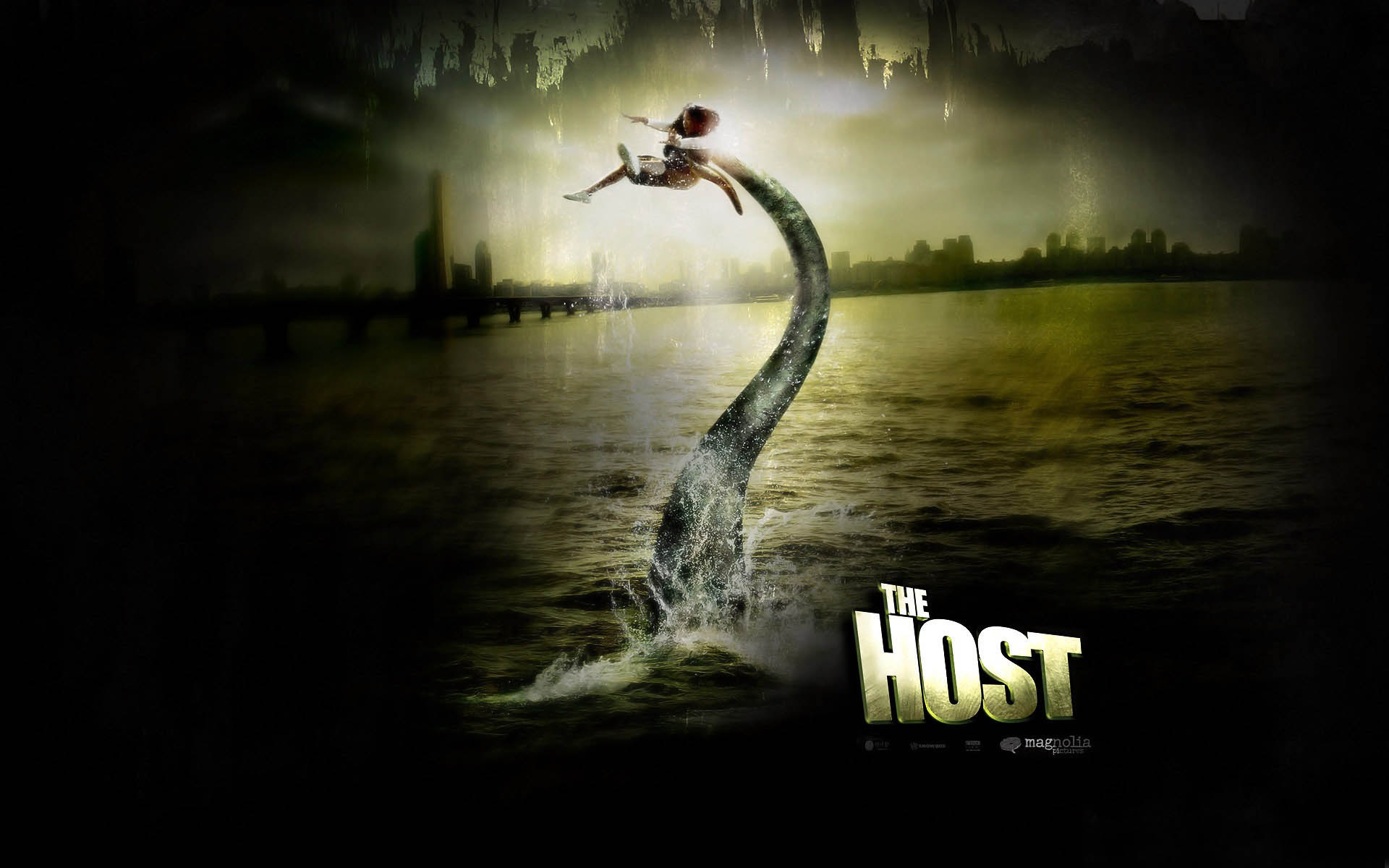
Japan may have left its monster movie past behind it, moving on to horrifying, circuitous tales where ghosts and technology intertwine, but in 2006, Korea took its own shot at the Godzilla fable. The sci-fi import The Host, which tells the tale of a giant mutant monster terrorizing Seoul, has all the thumbprints of the old Godzilla movies: military blunder, resultant angry monster, terrorized metropolis. Writer/director Joon-ho Bong updates the idea, and not solely with CGI.

The film opens in a military lab hospital in 2000. A clearly insane American doctor, repulsed by the dust coating formaldehyde bottles, orders a Korean subordinate to empty it all into the sink. Soon the contents of hundreds of bottles of formaldehyde find its way through the Korean sewer system and into the Han River. This event – allegedly based on fact – eventually leads, not surprisingly, to some pretty gamey drinking water.  And also a 25 foot cross between Alien and a giant squid.

Said monster – let’s call him Paul – exits the river one bright afternoon in 2006 to run amuck in a very impressive outdoor-chaos-and-bloodshed scene. A dimwitted foodstand clerk witnesses his daughter’s abduction by the beast, and the stage is set.

What follows, rather than a military attack on a marauding Paul, is actually one small, unhappy, bickering family’s quest to find and save the little girl. Their journey takes them to poorly organized quarantines, botched security check points, misguided military/Red Cross posts, and through Seoul’s sewer system, all leading to a climactic battle even more impressive than the earlier scene of afternoon chaos.

The film’s decidedly comedic tone gives the film a quirky charm, but seriously diminishes its ability to frighten. Host does generate real, claustrophobic dread when it focuses on the missing child, though. Along with its endearing characters, well-paced plot, and excellent climax, it makes for one of the best creature features to come along in decades.

Hope Madden and George Wolf … get it?