If you are feeling stir crazy, you’re starting to believe your own trapped family is leading you to lunacy, maybe even murder, have we got the movie for you! Indeed, it’s a stellar week for horror fans. Read on!
Here it is—the topic to test the marriage. Luckily, so George did not have to watch every film on the list, we were able to snag a couple of experts. Phantom Dark Dave and Jen Dreadful join Fright Club to gush, ooze, splurt, spray and basically get sloppy with Troma.
5. Poultrygeist: Night of the Chicken Dead (2006)
Are you squeamish? If so, best of luck trying to make it through anything on this list. Poultrygeist is certainly not recommended.
Part Better Off Dead, part Night of the Living Dead, a whole lot of Poltergeist, Kaufman’s film picks apart horror tropes and fast food chains. The film will do nothing for your appetite.
https://www.youtube.com/watch?v=s74J-XtfOE4
4. Tromeo and Juliet (1996)
James Gunn is one of many cinematic giants who got started with Troma. Along with Troma co-founder Lloyd Kaufman and Shakespeare, Gunn penned a troma-tastic version of the Bard’s star-crossed romance. Truth be told, things work out a little better for Gunn’s cute couple.
Incest, cannibalism, homoeroticism, body fluids, poor food safety protocols and more delirious nastiness mark this as a bone-deep Troma effort, so don’t let the highbrow source material throw you.
3. The Toxic Avenger (1984)
Here’s the classic. No way we could put together a tribute to Troma without Toxie. The Eighties underdog flick feels tame compared to what came before and after, but Eighties Troma tended to be a little friendlier, almost mainstream.
Well, that might be an exaggeration, but Toxic Avenger offers an excellent first toe into the massive, polluted gene pool that is Troma.
2. Father’s Day (2011)
The creative team behind loving giallo spoof Editor started off making what could reasonably be considered a spoof of a Troma film that wound up being an actual Troma film because, let’s be honest, who could tell the difference?
Story schmory—the film sets up every conceivable way to offend, disgust and dismay and it has the best time doing it. You’ll know if this film is for you within two minutes. Chances are good you won’t make it through that opening scene, and even better that you be sickened before the end of the movie if you do stick it out. What they do is vile and hilarious.
https://www.youtube.com/watch?v=tMZBXdf-6qA
1. Killer Condom (1996)
A Troma-distributed splatter/horror/comedy, Killer Condom is an enormous amount of fun. This is a German film—German actors delivering lines in German—but it’s set in NYC. You can tell because of the frequent shots of someone opening a New York Times newspaper machine.
Luigi Mackeroni (Udo Samel) is the grizzled NYC detective who longs for the good old days in Sicily. In German. He’s assigned to a crime scene in a seedy Time Square motel he knows too well, where it appears that women just keep biting off men’s penises.
Or do they?
This film is refreshingly gay, to start with, as nearly every major character in the film is a homosexual. The run-of-the-mill way this is handled is admirable, even when it is used for cheap laughs. (Babette, I’m looking at you).
It’s fun. It’s funny. It’s gory and wrong-headed and entertaining from start to finish. Who’d have guessed?
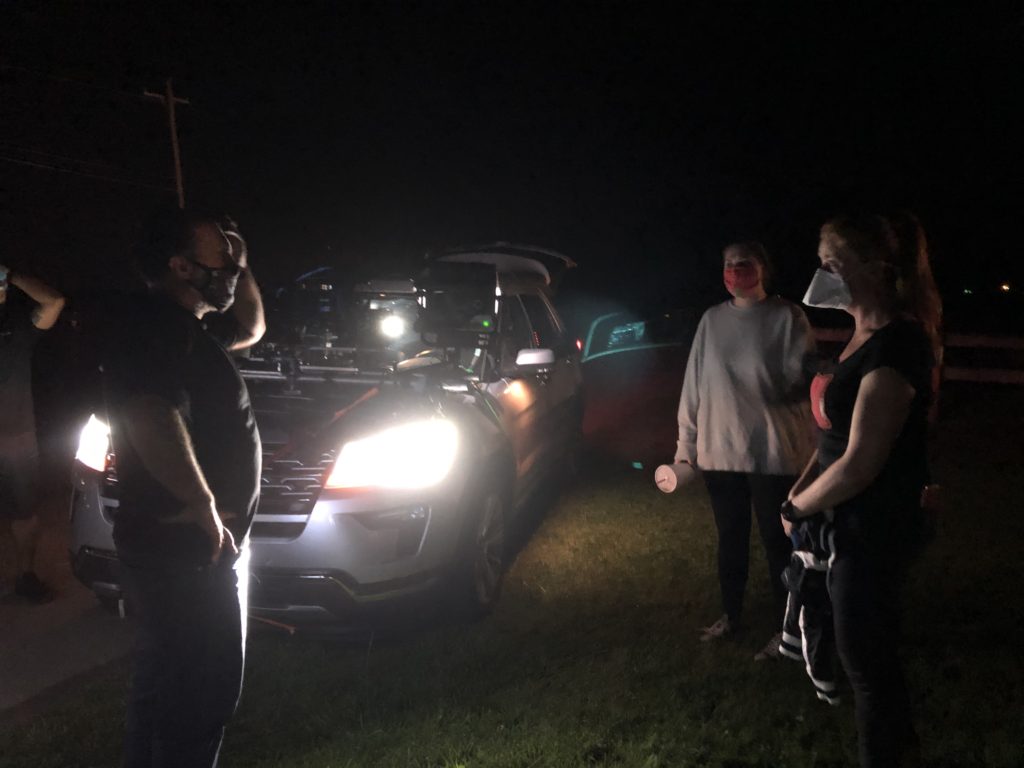
Masks in place, we set out for Madison County, base camping next door to a tiny little cemetery and just this side of the woods we needed for the final scene. That particular stretch of woods is famous for a murder, but I didn’t share that intel with the crew or with Cat. Too bad the Madison County Sheriff’s Deputy, who came and checked on us around 1am, has to let that cat out of the bag.
Cat took this one, really capturing the creepy beauty of our rural locale. Cat and I keep an appropriate social distance from DP Alberto Viglietta as we figure out a couple of things. Alberto mounts the cameras. Pretty soon – once it’s good and dark – poor Cat will have to drive these backroads with a bank of lights in her face and two cameras catching her every move!
Even with the fragmented and ubiquitous nature of film criticism in the social media age, Pauline Kael’s summation may still be the best.
Kael believed it was her job to “alert or interest people,” and without critics, “it’s all advertising.”
Falling into a movie reviewing gig almost by accident in the 1950s, Kael rode her obvious passion and expressive prose to a seat of tremendous power in the film industry. Many credit her positive review of Bonnie and Clyde with saving the film from ruin, while her negative reaction to Lawrence of Arabia made director David Lean question his future.
For What She Said: The Art of Pauline Kael, writer/director Rob Garver gathers interviews with Kael, her daughter and various film industry faces, weaving in passages from Kael’s writings amid snippets – with occasionally cheesy placement – from hundreds of movies.
It’s a spirited, engaging celebration of not only Kael, but of film itself as a source of entertainment, inspiration and discussion.
Garver supplies pertinent biographical info, showcasing Kael’s unlikely rise through sexist attitudes and editors uneasy with a critic unafraid to buck popular sentiment. And though it never quite feels as if we get to know Kael well, Garver makes sure we are aware of her complexities and contradictions.
She was grateful to be “paid for thinking,” not caring much about dissenting opinions or any hurt feelings on the other end of her sharpest barbs. She championed American New Wave cinema, but openly dismissed arthouse elitism for a populist lean, favoring sentences with the “sound of a human voice.”
It is that voice that speaks loudest in What She Said, with clear illustrations of how her self-assurance (and yes, self-promotion) elicited hatred, praise, and even the respect of those whose work fell below her standards.
And though Kael died in 2001, the film’s parting shot shows her approach as one both original and prescient. Putting some of Kael’s memorable thoughts inside imagined tweets, Garver leaves little doubt her following today would be impressively large.
What makes a good midlife crisis? What gives it swagger?
Physicality? Style? Maybe a little fringe?
Deerskin.
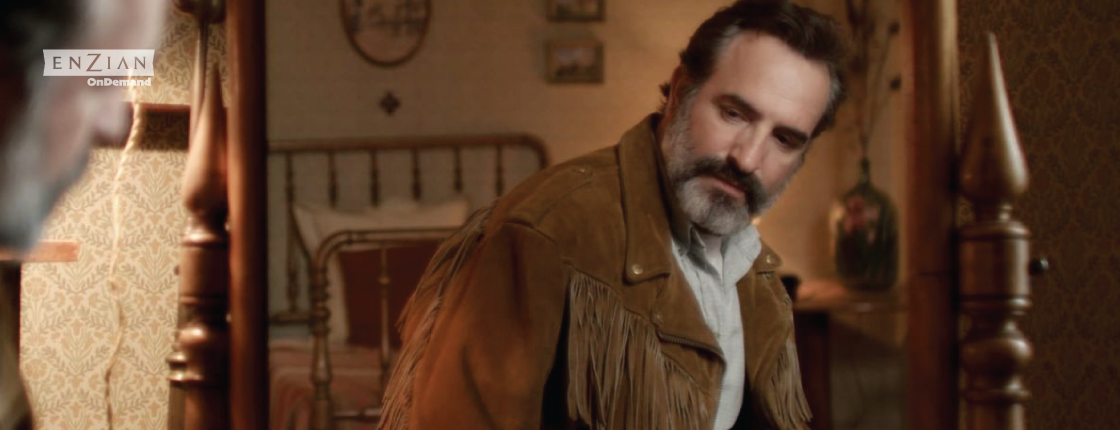
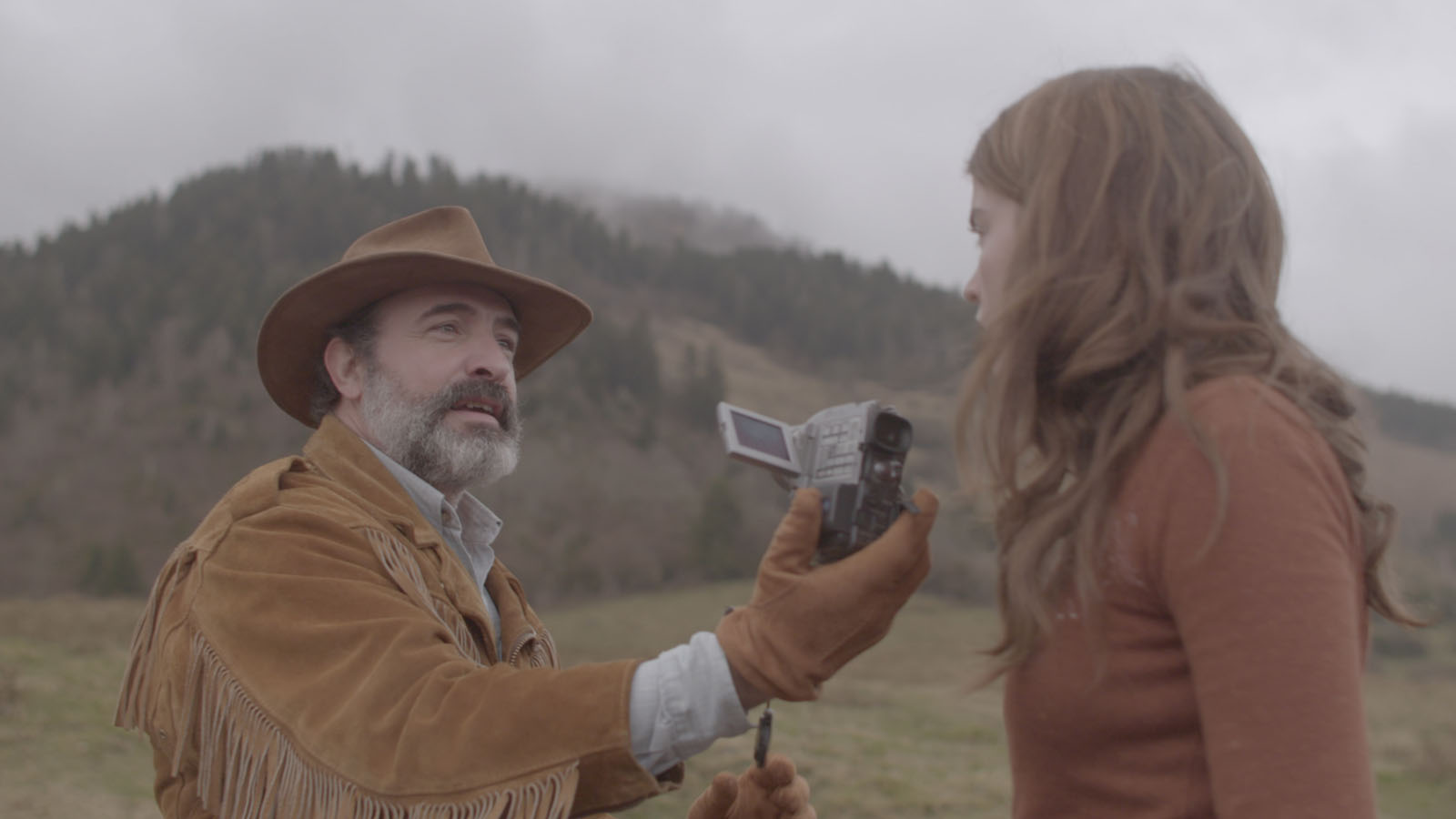
Oscar winner Jean Dujardin (The Artist) is Georges, a man willing to pay an awful lot for a jacket—so much that his wife locks him out of their account. No matter, Georges will just hole up in this little French town, learn how to use the digital camera that came with his purchase, and spend some quality time with his new jacket.
If that sounds absurd, it should. You’ve just stumbled into
the one-paragraph synopsis of the latest bit of lunacy from filmmaker Quentin
Dupieux. As he did with 2010’s Rubber (a sentient tire on a cross-country
rampage), Dupieux sets up one feature-length joke.
It’s funny, though.
Again the filmmaker draws hysterically deadpan, even
confused performances from the many nameless characters supporting his leads. Adèle
Haenel (Portrait
of a Lady on Fire), playing town barkeep and would-be filmmaker, offers
a wily and enjoyable counterpoint to Dujardin’s earnestness.
Aside from a couple of utterly priceless Dupieux
flourishes, it’s Dujardin that sells this film. He’s deeply committed to the
wildly wrong-headed internal logic of the film and the character. There’s an
underlying sadness to it, and the willful obliviousness required of a character
so willing to commit to a plan as ludicrous as Georges’s. He’s wonderful.
Deerskin is also slyly autobiographical in a way Dupieux’s other films are not. An odd duck wants to follow his vision (in this case, the obsessive love of a deerskin jacket) and make a movie. Creative partnerships and collaboration, while possibly necessary, also soil the vision and make the filmmaker feel dumb.
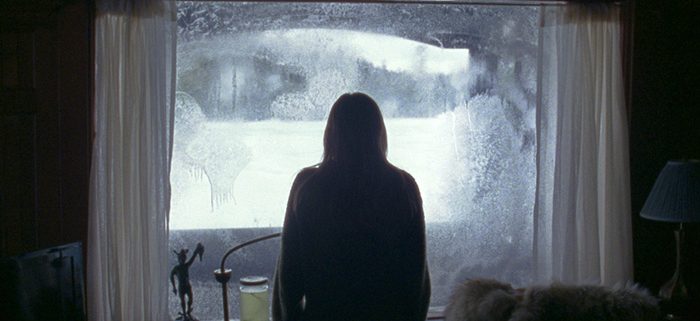
A tidy opening sets the stage, spilling enough beans to prepare you for the full tale while creating an atmosphere of genuine horror. Some excellent soundtrack choices establish a time and generate a mood.
So far so good, The Wretched!
As sometimes happens when a horror movie starts out strong, this one falls into familiar tropes to move things forward. Writers/directors Brett and Drew T. Pierce (Deadheads) stumble slightly as they usher in Act 2, relying on stock concepts as well as shorthand character introductions: rich asshole, hot girl, unfussy hot girl wearing eccentric socks who you should actually care about, Dad who’s trying but just isn’t that good at this.
Basically, there’s too much here that you’ve seen before and
may not need to see again. If horror movies have taught me anything (they have,
too!), it’s that Never Have I Ever is a lame game that only brings on death.
Still, the Pierce brothers and a game (if mainly unknown)
cast keep even the familiar pretty fresh.
High school kid Ben (John-Paul Howard) finds himself out at
the lake, working the docks with his newly single dad (Jamison Jones). Sure, he’d
planned to spend the summer tooling around town in the Lincoln his mom was
passing down to him, but he got himself into a little hot water and now it’s a
summer job catering to pampered townies and vacationing families.
If only that was going to be his biggest problem.
Zarah Mahler is especially effective in breaking through
tropes as the neighbor lady who is not what she seems, and The Wretched
uses the “child in danger” plotline to worrisome effect throughout its running
time.
Weird behavior from those tourists next door finds Ben doing
a little sleuthing. Quickly, The Wretched turns into Rear Window/Fright
Night/Disturbia—but without the actual house arrest kind of thing,
which seriously limits its tension.
There are other, lesser-known films that are thematically closer
and, honestly, better, including last year’s Irish horror The Hole in the
Ground and Oliver Frampton’s almost entirely unseen 2014 gem, The Forgotten.
At about the time you begin to weary of the film, it recovers with a nice surprise that reaffirms the promise of Act 1. There’s far too much borrowed and rehashed between Acts 1 and 3 for it to stand the test of time alone, but The Wretched delivers enough to entertain and to leave you interested in what’s next for the Pierce brothers.
It’s 1981 on the Red Crow Indian reservation and white people have lost their damn minds.
Since it is 1981, no way they know it’s zombies. Sure, Romero’s Night of the Living Deadcame out in ’69, but the genre doesn’t really take off until later in the Eighties. No, they have to figure this out for themselves – no meta commentary, no preconceived notions.
It wouldn’t help them anyway because Jeff Barnaby’s Blood
Quantum is a zombie movie with a twist, which he uses to his advantage to
subvert your knowledge of the genre.
Traylor (Michael Greyeyes) is having a busy morning. He had
to shoot his ex-wife’s dog, his sons have both been arrested, Sugar keeps
calling the station because his woman’s sick, and Traylor’s dad needs him to
come see something down at the store.
It’s always nutty like that right before the zombie
apocalypse, though. Although, to be honest, Blood Quantum often works a
little more like 30 Days of Night and Stakeland – both vampire
films that riff on zombie tropes—but the filmmaker utilizes Romero when it
makes sense.
Barnaby takes common horror themes and bends them to serve
the film’s purpose as an apt allegorical nightmare. It’s the combination of
social commentary and intimate family drama that makes the film memorable.
Blood Quantum would have been interesting solely on the basis of “plagued up Opies” invading indigenous space—sometimes wrapped in infected blankets, even. But the film derives its real strength from a more intimate struggle. Yes, a diseased white population threatens to overwhelm and destroy the folks of the Mi’gMaq reserve, but Barnaby’s focus is internal.
Whites are a mainly nameless burden, a privileged but
parasitic condition of life. Traynor and his boys need to take care of their
own shit if they want to survive this.
Greyeyes offers a level performance to build around. Kiowa Gordon brings sinister charm to the bad boy Lysol role, balanced nicely as favorite son Joseph by The Revenant’s Forrest Goodluck, (“He killed my boy!”)
Better still are longtime character actor Gary Farmer (love
him!) and relative newcomer Stonehorse Lone Goeman as a couple of guys who’ve
lived through a lot and bring rich if not always valuable perspective.
Performances are not always exceptional, and you would not
call this a feminist effort, but the underlying wry, weary wit separates the
film from anything else like it.
There’s also an excellent use of resources – minimal sets maximized results: claustrophobia, tension, horror. Barnaby’s spare but effective use of animation is another reason Blood Quantum delivers a vital new perspective for the genre.
The time will come within weeks that we have no post-theatrical releases to discuss. How insane is that? Until then, you can pass the time with two early 2020 releases that, according to box office, you probably missed. Both are worth a look – one is actually excellent.