I’m So Eggcited

Red Notice

by George Wolf

Heist Movie? Gal Gadot? I’m in.

Plus Dwayne Johnson and Ryan Reynolds.

I said I’m in! Sounds like a bunch of fun.

But somehow, it’s just not.

Johnson is FBI agent John Hartley, and he’s on the trail of Nolan Booth (Reynolds), the 2nd most wanted art thief in the world.

Who’s number 1? That would be The Bishop (Gadot), a mysterious criminal who always seems one step ahead of Booth in the quest to reunite three priceless jeweled eggs that Marc Antony once gave to Cleopatra. Yes, Cleopatra.

After a snappy, parkour-heavy chase to open the film, Hartley offers Booth the chance to move up to the top spot on Interpol’s Red Notice (highest level arrest warrant) list. All he has to do is help Hartley and the Feds nab The Bishop.

And the game is on!

Writer/director Rawson Marshall Thurber (Dodgeball, We’re the Millers, Central Intelligence, Skyscraper) has assembled three charismatic A-listers for a globe-trotting adventure with glamourous locales, double crosses and a script full of quippy banter. And it takes barely thirty minutes to begin wondering how it all went wrong.

You would think that watching Gadot, Reynolds and Johnson do anything together would be at least a marginal hoot, but nobody seems comfortable. What chemistry there is feels forced, at best, and none of the three stars bring much beyond the personas they’ve earned in better films. Reynolds carries most of the comedic weight, but with schtick that’s nearly interchangeable from his two Hitman’s Bodyguard films, a stale odor appears early and often.

There are a few LOL moments, most notably Hartley and Booth arguing about Jurassic Park and the real Ed Sheeran showing up to fight some federal agents. But with direct references that include Indiana Jones and Vin Diesel, plus multiple outlandish wardrobe changes (Johnson can’t exactly buy off the rack, so who had the tailor made safari outfit?), Thurber ends up navigating an awkward space that teeters on spoof.

Is Red Notice really trying to launch a new action/comedy franchise? Or is it just riffing on the genre? Either way, it ends up on the naughty list. Even those two Hitmans Bodyguard films embrace their own ridiculousness to deliver some dumb, forgettable fun. Red Notice manages two out of those three, and that ain’t good.

A Series of Unfortunate Events

Small Time

by Christie Robb

Writer/director Naiv Conty certainly does not look back on childhood with a rose colored tint. Her film Small Time follows elementary school student Emma as she pinballs around from unfit home to unfit home.

It’s an emotionally honest portrait of neglect that keeps us uncomfortably aware of the tightrope Emma is unaware that she is walking. She’s constantly suspended above disaster—one overlooked gas stove, one loaded handgun, one move from a leering perv away from lasting trauma.

But Emma’s still sustaining damage all the time, just in tinier, more banal, ways. Hard-core drug and alcohol abuse by the adults around her is a normal part of her life. She’s loaded up with religious baggage. She’s expected to parent the grown-ups in her life. In the whole movie, no one is there to give her a cuddle or reassurance that looks like it is going to truly have a positive effect. But most of the adults do seem to be doing their best. It’s just that their best isn’t that great.

You know you are in for a heavy film when, only 13 minutes in, your pint-sized heroine has attended her primary caregiver’s funeral and tried repeatedly to “wake up” her mom from an OD.

Still, Emma is a scrappy, upbeat, smart little thing, her interior light dimmed surprisingly little by the shit she has to deal with. Audrey Grace Marshall plays her very straightforwardly. There’s nothing saccharine about her, nothing overwrought. She takes things as they come.

The movie plays a little bit with the timeline and shows events somewhat out of order. This didn’t become clear to me until relatively far into the film. It was filmed over a three-and-a-half-year period to give Marshall time to grow and mature between the three major periods depicted.

These chronological jumps are not clearly signaled by musical or obvious visual cues so it can be a bit disorienting. But the lack of exposition does center us in Emma’s experience as she flashes back to previous experiences and tries to make the best of the terrible hand she’s been dealt.

Small Time isn’t an easy film to watch, but it’s a good one.

Scary Christmas

Double Walker

by Hope Madden

You know that lyric from It’s the Most Wonderful Time of the Year — “there’ll be scary ghost stories”? I was an adult before I realized Andy Williams was talking about Scrooge.

Filmmaker Colin West reminds us that that story, and Christmas ghosts in general, can be pretty scary and awfully damaging in his latest, Double Walker.

We open on a blood stain, then a funeral, then a despondent mother (Maika Carter), but her grief is more complicated than it looks.

From there, West’s film follows one young woman (co-writer Sylvie Mix, Poser) who looks very cold and vulnerable on the wintery streets of Columbus, Ohio. As one nice guy after another offers aid, West toys with your preconceived notions. Is she a dangerous psychopath? A victim in the making? Is Double Walker possibly a riff on Emerald Fennell’s glorious Promising Young Woman?

Not exactly. And maybe. But not really.

What the filmmakers have done is to fracture a storyline in favor of a mood, one that takes on the surreal qualities of a haunting.

A meditation on trauma, Double Walker sidesteps easy summarization but never feels unmoored. Like the old Dickens story, this tale wonders at the ripple effects of behaviors, how a change here or there might yet alter the course of events.

Mix is hollow, chilly melancholy as the central figure, wandering into and out of an interconnected group of lives. The almost expressionless performance through the bulk of her screentime allows the mystery to unravel around her without giveaways. It also adds weight to the rare smile and horror to her sudden movements.

Not every performance is as strong, but West evokes such a poignant and dreamlike atmosphere that minor acting hiccups can be overlooked. He casts a spell with his feature debut and it’s hard not to wonder what both he and Mix might do next.

I Spy

Lair

by Rachel Willis

Opening with a very tense scene of a young boy hiding under the stairs, writer/director Adam Ethan Crow sets us up for a suspenseful horror tale.

It’s unfortunate he can’t keep the momentum going. Following this immensely creepy start, Lair falls back on a mundane expository scene where we’re introduced to our main character, Dr. Steven Caramore (Corey Johnson). Disbelieving the existence of demons and the supernatural, he nonetheless decides to test out several supposedly haunted items on a group of unsuspecting renters in his building.

The clueless renters are Maria (Aislinn De’ath), her girlfriend Carly (Alana Wallace), and her own two daughters. The apartment is wired to watch for any sinister activity, so the film sinks into voyeur territory. Caramore watches these women in intimate situations, but Crow treats this as an unfortunate part of spying on your neighbors for demonic activity. It would have made more sense to mine this behavior to sinister effect, and combine it with Caramore’s habit of sneaking into the women’s apartment to place new, haunted items.

His tenants, unaware of this invasion into their lives, have their own drama to deal with. Head of a newly constructed family, Maria is trying to integrate Carly into her daughters’ lives. Carly attempts to figure out where she fits—is she the girls’ friend (particularly the teenage daughter) or an authority figure? This, along with the haunted apartment, is reason enough for interest. Dr. Caramore’s place in the mix begins to seem unnecessary. Why is his story patched into the family’s horror?

And yet, you can appreciate what Crow is trying to accomplish. The bones of a great tale are here, but the narrative falls apart as it’s fleshed out. Poor dialogue and an excess of exposition hurt the overall story. The actors embrace their roles and bring a level of realism to the movie, even as you try to wrap your head around some of the things they do or say.

Lair’s best aspects are the visual effects. There are some terrifying scenes, a couple of impressive jump scares, and some well-imagined demonic activity. Crow delivers enough horrific moments to satisfy even as his movie leaves something to be desired.

It’s also refreshing to see a demon movie that doesn’t revolve around possession—a genre explored almost as much as the zombie oeuvre.

Though Lair is not without its flaws, it’s nonetheless an intriguing idea.

State of Shark

Great White

by George Wolf

Wait, no new scientific term mixing sharks and weather? No genetically modified sharks? Unearthed prehistoric giants? Sharks with lasers on their heads?

Geesh, do these guys even know how to Sharkmovie?

Don’t get me wrong, Shudder’s Great White gives you plenty of opportunity to suspend disbelief, but it’s built on a premise that now seems almost quaint.

People in the water. Sharks in the water. Big sharks.

Farewell and adieu to you fair Spanish ladies….

Actually these are Australian waters, with Charlie (Aaron Jakubenko) and Kaz (Katrina Bowden) running the Pearl Air charter service, where they debate getting married and fire up the seaplane to take tourists on excursions to Hell’s Reef.

The business needs some renewed cash flow, so Charlie is only too happy to book a last minute trip for superdouche investment analyst Joji (Tiim Kano) and his wife Michelle (Kimie Tsukakoshi), who wants to scatter her Grandfather’s ashes in the sea.

But even before cook Benny (Te Kohe Tuhaka) can whip them up a delicious lunch on the island, a ridiculous accident puts everyone in a life raft trying to evade some large, hungry predators that supposedly injured some bathers.

Yes, that’s another Jaws reference, which seems appropriate as director Martin Wilson doesn’t shy away from them either, even including a pretty shameless re-working of one of Spielberg’s classic scenes. But Wilson does craft one major jump scare of his own, and adds frequent shots framed right on the waterline to consistently simmer the tension through simultaneous looks at the castaways and what they fear.

Bowden and Jakubenko mine Michael Boughen’s script for enough authenticity to seem like real people who care for each other. Kano and Tsukakoshi aren’t as lucky, with the Joji character painted as such an over the top asshole that it’s clear he’ll be an entree, the only question is how bloody satisfying it will be to watch.

These man-eaters never do get lasers, but there’s still some pretty outlandish shark wrangling before the shoreline comes into view. So while Great White gets some props for not drowning in silliness from the start, that may have been the only way to make it memorable.

The English Way

Spencer

by George Wolf

The opening credits of Spencer include a declaration that the film is “a fable from a true tragedy.” Indeed, it is a story draped in sadness and longing, but one that uses what you already know about its subject to its advantage, completely enveloping you in an otherworldly existence.

Much like 2016’s Jackie – his compelling take on Jackie Kennedy – director Pablo Larraín has no interest in the overreaching realism of bland biopics. Here, he chooses to dissect a few precious days over the Christmas holiday, roughly ten years after Diana Spencer (Kristen Stewart) married Prince Charles (Jack Farthing) and became Princess Di, worldwide obsession.

Diana is late arriving at the family gathering on the sprawling Sandringham estate in Norfolk, and this, like so many other aspects of her behavior, simply will not do. Diana and her two young sons often complain about feeling cold, and though she wonders why they can’t just “turn up the heating,” screenwriter Steven Knight isn’t just referring to the thermostat.

Through evocative visual storytelling and restrained, insightful dialog, Larraín and Knight set clear parameters for the haunting pressure of Diana’s daily life.

A new head of security (the great Timothy Spall) seems to lurk around every corner, reminding Diana of expectations and missteps. Her dresser Maggie (Sally Hawkins, perfect as always) has been sent away, apparently for the crime of being Diana’s one true friend. And as Charles’s longtime affair with Camilla Parker-Bowles becomes impossible to ignore, unsettling visits from Anne Boleyn (Amy Manson) make their way into Diana’s dreams, reinforcing her belief that past and present have conspired to deny her a future.

If you haven’t been keeping up with Stewart’s string of fine performances since the Twilight films, don’t be surprised when she starts collecting the award nominations this performance richly deserves. Yes, she has the mannerisms (shoulder turns, head tilts), the lithe movements and even the voice and accent down, but Stewart carries this film by completely embodying the quiet desperation (“the English way,” as Pink Floyd famously dubbed it) of a woman suffocating in real time.

Jonny Greenwood’s score should also be an Oscar contender, as his cascades of alternating strings, organs, drum rolls and a solitary horn give Larraín a major assist in setting a disorienting, almost Hitchcockian mood.

Diana must work hard to enjoy even a few moments of happiness, like a beach stroll with Maggie or eating KFC and singing along to Mike + the Mechanics with her boys. But when Charles admonishes Diana for forgetting that public persona always trumps whatever the heart might crave, the true weight of her crown is finally felt.

Spencer approaches Diana’s story from perhaps the only angle that fits such an icon. The goal here isn’t to tell her life story, but instead to reimagine it, and rethink what it may have cost – and Larraín is clearly unconcerned with any cost from alienating Royal Family fans. He chooses the word “fable” at the start for a reason. This film is no fairy tale, but Larraín’s committed vision and an achingly poetic turn from Stewart make Spencer a completely fascinating two hours of story time.

https://www.youtube.com/watch?v=20BIS4YxP5Q

Pixel Wars

Eternals

by Brandon Thomas

The Marvel formula continues to chug along 13 years after the Marvel Cinematic Universe was born in 2008’s Iron Man. The popular studio has had some major highs with The Avengers, Guardians of the Galaxy and Black Panther, and some major lows with Iron Man 2, Thor: The Dark World, and Black Widow

How does Marvel’s latest, Eternals, stack up with the rest of their catalog? 

Well, it might be time for Kevin Fiege and company to go back to the drawing board when it comes to their origin stories. 

Eternals is a sweeping, millennia crossing story that follows a group of immortal beings sent to Earth to protect it from the Deviants. After spending thousands of years fighting the Deviants – and finally destroying them – the group goes their own way until the time comes for their return home. As present-day arrives, an old enemy begins stalking the group one by one, and they must reunite for a final battle. 

Eternals is Marvel going full cosmic. The story is big – one that stretches over space and time – and seeks to be the most grandiose MCU movie to date. However, the film stumbles over itself time and time again with a story that never really knows where it wants to go. Eternals spends too much time reuniting characters we barely know. It’s difficult to become invested in the overall struggle when our heroes haven’t even made an impression. 

Director Chloe Zhao was an interesting choice for Eternals. Her films have always felt especially grounded and personal. Characters have always been her focus with the story a distant second. And those quieter moments in Eternals are the ones that work best. The large cast is more than game to bounce off one another with the ridiculous dialogue, and those become the moments where Zhao’s work feels most prominent, along with the gorgeous cinematography that has become a staple of her films. 

Speaking of the cast – wow, there’s plenty to speak of, including Angelina Jolie, Salma Hayek, Brian Tyree Henry, Kumail Nanjiani and Richard Madden. At 2 hours and 37 minutes, most of them get time to shine even if those moments feel like they came out of half a dozen previous Marvel movies. There’s no real breakout star the way Downey, Pratt, Hemsworth or Bosman were. 

Even the spectacle ends up disappointing. Marvel has a bumpy track record with the action in their film ranging from great (Captain America: The Winter Soldier) to downright boring (Thor: The Dark World). The action sequences here feel emotionless and lack even an ounce of excitement. It’s hard to get invested in what feels like a bunch of pixels bouncing off one another. 

I remember when it was exciting to see lauded filmmakers like Sam Raimi or James Gunn get a shot at one of these giant franchise movies. Now, when a respected filmmaker like Chloe Zhao gets thrown into the comic book movie mix, I can’t help but wince at what the final product might be. 

Growing Strong

Beans

by Christie Robb

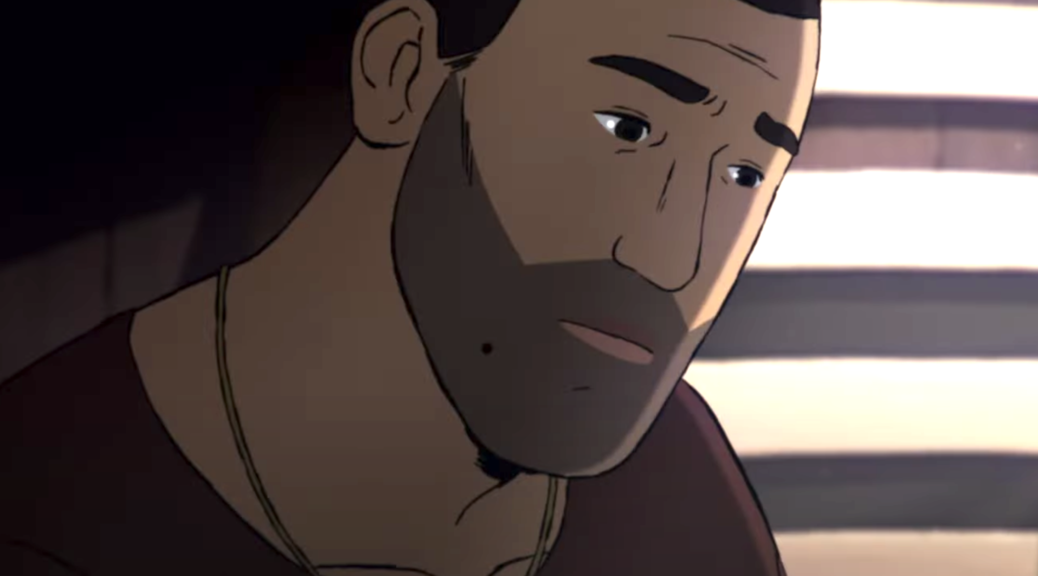
Adolescence is hard. It’s beset with conflicts and struggles that come from all directions—society, parents, peers, your own body… In Tracey Deer’s Beans, we see Tekahentakwa’s (nicknamed Beans) coming-of-age narrative, well, a slice of it anyway. She’s coming up on her seventh-grade year and contemplating a move from her neighborhood school to Montreal’s posh Queen Heights Academy.

The posh and majority-white Queen Heights Academy.

Which is more than usually fraught because Beans is a Mohawk and the Mohawks are fighting to keep White Quebecois developers from expanding a golf course onto a Mohawk cemetery.

Inspired by the true events of the Oka Crisis aka Kanesatake Resistance of 1990, Beans is a mix of archival news footage and fictional drama.

What begins as a peaceful protest at the cemetery turns violent once a riot squad shows up and starts lobbing tear gas at the protestors. A police officer is killed, which leads to a stand-off. Mohawks and white police face each other behind barricades. Beans’s town is cut off from supplies, leaving it more or less under siege.

The details of the stand-off are a little unclear, the way world events can seem when you are in middle school. What Beans experiences is a betrayal of white adults. They fail to live up to their roles in the social system she thought she was living under. Shop keepers won’t sell groceries to “her kind.” Police won’t protect a car full of women and children from folks throwing rocks. People scream obscenities and spit at her adorable kid sister.

In the midst of this, Beans is trying on possible versions of her adult self. She meets an older, more contemptuous, teenage mentor and seeks advice on how to toughen up. She abandons her baggy 90s overalls and braids and experiments with side ponytails, crop tops, and lipstick. She practices swearing in front of the mirror. She learns more about administering violence and suffering it.

As tensions with the developers and government mount, Beans’s life grows increasingly complicated, forcing her to make choices and figure out the type of person she wants to be.

The cast delivers authentic performances. As Beans, Kiawentiio nails the vulnerability covered with a brittle armor of cynicism that I remember from middle school. Paulina Alexis does a great job as the tough older girl who has been through some shit. And Rainbow Dickerson shines as the ultimate adult role model—strong and nurturing, and able to let loose with the lecture to kids and adults alike.

As a monolingual person from the States, I would have appreciated subtitles for the French language news footage and a little bit more context on how the Mohawks and the Canadian Government came to a resolution. But, overall, Beans is a moving coming-of-age story that depicts many strong First Nations women. This is Tracey Deer’s first feature film and I look forward to seeing what’s next.

Inner Conflict

Dangerous

by Hope Madden

I remember watching the inexplicably popular Bad Boys for Life and marveling at the film’s narrative purpose: to convince Marcus (Martin Lawrence) that being a violent man is better than being a man who does not commit violence against others.

Sure, there’s a mother/son angle, some explosions, a disco scene, but everything that happens does so to convince Marcus that his real purpose is to commit violence.

It’s different than the traditional “one man against the world” action flick, where a peaceful man is forced back into violence to avenge the death of his wife/child/puppy. Those have long existed. This idea that a man who chooses not to physically harm others needs to somehow be persuaded that he prefers a life of violence, that it is his nature and should be celebrated, is kind of new. This theme is also the driving force behind the admittedly enjoyable Nobody, among others.

The latest film that hates to see a man get his baser instincts under control is David Hackl’s Dangerous.

Scott Eastwood leads a solitary life. He works out. He eats frozen dinners. He waters his plants. Then his mind-numbing peace is disrupted when his brother Sean’s death brings him to the remote island where Sean had been renovating an old military base into a hotel.

Eastwood, who channels his father more and more these days, is now non-violent with the help of some personality-deadening drugs and call-me-whenever guidance from his therapist, played by Mel Gibson.

That’s funny.

Hackl’s clearly working on a shoestring here, and though the film sometimes shows a lack of funds, on the whole, it’s competently made. The humor Hackl, Gibson and Eastwood mine from Christopher Borrelli’s script delivers Dangerous’s saving grace.

Because, yes, D (Eastwood’s character) falls into ex-military, Black Op style gunplay once on the island, but first the recovering sociopath has to deal with his mom. Beyond that, the mystery is convoluted beyond measure, Tyrese Gibson and Famke Janssen are pointless, performances are forgettable.

In the end, the whole mess feels like the familiar fantasy of doing right by your mother just one time and then disappearing so you can’t screw it up. Which is a better story than the one about a sociopath who decides being a decent human is just not being true to himself.

Hope Madden and George Wolf … get it?