Click HERE and join us in The Screening Room this week to break down Dunkirk, Valerian, Fist Kill, The Little Hours, Killing Ground and what’s new on home video!
https://www.youtube.com/watch?v=V3uNlE7ejO0
Click HERE and join us in The Screening Room this week to break down Dunkirk, Valerian, Fist Kill, The Little Hours, Killing Ground and what’s new on home video!
https://www.youtube.com/watch?v=V3uNlE7ejO0
by Hope Madden
Nobody panic. Jason Reitman has just hit a slump, that’s all. Remain calm.
Sure, the writer/director made his feature film debut with Thank You for Smoking (thank you for making that movie!), and only went upward from there (Juno, Up in the Air, and the underappreciated masterpiece Young Adult). He was bound to waffle a little. Scorsese followed Taxi Driver with New York, New York, for Lord’s sake. It happens.
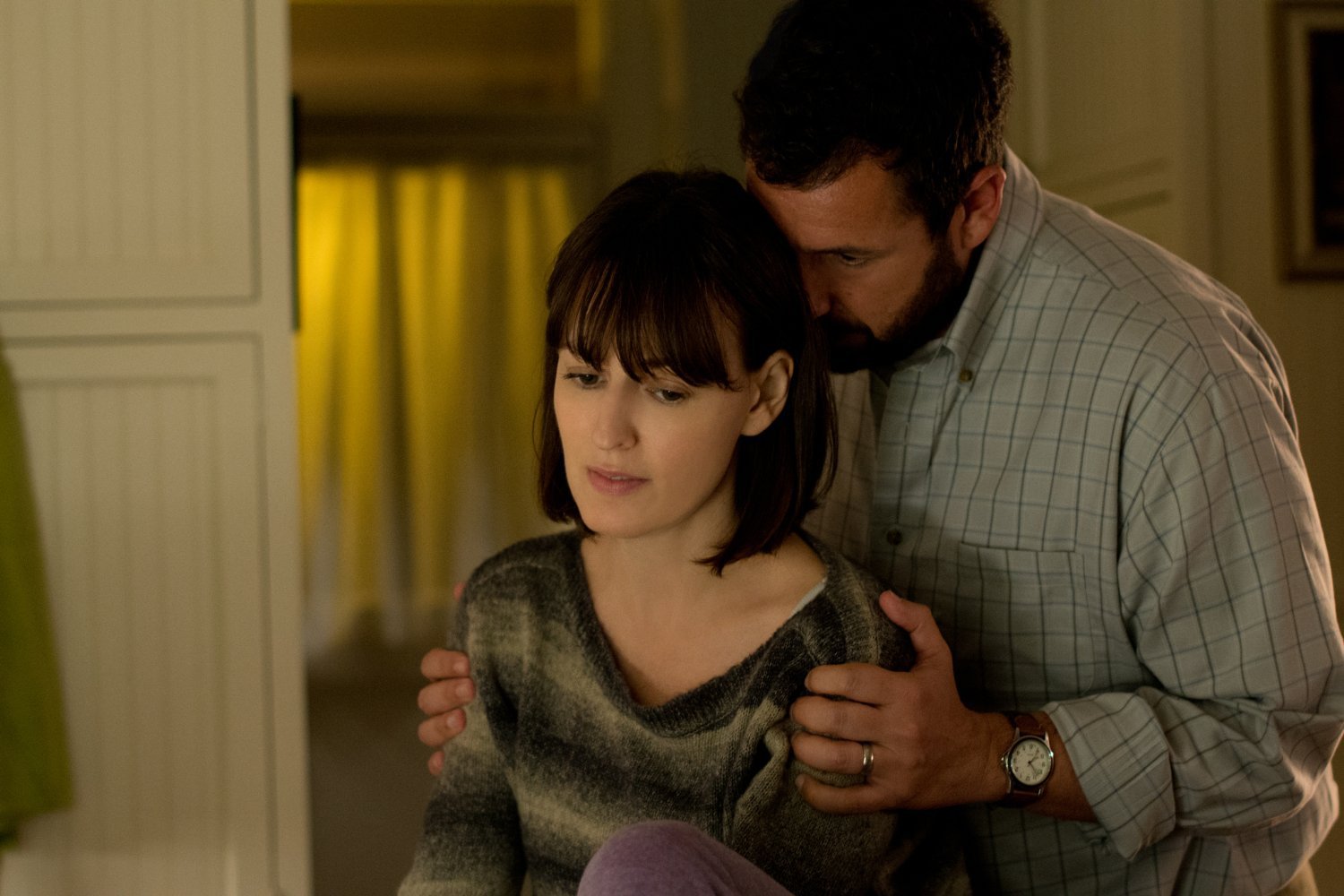
I’ll admit, I was hoping he was done with this misstepping with the laborious romantic bludgeoning Labor Day, but it appears he has one more overwrought drama in him in Men, Women & Children.
This is basically the same film Henry Alex Rubin made two years ago called Disconnect, which followed teens and parents making terrible decisions and living online instead of off.
MW&C is not the exact same movie, but close enough. Reitman, with co-writer Erin Cressida Wilson (Secretary), reworks Chad Kultgen’s novel about teens and parents and their collective obsession with the wired world.
In many ways, the themes plumbed here are universal to the coming of age film, only in the world inside this film, every anxiety is heightened by the disconnect between reality and our virtual worlds. What the film explores in dozens of ways is our ever-growing loss of intimacy.
It’s not an uninteresting point, just a belabored one. Some individual storylines grow so hyperbolic that even this talented cast cannot rein it in. (We are expected to believe that online porn has so warped one 15-year-old boy that he can no longer get an erection naturally. Even with a flesh and blood girl present. Monkeys immediately fly from butts.)
Judy Greer gives a characteristically unusual and nuanced performance, as do many of her cast mates. Plenty of folks will bristle at the idea of Adam Sandler in an ensemble drama, but in fact, Sandler is only worth watching in independent ensemble dramas. (Please see Punch Drunk Love. Seriously, please see it.)
Greer and Sandler are not alone. The cast – teen and adult – is quite solid, but by the second trip to the hospital I had to just give up on the film. The youngsters are either sociopathic loners or suicidal, and if their parents aren’t cartoonishly unaware, they’re tracking them like criminals or pimping their underwear-clad asses online. Can things really be this dire?
Back to business now, Jason. Come on. Something good this time.

The Exorcist gets a bad rap for being too Catholic, too traditional, anti-feminist. I read an account from a self-proclaimed Satanist who disliked it because the devil would never be so easily foiled. But for evocative, nerve jangling, demonic horror, you will not find better.
Director William Friedkin’s career is spotted with tepid-to-awful films, but when he cranks out a good one, look out. Hot on the heels of the verite action of his Oscar-winning The French Connection – a film that subverted expectations by casting seriously flawed heroes who don’t manage to resolve the film’s conflict – he made an abrupt left with this one.
Slow-moving, richly textured, gorgeously and thoughtfully framed, The Exorcist follows a very black and white, good versus evil conflict: Father Merrin V Satan for the soul of an innocent child.
But thanks to an intricate and nuanced screenplay adapted by William Peter Blatty from his own novel, the film boasts any number of flawed characters struggling to find faith and to do what’s right in this situation. And thanks to Friedkin’s immaculate filming, we are entranced by early wide shots of a golden Middle East, then brought closer to watch people running here and there on the Georgetown campus or on the streets of NYC.
Then we pull in a bit more: interiors of Chris MacNeil’s (Ellen Burstyn) place on location, the hospital where Fr. Karras’s mother is surrounded by forgotten souls, the labs and conference rooms where an impotent medical community fails to cure poor Regan (Linda Blair).
Then even closer, in the bedroom, where you can see Regan’s breath in the chilly air, and examine the flesh rotting off her young face. Here, in the intimacy, there’s no escaping that voice, toying with everyone with such vulgarity.
The voice belongs to Mercedes McCambridge, and she may have been the casting director’s greatest triumph. Of course, Jason Miller as poor, wounded Fr. Damien Karras could not have been better. Indeed, he, Burstyn and young Linda Blair were all nominated for Oscars.
So was Friedkin, the director who balanced every scene to expose its divinity and warts, and to quietly build tension. When he was good and ready, he let that tension burst into explosions of terrifying mayhem that became a blueprint for dozens of films throughout the Seventies and marked a lasting icon for the genre.
Remember the stories of moviegoers fleeing the theatre, or fainting in the aisles midway through this film? It seemed like hype then, but watch it today, experience the power the film still has, and you can only imagine how little the poor folks of the early 1970s were prepared.
Even after all this time, The Exorcist is a flat-out masterpiece.
There have long been filmmakers whose ultimate goal is entertainment; the idea being that art is meant to affect, not entertain. These filmmakers, from Sam Peckinpah to Lars von Trier, generally develop impenetrable indie credibility and a line of devoted, bawling fans. No one in recent memory has applied this ideology to horror cinema as effectively as writer/director Greg McLean with his Outback opus Wolf Creek.
Some of the best scares in film have come as the reaction to urbanites’ fear of losing the tentative grasp on our own link in the food chain once we find ourselves in the middle of nowhere. With Wolf Creek, it’s as if McLean looked at American filmmakers’ preoccupation with backwoods thrillers and scoffed, in his best Mick Dundee, “That’s not the middle of nowhere. This is the middle of nowhere.”
A quick glimpse of a map of Australia points out that nearly every city with a population higher than that of an Ohio State University dorm is along the coastline. McLean explores the isolated beauty of this vast, empty middle with spectacularly creepy results.
Using only digital cameras to enhance an ultra-naturalistic style, McLean’s happy backpackers find themselves immobile outside Wolf Creek National Park when their car stops running. As luck would have it, friendly bushman Mick Taylor (John Jarratt) drives up offering a tow back to his camp, where he promises to fix the vehicle.
If this sounds predictable and obvious to you, rest assured that McLean has plans to burst every cliché in the genre, and he succeeds on almost every level.
His first triumph is in the acting. Jarratt’s killer is an amiable sadist who is so real it’s jarring. You find yourself hoping he’s an actor. His performance singlehandedly shames the great Tobe Hooper and Wes Craven, whose backwoods horror films relied so completely on caricatures for villains.
A horror film this realistic is not only hard to watch, but a bit hard to justify. What makes an audience interested in observing human suffering so meticulously recreated? This is where, like a true artist, McLean finally succeeds. What is as unsettling as the film itself is that its content is somehow satisfying.
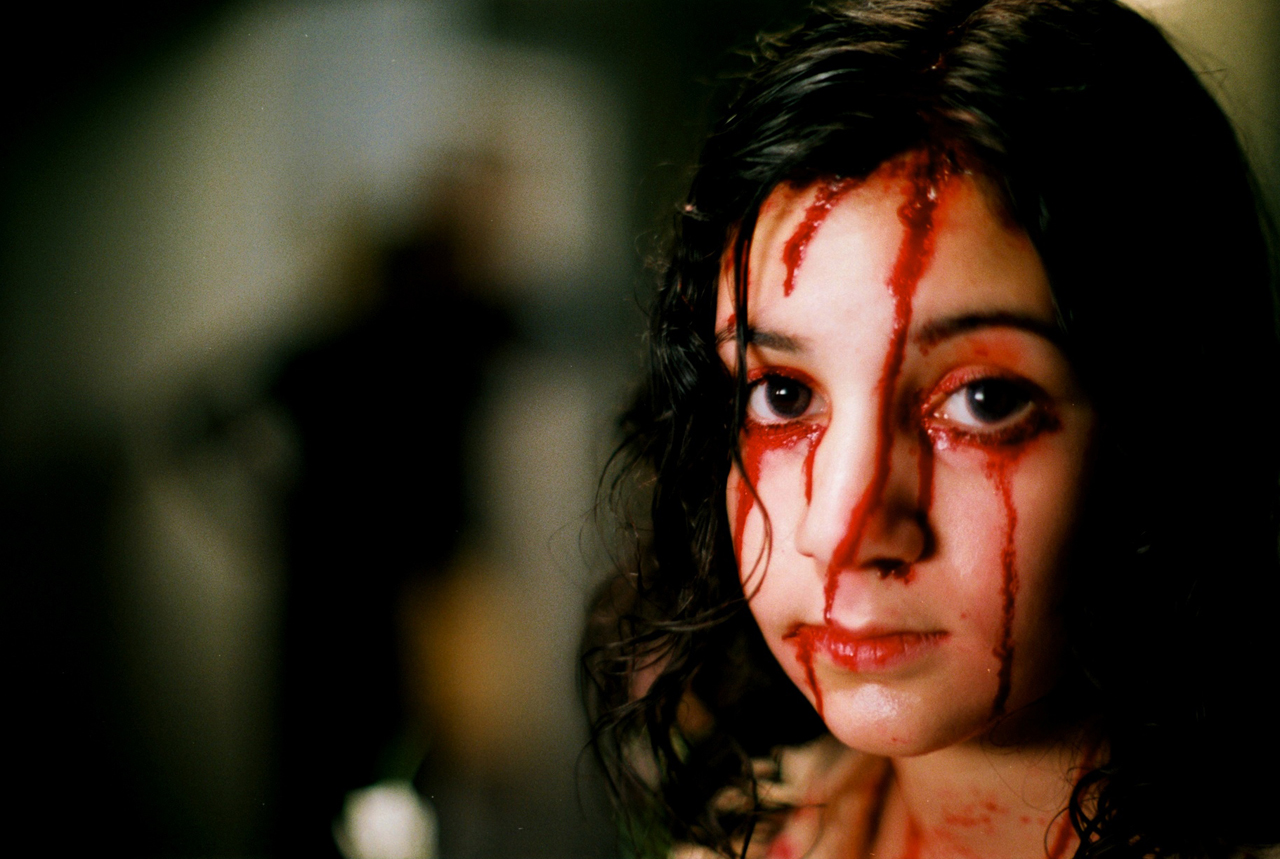
In 2008, Sweden’s Let the Right One In emerged as an original, stylish thriller – and the best vampire flicks in years. A spooky coming of age tale populated by outcasts in the bleakest environment, the film breaks hearts and bleeds victims in equal measure. Kare Hedebrant‘s Oskar, with his blond Prince Valiant haircut, falls innocently for the odd new girl (an outstanding Linda Leandersson) in his shabby apartment complex. Reluctantly, she returns his admiration, and a sweet and bloody romance buds.
Hollywood’s 2010 version carries the less confusing title Let Me In, and fans of the original that fear the worst can rest easy. Director Matt Reeves (Cloverfield) managed to retain the spirit of the source material, while finding ways to leave his own mark on the compelling story of an unlikely friendship.
Twelve year old Owen (Kodi Smit-McPhee) is a lonely boy who’s being bullied at school. When young Abby (Chloe Grace Moretz) and her “dad” (Richard Jenkins) move in next door, Owen thinks he’s found a friend. As sudden acts of violence mar the snowy landscape, Owen and Abby grow closer, providing each other a comfort no one else can.
While the original had an ominous sense of dread, a feel of bleak isolation, and a brazen androgyny that the update can’t touch, Let Me In scores points all its own.
Moretz (Kick-Ass) and Smit-McPhee (The Road) are both terrific, and give the film a touching, vulnerable soul. Reeves, also adapting the screenplay, ups the ante on the gore, and provides more action, scares and overall shock value. Incredibly, he even manages to build on the climactic “revenge” scene that was damn-near flawless the first time.
Together the films set the standard for child vampire fare, and neither one should be missed.
Who’s in the mood for something weird?
Unhinged Spanish filmmaker Alex de la Iglesia (Perdita Durango) returns to form with The Last Circus, a breathtakingly bizarre look at a Big Top love triangle set in Franco’s Spain.
Describing the story in much detail would risk giving away too many of the astonishing images. A boy loses his performer father to conscription in Spain’s civil war, and decades later, with Franco’s reign’s end in sight, he follows in pop’s clown-sized footsteps and joins the circus. There he falls for another clown’s woman, and stuff gets nutty.
Iglesia’s direction slides from sublime, black and white surrealist history to something else entirely. Acts 2 and 3 evolve into something gloriously grotesque – a sideshow that mixes political metaphor with carnival nightmare.
Like Tarantino, Igelsia pulls together ideas and images from across cinema and blends them into something uniquely his own, crafting a film that’s somewhat familiar, but never, ever predictable.
The Last Circus boasts more than brilliantly wrong-minded direction and stunningly macabre imagery – though of these things it certainly boasts. Within that bloody and perverse chaos are some of the more touching performances to be found onscreen.
Carlos Areces and Antonio de la Torre soar as the clowns at odds over the love of an acrobat (Carolina Bang, in another of the film’s wonderfully fresh performances). Areces’s tortured Sad Clown versus Torre’s sadistic Happy Clown – it’s a battle to the death in one of the more entertainingly garish political allegories in Spanish cinema.
If Ginger Snaps owes a lot to Carrie (and it does), then Jennifer’s Body finds itself even more indebted to Ginger Snaps.
The central premise: Boys are stupid, throw rocks at them. Better still, lure them to an isolated area and eat them, leaving their carcasses for the crows. This is the surprisingly catchy idea behind this coal-black horror comedy.
In for another surprise? Megan Fox’s performance is spot-on as the high school hottie turned demon. Director Karyn Kusama’s film showcases the actress’s most famous assets, but also mines for comic timing and talent other directors apparently overlooked.
Amanda Seyfried’s performance as the best friend, replete with homely girl glasses and Jan Brady hairstyle, balances Fox’s smolder, and both performers animate Diablo Cody’s screenplay with authority. They take the Snaps conceit and expand it – adolescence sucks for all girls, not just the outcasts.
In place of two alienated sisters, Jennifer’s Body shadows best friends – the smokin’ hot cheerleader (actually, oddly, she’s on flag squad), and the best friend whose non-glam look bolsters the popular girl’s insecurity-riddled self-esteem.
Cody’s script shines bright, as she gives the horror genre the rare chance to benefit from the pen of an Oscar winner. In turn, the young talent handling her acerbic prose does her proud. Adam Brody’s smarmy, contemptuous indie rocker steals several scenes, including a screamer set to “867-5309 Jenny.” Other welcome faces in small but memorable roles include J.K. Simmons and Amy Sedaris, both showing off and having fun in a film that far surpasses expectations.
http://www.youtube.com/watch?v=LCSzYioSeT0
From the brightly lit opening cemetery sequence to the paranoid power struggle in the house to the devastating closing montage, Night of the Living Dead teems with the racial, sexual and political tensions of its time. An unsettlingly relevant George A. Romero knew how to push societal panic buttons.
Two hundred miles outside Pittsburgh, squabbling siblings Barbara and Johnny visit a cemetery to put a wreath on their father’s grave. Then comes the first of the film’s many iconic quotes: They’re coming to get you, Barbara.
My favorite, though, has always been, “Yeah, they’re dead. They’re all messed up.”
A befuddled, borderline useless Barbara stumbles to an old farmhouse, where the very useful and not easily befuddled Ben takes her under his wing and boards up the place. Meanwhile, TV newsmen declare that the, “scene can best be described as mayhem” and note that Barbara, Ben and all those folks down the basement should avoid the mayhem’s “murder-happy characters.”
Romero’s responsible for more than just outstanding dialogue. (OK, at times, like the heavy handed score, the dialogue isn’t entirely outstanding. But often enough, it is.) As the first film of its kind, the lasting impact of this picture on horror cinema is hard to overstate. His inventive imagination created the genre and the monster from the ground up.
They’re dead.
They’re back.
They’re hungry for human flesh.
Their bite infects the bitten.
The bitten will eventually bite.
Aim for the head.
The tensions inside the house are almost as serious as the danger outside the house, once bossypants Mr. Cooper pokes his head out of the basement. And wouldn’t everybody be better off if Romero could write a worthwhile part for a female?
Still, the shrill sense of confinement, the danger of one inmate turning on another, and the unthinkable transformation going on in the cellar build to a startling climax – one that utterly upends expectations – followed by the kind of absolutely genius ending that guarantees the film’s eternal position in the annals of horror cinema.
Writer/director James Gunn took the best parts of B-movie Night of the Creeps and David Cronenberg’s They Came from Within, mashing the pieces into the exquisitely funny, gross and terrifying Slither.
A Troma alum with writing credits ranging from Scooby-Do movies to the remake of Dawn of the Dead, Gunn possessed all the raw materials to pull it off. The film is equal parts silly and smart, grotesque and endearing, original and homage. More importantly, it’s just plain awesome.
Cutie pie Starla (Elizabeth Banks) is having some marital problems. Her husband Grant (the great horror actor Michael Rooker) is at the epicenter of an alien invasion. Smalltown sheriff Bill Pardy (Nathan Fillion) tries to set things straight as a giant mucous ball, a balloonlike womb-woman, a squid monster, projectile vomit, zombies, and loads and loads of slugs keep the action really hopping.
The cast is superb, especially Gregg Henry as foul mouthed Mayor MacReady. It helps that he gets all the best lines. Like, “If this shit’s contagious and I turn into a fucking mollusk, I’m going to sue those bastards!”
Gunn lifts certain scenes – the best scenes – directly from both the Cronenberg and the lesser Creeps effort, but never steals. His film brims with affectionate nods, including the great early scene where white trash Margaret sits on her couch with her toddler watching Troma’s classic Toxic Avenger. Classy, mom!
Consistently funny, cleverly written, well paced, tense and scary and gross – Slither has it all. Watch it. Do it!