Category Archives: Uncategorized

Gone Fishing

I Love My Dad

by Brandon Thomas

We live in an era where cringe-comedy reigns supreme. From HBO’s Eastbound and Down to the American remake of The Office (so many cringe-inducing episodes), modern comedy seems hellbent on making us uncomfortable. While these two examples and many others only tend to dabble in discomfort, the new film I Love My Dad uses it to full effect while going places many movies could only dream of.

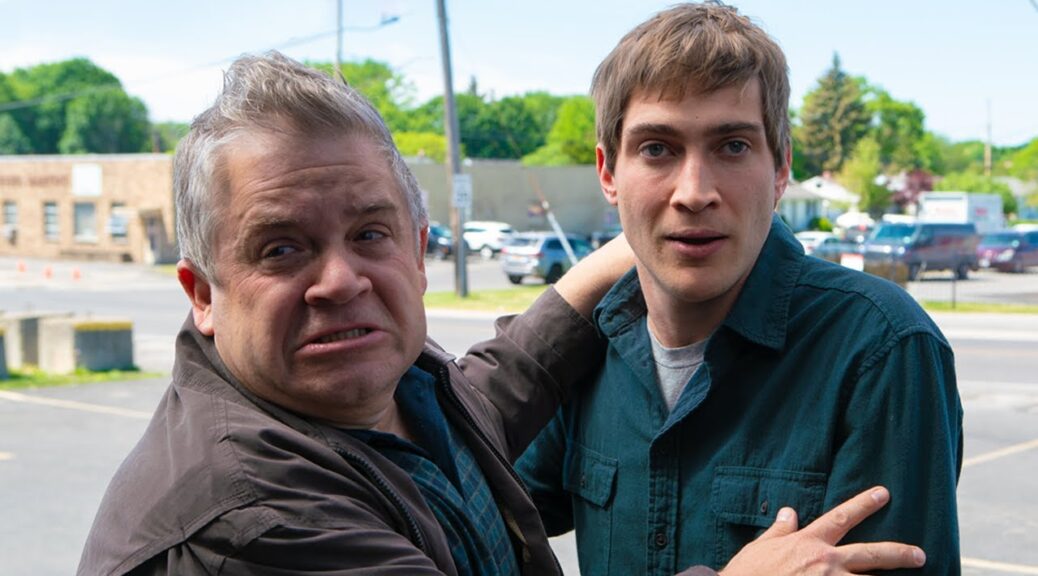
Chuck (Patton Oswalt of Ratatouille and Young Adult) has a terrible relationship with his son, Franklin (I Love My Dad writer/director James Morosini). Chuck was an absentee father who missed birthdays, made empty promises, and disappointed his son every chance he could. After Franklin blocks his dad on social media and won’t take his calls, Chuck decides to “borrow” the online identity of Becca, a waitress at a local diner, to catfish his way back into his son’s life. 

The premise of I Love My Dad is enough to make most people go, “Wait, what?” 

The execution though? 

Well, that’s something even more anxiety-riddled. 

Morosini knows exactly what he’s doing with this subject matter and carries it out through the entire running time. I Love My Dad is like a cinematic car accident you can’t help looking at as you drive by. However, in this case, the car accident is a very well-made movie.

Morosini cleverly brings to life the text conversations between Franklin and “Becca” by using the real actress (Claudia Sulewski) to act them out alongside him. It’s an impressive way to show how connected Franklin feels toward Becca and only helps ratchet up the tension. By the time the inevitable truth is revealed, even the audience feels invested in this fraudulent relationship that Chuck has conjured between him and his son.

So much of the success of I Love My Dad hinges on the casting of Chuck. Make no mistake, Chuck is a scumbag of the highest order, but having someone as likable as Patton Oswalt play him sets up certain expectations. Even as Chuck digs himself deeper and deeper, it’s difficult to completely root against him. Oswalt’s naturally affable demeanor is hard to get past even when the character he’s playing is so deplorable. It’s perfect casting that makes you think, “Well if HE’S the bad guy, what else can happen?”

The supporting cast is peppered with some fun faces. Lil Rel Howery (Get Out) shows up as Chuck’s work friend who gives him the catfishing idea. And the always-on-fire Rachel Dratch (Saturday Night Live) nearly walks away with the entire movie as Chuck’s very horny girlfriend. 

I Love My Dad explores some dark and taboo territory but still manages to wring out a lot of laughs along the way. Maybe don’t watch it with your parents, though.

The Deglammed Spy and Love Ties

Diary of a Spy

by Isaiah Merritt

The big screen has become oh so littered with the glamorous life of the fearless spy and their sonic-speed cars, fancy attire, and femme fatale sidekicks – all gorgeously accessorized by striking visuals, epic shots, and glittering cinematography. As entertaining as this style of filmmaking can be, there has been a lack of any opposing forces in the genre. 

Where’s the grit? Where’s the darkness? Where’s the reality? Where’s the BEEF?!!

Diary of A Spy, written and directed by Adam Christian Clark, offers a dark and hardy perspective through the lens of a traumatized woman who has dedicated her life to a cause that may destroy her.

Anna, played with stellar precision by Tamara Taylor, must somehow find a new foundation while she manages a high-stakes assignment that causes her to mix business with pleasure in this slow-burn thriller. When the lines between assignment and romance begin to blur, the plot thickens, ushering in a much-earned climax. 

From shot to shot and scene to scene, Clark displays a very clear voice as an auteur. The direction, writing, editing, and cinematography create a cohesive world rich with the rawness of life. 

The consistency of performances solidifies the strength of the film and gives the piece heart. Leads Taylor and Reece Noi are in no small part responsible for the success of the film. Especially in the closing scene, Noi proves he is a force to be reckoned with – a quiet storm of awkward realism. 

Meanwhile, Paulina Leija offers a scene-stealing performance in a supporting role.

This is a film that takes some time to gain momentum. However, with clear direction, a cohesive vision, and good performances to match, Diary of a Spy is a refreshing take — a spy film soaked in realism.

House Call

The Summoned

by Tori Hanes

A tale as old as time: boy meets girl, girl convinces boy to accompany her on a couple’s retreat, couples retreat turns satanic. If we see this setup anymore, we’ll have to consider the trope its own genre.

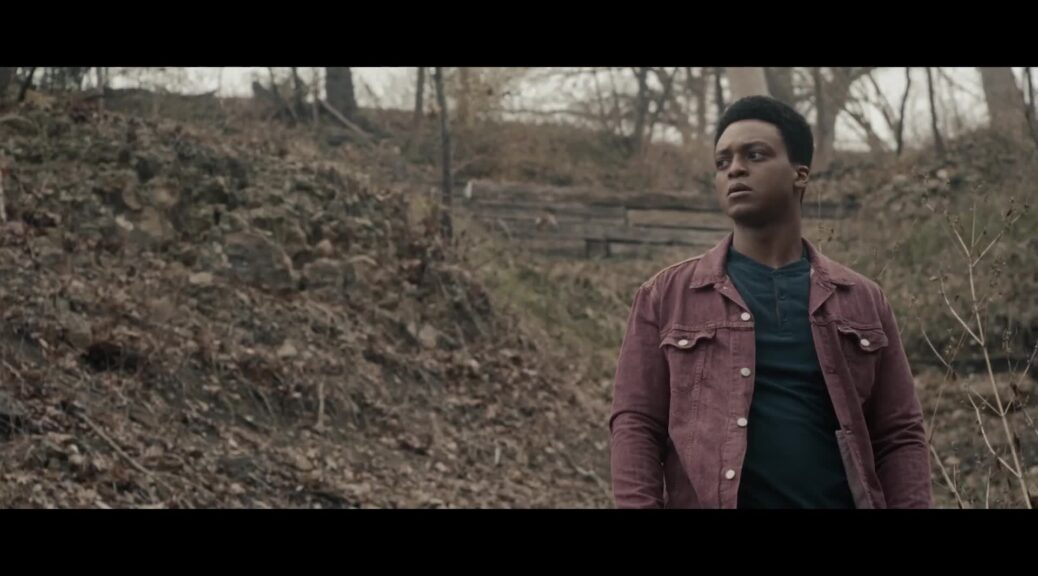
Director Mark Meir’s The Summoned follows average mechanic and hopeful musician Elijiah (J. Quinton Johnson), as he accompanies his pop star girlfriend Joplyn (Emma Fitzpatrick) on a secluded (and exclusive) self-help retreat. Joined by a millionaire author (Salvador Chacon) and prissy movie star (Angela Gulner), the vacation quickly goes from life-changing to life-threatening.

Unfortunately, when drawing up appropriate criticisms or praises for The Summoned, the metaphorical canvas remains blank. That is to say: this film drives at a safe speed and steadily down the dead-center of the road. Never veering into terrible road bumps like uneven performances, loose script, or uninspired narrative. This also means it never hits the high speeds of stellar performances, transformative writing, or intriguing ideas. 

The Summoned is competently made in almost every aspect. It looks pleasant, the cast is strong and is obvious in their chemistry, and the direction is solid. But you keep waiting for the twist of the knife, the moment where this film becomes a breathing piece. Unfortunately, that final push never comes, and the result is ultimately adept but magicless.

Perhaps the most enjoyable element of this film was the willingness to lean into camp. The performances offered by Gulner and Frederick Stuart as the flamboyant Dr. Frost gave even the most grisly moments appropriate levity. This levity is the ultimate grace the film needs to distance itself from gloom-obsessed horrors of the past (think Insidious, The Conjuring, etc.). It hits more closely to Jordan Peele’s Get Out, often pulling surprisingly snappy dialogue. 

If you’re looking for an easy fright, check this film out. You won’t be disappointed. If you’re looking for a thought-provoking scare, you may wish you hadn’t been summoned.

Birds, Bees and Whatnot

A Sexplanation

by Rachel Willis

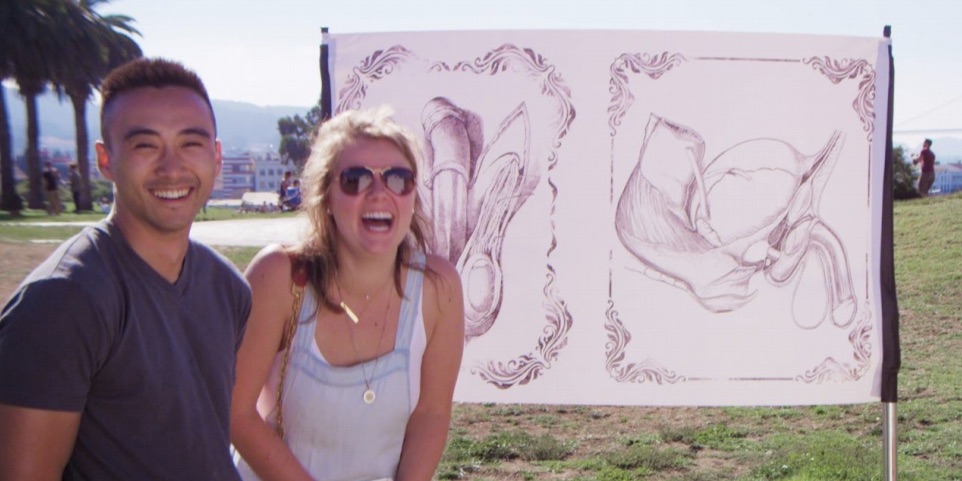
Director Alex Liu is on a quest to overcome the shame he feels regarding sex. He’s also out to understand why sex is such a taboo subject in America – especially when it comes to our kids, their curiosity, and their own drives (whatever they may be) – in his documentary, A Sexplanation.

Part exploration of sex education in the United States, healthy sexual conversation, and personal memoir, the doc wants to understand why Liu was made to feel such shame about his own sexual acts and preferences. In a heart-wrenching moment, he even admits to contemplating suicide because of it.

This is a heavy sequence in an otherwise very lighthearted and funny documentary. Liu might still feel some of the embarrassment of his upbringing (in one particular interview it’s obvious from his blush he’s asking questions that bring discomfort), but he is determined to upend the current notion of sex as shameful.

This is the kind of documentary that would be a wonderful conversation starter for parents and their teenagers, as some of its queries are a bit too advanced for younger children. One of the points the documentary makes is that there shouldn’t be “The Talk” with kids, but a continuing conversation around age-appropriate topics. There’s no reason why a two- or three-year-old can’t know the proper terminology for their body parts. Or why a six-year-old can’t begin to understand the biological differences between the sexes. In the case of sex, silence from parents can be just as damaging as outright shaming.

This is what appears to have happened to Liu. As he talks with his parents, both of whom seem quite open to his questions, it doesn’t appear that they intended for Liu to feel awkward, embarrassed, or even wrong for a natural part of development. But their silence meant he was left to the wayward American education system, which primarily values abstinence-only over comprehensive sex-ed.

Conversations with others his age reveal the woefully inadequate education most of us have, not only concerning sex, but also some of the basics of human biology.   

Liu could probably have done a bit more exploring. Still, A Sexplanation offers a non-judgmental safe space for the questions that many of us (okay, probably all of us) have had when it comes to masturbation, sexual proclivities, and the whole exciting and wonderful topic that is sex. 

Scream Queen

All About Evil

by Hope Madden

Creepy twins! Librarians! Drag queens! These are a few of my favorite things…

The long-lost 2010 cult-film-in-the-making All About Evil brings all this and more to its Shudder debut this week. What’s it about?

The business of show!

Natasha Lyonne is Deborah Tennis, anxious librarian. Deb inherits her dad’s beloved single-screen San Francisco theater and vows to keep it afloat, no matter how. Her plan of action: make grisly, hyper-realistic horror shorts with literary puns for titles.

You’d be surprised how well it works.

Writer/director Joshua Grannell (aka Peaches Christ, who co-stars) surrounds Lyonne with some underground heavy-hitters including Mink Stole and Cassandra Peterson. Between that and the Herschel Gordon Lewis love, All About Evil is a mash note to camp.

Performances and writing fall right in line. It’s community theater bad, but in the best way. Lyonne is in her element, hamming her arc from mousy literary type to vampy directress with Gloria Swanson skill. She’s even more fun when she’s directing her fine crew (Jack Donner, Noah Segan, and Nikita and Jade Ramsey – all so fun).

The underlying story that we need to stop assuming every troubled, white high school boy is a danger to society has not aged well. But Grannell also hits on timeless lessons about cell phone use during a movie (never OK!) and Elvira’s hotness (eternal!).

All About Evil offers clever midnight-movie fun from start to finish. The filmmaker is clearly a devotee of cult and kitsch, a love that brightens every frame of the film. Plus, the film memorabilia! Come for the movie posters, stay for more movie posters, enjoy some madcap campy mayhem in between.

Wake Up Call

6:45

by Rachel Willis

Working from a screenplay by Robert Dean Klein, director Craig Singer brings us the time loop horror film, 6:45.

Bobby (Michael Reed) and Jules (Augie Duke) are trying to work through some issues, so they visit the quaint island of Bog Grove for a relaxing vacation. What the couple doesn’t know is that their visit to the island falls on the anniversary of a traumatic, unsolved murder. Because of this, the ferry service doesn’t run, and they’re stuck – or so they’re informed by the nosy, odd proprietor for the inn where they’re staying.

A slow opening that follows the couple exploring Bog Grove, its tourist shops and oddball residents, doesn’t take advantage of the opportunity to build tension. When the tragedy occurs, it comes as a relief rather than a shock.

Soon, Bobby descends into a nightmare he must relive over and over. Being forced to relive the day alongside Bobby is a horror in itself.

No one else experiences the loop, so we get to see Duke in a range of roles: some days she wishes could last forever, others see her trying to rein in an increasingly unstable boyfriend. Reed, on the other hand, is stuck playing a man who doesn’t seem to know how to handle himself each day. Every time the crucial event occurs, he seems constantly taken by surprise.

The cast of locals has little to do, often repeating lines from previous loops. They fill mostly stereotypical roles: small-town friendly and welcoming or weirdly creepy. There isn’t middle ground, and it makes for uninteresting characters.   

Rather than differentiate itself from similar time loop films through storytelling, 6:45 instead focuses on camerawork and distracting split screens. Anywhere from four to six screens will litter the frame, some focusing on banal details, others on more interesting visuals. Days are relegated to montages,

Flashbacks detailing the couple’s history sometimes punctuate the flashbacks. It’s here that Singer cleverly injects moments that help us understand why the couple has been fighting. It’s clear that the fight revolves around infidelity, but these fleeting moments offer hints of violence, which reveals something more sinister.

The film does take an interesting turn, but it comes too little, too late. It also fumbles any message it’s trying to get across. Instead of offering a strong look at a troublesome relationship, it embraces shock over commentary. In the end, we’re not shown anything new or astute.

Mean Boys

Mother Schmuckers

by Brandon Thomas

My relationship with gross-out humor is hit-or-miss. Like millions of other people around the world, I laughed uproariously as Cameron Diaz used the wrong “hair gel” in There’s Something About Mary. For 20 years, I’ve enjoyed the increasingly dumb antics of the crew from the Jackass films. On the other hand, Tom Green’s weirdo pet project Freddy Got Fingered remains one of the few movies I almost walked out of. Even revered cult classic Pink Flamingos has never been much more than a cinematic endurance test in my eyes.

Unfortunately for me, Belgian import Mother Schmuckers is less Mary and more Freddy with its unfunny bits and horrifically unlikable characters.

Brothers Zebulon and Issachar live a life of debauchery and chaos. When the two lose their mother’s beloved dog, they have 24 hours to find it or risk being thrown out on the street. Along the way, the two run afoul of a grocery store security guard, kill birds with a handgun, and parade a dead body around.

Mother Schmucker’s approach to comedy is throwing everything at the wall and seeing what sticks. Directors Harpo and Lenny Guit definitely aren’t afraid to try anything and everything, even if it means the vast majority of the gags (pun fully intended) fall flat. Everything from force-feeding feces to animal kink shows up at one point or another. This “anything goes” attitude might work for a prank or other kind of reality show, but as a narrative feature it just comes across as unfocused and lazy.

There’s a chaotic energy to Mother Schmuckers that’s undeniable. The movie’s visual aesthetic feels closer to a mid-90s skateboarding video than it does a traditional comedy. The camera moves around almost as fast as the brothers as they scurry from one catastrophe to the next. While it doesn’t necessarily make the movie any better, it does keep it from becoming a complete bore.

I don’t want to sound too puritanical, but brothers Issachar and Zebulon are two of the worst degenerates to ever grace the big screen. I doubt the Guits intended for audiences to embrace these moronic characters, but the lengths to which they go to make us actively hate them is almost impressive. I don’t for a second believe that movie characters need to be likable to be relatable, but these two live on a completely different plane of obnoxiousness and cruelty.

Mother Schmuckers is a pointlessly mean-spirited endeavor. Gross cinema can be good – heck, it can even be great! What it should never be, though, is cruel.

Pick A Side

A Shot Through the Wall

by Rachel Willis

“It’s important … that I understand your side of the story.”

Writer and director Aimee Long tackles a big topic with her debut feature, A Shot Through the Wall. Focusing on the aftermath of the shooting of a Black man shot by a police officer, Long tries to present the issue in shades of gray rather than the black and white portrayal often warring in the news or across social media.

When two police officers stop a group of Black teenagers on the street, a chase leads to an accidental shooting.

In a blink-and-you’ll-miss-it moment, Officer Michael Tan (Kenny Leu) draws his weapon in the pursuit of one of the teenagers and his gun discharges. Whether the result of a misfire or a jumpy trigger finger is never made clear, but that’s not Long’s point. From Tan’s perspective -and his is the one on which we’re focused – it’s an accident.

This is one of the more troubling aspects of Long’s film. While it’s made clear from the beginning that Tan never meant to hurt anyone, we’re not given the alternative perspective of what the killing of a Black man at police hands means for the family or the community.

A moment in the film’s first act allows us a chance to see the anger and the demand for justice, but this is depicted as a blanket response. No one takes the time to show us how the hole in the wall of an apartment rips a hole in so many lives. Be it accidental or intentional, the result is more victims of an unjust system.

The only chance we get to understand the victim’s side comes in the form of Tan’s fiancée, a Black woman. Portrayed by Ciara Renée, Candace is the strongest character as her dual role in the conflict gives us a little more insight.

However, that’s not to say the other actors don’t inhabit their roles. Each one brings depth that makes up for the film’s storytelling weaknesses.

A few tough questions are raised in the film. Is Tan’s race a factor in his indictment? Would a white cop face the same legal persecution?

There is strength in the film’s second act, as we get a chance to know Tan, but it falls apart at the end. The idea that violence begets violence leads to a (forgive the pun) cop out.

There is no real justice to find here. Only more of the same in a society where oppression and injustice are too often the norm.

https://www.youtube.com/watch?v=UZpkHEtE56U

Growing Strong

Beans

by Christie Robb

Adolescence is hard. It’s beset with conflicts and struggles that come from all directions—society, parents, peers, your own body… In Tracey Deer’s Beans, we see Tekahentakwa’s (nicknamed Beans) coming-of-age narrative, well, a slice of it anyway. She’s coming up on her seventh-grade year and contemplating a move from her neighborhood school to Montreal’s posh Queen Heights Academy.

The posh and majority-white Queen Heights Academy.

Which is more than usually fraught because Beans is a Mohawk and the Mohawks are fighting to keep White Quebecois developers from expanding a golf course onto a Mohawk cemetery.

Inspired by the true events of the Oka Crisis aka Kanesatake Resistance of 1990, Beans is a mix of archival news footage and fictional drama.

What begins as a peaceful protest at the cemetery turns violent once a riot squad shows up and starts lobbing tear gas at the protestors. A police officer is killed, which leads to a stand-off. Mohawks and white police face each other behind barricades. Beans’s town is cut off from supplies, leaving it more or less under siege.

The details of the stand-off are a little unclear, the way world events can seem when you are in middle school. What Beans experiences is a betrayal of white adults. They fail to live up to their roles in the social system she thought she was living under. Shop keepers won’t sell groceries to “her kind.” Police won’t protect a car full of women and children from folks throwing rocks. People scream obscenities and spit at her adorable kid sister.

In the midst of this, Beans is trying on possible versions of her adult self. She meets an older, more contemptuous, teenage mentor and seeks advice on how to toughen up. She abandons her baggy 90s overalls and braids and experiments with side ponytails, crop tops, and lipstick. She practices swearing in front of the mirror. She learns more about administering violence and suffering it.

As tensions with the developers and government mount, Beans’s life grows increasingly complicated, forcing her to make choices and figure out the type of person she wants to be.

The cast delivers authentic performances. As Beans, Kiawentiio nails the vulnerability covered with a brittle armor of cynicism that I remember from middle school. Paulina Alexis does a great job as the tough older girl who has been through some shit. And Rainbow Dickerson shines as the ultimate adult role model—strong and nurturing, and able to let loose with the lecture to kids and adults alike.

As a monolingual person from the States, I would have appreciated subtitles for the French language news footage and a little bit more context on how the Mohawks and the Canadian Government came to a resolution. But, overall, Beans is a moving coming-of-age story that depicts many strong First Nations women. This is Tracey Deer’s first feature film and I look forward to seeing what’s next.

Inner Conflict

Dangerous

by Hope Madden

I remember watching the inexplicably popular Bad Boys for Life and marveling at the film’s narrative purpose: to convince Marcus (Martin Lawrence) that being a violent man is better than being a man who does not commit violence against others.

Sure, there’s a mother/son angle, some explosions, a disco scene, but everything that happens does so to convince Marcus that his real purpose is to commit violence.

It’s different than the traditional “one man against the world” action flick, where a peaceful man is forced back into violence to avenge the death of his wife/child/puppy. Those have long existed. This idea that a man who chooses not to physically harm others needs to somehow be persuaded that he prefers a life of violence, that it is his nature and should be celebrated, is kind of new. This theme is also the driving force behind the admittedly enjoyable Nobody, among others.

The latest film that hates to see a man get his baser instincts under control is David Hackl’s Dangerous.

Scott Eastwood leads a solitary life. He works out. He eats frozen dinners. He waters his plants. Then his mind-numbing peace is disrupted when his brother Sean’s death brings him to the remote island where Sean had been renovating an old military base into a hotel.

Eastwood, who channels his father more and more these days, is now non-violent with the help of some personality-deadening drugs and call-me-whenever guidance from his therapist, played by Mel Gibson.

That’s funny.

Hackl’s clearly working on a shoestring here, and though the film sometimes shows a lack of funds, on the whole, it’s competently made. The humor Hackl, Gibson and Eastwood mine from Christopher Borrelli’s script delivers Dangerous’s saving grace.

Because, yes, D (Eastwood’s character) falls into ex-military, Black Op style gunplay once on the island, but first the recovering sociopath has to deal with his mom. Beyond that, the mystery is convoluted beyond measure, Tyrese Gibson and Famke Janssen are pointless, performances are forgettable.

In the end, the whole mess feels like the familiar fantasy of doing right by your mother just one time and then disappearing so you can’t screw it up. Which is a better story than the one about a sociopath who decides being a decent human is just not being true to himself.