Category Archives: Shudder Premiere

Good Night and Good Luck

Best Wishes to All

by Hope Madden

Filmmaker Yûta Shimotsu has seen a few Takashi Miike films. Everyone should. He’s one of the world’s greatest and most prolific genre filmmakers, so that’s not a drag on the Best Wishes to All (also known as Best Regards to All) writer/director.

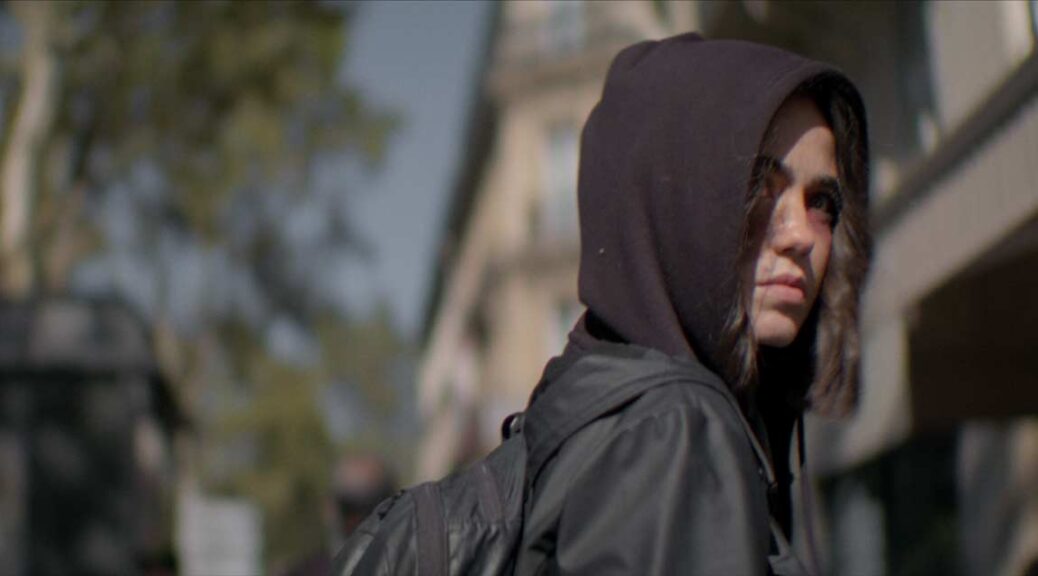
His first feature follows a nursing student (Kotone Furukawa) visiting her grandparents over break. They’ve gotten odd. Or have they always been odd and she’s just blocked it out more effectively until now?

Shimotsu’s film, co-written with Rumi Katuka and based on his own 2022 short, is a nimble little beast. What begins as a reckoning with the horrors of aging twists into something else altogether. And then, something else. Because what the unnamed granddaughter learns is that her family is keeping a secret from her. But what’s even more disturbing than the secret itself is the nonchalance with which it’s held, and that the secret does not belong to her family alone.

The filmmaker mines unease, even queasy dread, surrounding obligation to an older generation, the notion of one day turning into that same monstrous burden, or even worse, the realization that you never were anything other than a monster yourself.

Stylistically, Best Wishes to All recalls some of Miike’s more absurd horrors, Gozu in particular. But Shimotsu stitches the absurdity of Gozu or The Happiness of the Katakuris or even Ichi the Killer to pieces of grittier horror. Not quite Audition, but in that zip code. But he can’t strike a tone that can carry the two extremes.

The grotesquerie is always in service of a tale that’s more folk horror than body horror. This doesn’t always work, but it’s never less than interesting.

Kurukawa is delightfully absorbing as the obedient granddaughter utterly gobsmacked by her grandparents’ behavior. What appears to townsfolk as naiveté actually mirrors the audience’s horrified confusion, making the poor girl all the more empathetic.

But what is it, exactly, that’s expected of her? And why? Best Wishes to All is frustratingly unclear in terms of the narrative’s underlying mythology. This limits the satisfaction of the climax and robs the film’s final image of its necessary impact.

It’s a weird one, though, and certainly entertaining. Shimotsu can’t quite pull it all off, but it’s fun even as it falls apart.

Daddy’s Little Girl

The Surrender

by Hope Madden

At one point in writer/director Julia Max’s feature debut The Surrender, Barbara (the always reliable Kate Burton) tells her daughter, Megan (Colby Minifie), that their grief over the death of the family patriarch is not the same. After 40 years together, Barbara says, “I don’t know who I am without him.”

That’s really the heart of the horror film that sees a bereaved mother and daughter transgress the laws of nature to bring their beloved husband/father back from the dead.

Max uses horror tropes to play nimbly with the dishonesty of memory and the ugliness of reality. What The Surrender unveils is that mother and daughter do not know who they are as a family without Robert (Vaughn Armstrong); they don’t recognize the other without the third wheel for balance.

As a character study and a glimpse into family politics, particularly during the tailspin of grief, The Surrender is beautifully, authentically written. Every inexplicable grace Barbara has granted Stephen during their decades is somehow unavailable to her daughter, who, in turn, forgives and forgets conveniently when it comes to her father. But Megan’s less forgiving of her mom.

And so, the two grasp desperately to regain balance and relieve their panic and grief, which is where the horror comes in. Max returns to the exquisitely horrific image that opens the film once Megan and Barbara, aided by “the man” (Neil Sandilands, compellingly understated), go in search of Stephen.

Max’s image of the other realm is as imaginative as it is stark. There’s a bleak beauty to it all that recalls Liam Gavin’s genre masterpiece, A Dark Song. The Surrender never reaches those heights, but Max knows how to ground the supernatural in relatable reality and wonders which is worse.

Your Roots Are Showing

Frewaka

by Hope Madden

It’s 1973. Men in black suits with wicker cages on their heads lead a goat up a path to a wedding.

“Who invited them?” asks the bride.

“Nobody invites them. That’s the whole point.”

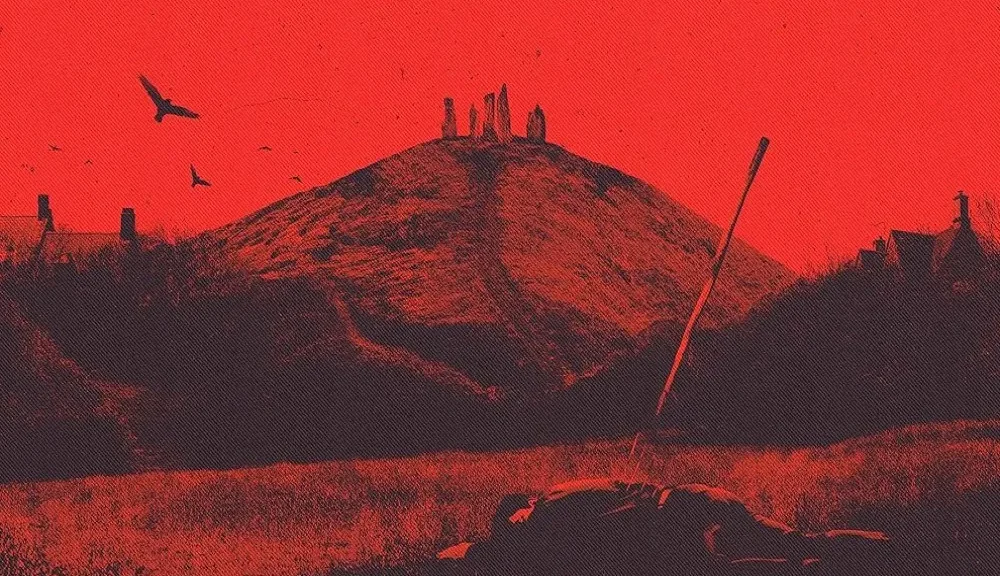
OK. I am in. Writer/director Aislin Clarke’s Frewaka—Irish folk horror told in the ancient tongue—grabs you early and clings to you like a melancholic Irish ballad.

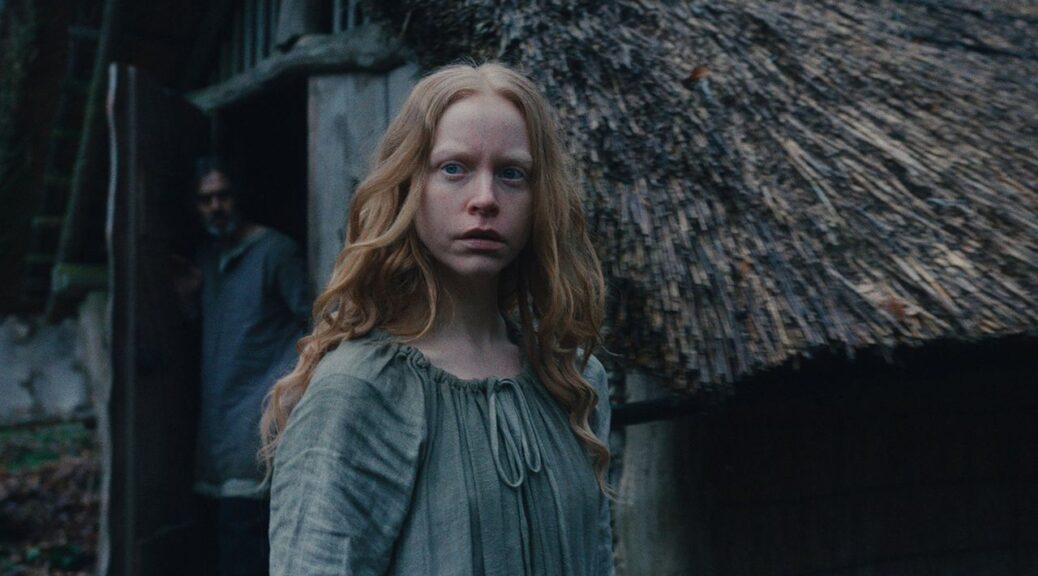
After the wedding prologue, the film jumps to present day with a limp, a song, a lot of rosaries and a bang. Then Shoo (Clare Monnelly) takes a homecare nursing gig out in the countryside, caring for Peig (Bríd Ní Neachtain), who might be a little mad. She talks gibberish of listeners, a house below her house, and of being abducted on her wedding day by mysterious folk.

Clare has her own problems, but the longer she’s with Peig, the weirder the world becomes.

I dig a good Irish horror show and Frewaka (Irish for “roots”) delivers a trippy experience rooted in the fears, history and earth of Ireland. Clarke links generational trauma to Ireland’s traumatic history in a story about the upside-down world of mental illness and the fear of becoming your mother.

Wicker Man moments inject something insidious and sinister into the fable. Monnelly and Neachtain share a natural chemistry. Their performances are never showy, and that low key authenticity grounds the uncanniness of the story.

Clarke’s 2018 feature directorial debut The Devil’s Doorway tread some similar ground, upending the exorcism genre to expose Ireland’s caustic relationship with Catholicism. Her second feature is far more assured, far less predictable, and it boasts a richer and more layered composition.

There’s something obvious and unsatisfying in the climax that limits the film’s impact. Clarke opens strong and her cast keeps you guessing and engaged for as long as they can, but in the end, it feels as if she clung too closely to tales we already know. That can’t erase the mounting dread and nightmare imagery, though.

Excellent Day for an Exorcism

Shadow of God

by Hope Madden

To Michael Peterson’s credit, he tried something new within the exhausted exorcism subgenre. Working from a script by Tim Cairo, Peterson’s Shadow of God wonders whether God’s will is really such a great deal for humans.

Mark O’Brien (Ready or Not) is Father Mason, an exorcist forced to take a leave of absence when his colleagues begin dying during their rituals. He is forbidden to perform an exorcism until the church can investigate. So, I guess it’s too bad he’s so convinced that his dad (Shaun Johnston) is possessed.

There’s a lot going on with Fr. Mason’s dad, not the least of which is that he died of a gunshot wound years back when police raided the cult he led. Pretty surprising, then, when Dad turns up at the cabin.

Here’s what you’re working with: Catholic priest, undead (resurrected?) father, cultists, isolated small town, cabin. Lucifer (Josh Cruddas, Anything for Jackson) makes an appearance, plus there’s lust in Fr. Mason’s heart for his old friend Tanis (Jacqueline Byers, Prey for the Devil). She’s a war veteran and psychologist, so the battle between divinity and psychology gets a nod as well. Plus, loads of childhood trauma.

Quite a mishmash of horror mainstays. Peterson and his cast make a valiant attempt at keeping it all afloat, but Shadow of God would probably have been better served by a bit of streamlining. The film’s big revelation, a subversive idea that certainly merits its own film, deserved a tighter focus.

Instead, enormous leaps in logic paired with wholly irrational decision-making obscure the mystery that might make the big revelation more intriguing.

The FX are bad. The Raiders of the Lost Ark moment is silly. But in terms of reconsidering exorcism tropes, Shadow of God has some big ideas. They don’t entirely work, but at least it’s novel.

Wait a Minute, Mr. Postman

Dead Mail

by Hope Madden

Welcome to Peoria, IL sometime in the mid-1980s. A little mystery has taken hold of the post office. Letter sorters found a necklace in an envelope with the wrong address on it. It looks valuable, so that means Jasper (Tomas Boykin) will put his skills to the test to try to sleuth out who the jewelry belongs to and return it to its rightful owner.

There’s also this torn, bloody piece of paper about a kidnapping.

Filmmakers Joe DeBoer and Kyle McConaghy’s thriller Dead Mail builds on a wildly unrealistic concept: smalltown post offices with super-secure back rooms where pains are taken and spies may be accessed to solve mysteries behind lost mail. And yet, their analog approach to this period piece gives it a true crime feel you never fully shake.

The authenticity is not just in the lo-fi look—although the set design, costumes and hair are spot on. The wholly convincing performances, especially from two of the cast mates, pull you in.

Boykin’s low key, unflappable turn as the dead letter investigator quietly anchors the film—so quietly that the machinations around him are more likely to draw a “huh, I had no idea the Peoria post office went to such pains to track down lost mail” than they really should.

But the bulk of the film is carried on John Fleck’s shoulders. As Trent, the seemingly harmless organ enthusiast who has a man trapped in his basement, Fleck’s delivers magnificent work. There’s a beautiful loneliness in his performance that makes Trent irredeemably sympathetic.

DeBoer and McConaghy (Sheep’s Clothing), who co-write and co-direct, invest in character development enough to complicate your emotions. You’re genuinely sorry to see what happens to some of these characters, and yet, you just can’t hate Trent.

A couple of characters are there more for comic relief than anything, but even they are somewhat delicately drawn. And though the premise on its face is outlandish, every detail in the film convinces you you’re watching nonfiction.

Filmmaker and cast investment pays off. Dead Mail is clever, intriguing and wholly satisfying little thriller.

Neighborhood Watch

825 Forest Road

by Hope Madden

I wonder whether Ashland Falls is a far drive from Abaddon, New York. Looks like a pretty area.

Hell House LLC writer/director Stephen Cognetti launched a fun and mainly impressive horror franchise from the dusty soil of the mythical Abaddon, New York, reinvigorating the found footage genre and reminding those who’d forgotten that clowns are terrifying.

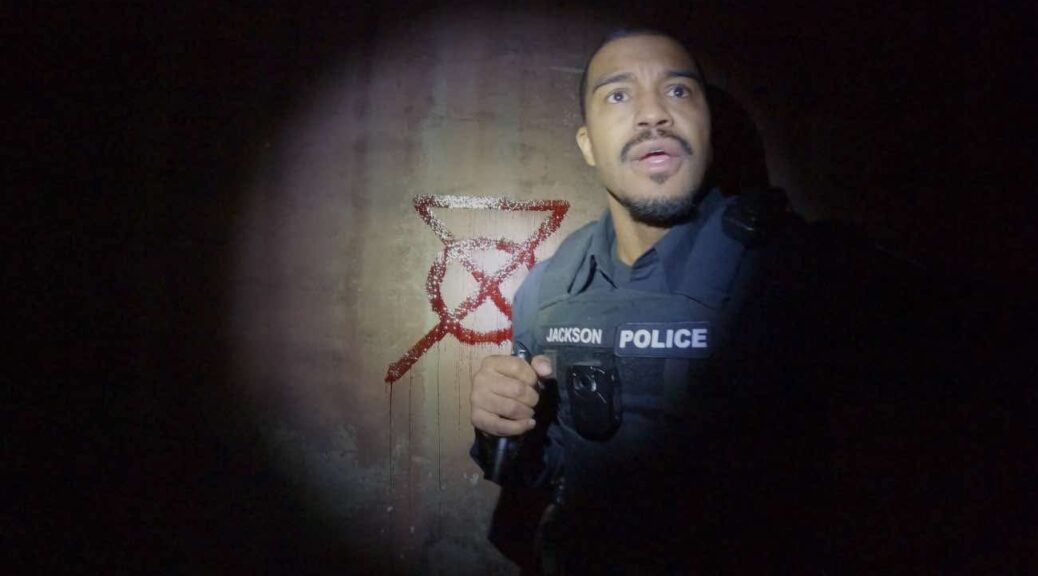
Cognetti’s latest, 825 Forest Road, is the filmmaker’s first feature outside that franchise. Though he leans on some of the style that made the Hell House films memorable, this movie is not found footage. In fact, it’s a pretty straightforward haunted house picture.

Chuck (Joe Falcone) and Maria (Elizabeth Vermilyea) buy a roomy old home in Ashland Falls, to be near the little college where Chuck’s younger sister Isabelle (Kathryn Miller) will attend. Couldn’t Isabelle just move into the dorms like every other college freshman?

Why do that when they could all uproot themselves and buy a haunted house?

The backstory—family tragedy, estranged siblings trying to rebuild something—is the first of the film’s many weaknesses. The fact that the incoming freshman looks like she’s older than her guardians doesn’t help set the mood, either.  

But it’s not just Chuck’s new house that’s haunted. It’s the whole damn town. That can be a ripe premise, too. Just not today.

825 Forest Road delivers a little bit of the style Cognetti’s become known for, and it’s refreshing to watch a modern horror film and know that if you don’t pay attention, you may miss an inspired bit of haunting. But in this case, that’s not enough to merit your time.

Though Vermilyea convinces, the balance of the cast feels more like they’re doing a read through than performing. Chemistry among the actors is nonexistent, which exacerbates the problem with the unfelt backstory.

Every reason to do something is a contrived excuse rather than natural choice, and every reason not to do something is even less earned. The movie plays like a rehearsal that could have turned into something fun with a couple more rounds of script revisions.

Daddy’s Little Girl

Bloody Axe Wound

by Hope Madden

New to Shudder this week is Matthew John Lawrence’s (Peckerhead) charming dismantling of the slasher genre and insightful look at the impact of adolescence on the generations.

Bloody Axe Wound stars a spunky Sari Arambulo as Abbie Bladecut. Her family video store lives and dies on the movies they package and rent, slashers starring her dad, the infamous serial killer Roger Bladecut (Billy Burke under heavy prosthetics), slashing his way through their hometown’s high school students and campers alike.

But ol’ Roger’s getting old. Well, technically he died as a boy at that campground, but for decades he’s been a grown man haunting Lover’s Lane and other tropey spots, coming back from the dead whenever the adventure takes that turn. But lately, well, he doesn’t seem to be healing as quickly. He’s lost a step or two.

Perfect! Because Abbie’s ready to step in. Dad reluctantly, tentatively agrees, sending her to the town high school to make minced meat of the chosen clique. But Abbie soon realizes that these kids are not so bad.

The film delivers some honest moments, however comedically staged, about watching your child outgrow you, lose their need for you, see what used to be honored tradition as old fashioned nonsense in need of change. Bloody Axe Wound is sharpest when Lawrence and his game ensemble use the coming-of-age storyline to make points about horror movies, and slashers in particular.

Burke and Arambulo share a delightfully begrudging chemistry, and their scenes at home and at the video store are populated with genre-loving easter eggs that suit the meta undertaking.

Likewise, the cast of high school misfits—Molly Brown, Margot Anderson-Song, Taylor Watson Seupel and Eddie Leavy—create a warm friend group you can see wanting to hang out with.

The kills (and near kills) are often clever and the characterizations are funny. The film’s mythology gets mushy and the story comes to a close with more of a nod to horror tropes than an acknowledgment of the internal conflicts and genuine emotion the story built, but it’s still fun.

Feeling Peckish?

Little Bites

by Hope Madden

Set in the “every fabric is patterned” Seventies, Little Bites drops us into one really horrifying relationship.

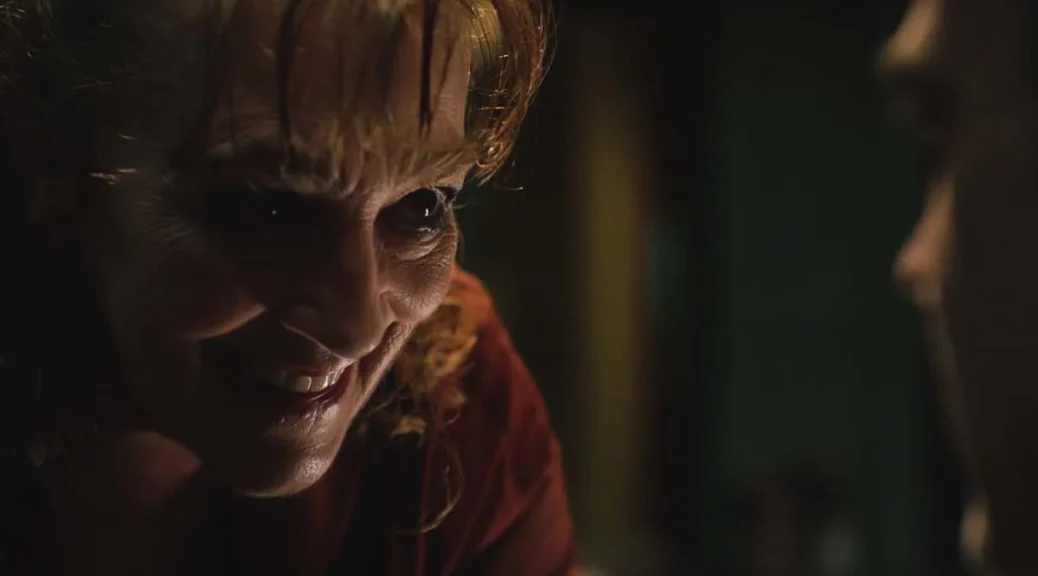
Widowed mom Mindy (Krsy Fox) has sent her 10-year-old, Alice (Elizabeth Phoenix Caro), to stay with Grandma (Bonnie Aarons, The Nun franchise)—an overbearing, hypercritical shrew. That’s not the problematic relationship, though. Mindy sent Alice away because of the demon living in her basement, the one who rings a dinner bell a few times a day, then takes a couple of bites out of Mindy.

The mythology is interesting if undeveloped, but whatever the reason Agyar (Jon Sklaroff, excellent) came to live off of Mindy’s flesh, it’s a solid and troubling concept. Sklaroff’s weary superiority and dark wit create a fascinatingly nightmarish villain.

 It’s a metaphor concerning the life draining sacrifice motherhood can be—something Babadook explored so beautifully and startlingly. It’s a provocative idea executed poorly.

Writer/director Spider One (Rob Zombie’s youngest brother) strings together some memorably disturbing ideas made weirder and better with some (not all) of his dialog. And a slew of veteran actors (Aarons, Barbara Crampton, Heather Langenkamp) strengthens the effort. Chaz Bono (who Executive Produces with his mother) delivers a sweetly bruised performance.

Fox is the weak link. She lacks chemistry with the rest of the cast and struggles mightily with the filmmaker’s more overwrought sections of dialog (any conversation between Mindy and her mother, for example).  

At least as problematic is the stiff direction. There’s precious little variety in shot selection, at an hour and 45 minutes, the film is in desperate need of a good trim. Every scene goes on for an awkward length, far longer than the actors are able to maintain any sense of naturalism. Tightening scenes would certainly have made carrying the film an easier task for Fox.

There’s something here, something unseemly and a little tragic. If the filmmaker could have trimmed the fat, Little Bites might have been a pretty tasty horror.

Rizz Up

The Dead Thing

by Hope Madden

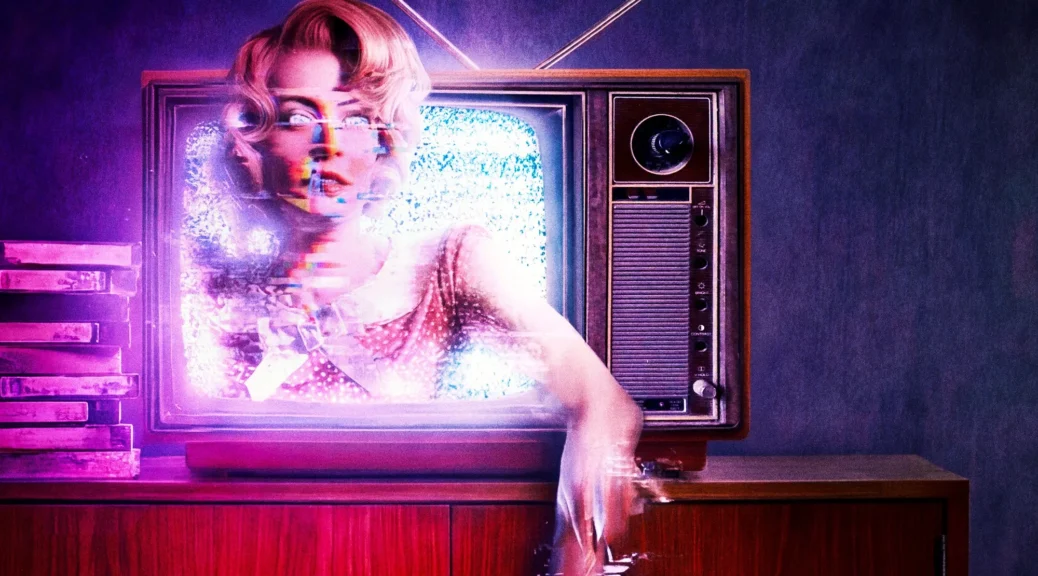
The clever, underlying theme in Shaun of the Dead is that every Londoner was already basically a zombie.

Elric Kane, co-writer and director of The Dead Thing, looks at a culture of app hook ups and sterile, fluorescent work spaces and sees something similar. A whole generation of people seems to already be dead.

They’re not exactly alive, anyway.

Beautiful Alex (Blu Hunt) fits that bill. Her job is mindless, she keeps her headphones in and avoids eye contact with her one co-worker, Mark (Joey Millin). After work and another swipe right hookup she sneaks into her apartment to avoid conversation with her longtime best friend (Katherine Hughes). Sleep. Wake up. Repeat.

Then she meets Kyle (Ben Smith-Petersen), and it’s as if she wakes from a trance. It starts off the same as every other meet up, but Kyle is different. They connect. He stays all night, they laugh and draw pictures of each other and hate to say goodbye the next day when her uber for work arrives.

She decides to keep in touch, but he never responds to a text. So, she shows up where he works, and a mystery begins.

Each act in The Dead Thing tells a different story. Hunt anchors the evolving storytelling with an authentic display of ennui, of disconnectedness—partly chosen, partly inevitable. Smith-Petersen’s vacant sweetness gives each change in the narrative an underlying sinister quality that also evolves nicely from one act to the next.

By Act 3, Kane abandons the film’s original metaphor in favor of a different analogy. While this change offers more opportunity for visceral horror, the result is less satisfying than the original, insightful image of modern romance.

Though the more traditional wrap up disappoints after such a stylish and intriguing premise, The Dead Thing—including Iona Vasile’s dreamy camerawork and deceptively creepy performances throughout—keeps your attention and manages to subvert expectations and entertain.

Face Off

Grafted

by Hope Madden

Well, Sasha Rainbow knows for sure that there’s an audience for body horror enraged at the pressure to fit a certain standard of beauty. The fact that her feature debut Grafted will face constant comparisons to Coralie Fargeat’s The Substance is less of a positive note. (There’s even a scene of someone gorging on shrimp, I swear to God.)

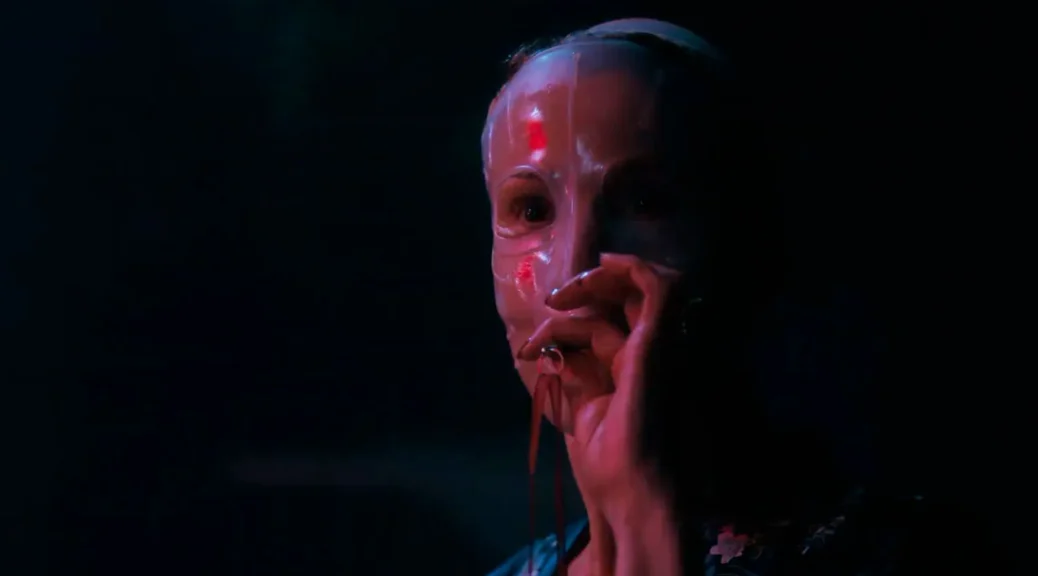
Rainbow introduces us to Wei (played in youth by Mohan Liu) and her father (Sam Wang). Both father and daughter are marked with some kind of red tissue across their faces, and while working on a cure, tragedy strikes, and Wei is left on her own.

Years later, she obtains a scholarship to a university in New Zealand and goes to live with her aunt (Xuai Hu) and cousin, Angela (Jess Hong). Try as she might, Wei (Joyena Sun) cannot fit in with Angela and her beautiful friends (Eden Hart, Sepi To’a), but she has other things on her mind—finishing her father’s research.

Rainbow, who co-wrote the script with Lee Murray and Mia Maramara, wraps social anxiety, assimilation, misogyny, sexual politics, the ludicrous nature of scientific advancement, racism, nationalism and more around Wei’s descent into madness, and it might be just too much to take on in 96 minutes.

Sun, Hong and Hart have fun, making the most of their onscreen personality swapping and Rainbow’s focus is most on target during these sequences. Jared Turner entertains as your typical vain professor, and To’a delivers enough empathy to give the film a touch of humanity.

But Grafted bites off more than it can chew. It too often feels unfocused, random, and superficial. It suffers not only in comparison to Fargeat’s film but to New Zealand’s pretty epic history of body horror.

That doesn’t mean it’s bad. There are some great ideas at work here, and every performance, large and small, brings its own weirdness to the screen. It’s certainly enough to keep me interested in seeing what Rainbow does next.