Category Archives: New In Theaters

Reviews of what’s out now

Sister Act Too

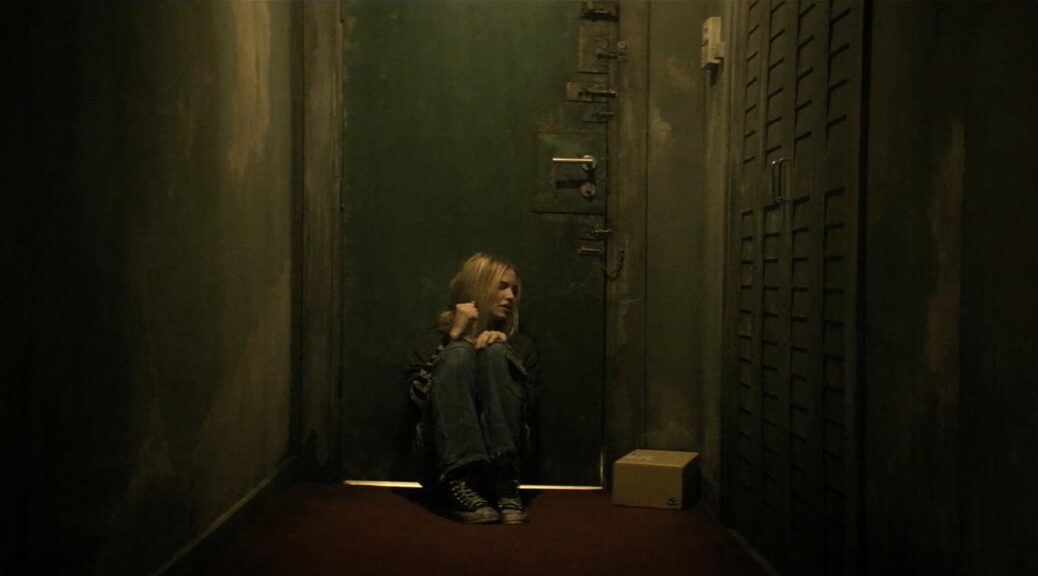
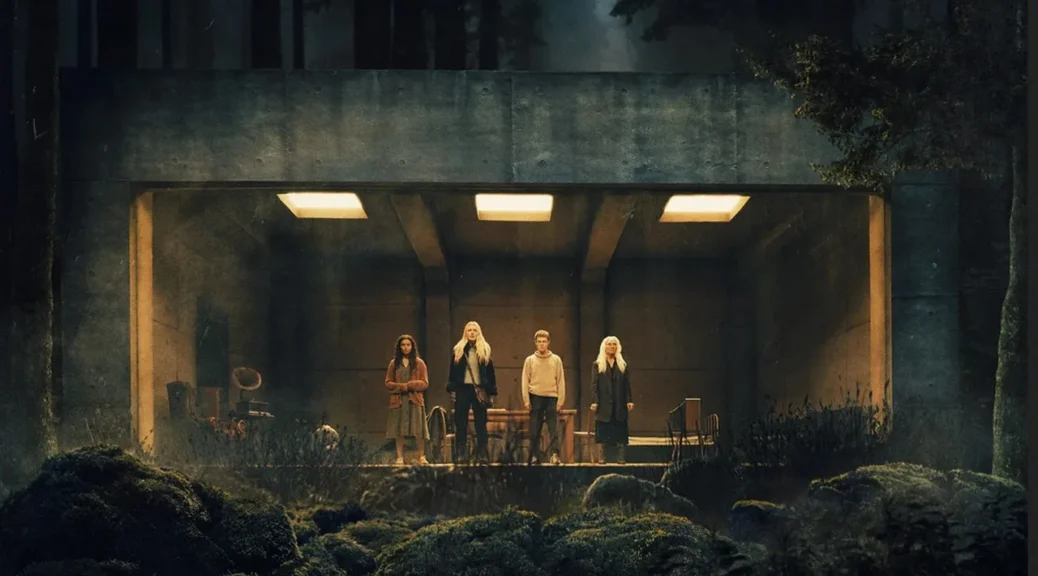
The First Omen

by Hope Madden

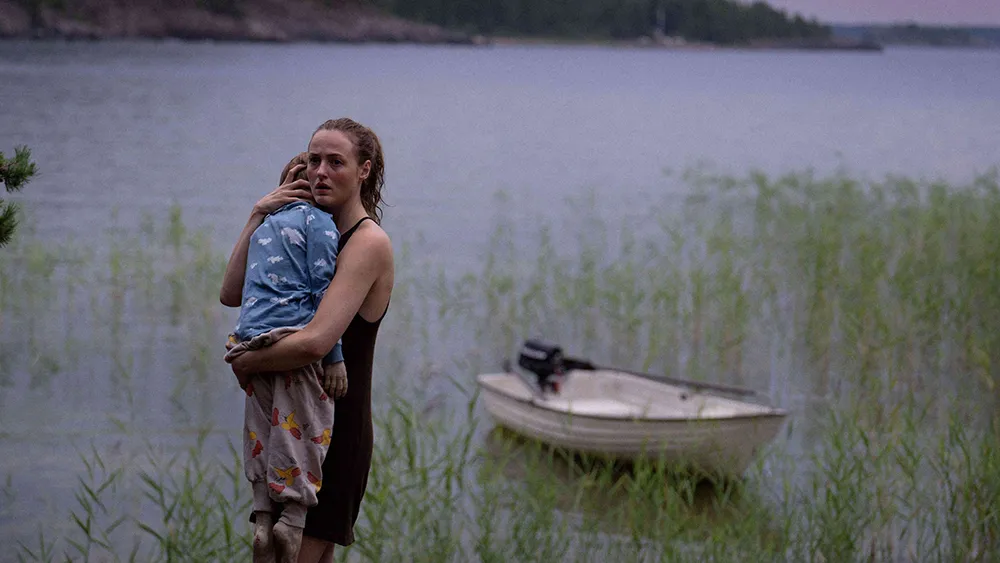
Just two short weeks ago, producer/star Sydney Sweeney’s Immaculate turned the threadbare “innocent nun bringing about the apocalypse” horror (it’s actually an incredibly common trope) into a potent and startling instrument of female rage.

Thanks, by the way.

But if all that remarkable sacrilege was a little too much for you, if you were looking for the exact same movie—just maybe not so hard on the patriarchy—can I interest you in The First Omen?

Arkasha Stevenson’s hands were a bit tied, of course, this being a direct prequel to Richard Donner’s 1976 classic. Donner’s film has already spawned three sequels and a remake, and now a reboot.

A lot has happened since 1976 that makes a “trust the priest” narrative tough to swallow. Stevenson, working from a script she co-wrote with Tim Smith and Keith Thomas, digs into the sketchy side of Catholicism hinted at back in ’76. You know, the burned convent. The shady hospital baby switch. The jackal.    

And yet, for all the Omen specificity Stevenson sews into her antichrist apocalypse tapestry, the movie still feels for all the world like a neutered Immaculate.

Margaret (Nell Tiger Free) is an American who grew up in Catholic orphanages and has come to an Italian convent to take her vows and become a nun. There’s a hospital wing at the convent. Margaret quickly decides things are unseemly but she’s powerless.

Why yes, that is the exact set up as Immaculate. There’s also a saucy best friend nun who doesn’t seem cut out for the veil, and of course, the involuntary vessel of the antichrist.

How do the films differentiate themselves? Well, Immaculate is not part of a decades-old franchise. The First Omen has a pretty great club scene. Other than that, they are essentially the same film. One just hits a lot harder.

Back in 2022, Daniel Stamm’s Prey for the Devil tried to breathe a little feminism into convent  horror. It wasn’t a great movie, but it was a nice try. Just two years later, a little feminism feels like a pulled punch.

Sleeping with the Enemy

Femme

by Matt Weiner

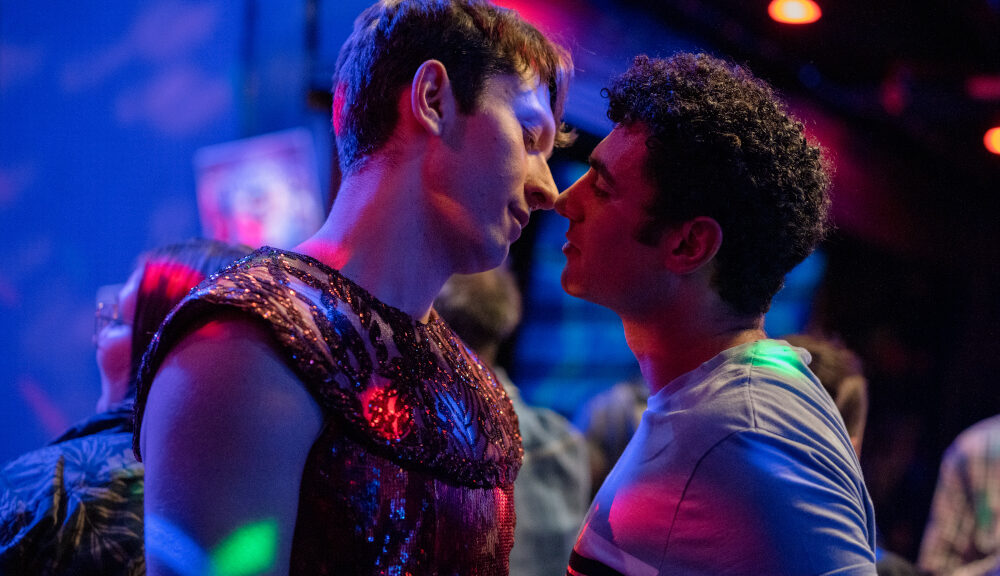
“Revenge thriller with a twist” doesn’t do justice to Femme, the tight feature debut from writers and directors Sam H. Freeman and Ng Choon Ping.

Based on their 2021 short film, Femme kicks off with a brutal and unflinching gay-bashing when Jules (Nathan Stewart-Jarrett) stands up for himself after being mocked for his drag attire by Preston (George MacKay) and his mates.

The attack leaves Jules traumatized for months. After a chance sighting of Preston in a bathhouse, Jules realizes that his attacker is deeply closeted—and the idea for an intricate revenge plot energizes Jules and gives him a new purpose.

The plan is to film revenge porn and out Preston, ruining his life in a social circle with little tolerance for homosexuality. To achieve this plan, of course, Jules has to actually record the revenge porn, which kicks off a high-wire secret relationship between the two as they fall in something resembling love despite the glut of secrets each man is hiding.

Freeman and Ping breathe fresh life into the self-loathing homophobe trope. The sexy (and seamy) sides of London nightlife elevate Femme into a taut neo-noir thriller. As Jules develops complicated feelings for Preston, his plan for revenge feels much closer to Hitchcock than Forster.

The movie also moves at a rapid pace, almost to a fault. It’s a sparse plot, which puts the full weight of the challenging emotional interplay on MacKay and Stewart-Jarrett. The two leads are both exceptional, and pull off their thorny affair with empathy on both sides. This is no small feat for MacKay especially, whose Preston starts the movie full of hate and nearly killing his soon-to-be lover.

MacKay humanizes Preston without letting go of a barely contained menace that could erupt at any moment. It’s clear that Jules is playing a dangerous game. And one that is unlikely to have any winners.

The Final Curtain

Ryuichi Sakamoto: Opus

by George Wolf

There’s that pivotal scene in Walk the Line, where a young Johnny Cash is failing his audition with Sun Records. Owner Sam Phillips is growing impatient, and finally tells Cash to play one song as if he were dying and wanted to tell God what he felt about his time on Earth.

For 103 glorious minutes in Opus, a dying Ryuichi Sakamoto delivers just such an elegy, a soul-stirring set of piano compositions that often seem to be speaking directly to the heavens.

Sakamoto, the Japanese composer and actor who earned Grammys, BAFTAs, Golden Globes, an Oscar and multiple other awards in his legendary career, was nearing the end of his long battle with cancer when he agreed to one final performance.

Director Neo Sora – Sakamoto’s son – presents his father’s farewell with minimalistic virtuosity. There is only Sakamoto, his piano, and his wonderful talent, as a cascade of musical beauty fills in all the colors needed against Sora’s rich black-and-white pallet.

Sora’s camera is often static, as if to respect and savor the moment. But when it does move it is with grace and purpose, to slowly focus on the master’s hands, his fulfilled facial expressions or the repeated bows of his head.

Sakamoto chooses original works from across his career, performing each with a depth of feeling that is transfixing and touching, reaching an almost ethereal level of expression. It is an experience that can be deeply moving for an audience, but it’s also one that requires a theater setting and uninterrupted silence to completely let it in.

Give Ryuichi Sakamoto: Opus your time and complete attention, and you will be rewarded. This is a man talking to God through his piano.

Just let your soul be enriched

Crooked Line

Glitter & Doom

by Rachel Willis

Being unfamiliar with all but one Indigo Girls song, I was still impressed with how well their music is worked into the romantic musical, Glitter & Doom.

Director Tom Gustafson weaves the tunes into the budding summer romance of Doom (Alan Cammish), an aspiring musician, and Glitter (Alex Diaz), a hopeful circus performer. These two are first drawn to one another while Glitter is filming an audition tape for clown school in Paris.

When the two meet again, the meet cute duet is a bit jarring at first, until we learn that our duo can sing. However, the scene is stolen by the choreography, which is a fun, entertaining highlight in what would otherwise be an underwhelming moment of connection.

There honestly isn’t much to this story, though. The characters seem made to encourage each other’s ambitions. And though they’re presented as opposites, their winning duets don’t help paint them as people with diametrically opposed life perspectives.

Sure, it’s hard not to notice Doom’s outlook matches his name. This is most obvious when he interacts with his mother (Missi Pyle). Glitter, on the other hand, radiates positivity, except when dealing with his loving but unsupportive mother (Ming-Na Wen, who has her own lovely singing voice). In fact, the mother-son relationships are the most interesting parts of the film—not exactly what you want when the focus of your story is a romance.

But when your two leads have the kind of chemistry that Cammish and Diaz have, it’s hard not to be pulled into their tale. Their ups aren’t very high, nor their lows very low, but it’s hard not to root for them – both as a couple, and as they pursue their dreams.

Not much really sets this movie apart except for the music, and each scene seems to drive you toward the next musical number. While it’s not entirely unappealing, it is a bit underwhelming.

Music Maker, Dreamer of Dreams

Remembering Gene Wilder

by Hope Madden

Maybe the smartest choice director Ron Frank made when putting together his affectionate documentary Remembering Gene Wilder was to pull audio from Wilder’s own autobiography. Sure, we hear from many who loved the comic actor—Mel Brooks, Carol Kane, Alan Alda among them. But everything they tell you about his authenticity, humility, humanity, and perfect comic timing you can hear for yourself as Wilder spills the beans on his life.

You remember the hair, of course. And probably those eyes. But that voice proves, in case you have forgotten, that there was something deeply, bubblingly, undeniably delightful about Gene Wilder. And he could act.

Frank, working with writer Glenn Kirschbaum, hand picks some of Wilder’s best scenes. Not necessarily the most iconic, but the most confounding, the scenes where he made a creative decision no one else would have considered, creating an indelible moment on screen.

This is a film that loves Gene Wilder, and it makes a pretty good case for that.

We hear about is childhood, about Willy Wonka, Young Frankenstein, Richard Pryor, Gilda. Each story showcases the gentle, charming creature that was Gene Wilder. Though Frank doesn’t break any new ground cinematically—talking head interviews flank home movies, film clips surround family photos—the mellow approach belies a deep emotional connection.

Remembering Gene Wilder is not just a greatest hits. Although the film does not delve into any of the actor/director’s box office or critical missteps—nor does it devote a single moment to anything that would make Wilder out to be anything other than a treasure—it acknowledges low times. Even those just make you want to hug him.

Not every film or character of Wilder’s has aged well, but his good nature and talent shine none the dimmer. Remembering Gene Wilder certainly does not unearth any ugliness, bares no startling truths. It’s clearly the product of a filmmaker who truly loves his subject.

He doesn’t seem wrong, though.  

You’ve Got Hate Mail

Wicked Little Letters

by George Wolf

Long before you could hide behind a keyboard and avatar, a small English village was scandalized by some expert-level anonymous trolling. Wicked Little Letters tells us that story is “more true than you’d think,” and rolls out a stellar ensemble to elevate the tale at nearly every turn.

It is the 1920s in Littlehampton, England, where unmarried Edith Swan (Oscar winner Olivia Colman) still lives with her parents (Timothy Spall, Gemma Jones). Edith is known to be a dutiful daughter and devout Christian, so town tongues are wagging when she begins to receive hateful and profanity-laced “poison pen” letters in the mail.

Who could be behind such unwarranted vitriol?

Whaddya bet it’s that filthy Irishwoman Rose Gooding (Oscar nominee Jessie Buckley)?

Rose is frequently loud, drunk and vulgar. Plus, she’s a war widow (or is she?) with a young daughter (Alisha Weir from the upcoming Abigail), a “reputation” and a live-in boyfriend (Malachi Kirby).

Throw in the recent falling-out with Edith, and that’s enough for the town Constables (Hugh Skinner, Paul Chahidi), who arrest Rose and quickly schedule a show trial.

But “Woman Police Officer” Moss (Anjana Vasan) isn’t convinced, and she risks her position by continuing to investigate the letters on her own.

Director Thea Sharrock (Me Before You, The One and Only Ivan) and first-time screenwriter Jonny Sweet don’t craft a “whodunnit” as much as they do a “whoproveit” and a “whydunnit.” The real culprit is revealed fairly early on, and the film tries to balance some British wit atop heavier themes of repression, equality, and the sanctimonious crowd who are all preach no practice.

It’s historically interesting and well-meaning enough, but it reveals Sweet’s TV background through a light and obvious romp that’s rescued by heavyweight talent.

Colman, Buckley and Spall are all customarily splendid, each making up for the lack of nuance in their characters with some livid-in conviction and natural chemistry. Plus, Vasan stands out in the winning supporting group as the overlooked and underestimated W.P.O. Moss.

So while it’s lacking in the bite needed to leave a lasting impression, think of Wicked Little Letters as an extended cat video, one just amusing enough to take your mind off of all those nasty comments from the keyboard warriors.

Two Minute Warning

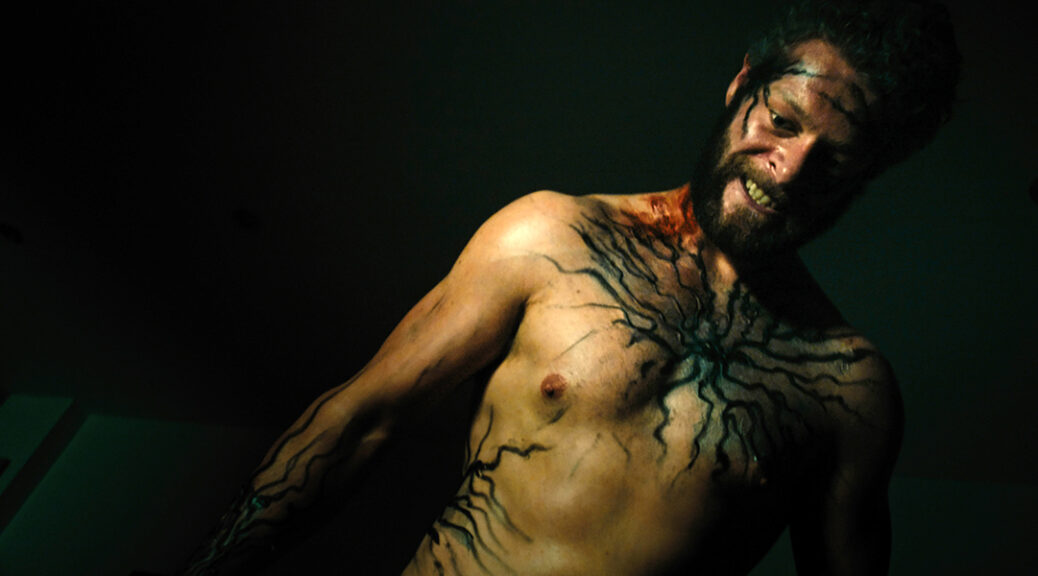
Baghead

by Hope Madden

Back in 2013’s Texas Chainsaw, a young woman receives word that she’s inherited a building from a mysterious relative. She ignores the notes explaining her duties until it’s too late and she’s already stumbled into what lives in her basement.

Laberto Corredor’s Baghead—an expansion of his 2017 short of the same name—treads similar real estate. Iris (Freya Allan) gets word that her estranged dad (Peter Mullan) has passed and she’s inherited his dilapidated Berlin pub. Currently penniless, jobless and homeless in England, Iris signs the deed and takes over the old place.

She doesn’t watch the video explaining the current basement tenant until it’s too late. But it’s not Leatherface down in Iris’s cellar. It’s Baghead, a centuries old witch condemned to freakshow status. For a fee, she’ll swallow a relic of a deceased loved one and turn into said loved one for two minutes.

But—as was the case with last year’s similarly themed Talk to Me—the conversation comes with more baggage than you might expect.

There are some exceptional shots in this film and solid performances. The small ensemble boasts memorable support work from Mullan, Ned Dennehy and Svenja Jung, as well as strong lead performances.

Ruby Barker elevates the thankless best friend role, while Jeremy Irvine smartly inhabits the character of a grieving husband.

Iris makes a lot of inexcusably dumb choices, but because Allan crafts her as angry and short sighted, this feels less like a misstep than it could have.

The plot—co-written by Christina Pamies, Bryce McGuire and the short film’s writer, Lorcan Reilly—becomes needlessly complicated. Worse, Corredor undermines the excellent production value of his locations with gimmicky and weak VFX.

Irvine and Allan nearly save the film, though. The result is a modestly entertaining mixed bag.

The Sexual Tension Is Palpable

Godzilla x Kong: The New Empire

by Hope Madden

Remember how good Godzilla Minus One was? Did you see the black and white version? Glorious!

It’s almost too bad that Adam Wingard’s Godzilla x Kong: The New Empire is really competing with the memory of that 2023 Oscar winner rather than his own moderately entertaining 2021 hit Godzilla vs. Kong. Because as a straight up sequel, G x K feels a little streamlined, a bit punchy. Dumb but moderately fun.

Writer Terry Rossio returns, teaming with longtime Wingard collaborator Simon Barrett, as well as Jeremy Slater. They prune most of the Godzilla storyline to focus on Kong and his search for family. That brings Dr. Andrews (Rebecca Hall) and young Jia (Kaylee Hottle) back into focus.

When the Doc needs help understanding Jia’s connection to energy spikes in Hollow Earth (Kong lives there now, remember?), she turns to podcast conspiracy spewster/world saver Bernie Hayes (Brian Tyree Henry). Together with a veterinarian who’s in touch with his emotions and really bad early 80s rock (Dan Stevens), Dr. Andrews, Jia and Bernie head to Hollow Earth to lend Kong a hand.

There’s a lot of Planet of the Apes going on in this movie. Kaiju action takes a back seat and, though brightly colored and relatively fun, it’s never central to the film.  But Wingard can create a fake looking but fun creature fight and Hall gets to explain what’s going on frequently to her dumb company, which makes it easy for every the most sugar-hyped family members to follow the story.

What she’s doing in this franchise continues to be a head scratcher, but she can certainly act, which never hurt a movie. Henry and Stevens bring levity—or try. Both are also inarguable talents and they share a sweetly enjoyable onscreen chemistry, but nothing happening in G x K is as much fun as Wingard thinks it is.

Kong: Skull Island was fun. That was a popcorn muncher for the ages: the soundtrack, the shot choices, the monster carnage, the humor and pathos. And don’t even compare it to Minus One, that just wouldn’t be fair. But for a greenscreenapalooza of dumb monster action, Godzilla x Kong: The New Empire is adequate.

Play Me a Memory?

They Shot the Piano Player

by Hope Madden

An unusual hybrid of documentary and narrative, music and animation, They Shot the Piano Player pulls you into a political mystery.

Jeff Goldblum voices the character of a New Yorker journalist writing a book about bossa nova, or so he thinks. He travels to Brazil to dig into the history of this groundbreaking musical movement and finds himself drawn to the story of one particular pianist.

Inside the chaos of color, vibrant animation and remarkable soundtrack, directors Javier Mariscal and Fernando Trueba unveil a particularly turbulent moment in history. The discovery and quick popularity of Brazilian bossa nova—literally the “new wave” of samba and jazz fusion—ran headlong into a continent-wide collapse into violent, oppressive military regimes.

Goldblum is one of a handful of actors whose fictional storyline collides with archival interviews with some of the musical movement’s greats. Little by little, the investigation sidesteps music to focus on the 1976 disappearance of Francisco Tenório Júnior.

The filmmakers bridge audio commentary concerning the disappearance, the desperate search, and the inevitable truth with Goldblum’s fictionalized storyline. The result, much elevated by Goldblum’s characteristically offbeat performance, generally works. The filmmakers attempt to do more than uncover one of hundreds of thousands of stories of innocent lives lost to Central and South American despots beginning in the 1960s.

Mariscal and Trueba want you to know Tenório, to see all that was lost when he was disappeared: father, friend, artist. And with him, the entire beautiful new wave of music and art that had been blooming across the continent.

Unruly and fresh as the music it dances to, They Shot the Piano Player sometimes loses its train of thought. The outright documentary content is probably compelling enough—even if told via animation—to omit the fictionalized sleuthing. But the way Mariscal and Trueba couch the heartbreaking loss of one life within the larger artistic loss of an entire art form is melancholy magic.

The Deadest of Pans

Lousy Carter

by George Wolf

“Lousy” Carter (a terrific David Krumholtz) is a college professor, currently teaching a grad level seminar on The Great Gatsby.

One book? Even his “best friend” and colleague Kaminsky (Martin Starr) is nonplussed.

“Maybe you should teach a pamphlet,” he says with the deadest of pans, underscoring the entire tone of writer/director Bob Byington’s sardonic slice of life and death.

Carter got his titular nickname from being bad at golf, but he’s not exactly ace-ing this life thing, either. Lousy’s students don’t like him, his ex (Olivia Thirlby) calls him a “baby man,” and his sister (Trieste Kelly Dunn) would rather not call him at all. His fellow teachers are embarrassed for him, his therapist (Stephen Root) mocks him, he’s thousands in debt, and he’s sleeping with Kaminsky’s wife (Jocelyn DeBoer).

Great. Anything else?

He just got some very bad news at the doctor’s office.

But hey, he does have a fan in Dick Anthony (Macon Blair), a weird guy who loved the animated film Lousy made “back in the aughts,” and who might be giving off stalker vibes.

If you’re familiar with Byington’s work (Somebody Up There Likes Me, RSO), you’ll be ready for how dryly Byington attacks this clash of narcissism against the merciless march of time. And though you can probably count on one hand the number of times any character smiles, that doesn’t mean there aren’t laughs to be found here.

The biggest may be the “based on true events” tag that Byington hangs up at the start, right before he lets Krumholtz loose on this journey of indignation. It’s not so much an arc as it is a sinking ship, but Krumholtz excels in finding sympathetic moments that draw us in.

And even if this bark has too much bite for you, it’s hard not to respect Byington’s masterly command of tone. His commitment to that tone is unwavering, with Krumholtz leading an unmerry band of misanthropes through a series of events that are never at a loss for darkly funny cynicism.

I mean they’re just lousy with it.