Category Archives: New In Theaters

Reviews of what’s out now

Songbird

Annette

by George Wolf

Annette wraps the beautifully enigmatic visions of director Leos Carax around the idiosyncratic pop musings of Ron and Russell Mael (aka Sparks) for a what-did-I-just-watch spectacle with undeniable will.

Anyone who’s seen Holy Motors knows Carax is a puzzler. And while Edgar Wright’s recent doc The Sparks Brothers may have nudged the Mael boys toward the mainstream, the songs and the story they bring to this film are a mighty slippery mix.

Think A Star Is Born with Sondheim sensibilities, Shakespearean tragedies, and the kitsch of a Springfield Community Theatre production from The Simpsons.

Magic, right? Well, sometimes.

Adam Driver stars as Henry, a standup comic provocateur whose new show “The Ape of God” has him boasting that he only does comedy so he “can tell the truth without getting killed.”

Marion Cotillard is Ann, a famous opera star who “saves” her audience by dying onstage every night.

As detailed by headlines from the Showbizz Network, the two fall passionately in love, get married and have a daughter named Annette, who comes into the world with an unexpected gift.

In fact, you’ll find most everything about Annette to be a surprise. And that’s all I’m going to say about that.

The actors sing live and frequently break that fourth wall, which brings new intimacy to some very intimate moments and quickly immerses us in the grandness of Carax’s vision. Armed with sumptuous cinematography from Caroline Champetier, Carax rolls out a succession of gorgeously hypnotic set pieces.

Be ready, though, for the dreamlike tone to often run headlong into campy silliness that leaves many metaphorical elements searching for a resonate metaphor.

Just when Annette is clear about its musings on the relationship between artist and audience, or about fame, or self-loathing, or fragile masculinity or creative boundaries, it goes all Cop Rock on us.

But man, it’s transfixing to look at, and the Driver/Cotillard pairing is just as powerful as you’d expect. Just don’t expect anything else from Annette, and what you find won’t soon be forgotten.

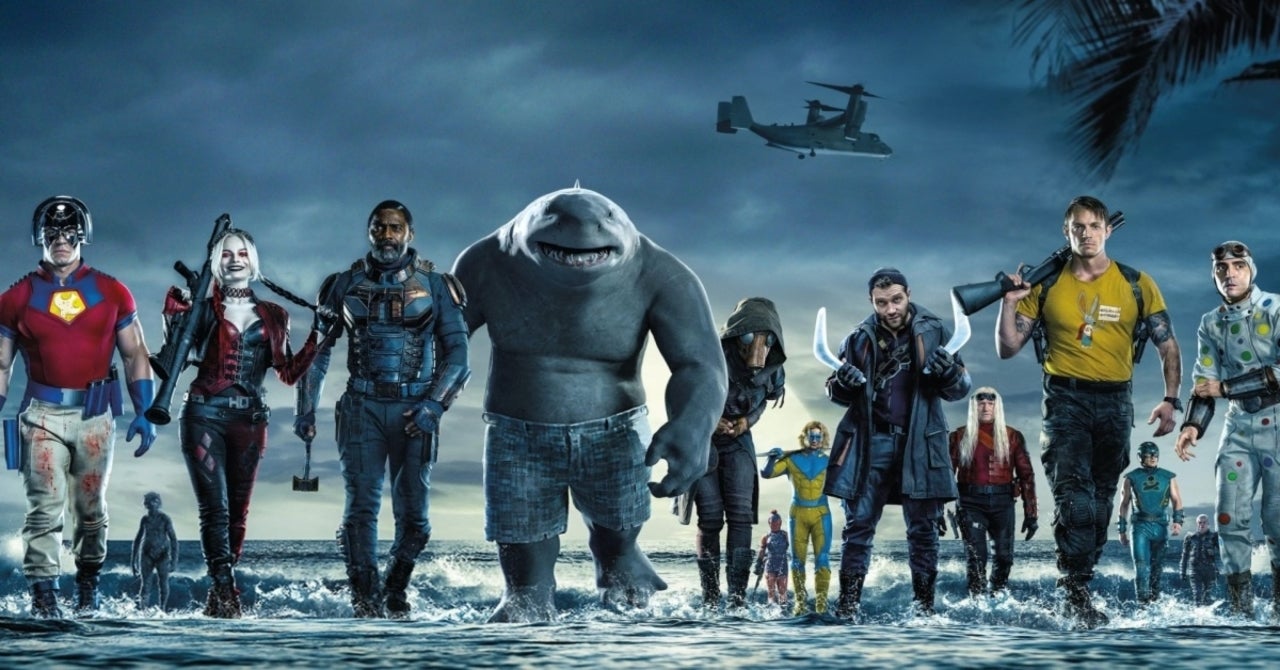
Squad Goals

The Suicide Squad

by Hope Madden

What, did you think Amanda Waller (Viola Davis, glorious goddess that you know she is) only did that supervillain black ops thing that one time? No. Don’t fix what ain’t broke—she has access to expendable bad guys and lots of very sticky situations to deal with.

Now is just the time for another Suicide Squad.

Actually, writer/director James Gunn’s clear purpose is to fix what David Ayer broke last time. And what did he break? An exceptional idea that rid us of those tedious superheroes and gave us an adventure strewn with the far more colorful characters: the bad guys.

How did he fix it? Step 1: an R rating. He’s not kidding, either. If you only know Gunn from his family-friendly Guardians of the Galaxy adventures, then you may not expect quite this much carnage. If, however, you know him from his early Troma work or his sublime creature feature Slither, then you might have a sense of what’s in store.

Also fixed—the cast! Bring back the good ones (Ms. Davis, Margot Robbie), add exceptional new faces (Idris Elba, John Cena), pepper in Gunn-esque cameos (Michael Rooker Nathan Fillion, Sean Gunn, Lloyd Kaufman), and voila! Joel Kinnaman’s back, too, and he has to be elated that his character gets to have a personality this time around.

The very James Gunn soundtrack delivers from the opening seconds through the closing credits and brings with it a wrong-headed sense of fun that pervades the entire effort. Gunn’s writing is gawdy, bedazzled, viscera-spattered glee, but there’s a darkness along with it that suggests he understands better than most the ugliness of these characters and their assignment.

Robbie’s Harley Quinn steals scenes, as is her way. Cena’s true talent shines brightest when he’s put in the position to be the butt of jokes, and as such, his Peacemaker gets off a lot of great lines. Elba is the solid skeleton to hang all this nuttiness on.

Not everything works, though. Stallone’s shark man feels like little more than this film’s version of Groot, only with less purpose. There’s a rat subplot that goes nowhere, and the film is as leaden with daddy issues as every comic book movie in history.

But the way Gunn handles the mommy issues that plague Polka Dot Man (David Dastmalchian, unnerving as ever) is nothing less than inspired.

Is The Suicide Squad a cinematic masterpiece? It is not. It is, however, a bloody, irreverent good time.

Growing Pains

John and the Hole

by Hope Madden

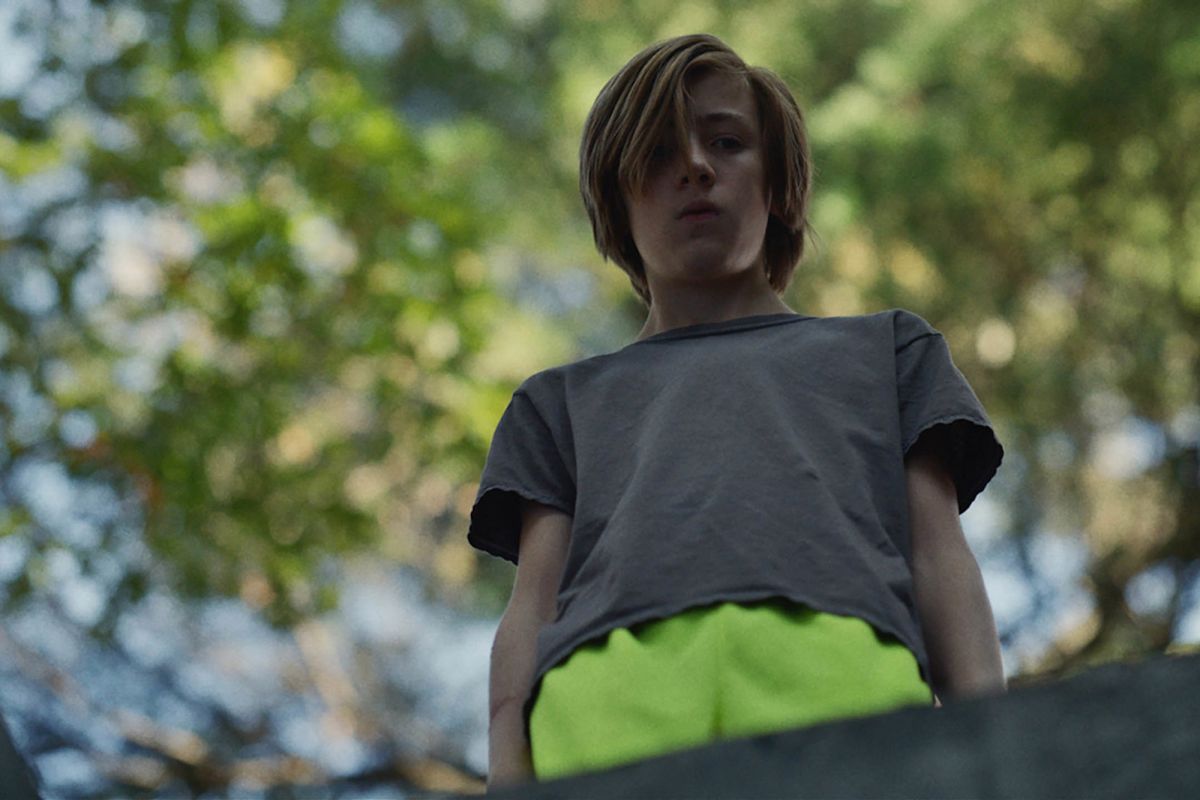
Adolescence can be tough. It’s a confusing time, and the fantasy of skipping those awkward years entirely and just being an adult can be heady stuff—especially to John (an unnerving Charlie Shotwell).

When the 13-year-old John stumbles across a deep, unfinished bunker in the woods not far from home, he drugs his family then deposits it, leaving him king of the castle, so to speak.

And leaving his family none the wiser in a hole.

Director and visual artist Pascual Sisto’s feature debut John and the Hole spends a week or so with John as he devises and executes this plan to be the grown-up for a while. Sisto’s working from a script by Nicolás Giacobone, a writer known for dreamlike beauty and cruelty (Birdman, The Revenant, Biutiful).

Dreamlike beauty and cruelty are absolutely in Sisto’s wheelhouse, and he adds Lanthimos-esque absurdism to the effort that makes the film almost funny as well as horrific.

Shotwell’s performance keeps you on edge, unsure of what young John might try next. The performance never veers into easy psychosis or villainy, although it’s undoubtedly the responses of his parents and sister that provoke the most intrigue.

Played with surprising empathy and compassion by Jennifer Ehle, Michael C. Hall and Taissa Farmiga, John’s mother, father and older sister (respectively) represent a very human, genuinely loving and protective unit.

Even in the hole.

It’s a fascinating dynamic, one that defies expectation and gives the film a fable quality that suits it. Some details will certainly frustrate viewers, but the overall impact of Sisto’s measured coming-of-age nightmare is chilling.

Sisto’s tale never tries to explain John’s behavior, and Shotwell’s performance certainly doesn’t shed much light. The film keeps the audience at arm’s length from the first shot through the dining room window to the last shot back at that dinner table.

There’s a chilly beauty to this ambiguity. Between that and an entire ensemble of spot-on performances, you can almost forgive the specificity and resonance the film gives up in favor of this vagueness.

John and the Hole is a head-scratcher and a fascinating addition to the troubled adolescent subgenre.

Eye in the Sky

Whirlybird

by Rachel Willis

If you were paying attention to the news in the early 1990s, you’ve likely seen the aerial footage from Bob (now Zoey) Tur and Marika Gerrard-Tur that came out of Los Angeles. Even now, some of the captured footage is embedded within the American culture.

Collating hundreds of hours of footage, director Matt Yoka has assembled a fascinating and poignant documentary about the quest to be first on the scene of breaking news and about the heartbreak of one family behind the camera.

Zoey Tur talks in-depth about her experiences behind the camera in LA, starting in the late 1970s and running through the late ’90s. Her enthusiasm for the chase – whether following police cruisers in the family car (with wife and children in tow), or hovering over the city in her helicopter – is infectious. It’s not hard to see why she pursued the stories with such zeal.

The other half of the duo, Marika, was instantly caught up in the adrenaline rush after her first date with Tur. She describes Tur as being unlike anyone she had known before – a thrill seeker who sucked her into a world of breaking news.

Yoka is not interested in mining the ethical grey area that surrounded the early days of breaking news. Instead, he is more interested in looking at what happens to the people behind the camera – how are they affected by the crime and violence they capture, sometimes as it’s happening?

One of Tur’s most infamous captures was the beating of Reginald Denny. Broadcast on live television (Tur behind the camera in her helicopter), Denny was dragged from his truck and beaten by several men during the LA riots that followed the acquittal of the four officers responsible for the attack on Rodney King.

Tur cannot help but pass judgment on the violence recorded from above, and this is something Yoka focuses on: the influence, not only of the images captured, but the opinions from those recording the footage, on society.

As we watch the seemingly increasing violence in LA, we also watch it reflected in Tur. Violence and anger well up within her, and she lashes out at her family.

Yoka’s sensitive examination of a family and a culture that hinges on the precipice of breaking news is well worth making time for.

Mondon’t

Mondo Hollywoodland

by Christie Robb

Janek Ambros’s Mondo Hollywoodland is a play off a 1960s documentary called Mondo Hollywood by Robert Carl Cohen. The original aimed to depict the more extreme elements of life behind the scenes in Hollywood and included appearances by hippies, strippers, psychedelic pioneer and Tim Leary’s buddy Ram Dass, and both victims and perpetrators of the Manson Family killings.

Ambros’s Hollwoodland is part mockumentary part narrative story narrated by a dude from the 5th dimension who visits a magic mushroom dealer named Boyle to understand modern Hollywood and explore the concept of “Mondo.” (Which I guess, like pornography, is something you’ll know when you see.)

Boyle’s life intersects with three archetypes of Hollywood life: the Titans, the Weirdos, and the Dreamers. Each of the archetypes is personified by a few characters and gets its own section before they come together in a somewhat bewildering act four.

The Titans are represented by paranoid, cocaine-fueled, egomaniacal producers and starlets who are catered to by various fawning assistants. The Weirdos are a hodgepodge of political activists, New Age seekers, and untalented artists. The Dreamers are a group of folks who desire financial success or fame, but are unaware that they lack the business acumen or talent necessary to realize their vision.

There’s no nuance to these characterizations. They are the broadest sketches of common tropes. If Ambros was going for a Christopher Guest-style mocumentary or drug-addled comedy, he forgot to make it funny. If there was supposed to be a message to walk away with, it was lost along the way. There certainly wasn’t much new to learn about Hollywood. And if there was any Mondo contained therein, I didn’t see it.

The nods to the original Mondo documentary from the 60s (trippy music, colorful filter effects, swingy camera movements, and the title) seem derivative, if not downright exploitative of a cult classic. The groovy nostalgia vibe doesn’t reflect life in the 2020s and the focus on southern California stereotypes doesn’t add anything that Saturday Night Live couldn’t provide.

Choosing Wisely

Nine Days

by George Wolf

Will (Winston Duke) is a selector. Inside a modest home situated in the middle of nowhere and surrounded by nothing but flatland, he monitors the progress of his past selections while he carefully prepares to fill a new vacancy.

At the end of nine days, Will must choose wisely. His one selection among a new group of unborn souls will move on the “real world” and experience human life. The rest will not.

In his feature debut, writer/director Edson Oda presents an impressively assured vision of transfixing beauty and gentle poignancy. While the current run on “appreciate every day” films is hardly surprising in today’s climate, Oda brings an organic originality to the mantra of seeing the world through someone else’s eyes.

Will does exactly that, via the television monitors (and VHS tapes) that allow him to view the world as his past selections are living it. The monitors also play a role in the selection process, as Will gives his candidates (including Zazie Beetz, Tony Hale and Bill Skarsgård) daily assignments to write down their reactions to the world views they see.

Duke (Us, Black Panther) is phenomenal as a “cog in the wheel” who becomes caught between the clinical completion of his duties and the emotional weight of his responsibilities.

Unlike many in this otherworld – including his assistant Kyo (Benedict Wong) – Will actually spent time living in the real one. And while he won’t discuss details of his life experience, his charming reliance on VCRs and Polaroid cameras gives us a clue about the timeframe. Duke brings touching authenticity to the barrier Will has put up around his past, while also letting us glimpse how Will is haunted by the fate of a past selection, and by the chance he may have chosen poorly.

Oda’s writing and direction exhibit solid craftsmanship. His framing and use of light often work wonders together, conjuring an existential outpost full of strangely comfortable trappings.

The screenplay is finely tuned for each distinct applicant in the process, allowing a standout Beetz and the terrific ensemble to find intimate resonance in the alternately joyous and heartbreaking moments of a life.

Yes, Nine Days often has a lilting air of pretension, but with such a philosophical anchor, it would be more surprising if it did not. Give Oda credit for being unafraid of the moment. He’s taking some big swings at mighty heavy concepts here, with an originality of voice and attention to craft that is welcome any day.

Baby Blues

Fully Realized Humans

by Brandon Thomas

I don’t have children, but that doesn’t mean I don’t understand the hardships that come with parenthood. You’re no longer living just for yourself. There’s now this little person who relies on you for their survival, and that has to be a daunting feeling. It gives me existential dread to even think about. Fully Realized Humans provides a charming, funny and honest look at the freakouts that come with being soon-to-be parents 

Jackie (Jess Wiexler, Teeth) and Elliot (Joshua Leonard, The Blair Witch Project) are weeks away from becoming first-time parents. After their baby shower nearly goes off the rails with mentions of crib death and vaginal ripping, the two are faced with the reality that their lives are about to get much more complex and scary. Insecurities and a lot of “What ifs…” bubble to the surface as the couple tries to navigate feelings of inadequacy before their child enters the world. 

The success or failure of Fully Realized Humans hinges on the relationship between Jackie and Elliot. If the chemistry between those two doesn’t work then the movie is toast. Luckily, Wiexler and Leonard have incredible chemistry, making them one of the most charming on-screen couples in recent memory. The two actors bounce off one another naturally. It’s the kind of work that helps the audience settle in and get comfortable with these people from the get-go.

A lot of the fun of Fully Realized Humans is how Jackie and Elliot’s insecurities lead them into some real out-of-left-field situations. There’s an extended sequence that begins with the couple experimenting in the bedroom, and ends with Elliot getting punched for the first time to “reclaim” his manhood. The natural progression of these comedic beats speaks to the cleverness of Leonard and Wiexler’s screenplay.

Leonard, who directed the film and co-wrote it with Wiexler, wisely leaves melodrama out of the equation. At its core, Fully Realized Humans is a silly comedy, yes, but that doesn’t mean it also can’t comment on serious topics and emotions. There’s a deftness to the tone management that lets the film successfully walk a tightrope.

There aren’t any major surprises in Fully Realized Humans, and to be honest, it’s a topic a lot of movies have already covered. However, what many of those other movies didn’t do was craft such enjoyable characters. Jackie and Elliot might not end up being the world’s perfect parents, but these are two characters I’d gladly spend another 90 minutes with.

Pants and Skippy

Jungle Cruise

by George Wolf

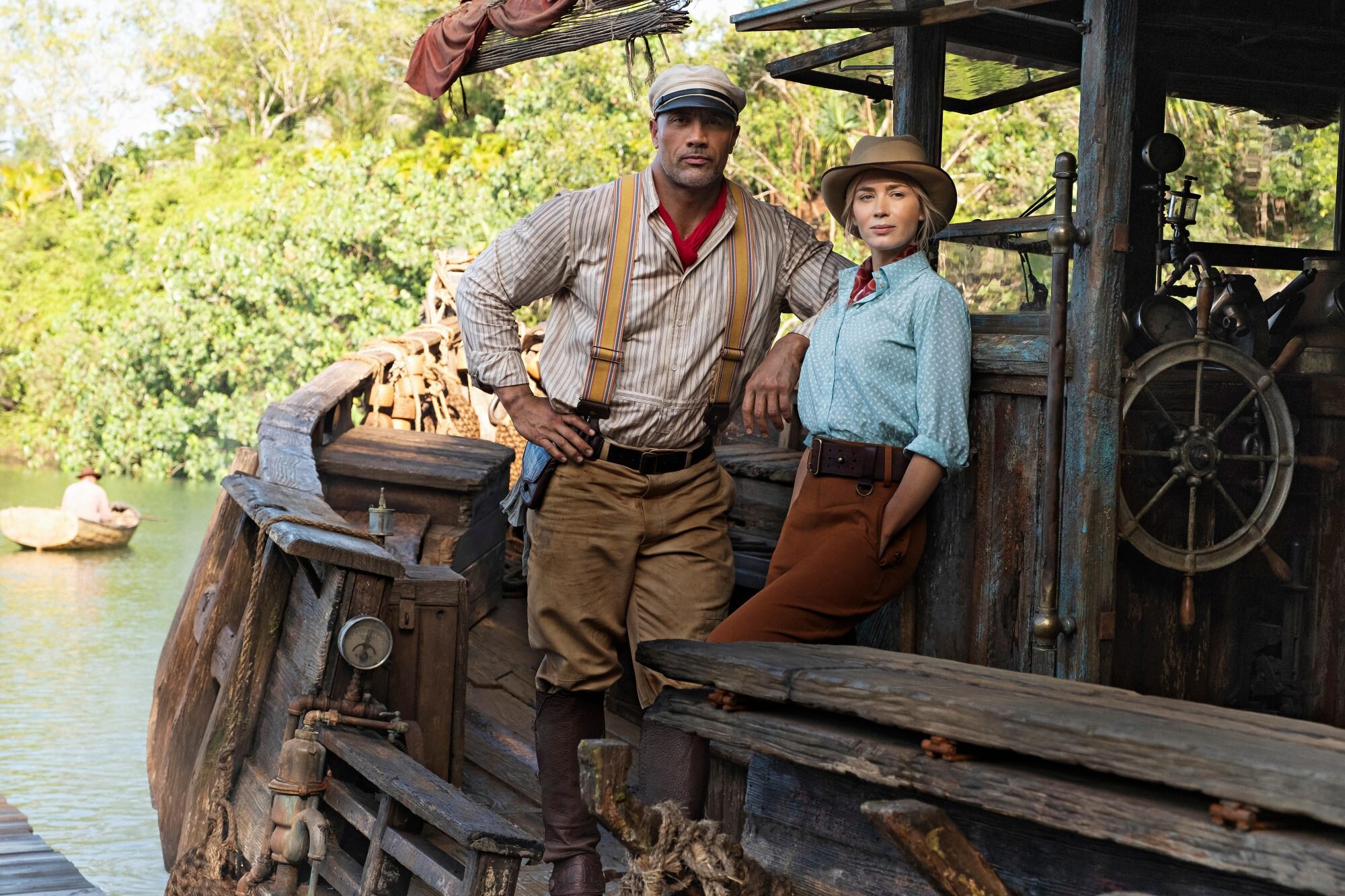
Dr. Lily Houghton (Emily Blunt) wears trousers in 1916 London, so she’s “pants.”

Frank Wolff (Dwayne Johnson) is the skipper Lily hires to guide her and her brother MacGregor (Jack Whitehall) into the Amazon jungle, she he’s “skippy.”

As Lily and Frank’s verbal sparring grows more and more flirtatious during the swashbuckling adventures of Jungle Cruise, the sheer charisma of the two leads succeeds in steering the film away from dull waters.

Director Jaume Collet-Serra fills Disney’s latest with plenty of wink-wink spirit from the original theme park ride, right down to the cornball jokes Frank insists on telling to his tour boat clients.

But Lily is no tourist. She’s a botanist in search of the Tears of the Moon, a legendary tree said to contain magical healing powers. The closer Frank gets them to the prize, the more dangers come out of the jungle. Not only does Kaiser Wilhelm’s son Joachim (Jesse Plemons) also want the magic flowers, but a 400-year-old undead conquistador (Edgar Ramirez) is seeking to break the curse that ties him to the jungle.

Yes, there’s much going on, but Collet-Serra keeps the CGI action sequences (some of which will remind you plenty of Pirates of the Caribbean) front and center on a journey that never loses the family adventure vibe.

Not that the five credited writers have forgotten about us grown-ups who took this actual Disney ride as kids. An extended bout of Blunt v Johnson innuendo becomes a frisky delight, while the subtle nods to marriage equality and the savagery of colonialism are fleeting but effective.

The film’s third act delivers a major surprise, which results in extended exposition and the first signs of treading water. But even at its most formulaic, there’s enough humor, heart and genuine movie star appeal here to make Jungle Cruise an excursion full of rollicking good fun.

Not Easy Being Green

The Green Knight

by Hope Madden

Lutes and mead, chainmail and sorcery—director David Lowery’s Camelot is just as rockin’ as ever in his trippy coming-of-age style The Green Knight.

Dev Patel stars as King Arthur’s nephew, Gawain. He’s a bit of a ne’er-do- well and it looks like he’s ne’er going to actually be knighted. But Christmas warms old Arthur’s heart and he asks the boy to take a seat of honor at the round table. When this menacing giant (think Groot, but sinister) drops in for a beheading game, Gawain offers to play so he can keep his uncle’s respect.

The story itself is more than 700 years old. Credit Lowery, who adapted the old ballad for the screen, with finding fresh intrigue in the old bones. He’s slippery with symbolism and draws wonderful performances from the ensemble.

Joel Edgerton is especially fun as The Lord, just one of many helpers and hindrances Gawain finds on his journey. Barry Keoghan is likewise wonderful playing a brash, angry scavenger. But Edgerton and Keoghan are always good. The real surprise here is Patel.

That’s not to say he’s unproven, just that his performances until now tend to rely heavily and falsely on an earnest streak. Gawain does not. Patel doesn’t shy away from or judge the character’s weakness or cowardice. Instead, he uses those very characteristics to make Gawain human.

It’s the kind of compassionate portrayal rarely depicted in an Arthurian fable, and it ensures that you care enough for the character to puzzle through his adventures with him. There’s sorcery afoot, and also psychedelic mushrooms, so who knows what’s really going on?

Here’s where Lowery really excels, though. His visual storytelling has always been his greatest strength as a director and this tale encourages his most fanciful and hypnotic visual style to date. The Green Knight is gorgeous. The color and framing are pure visual poetry. Together with this exceptional ensemble, Lowery’s created a magical realm where you believe anything could happen.

American Dad

Stillwater

by Hope Madden

A couple weeks back, Nicolas Cage played a man desperate to reclaim a loved one that was lost to him, a man who might stop at nothing to do just that. His film Pig hit every beat of a John Wick or Taken, subverting the genre trappings to create one of the most beautiful films of 2021.

Matt Damon has not lost his beloved bovine, but in Stillwater, he leads a film equally bent on messing with audience expectations.

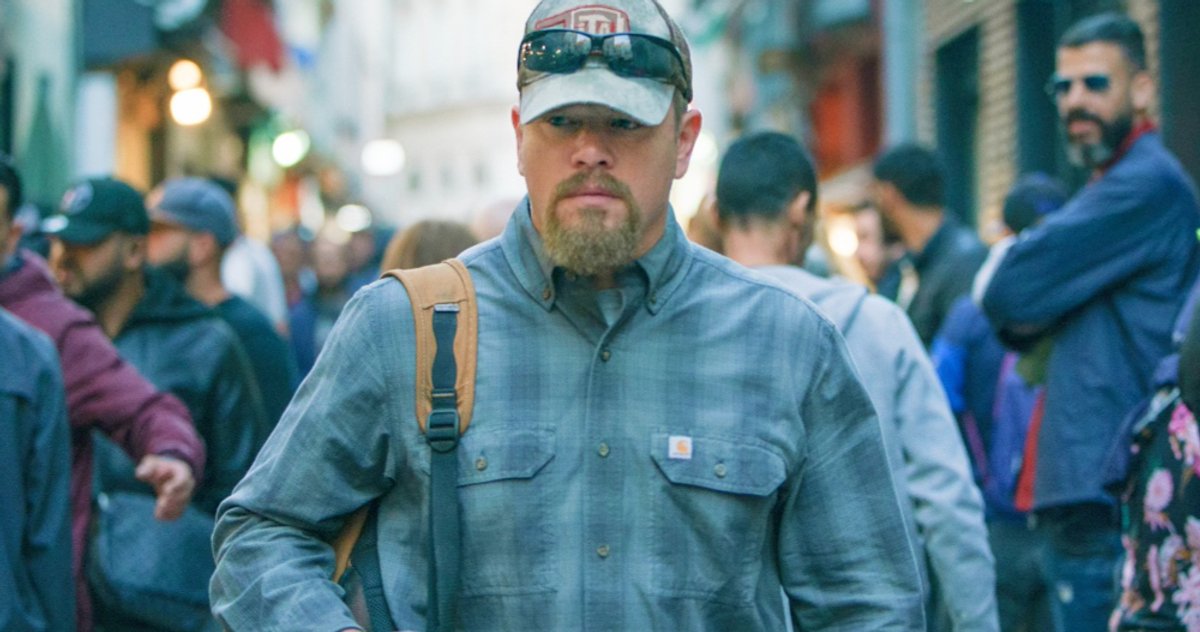
Damon plays Bill Baker, out-of-work oil rigger headed to Marseilles to see his daughter, Allison (Abigail Breslin). It’s not your ordinary visit, though. Allison has been in prison for five years for a very Amanda Knox type of incident.

What does Bill want? To get his little girl out of prison. What does he need? To prove himself to himself, and to the world, but most desperately to Allison. There is an aching humility undergirding this performance, giving it richness and tenderness. That humility alone is enough to separate Stillwater from other fathers-desperate-to-save-daughter films like Taken.

But co-writer/director Tom McCarthy does not stop there.

This filmmaker is hard to figure. McCarthy followed up his early indie treasures (The Station Agent and The Visitor among them) with the high profile, catastrophically terrible Adam Sandler movie The Cobbler. Bounced back pretty well, though, with his Oscar-winning Spotlight. Still, his filmography swings back and forth between masterpiece (he wrote Pixar’s Up) and misfire (he wrote Disney’s Million Dollar Arm).

Stillwater falls somewhere between.

The film opens with the threadbare premise of an earnest All American Dad taking justice in his own hands to save his daughter. It picks up that thriller storyline late in the second act with a jarring right turn you simply did not expect. In between, though, in what could easily feel like a self-indulgent side plot, is the real meat of the film.

Bill decides to stay semi-permanently in France, moving in with the French woman who’s willing to help translate and sleuth with him. While he’s drawn to Virginie (Camille Cottin), it’s really her 9-year-old (a fantastic Lilou Siauvaud) that draws him in. And here McCarthy—along with a team of writers, both American and French—betray the real theme of the film.

Stillwater is a tragedy about second chances. Its sloppy construction is both its downfall and its strong point. The film works against your expectations brilliantly to deliver a film that refuses to satisfy. The result is an often brilliant, ultimately unsatisfying work. And that seems to be the point.