Category Archives: New In Theaters

Reviews of what’s out now

Heartbreak and Displacement

All That’s Left of You

by Rachel Willis

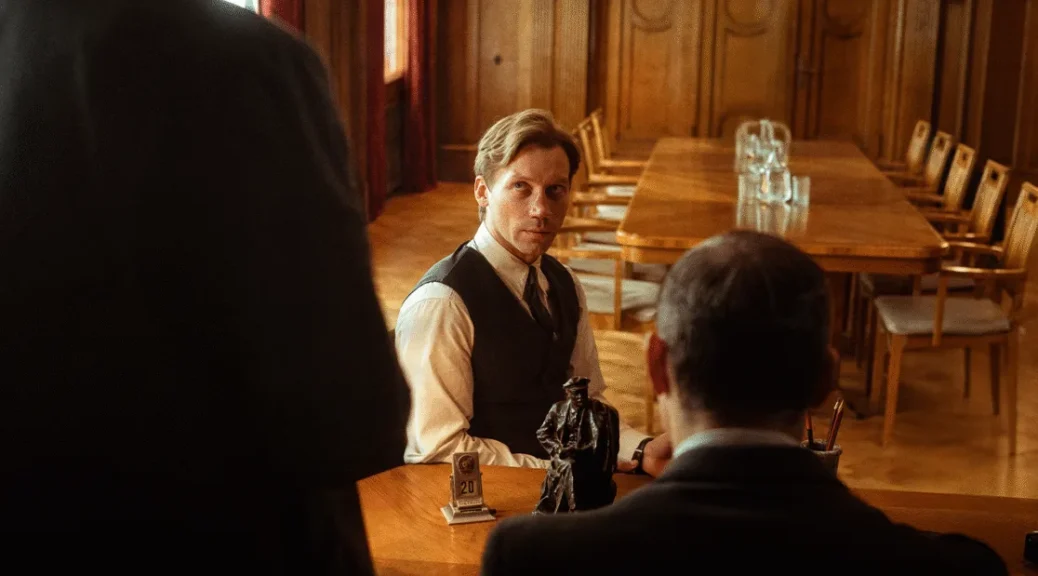
Opening with two teenagers swept up in a demonstration in the West Bank, writer/director Cherien Dabis drops us into a world of strife and sorrow with her film, All That’s Left of You.

After the tense opening, the film moves backward in time to 1948, Jaffa, Palestine. From here, we follow Sharif (Adam Bakri) as he struggles to hold onto his land and home amid ever worsening strikes in the region. His wife is less concerned with his ideals than she is with keeping her family safe.

As we follow Sharif and his family, and the decisions they have to make as Zionist troops close-in, we get a sense of the hopelessness of the situation. Whether or not you know the history, there is a sense of impending doom as the men in the region discuss their options—stay and resist or leave in hopes of a safer future.

The 1948 segment of the film is the shortest, but it gives a sense of what was lost for the people of Jaffa.

Jumping ahead 30 years to the occupied West Bank, Sharif is now an old man who lives with his son Salim (Saleh Bakri) and his family. Each moment we spend with this family shows how deeply the film cares about its subject matter.

One scene during the 1978 segment is so intense it’s nearly impossible to watch. As soldiers torture and humiliate Salim in front of his son, Noor (Sanad Alkabareti), their laughter only underscores the cruelty present when we dehumanize each other. Noor’s reaction to the event is heartbreaking, yet honest.

The film jumps ahead another ten years as we follow an angry, teenage Noor (Muhammad Abed Elrahman) in an increasingly charged West Bank. The scene that opens the film comes full circle as the third section begins.   

This family’s trauma across generations is our gateway into this world. Events unfold around them that are almost incomprehensible. Protestors are gunned down in the street. Treatment for a medical emergency is delayed over bureaucratic red tape and a misplaced ID. All That’s Left of You is an impassioned portrayal of one family’s experiences of displacement and heartbreak in Palestine.

Bob’s Your Uncle

Father Mother Sister Brother

by George Wolf

January is often regarded as a dumping ground for throwaway theater releases, featuring films not good enough to make into the holiday/award season push.

But this month is the perfect time to catch Father Mother Sister Brother, a richly human big screen triptych that explores the type of strained family get- togethers many of us experienced just weeks ago.

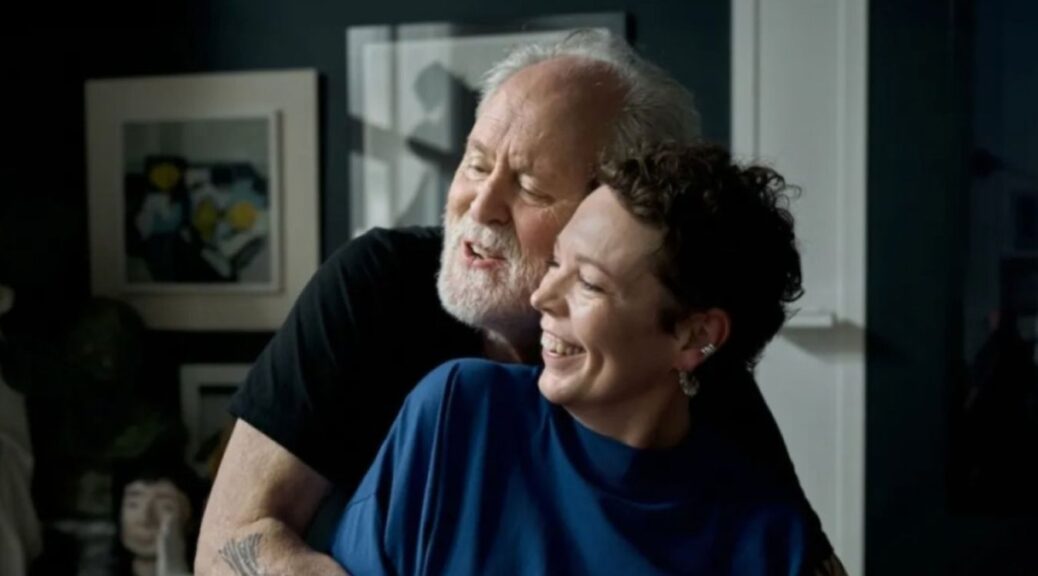
Writer/director Jim Jarmusch reportedly began writing the film as a way to cast Tom Waits as Adam Driver’s dad, and the opening “Father” sequence gives us just that. Jeff (Driver) and sister Emily (Mayim Bialik) don’t exactly seemed thrilled about visiting their father (Waits) at his place in very rural New Jersey. As the siblings converse in the car, we learn some things about Dad. But it isn’t long into their strained family reunion that we begin to doubt every one of these things.

The “Mother” chapter takes us to Dublin, Ireland, where Mom (Charlotte Rampling) is awaiting daughters Lilith (Vicky Krieps) and Timothea (Cate Blanchett) for their annual visit. Though life updates are spilled around a beautiful array of tea and cakes, only a few crumbs of truth actually get shared.

And in Paris for the “Sister Brother” finale, twins Skye (Indya Moore) and Billy (Luka Sabbat) meet after the recent plane crash that killed their parents. From a small cafe to an empty apartment, sister and brother sort through mementos and memories as they take a small step toward moving on.

Though Jarmusch films can sometimes be glacially paced (The Limits of Control) or deadpan enough (The Dead Don’t Die) to frustrate the uninitiated, FMSB finds him at perhaps his most tender and warmly funny.

The segments aren’t connected through these characters, but instead via beverages, watches, skateboarders and the old English phrase “Bob’s your uncle.” The camera lingers on old frames, photographs and empty rooms, making a subtle call to all that caused these recent moments to be less worthy of commemorating. Ultimately, what we don’t see happen begins to weigh as heavily as the things we do.

The cast – full of Jarmusch favorites old and new – is uniformly terrific. Each character is weary with obligations and regrets that seem as authentic as they are relatable, and each reacts to breaks of humor in ways that are different yet still feel very much like family.

And those people you were with over the holidays – would you have hung out even if they weren’t your family? Father Mother Sister Brother might make you consider the answer a bit longer.

Just find a screening, and you know, Bob’s your uncle.

To Live or to Drown

The Chronology of Water

by Hope Madden

Since becoming the reluctant icon of a franchise equally adored and loathed, Kristen Stewart has made a career out of fascinating decisions.

As an actor, Stewart’s veered from dark comedy (American Ultra) to awards contenders (Still Alice, The Clouds of Sils Maria) to genre (Lizzie, Underwater). She worked with some of the greatest indie filmmakers in the business (David Cronenberg’s Crimes of the Future, Olivier Assayas’s Personal Shopper, Kelly Reichardt’s Certain Women, Rose Glass’s Love Lies Bleeding) and finally shook that angsty adolescent image with an Oscar nomination for her stunning work in Pablo Larraín’s 2021 film, Spencer.

Since becoming an undisputed acting heavyweight, Stewart’s moved on to a new challenge: filmmaker. Her leap to the big screen feature format is an adaptation of Lidia Yuknavitch’s memoir, The Chronology of Water.

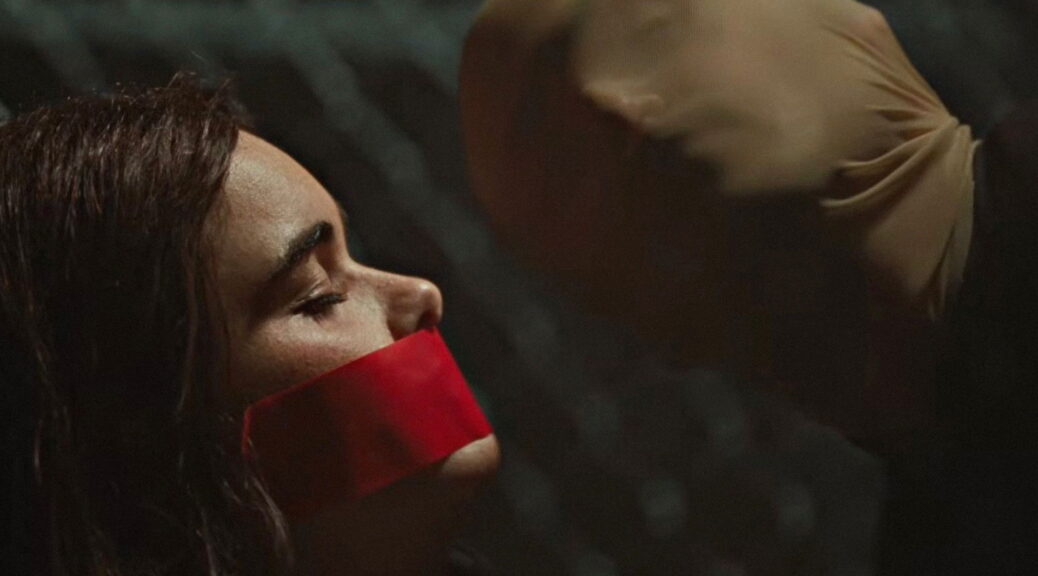
Imogen Poots plays Lidia. It’s the kind of a role that would simultaneously entice and worry an actor—survivor of abuse who numbs her trauma with self-destructive behavior. And for Stewart, Lidia’s is a tale told in close-up. The filmmaker has apparently never met a wide shot she liked. Her approach creates a wild intimacy, taking a story told in flashback and requiring us to see every second’s urgent immediacy.

It’s also a choice that disallows any kind of acting cheat. No matter, because Poots is no cheat. The actor has impressed in a wide range of characters but never has she brought such raw agony to the screen.

Stewart’s made a punishing film, and in Poots’s more ferocious moments, it’s difficult to watch. The actor externalizes pain as rage brilliantly, making her moments of vulnerability that much more heartbreaking.

A supporting cast goes often nameless, existing as fragments of Lidia’s reality. Still, Stewart draws wonderful performances from everyone. Thora Birch is understated excellence, a perfect counterpoint to Poots’s explosive passion. And Jim Belushi offers an affable, caring turn as Ken Kesey.

Together, cast and filmmaker find beauty in Yuknavitch’s tale, though at times The Chronolog of Water feels like it’s wallowing. Still, Stewart’s touch is lyrical, offsetting the brutality of the film’s content with images that are delicately wondrous, contradictorily peaceful, sometimes even lightly but discordantly funny.

Take My Wife, Please

Is This Thing On?

by Hope Madden

Back when Bradley Cooper forgot stealing Mike Tyson’s tiger, few would have guessed that he would go on to collect a dozen Oscar nominations for writing, directing, producing, and acting. His first two adventures behind the camera, 2019’s A Star Is Born and 2024’s Maestro, each earned him nominations for picture, screenplay, and performance. They also showcased a director of real power.

So obviously his latest is a comedy.

Cooper co-writes and directs Is This Thing On?, a midlife crisis disguised as a rom-com.

Alex (Will Arnett, who co-writes) and Tess (the ever-incandescent Laura Dern) are ending their 20-year marriage. No hard feelings, no infidelities, both just decided it was time to call it.

On his first night out of the house, in need of a beer and lacking the $15 cash to pay the cover, Alex puts his name on “the list” for a comedy club’s open mic night. He doesn’t bomb, gets some stuff off his chest, and finds that he kind of loves stand-up.

Because men will do anything to avoid therapy.

A supporting cast keeps things chaotic. Cooper plays Alex’s dumbass stoner actor brother whose wife (Andra Day) needs to stay high just to tolerate him. His parents (an inspired Christine Ebersol and Ciarán Hinds) mean well, Cooper directing their cacophony of advice, dismay, rebukes, and requests for juice boxes for giddy, exhausting mayhem.

Dern is characteristically wonderous, crafting a character who’s raw and on-edge and absolutely never the clichéd put-upon supportive partner. Her chemistry with Arnett breathes, bristles, and laughs as easily as a lived-in relationship rooted somewhere or other in love.

To Arnett’s credit, he goes head-to-head with the veteran Oscar winner and charms. Muddled but earnest and effortlessly likeable, Alex is the dad you want kids to know and the floundering ex you root for, if not to get back together, at least to just get it together.

Aside from one or two convenient plot beats, Is This Thing On? benefits immeasurably from authenticity. That emotional honesty drives the laughter and the tension, and elevates the relatively light film (given Cooper’s previous two efforts) above easy comedy or indie dramedy. The film is a unique beast, natural and messy but still totally sold on love.

Damn Dirty Ape

Primate

by Hope Madden

My working theory is that Johannes Roberts saw Nope and thought, when does Gordy get his own movie? IP being what it is, Primate is likely the closest the co-writer/director could come.

The film follows Lucy (Johnny Sequoyah) home from college. She’s summering with family—dad (Troy Kotsur, CODA), little sister (Gia Hunter), and Ben, the family’s beloved chimpanzee in their incredibly impressive compound on the side of a cliff in Hawaii.

But Dad’s off to a work event Lucy’s first weekend home, so friends crash to drink beer, smoke weed, eat pizza, and get picked off one by one when Ben turns super feral.

Roberts (47 Meters Down, 47 Meters Down: Uncaged, Strangers: Prey at Night, Resident Evil: Welcome to Raccoon City) has not built a career on nuance. He makes fun, obvious monster movies. The telegraphed scares are at least goretastic, and what he lacks in subtlety he makes up for with macabre humor.

Like any monster movie worth its chlorine, Primate is a survival tale. Quickly, the partiers assess the danger and jump into the pool because chimps can’t swim. Did you know that? I didn’t know it. Is it even true?

Google says it’s true.

There you go. Johannes Roberts taught me something today.

Superficial character development feeds into teen horror cliche as Sequoyah and her supporting players, including Jess Alexander (A Banquet) and Victoria Wyant, struggle with insipid dialog. The writing is pretty awful, and aside from jumping into the pool, the kids’ behavior is consistently dumb.

Some of the gore is inspired, though, particularly one jaw-related injury. The creature design is a little more touch and go. At times Ben’s look is passably realistic, but not always. But Kudos to Roberts for going practical, and Miguel Torres Umba inside the suit moves with menace.

There’s also an effective device made of Lucy’s dad’s deafness, handled with minimal manipulation and landing some authentic tension.

In the end, Gordy Meets Cujo delivers exactly what you should expect: jump scares, cliché, young adults behaving stupidly, and plenty of blood. Is it a great movie? It is not. Nope, definitely not. But it might be what you’re in the mood for.

Shark Infested Waters

The Plague

by George Wolf

2025 was yet another year with an impressive list of great performances from young film actors. Ana Sophia Heger (She Rides Shotgun), Cary Christopher (Weapons), and Nina Ye (Left-Handed Girl) were among those seasoned beyond their years. Now, The Plague‘s Everett Blunck leads a terrific ensemble of youngsters to join this group of standout turns.

Blunck (last year’s Griffin in Summer) is 12 year-old Ben, one of the young athletes spending the summer at a boys’ water polo camp in New England. A bit shy and awkward, Ben still finds a way to be accepted at the cool kids’ table.

And led by the smug, sarcastic Jake (Kayo Martin, also stellar), those kids target Eli (Kenny Rasmussen, just wonderful) – the weird kid with the rash – for taunts and bullying. Dubbing Eli’s skin condition as a “plague” that’s contagious, the boys are not shy about the finger pointing and mocking laughter.

Ben goes along to get along. But when he dares to show Eli some sympathy, he crosses an unpopular line. Jake and the King Bees decide it is Ben who now has the plague and must be cast out.

Writer/director Charlie Polinger’s feature debut bursts with vision and craftsmanship. He wanders the confines of the swimming pool, locker room and the campus buildings with a probing, studious eye, unveiling some gorgeously shot sequences with a cold detachment that fuels the mood of alienation.

Polinger’s writing is also urgent enough to make this more than just a chlorinated Lord of the Flies. Joel Edgerton’s coach character is aware of some of what’s going on in camp, but he’s purposely kept on the fringes, as Polinger explores how the boys navigate their cruelty around the adults’ anti-bullying sit downs.

Working equally as a microcosm and a singular coming-of-age narrative, The Plague is fascinating, heartbreaking and often quite beautiful. It’s a major debut for a gifted filmmaker, and an emotional showcase for a talented group of young performers.

Tasmanian Devils

We Bury the Dead

by Hope Madden

We Bury the Dead is an intriguing title, particularly for a zombie movie. Writer/director Zak Hilditch’s latest mixes familiar with fresh, focused less on scares than on contemplative action.

Daisy Ridley is Ava, a young woman determined to find her husband (Matt Whelan) after a US chemical weapons mishap wipes out every living thing in Tasmania. She volunteers with a group who will find, catalog, and bury the dead. As a Yank, she’s not too welcome, but her ulterior motive is to get to the heart of the catastrophe, to the resort where her husband had gone for a conference. To find him, she’ll have to risk exposure to the smoke, the military, rogue sharp shooters, and the dead who come “back online”.

Ridley has made a series of fascinating choices since being catapulted into merciless Star Wars fandom with her career-making turns as Rey. She has gravitated mainly toward quietly complicated characters in mid-budget independent films, as well as voice work in animation and documentary.

While not every project has been a winner, Ridley’s flexed a range of muscles. From dark, dry, awkward comedy (Sometimes I Think About Dying) to  meditative, spooky thriller (The Marsh King’s Daughter) to inspirational, true life-adventure (Young Woman and the Sea), Ridley brings an introspective magnetism to projects. The same can be said for her work in Hilditch’s Tasmanian zombie drama.

Ava develops a frenemy situation with her volunteer partner, Clay (Brenton Thwaites), a bad boy who smokes a lot, shows no respect for the dead, and just might be criminal enough to help Ava get through the restricted areas of the country. Thwaites’s performance is better than the script, but it’s still tough to buy the burgeoning friendship.

A late side story with Riley (Mark Coles Smith) edges the film closer to horror, but Hilditch’s interests lie in drama. The heart of the story has to be the reason Ava risks so much to find Mitch. Much credit goes to Hilditch for some of the surprises he has in store, but he writes himself into a corner he can’t quite escape.

And though he crafts a few truly memorable sequences and injects zombie lore with a few new ideas, he unfortunately leans back on one of the most tiresome and suddenly popular cliches, a choice meant to wrap Ava’s arc up in a tidy bow when dystopia calls for messes.

But Ridley and Thwaites carve a compelling odd couple and Tasmania offers a  handful of fascinating new details for the genre.

Snake Charmer

Anaconda

by Hope Madden

Upon first seeing the trailer for Anaconda, the Jack Black/Paul Rudd spiritual sequel to the 1997 JLo vehicle, my husband George said, “This will either be incredibly funny or unwatchable.”

I banked on the first. How could this lose?! Not only because of the upbeat comedy gold of Black and Rudd, but forever favorite Steve Zahn, plus Thandiwe Newton classing up the joint. With Tom Gormican, the madman behind The Unbearable Weight of Massive Talent, co-writing and directing, it seemed like Anaconda couldn’t go wrong.

Anyway, I wouldn’t call it unwatchable.

Black, Rudd, Zahn and Newton were high school besties, brought together again by a dream: to make a reboot/sequel/reimagining of the giant snake movie they’d watched dozens of times when they were young and idealistic.

It’s a funny premise!

One script, a lead on a snake handler, and 42 grand later, the friends head to Brazil to shoot this thing and salvage something of what they’d hoped to be when they grew up.

There are some funny bits. Selton Mello is joyously weird as Santiago, the snake handler. Cameos, descriptions, and bits of dialog from the original Anaconda inject a bit of mischievous fun. I will be using the term “Buffalo sober” in my future.

But as inarguably charming as this cast is, it can’t elevate the many stretches of film without a joke. Though lots of scenes are humorous, very few are laugh-out-loud funny. Both Rudd and Black fall back on schtick and timing to make up for the spare comedy of the script, and Newton is given nothing at all to do for 99 minutes.

Every scene goes on a beat or two too long, it takes the film forever to get to the jungle, and too little happens once we’re there. The fact that the film owes almost as much to a classic Black comedy Tropic Thunder as the original Anaconda only leaves you longing for something funnier to happen.

It’s watchable. It’s even mildly entertaining. But it felt like it could have been more.

The Mouse That Roared

Marty Supreme

by George Wolf

It’s been six years now, have we recovered from the panic and palpitations brought on by Josh Safdie’s Uncut Gems?

Better towel off and grab hold of something, because Marty Supreme serves up another harried drama set at a breakneck pace.

Served up, see what I did there? Marty “The Mouse” Mauser is a table tennis phenom looking to cement his name as the best in the world.

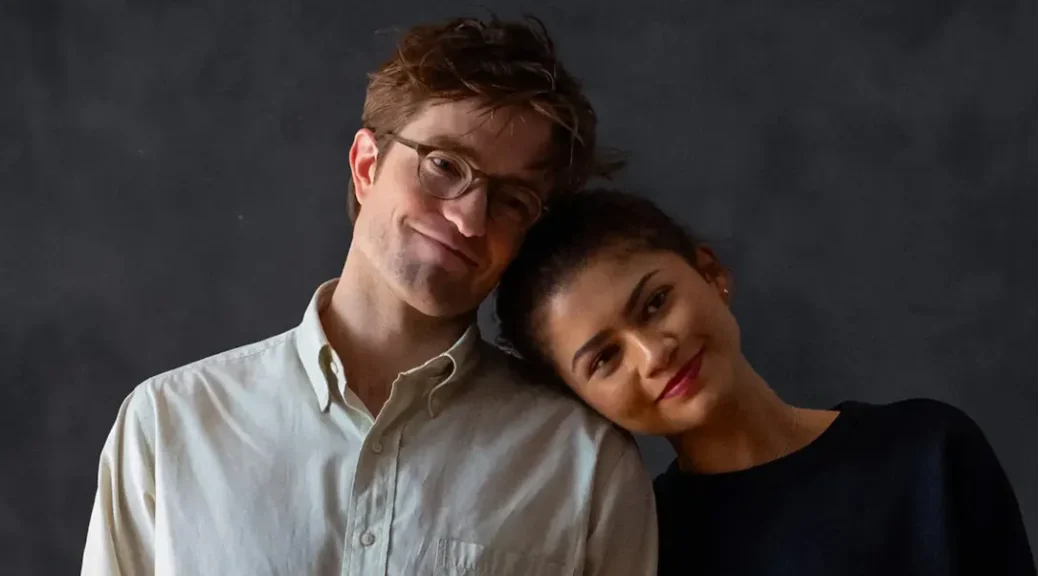
But when we first meet him, Marty (an absolutely electric Timothée Chalamet) is working in a shoe store in 1950s New York. He’s a born salesman, but makes it clear he’s only there to make enough money to finance his next trip to a big tournament. And in that opening few minutes, Safdie and Chalamet gives us a clear glimpse into the Marty Mauser worldview that will grab us by the throat for the next two and a half hours.

Everyone and everything is a means to an end. And Marty is relentless.

It could be an adoring young woman who’s already married (Odessa A’zion), a rich ink pen tycoon (Shark Tank‘s Kevin O’Leary in another bit of Safdie stunt casting) or his bored actress wife (a terrific Gwyneth Paltrow), or even a man out to find his lost dog. It doesn’t matter, Marty will size you up and instantly start working the angle he thinks is most likely to make you an asset.

The entire film, loosely based on Jewish-American table tennis champ Marty Reisman, is a fascinating character study and Chalamet is in mesmerizing, career-best form. Safdie (co-writing again with Ronald Bronstein) might as well just shoot Marty out of a cannon when he leaves that shoe store, and Chalamet makes you afraid to miss anything by looking away.

Like everything else here, the table tennis action is fast, furious and intense, and after an early loss to an unknown, Marty’s singular mission becomes avenging that upset and proving his greatness. But Marty Supreme could be about any type of American unafraid to dream big. It’s another intoxicating ride from Josh Safdie, with an award-worthy Chalamet digging soul deep into a man’s journey toward finding something he values more than himself.

Forever in Sequins

Song Sung Blue

by George Wolf

I admit it, I didn’t pay enough attention to the trailer and I really thought Song Sung Blue was a Neil Diamond biopic. And from what I did notice from the trailer, it looked like a pretty bad Neil Diamond biopic.

Wrong on all counts.

The latest from writer/director Craig Brewer leans on terrific performances from Hugh Jackman and Kate Hudson for an unabashed feel good salute to the dreamers who won’t be derailed from following their joy.

Jackman and Hudson are Mike and Claire Scardina, a Milwaukee couple who built up quite a following in the 80s and 90s as Lightning and Thunder, a Neil Diamond “tribute experience.” Starting out playing restaurants and small clubs, they worked their way up to bigger venues around the Midwest – even opening for Pearl Jam! – before a terrible accident put the future in doubt.

Brewer (Hustle and Flow, Black Snake Moan, Dolemite is My Name, Coming 2 America) adapts Greg Koh’s 2008 documentary with committed earnestness. There isn’t a cynical note to be found about the Scardinas, the nostalgia circuit they love or the ways any of these people measure success. The moments of joy, pain and perseverance are proudly displayed on all their sleeves, and the film is able to pull you in pretty quickly.

Expect plenty of Neil Diamond music, and a reminder that the man has a ton of hits. Yes, the rehearsal and performance set pieces are too perfectly polished, but even that fuels the vibe of dreams-coming-true that the Scardinas are living. And also yes, Jackman and Hudson do their own singing and both sound terrific, while the ensemble cast (including Jim Belushi, Fisher Stevens, Michael Imperioli and Ella Anderson) carves out some unique support characters.

The leads also make Mike and Claire two people that are easy to root for. Off stage, the two bring hardscrabble pasts and children of various ages to their new relationship. They come to believe they were truly meant for each other, and the blended family dynamic offers many relatable beats that run from tender to tragic.

And ironically, it’s those narrative successes that make the missteps in Act III more disappointing. Brewer ends up veering from true events pretty dramatically, adding twists of high melodrama that land as overly contrived.

They also feel unnecessary for a film so committed to the worth of these people and their journey. Song Sung Blue is unapologetic feel-good filmmaking. It plays the heartstrings, the greatest hits and even the cheesy gimmicks so earnestly that the whole show becomes pretty damn hard to resist, even if sequins aren’t exactly your thing.