Category Archives: Fright Club

A celebration of horror movies with updates on our monthly Fright Club film series at the Gateway Film Center.

Fright Club: WTF?! Horror

Horror films have the power to freak you out, to terrify you, to disturb and unsettle you. And often enough, along with inspiring some combination of the aforementioned emotions, certain horror films just beg the question WTF?! Like, almost anything Takashi Miike has ever directed. Or Antichrist – I’m sorry, did that fox just speak? Whether the bizarre puppetry of Hausu or the skull sex of Headless, the orifice’s point of view camera angles in Enter the Void or the queasying sibling relationship in Pin, horror movies can hit that unsettling nerve. So let’s just embrace it today, shall we? Today we count down the five (or six!) best in WTF?! horror.

6. The Woman (2011)

There’s something not quite right about Chris Cleese (an unsettlingly cherubic Sean Bridgers), and his family’s uber-wholesomeness is clearly suspect. This becomes evident once Chris hunts down a feral woman (an awesome Pollyanna McIntosh), chains her, and invites the family to help him “civilize” her.

The film rethinks family – well, patriarchy, anyway. Notorious horror novelist and co-scriptor Jack Ketchum may say things you don’t want to hear, but he says them well. And director Lucky McKee – in his most surefooted film to date – has no qualms about showing you things you don’t want to see. Like most of Ketchum’s work, The Woman is lurid and more than a bit disturbing. Indeed, the advanced screener I watched came in a vomit bag.

Aside from an epically awful performance by Carlee Baker as the nosey teacher, the performances are more than just good for the genre, they’re disturbingly solid. McIntosh never veers from being intimidating, terrifying even when she’s chained. Bridgers has a weird way of taking a Will Ferrell character and imbibing him with the darkest hidden nature. Even young Zach Rand, as the sadist-in-training teen Brian, nails the role perfectly.

Nothing happens in this film by accident – not even the innocent seeming baking of cookies – nor does it ever happen solely to titillate. It’s a dark and disturbing adventure that finds something unsavory in our primal nature and even worse in our quest to civilize. Don’t even ask about what it finds in the dog pen.

5. Bad Boy Bubby (1993)

The hell?! Why? What?! Good God.

Nicholas Hope is astonishing as the titular Bubby, a 30-year-old manchild who’s never, ever left the room he keeps with his mum.

Remember the Oscar-winning indie film Room? Remember how tragedy is somehow skirted because of the courageous love of a mother for her son? Well, this was not Bubby’s mum. Bad things are happening in that room, and once Bubby is finally free to explore the world, his adventure is equal parts deranged and soul-crushing. Hope is so frustratingly empathetic in the lead that no matter what he does, you root for him. You root for friends who will love him, for someone who will care for him, but it’s the resigned cheerfulness with which he faces any kind of abuse that really just kills you.

This taboo-shattering film is so wrong in so many ways, and yet it’s also lovely, optimistic, sweet, and funny. And just so, so fucked up.

4. Baskin (2015)

Welcome to hell! Turkish filmmaker Can Evrenol invites you to follow a 5-man police squad into the netherworld, where eye patches are all the rage, pregnancy lasts well under the traditional 40 weeks, and you don’t want to displease Daddy.

The serpentine sequencing of events evokes a dream logic that gives the film an inescapable atmosphere of dread, creepily underscored by its urgent synth score. Evrenol’s imagery is morbidly amazing. Much of it only glimpsed, most of it left unarticulated, but all of it becomes that much more disturbing for its lack of clarity.
The further along the squad gets, the more often you’ll look in horror at something off in a corner, that sneaking WTF? query developing along with your upset stomach.

The central figures in this nightmare are one eye-patch wearing helper who enjoys tossing his or her hair over one shoulder, and the breathtaking father figure played by Mehmet Cerrahoglu. There is no one quite like him.

Cerrahoglu’s remarkable presence authenticates the hellscape. Evrenol’s imaginative set design and wise lighting choices envelope Cerrahoglu, his writhing followers, and his victims in a bloody horror like little else in cinema.

3. Calvaire (The Ordeal) (2004)

A paranoid fantasy about the link between progress and emasculation, The Ordeal sees a timid singer stuck in the wilds of Belgium after his van breaks down.

Writer/director Fabrice Du Welz’s script scares up the darkest imaginable humor. If David Lynch had directed Deliverance in French, the concoction might have resembled The Ordeal. As sweet, shy singer Marc (a pitch perfect Laurent Lucas) awaits aid, he begins to recognize the hell he’s stumbled into. Unfortunately for Marc, salvation’s even worse.

The whole film boasts an uneasy, “What next?” quality. It also provides a European image of a terror that’s plagued American filmmakers for generations: the more we embrace progress, the further we get from that primal hunter/gatherer who knew how to survive.

Du Welz animates more ably than most our collective revulsion over the idea that we’ve evolved into something incapable of unaided survival; the weaker species, so to speak. Certainly John Boorman’s Deliverance (the Uncle Daddy of all backwoods survival pics) understood the fear of emasculation that fuels this particular dread, but Du Welz picks that scab more effectively than any filmmaker since.

His film is a profoundly uncomfortable, deeply disturbing, unsettlingly humorous freakshow that must be seen to be believed.

https://www.youtube.com/watch?v=Hn3oba5HmH8

2. Possession (1981)

Speaking of sex and monsters – wait, were we? – have you seen Possession? WTF is going on there?

Andrzej Zulawski – writer/director/Czech – created this wild ride with doppelgangers, private investigators, ominous government agencies, and curious sexual appetites. It’s more precisely fantasy than horror, but it feels like David Cronenberg meets David Lynch, which is a pairing we can get behind.

Sam Neill plays Mark. Mark has just left his job – a mysterious position with some kind of lab. He’s being offered a lot of money to stay, but he needs to go home. We don’t know why.

Back at home, he greets his genuinely adorable son Bob (Michael Hogben). Bob – the names is so normal, and yet feels so unusual for a small child. Mark’s wife Anna (Isabelle Adjani) is also at home with Bob. There’s nothing normal about Anna.

Mark and Anna’s relationship boasts an intentional artificiality – a queasying sexuality – that makes it hard to root for either of them as their marriage deteriorates. Anna, it seems, is in love with someone else. Is it the sexually open – really, really open – Heinrich? Is it a bloody, mollusk-like monster? Is Mark boning Anna’s mean friend with a cast on her leg? Does Bob’s kindergarten teacher bear an unreasonable resemblance to Anna? Is anyone caring properly for Bob?

These questions and more go basically unanswered in a deviant, summary-defying, fantastical bit of filmmaking that mocks the idiocy, even insanity of obsession and boasts a handful of weirdly excellent performances. And sex with a bloody mollusk monster.

1. Gozu (2003)

If you are looking for genuine lunacy in film, your search should begin and quite possibly end with filmmaker Takashi Miike. His shit is nuts. Truth be told, there are scads of Miike films that could have populated this list because even his tamest, most logical, no-puppetry films are wild rides. So when he starts coloring way outside the lines, expect to be surprised.

This one starts off as a yakuza film – one guy on a mob-style assignment – then descends into absolute madness.

Minami (Yuta Sone) has been ordered to assassinate his feeble-minded yakuza boss Ozaki (Sho Aikawa), but he’s conflicted. Then he loses him and wanders, in search, into – you might say it was the Twilight Zone, except this place is considerably weirder. There’s a minotaur. An electrified anal soup ladle death scene. Some seriously, seriously weird shit.

Like a walk through somebody’s subconscious, the film is awash in repressed sexual desires of the very most insane and unspeakable. There’s a comical element that’s almost equally unsettling. Gozu is not as violent as many Miike films – it’s violent, don’t be mistaken, but the horror here is more in unseemly behavior and wildly inappropriate imagery. It’s just stuff you can’t unsee.

https://www.youtube.com/watch?v=penZT2N2xDw

Fright Club: Best Horror Musicals

We’re on a music kick. Last week we looked at the best rock star horror movies, so it seemed only natural to move on to the best horror musicals this week. At our house, this particular sub-genre might serves as a kind of bridge between the two of us, since Hope generally hates musicals while George appreciates them. And though it is true that Hope can find some love in her heart for a musical with a side of bloodletting, it turns out that George only likes actually good musicals. Which is to say, they disagree a bit on this list.

Hear the full disagreement, er, podcast HERE.

5. Phantom of the Paradise (1974)

Dude, 1974 must have been nuts. Brian De Palma’s first and only musical is a Phantom of the Opera/Faust/The Picture of Dorian Gray mash up (with some Frankenstein, The Cabinet of Dr. Caligari, and more than a little Rocky Horror thrown in for good measure). That’s a heady mix, and while the film was nominated for an Oscar for its music, it isn’t exactly the classic you might expect.

A campy skewering of the soulless music industry, Phantom sees tiny Seventies staple Paul Williams as the Satan-esque Swan, a music executive with a contract for you to sign. Poor Winslow (William Finley) is just as wide-eyed about his music as all those would-be starlets are about their chances for fame and fortune in this evil world of pop super stardom.

Like many horror musicals, the film works best as a comedy, but Finley’s garish visage once he makes his transformation from idealistic musician to mutilated Phantom is pretty horrifically effective. The film as a whole is a hot Seventies mess, but that’s kind of the joy of it, really.

4. House (Hausu) (1977)

If Takashi Miike’s Happiness of the Katakuris were to marry Pee-wee’s Playhouse, this would be their offspring.

A spoof of sorts, Hausu tells the story of six uniform-clad high school girls named Gorgeous, Fantasy, Sweet, Melody, Kung Fu, and Mac. The nomenclature alone should clue you in on the film’s lunacy. The giggling sextet spend spring break at an aunt’s spooky house – or, in fact, a cheaply made set of an aunt’s spooky house. Not a single thing that follows makes sense, nor is it really meant to.

Expect puppets, random musical sequences, remarkably bad backdrops, slapstick humor, and an amazingly sunny disposition given the sheer volume of human dismemberment. The trippy nonsense wears a bit thin eventually. Luckily director Nobuhiko Obayashi’s film clocks in at under 90 minutes, so the screen goes dark before the novelty wears off.

3. Sweeney Todd: The Demon Barber of Fleet Street (2007)

Here’s a bizarre idea for a musical: The barber upstairs kills his clients and the baker downstairs uses the bodies in her meat pies. Odd for a Broadway musical, yes, but for a Tim Burton film? That sounds a little more natural.

Burton’s Sweeney Todd: The Demon Barber of Fleet Street is a full-on musical – Burton’s first – and every inch a stage play reproduction. For many films, this would be a criticism, but Burton’s knack for dark artificiality serves the project beautifully, and he achieves the perfect Dickensian Goth tone. His production is very stagy and theatrical, but never veers from his distinct, ghoulish visual flair.

As in most of Burton’s best efforts, Sweeney Todd stars Johnny Depp in the title role. Depp is unmistakably fantastic – consumed, morose, twisted with vengeance – and he’s in fine voice, to boot.

The supporting cast boasts a liltingly nefarious performance by Alan Rickman. As the judge whose sent an innocent Todd off in shackles, raped his wife, then took custody of his daughter, whom he leeringly admires, Rickman is wonderful as always. His duet with Depp on “Pretty Women” is the film’s real musical gem.

With Burton’s help, Depp found another dark, bizarre anti-hero to showcase his considerable talent. With Depp’s help, Burton gorgeously, grotesquely realized another macabre fantasy.

2. The Happiness of the Katakuris (2001)

Takashi Miike is an extremely prolific director. He makes a lot of musical films, a lot of kids’ movies, a lot of horror movies, and then this – a mashup of all of those things. Like Sound of Music with a tremendous body count.

The Katakuris just want to run a rustic mountain inn. They’re not murderers. They’re lovely – well, they’re losers, but they’re not bad people. Buying this piece of property did nothing to correct their luck, either because, my God, their guests do die.

You might call this a dark comedy if it weren’t so very brightly lit. It’s absurd, farcical, gruesome but sweet. There’s a lot of singing, some animation, a volcano, a bit of mystery, more singing, one death by sumo smothering, and love. It sounds weird, truly, but when it comes to weird, Miike is just getting started.

https://www.youtube.com/watch?v=XDfMXwRapNc

1. The Rocky Horror Picture Show (1975)

Surely you expected no other atop this list because, honestly, nothing else comes close. The most iconic of all horror musicals, The Rocky Horror Picture Show boasts the best soundtrack, the best performances, the best mad scientist, and quite possibly the most fun there is to be had (legally) at the movies.

I’m afraid you’ve touched on a rather tender subject there.

Tim Curry is utter perfection as Frank-N-Furter (A Scientist). The entire balance of the cast is also amazing, but no matter how many times you watch Curry step out of that elevator, abuse his servants, or seduce his houseguests, it never gets old.

Creator Richard O’Brien’s raucous, once controversial film about a sweet transvestite, a slut, an asshole, and a couple of domestics who sing, time warp, throw rice, animate monsters, swap partners, and finally put on a show is still as much fun as it ever was.

Once a subversive take on the classic musicals and sci-fi films of the 30s and 40s, Rocky Horror is now a high-camp icon of its own.

Fright Club: Rock Stars in Horror

The rock star/horror movie crossover seems a natural extension of the darkness and cool of each, and it has happened countless times. Some of the crossovers are almost too obvious – Ozzy Osbourne in Trick  or Treat or Grace Jones as an aggressive stripper/vampire in Vamp. John Mellencamp, Iggy Pop, Cherie Curie, Jon Bon Jovi, and, of course, Meat Loaf – these rockers and others have lined up to dance with the dead.

But here are the best rock star performances in horror.

Listen to the full podcast HERE.

Alice Cooper: Prince of Darkness (1987)

Let us just get this out of the way now – we don’t care for this film. Yes, John Carpenter is a master of horror, but this film felt stale in ’87 and it has not aged well.

However, perhaps the greatest stroke of genius Carpenter had when filming was to cast Alice Cooper as the leader of the demon-possessed band of shopping cart people.

As scientists and theologians hole up inside an abandoned church in a very bad neighborhood, they begin to notice the attention of the silent, menacing homeless man outside. And every time they look, he has more friends. It is possibly the only genuinely chilling image in the film, and much of the success is due to Cooper’s effortlessly menacing presence.

Alice Cooper’s stage persona makes him a perfect fit in horror – perhaps moreso than any other rock star. Indeed, he’s gone on to play Freddy Krueger’s father, a vampire, and all manner of supernatural lowlife in film. But for his most unsettling turn, all he needed was a disheveled appearance and his own natural presence.

5. Tom Waits: Bram Stoker’s Dracula (1992)

Francis Ford Coppola took his shot at Dracula in ’92. How’d he do?

Cons: Keanu Reeves cannot act. Winona Ryder can act – we’ve seen her act – but she shows no aptitude for it here, and lord she should not do accents. Anthony Hopkins has always enjoyed the taste of scenery, but his performance here is just ham-fisted camp.

Pros: Tom Waits as Renfield – nice! Creepy yet sympathetic, with that haggard voice, Waits brings a wizened mania to the character that’s more than refreshing. Likewise, Gary Oldman, who can chomp scenery with the best chewers in the biz, munches here with great panache. He delivers a perversely fascinating performance. His queer old man Dracula, in particular – asynchronous shadow and all – offers a lot of creepy fun.

Still, there’s no looking past Ryder, whose performance is high school drama bad.

4. Henry Rollins: He Never Died (2015)

With a funny shuffle step and a blank stare, Henry Rollins announces Jack, anti-hero of the noir/horror mash up He Never Died, as an odd sort.

Jack, you see, has kind of always been here. The “here” in question at the moment is a dodgy one bedroom, walking distance from the diner where he eats and the church where he plays bingo. An exciting existence, no doubt, but this mindlessness is disturbed by a series of events: an unexpected visit, a needed ally with an unfortunate bookie run-in, and a possible love connection with a waitress.

From the word go, He Never Died teems with deadpan humor and unexpected irony. Casting Rollins in the lead, for instance, suggests something the film actively avoids: energy. The star never seethes, and even his rare hollers are muted, less full of anger than primal necessity.

Rollins’s performance is strong, offering Jack as a solitary figure who clings to all things mind numbing as a way to pass the time without complication or human interaction. As a survival mechanism, he’s all but forgotten how to behave around humanity, a species he regards without needless sentimentality.

3. Sting: Brimstone & Treacle (1982)

Easily the best acting of Sting’s career, his con man Martin turns out to be a far more malevolent presence in the Bates household than poor Norma (Joan Plowright – wonderful as always) and Tom (Denholm Elliott) could imagine.

Martin feigns a fainting spell on the street long enough to lift Tom’s wallet. When he returns it – cash light – to the address on the license, he quickly eyeballs the surroundings and claims to be the fiancé of their bedridden daughter Pattie (Suzanna Hamilton).

The film mines layer after layer of repression – societal, sexual, religious and other – as it plays on your constantly expanding sense of dread. Sting is wonderful. His playfully evil performance and the way he eyes the audience/camera gives him the air of something far more unwholesome than your run of the mill conman. Maybe even something supernatural.

2. Debbie Harry: Videodrome (1983)

As bizarre as anything he ever made – even CosmopolisVideodrome shows an evolution in David Cronenberg’s preoccupations with body horror, media, and technology as well as his progress as a filmmaker.

James Woods plays sleazy TV programmer Max Renn, who pirates a program he believes is being taped in Malaysia – a snuff show, where people are slowly tortured to death in front of viewers’ eyes.

Punk goddess Deborah Harry co-stars as a seductress intrigued by the slimy Renn. Harry is, as always, effortlessly sultry – a quality that works queasyingly well in this Cronenberg head trip.

But the real star is Cronenberg, who explores his own personal obsessions, dragging us willingly down the rabbit hole with him. Corporate greed, zealot conspiracy, medical manipulation all come together in this hallucinatory insanity that could only make sense with the Canadian auteur at the wheel.

Long live the new flesh!

1. Bowie: The Hunger (1983)

Tony Scott’s seductive vampire love story has a little bit of everything: slaughter, girl-on-girl action, ’80s synth/goth tunage, David Bowie. What more can you ask?

Actually the film’s kind of a sultry, dreamily erotic mess. Oh, the gauzy, filmy curtains. It looks great, but the internal logic of the vampirism as a disease doesn’t work very well. Lots of meaningless parallels with some experiment apes don’t help.

Catharine Deneuve is the old world vampire Miriam, David Bowie is her lover. But he suddenly begins aging, and she needs to find a replacement. Enter Susan Sarandon as a medical specialist in unusual blood diseases and a fine actress who’s not above smooching other girls.

There are three reasons people still watch it: Bowie, Catherine Deneuve’s seduction of Susan Sarandon (classy!), and the great dark-wave Bauhaus number Bela Lugosi’s Dead. Together it’s a Goth Trifecta! And Goths do love them some vampires.

Fright Club: Best Irish Horror

St. Patrick’s Day approaches, and thoughts turn to flowing green meadows, flowing Guinness taps, and – if you’re us – flowing Irish blood. Yes, we celebrate this holiday the way we celebrate every holiday, with carnage and shreiking. So join us over on the Emerald Isle as we count down the 5 best Irish horror movies.

5. The Hallow (2015)

Visual showman Corin Hardy has a bit of trickery up his sleeve. His directorial debut The Hallow, for all its superficiality and its recycled horror tropes, offers a tightly wound bit of terror in the ancient Irish wood.

Adam (Joseph Mawle) and Clare Hitchens (Bojana Novakovic) move, infant Finn in tow, from London to the isolated woods of Ireland so Adam can study a tract of forest the government hopes to sell off to privatization. But the woods don’t take kindly to the encroachment and the interloper Hitchens will pay dearly.

Hardy has a real knack for visual storytelling. His inky forests are both suffocating and isolating, with a darkness that seeps into every space. He’s created an atmosphere of malevolence, but the film does not rely on atmosphere alone.

Though all the cliché elements are there – a young couple relocates to an isolated wood to be warned off by angry locals with tales of boogeymen – the curve balls Hardy throws will keep you unnerved and guessing.

4. Citadel (2012)

In the colorless world of Edenstown, an Irish slumland abandoned by the police just beyond the last bus stop, an agoraphobic young father (Aneurin Barnard) struggles to remain sane and take proper care of his infant daughter. He’s plagued at night by the feral, hooded children that roam the area – the very monsters that killed his wife. Now they seem to want to take the baby, too.

Writer/director/Irishman Ciaran Foy builds dread beautifully in a picture that borrows from Cronenberg’s The Brood, among other films, but still manages to offer a fresh take on the horror of evil, faceless children. Taking shots at a lot of the underlying causes of rampant Irish urban poverty (each of which translates well across the pond), Foy is optimistic and brutal at the same time.

He spins an urban blight nightmare where fatherless children run amuck, perpetrate violence, and spread malevolence like a disease across a town too trapped by poverty to escape. An unholy Catholic church and impotent social services do more harm than good. In Foy’s parable, nothing can be changed until a father grows a pair and faces his responsibility.

A handful of predictable obstacles aside, Ciaran’s unsettling film hits a nerve, and if you follow the metaphor through to the conclusion, his image of correcting the situation is certainly provocative.

3. Byzantium (2012)

Director Neil Jordan returned to the modern day/period drama vampire yarn in 2012 with Byzantium. With more understatement and talent, he far exceeds the middling effort that was Interview with the Vampire. Thanks go to two strong leads, a lonesome atmosphere, well-handled flashbacks, and a compelling story.

A mother and daughter land in a coastal carnival town. Saoirse Ronan is the perfectly prim and ethereal counterbalance to Gemma Arterton’s street-savvy survivor, and we follow their journey as they avoid The Brotherhood who would destroy them for making ends meet and making meat of throats.

Jordan attempts a bit of feminism but the film works better as a tortured love story. A host of fascinating, dimensional supporting characters and dual storylines that work well together gel in Jordan’s most hypnotic work in years.

2. Stitches (2012)

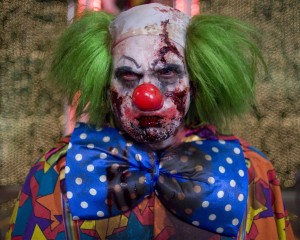
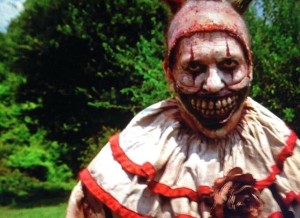
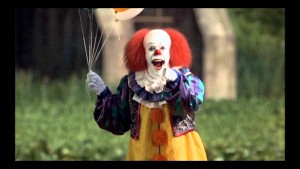
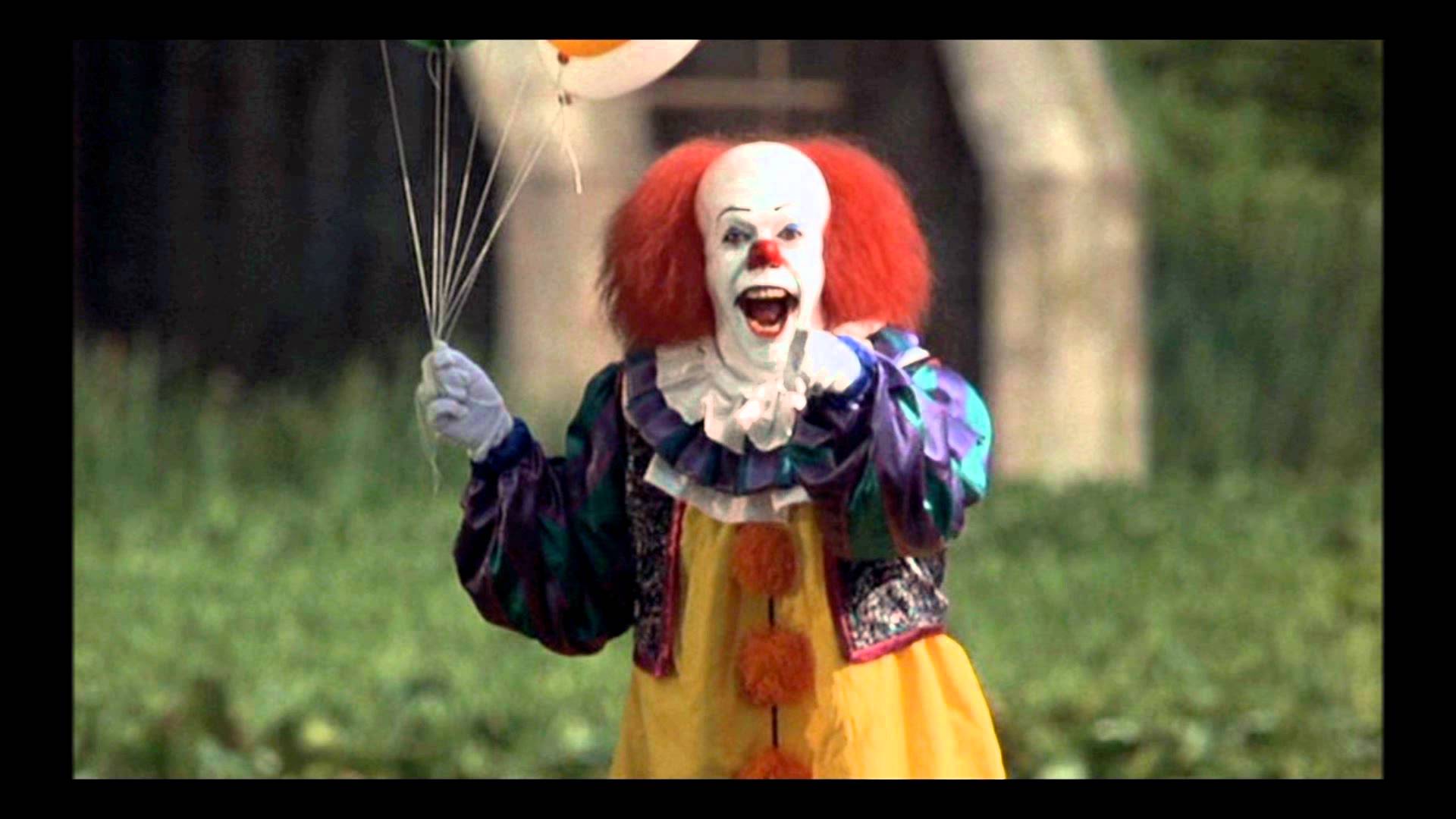
There are a lot of scary clowns in films, but not that many can carry an entire film. Stitches can.
This Irish import sees a half-assed clown accidentally offed at a 6-year-old’s birthday party, only to return to finish his act when the lad turns 16.

Yes, it is a familiar slasher set up: something happened ten years ago – an accident! It was nobody’s fault! They were only children!! And then, ten years later, a return from the grave timed perfectly with a big bash that lets the grisly menace pick teens off one by one. But co-writer/director Connor McMahon does not simply tread that well-worn path. He makes glorious use of the main difference: his menace is a sketchy, ill-tempered clown.

Dark yet bawdy humor and game performances elevate this one way above teen slasher. Gory, gross, funny and well-acted – it brings to mind some of Peter Jackson’s early work. It’s worth a look.

1. Grabbers (2012)

This joyously Irish horror comedy contends with an alien invasion in the most logical way to deal with any problem (at least in my very Irish family): Maybe if we drink enough, it’ll just go away.

Director Jon Wright takes Kevin Lehane’s tight and fun script, populating it with wryly hilarious performances and truly inventive and impressive creatures. The FX in this film far exceeds the budgetary expectations, and between the brightly comedic tale and the genuinely fascinating monsters, the film holds your attention and keeps you entertained throughout.

Drunken fisherman Paddy (Lalor Roddy) finds something more than lobsters in his trap. Indeed, not-lobsters are making a quick horror show of the island where Paddy lives, but somehow Paddy has gone unscathed. What’s his secret? It’s his truly heroic blood alcohol content, which is poisonous to the monsters. So, all the islanders have to do is hole up in the local pub, drink til they’re blind, and wait for the sun to dry up the island so the sea creatures are immobilized.

It amounts to a surprisingly tender, sweet, and endlessly funny creature feature that pairs well with a hearty stout or a shot of Jamo.

Fright Club: Best Wes Craven Movies

It’s time again to celebrate the work of a great horror filmmaker. Today it’s Wes Craven, a man who reimagined the genre again and again over his career. Sometimes with graphic violence, sometimes with satirical humor, always with a vivid imagination, Craven could make the viewer feel unsafe – a great place to start if you’re making a scary movie. Do you like scary movies?

Listen to the full podcast HERE.

5. Last House on the Left (1972)

Wes Craven made his dubious feature directorial debut with this 1972 revenge fantasy. Watch the film at your own risk, and follow the tale of a trusting family whose beloved and wholesome daughter falls into the hands of evildoers. Her fate is unknown to her family until her attackers are unknowingly taken in for the night by her family in an act of kindness. Once their crime is discovered, the family abandons decency and wreaks bloody vengeance.

Craven’s interest is the brutality – of the killers, and then the family. He wallows so mercilessly in both that this picture carries a measure of notoriety missing from anything else Craven’s directed – even The Hills Have Eyes. It’s been banned in countries the world over.

His film is not a good one, and what psychological merit it has – the idea of decent people abandoning decency in favor of blood soaked revenge – isn’t Craven’s own. (Last House on the Left is, in fact, a remake of Ingmar Bertman’s Oscar winner The Virgin Spring.) Still, for all its cartoonish sadism and contempt, for its artless disgust, Last House is an interesting genre entity, particularly as the first step in Craven’s career. It’s a horror film, plain and simple. No tidy idea that violence can be resolved through violence, or that any act of brutality is justifiable. It’s an ugly film that leaves you feeling ugly, but horror is not meant to brighten your day, eh?

4. The Hills Have Eyes (1977)

Wes Craven’s original Hills – cheaply made and poorly acted – is a surprisingly memorable, and even more surprisingly alarming flick. Craven’s early career is marked by a contempt for both characters and audience, and his first two horror films ignored taboos, mistreating everyone on screen and in the theater. In the style of Deliverance meets Mad Max, Hills was an exercise in pushing the envelope, and it owes what lasting popularity it has to its shocking violence and Michael Berryman’s nightmarish mug.

The Hills Have Eyes is not for the squeamish. People are raped, burned alive, eaten alive, eaten dead, and generally ill-treated.

In fact, Craven’s greatest triumph is in creating tension via a plot device so unreasonably gruesome no audience would believe a film could go through with it. The freaks kidnap a baby with plans to eat her. But by systematically crushing taboo after taboo, the unthinkable becomes plausible, and the audience grows to fear that the baby will actually be eaten. It’s not the kind of accomplishment you’d want to share with your mom, but in terms of genre control, it is pretty good.

3. Scream 2 (1997)

Updating his celebratory meta-analysis of genre clichés, Craven checked back in on Sydney Prescott (Neve Campell) and crew a couple years later, as the surviving members of the Woodsboro murders settled into a new semester at Windsor College. The movie Stab, based on the horrors Sydney and posse survived (well, some didn’t survive) just two years ago is already out and screening on campus, but has it inspired copycat killers?

Craven, working again from a screenplay by Kevin Williamson, goes even more meta, using the film-within-a-film technique while simultaneously poking fun at horror sequel clichés in his own horror sequel.

And in the same way Scream subverted horror tropes while employing them to joyous results, the sequel – funny, tense, scary, smart, and fun – manages to find freshness by digging through what should be stale.

2. Nightmare on Elm St. (1984)

Teens on suburban Elm St. share nightmares, and one by one, these teens are not waking up. Not that their disbelieving parents care. When Tina woke one night, her nightgown shredded by Freddie’s razor fingers, her super-classy mother admonished, “Tina, hon, you gotta cut your fingernails or you gotta stop that kind of dreamin’. One or the other.”

Depositing a boogieman in your dreams to create nightmares that will truly kill you was a genius concept by writer/director Craven because you can only stay awake for so long. It took everyone’s fear of nightmares to a more concrete level.

The film was sequeled to death, it suffers slightly from a low budget and even more from a synth-heavy score and weak FX that date it, but it’s still an effective shocker. That face that stretches through the wall is cool, the stretched out arms behind Tina are still scary. The nightmare images are apt, and the hopscotch chant and the vision of Freddie himself were not only refreshingly original but wildly creepy.

1. Scream (1996)

In his career, Wes Craven has reinvented horror any number of times. When Scream hit screens in 1996, we were still three years from the onslaught of the shakey cam, six years from the deluge of Asian remakes, and nearly ten years from the first foul waft of horror porn. In its time, Scream resurrected a basically dying genre, using clever meta-analysis and black humor.

What you have is a traditional high school slasher – someone dons a likeness of Edvard Munch’s most famous painting and plants a butcher knife in a local teen, leading to red herrings, mystery, bloodletting and whatnot. But Craven’s on the inside looking out and he wants you to know it.

What makes Scream stand apart is the way it critiques horror clichés as it employs them, subverting expectation just when we most rely on it. As the film opens, Casey (Drew Barrymore) could have survived entirely (we presume) had she only remembered that it was not, in fact, Jason Voorhees who killed all those campers in Friday the 13th; it was his mother. A twisted reverence for the intricacies of slashers is introduced in the film’s opening sequence, then glibly revisited in one form or another in nearly every scene after.

We spent the next five years or more watching talented TV teens and sitcom stars make the big screen leap to slashers, mostly with weak results, but Scream stands the test of time. It could be the wryly clever writing or the solid performances, but we think it’s the joyous fondness for a genre and its fans that keeps this one fresh.

Fright Club: Best Witch Movies

Can’t imagine what it was that inspired us to run through the best witch movies. Oh wait, it was the spellbinding and unsettling The Witch, that’s what it was. So, celebrate that film and many a Black Mass with us as we count down the best films about witches, and invite Junior Emmy-Winning Corresponding Mike McGraner to hash out the pros and cons of The Witch. Listen to the full brawl…er…podcast HERE.

5. Starry Eyes (2014)

Sarah (Alex Essoe) is an aspiring actress in LA and a bit of a delicate flower. She lives in a complex full of other aspiring actors, but she doesn’t hang out with them or participate in their low budget indie circle – they believe she thinks she’s too good for them. Then she auditions for a part, does some things on camera for the audition she regrets, behaves weirdly in the bathroom, and is invited to meet The Producer.

On the one hand, Starry Eyes offers an obvious plot about selling your soul for success, dressed in a cautionary tale about Hollywood. But the writing/directing team of Kevin Kolsch and Dennis Widmyer are much more sly than that. Yes, the insights they provide about the backbiting lowest rungs of the Hollywood ladder abound, but they are far more compassionate than what you routinely see.

Also fascinating is the clever use of the protagonist Sarah – she begins as our empathetic heroine, our vehicle through the daily degradation of trying to “make it.” But the filmmakers have more in store for her than this, and Essoe uncomfortably peels layer after layer of a character that is never fully what we expect.

Look for outstanding, witchy appearances by genre veteran Maria Olsen, as well as a spot-on Louis Dezseran. They will make you uncomfortable.

4. Suspiria (1977)

Italian director Dario Argenta is in the business of colorfully dispatching nubile young women. In Suspiria, his strongest film, American ballerina Suzy Bannion (Jessica Harper) moves to Germany to join a dance academy, but the other dancers are catty and the school staff are freaks. Plus, women keep disappearing and dying.

As Suzy undertakes an investigation of sorts, she discovers that the school is a front for a coven of witches. But Argenta’s best film isn’t known for its plot, it’s become famous because of the visually disturbing and weirdly gorgeous imagery. Suspiria is a twisted fairy tale of sorts, saturating every image with detail and deep colors, oversized arches and doorways that dwarf the actors. Even the bizarre dubbing Argento favored in his earlier films works beautifully to feed the film’s effectively surreal quality.

It’s a gorgeous nightmare, bloody and grotesque but disturbingly appealing both visually and aurally (thanks to Argento’s go-to soundtrack collaborator, Goblin).

3. The Witches (1990)

Roald Dahl can spin the most wondrously dark tales for children, and the tale that fits that description best is The Witches. Directed by Nicolas Roeg (Don’t Look Now, The Man who Fell to Earth, Performance) from a screenplay adapted by Allan Scott, the film may pull a punch here or there, but it lands others unexpectedly.

Angelica Huston – always an imposing presence – leads a cast of witches whose dastardly plan to eliminate all the children in England is overheard by, well, a child in England. Now he has to save the world, even though they’ve turned him into a mouse.

While this is absolutely a family film, full of Honey I Shrunk the Kids style fun with the tiny mouse protagonist, plus a lot of slapstick humor, Huston is forever frightening, and the film takes an absolutely terrifying turn once all those witches remove their day-to-day faces.

No, The Witches may not be a true horror flick, but it was a terrifying experience for countless kids in 1990 and it definitely boasts some of the scariest witches in cinema.

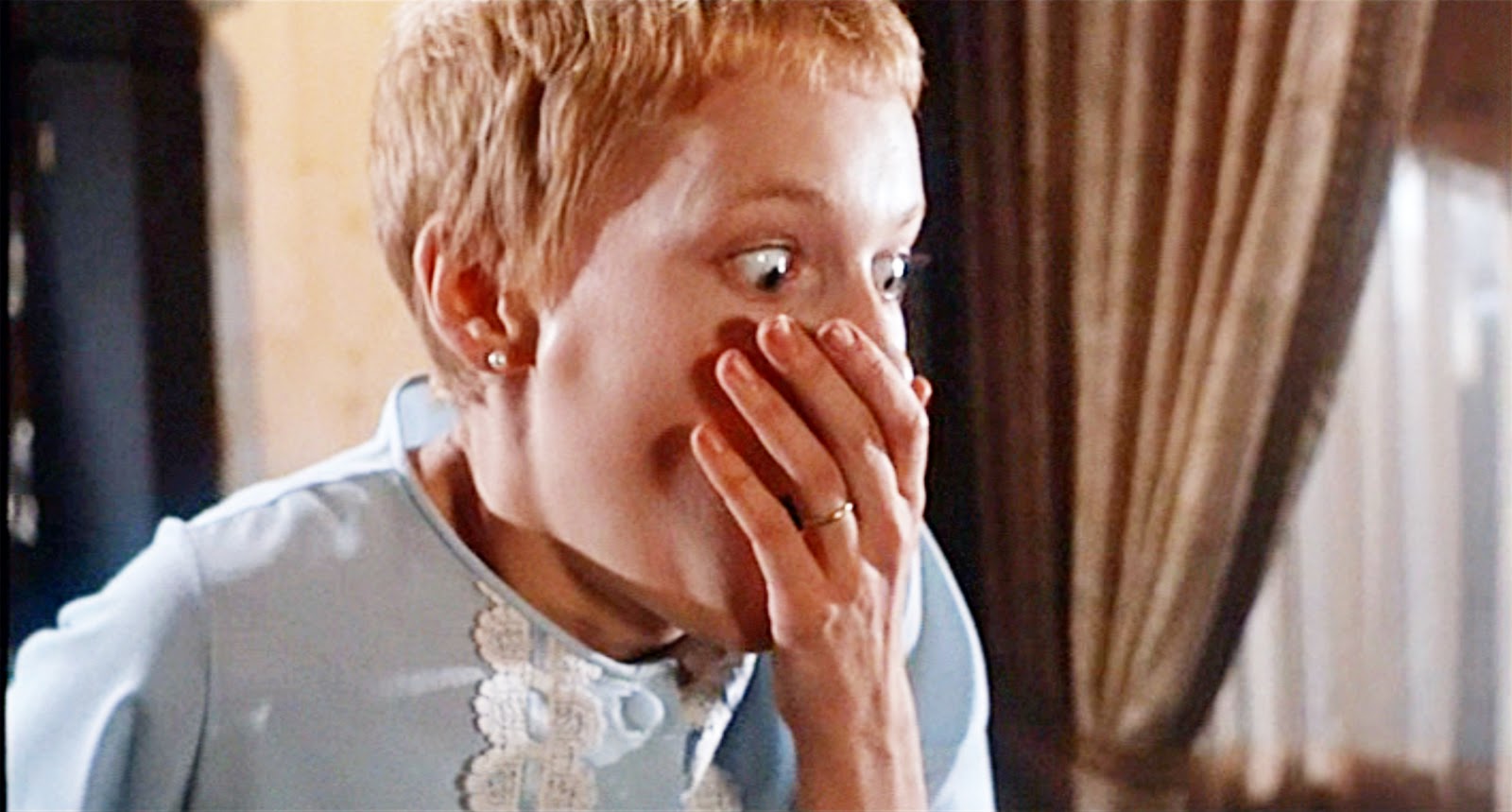
2. Rosemary’s Baby (1968)

Nearly 50 years after its release, this film remains a disturbing, elegant, and fascinating tale, and Mia Farrow’s embodiment of defenselessness joins forces with William Fraker’s skillful camerawork to cast a spell. Yes, that crazy pederast Roman Polanski sure can spin a yarn about violated, vulnerable females.

Back in ’69, Roman was interested in Rosemary Woodhouse, she of the fuzzy slippers who doesn’t want to be a bother. Tethered to aspiring actor/bad husband Guy Woodhouse, Rosemary moves into a Manhattan apartment building with a dark past and some peculiar neighbors.

Working from Ira Levin’s novel, Polanski takes all the glamour out of Satanism – with a huge assist from Ruth Gordon, who won an Oscar for her turn as the highly rouged busybody Minnie Castevet.

By now we all know what happens to poor Rosemary, but when the film was released, thanks much to Mia Farrow’s vulnerable performance, the film boiled over with paranoid tension. Was Rosemary losing it, or was she utterly helpless and in evil hands? Not that Roman Polanski, of all people, can be trusted in such a situation.

1. The Witch (2015)

The unerring authenticity of The Witch makes it the most unnerving horror film in years.

Ideas of gender inequality, sexual awakening, slavish devotion to dogma, and isolationism and radicalization roil beneath the surface of the film, yet the tale itself is deceptively simple. One family, fresh off the boat from England in 1630 and expelled from their puritanical village, sets up house and farm in a clearing near a wood.

As a series of grim catastrophes befalls the family, members turn on members with ever-heightening hysteria. The Witch creates an atmosphere of the most intimate and unpleasant tension, a sense of anxiety that builds relentlessly and traps you along with this helpless, miserable family.

Every opportunity writer/director Robert Eggers has to make an obvious choice he discards, though not a single move feels inauthentic. Rather, every detail – whether lurid or mundane – feels peculiarly at home here. Even the most supernatural elements in the film feel appallingly true because of the reality of this world, much of which is owed to journals and documents of the time, from which Eggers pulled complete sections of dialog.

Equally important is the work of Eggers’s collaborators Mark Kovan, whose haunting score keeps you unnerved throughout, and cinematographer Jarin Blaschke. From frigid exteriors to candle-lit interiors, the debilitating isolation and oppressive intimacy created by Blaschke’s camera feed an atmosphere ripe for tragedy and for horror.

As frenzy and paranoia feed on ignorance and helplessness, tensions balloon to bursting. You are trapped as they are trapped in this inescapable mess, where man’s overanxious attempt to purge himself absolutely of his capacity for sin only opens him up to the true evil lurking, as it always is, in the woods.

Fright Club: Horror at the High School Dance

Love is in the air! And it smells a lot like prom. If you thought your own prom was a dud – crap DJ, your date was grounded, your date wore corduroy, unplanned pregnancy, what have you – well, here’s a list of five high school dances that made yours look like an absolute joy. You know what we’ve learned from looking into this topic? It’s always fun to see someone die on prom night.

Listen to our whole podcast HERE.

5. Prom Night (1980)

Saturday Night Fever meets Carrie in this high school slasher that’s utterly preoccupied with disco and Jamie Lee Curtis’s boobs. Who isn’t?!

You’ll find red herrings and Seventies cop drama in a plot that, as Scream later points out, became the framework for countless films to follow. But Prom Night did it first. It did it really sloppily, but man did it bring its boogie shoes.

Who’s the killer? Is it the pervy janitor? The disfigured escaped mental patient? The vindictive ex and her hoodlum new boyfriend? It all builds to a bloodbath on prom night, so boogie down!

See it for the super-colossal dance-off. Go Jamie Lee and Jamie Lee’s thumbs, go! Is that Leslie Nielsen? Who brought that glitter?

4. Buffy the Vampire Slayer (1992)

Joss Whedon may have gotten more miles and more artistic satisfaction from the TV series, but what he did not have was Paul Reubens. Or Rutger Hauer, for that matter. How did he think that would work?

Back in ’92, Hauer and Reubens played vampires (thank you!) bent on draining a California town, but one superficial mean girl at the local high school happens to be the Chosen One, the Slayer, or so says Donald Sutherland, and it generally seems like a fine idea to listen to him. Kristy Swanson then flirts with Luke Perry while training to stake some bloodsuckers.

Swanson is joined by Ben Affleck and Hilary Swank as vacuous teens in a highly dated but no less fun horror comedy. The film may be too campy for Whedon’s taste, but anytime you crown Rutger Hauer prom king, you can count us in.

3. Scout’s Guide to the Zombie Apocalypse (2015)

“Do you know what’s cooler than cool? Scouting!”

OK, maybe not, but Boy Scouts are exactly the people you need on your zombie survival team. Who doesn’t know that? They know how to tie knots properly, they can forage, find their way around in the woods, and they’re handy. They’re prepared. Duh.

Director Christopher Landon, working with a team of writers, puts this wickedly logical premise into action with his bloody horror comedy Scouts Guide to the Zombie Apocalypse.

This is not a family film, though – make no mistake. This is definitely an R-rated movie, but for all its juvenile preoccupations and vulgar body horror, a childlike sweetness runs through it that keeps it forever fun to watch.

Cleverly written, directed with a keen eye toward detail and pacing, brimming with laughs, gore, friendship, and dismembered appendages – but utterly lacking in cynicism or irony – it’s a blast of a film with a lot to offer.

https://www.youtube.com/watch?v=A5e7Mr7eVTk

2. Carrie (1976)

The seminal film about teen angst and high school carnage has to be Brian De Palma’s 1976 landmark adaptation of Stephen King’s first full length novel, the tale of an unpopular teenager who marks the arrival of her period by suddenly embracing her psychic powers.

Sissy Spacek is the perfect balance of freckle-faced vulnerability and awed vengeance. Her simpleton characterization would have been overdone were it not for Piper Laurie’s glorious evil zeal as her religious wacko mother. It’s easy to believe this particular mother could have successfully smothered a daughter into Carrie’s stupor.

One ugly trick at the prom involving a bucket of cow’s blood, and Carrie’s psycho switch is flipped. Spacek’s blood drenched Gloria Swanson on the stage conducting the carnage is perfectly over-the-top. And after all the mean kids get their comeuppance, Carrie returns home to the real horror show.

1. The Loved Ones (2009)

Writer/director/Tasmanian Sean Byrne upends high school clichés and deftly maneuvers between angsty, gritty drama and neon pink carnage in a story that borrows from other horror flicks but absolutely tells its own story.

Brent (Xavier Samuel) is dealing with guilt and tragedy in his own way, and his girlfriend Holly tries to be patient with him. Oblivious to all this, Lola (a gloriously wrong-minded Robin McLeavy) asks Brent to the end of school dance. He politely declines, which proves to be probably a poor decision.

Byrne quietly crafts an atmosphere of loss and depression in and around the school without painting the troubles cleanly. This slow reveal pulls the tale together and elevates it above a simple work of outrageous violence.

Inside Lola’s house, the mood is decidedly different. Here, we’re privy to the weirdest, darkest image of a spoiled princess and her daddy. The daddy/daughter bonding over power tool related tasks is – well – I’m not sure touching is the right word for it.

The Loved Ones is a cleverly written, unique piece of filmmaking that benefits from McLeavy’s inspired performance as much as it does its filmmaker’s sly handling of subject matter.

https://www.youtube.com/watch?v=olB5Wrg8Sxc

Fright Club: Best Alien Horror Movies

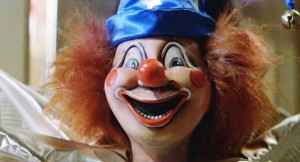
Aliens tend to be very scary. Whether they’re sucking blood from some unsuspecting, love struck plant store employee or leaving crop circles out behind Mel Gibson’s barn, unleashing slugs who share group consciousness or luring us into a fearsome carnival to learn the true meaning of “scary clown,” aliens are tough to trust. Just like Mulder says, and indeed, it was the fresh new look at The X-Files that inspired this week’s count down: the scariest alien movies.

Listen to the full podcast HERE.

5. The Mist (2007)

Frank Darabont really loves him some Stephen King, having adapted and directed the writer’s work almost exclusively for the duration of his career. While The Shawshank Redemption may be Darabont’s most fondly remembered effort, The Mist is an underappreciated creature feature.

David Drayton (Thomas Jane) and his young son head to town for some groceries. Meanwhile, a tear in the space/time continuum opens a doorway to alien monsters. So he, his boy, and a dozen or so other shoppers are all trapped inside this glass-fronted store just waiting for rescue or death.

Marcia Gay Harden is characteristically brilliant as the religious zealot who turns survival inside the store into something less likely than survival out with the monsters, but the whole cast offers surprisingly restrained and emotional turns.

The FX look good, too, and the film itself is best seen in via the black and white version. Regardless, it’s the provocative ending that guarantees this one will sear itself into your memory.

4. Slither (2006)

Writer/director James Gunn took the best parts of B-movie Night of the Creeps and Cronenberg’s They Came from Within, mashing the pieces into the exquisitely funny, gross and terrifying Slither.

Cutie pie Starla (Elizabeth Banks) is having some marital problems. Her husband Grant (the great horror actor Michael Rooker) is at the epicenter of an alien invasion. Smalltown sheriff Bill Pardy (every nerd girls’ imaginary boyfriend Nathan Fillion) tries to set things straight as a giant mucous ball, a balloonlike womb-woman, a squid monster, projectile vomit, zombies, and loads and loads of slugs keep the action really hopping.

Consistently funny, cleverly written, well-paced, tense and scary and gross – Slither has it all. Watch it. Do it!

3. Invasion of the Body Snatchers (1978)

Among the best remakes of all time, Philip Kaufman’s Invasion of the Body Snatchers creates an oppressive, delirious atmosphere that will not let you go. San Francisco health department workers originally believe some friends are becoming paranoid, sensing a non-existent distance in their loved ones, but soon realize that an alien species is replacing human beings with replicas – exact duplicates, except for the lack of emotion.

The sound and visual effects are especially magnificent when compared to other films of the era, but they age well and give the film a gritty realism that feels unsettling against the fantasy storyline.

The cast is weirdly perfect – the unflappable Donald Sutherland, the naturally emotionless Leonard Nimoy, the effortlessly weird Jeff Goldblum, and Nancy Cartwright, who screams so well when aliens show themselves.

2. The Thing (1982)

John Carpenter’s remake of the 1951 SciFi flick The Thing from Another World is both reverent and barrier-breaking, limiting the original’s Cold War paranoia, and concocting a thoroughly spectacular tale of icy isolation, contamination, and mutation.

A beard-tastic cast portrays a team of scientists on expedition in the Arctic who take in a dog. The dog is not a dog, though. Not really. And soon, in an isolated wasteland with barely enough interior room to hold all the facial hair, folks are getting jumpy because there’s no knowing who’s not really himself anymore.

This is an amped up body snatcher movie benefitting from some of Carpenter’s most cinema-fluent and crafty direction: wide shots when we need to see the vastness of the unruly wilds; tight shots to remind us of the close quarters with parasitic death inside.

The story remains taut beginning to end, and there’s rarely any telling just who is and who is not infected by the last reel. You’re as baffled and confined as the scientists.

https://www.youtube.com/watch?v=F7t-919Ec9U

1. Alien (1979)

After a vagina-hand-sucker-monster attaches itself to your face, it gestates inside you, then tears through your innards. Then it grows exponentially, hides a second set of teeth, and bleeds acid. How much cooler could this possibly be?

Compare that to the crew, and the competition seems unreasonably mismatched. The sunken-chested Harry Dean Stanton, the screechy Veronica Cartwright, the sinister Ian Holm, the mustachioed Tom Skerritt, even the mulleted Sigourney Weaver – they all seem doomed before we even get to know them.

Director Ridley Scott handled the film perfectly, emphasizing the tin can quality of the futuristic vessel. These people are simply not safe – they probably were in danger before bringing the afflicted John Hurt back on board. It’s dark in there, decaying and nasty – just like some moldy old mansion. The trick here is that these people- unlike the inhabitants of a haunted house – truly cannot go anywhere. Where would they go? They’re in space.
Much ado has been made, rightfully so, of the John Hurt Chest Explosion (we loved their early work, before they went commercial). But Scott’s lingering camera leaves unsettling impressions in far simpler ways, starting with the shot of all those eggs.

Fright Club: Best Found Footage Horror Movies

It is the most tired and tiresome of all horror film gimmicks, but are there worthwhile found footage movies to be celebrated? Or are they all simply the result of an inexpensive narrative device that allows for sloppy filmmaking and weak production values? Well, we did the research and found that there are many worthwhile offerings in this field. Yes, the bad outnumber the good 10 – 1, but there are good ones. Here are our five (OK – 6!) favorites.

Listen to the whole podcast HERE.

6. Trollhunter (2010)

All ancient cultures generated fairy tales. They passed on stories that wrapped the virtues most respected at the time inside common dangers to tell tales of heroism and humor. Norway’s fairy tales all involve trolls. Indeed, their entire national culture seems weirdly identified with trolls. Why is that? Well, writer/director Andre Ovredal’s Trollhunter suggests that maybe it’s because trolls are a real problem up there.

Ovredal’s approach is wry and silly – adjectives that rarely hang out together, but maybe we haven’t seen enough of Norway’s cinematic output. The FX are sometimes wonderful, and especially effective given the otherwise verite, documentary style. Ovredal makes droll use of both approaches.

Trollhunter is definitely more comedy than horror, as at no time does the film actually seek to scare you. It’s a wild ride into a foreign culture, though, and it makes you think twice about the Norway section of Epcot, I’ll tell you what.

https://www.youtube.com/watch?v=vy2nAOdBUlw

5. Paranormal Activity (2007)

Paranormal Activity, or The Little Ghost Story That Could, opened on a handful of screens in just a few cities around the country for midnight weekend shows only. All screenings promptly sold out. Powerful word-of-mouth and an aggressive marketing campaign propelled the modest flick into multiplexes worldwide. Why the hubbub? Well, for those patient enough to let it seep in – for those who do not require a jump, a slash, or a violent act in every fifth frame – Paranormal Activity is an effective, creepy little production.

A classic ghost story, the film evolves Blair Witch-style, as a couple pestered by something spectral begin cataloguing incidents with a night vision camera. The entire film consists solely of the video footage, tracking about three weeks’ worth of rising tension, most of it captured in the couple’s bedroom while they sleep.

The couple (Katie Featherston and Micah Sloat) is annoyingly believable in their pensions for doing the wrong thing simply to cater to each other’s insecurities. This, and the simplicity in the filmmaking – limited effects, incredibly limited cast and sets, minimal backstory – create an unnerving air of authenticity. The cam-corder timestamp rolls quickly forward, providing shorthand imaging of the couple sleeping, then slows to real time tracking just as something is about to happen. This repetitive gimmick proves so succinct and effective that dread begins to build while still fast forwarding. By the time the clock slows, half the audience is holding its breath.

4. The Last Horror Movie (2003)

A clever concept handled very craftily, The Last Horror Movie is found footage in that we, the audience, have found it recorded over the VHS tape we are apparently watching. What serial killer Max (a top notch Kevin Howarth) has done, you see, is made a documentary of his ghastly habits and shared them with an audience that’s shown, by virtue of the movie it intended to rent just now, its predeliction for someting grisly.

There’s a lot of “yes, I’m a bad person, but aren’t you, too” posturing going on, and while it is an idea to chew on, it nearly outlives its welcome by the time Max applies his theory to concrete action. It’s an idea explored masterfully by Michael Haneke in 1997 (and again, ten years later) with Funny Games, and by comparison, The Last Horror Movie feels a bit superficial. (Not a huge criticism – few could withstand a comparison to Michael Haneke.)

But director Julian Richards deserves immense credit for subverting expectations throughout the film. Just when we assume we’re seeing a predator anticipating the pounce – just when we’re perhaps feeling eager to see someone victimized – the film makes a hard right turn. In doing this, Richards not only manages to keep the entire film feeling fresh and unpredictable, but he enlightens us to the ugliness of our own horror movie fascinations.

https://www.youtube.com/watch?v=McCUO5tQ5gk

3. Man Bites Dog (1992)

Oh, Belgium. How we do love your horror output. In a bit of meta-filmmaking, Man Bites Dog is a pseudo-documentary made on a shoestring budget by struggling, young filmmakers. It is about a documentary being made on a shoestring budget by struggling, young filmmakers. The subject of the documentary is the charismatic Ben – serial killer, narcissist, poet, racist, architecture enthusiast, misogynist, bird lover.

There’s more than what appears on the surface of this cynical, black comedy. The film crew starts out as dispassionate observers of Ben’s crimes – which is certainly morally questionable to begin with. Eventually their commitment to the project, fear of retaliation, bloodlust, or sense of camaraderie pushes them toward aiding Ben, and then finally, to committing heinous crimes themselves.

It’s a bitter view of their chosen industry, and – much like The Last Horror Movie – a bit of a condemnation of the viewer as well. The fact that much of the decidedly grisly content is played for laughter makes it that much more unsettling.

2. [REC] (2007)

[Rec] shares one cameraman’s footage of the night he and a reporter tagged along with a local fire department. The small news crew and two firefighters respond to a call from an urban apartment building. An elderly woman, locked inside her flat, has been screaming. Two officers are already on the scene. Bad, bad things will happen.

Just about the time the first responders realize they’re screwed, the building is completely sealed off from the outside by government forces. Power to the building is cut, leaving everyone without cell reception, cable, and finally, light. Suddenly we’re trapped inside the building with about fifteen people, some of them ill, some of them bleeding, some of them biting.

Filmmakers Jaume Balaguero and Paco Plaza make excellent use of their found footage approach, first by way of the news report, then because of the need to use the camera to see once power’s been cut. They play the claustrophobic nature of the quarantine to excellent effect, creating a kind of funhouse of horror that refuses to let you relax. The American reboot Quarantine is another excellent choice, but our vote has to go with the original.

1. The Blair Witch Project (1999)

BW is, of course, the now famous instigator of the found footage movement. Yes, Cannibal Holocaust was the first film to use the found footage conceit, but a) it sucked, and b) it didn’t show the audience this footage exclusively. Cannibal Holocaust built a narrative around the film canisters, and then looked at them. One of several truly genius ideas behind Blair Witch is that the filmmakers made the audience believe that the film they were watching was nothing more than the unearthed footage left behind by three disappeared young people.

Between the novelty of the found footage approach and the also novel use of viral marketing, the film drew a huge audience of people who believed they were seeing a snuff film. Nice.

And those two cutting edge techniques buoyed this minimalistic, naturalistic home movie about three bickering buddies who venture into the Maryland woods to document the urban legend of The Blair Witch. Twig dolls, late night noises, jumpy cameras, unknown actors, and not much else blended into an honestly frightening flick that played upon primal fears.

https://www.youtube.com/watch?v=D51QgOHrCj0

Fright Club: Oscar Nominee Skeletons in the Closet

The Oscar nominations are out, and – as is the case every year – the nominees with horror movie skeletons in their closets are fully accounted for. We’ve discussed the great Mark Ruffalo’s not-so-great The Dentist in previous podcasts, so we’ll leave that one in the closet this week. Rooney Mara just missed the cut, as well, with only a cameo in her sister Kate’s Urban Legends: Bloody Mary. The only problem with Tom Hardy was basically determining which bad horror movie to choose (which basically means Tom Hardy is filling in for George “Oh So Many” Clooney this year.)

Who made the grade? Who might take home an Oscar regardless of this horrific offense in their background? Provocative!

Listen to the whole podcast here:

5. House at the End of the Street (2012)

Jennifer Lawrence starred in three films released in 2012 – The Hunger Games (maybe you’ve heard of it?), Silver Linings Playbook (winning her first Oscar), and House at the End of the Street. One of these is not like the others.

Lawrence plays Elissa, high school badass who moves into a secluded new house with her single, doctor mother (Elisabeth Shue). Legend has it, out in the woods behind the house roams the crazy-ass, murdering sister of the cute if damaged neighbor boy, Ryan (Max Thieriot).

House at the End of the Street is a smorgasbord of ideas stolen from better films and filmmakers, although it is not a god-awful mess. Whatever success it has is thanks to Lawrence, whose talent knows no bad screenplay, no clichéd character, and cannot be overshadowed by a tight, white tank top.

4. Blood Creek (2009)

What would be more compelling viewing than Superman Meets Batman? Henry Cavill’s run-in with a Nazi zombie played by Michael Fassbender. Clearly.

A Nazi scientist finds a Viking runestone on a West Virginia farm, where blood sacrifice turns him into an ageless monster, and a weird, runestoney ritual keeps him bound in the farmer’s basement. That guy – that Nazi zombie – is played by Michael Fassbender. Whose mind is blown?

Cavill comes into the picture when his character Evan reunites with long lost and presumed dead brother Victor (Dominic Purcell). Some crazy farmers have had him locked up all this time, taking his blood for god knows what purpose.

Truth be told, Cavill offers a fine turn full of longing and regret, and Fassbender is mesmerizing. The guy cannot turn in a bad performance. He’s completely feral, totally unhinged. It’s like he has no idea that the movie he’s in is so, so, so very bad.

The effects are terrible, the medieval Viking hocus pocus is beyond ludicrous, Purcell cannot act, and the script’s lack of logic actually makes you long for director Joel Schumacher’s better efforts, like Batman and Robin or 8MM.

Seriously, that’s how bad this is.

3. Critters 3 (1991)

Long before Django Unchained, Titanic, or even What’s Eating Gilbert Grape, a barely pubescent Leo DiCaprio donned a day-glow t-shirt and a pre-teen scowl to battle Gremlin rip-offs in Critters 3.

They are furry, toothy, ravenous beasts from outer space and, until episode 3, they were content to terrify rural folk. But now they’re in the big city, and (in a clear rip off of the not-quite-as-terrible film Troll), they are pillaging a single apartment building and terrifying all those trapped inside. It’s a comedy, really, the kind with farting furballs and dunderheaded people. Which is to say, one that’s not particularly funny.

Serving up the same derivative comedy/horror pap you can find in one out of every three films made that decade, Critters 3 has a lot of hair in scrunchies, oversized blouses belted over colorful leggings, stereotypes, and actors on their careers’ last legs. And Leonardo DiCaprio, which will forever be the only reason this movie was released to DVD.

2. Minotaur (2006)

Oscar nominee Tom Hardy is truly one of the most talented actors working today, and I’m sure he’s proud of all his films. Except maybe this one.

The film plays like Jabba the Hutt’s palace set in Middle Earth, except in place of Jabba we have Candyman (Tony Todd, whose actual character name is Deucalion, but he’ll always be Candyman to us). Todd is king of the realm, and beneath his castle lives a Minotaur who requires a blood sacrifice. Periodically he rounds up youngsters from Theo’s (Hardy) village and drops them down below.

Hey – just like the Rancor!

Theo secretly takes the place of one of the sacrificial lambs and hits the underground to slay the Minotaur and reclaim his (probably long dead) love. Hallucinations, danger, and stilted medieval dialog await below the castle, while up above, Deucalion wants to get it on with his sister, who wants to get it on with Theo.

The sets are pretty terrible, as are the accents, props, costumes. Oh, and the Minotaur! He’s like an angry Muppet. But Hardy acquits himself reasonably then quickly goes on to better things.

You will, too, but why not indulge?

1. Dead Space (1991)

A distress signal from a research lab on the planet Fabon draws in maverick space cowboy Steve Krieger (Marc Singer, from such superior films as Beastmaster 3) and his cyborg shipmate Tinpan. Oscar nominee and billion-time Emmy winner Bryan Cranston plays an infected scientist more sympathetic to the creature he’s created than to the crew this merciless muppet feeds upon.

Jesus God this movie is bad.

The story is utterly nonsensical. No, not that scientists removed from earth have unwittingly created a monster. But why do they feel obligated to share all their secrets with some rando space ranger, why does he take charge of the vessel, why does everyone wear blue unitards underneath their lab coats, who on earth thought Laura Mae Tate could act – well the unanswerable conundrums are legion.

But Cranston tries. He tries to create a character, tries to generate chemistry with other actors, tries to be both villain and victim, tries not to look like a mannequin when the giant mutant tears his head clean off. He totally fails, don’t get us wrong, but damnit, he tries.