Rock music and horror have always gone together like peanut butter and jelly. Given that both are considered outsider artforms, it’s just a natural pairing. After all, rock (and metal or punk) music tends to be aggressive and there is no genre of film more aggressive than horror. Even action cinema tends to be less brutal.
Comedy is another genre that fits well with both horror and rock. Both artforms love to roll about in camp on occasion, cutting loose with over-the-top subject matter and black humor. Murder Ballads knows all of this and revels in it, while also mixing doses of British crime into the mix as well. What results is an offbeat concoction that feels like someone dumped elements of ‘90s slacker comedies, music biopics, and ‘90s crime comedies into a blender. The trappings are lo-fi due to its indie budget, but the throwback sentiments remain intact.
The story follows a struggling British rock band in desperate need of a new image – including a new member – and a new hit song. If they cannot swing either one, their label is going to give them the boot. Desperate times call for desperate measures and those desperate measures end up involving theft, deception, and murder, among other things. If that weren’t enough, most of the band members also happen to be morons. Given that morons are prone to making mistakes and mistakes are the last thing one should be making when committing crimes, well, you can see why things inevitably get out of control.
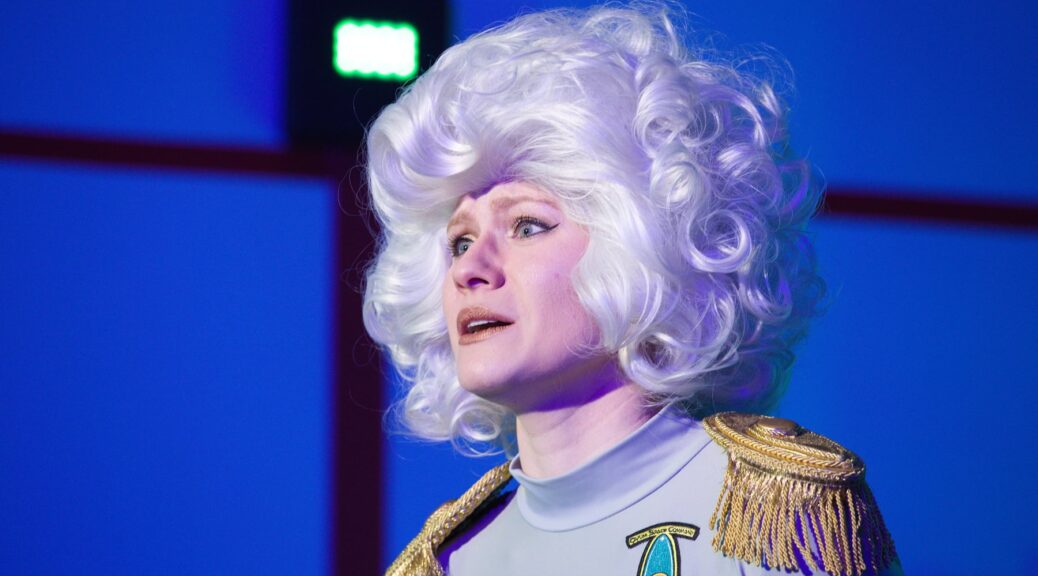
Writer/director Mitchell Tolliday has crafted a fun little film here about the darkly comedic and supremely chaotic rise and fall of a British rock ‘n’ roll band. The performances are pitched properly to the film’s playful tone, the faux documentary cutaways to actor Simon Callow are amusing, and the segues between sections are cute and inventive. Aside from some occasional pacing issues, this is a fun time.
Genre-bending mysteries were big in the ‘80s and high concept thrillers were all the rage in the ‘90s. Attempting to combine both is a bit of a tall order, but it’s one that writer/director Evan Marlowe aims for with Abruptio. What we have here is an increasingly tense and weird tale of a mild-mannered sad sack named Les (James Marsters – more on that in a moment) who finds himself at the center of an increasingly weird and violent conspiracy. Forces beyond his comprehension are compelling him to commit heinous acts at the drop of a hat. If he refuses, he dies. But will he be able to live with himself if he continues to accept these diabolical missions?
You’d think that would be enough of a tightrope act for Marlowe to walk, but you’d be wrong. Not satisfied with crafting just any mere genre-melting pot thriller, Evan decided he should also do the entire thing with puppets and other handcrafted effects. The potential failure rate for such an additional complication is high, but Abruptio nonetheless manages to pull it off. Because of this, every last bit of tension, violence, and weirdness gains an extra layer of uncanniness, absurdity, and existential dread.
Quite a few of our puppet leads are voiced by familiar genre performers. There’s the aforementioned James Marsters, who voices a troubled middle aged lead who 30 years ago could have easily been played in the flesh by J.T. Walsh. We also get the late Sid Haig as a sketchy stand-up comedian, the great Robert Englund as a haunted neat freak, and Christopher McDonald as a gruff intimidating police chief. All of this is an added bonus atop a film that bears multiple influences from genre filmmaking luminaries like David Cronenberg, John Carpenter, Don Coscarelli, David Lynch, and Joel Schumacher.
An experimental, genre-bending, high concept thriller performed entirely with advanced puppetry should be a recipe for disaster. In the hands of Evan Marlowe, his crew, and his voicecast, it sings. Abruptio should not work, but it very much does. The world has been gifted a wild little midnight movie here that isn’t for everyone, but the people who it is for are going to love every last bit of it.
The Wheel of Heaven delivers oddball charm and horror in equal measure.
What’s it about? That’s an excellent question, and not a simple one to answer. We seem to be stuck on late night, all access TV, which is running through a wild set of programs and sponsors. (My favorite sponsor is Rad Abrams, Skateboard Attorney.)
And my favorite show is undoubtedly The Uncle Bobbo Show, which was also the focus of director Joe Badon’s 2021 short, The Blood of the Dinosaurs.
Kids’ TV host Uncle Bobbo (an eerily unblinking Vincent Stalba) wants to teach us where oil comes from. With assistance from his vampire puppet co-host Grampa Universe (voiced by John Davis) and his young helper Purity (Stella Creel), he seeks to enlighten and entertain. And misinform. It’s sort of a Pee-wee’s Playhouse for sociopaths. If that does not seem like a ringing endorsement, you’re not reading it correctly.
So, we’re watching highly local TV programming. Or are we? Maybe each story is a little diorama dreamt up by local artist Margaret Corn (Kali Russell)? Or perhaps we may instead be reading along with Marge the Mechanic (Russell again), who picked up a “choose your adventure” book at a thrift store.
Russell plays at least half a dozen distinct but related characters, each a fully formed and often bizarre individual. Her range and effortless skill with characterization ground the segments in something tangible, however goofy the character.
Whether these characters are part of a book, TV programming or one artist’s imagination is irrelevant. Badon’s upended the concept of a framing story for what is essentially an anthology of short films. Every tale, including the framing stories, morph and mutate and as each folds in on itself, Badon and his crew appear to emphasize the illusion versus reality of this absurdist storytelling.
What else does Badon hit on? Birth. Death. Choice. 3D glasses. Kitch. Homage. Dinosaurs. Storytelling. But mainly creation and how the act of creating is linked to all of these. The Wheel of Heaven throws a lot at you and not all of it hits, but Badon’s instinct for the bizarre, humorous and horrific generate a wonderfully oddball effort.
With her feature debut, director Clare Cooney skates some familiar ice but tweaks the high school slasher enough to produce a charming, compelling and strangely fresh slasher with Departing Seniors.
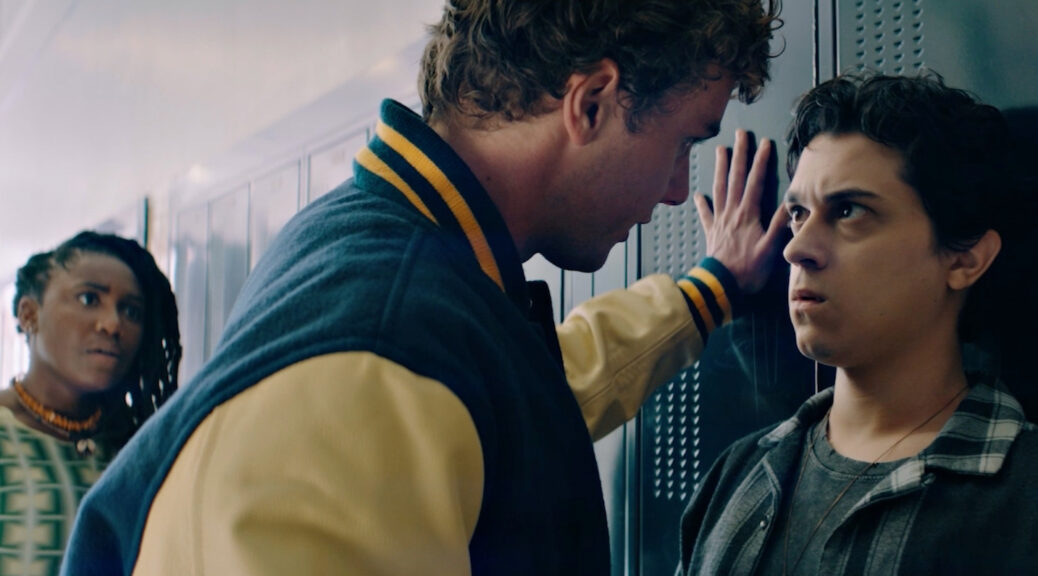
Jose Nateras’s script centers on Javier (Ignacio Diaz-Silverio), a high school senior who loves his best friend Bianca (Ireon Roach) and his gig on the high school paper, and maybe new guy William (Ryan Foreman). Otherwise, high school blows, but it’s almost over and then – even if Ginny (Maisie Merlock) steals his slot as valedictorian – he and Bianca will be out of this Podunk town and on to better things.
Graduation can’t come soon enough, though, because Ginny and her letter-jacket buddies have amped up the bullying. Things are so bad Javier barely even notices when the first of the popular jock dumbasses dies in the pool of apparent suicide.
At its best, Departing Seniors breathes life into the tropes of coming-of-age horror films. Cooney has gathered a truly talented and memorable group of young actors to elevate a clever if somewhat predictable take on the high school slasher. This cast, top to bottom, impresses and Nateras writes characters that they can sink their teeth into.
Diaz-Silverio reimagines the bullied teen with tenderness, resilience and humor. An exceptional, empathetic central figure, it is impossible not to root for Javier.
Roach continues her streak (after Jennifer Reeder’s Knives and Skin and Perpetrator as well as Nia DaCosta’s Candyman) of carving memorable characters regardless of screen time. She brings a relatable, cynical humor that also emphasizes Javier’s kindness.
The traditional plotting eventually limits the film’s creative success and the speechifying undoes a lot of the nuanced storytelling that preceded it, but you never stop caring about the characters. Departing Seniors subverts every one-dimensional high school slasher cliché to deliver a startlingly empathetic and effecting thriller.
In the anthology horror film Cryptids, horror veteran Joe Bob Briggs plays radio show host Major Harlan Dean. Dean hosts the call-in show, The Truth Serum. With that kind of name, you might suspect a show dedicated to all manner of conspiracy-style neuroticism. However, in the episode we’re privy to, Dean’s focus is cryptozoology – he wants callers to recount their encounters with cryptid creatures.
By setting up the framing story this way, each call into the radio show becomes its own entry. As with any anthology horror, some of the shorts are better than others. In this case, all deal with creepy creatures – some familiar beasties, like chupacabras, and others that are unique to this movie.
The first segment is a bit of a stretch for its inclusion in a film about cryptids since the creatures in question are technically human. However, they’re creepy and unnerving enough that you probably won’t mind their presence. The first short is also a nice warm up for what’s to come. It’s not the best of the bunch, but it’s fun and just a little creepy.
Since each mini movie has only so much time to work with, every short opens with a call into Dean’s show before jumping right to the heart of the matter – the monsters.
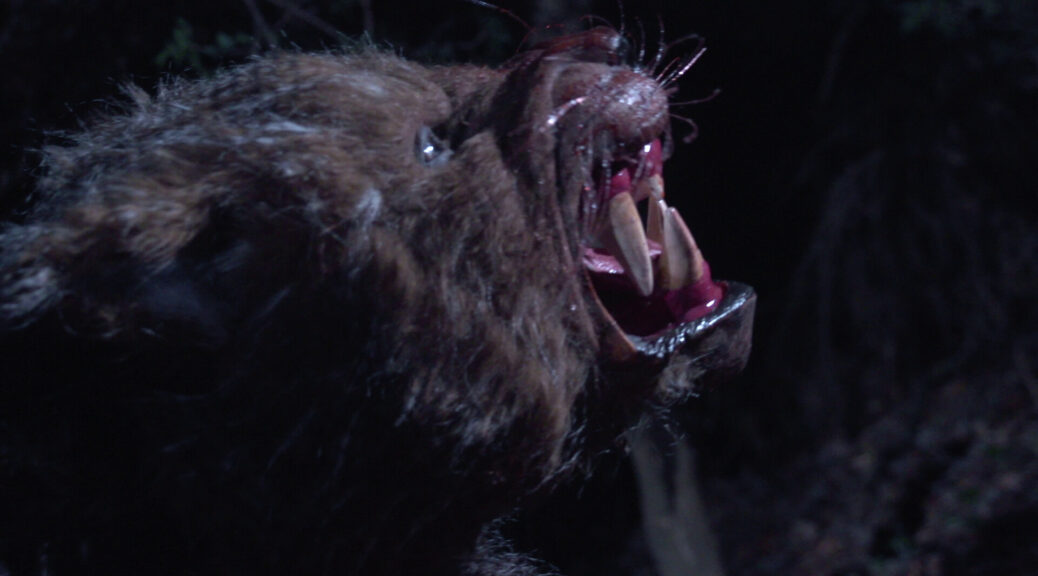
The movie’s best aspect is the creature effects. Each creature has its own unnerving features, and each is unique, though some resemble monsters you may have seen before. Little creatures that hatch from a giant egg were my personal favorite beasties as they were both creepy and adorable (something only a mother could love?).
There is always a certain amount of enjoyment that comes with anthology horror since you’re not always sure what will come next. While in this case, it’s clear to be some kind of creature, what they are and what they do is where the fun comes in. Some of the creature antics are gruesome, leaving no shortage of gore and carnage in many of the segments. While the writing can sometimes leave a little to be desired, the film’s overall effect is entertaining. If you like creature features, each of Cryptids little creature slices is enjoyably nasty.
Hats! They tell you a lot about a villain. Norma’s lightning bolt hat in Carrie tells us that she lacks fashion sense. Leprechaun’s golden buckled hat tell us that he’s sassy. Art the Clown’s tiny little hat lets us know that he doesn’t take himself too seriously. The Wicked Witch of the West wore the greatest, most iconic villain hat of all time, but The Wizard of Oz is not horror, so she didn’t make this list.
Who did make our list of best use of hats in a horror movie? Let us share with you.
5. The Grabber, The Black Phone (2021)
Ethan Hawke’s look for Scott Derrickson’s adaptation of the Joe Hill short story is epic. The constantly evolving, endlessly sinister mask is the push over the cliff, but it all starts with that hat. A black top hat not unlike the one that brought Frosty to life, this hat means magic.
He is a part time magician, after all! And in 1973, I guess people did not se magicians or clowns as scary. But they should have.
4. Mr. Dark, Something Wicked This Way Comes (1983)
Another dark top hat, Mr. Dark’s headwear of choice also conjures the image of magic. But somehow, even in Green Town, Illinois, Mr. Dark doesn’t look out of place with so formal a look. Sure, every other Joe wears something less fancy, but on Mr. Dark, the hat seems perfectly in place.
That’s all part of his charm.
3. Alex, A Clockwork Orange (1971)
The bowler – headwear of choice for Alex and his Droogies. You have to look sharp when on the prowl for a bit of the old in and out.
The iconic costuming in Stanley Kubrick’s masterpiece adaptation of Anthony Burgress’s novel creates the mood for the piece. Somehow retro and futuristic, elegant and brutal, punk rock and Ludwig Van all come together in this one ensemble: white trousers, white shirt, white cod piece, and suspenders, black boots, one set of black lashes and that spiffy bowler. Welly, welly, welly, welly well.
2. The Babadook, The Babadook (2014)
If it’s in a word, or if it’s in a book you can’t get rid of the Babadook. He wears a hat he’s tall and black but that’s how they describe him in his book. A rumbling sound, than three sharp knocks you better run, or he’ll hold you in his locks. ba-ba-ba-dook-dook-dook… Your closet opens and your honestly hopin’ that he won’t hear a sound but that’s when you know that he’s around. The book close you have an itch under your nose and that’s just how the story goes. So close your eyes and count to ten better hope you don’t wake up again. ‘Cause if it’s in a word, or if it’s in a book you can’t get rid of the Babadook …. you’ll see him if you look
1. Rose the Hat, Doctor Sleep (2018)
Possibly the hottest villain since Salma Hayak wrapped a yellow python around her neck, Rose the Hat (Rebecca Ferguson) will swallow your soul.
Ferguson’s performance is eerily, hauntingly believable in Mike Flanagan’s courageous take on Stephen King’s The Shining sequel. Of his many successes with this film, his villain ranks highest. Rose the Hat is savvy, strong, and more than anything, merciless.
The sins of the father might be laid upon the children. But it’s the women who suffer the most in Saturn Bowling, a tight and gripping French noir from director Patricia Mazuy (Paul Sanchez Is Back!).
Police detective Guillaume (Arieh Worthalter) inherits a bowling alley from his late father. Too busy to run the business himself, he allows his estranged half-brother Armand (Achille Reggiani) to oversee the alley’s operations.
While Guillaume tracks a brutal serial killer who is violently attacking and murdering young women, he must also juggle a new relationship with animal rights activist Xuan Do (Y-Lan Lucas) while keeping his father’s rowdy hunting buddies happy at the bowling alley.
It’s not a murder mystery—we know right away who the killer is, even if it takes Guillaume too long to realize the suspect is someone close to home. But it’s the killer’s motivations (as well as the unflinching misogynistic rage) that makes Mazuy’s thriller so deeply discomfiting.
Saturn Bowling is also sumptuously filmed, with the bowling alley’s seedy nighttime scenes bathed in deep blacks, reds and blues. And the daytime offers little respite. As befits this neo-noir, there are no heroes to be found.
Worthalter and Reggiani are well-matched to fill in the blanks in the brothers’ long-estranged relationship with their demeanors. The grizzled detective is a familiar character, but it falls to Reggiani to turn the cryptic Armand into a fully absorbing (if detestable) person. The film plays it coy at times with just what is haunting Armand, natural or otherwise. Which makes it incredibly effective and hard to watch when Reggiani unleashes the full extent of Armand’s perversity. The brothers’ fates take on almost Shakespearean proportions in the shadow of their dead father. Mazuy and co-writer Yves Thomas construct a seamy world where predators are constantly on the hunt, driven by almost supernatural forces that are beyond their grasp to understand, let alone stop and imagine what a less hateful existence may look like.
I’m going to guess Joe Lynch is a Stuart Gordon fan.
Who isn’t?!
The Mayhem director returns to the horror genre with a Lovecraftian fable, but this is no garden variety Lovecraft. Lynch’s vibe and manner – not to mention co-writer and cast – lean closer to Gordon homage than outright cosmic horror.
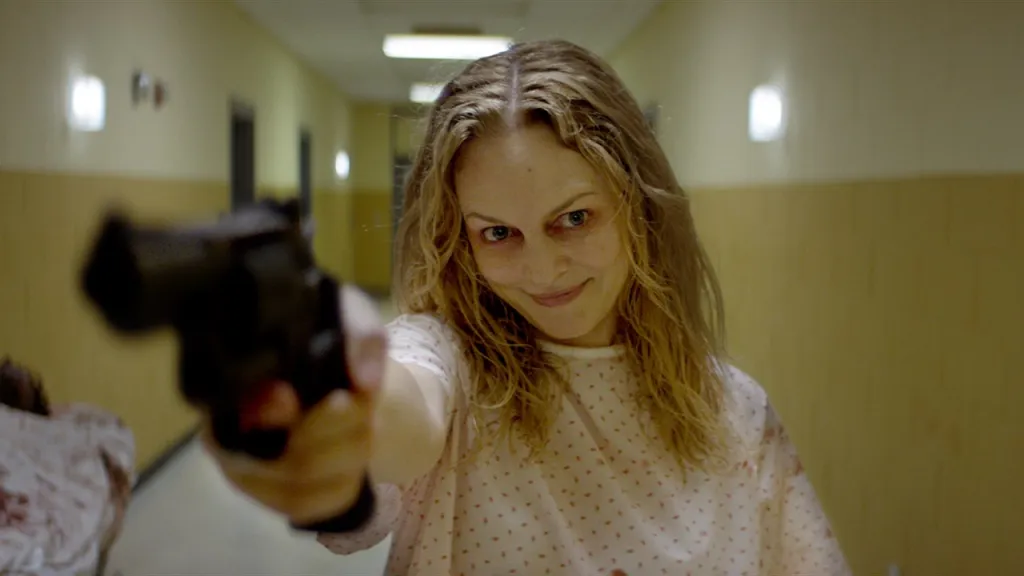
Lynch loosely adapts Lovecraft’s The Thing on the Doorstep, writing with Stewart’s longtime collaborator Dennis Paoli (Re-Animator, From Beyond, Castle Freak, Dagon). Their tale shadows psychiatrist Elizabeth Derby (Heather Graham), who – against her own better instincts – takes on a new patient. Asa (Judah Lewis) believes his father is trying to steal his body.
Cleaving to science and yet inexplicably attracted to the young man, Derby fails to understand her patient’s claims until it is too late – an evil entity has moved from Asa’s father into Asa and is now threatening to take over Dr. Derby’s body.
Graham’s a bit of campy fun in a dual role – far more fun when she gets to dig into the hedonistic villain character. It’s a performance that lets the actor stretch a bit and she seems to relish the darker side of the role. Likewise, Lewis excels in particular when the sinister force inhabits meek and terrified Asa.
Of course, no Gordonesque Lovecraftian flick is complete without the glorious Barbara Crampton (Re-Animator, From Beyond, Castle Freak). Crampton’s Dani, Derby’s uptightcolleague and best friend, becomes an ideal foil for the transformed psychiatrist. Graham and Crampton vamp it up as the demon oscillates between them, which is as much fun as it sounds like it would be.
The film feels very much like a Dennis Paoli film and fans of his Gordon collaborations have reason to celebrate. But Suitable Flesh doesn’t entirely deliver on its promise of mayhem. It never quite leaps off that cliff the way Paoli films usually do and for that reason feels a tad tame.
But a game cast and a bit of 80s inspired lunacy ensure a good time is had by all. Plus, that’s a great title.
The question comes from a book on Osage Indian history that Ernest Burkhart is perusing, and it’s one that lingers throughout Martin Scorsese’s triumphant epic Killers of the Flower Moon.
After serving as a cook in WWI, Ernest (Leonardo DiCaprio) has come home to work for his uncle William “King” Hale (Robert De Niro) on an Oklahoma ranch. But while King is a wealthy powerbroker in the town of Fairfax, he laments that his “cattle money” is nothing next to the oil money of the Osage tribe, at that time the richest people per capita on the face of the Earth.
The Osage natives are worried, too, about the price of assimilation, the dangers that come with the comforts of wealth, and the white men eager to marry into their money.
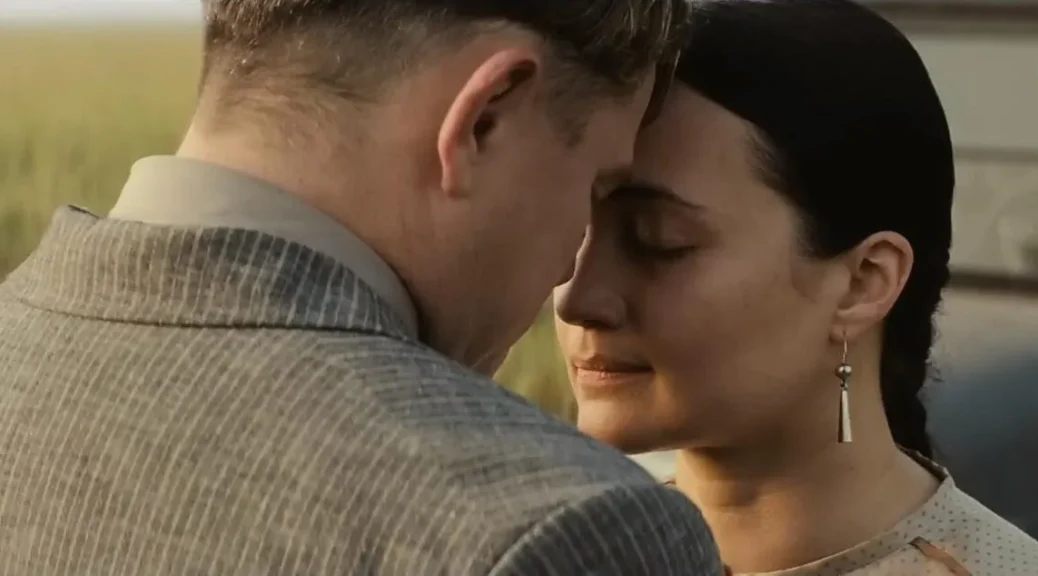
King assigns Ernest a job driving for the reserved, pensive Mollie (Lily Gladstone). And when the couple marries, King calmly explains to Ernest how much closer the legal union puts them to the oil shares in Mollie’s family.
But Ernest has trouble “finding the wolves,” and as unsolved murders of the Osage people begin to mount, Ernest is drawn into a quagmire of lies and killings that eventually brings federal investigator Tom White (Jesse Plemons) and his team to Fairfax.
Scorsese and co-writer Eric Roth adapt David Grann’s nonfiction book with an engrossing mix of true crime fact-finding, slow burning thrills and devastating heartbreak. The characters are rich in culture and in shades of human grey, each one caught in an infamous crossfire of American envy, arrogance, bigotry and greed.
Expect multiple notices in the coming awards season.
Editing from three time Oscar-winner Thelma Schoonmaker is subtle and patient, every frame buoyed by a mesmerizing, evocative score that is sure to land the legendary Robbie Robertson posthumous nominations, right beside those of an acting ensemble that is don’t-forget-to-breathe tremendous.
De Niro makes King a scheming sociopath hiding in plain sight, with his kindest words saved for those he is most gaslighting. DiCaprio has never been better, as the simple Ernest’s journey from war hero to murder suspect is both a singular character study and a broad personification of confident ignorance.
Every member of the cast, from familiar faces such as Plemons, John Lithgow and Brendan Fraser to lesser known actors like Jason Isbell, Cara Jade Myers and William Belleau, brings limited roles to wonderfully realized fruition.
But it is Lily Gladstone who carries the very soul of this film. Mollie is a woman very aware of the daggers that are out for her people. She wants desperately to trust in her husband and their future, and the deeply held emotion that Gladstone (Certain Woman, First Cow) is able to communicate – often with her eyes alone – is a masterful thing to behold.
Scorsese and cinematographer Rodrigo Prieto (Barbie, The Irishman, Brokeback Mountain, Silence) find beauty in the expanse of the landscape, intimacy in moments of violence and betrayal, and a purposeful sense of history in the way numerous snapshots are held for an extra beat.
Still, not one moment of the film’s three hours and twenty-six minutes feels like filler. This is majestic, vital storytelling, from a legendary filmmaker who has not lost the drive to push himself. Beyond his clickbait comments about superhero franchises, here is proof that Scorsese still finds plenty on the big screen that inspires him.
He has given credit to Ari Aster for Flower Moon‘s committed pacing, while the film’s surprising finale feels directly influenced by Spike Lee’s success with connecting past and present via bold and challenging choices.
Like Lee, Scorsese is out to document American history while pointing out why so many look to bury it. The correct answer isn’t that there are no wolves in the picture, and Killers of the Flower Moon is a searing reminder that we can’t move forward together until we’re brave enough to confront where we’ve been.