All posts by maddwolf

If I Cannot Inspire Love, I Will Cause Fear

Stitch Head

by Hope Madden

Is there anything more delightful than an animated tale suitable for Halloween? A Nightmare Before Christmas, ParaNorman, Frankenweenie, The Corpse Bride, Wendell & Wild, Coraline, Mad Monster Party­—each one is a fun way to get spooky, with the kids or without.

Steve Hudson extends that list with Stitch Head, a delightful, animated story about embracing your inner and outer monster.

Stitch Head (Asa Butterfield) was the first of the Mad Scientist’s creations. But the creator’s ADHD gets the better of him pretty quickly, and Castle Grotteskew is soon full to brimming with monsters. These include today’s beast, Creature (Joel Fry). Stitch Head’s taken on the eldest child duties around the castle, which includes helping each new beastie adjust their monstrous natures to avoid upsetting the townsfolk below. Don’t draw attention to yourself and you can avoid the angry mob.

“Welcome to almost life,” Stitch Head tells each new monster. “Patent pending.”

The film, especially Nick Urata’s music, certainly conjures Tim Burton. The songs Are You Ready for Monsters and Make ‘em Scream are both dancy fun, but neither are Elfman level memorable. Stitch Head lacks that macabre flavor of a Burton. Castle Grotteskew’s residents feel more akin to the working stiffs of Monsters, Inc. They’re nothing to be afraid of, they’re just different. Which is the point.

There’s also a bit of Pinocchio as Stitch Head, seeking the love he’s not receiving from his negligent parent, leaves the castle in favor of the circus, and finds—as we all must—that capitalism blows.

Butterfield’s delivery and Hudson’s animation create a tender central figure you root for. Fry’s big-hearted performance—plus Creature’s zany design—balance the delicate, tightly wound Stitch Head to create a sweetly peculiar odd couple.

Based on Pete Williamson and Guy Bass’s series of kids’ books, written for the screen by Hudson, Stitch Head delivers fun, eccentric characters, a warm adventure, and genuine lessons about the joys—even the necessity—of nonconformity.

“Just be whoever you’d be if you weren’t afraid.”

Screening Room: Springsteen: Deliver Me From Nowhere, Frankenstein, Shelby Oaks & More

Hope and George cover this week’s new releases: Springsteen: Deliver Me From Nowhere, Frankenstein, Blue Moon, Shelby Oaks, The Hand That Rocks the Cradle, Stiller & Meara: Nothing Is Lost, and Last Stop: Rockafort St..

Nowhere Man

Springsteen: Deliver Me From Nowhere

by George Wolf

My sister-in-law Ellen still tells the story of when she bought Bruce Springsteen’s new album Nebraska in 1982. She was a college student, and was ready to rock out in her dorm room with the guy who was coming off the top ten singalong smash “Hungry Heart.”

What she got was a collection of stark, acoustic songs about murder, desperation and dead dogs. Not much to dance to.

Why would a rock star on the verge of global superstardom make such an unexpected move?

Writer/director Scott Cooper explores that question with Springsteen: Deliver Me From Nowhere, a heartfelt and emotional story of a man caught between the echoes of his past and the promise of his future.

Jeremy Allan White is sensational as Bruce. The look is right, and White’s playing and singing often get eerily close to the real thing. But even more than that, White captures the tortured soul of a rising phenom seemingly terrified of the success he knew was suddenly within his grasp.

Adapting Warren Zanes’s 2023 book, Cooper revisits some themes from his Oscar-winning Crazy Heart and makes the film a collection of small moments that capture a pivotal snapshot in the life of a living legend.

And none of it pushes too hard. Glimpses of a Flannery O’Connor book, the movies Badlands and Night of the Hunter, and the Suicide song “Frankie Teardrop” quietly tell us much about Bruce’s inspirations for the album. Black and white flashbacks to Bruce’s childhood with a troubled father (Stephen Graham) and a protective mother (Gaby Hoffmann) take a similarly understated approach, effectively layered as the lingering memories they were.

Bruce’s relationship with fictional girlfriend Faye (Odessa Young) begins as an awkward choice amid all this attention to detail, but the device ultimately gives us some insight into his fear of any happiness he felt was undeserved.

Lighter moments do come, almost always with the reactions to Bruce’s new direction. Manager Jon Landau (yet another terrific supporting turn from Jeremy Strong) gently tries to steer him toward the songs that would become Born in the U.S.A., while a record exec (David Krumholtz) throws up his hands in exasperation. And through it all, everyone (including Marc Maron as longtime engineer Chuck Plotkin) keeps wondering where the case is for Bruce’s cassette of homemade demos.

Bruce fans know well that those demos became the album, one now regarded as a seminal statement of untold influence. Those longtime followers will appreciate Cooper’s respectful approach that doesn’t feel the need to explain who people like Jon Landau are and where they fit in.

Because even for people who haven’t listened since 1982, Deliver Me From Nowhere presents a richly satisfying story of inspiration, artistic passion, and finding an inner peace that has long eluded you.

And yes, there’s a bit of “Born to Run” in here, too.

Sister’s Keeper

Shelby Oaks

by Hope Madden

Chris Stuckmann—film critic, podcaster, YouTube phenom, DIY filmmaker and Ohio native—delivers his directorial feature debut with Shelby Oaks, one woman’s odyssey to find her missing sister.

Stuckmann’s approach combines found footage style with something more cinematic, balancing the jarring authenticity of one with the macabre beauty of the other.

Mia (Camille Sullivan) is talking with a documentarian about her sister Riley’s cold case. Twelve years ago, Riley’s (Sarah Durn) popular ghost hunting show Paranormal Paranoids stumbled into an Ohio ghost town and disappeared. Viewers cried hoax until Riley’s producers and directors were found dead. Riley was not found at all. 

Mia hopes the documentary will reignite interest in her sister’s case, maybe generate some leads. In a way, it does, and Mia takes it upon herself to follow the breadcrumb trail back to Darke County, OH and the scene of the crime.

The found footage of the early film gives way to something more eerily beautiful as Mia explores an abandoned theme park, disused reformatory, and a little town long vacated. When Mia meets Norma (an intensely unnerving Robin Bartlett), the film takes a sinister turn.

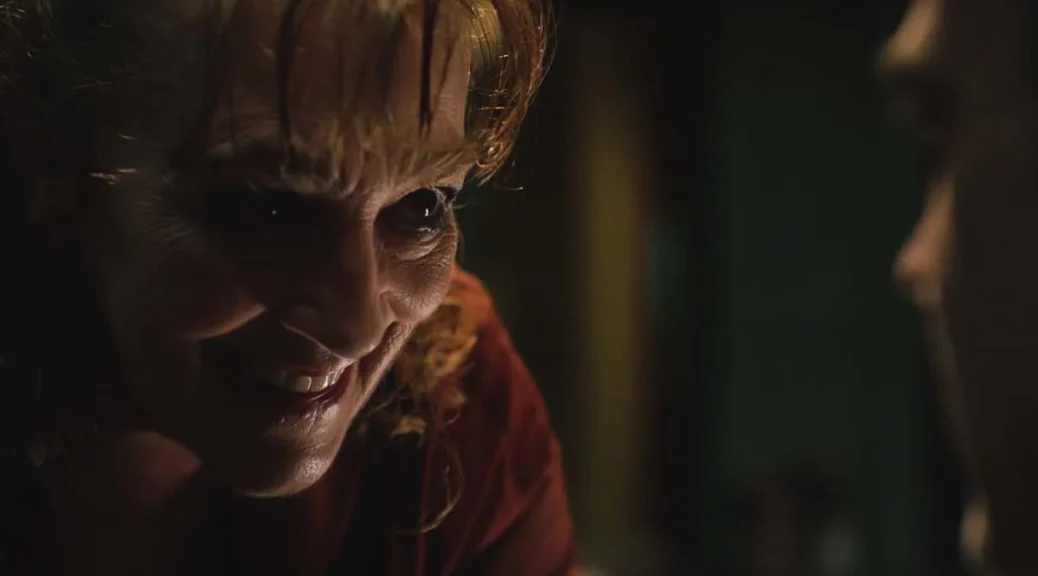
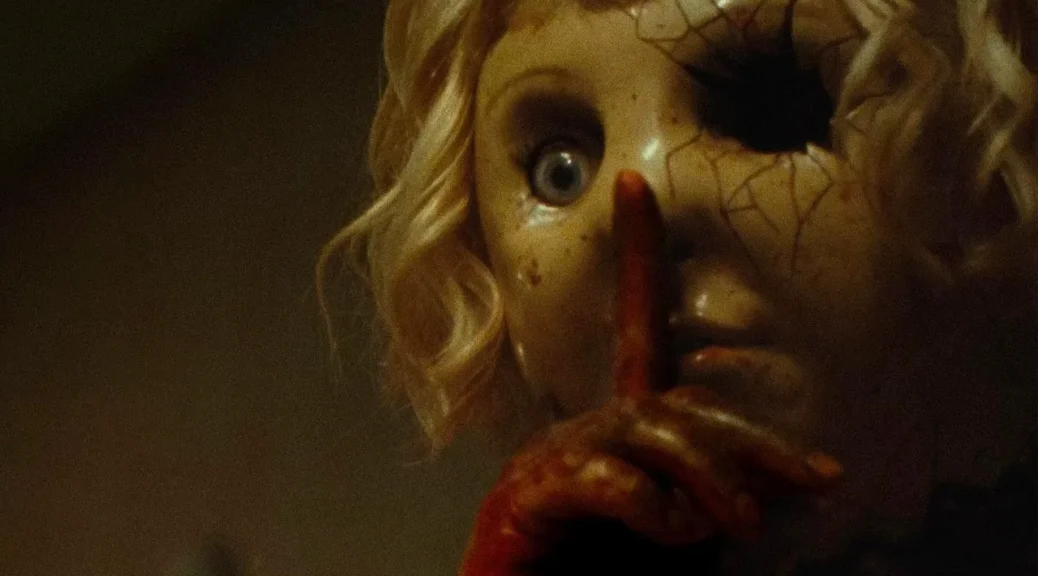
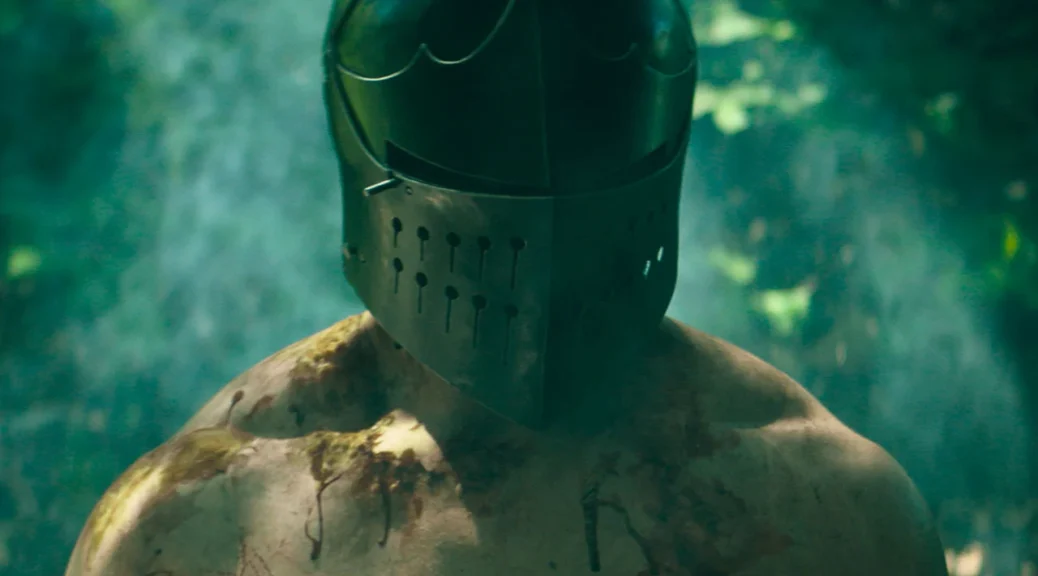
Sullivan carries the film easily, utterly convincing as a protective older sister unintimidated by obstacles, however horrific, and unwilling to abandon her beloved little sister. Creature design is equally impressive, and Stuckmann’s choices to keep the image on the periphery of the film amplifies its unsettling effect.

Shelby Oaks delivers a spooky tale brimming with love of genre. It creates place well and develops an atmosphere of tunnel vision optimism that allows the audience to see what Mia cannot. But it doesn’t break any new ground. Pieces fit together well, the mystery and its solution possess integrity often lacking in genre fare, especially in found footage films. But there aren’t a lot of surprises here.

There are fun jumps, eerie images, creepy images and a solid mystery though. More than reason enough to look forward to whatever Stuckmann does next.

Fearless and Powerful

Frankenstein

by Hope Madden

Guillermo del Toro is a big ol’ softy. In many ways, that’s what makes Frankenstein a perfect property for him. His heart has always been with the monster, so why not tell the most heartbreaking and terrifying monster story?

The filmmaker shares writing credit with Mary Shelley, and it’s a good partnership. From the opening moments on frozen tundra, GDT announces that he will cover more of the novel’s ground than any other adaptor. We meet Victor Frankenstein (Oscar Isaac) lying helpless on that ice. An explosion draws the crew of an icebound ship to his aid. But Victor is not alone, and soon he begins his yarn of the beast that circles the vessel.

The icy desolation looks fantastic, but the North Pole has nothing on the macabre Victorian splendor the maestro has in store. Lush and gorgeous, even when it is running with blood, the world del Toro creates for his gods and monsters is breathtaking. The way he punctuates images with red—a billowing veil, the doctor’s gloves, a tie, a kerchief—beguiles and alarms in equal measure.

His idea of a mad scientist’s lab is a gloriously goth work of art, as is the film’s costuming—particularly the wardrobe for dear Elizabeth (Mia Goth). The wild mix of colors and textures, metallics and gauzes, conjure ideas of nature and machine in gorgeous disharmony.

It is with the b-story, focusing on Elizabeth and her uncle (Christoph Waltz), where GDT veers most widely from Shelley’s text. The choices are fresh and odd, allowing for a rich image of creator and creation, the natural versus the magnificent.

Isaac is a marvel of angry arrogance made humble. As his creature, the long and limby Jacob Elordi offers a monster who’s more sensitive son than wounded manchild.

Goth delivers the same uncanny grace that sets so many of her characters apart, and del Toro’s script allows Elizabeth an arc unlike any previous adaptation.

Frankenstein is over long. Del Toro spends more time than necessary with young Victor, and the b-story could have used trimming. You feel the film’s length. It’s also as sentimental a movie as del Toro’s ever made, sometimes to its detriment.

But you don’t wander into a Guillermo del Toro film expecting less anything than glorious excess—another reason why Frankenstein and he were meant for one another.

Mommy Fearest

The Hand That Rocks the Cradle

by George Wolf

Even at its most fun, 1992’s The Hand That Rocks the Cradle was a bit of a guilty pleasure. Hulu’s new update strips away the overdone pulp for a more focused, and more primally scary tale.

Caitlin (Mary Elizabeth Winstead) is an L.A. lawyer who diligently screens her children’s food for sugars and aims to get a new stop sign for her neighborhood. Working at a tenants rights group, Caitlin helps Polly (Maika Monroe) with a landlord problem, and when the two cross paths again at a local market, fate seems to have dealt a good hand.

Polly has experience as a nanny, and she comes with a glowing recommendation from her last employer. She looks like the perfect choice to help Caitlin and her husband Miguel (Raúl Castillo) with young Emma (Mileiah Vega) and baby Josie (Nora and Lola Contreras).

Caitlin chooses poorly.

Screenwriter Micah Bloomberg (Sanctuary) updates the original story with some important twists, and director Michelle Garza Cervera sets a pace that lets the gaslighting, secrets and lies simmer nicely before boiling over.

Cervera crafted an impressive maternal nightmare three years ago with her feature debut, Husera: The Bone Woman. Here, she trades the religious imagery for symbols of upwardly mobile success, while still toying with anyone eager to check boxes of good mother/bad mother.

Winstead and Monroe are both terrific, bringing their characters into a dance of identity with menacing dread. There is more to Caitlin than her liberal guilt, and as Polly twists the knife with increasing sociopathy, Cervera’s instincts for a modern horror thriller are again solid.

Is any remake truly “necessary?” Debatable. But even back in ’92, the original film seemed like one that wouldn’t age particularly well. The questionable decisions remain, and one or two story beats are foreshadowed too heavily, but by the time all secrets are revealed, this Cradle rocks with some newly relevant bloodletting.

Downbound Train

Barcelona Underground

by Hope Madden

Subways can be very scary places. An American Werewolf in London knew it. Del Toro’s Mimic. Midnight Meat Train. Jacob’s Ladder. A Quiet Place: Day One. These films amplified the claustrophobic subterranean atmosphere for all its hellscape potential.

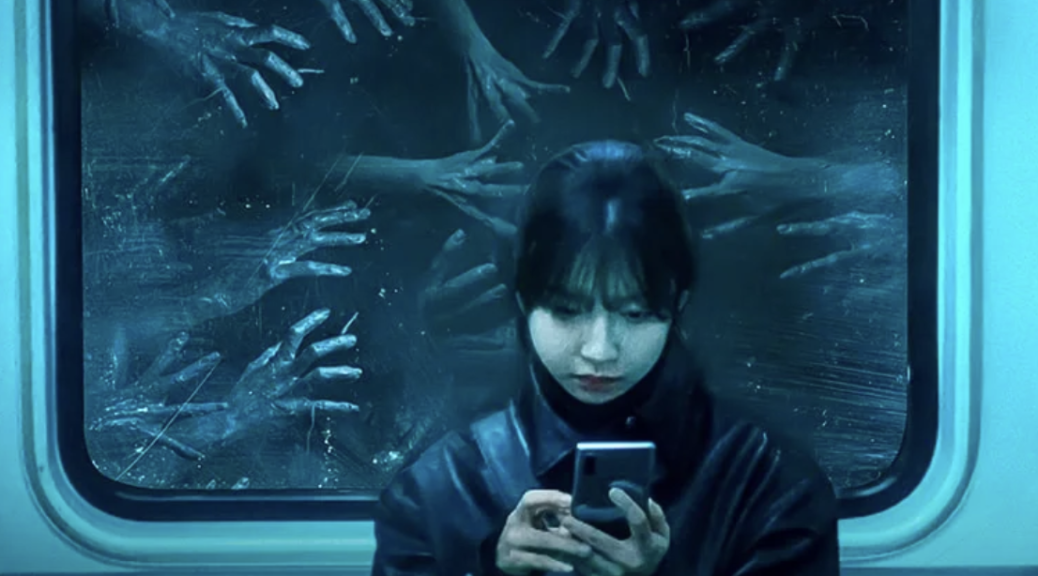
Luis Prieto’s Barcelona Underground (also variously called Last Stop: Rocafort St. and Rocafort Station) tries to tap into that mass transit terror. Laura (Natalia Azahara) has a new job manning the Rocafort stop on Barcelona’s subway system, which is legendary for its suicides. Three of every four subway suicides in the city take place at the Rocafort Street stop.

It all started back when Román (Javier Gutiérrez) was still a cop. He followed serial killer Elías Soro through the labyrinthine tunnels but wasn’t quick enough to save the family of four Soro had taken hostage.

Were they suicides? They were not. How is this connected to the suicides? And why is Laura haunted by hallucinations ever since she witnessed one? Who knows, honestly? I sat through the whole movie and feel confident in saying that Prieto never truly connects the folklore, exorcism, and police procedural threads to even begin to make sense of this plot.

Worse, he doesn’t capitalize on the horrific possibilities available in a subway tunnel.

Barcelona Underground is a hodgepodge of obvious cliches and worn-out tropes slapped together with nonsensical panache. Each piece is incredibly familiar, but not one fits snugly in place beside the next piece. It’s as if Prieto, writing with Ivan Ledesma and Ángel Agudo, lifted the most cliched scene from a dozen films and taped them together, hoping to create a single tale.

None of it works because none of it makes sense. Both Azahara and Gutiérrez do what they can with poorly written roles, but the senseless mishmash of a story arc keeps either from crafting a recognizable character.

Plus, it’s not scary.  

An American Werewolf in London is scary, though. Do with that information what you will.

Lonely in Your Nightmare

Black Phone 2

by Hope Madden

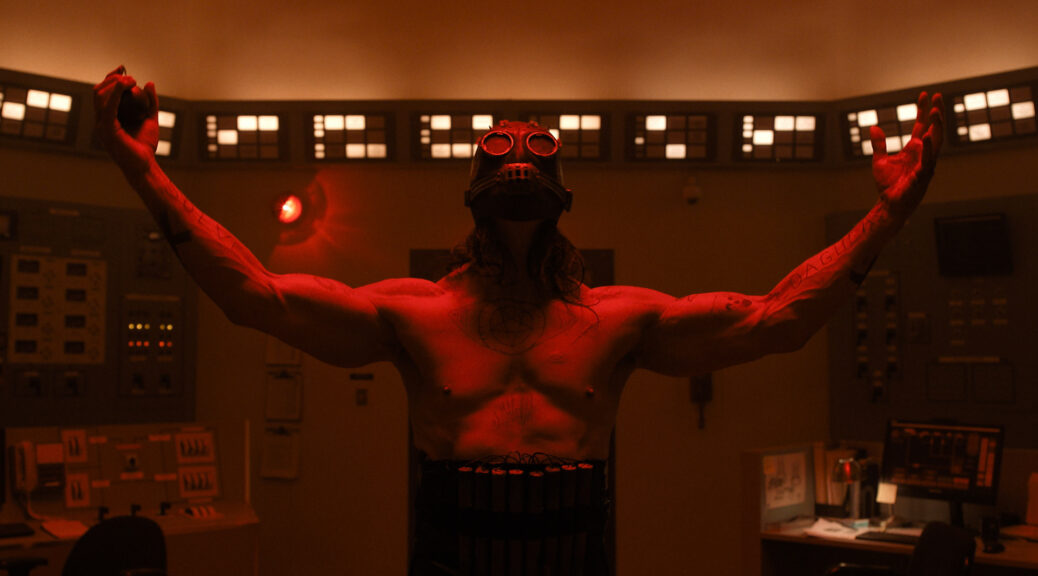
I was cautiously optimistic about director Scott Derrickson’s sequel to his creepy 2021 Joe Hill adaptation, Black Phone. And lo and behold, within the first ten minutes, Black Phone 2 had worked three of my favorite things into its tale: Pink Floyd, Duran Duran, and extreme profanity from children.

I’m listening.

Finney (Mason Thames) and his little sister Gwen (Madeleine McGraw) are struggling to find a new normal after Finney killed serial killer The Grabber (Ethan Hawke) a few years back. What Finn doesn’t want to admit is that he still sees that masked demon in a top hat everywhere he looks. Meanwhile, Gwen’s dreams have taken a decidedly sinister turn.

Last time out, Derrickson, writing with longtime collaborator C. Robert Cargill, filled out Hill’s short story with a just-strong-enough b-story about Gwen and her dreams. It gave the film a larger world to live in and enhanced the supernatural elements of Hill’s original nicely.

For the sequel, Cargill and Derrickson mine Gwen’s abilities for the bulk of the story, as her dreams lead the two siblings to a Christian sleepaway camp called Alpine Lake. Derrickson’s early 80s timeline allows for an analog look that lets him artfully conjure Friday the 13th, of course, as well as A Nightmare on Elm Street (the original and episode 4). There’s even a little Curtains thrown in there. Fun!

The script tries to close too many circles, find too many coincidences, and the story collapses on itself. Worse, a perfectly grotesque and bloody climax is kneecapped by an unfortunately saccharine ending.

Still, there is plenty of bloodshed and gore, and Hawke still cuts an impressive figure in that mask. We don’t see or hear enough of him in a story that feels rushed, but you don’t need much of The Grabber to be creeped out.

My real worry was that if Gwen and crew didn’t figure out what’s what and get home from camp in time, she might miss the Duran Duran show. Talk about tension!

Belief Systems

After the Hunt

by Hope Madden and George Wolf

Luca Guadagnino likes a provocative tale of challenging relationships, opportunists and lovers. With lush visuals. And sometimes peaches. His fruit free triangle of sorts, After the Hunt, considers and reconsiders a “he said/she said” in the ever-fluctuating moral landscape of higher education.

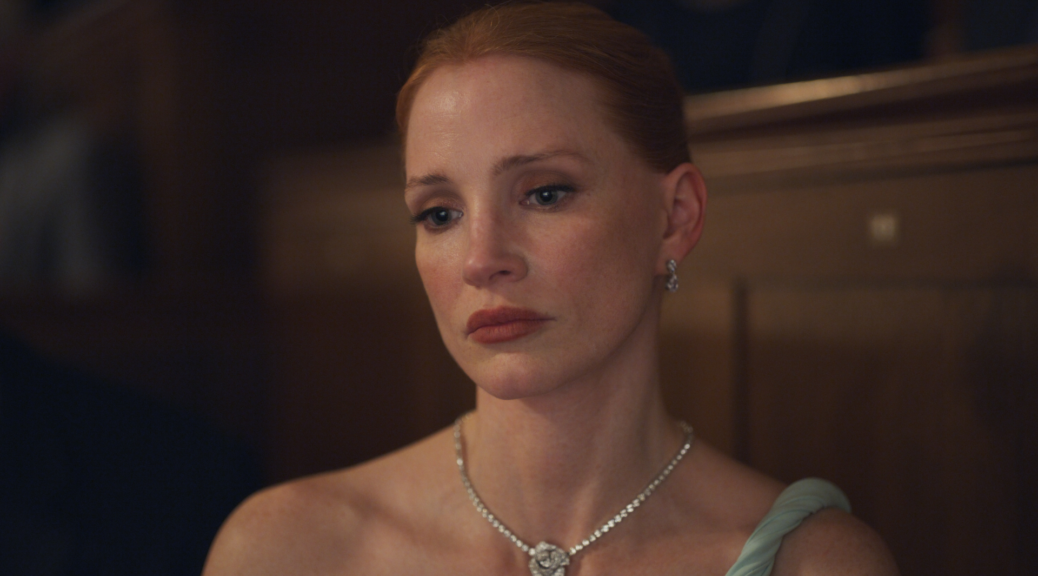
Julia Roberts is Yale philosophy professor Alma Imhoff. She and her husband, Frederik (Michael Stuhlbarg), are awaiting word on Alma’s tenure, alongside her very close colleague, Hank (Andrew Garfield). But when star student Maggie (Ayo Edebiri) makes an accusation, Alma faces a conundrum. She should believe Maggie, but does she? She should come to her aid, but will that be a risk to her tenure?

That barely scratches the surface of all the pathos and conniving, manipulation and secrecy, and above all, opportunism afoot in this fascinating but cumbersome thriller.

First time screenwriter Nora Garrett bites off more than she can chew, but her commitment to looking at every angle is both laudable and often fascinating. It’s rarely satisfying, but the densely textured characters provide rich opportunities for this talented cast.

Sure, these are caricatures of academia – like those dinner party people on South Park who like to smell their own farts – but Guadagnino, Garrett and cast are so entrenched in the melodrama you can’t help but be sucked in.

Roberts is an effective mix of conflict and entitlement, and Garfield is especially good as a man so sure of his superiority that an accusation against him seems like an affront to human evolution itself. Stuhlbarg finds his usual ways to make a supporting role memorable, especially when Frederik takes offense to Maggie’s suggestion that he may be a wee bit out of touch.

And ironically, that’s as issue that dogs the film. It wants to lead and provoke, but the worthy issues it raises are so malleable that much of verbal sparring already feels a half step behind the conversation. An epilogue that shrugs at the whole affair only neuters the search for clarity.

Like Ari Aster’s Eddington, After the Hunt is bound to offend people because of its absolute refusal to take sides or tidy up motivations. Like Aster’s film, Guadagnino’s latest is far more interested in philosophy and the muddy concept of morality in the context of success—particularly when everyone involved is damaged in one way or another.