Hope & George review this week’s new releases: Five Nights at Freddy’s 2, Hamnet, Merrily We Roll Along, Oh What Fun, Man Finds Tape, Pig Hill, Reflections in a Dead Diamond, The Wailing, The Lonely Legend and My Mother the Madam!
Hope & George review this week’s new releases: Five Nights at Freddy’s 2, Hamnet, Merrily We Roll Along, Oh What Fun, Man Finds Tape, Pig Hill, Reflections in a Dead Diamond, The Wailing, The Lonely Legend and My Mother the Madam!
by Rachel Willis
For as many horror films as I watch, it’s rare for one to truly unnerve or scare me. The ones that do tend to hit a deeply held fear or anxiety. Director Pedro Martín-Calero’s film The Wailing hits one of those fears—the fear of not being believed.
Co-writing with Isabel Peña, Martín-Calero movie follows several women as they encounter a sinister presence. Each section of film follows a different woman, traveling backward and forward in time to show how each one is impacted by the violent entity in their lives.
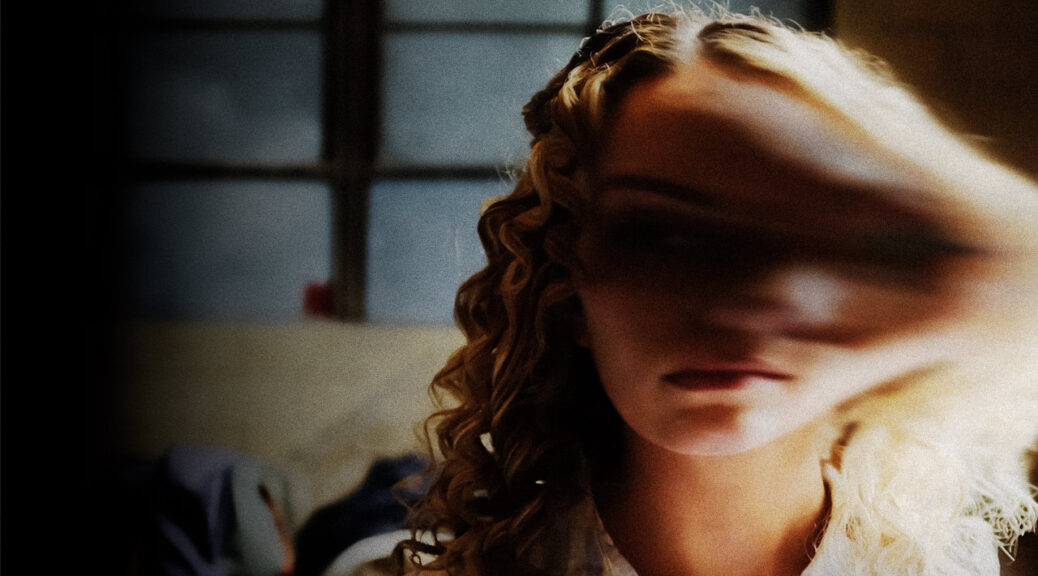
The first is Andrea (Ester Expósito). While walking home one day, the music on her phone is interrupted by the ethereal wailing of one or more women.
The film’s tension picks up quickly. One especially frightening scene pairs the fear of not being believed with the anxiety of being ignored. As Andrea pleads and screams for help in a crowded room, onlookers simply stare at her, unmoving and unmoved.
It’s these moments, and several quieter ones, where the film excels. As the suspense and mystery grows, it’s clear the takeaway is that when women are ignored, everyone is the worse for it. While the women are the most negatively and directly impacted, the violence has a sinister spread with the potential to affect everyone in it orbit.
The only element the film struggles with is how to convey text conversation. The choice to overlay images with text messages is distracting and negates the rising tension.
Fortunately, this is only an issue during Andrea’s story. Then the film moves back in time to follow Camila (Malena Villa) as she interacts with Andrea’s mother, Marie (Mathilde Olliver).
The Wailing excels in following a reverse timeline to explore the extended metaphor of the long-term effects of not believing women. The film ends on what could be construed as a hopeful note, but the choice of how we move forward is left to the audience to decide. Believing women is the first step; what comes next is up to us.

by Hope Madden
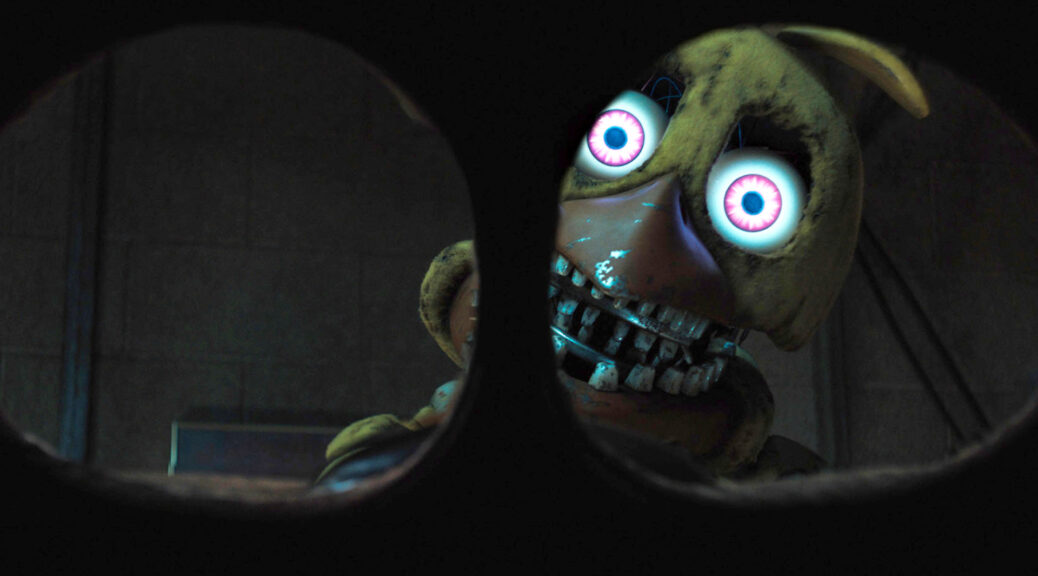
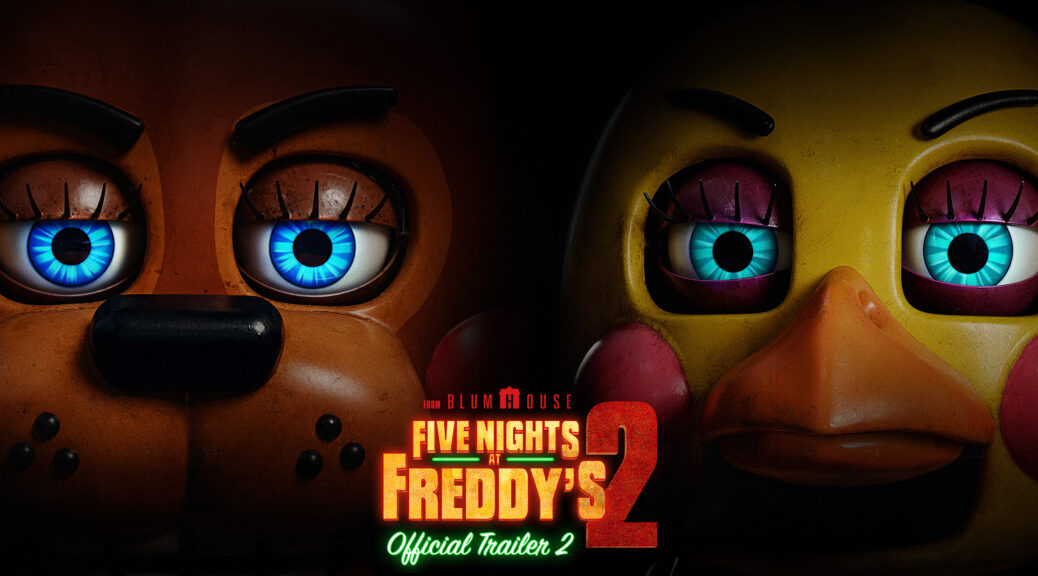
In 2023, Five Nights at Freddy’s—a predictable PG-13 horror built on a video game—delivered a bit of gimmicky fun for fans of the game and little to nothing for the rest of us. So, hooray! There’s a sequel.
Director Emma Tammi returns, with video game creator Scott Cawthon handling the sole screenplay credit this go-round. His script sees Mike (Josh Hutcherson) still avoiding therapy for himself or his disturbingly naïve 11-year-old sister Abby (Piper Rubio). And Vanessa (Elizabeth Lail) is so bad off she’s taking psychological advice from Mike.
Naturally, all of them are suffering the trauma of the bloodthirsty animatronics that came to life on night security Mike’s watch last time around, possessed by Vanessa’s evil dad’s. But Mike’s painting a house and Abby’s into robotics, so I’m sure they’re fine!
Wait, they’re not. And through a fairly convoluted storyline that sees one of Seinfeld’s neighbors get The Story of Ricky treatment, the trio not only brings the Country Bear Murder Spree back to life, they set them free to roam the town.
Scenes are slapped together with a gleeful disregard to continuity, and again, the macabre sense of humor that might have kept the film afloat is entirely missing.
Freddy Carter is a fun addition as the villainous Michael. (Who, honestly, names one character Mike and another one Michael?) And there is a Skeet Ulrich sighting. Plus, a new animatronic—kind of a goth Miyazaki styles marionette—is cool. And though I’d predicted McKenna Grace to be a kind of cold open kill, instead she gets a bit of a creepy, if small, character arc.
I realize the film is aimed at a young audience, but Tammi and team could at least pretend to respect them as viewers.
Hutcherson can act, and I’m confident someday he’ll get another film that lets him do that. Until then, Five Nights at Freddy’s 2 ends with a clear path to a third installment. Hooray.

by Hope Madden
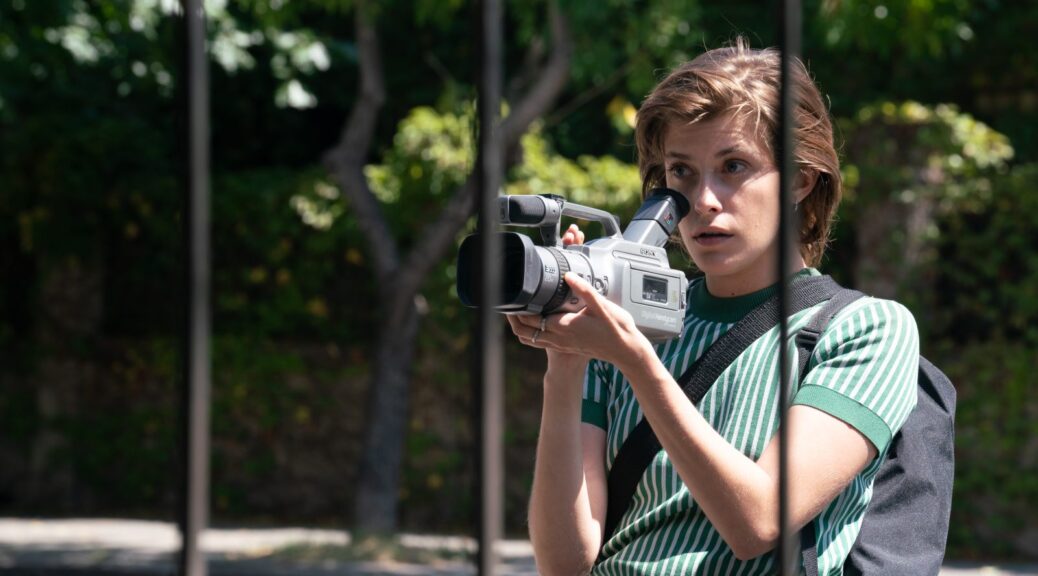
Co-writers/directors Paul Grandersman and Peter S. Hall experiment with concept of found footage in an often unique and puzzling feature, Man Finds Tape.
While there are times that the film feels less than original—an influencer suggests he’s stumbled onto something supernatural only to be believed a fraud—the mystery itself is something I haven’t seen before.
Lynn (Kelsey Pribilski) and her brother Lucas (William Magnuson) are not close. She left their small Texas town shortly after their parents died, while Lucas knocked around the old house, falling slowly into depression, until he came across a MiniDV with his name on it. He shares the find online, creating a big conspiracy that screws up Lynn’s documentary career.
So, when he calls her up asking her to watch another video, she’s understandably, even angrily reluctant. But she’s worried about him, so she watches. And while the footage itself is genuinely intriguing, Lynn’s more unnerved by the affect the footage has when her brother watches it. Turns out, every person living in Larkin, Texas has the same reaction. Only Lynn is unaffected.
So, Lynn sets out to document what’s happening, which is how all the various formats of found footage are stitched together. This gives the film a Shelby Oaks or Strange Harvest vibe that leeches some originality from the concept.
But for a good while, it is an interesting concept. Both Pribilski and Magnuson convince as bickering siblings, and most of the ensemble—primarily playing townies happy to be interviewed for Lynn’s documentary—are a lot of fun. Meanwhile, Brian Villalobos approaches his role as “The Stranger” with a fascinating air of smug disgust.
Man Finds Tape delivers an often-engrossing metaphor about parasitic predation dressed as religion, and its particularly harmful effect on small, Southern towns. But Hall and Gandersman write themselves into a corner and the final solution to the mystery is unsatisfying. It’s too bad, because for a good while, they really had something.

by George Wolf
Stephen Sondheim’s Merrily We Rolling Along may have taken a while to attain beloved musical status, but it’s certainly getting the flowers now.
Closing just 16 performances after its 1981 Broadway premiere, the show got various rewrites and new stagings over the years, a 2016 documentary on the original production, and finally a Tony award-winning revival in 2023.
And while fans wait for Richard Linklater’s adaptation, which is being filmed over the course of twenty years, director Maria Friedman delivers a film pro shot of a June 2024 performance at New York’s Hudson Theatre.
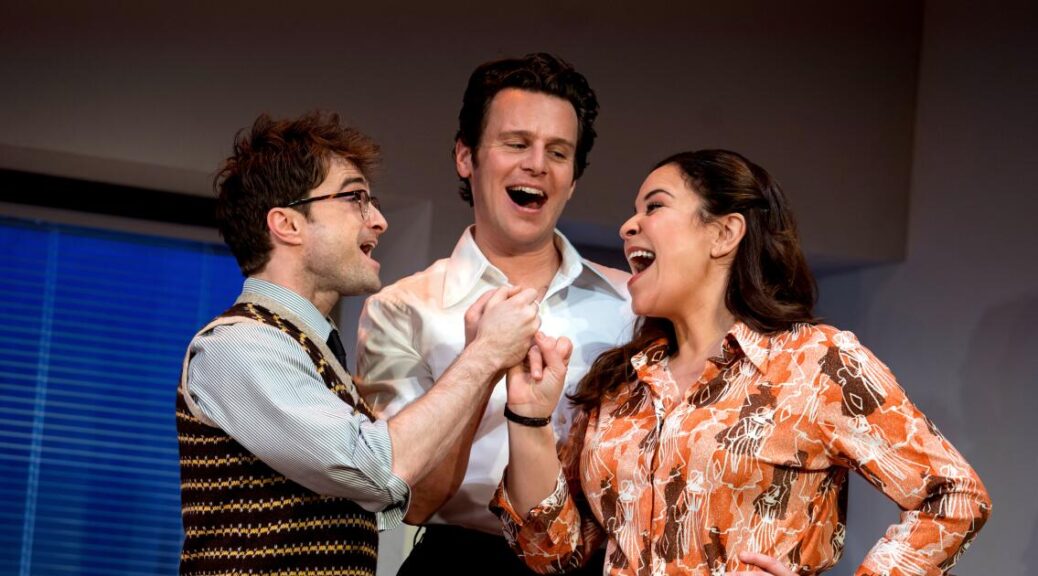
Tony winners Jonathan Groff and Daniel Radcliffe are songwriters Franklin Shepard and Charley Kringas. When we meet them in 1976, the friendship is strained over Frank’s decision to “go Hollywood” and produce movies. Writer Mary Flynn (Lindsay Mendez, 2018 Tony winner for Carousel) – their third musketeer – tries to make peace but is often drunkenly sarcastic about the cost of their quest for success.
Frank’s self absorption and philandering ways have taken their toll on his family and friends, and as Frank confronts the lowest point in his life, the show begins a series of “Transitions” that gradually roll back to the beginning of the three long friendships.
It’s easy to see why musical theatre fans love this show. It’s a salute to dreamers everywhere – Broadway dreamers especially – sporting several Sondheim tunes (“Opening Doors,” “Old Friends,” “Our Time”) that have become favorites.
The ensemble is fantastic, starting right at the top with the three leads. Of course, Groff (Hamilton‘s original King George) and Mendez are longtime musical theatre powerhouses, so it’s Radcliffe’s absolutely charming turn that will be the biggest surprise.
It is Merrily‘s direction that ends up hampering its effectiveness on screen, with a cramped approach that often yearns for room to breathe. Just earlier this year, Hamilton‘s film pro shot achieved a near perfect balance of intimacy and movement. Friedman leans too heavily on quick cuts and close ups, which tends to neuter the live feeling that is essential to the pro shot experience.
Still, this is one that musical fans should make time for, even if it can’t blend stage and screen quite as merrily as we’ve seen before. But for holding us over for the next couple decades? It’ll do.

by Hope Madden
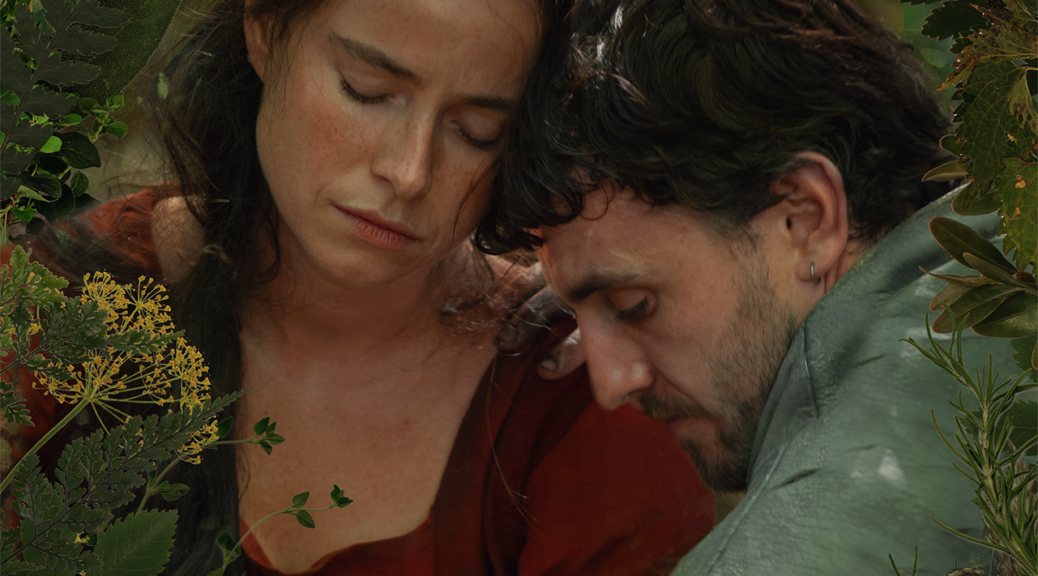
It’s been five years since Chloé Zhao took home two Oscars, one for directing and one for adapting the screenplay for Nomadland. She returns to form in both respects with Hamnet, the cinematic adaptation of Maggie O’Farrell’s novel that imagines the way grief may have shaped Shakespeare’s greatest tragedy.
Zhao’s film opens stunningly on Jessie Buckley, nestled womblike among the roots of a massive tree, her face and hands dirty, her hair tangled with leaves. Buckley is Agnes, believed by those in town to be the daughter of a forest witch. Agnes comes from what is.
Will (Paul Mescal) imagines what can be. The hyper real poetry of Zhao’s camera perfectly articulates their yin/yang balance.
It’s with Will that we first see Agnes’s nurturing side applied to humanity rather than the wild. It’s a trait that will become the backbone of their story. Her love is powerful, messy, and unforgiving, and Buckley’s more than up to the task. Her performance, as is so often the case, feels dangerous and uncensored. And gazing adoringly at her, inspired and nurtured, is Will. If there is a better face in cinema than Mescal’s for earnest yet doomed longing, I don’t know whose it could be.
The young cast more than keeps pace. Jacobi Jupe is particularly amazing and utterly heartbreaking as Will and Agnes’s boy, Hamnet. (His older brother Noah Jupe also impresses later in the film as the actor portraying the great Dane in the first ever stage production.)
By the time the most famous lines in theatre are uttered, it takes restraint and rawness. The slightest hint of artifice and the previous ninety minutes are ruined, the film a gimmick. But Zhao never skirts artifice, not even when she makes a Marvel movie, and Mescal delivers lines we know by heart as if they were freshly pulled from an open wound.
Zhao has crafted, aided by magnificent performances and hauntingly stunning cinematography from Lukasz Zal (The Zone of Interest, Cold War), a film that is shattering in its articulation that it is the depth of love that deepens and amplifies the pain of grief.
People make movies about grief all the time. We can expect one every Oscar season. But what Chloé Zhao does with Hamnet is ask us to experience that grief, not just witness it, and in experiencing it we understand the power and vital importance of art.

by Brandon Thomas
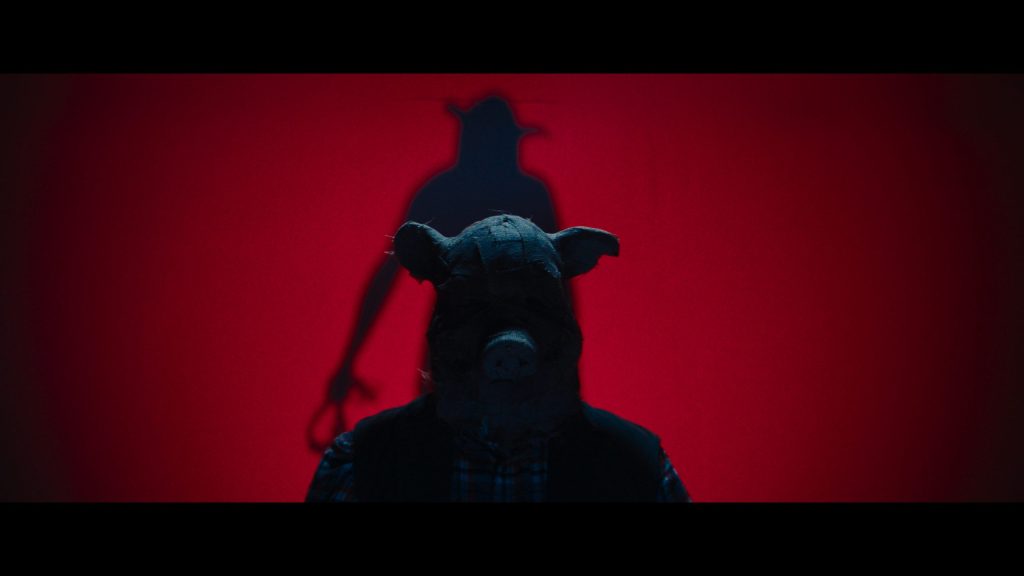
Using the word “Pig” in the title of your film automatically conjures up a disgusting mix of imagery before you’ve seen even one frame of film. As Sam Jackson’s Jules says in Pulp Fiction, “Pigs are filthy animals.” That they may be, but director Kevin Lewis sets up a nice curveball with Pig Hill, one that delivers a more psychologically disgusting film than a visual one.
Like most small towns in America, Meadville, Pennsylvania has its own local legend: that of the pig people of Pig Hill. Everyone has their own theory about the pig people, but the one true throughline from all is that they are some ghastly mix of human beings and pigs. Carrie (Rainey Qualley) and her brother Chris (Shiloh Fernandez, Evil Dead) have lived in Meadville their entire lives, and the pig people story has always loomed large. As recent personal struggles bring both siblings to emotional low points, the prospect of writing a book about Pig Hill gives Carrie a potential ticket out of Meadville. As Carrie’s investigation into pig hill deepens, so does the mystery surrounding a growing number of women who have been going missing.
Pig Hill is a cornucopia of a film. There’s a dash of Texas Chain Saw Massacre mixed with a pinch of The Silence of The Lambs, and finally a bit of The Hills Have Eyes for taste. Story and tone aren’t a problem as Lewis (Willy’s Wonderland) weaves his influences together into a satisfying and cohesive whole. As someone who clearly knows the horror genre inside and out, Lewis wickedly plays with audience expectations until the very end.
Outside of a pretty standard open, Pig Hill isn’t the stalk n’ slash fest you might expect. When the film gets down and dirty – it does so with gusto and never forgets that there are characters experiencing the horror around them. The cast ends up doing the bulk of the heavy lifting as it’s a surprisingly dialogue-heavy film that takes the time to flesh out characters. While the cast may not rival that latest P.T. Anderson flick, they all work well for the film. Qualley and Fernandez bounce off one another well, and former teen heartthrob Shane West (A Walk to Remember, League of Extraordinary Gentlemen) brings some name recognition as the film’s romantic lead and pseudo-hero.
Lewis takes a big swing toward the end of the film that might seem too telegraphed, but it still doesn’t lessen the impact once the layers get pulled back more and more. It lets Pig Hill end on a horrific emotionally charged note instead of one covered in blood and guts.