Forest Primeval

Out of Darkness

by Hope Madden

Some 45,000 years ago, Adem (Chuku Modu) and his mate Ave (Iola Evans), his heir (Luna Mwezi), his brother (Kit Young), the elder (Arno Lüning), and a stray (Safia Oakley-Green) left their hunter-gatherer community and crossed the water, looking for the paradise Adem had heard tell of in the old lands.

We know this because the little group spins yarns around a campfire to stave off starvation, and wise Odal (Lüning) is entertaining. He’s also owning the narrative, a concept co-writer (working with Ruth Greenberg and Oliver Kassman) and director Andrew Cumming returns to often as he contemplates early human history with his stone age thriller, Out of Darkness.

Adem, confident of his godlike abilities and his entitlement, believes he will establish his own paradise in this land. But there is no food in sight, and pregnant Ave may die or lose another baby if he does not find food soon.

And yet, starvation may be the least of the little band’s worries. Gathered around the fire at night, they feel movement in the shadows, hear unearthly shrieking. Have they angered demons? Will they become prey?

An imposing Scottish landscape lends the film immeasurable production value, and the invented language adds authenticity. Each performance is solid. Modu, as the steely alpha, is pitiless and selfish. Lüning delivers a conniving turn, and Oakley-Green, as the underdog hero, mines a primitive spirit for complexity.

The film itself treads somewhat familiar ground–a little bit Prey, a touch Quest for Fire, maybe a little Bone Tomahawk.

The film expertly plays with audience expectations. A “brains trump brute force” evolution tale, a la One Million B.C.? A feminist reimagining of prehistory? A pioneering story, or one of invasion? Is it a man versus nature ordeal, or is it a horror movie?

Out of Darkness asks more questions than it answers. That’s not to say there are plot holes–the script is airtight. But what Cumming is out to communicate about our humble beginnings or what that has to say about humanity is a little tougher to decipher.


Willie or Won’t She?

Willie and Me

by George Wolf

Greta is a young girl in Germany who loves her some Wille Nelson. Her unstable mother does not agree.

“Turn it off or I’ll punch you in the face!” Not a lot of gray area there.

But her devotion to the Red Headed Stranger endures into adulthood, when Greta (Eva Haßmann, who also writes and directs her first feature) feels compelled to travel to America and attend Willie’s “farewell” concert in Las Vegas.

So after selling the Porsche behind her husband’s back and setting their kitchen on fire (accidentally?), Greta just can’t wait to get on the road (again).

Flying first into L.A, Greta finds the city pretty welcoming, starting with the helpful hotel desk clerk who sails often on whiskey river (Peter Bogdanovich, in his final screen appearance). A local Elvis impersonator named Nick (Blaine Gray) also takes an interest in Greta’s welfare, stirring echoes of how an entire city instantly rolled over for Elizabeth Berkeley’s character in Showgirls.

But rather than serving up pretentious camp, Haßmann embraces the utter silliness of Greta’s quest. There are snake bites, blow up dolls, stolen cars, pre-teen con artists and more trying to derail Greta’s journey, but she just keeps plowing ahead with the certainty of the Blues Brothers’ “mission from God.”

It’s not really that funny, and the production values can be shaky, but there’s a quirky charm here, thanks mainly to a commitment from Haßmann that mirrors her character. She even writes and performs a song with Willie himself, who handles double duty with a cameo as a mysterious man in black.

It adds up to a madcap slice of Napoleon Dynamite-esque Americana that’s just as likely to leave you scratching your head as laughing out loud. There’s little chance Willie and Me will be always on your mind, but at just 87 minutes, it’s a whimsical tribute to an icon that won’t feel like a waste of time.

We All Float On Okay

Float

by Rachel Willis

It’s often said there are no new stories, only new ways to tell them. Director Sherren Lee’s film Float aptly exemplifies this concept.

The film follows a standard rom-com format while not exactly falling into the rom-com category. There’s romance, yes, and a certain amount of comedy, but also a lot of heart and turbulence as several characters navigate their relationships.

Waverly (an exquisite Andrea Bang) finds herself in Holden visiting her Aunt Rachel (Michelle Krusiec), whom she hasn’t seen in so long neither can really remember when it last was. Waverly’s visit is unexpected. She was supposed to be in Toronto for a career opportunity her parents arranged for her. But even that wasn’t planned. Her original plan for the summer was to fly to Taipei to spend time with parents she hasn’t seen in four years.

It’s clear from the beginning that Waverly’s relationship with her parents is far from perfect. Seeking refuge from their expectations, she finds the small town of Holden a good place to recharge and sort out her feelings.

Waverly meets a host of characters who enliven her experience in the gorgeous town. It can be hard to balance a large cast of characters, but the film does this well.

The one exception is Blake (Robbie Amell), which is a problem since he’s the other half of our romantic duo. Blake never really comes to life, and it can be hard to work out what it is about him that Waverly likes. Most of their time spent getting acquainted is shown in montage, which doesn’t allow the audience to get to know Blake.

The other problem is the lack of depth given to Waverly’s relationship with her parents. This is a big part of the film’s conflict, but Lee doesn’t devote enough time to it.

However, Float boasts an endearing tenderness. Bang can carry the film’s emotional weight, her range of emotion spilling over into each scene. A mixed bag, Float at least has a unique take on the rom-com formula.

Rules Are Rules

The Teacher’s Lounge

by George Wolf

“What happens in the teacher’s lounge, stays in the teacher’s lounge.”

Mrs. (Carla) Nowak uses that line as a condescending quip to avoid some pointed questions from her students’ even as she’s starting to desperately wish it were true.

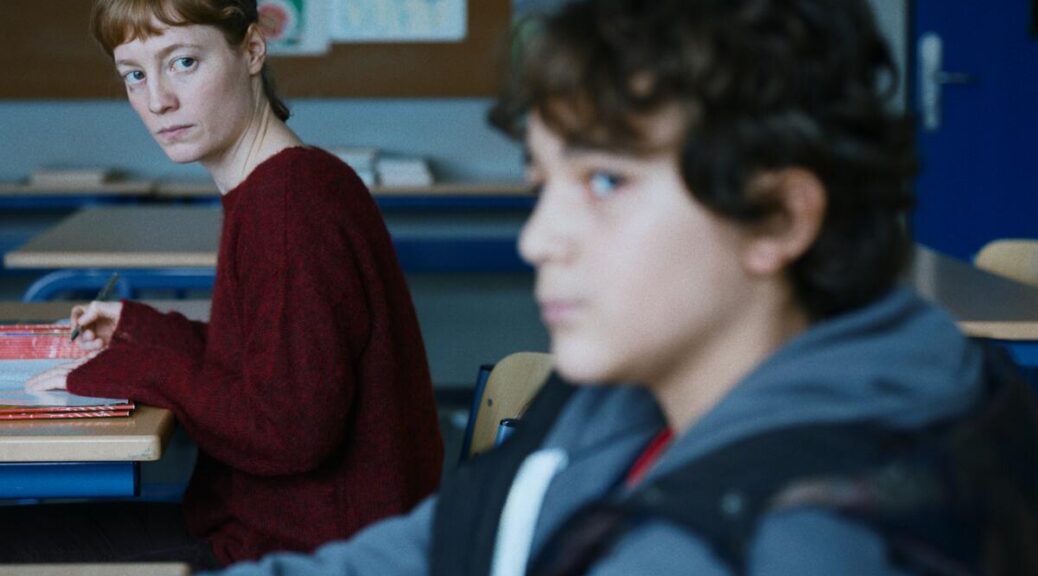
Carla (Leonie Benesch, fantastic) teaches 12-year-olds at a German grade school. Carla exchanges small talk with her fellow teachers, and doesn’t look away when she notices one who helps herself to what’s in the office coffee fund jar just minutes after Carla donated some change.

It’s a small but meaningful moment that writer/director Ilker Çatak uses to effectively illustrate Carla’s idealism, and to foreshadow her coming clash with reality.

The conflict begins to simmer when Carla witnesses two other teachers try to coerce some “good” students into naming who they think might be behind the recent rash of thefts at the school. Carla objects to the line of questioning, and reacts by using her wallet and laptop camera to set a trap and expose the guilty party.

What follows is a tense and utterly fascinating parable of accusation, distrust, paranoia and anger that has garnered an Oscar nomination for Best International Feature. Çatak crafts the school community as a Petri dish of contrasting agendas, one where teachers, students and parents fight for claims on the moral high ground.

Benesch is simply wonderful. Carla’s care for her students is never in doubt, but as the gravity of her situation begins to dawn on her, Benesch often only needs her wide eyes and tightened jawline to deliver Carla’s increasingly desperate mix of emotions.

As perspectives change, you may be reminded of Ruben Östlund’s insightful Force Majeure. But with The Teacher’s Lounge, Çatak moves the conversation to how the tribal nature of modern society can lead to separate realities, and how quickly those dug-in heels can be weaponized.

Hey, Barbie

Sometimes I Think About Dying

by Hope Madden

Sometimes I Think About Dying feels like the farthest from Star Wars an actor can go. And I like Star Wars, but still, I mean that as a good thing.

Rather than taking place in a galaxy far, far away, director Rachel Lambert’s film takes place in a set of cubicles inside an office near the ocean of a small Washington town. Daisy Ridley (who also produces) plays Fran. Fran likes spreadsheets, almost never talks, and sometimes she thinks about dying.

That is, until Robert (Dave Merheje) takes the cubicle recently vacated by Carol (Marcia DeBonis), who retired and went on a cruise. Robert’s outgoing, as all of Fran’s office mates seem to be, but there is one difference. Robert realizes Fran exists. And now suddenly, as she sits alone in her very modest apartment after eating a microwaved meal of meat patty covered in cottage cheese, Fran no longer thinks about dying. She thinks about Robert.

Lambert’s film benefits immeasurably from an incredibly lived-in, authentic environment. Though each character has its charm, each one also feels apiece of this world. Sometimes I Think About Dying doesn’t satirize the world of the cubicle as The Office or Office Space. It just understands it–recognizes the banality and camaraderie and sparks of humanity and humor.

What Lambert and Ridley mine beautifully is the difficulty people face when they’re trying desperately to be normal, and the only way they can manage is to be utterly invisible. The longing that comes to life in Fran’s face, her slow thaw to tenderness, vulnerability, brittleness, and panic testifies to Ridley’s versatility.

The full ensemble is a delight, but Merheje is particularly perfect in this role. His own insecurity and loneliness bubble to the surface as he tries and fails to figure Fran out and just have a normal relationship.

Working from a script by Stefanie Abel Horowitz (which she adapts from her acclaimed short), Kevin Armento, and Katy Wright-Mead, Lambert shies away from the morbid or fantastical that exists in the tale. It exists, but it’s accepted lightly in a film that is quiet. It sneaks up on you, like death or like love. And it shows an impressive, introspective side of Ridley.

Arhat Get Your Gun

The Monk and the Gun

by Matt Weiner

What if you took the interlocking stories of a Pulp Fiction, but all the gunplay was in the service of a hopeful Buddhist fable?

It’s a fantastical idea, but the film recognizes that so is the sight of a peaceful country being “forced” to go through the early throes of democratic governance. For The Monk and the Gun, there’s no great upheaval accompanying these sweeping changes.

Instead, Pawo Choyning Dorji’s delightful second feature (after 2019’s Oscar-nominated Lunana: A Yak in the Classroom) takes place in the aftermath of the King of Bhutan choosing to abdicate the throne and hold modern elections.

The rural village of Ura is holding mock elections to help prepare its residents, whose reactions to the abdication range from apathy or disinterest to outright hostility toward those voting for parties that do not seem aligned with the former monarch’s views.

Tshering Yangden (Pema Zangmo Sherpa), an elections official from the city, arrives in town to oversee the practice election and educate voters on why democracy matters. Her big city assurances about the great import of the election contrast with Ura’s locals, who question if they really need something that they don’t have to fight for.

As Yangden grapples with proving that democracy is as sacred as the campaign posters around the village proclaim, the village Lama (Kelsang Choejey) instructs his monk Tashi (Tandin Wangchuk) to bring two guns for the full moon ceremony so that the lama can “make things right” in the presence of the election official.

Tashi diligently follows his master’s odd (and unsettling) request, which gets the unassuming young monk caught up with an unscrupulous American gun collector (Harry Einhorn) and the criminal underbelly of Bhutan. While The Monk and the Gun is mostly bucolic satire, it’s a credit to writer/director Dorji that the ominous unease surrounding the ceremony persists up until the very end. Being given the means to control your life—and your national destiny—is serious stuff. But along the way, his film pokes both inward at itself and outward at the west, suggesting that nobody has a monopoly on the best way forward for a community.

Island Vibes

Ghostwritten

by Brandon Thomas

Guy Laury (Jay Duplass of TV’s Transparent) is eight years removed from the release of his successful first novel. Drowning in self-doubt and a healthy dose of writer’s block, Guy accepts an offer to travel to Nantucket Island for an isolated writing retreat. As Guy’s artistic inspiration remains elusive, he begins to wonder if there’s something sinister occurring in the house he’s staying in or maybe even with the entire island community itself. 

So much of Ghostwritten’s success is found in mood and atmosphere. The gorgeous black & white cinematography brings the remote coldness of Nantucket Island to life in a way that chills to the bone. Bursts of color appear randomly to signify Guy’s splintering state of mind–whether it be hallucinations or vivid dreams. It’s an interesting approach to highlight the lack of cohesion surrounding Guy’s perception of what’s real and what isn’t. The abstract weirdness of the film helps keep the audience on its toes and continually asking if Guy is an unreliable narrator or is something kooky really going on.

Duplass plays Guy as a man constantly at war with his own desires. One can almost see Guy’s ego swell on screen when an Island’s residents tells him that they loved his first book. He loves the idea of being a writer and the praise it brings him, but actually putting the work in to write seems almost insurmountable to Guy. That the supposed haunting and other strange occurrences might be an elaborate way for Guy to put off writing is both depressing and mischievously funny. 

Given Duplass’s non-acting work (he co-wrote Jeff, Who Lives At Home, Cyrus, and Baghead with his brother Mark), the abundance of comedy in Ghostwritten shouldn’t come as a surprise. Yes, there are legitimate attempts at scares and an unnerving tone, but the charming quirkiness of the film is undeniable and ultimately what makes the film stand out from this type of isolated genre fare. 

Ghostwritten wades into a lot of familiar territory (The Wicker Man being an easy homage), but it does so with a quirky lead performance and an oddball approach to mood an atmosphere.

Bubblegum Noir

Marmalade

by Christie Robb

Newbie prisoner, Baron (Joe Keery, Stranger Things), needs to be back on the street by three p.m. Luckily, his new cellmate is a veteran at all things illegal, including successful jail breaks. And he’s bored. If Baron can spin a compelling enough yarn about why he needs to make his three o’clock meeting, Otis (Aldis Hodge, Black Adam) will get him there on time.

Veteran character actor Keir O’Donnell takes the helm to write/direct his first feature with Marmalade.  And his casting is pretty great. Keery’s Baron shares a lot of the qualities that made his Steve from Stranger Things so much fun—great hair, the charisma of a golden retriever puppy, and a relentless devotion to his loved ones.

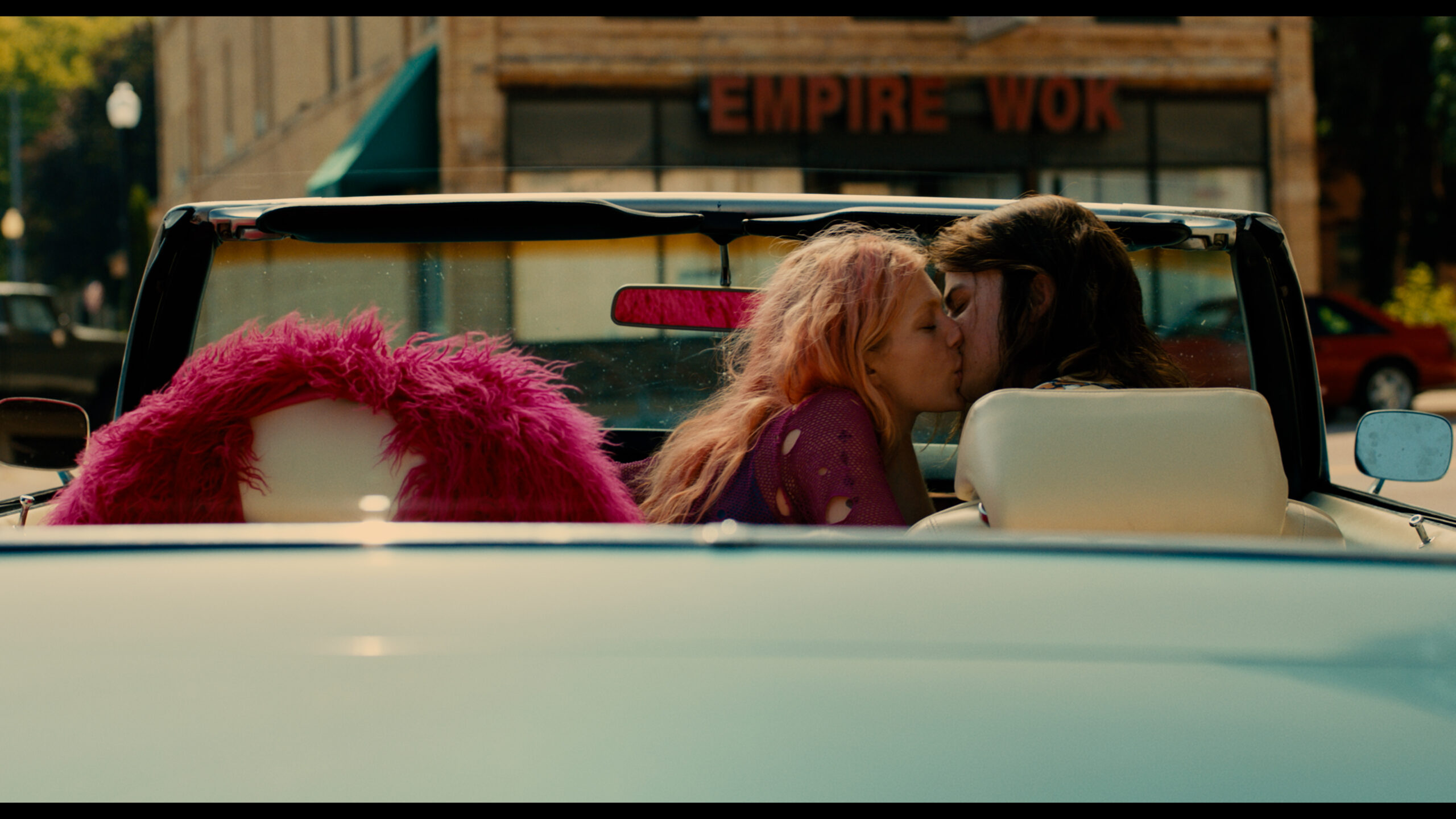
Here, Keery’s the caregiver of a bedridden mamma whose prescription medication just jumped up in price. All seems bleak until Marmalade (Camila Morrone, Daisy Jones and the Six) rolls into town. She’s got the pink hair, tattoos, and unconventional fashion sense of a manic pixie dream girl. But she’s also got a gun and a plan to rob a bank, so more a noir femme fatale who shops at vintage stores.

Marmalade is a little bit Forrest Gump and a little bit Natural Born Killers and a lot bit of another movie that I won’t mention because…spoilers. But you’ll figure it out before the credits roll.

It’s a stylish movie with good chemistry between cast members and some fun twists. However, the script deserved another few drafts before filming. In order to pull off what the film is trying to do, you need a tightly woven script that works the first time without giving away the ending, and that holds up to multiple viewings once you know. Here, there were plot holes as big as those in the hot pink fishnet tights that Marmalade so often wears.  

But if you don’t mind that, Marmalade is pretty sweet.

Screening Room: Argylle, The Promised Land, Scrambled, Greatest Night in Pop & More

King’s Ransom

The Promised Land

by George Wolf

Just going by its trailer, you might not expect The Promised Land to have much in common with Saltburn, but the similar themes are there. So while there’s no shocking bathwater here – or much bathing at all – there is a sweeping historical epic of one man’s quest for social climbing.

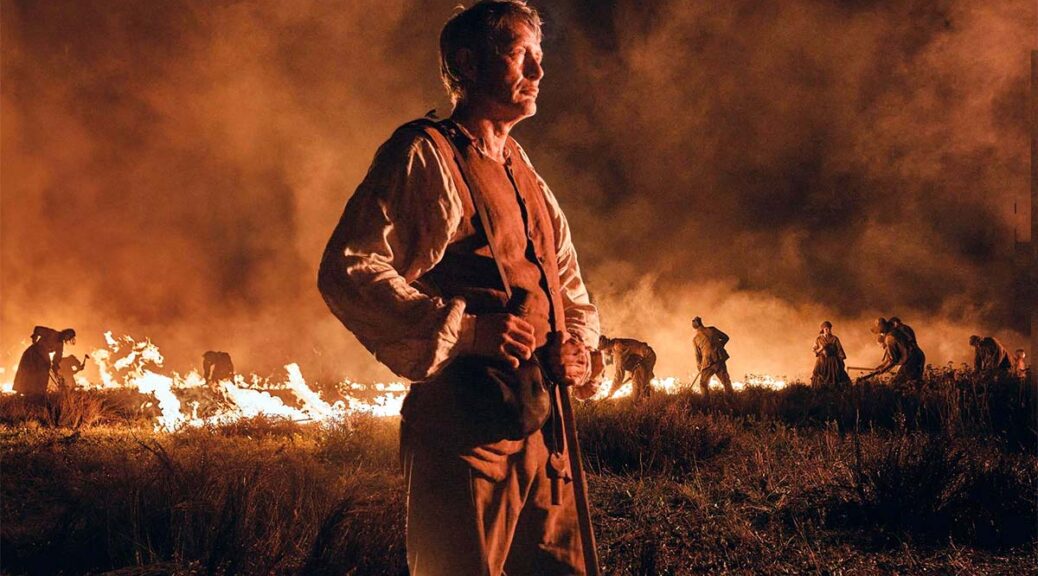
The man is Ludvig von Kahlen (Mads Mikkelsen), a longtime captain in the German army who returns home to Denmark in 1755. Desiring both wealth and honor, he visits the court of King Frederik V with a promise to bring the King what no one else has managed to deliver: settlements on the Danish heath.

Ludvig promises to tame the barren land in exchange for a noble title, a manor and some servants. And to seal the deal, Ludvig will finance the farming project with his own military pension.

Battling the elements and the roaming outlaws will be tough enough, but Ludvig also must face the wrath of sadistic county judge De Schinkel (Simon Beenebjerg), who wants to claim the land as his own and make good on his promise to Ludvig that “life is chaos.”

Director and co-writer Nikolaj Arcel adapts Ida Jessen’s historical novel as a harrowing tale that consistently reveals new layers throughout its two compelling hours.

Mikkelsen – teaming again with Arcel after 2020’s terrific Riders of Justice – is perfection as the battle-tested soldier with steely-eyed dreams of nobility. Ludvig’s arc plays out patiently, but as the Captain takes in two runaway peasant farmers (Amanda Collin, Morten Hee Anderson), a well-meaning pastor (Gustav Lindh) and an unwanted child (Melina Hagberg), Mikkelsen ensures the awakened humanity feels well-earned and real.

And Arcel keeps the stakes rising to thrilling effect. Cinematographer Rasmus Videbæk’s majestic frames serve and volley with the twists of the screenplay to mine drama that can be as subtle as a framed patch of dirt or as overt as the triangle that springs from Schinkel’s intended fiancée Edel (Kristine Kujath Thorp) eyeing Ludvig as the man who can save her.

What price ambition? It remains an intriguing question, whether you’re surrounding it with delicious ultra-modern pulp or re-imagining true events from hundreds of years past. The Promised Land takes the road less adorned, forging a rousing tale of savagery, revenge and fulfillment that will not be denied.