In the summer of 2000, world renowned cellist Yo-Yo Ma assembled a group of celebrated musicians from across the globe “to see what might happen when strangers meet.” Since then, Ma’s Silk Road Project has recorded six albums and performed for over two million people in thirty-three countries.
To say that thrilling music happened is an understatement, but what makes director Morgan Neville’s documentary on the ensemble strike deeper is how it illustrates the creative joy that can spring from the depths of pain.
Neville, director of the enthralling Best of Enemies and the Oscar-winning 20 Feet from Stardom, keeps his impressive winning streak intact by going inside the ensemble, and finding members committed to a shared vision while still keeping their cultural identities alive.
From revolutions in their home countries, to months away from loved ones, to charges of “cultural tourism,” turmoil often fuels the genius of the Silk Road Project. The Music of Strangers is a life-affirming chronicle of that journey.
A young city girl wants to make a difference. She has no idea what she’s doing, and stirs up a lot of dust in a small rural community. Also there are dogs.
Sara Gold works for the United Animal Protection Agency (UAPA). The offices are pristine and corporate, mysterious for an agency which can’t afford to even pay the people manning its desks, but Sara is up for a “promotion” anyway and is ready to make a name for herself.
Sara is assigned to go undercover, posing as a second-year vet student and eager summer intern, at the Holloway family owned and operated dog breeder. There have been allegations of inhumane circumstances, and armed with a handful of wireless cameras, Sara is determined to get justice for the dogs she loves so much.
The strangest thing about The Dog Lover is that there really aren’t many dogs, not in the way you’d hope. While the opening credits are composed of various internet clips of people interacting with their beloved family pets, no one in the film seems to actually love dogs. Sara doesn’t seem to even know any herself. The Holloway family has a house dog, but no one is shown connecting with it.
Director Alex Ranarivelo spends a lot of time peering at big brown eyes through chain link. These shots are sure to tug at heart strings, but fail to create a real connection between any of the actors and their companions.
This puzzle has a lot of pieces that just don’t seem to fit. The struggling family dog breeding business also has horses, a very expensive animal to house. The only time a horse appears useful is when strapping young Will Holloway rides up, shot-gun in hand, to save Sara from threatening red-neck “backyard breeders.” Yes, he actually rides in on horseback.
A lot of work is spent undermining Sara at the outset. When she arrives at the small airport, Will suggests she might want to reconsider. “Reconsider what?” It’s her shirt that’s apparently offensive. Will explains that his father is very conservative. Sara is wearing a v-neck t-shirt.
When she joins the Holloway family for dinner on her first night, she declines an offer of chicken, explaining that she’s a vegetarian. The family reactions vary from disbelief to dismissal. The mother laughs that she was a vegetarian when she was in vet school too, but that she eventually “couldn’t resist.” When Sara hesitates to hold hands at prayer, the father asks gruffly “You aren’t an atheist, too?”
The Dog Lover promises to have heart, but never delivers. It settles somewhere close to Hallmark channel original. The plot isn’t much, the actors are middling to good, and there are some standard Americana shots, including a running herd of horses for good measure.
The film concludes with a warning message fading on a black screen. “Investigate before you donate.” Turns out, the animal protection agency were the bad guys all along, small town America reigns supreme, and the backyard breeders who were actually doing animals harm never get their comeuppance. Woof.
Is this a sequel to Welcome to the Dollhouse? Do we catch up with Dawn Wiener and see how her life has turned out?
Well, no, and…sort of.
Dawn (now played by Greta Gerwig) is just one of the perfectly odd owners of the titular dachshund. From an introverted boy, to Dawn, to a young brother and sister, to a sad sack film school professor (Danny DeVito), and finally to a sick old woman (Ellen Burstyn), the sweet pooch connects vignettes full of Solondz’s bleak, darkly comic worldview.
During the film school segment, DeVito’s Professor Schmerz speaks wistfully of wanting to write his great screenplay, one full of memories, pain, and dreams. And, he says, “I wanted it to be funny.”
That sounds an awful lot like Solondz refusing to apologize for his challenging approach, and good for him. Wiener-Dog is funny, sometimes very funny, and early on you wonder if this film might herald a more hopeful, optimistic Todd.
No, same Todd. Ruminations on death and regret permeate each segment, punctuated by painfully harsh situations and coal black, wince-inducing humor. As the incredibly sweet wiener-dog moves from owner to owner, Solondz reminds us to appreciate all the souls (pets included) that come in and out of our lives, and the effect they each have on our mutually shared journey…because, you know, we’re all headed for the same fate anyway.
Solondz is not for every appetite, but his vision is unique, and this may actually be his most accessible film to date. With its old school intermission and two musical odes to a canine hero, Wiener-Dog feels almost light-hearted…until it brings you back to a universe full of comic despair.
So enjoy, and good luck getting “The Ballad of Wiener-Dog” out of your head.
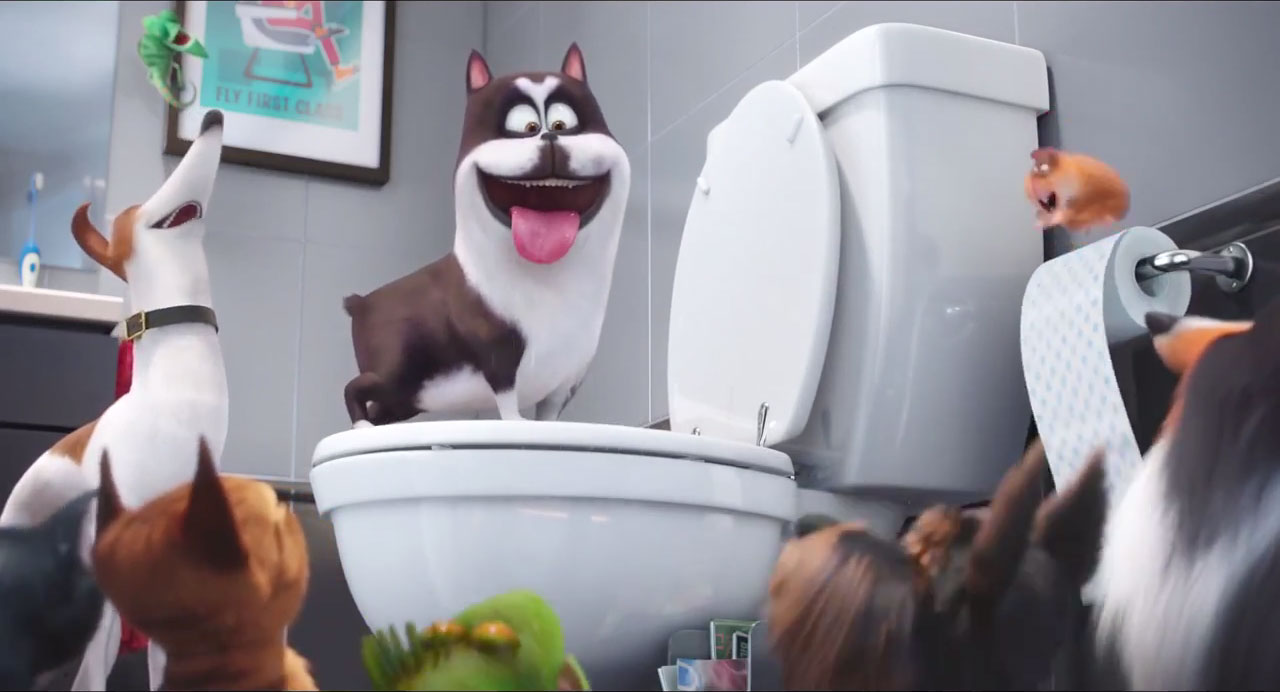
For a madcap family movie, The Secret Life of Pets raises some deeply disturbing questions. How much libido could fuel a romantic subplot when the lovers have been neutered? Why does “No Sleep Till Brooklyn” cue up during a drive into Manhattan? And exactly where is the autonomic system located on a sausage?
Alas, The Secret Life of Pets, directed by Chris Renaud and Yarrow Cheney (Despicable Me franchise veterans), answers none of these questions. Instead, the movie offers up a diverting animated comedy with plenty of action but little cohesion or earned emotion to back it up.
The plot, as much as it exists other than to fling a Bronx Zoo’s worth of animals across New York City set pieces, hints at a Toy Story-light conflict between earnest terrier Max (Louis C.K.) and the newly adopted Duke (Eric Stonestreet), a gruff Newfoundland with a sad past.
It’s fitting that Duke, a shaggy dog, gets the action going. Once he and Max find themselves captured by the only two animal control officers in a city of 8 million, the sole remaining tension is whether Max and Duke will learn to get along before or after a successful rescue effort, as led by Gidget the tougher-than-she-looks Pomeranian (Jenny Slate) and Chloe, a scene-stealing cat (Lake Bell).
The Secret Life of Pets features inspired physical comedy, in a Buster-Keaton-meets-future-theme-park-ride kind of way that turned the Minions into cash cows. But it’s Pixar without the pathos: the movie never misses a chance to ignore any avenue for genuine emotion, whether it’s Duke learning what happened to his former owner or the streetwise villain Snowball (Kevin Hart, playing to the back row) hinting at the dark desires that animals really harbor toward their fickle owners.
It’s the single-note drone of the movie’s action that makes the glimpses of what might have been all the more remarkable. An extended fantasy sequence in a Brooklyn sausage factory takes place for no reason other than setting up a song-and-dance number that’s a drugged-out tribute to edible body horror, complete with dancing hot dogs made rapturous by their imminent consumption. None of this advances the plot in any way, but it’s a rare delight in a movie mostly content to coast.
In the end, predators and prey make amends, Max and Duke are ready for a sequel and a reliable supporting cast have made their case for a spinoff. Not bad for a day’s work in New York. But the real secret is that our pets are very much like their human counterparts: they share our likes and dislikes, our strengths and our flaws, and — most of all — our willingness to settle for just good enough.
Back in 2012, Aubrey Plaza starred in an eccentric little SciFi adventure based on a Craigslist ad. Safety Not Guaranteed was a surprised (and welcome) hit, partly because of writer Derek Connelly’s fertile imagination, partly because of the genuinely bizarre ad: Wanted: Somebody to go back in time. This is no joke. You’ll get paid after. Bring your own weapons. Safety not guaranteed. I have done this once before.
That is ripe.
Since then, two all-American bros took to Craigslist to get dates to a wedding they were forbidden to attend stag for fear they would harass all the female guests and become generally unruly. That particular ad has already been milked of every conceivable bit of interest, with TV spots AND a book. A book! And yet, Andrew Jay Cohen and Brendan O’Brien (writers behind the Neighbors franchise) have adapted the ad for the new film Mike and Dave Need Wedding Dates.
It also stars Plaza, alongside Anna Kendrick, Zac Efron and Adam Devine as the destination-wedding-bound foursome.
Jake Szymanski directs the raunchy comedy that pits two lovable losers trapped in their never ending adolescence against the equally immature but more scheming young women just looking for a free trip to Hawaii.
Efron and Plaza co-starred in the very-R comedy Dirty Grandpa earlier this year, with Devine and Kendrick sharing the screen in both Pitch Perfect films. The four of them are likeable and – to varying degrees – talented. They’d have to be comedic lightning bolts to get this off the ground, though.
With a plot this thin, the film has to lean too heavily on shock situations and over-the-top language to generate any energy. Expect moms to call sons “assholes,” sisters to bare some pelt, and Aubrey Plaza to demonstrate sexual technique using texting as the metaphor.
The cast offsets the raunch with character earnestness (except for Plaza, who’s all in), but the film always feels too slapped together to hold water and a bit to mean-spirited to merit more than a smile here and there.
The whole thing is so thin, so desperate for content, it’s as if some idiot based an entire screenplay on a 400 word Craigslist ad.
The year is half over already?! Well, hell. Suppose we should argue over the best the genre has had to offer thus far? Senior Filmmaking Correspondent Jason Tastevin joins us to debate whether 10 Cloverfield Lane is a horror film or not, whether The Witch is any good, and to count down the best in horror so far this year.
5. Southbound
“For all you lost souls racing down that long road to redemption…”
Successful anthology horror is difficult to pull off. Southbound manages to do so as it spins its diabolical tale, interlocking five stories of travelers on a particularly lonesome road.
The film opens strong as two bloodied passengers rush to a desolate gas station to clean up and take stock of their situation – a situation we’re given very few clues about. But the immediately menacing, we-know-something-you-don’t-know atmosphere inside that gas station sets us up for the nightmarish episode that will unravel.
What follows are pieces on similarly distressed wayfarers – a rock trio with a flat tire, a distracted driver, a brother searching desperately for his missing sister, a family on an ill-planned vacation, then back to the original bloodied pair heading for gas.
Rather than feeling like five shorts slapped together with a contrived framing device, the segments work as a group to inform a larger idea – together they help to define this particular and peculiar stretch of highway.
4. Nina Forever
Brothers Ben and Chris Blaine crafted their feature debut as a “fucked-up fairy tale.” The truth is, that tag line sells their bleakly comedic, emotionally relevant, disquietingly familiar film short. Though you may laugh, Nina Forever swims a wellspring of sadness.
Check out girl Holly (Abigail Hardingham, wonderful) falls hard for mopey, over-aged stock boy Rob (Cian Barry), who’s still suicidal over the motoring death of his longtime girlfriend Nina (Fiona O’Shaughnessy). Whenever the two living lovers hook up, Rob’s viscera-and-glass-shard-covered ex writhes her way into their embrace.
As an analogy for those awkward relationships you just can’t seem to let go of, Nina Forever excels in its amplification of all that is awkward and unruly. The filmmaking duo, who also write, avoid clichés and easy answers while their talented cast creates unpredictable and dimensional characters.
There is real depth and authenticity to a film that constantly surprises without really feeling contrived. Few seasoned directors handle tonal shifts with as much confidence as the Blaines in their feature debut.
https://www.youtube.com/watch?v=1IokJt_05co
3. Baskin
If you’ve ever wondered what hell might look like, first time feature director Can Evrenol has some ideas to share. They are vivid. You’ll swear they even have an odor.
Evrenol’s Baskin is a loose, dreamily structured descent into that netherworld in the company of a 5-man Turkish police unit. (Baskin is Turkish for “police raid.”) The serpentine sequencing of events evokes a dream logic that gives the film an inescapable atmosphere of dread. We are trapped along with this group of somewhat detestable, somewhat sympathetic men as they respond to a call for backup in an “off the map” nearby area. What they find is deeply disturbing.
Evrenol’s imagery is morbidly amazing. Much of it only glimpsed, most of it left unarticulated, but all of it becomes that much more disturbing for its lack of clarity.
There are moments when Baskin feels like a classier, more stylishly made Nightbreed, but there’s no camp factor here. Just a surreal exploration of the corruptibility of the human soul, and its final destination.
2. Green Room
The tragic loss of 27-year-old talent Anton Yelchin makes this one bittersweet. Young punk band the Ain’t Rights is in desperate need of a paying gig, even if it is at a rough private club for the “boots and braces” crowd (i.e. white power skinheads). Bass guitarist Pat (Yelchin) eschews social media promotion for the “time and aggression” of live shows, and when he accidentally witnesses a murder in the club’s makeshift green room, Pat and his band find plenty of both.
Along with concertgoer Amber (a terrific Imogen Poots), they’re held at gunpoint while the club manager (Macon Blair from Blue Ruin) fetches the mysterious Darcy (Patrick Stewart, gloriously grim) to sort things out. Though Darcy is full of calm reassurances, it quickly becomes clear the captives will have to fight for their lives.
As he did with Blue Ruin, writer/director Jeremy Saulnier plunges unprepared characters into a world of casual savagery, finding out just what they have to offer in a nasty backwoods standoff. It’s a path worn by Straw Dogs, Deliverance, and plenty more, but Saulnier again shows a knack for establishing his own thoughtful thumbprint. What Green Room lacks in depth, it makes up in commitment to genre.
Only a flirtation with contrivance keeps Green Room from classic status. It’s lean, mean, loud and grisly, and a ton of bloody fun.
1. The Witch (2015)
The unerring authenticity of The Witch makes it the most unnerving horror film in years.
Ideas of gender inequality, sexual awakening, slavish devotion to dogma, isolationism and radicalization roil beneath the surface of the film, yet the tale itself is deceptively simple. One family, fresh off the boat from England in 1630 and expelled from their puritanical village, sets up house and farm in a clearing near a wood.
As a series of grim catastrophes befalls the family, members turn on members with ever-heightening hysteria. The Witch creates an atmosphere of the most intimate and unpleasant tension, a sense of anxiety that builds relentlessly and traps you along with this helpless, miserable family.
As frenzy and paranoia feed on ignorance and helplessness, tensions balloon to bursting. You are trapped as they are trapped in this inescapable mess, where man’s overanxious attempt to purge himself absolutely of his capacity for sin only opens him up to the true evil lurking, as it always is, in the woods.
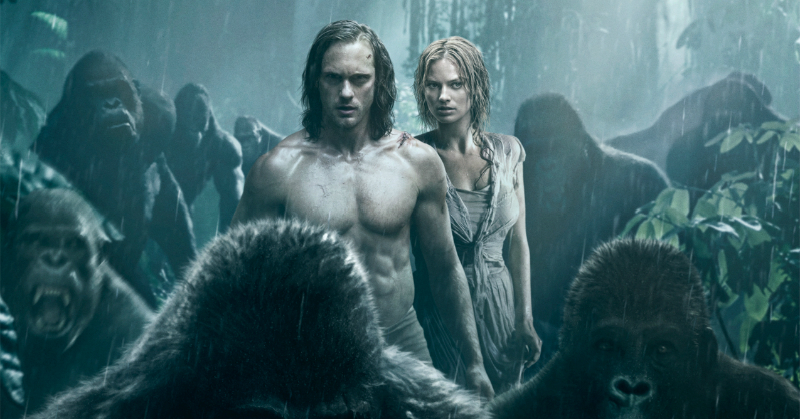
You’ll hear that famous phrase in The Legend of Tarzan, but only for ironic purposes. This new reboot takes its cue from recent superhero films that have embraced the darker side of their legend.
We drop in on Tarzan (Alexander Skarsgard) in the late 1880s, years after his return to Greystoke Manor and the name John Clayton, as he’s living the aristocratic life with wife Jane (Margot Robbie) in a London mansion full of servants. Flashback segments do fill us in on the couple’s jungle past, but credit screenwriters Craig Brewer and Adam Cozad with a welcome pivot from the usual origin story formula.
Clayton is called back to the wilds of the Congo thanks to a devious plan from Leon Rom (Christoph Waltz), special envoy to Belgian King Leopold. Rom can deliver a fortune in diamonds to his King, but only if he can deliver Tarzan to a Congolese chieftain (Djimon Hounsou) looking to settle an old score.
So John and Jane head back “home,” with U.S. envoy George Washington Williams (Samuel L. Jackson) in tow, but when Rom puts his kidnapping plan in motion, Tarzan’s particular set of skills come out to play.
Director David Yates, who guided the Harry Potter film series to an epic conclusion, keeps his camera fluid, his landscapes beautifully panoramic and the action frequently thrilling. Yes, it gets a bit silly and a bit more anachronistic, but Yates brings an ambitious scope to this modern Tarzan, with a respectable side of social conscience even when it panders.
Skarsgard’s chiseled physique certainly looks the part, and his somewhat robotic lack of range serves him well here. Robbie provides plenty of spunk, but her Victorian-era Jane could have just as easily beamed down from last Halloween. As for their chemistry…hey, those CGI jungle animals look fantastic!
Waltz and Jackson are well, Waltz and Jackson.
Itprobably won’t set the stage for a string of blockbuster sequels – and to its credit, isn’t trying to – but for most of its nearly two hours, this new Tarzan really swings.