Tag Archives: Rachel Willis

Unfortunate Son

Adam the First

by Rachel Willis

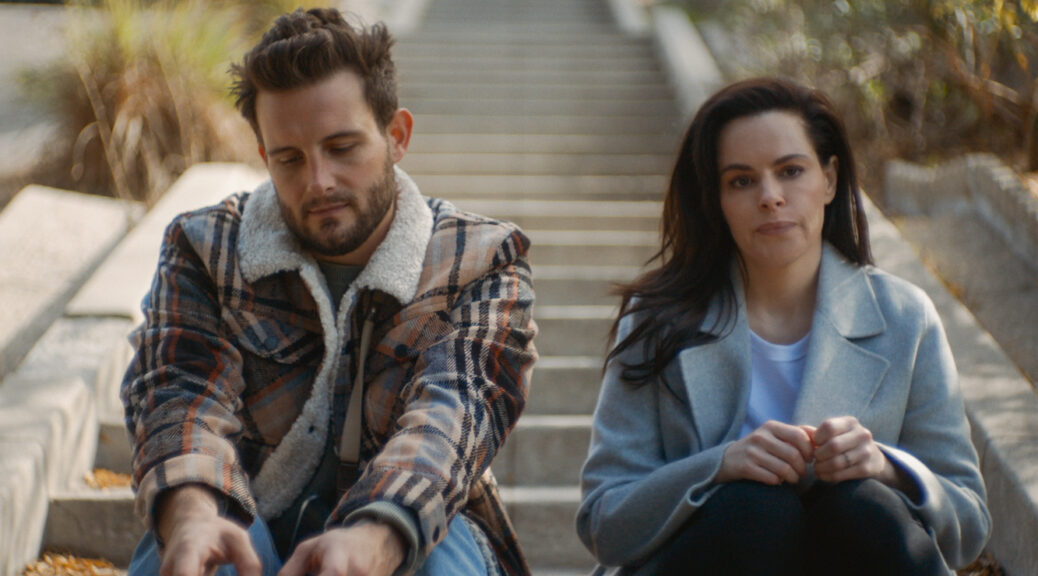
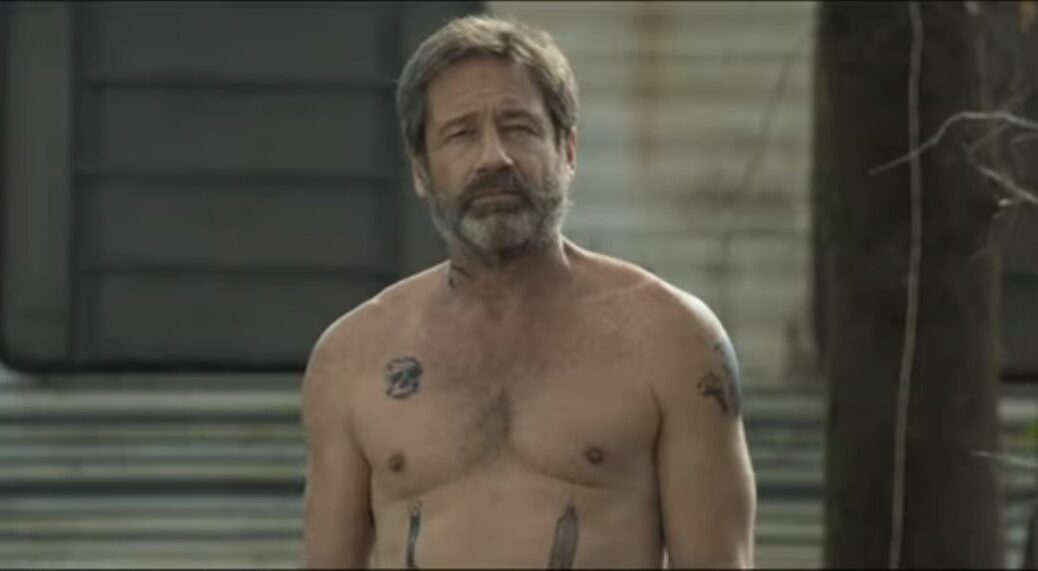
A father (David Duchovny) takes his son into the woods to reveal that he is not the boy’s real father in writer/director Irving Franco’s film, Adam the First.

Jumping ahead in time, Adam (Oakes Fegley) still lives with the man who’s not his father and a woman whom he calls mother (Kim Jackson Davis), but a disruptive event sets the boy on a quest to find his real father. What follows is a dream-like odyssey through the rural forests and swamps of Mississippi.

An underlying tension follows Adam throughout his journey. He makes several bad decisions (and a few good ones) while meeting a colorful cast of characters – all of whom seem willing to help him.  

The lush Mississippi backdrop provides a splendid setting for the surreal quality of the film. Though rooted in reality, there are several unusual features in Adam’s quest, and it helps to build tension as we wonder what Adam will do when he locates his father. Despite that anxiety, Adam carries an undeniable sweetness to him. You want him to make better decisions; you want him to find what he needs.

Each person that enters Adam’s life offers him something that he uses to continue on. Some of dialogue feels more natural than other – some character’s offer a little too much wisdom, a stumble in an otherwise very naturalistic film. But even with these (very few) weaker moments, each character comes to life in their own ways, bringing something unique to the table.

Even though this is a quiet film that takes its time getting from one scene to the next, there is never a slow moment. You’re content to follow where Adam leads. That’s not to say the movie doesn’t have a few explosive moments, but everything unfolds in its own time.

Franco masterfully balances each element of Adam’s story. Some of the film is heartbreaking, as Adam faces challenges that would hinder a less-determined person. But what Adam is searching for is what many of us want: happiness, security, family. Adam the First is a outstanding examination of the indomitable human will.

Four’s a Crowd

Lazareth

by Rachel Willis

After a deadly virus strikes, a trio of women turn their home into a sanctuary, cut off from the outside and safe in director Alec Tibaldi’s film, Lazareth.

As years pass in this virus-plagued world, we watch Lee (Ashley Judd) and her nieces Maeve (Sarah Pidgeon) and Imogen (Katie Douglas) carve out rituals and chores to keep themselves going. With a truck that somehow still works, Lee makes trips into town for supplies, but as she warns the girls, things in town are bad.

There is a lot of information given in a small amount of time that stretches the thin cord of belief. After so many years, it’s hard to accept there are certain items still available. However, it’s interesting to see how these three women work together to maintain their fragile existence. As the film progresses, we get answers to several questions, but some things remain vague.

The two sisters, Maeve and Imogen, are the film’s strongest characters. Having little experience of the world prior to the pandemic, they rely on their aunt to keep them safe. Most of what they believe is taken on faith.

It seems as though writer/director Alec Tibaldi expects much of the same from the audience. It’s never clear what Lee’s motivations are. When Maeve’s eyes are open to various truths, her choices are unfathomable. Imogen never has much chance to develop as more than “girl smitten with new boy,” which, to be fair, isn’t too far out of the realm of possibility as she’s a teenage girl who’s never met a boy before.

The boy in question, Owen (Asher Angel), quickly threatens to upend Lee’s fragile world. The tightrope Lee has been walking threatens to fall from under her.

There is some tension after Owen arrives, but it’s never quite enough to make us fearful for our trio of survivors. We also don’t spend enough time getting to know who they are to care what happens to them, and the characters do things that contradict what we think we know of them.

If done well, these surprises can keep audience off balance, but when done poorly, it’s another thorn in a viewer’s side. Lazareth is an island surrounded by thorns, never giving anyone a chance to learn much of anything.

Reinvention

New Life

by Rachel Willis

From the first moments of director John Rosman’s film, New Life, you know you’re in for a tense thriller.

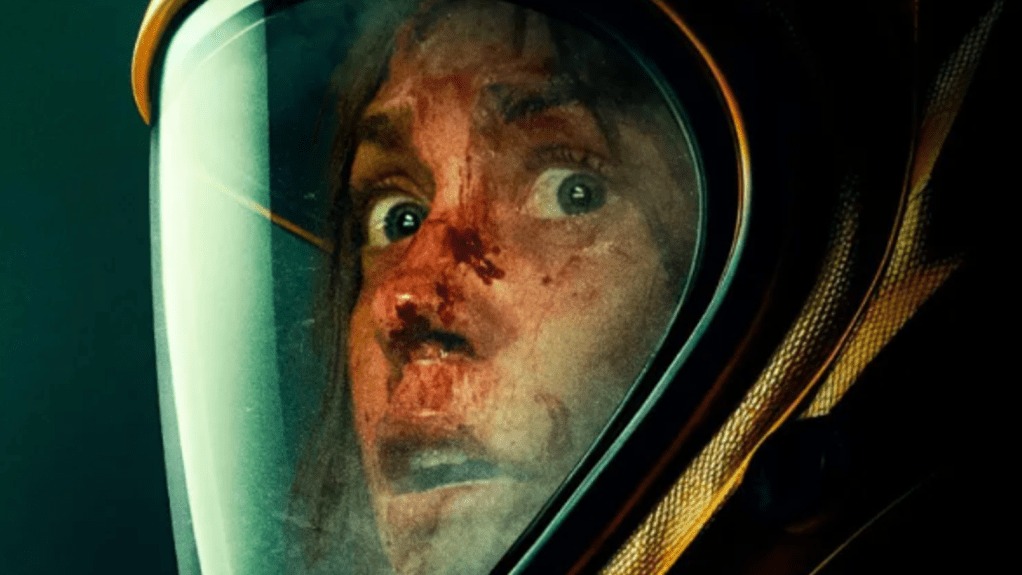
The film opens with the sounds of a woman in distress. Soon, the woman (Hayley Erin) is revealed, covered in blood and trying walk to quickly but nonchalantly down a quiet neighborhood street.

After this opening leaves you wondering just what is going on, the film slows down, giving our main character, Jessica, (and us) time to catch her breath. New characters are introduced, including a fixer named Elsa (Sonya Walger). Her task is to hunt down Jessica.

The reasons for Jessica’s bloody entrance, and the race to find her, are unveiled slowly. Flashbacks are worked into the film at perfect moments, revealing just enough to keep us intrigued until more is revealed.

As the focus of the film shifts between Jessica and Elsa, we learn a little more about each character, and Rosman effectively fosters sympathy for both. Not an easy feat when one is a hired gun, and the other is a walking time bomb. Erin brings a sweet naivety to Jessica; Walger’s Elsa is more pragmatic.   

The film’s only poor moment is filled with too much exposition. What starts as a tense conversation with just enough information to answer a few questions, devolves into something more tedious. Rosman would have done better to show more of this information through additional flashbacks, but it is a small misstep in an otherwise finely crafted film.

There is also a certain cynicism to the film, whether intentional or not, that emphasizes mean world syndrome. Those who show kindness to Jessica suffer for that choice, and one wonders if this intentional. Are we really to believe that kindness is a liability?

Perhaps we are. As New Life heads toward its climax, our focus shifts away from Jessica and toward Elsa. Our pragmatist understands things in a way Jessica does not, and it’s an interesting dynamic that leads us through this world. For a first feature, Rosman has brought to the table a film that preys on some of our most innate fears, those that might be especially raw considering recent global events. Add in some truly disturbing and bloody practical effects, and we’re given a thriller that is effectively terrifying.

Screening Room: Abigail, Ministry of Ungentlemanly Warfare, Sasquatch Sunset, The People’s Joker & More

Dress for the Job You Want

Villains, Inc.

by Rachel Willis

When their super villain leader dies, three henchmen are left adrift in director Jeremy Warner’s comedy Villains, Inc.

It’s an interesting concept told with the kind of mundanity that speaks to real life. Though most of these villains have superpowers and special abilities, they need jobs – just like the rest of us. They also have dreams of the future, just like us. Not perhaps of a summer house in the country, but of world domination. 

After the leader dies, Beatrix (Mallory Everton) becomes the group’s de facto number one. The other two (Colin Mochrie and Jason Gray) just aren’t capable of leading anyone.

There is a certain amount of comedy from the set up alone. What do hench people do when they have no one to guide them? However, this concept only takes you so far. What follows is often forced and ineffective. No one leans into the material, so too often, there is nothing to laugh at.

We’re left with clunky dialogue and a been-there-done-that style of humor. That’s not to say no joke ever lands – Mallory Everton and Jason Gray get produce a good laugh or two – but too often the writing gets in the way.

The story itself is fine. We have montage moments and misunderstandings, reconciliations and growth. The superhero of the film, Captain Justice (Trey Warner), has some of the best scenes, but even a few of those are lifted from other films. The moment when Justice hands out “swag” to fawning cops is reminiscent of The Lego Batman Movie.

While the characters are likable enough, there simply isn’t enough working for this movie to keep it interesting. There are too many threads for each to get a satisfactory resolution, as if the writers weren’t quite sure what kind of story they wanted to tell.

The slap-stick style comedy will definitely work for some, but comedy is one of the toughest sells. What resonates is not so much the humor but the desperation that comes with needing a job – even if you have superpowers.  

Back for Seconds

Food Inc. 2

by Rachel Willis

I’ll admit I didn’t watch 2008’s Food, Inc., but the first film is not a prerequisite for watching Food, Inc. 2—an updated, critical look at the system that feeds us.

What director Robert Kenner addressed in the first film is, in part, revisited—this time with co-director Melissa Robledo. Has much changed since Food, Inc. was released 15 years ago? What role did the COVID-19 pandemic play in exposing the weaknesses in our food system? And what is ultra-processed food doing to our health?

Producers Michael Pollan and Eric Schlosser once again join Kenner in tackling the issues that come with food consumption in America. While farmer’s markets are now a staple in many American cities, and organic and free-range food is readily available in big chain grocery stores, much of what we eat is still controlled by only a handful of companies.

The point is made early that what was started with the original Food, Inc. wasn’t enough.

The filmmakers make a strong case for the fragile nature of our food supply. The COVID pandemic brought into sharp relief the problems with having so few suppliers for our food. Footage shows milk being dumped, pigs euthanized, and produce wasted while store shelves stand depleted. It’s a harsh fact brought to light: the food industry is based on predictability. When something unpredictable happens, people go hungry.

One issue highlighted is that 80% of the infant formula market is controlled by only two companies. When one of those companies had to shut down one of their factories in 2022, parents were left desperate to find the food necessary to feed their babies—just one of many examples that demonstrate the fragility of our most important system.

Several interviews focus on the exploitation of workers harvesting and producing crops for pityingly low wages in inhumane conditions. One man makes the point that “the work is essential, but we’re treated as disposable.” In the 100+ years since The Jungle was published, it seems little has changed.

Michael Pollan is quick to highlight the war between Big Ag and nature. Moving dairy farms to the desert is unsustainable, yet regulations are few and land is cheap. When cows need water from aquifers to produce milk, people go without water.

Food, Inc. 2 raises urgent issues. It’s essential that we listen.

Crooked Line

Glitter & Doom

by Rachel Willis

Being unfamiliar with all but one Indigo Girls song, I was still impressed with how well their music is worked into the romantic musical, Glitter & Doom.

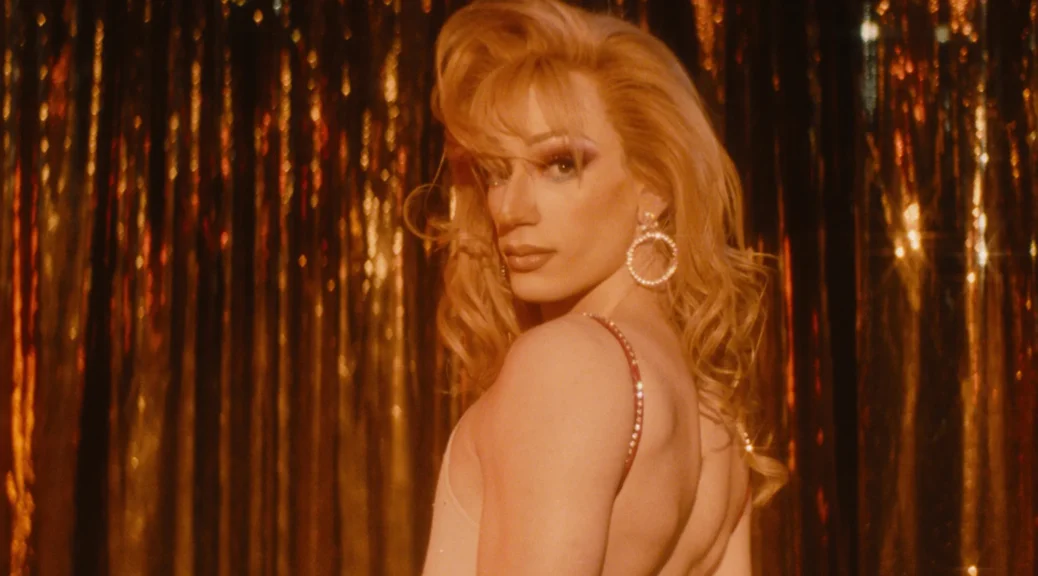
Director Tom Gustafson weaves the tunes into the budding summer romance of Doom (Alan Cammish), an aspiring musician, and Glitter (Alex Diaz), a hopeful circus performer. These two are first drawn to one another while Glitter is filming an audition tape for clown school in Paris.

When the two meet again, the meet cute duet is a bit jarring at first, until we learn that our duo can sing. However, the scene is stolen by the choreography, which is a fun, entertaining highlight in what would otherwise be an underwhelming moment of connection.

There honestly isn’t much to this story, though. The characters seem made to encourage each other’s ambitions. And though they’re presented as opposites, their winning duets don’t help paint them as people with diametrically opposed life perspectives.

Sure, it’s hard not to notice Doom’s outlook matches his name. This is most obvious when he interacts with his mother (Missi Pyle). Glitter, on the other hand, radiates positivity, except when dealing with his loving but unsupportive mother (Ming-Na Wen, who has her own lovely singing voice). In fact, the mother-son relationships are the most interesting parts of the film—not exactly what you want when the focus of your story is a romance.

But when your two leads have the kind of chemistry that Cammish and Diaz have, it’s hard not to be pulled into their tale. Their ups aren’t very high, nor their lows very low, but it’s hard not to root for them – both as a couple, and as they pursue their dreams.

Not much really sets this movie apart except for the music, and each scene seems to drive you toward the next musical number. While it’s not entirely unappealing, it is a bit underwhelming.

Cinematic Treasure Hunters

Mad Props

by Rachel Willis

Enter a world of movie prop collectors, individuals who amass pieces from costumes to sculptures to fragments of sets. These collectors are the focus of director Juan Pablo Reinoso documentary, Mad Props.

He begins by introducing our narrator and host, film producer Tom Biolchini, and his history, from wanting to work as a special effects artist to his eventual role as a hobby prop collector. It’s not the most compelling way to start the film. Several scenes involve Tom showing his family pictures from a prop catalog, dreaming about his most desired objects. We watch him place bids, paying anywhere from $25,000 to $75,000 for a single item.

The film picks up somewhat as the focus moves to other prop collectors. We travel the world to see some of the most impressive collections. Collectors often display their items in creative ways, highlighting the pieces they are most proud of. Unfortunately, Reinoso doesn’t do much to vary the presentation of these moments, and that repetitiveness drags.

Mad Props is most interesting when Reinoso interviews the artists who make the movie props. When asked what he thinks of his work being coveted by fans, one designer expresses delight. But who is the ultimate beneficiary of all the money being spent on these props? It’s not the designers.

Actors Lance Henriksen and Robert Englund add a little levity to the film. Unfortunately, even they can’t help with much of the footage, which simply feels like filler.

Mad Props flounders, never quite telling its story in a cohesive, interesting way. Of all the things to collect, movie props are pretty cool. You purchase a piece of cinematic history, art, and depending on the person’s relationship to the film itself, a bit of nostalgic joy. Of course, the cost of the items makes the hobby pretty prohibitive, hindering any attempt at universal appeal.

Reinoso wants to convey the value in this type of collecting. Sadly, he never quite makes the case that this is a hobby of interest for those beyond the collectors themselves.

Self Portrait

Frida

by Rachel Willis

Director Carla Gutiérrez lets Frida Kahlo speak through her words, photos, and most movingly, self-portraits (including images from her illustrated diary) in the documentary Frida.

The film moves through the years of Kahlo’s life, weaving in her own words and images from her young life. Film from the time period helps set the scene of Frida’s childhood in Mexico. Photos of Kahlo and her parents illustrate her spoken memories.

The documentary makes impressive use of Kahlo’s paintings to bring the legend to life. This is a documentary that puts the soul of the artist front and center of her own story.

When Frida tries to bring in its own artistry, it suffers by comparison. The choice to highlight certain sections of black and white film in bright colors feels tacky compared to the rich paintings. Used to better effect are animations that enliven the artist’s works.

In addition to Kahlo’s own words, voices from those who knew her pepper the film. Classmates, former boyfriends, and friends add layers to the portrait the film paints.

It is impossible to study Kahlo’s life without examining her relationship with fellow artist Diego Rivera. His influence on her life was profound, as was hers on his.

Kahlo’s emotional highs and lows allow the audience to know her in a way that enhances an understanding of her art. Like so many artists, the true impact of her work would only be understood after her death. But in life, it brought her joy.

For those unfamiliar with Frida Kahlo, this is a lush and impressive introduction to her life and art.

Screening Room: Kung Fu Panda 4, Imaginary, Ricky Stanicky, Damsel & More