Tag Archives: Nia DaCosta

Howzat?

28 Years Later: The Bone Temple

by Hope Madden & George Wolf

Maybe you enjoyed last year’s coming-of-age survival story masquerading as horror, 28 Years Later. Respect. But if you believe the film lacked the genuine terror required for this franchise, director Nia DaCosta has you covered.

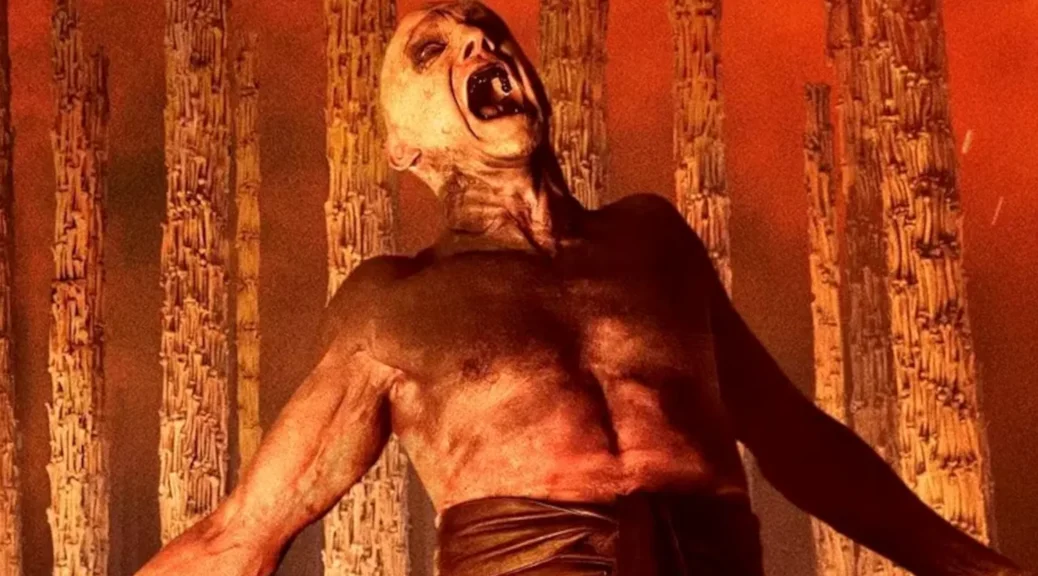
She delivers the first great horror film of the year with 28 Years Later: The Bone Temple, also written by Alex Garland. It picks up the most intriguing threads left untied last time: those of the band of Clockwork Orange-esque marauders who saved young Spike (Alfie Williams) from the infected, and the beautiful soul covered in iodine and living amongst the bones, Dr. Ian Kelson (Ralph Fiennes).

There is more visceral horror in the first three scenes of DaCosta’s film than in the entire hour and fifty-five minutes of the previous installment.

Spike finds himself unwittingly and unwillingly one of the Jimmys, the seven blond-wigged disciples of Sir Jimmy Crystal (O’Connell). Meanwhile, die-hard Duran Duran fan (hell yeah!) Dr. Kelson might be making friends with Samson (Chi Lewis-Parry), the pantsless alfa-infected who left such an impression in the last film.

As the two stories lead toward inevitable collision, Garland, who wrote the 2000 genre masterpiece 28 Days Later before writing and directing some of the best genre films of the 2000s (Ex MachinaAnnihilationMenCivil War), delivers smart storytelling, impeccable world building, and scares aplenty.

And again, Garland is able to display an intense social conscience, with timely and relevant nods to humanity fighting cruelty for survival, and the desperate allure of demagogues.

O’Connell’s never given a bad performance, and thanks to Sinners, the world knows what he can do with a villain role. But the man’s been doing the charismatic sadist better than any actor since his 2008 breakout, Eden Lake. His performance here is diabolical and unsettlingly funny.

Fiennes is again in wonderous form, soulful, earnest and dear. DaCosta surrounds them both with a strong ensemble that more than sells this story.

The filmmaker (Little Woods, Candyman, The Marvels, Hedda) returns to horror with aplomb, expertly weaving from the grimmest horrors the Jimmys can muster to the tender bromance blossoming over at the bone temple. And the climactic musical number she stages there is a thing for the ages.

Back in the summer of 2002, Danny Boyle released the single scariest movie to hit screens in a decade or more. The next two sequels are solid films. But credit DaCosta and her game and gamey cast for upping the ante to deliver everything a horror fan hoped to get last time out.

Intergalactic. Planetary.

The Marvels

by George Wolf

With some misguided storytelling and off-screen tumult, Marvel’s post-Thanos phases have been uneven, to say the least. Recent rumors even have the studio willing to pony up whatever it takes for a re-assembling of the core Avengers.

Nią DaCosta’s The Marvels gets the MCU back on some steady ground, layering characters, tones and multi-verses for a fast and fun trip to the stars.

Intergalactic trouble starts when Cree warrior Dar-Benn (Zawe Ashton) uncovers a “Quantum Band” buried on planet MB-418. Her meddling causes a power surge in the universe jump points. It’s enough to get the attention of both Nick Fury (Samuel L. Jackson) and Carol Danvers/Captain Marvel (Brie Larson), but nothing compared to what Dar-Benn could do if she found the other matching Band.

So where would it be?

In Jersey City, on the arm of Kamala Khan/Ms. Marvel (scene-stealer Iman Vellani). And it isn’t long before Carol, Kamala and a grown up Capt. Monica Rambeau (Teyonah Parris) come together to find that every time they use their respective “light-based” powers, they switch physical spaces.

This is going to make it difficult to battle Dar-Benn and her revenge tour, but “The Marvels” will have to figure it out.

DaCosta (Candyman, Little Woods), also co-writing with WandaVision‘s Megan McDonnel and Loki‘s Elissa Karasik, sets a funny, frisky tone from the start. The split screen panels and universe jumping tap into a hipper Spider-Man type vibe, while Ms. Marvel’s glee at working alongside her idol provides a seamless infusion of her series’ youthful charm.

There are a few rough spots, including more trouble in the Marvel visual department. Some of the wider, more expansive looks are fine, if not exactly eye-popping, but too many of practical set pieces come with a look of discount production design and thrown-together costuming.

Most of the film’s humor lands firmly, with a self-aware wink and a nod. And while our heroes’ stop at a planet that communicates only through song falls flat, the musical number starring Goose the cat becomes a laugh out loud highlight.

For real, if you liked Goose the first time, this installment will feel like catnip.

The end result creates its own crowd-pleasing jump point, one that brings Marvel’s small screen spirit to the multiplex. At 105 minutes (and that includes one mid-credits stinger) The Marvels may be the most brisk feature in the entire MCU. But compared to the bloated run times spent on Love and Thunder, Quantumania and Eternals, this less certainly feels like more.

Say His Name

Candyman

by Hope Madden and George Wolf

Sweets to the sweet, indeed.

This new Candyman is the most delicious brand of horror sequel. Thanks to the startling vision of director/co-writer Nia DaCosta and producer/co-writer Jordan Peele, it is a film that honors its roots but lives so vibrantly in the now that it makes you view the 1992 original from an urgent new angle.

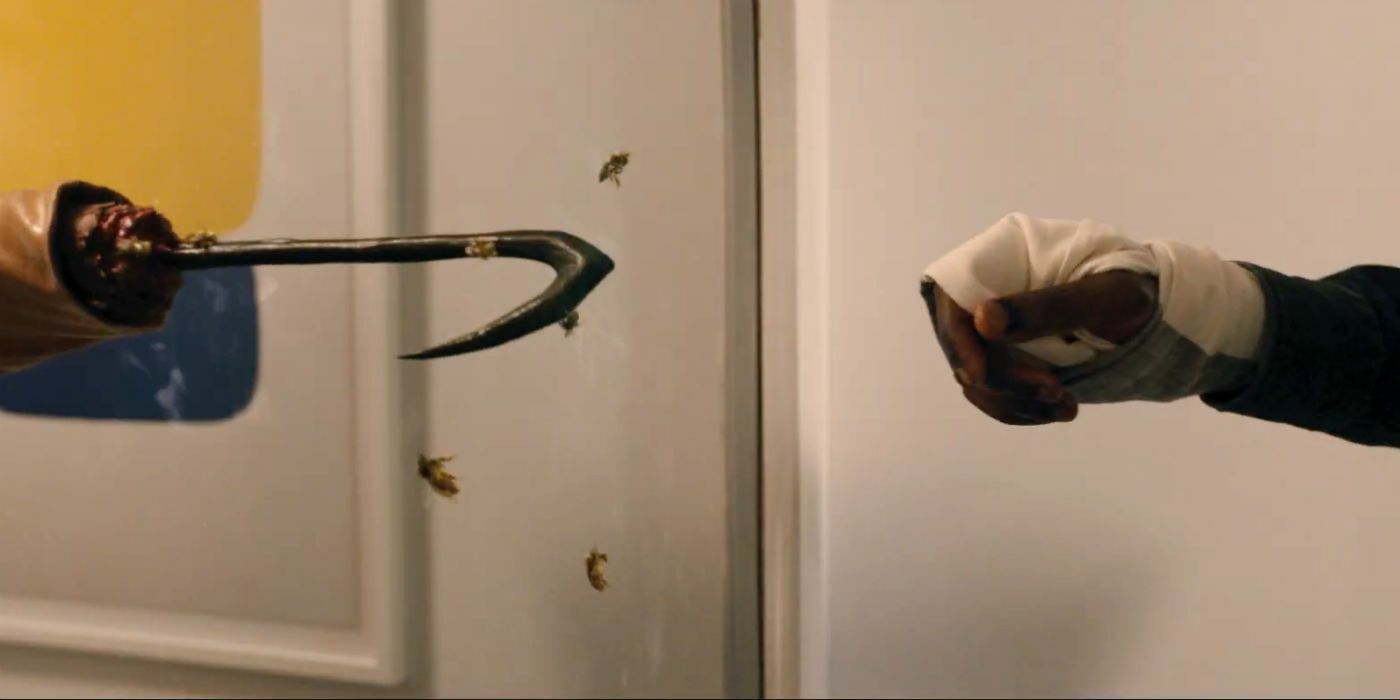
We go back to Chicago’s now-gentrified Cabrini Green housing project with up-and-coming artist Anthony McCoy (Yahya Abdul-Mateen II), whose works have taken a very dark turn since he learned of the Candyman legend from laundromat manager William Burke (Colman Domingo).

Anthony’s obsession helps spark the interests of curious doubters, which means blood will soon be shed. Suspicions about Anthony’s possible role in the killings begin to grow, leading his girlfriend Brianna (Teyonah Parris) to worry about her own promising career in the art world – and eventually her own safety.

Research on the legend reacquaints us with events from the first film, gloriously reenacted through the paper and shadow puppet work first seen in the film’s trailer. Without dismantling the backstory, only shifting the point of view from white storyteller to Black, DaCosta takes ownership of the narrative—which is, itself, the point the film makes. Own the narrative.

DaCosta’s savvy storytelling is angry without being self-righteous. Great horror often holds a mirror to society, and DaCosta works mirrors into nearly every single scene in the film. Her grasp of the visual here is stunning—macabre, horrifying, and elegant. She takes cues from the art world her tale populates, unveiling truly artful bloodletting and framing sequences with grotesque but undeniable beauty. It’s hard to believe this is only her second feature.

Compelling performances throughout draw you into the saga. Abdul-Mateen II delivers terrifying layers while Parris gives the filmmaker a vehicle for outrage and satire. The always reliable Domingo (having a banner year) brings the film’s institutional knowledge — important in any sequel (somebody has to tell the protagonist what’s already happened), but invaluable in a film about the legacy of trauma.

And then there’s Vanessa Williams, whose return to the franchise is heartbreaking perfection.

Fans of the preceding films will find no reason to be disappointed, but that’s about the least of what this Candyman accomplishes. By the time a brilliant coda of sadly familiar shadow puppet stories runs alongside the closing credits, there’s more than enough reason for horror fans to rejoice and…#telleveryone.

American Pastoral

Little Woods

by Hope Madden

If you already know the name Nia DaCosta, the likely reason may be that Jordan Peele pegged her to direct the Monkey Paws-produced remake of 1992’s horror gem Candyman that’s due next year.

What had she done to so impress the new American emperor of horror?

Little Woods.

DaCosta’s feature directorial debut, which she also wrote, is not a horror film. It’s an independent drama of the most unusual sort—the sort that situates itself unapologetically inside American poverty.

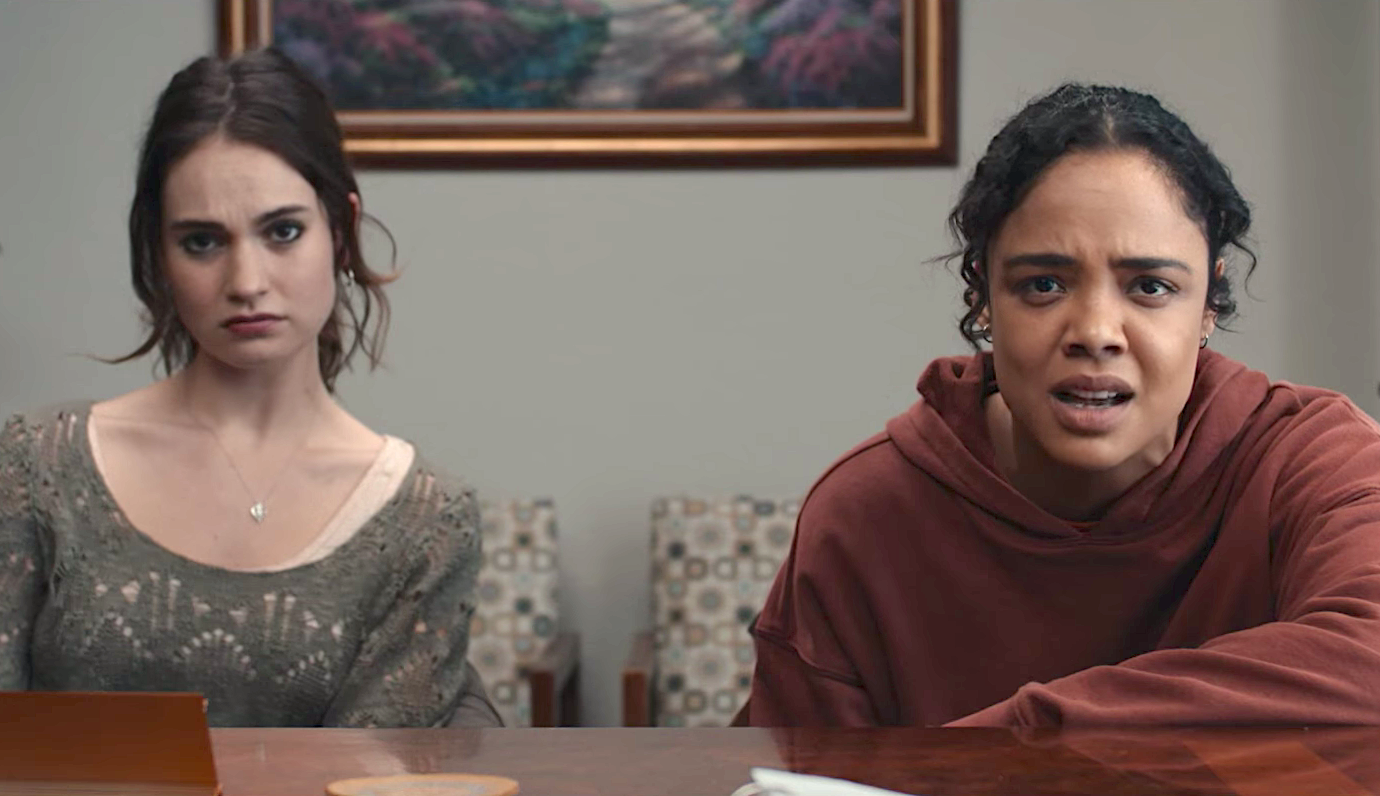
Tessa Thompson anchors the film as Oleander. She has 8 days left on her probation for running drugs across the Canadian border and she means to get the F out of her dead end town the first minute she can. Her sister Deb (Lily James) complicates things.

There is a predictability in the setup that DaCosta uses to betray your preconceived notions. While the traditionally structured narrative does its job to elevate tension, the characters within that tale veer wildly—or, authentically—from the expected.

This is less a film about the complicated pull of illegal activity and more a film about the obstacles the American poor face—many of them created by a healthcare system that serves anyone but our own ill and injured.

Films that honestly explore American poverty are scarce—The Florida Project, Frozen River, The Rider and very few others. Little Woods joins this list, all beautiful gut punch films that choose to present realistic tales with fully drawn characters rather than easy, noble tragedies.

The border crossing scene in Little Woods holds particular resonance, even more than it did back in 2008 when Courtney Hunt put Melissa Leo and her car on Frozen River‘s thin ice. Echoes of images from our own Southern border help to contextualize the nation’s narrative about saving society from the poor families and the criminals out to exploit our riches.

But politically savvy filmmaking is not the main reason to see Little Woods. See it because Tessa Thompson and Lily James are amazing, or because the story is stirring and unpredictable.

See it because it’s what American actually looks like.